
价值战

Search documents
外卖巨头集体告别价格战!美团、饿了么、京东同日发声抵制恶性竞争
Sou Hu Cai Jing· 2025-08-02 04:21
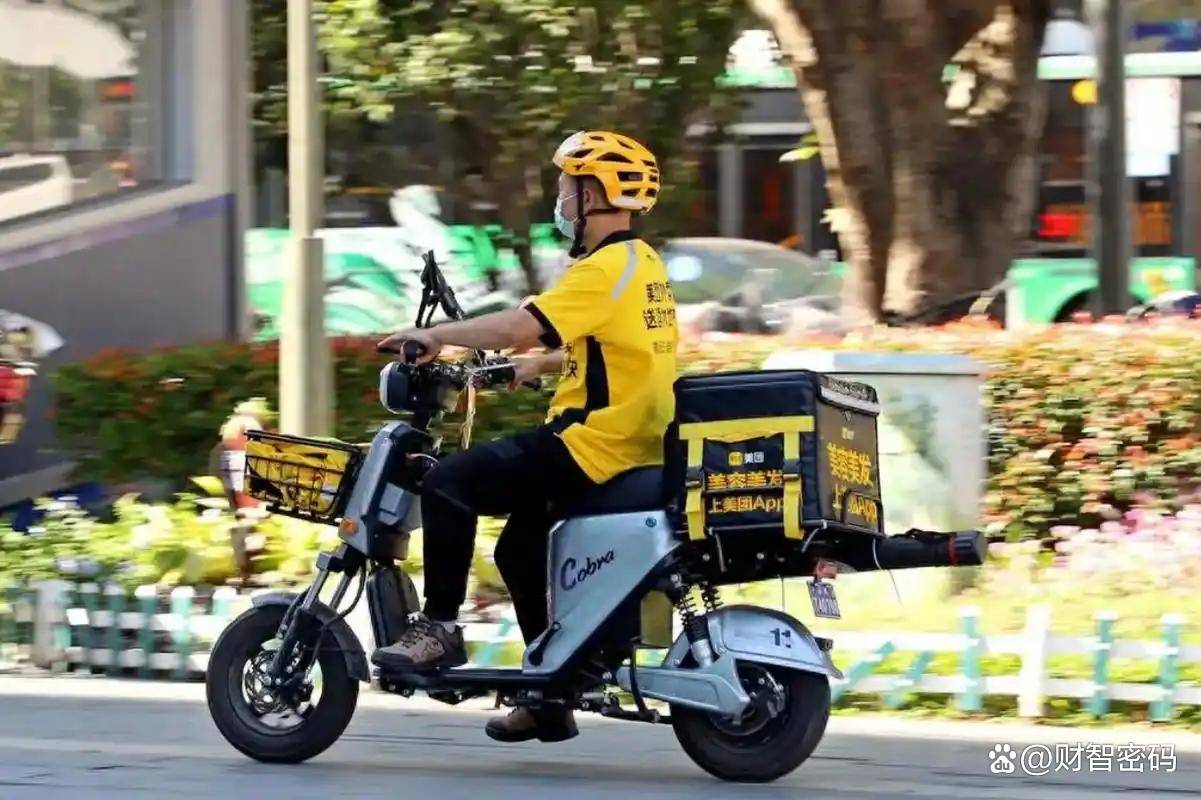
Core Viewpoint - The takeaway from the articles is that the food delivery industry in China has transitioned from a "price war" to a "value war," with major platforms like Meituan, Ele.me, Taobao Shanguo, and JD.com collectively announcing a commitment to resist unhealthy competition and focus on service and quality instead [1][4]. Group 1: Industry Transition - The prolonged subsidy war has led to significant negative impacts on merchants, riders, and consumers, with extreme promotional activities like "0 yuan purchase" and "1 cent purchase" severely squeezing profit margins [2][4]. - Regulatory intervention played a crucial role in this transition, as the State Administration for Market Regulation held discussions with major platforms to enforce compliance with antitrust laws and fair competition practices [1][2]. Group 2: New Strategies and Initiatives - The platforms have outlined specific measures to shift towards a "value war," including commitments to not sell below cost, ensuring merchants' pricing autonomy, and focusing on service and quality rather than just price [4][6]. - Adjustments in subsidy models have been made, with some cities moving from extreme discounts to more sustainable offers, enhancing merchants' revenue share to over 60% [4][6]. Group 3: Positive Market Response - Following the announcement of the new strategies, stock prices for Meituan, Alibaba, and JD.com saw significant increases, indicating positive market sentiment towards the industry's transformation [1]. - The second quarter of 2025 showed an increase in user repurchase rates, further validating the effectiveness of the industry's shift towards sustainable practices [9]. Group 4: Future Outlook - Platforms are implementing long-term plans to foster high-quality development, such as Taobao Shanguo's goal to cultivate 100,000 digital demonstration merchants within three years and Ele.me's green packaging subsidy fund [9]. - The focus on improving delivery efficiency and service quality is becoming a new competitive edge, with various platforms investing in technology and rider rights protection [9].



对话王先林:“内卷式”竞争本质是低效消耗战,破坏行业生态
Nan Fang Du Shi Bao· 2025-07-31 14:02
Core Viewpoint - The article discusses the rise of "involutionary competition" in various industries, particularly in the platform economy, and the regulatory response to mitigate its negative effects through new laws and regulations [1][4][19]. Summary by Sections Involutionary Competition and Price Wars - Involutionary competition is characterized by low-price strategies leading to a race to the bottom, resulting in decreased profit margins and industry stagnation [5][6]. - Price wars, while appearing beneficial in the short term, can create long-term risks and harm the industry ecosystem, as seen in recent high-subsidy practices by food delivery platforms [4][8]. Market Dynamics and Strategic Considerations - Companies engage in price wars as a strategic choice to gain market share, often sacrificing profits for survival in a highly competitive environment [6][7]. - The phenomenon is exacerbated by market homogeneity and the pressure to maintain short-term profits, leading to a "prisoner's dilemma" where individual rational choices result in collective irrational outcomes [7][8]. Legal Framework and Regulatory Changes - New amendments to the Anti-Unfair Competition Law and the Price Law aim to curb malicious price competition and promote a shift from price wars to value competition [10][11]. - The revised laws introduce stricter regulations against below-cost pricing and coercive practices by platforms, aiming to protect smaller businesses and ensure fair competition [12][13]. Challenges in Implementation - Identifying below-cost pricing poses challenges due to hidden and dynamic costs in the platform economy, necessitating more precise regulatory measures [14]. - A multi-faceted governance system is required to ensure the effective implementation of these new regulations, combining legal frameworks, industry self-regulation, and technological support [15][16]. Future Directions for Competition - The transition from price competition to value competition is essential for sustainable industry growth, requiring collaboration among government, industry, and enterprises [17][19]. - It is crucial to distinguish between legitimate competition driven by innovation and harmful involutionary practices, ensuring that regulatory measures do not stifle healthy market dynamics [18][19].

“外卖大战”,谁是赢家?
Sou Hu Cai Jing· 2025-07-22 03:01
Core Viewpoint - The recent resurgence of the food delivery price war is reshaping the underlying logic of China's consumer market, transitioning from planned consumption to instant consumption, creating a trillion-level blue ocean market [2][4]. Group 1: Industry Dynamics - Multiple food delivery platforms are offering large, no-threshold red envelopes or coupons, with some products even available for "0 yuan purchase," intensifying the competition [2]. - The food delivery industry, previously thought to be stagnant, is experiencing a dramatic shift from "unable to compete" to "fighting fiercely," leading to system crashes and overwhelming order volumes for merchants [2][3]. - The competitive strategies seen in the food delivery sector echo those from the shared economy era, where price wars led to market consolidation among a few major players [3]. Group 2: Economic Implications - The current price war raises questions about the sustainability of profits, as the apparent benefits for merchants, delivery riders, and consumers may not be long-lasting [4]. - The influx of "0 yuan free orders" has caused operational challenges for small businesses, leading to increased order volumes but reduced profit margins, forcing some to temporarily close [4][5]. - The shift from "price wars" to "value wars" is seen as essential for the industry's transformation, emphasizing the need for a more sustainable and equitable business model [6][7]. Group 3: Future Outlook - The outcome of the ongoing competition among internet giants in the food delivery space remains uncertain, with potential for either market monopolization or significant exits from the industry [7]. - A successful transition to a more balanced ecosystem requires recognizing the value of all stakeholders, including delivery riders and merchants, rather than relying solely on aggressive subsidies [6][7].

10116家!连云港“胖东来”时代来了?
Sou Hu Cai Jing· 2025-07-18 14:32
Core Insights - The retail industry in Lianyungang is experiencing a transformation from merely selling products to offering experiences, with local supermarkets like Jiadefu and Baozhen leading the charge [4][5][9] - The number of active supermarkets in Lianyungang has increased significantly from 7,235 to 10,116 over five years, indicating a robust growth trend in the sector [4][5] Group 1: Industry Transformation - Lianyungang supermarkets are adopting new design models inspired by leading companies like Pang Donglai and Hema Fresh, focusing on enhancing consumer engagement [5][9] - The shift in consumer demographics is evident, with the average shopper now aged between 25 and 45, prompting supermarkets to adjust their product offerings to cater to younger tastes [7][9] - The introduction of "convenience corners" and enhanced customer service features is transforming supermarkets into lifestyle hubs rather than just shopping venues [9][11] Group 2: Competitive Landscape - The competition among supermarkets has intensified, evolving from price wars to value-based strategies, where customer experience and service quality are paramount [11][12] - The density of supermarkets in Lianyungang is high, with over 10 supermarkets per square kilometer in key areas, making customer retention critical [11][12] - The rise of online retail is challenging traditional supermarkets, but they are leveraging their strengths in fresh produce and immediate service to maintain relevance [11][12] Group 3: Future Outlook - The transformation initiated by Jiadefu and Baozhen is expected to gradually influence the entire region, although the pace may vary across different areas [12][14] - The penetration of popular products and modern shopping concepts into county markets is changing consumer habits, indicating a shift towards a more integrated shopping experience [14] - Future supermarkets in Lianyungang may evolve to offer a wide range of services, from food purchases to family activities, embedding themselves into daily life [14]


乐见平台经济破“卷”重生
Jing Ji Ri Bao· 2025-07-01 22:10
Core Viewpoint - The recent revision of the Anti-Unfair Competition Law aims to curb "involutionary competition" in the platform economy, which has led to unsustainable low prices and compromised product quality [1][2][3] Group 1: Involutionary Competition - Involutionary competition is characterized by platforms engaging in price wars to attract users, resulting in reduced product quality and increased pressure on merchants [1][2] - The law prohibits platform operators from forcing merchants to sell products below cost, signaling a shift towards rational competition [2][3] Group 2: Sustainable Low Prices - Sustainable low prices in the health market should be achieved through legitimate means such as technological innovation, economies of scale, and supply chain optimization, ensuring reasonable profits for merchants and real benefits for consumers [1][3] - The revision of the law is not aimed at banning low prices but at eliminating the distortion of price signals caused by involutionary competition, allowing merchants to focus on improving product quality [3]
【独家专访】对话蛋挞超级大单品背后的创始人:全球蛋挞未来最大B端品牌也许是我们
东京烘焙职业人· 2025-06-25 08:30
Core Insights - Zhongbei Egg Tart is a key player in the egg tart market, focusing on high-quality products and innovation, aiming to become a benchmark in the tart category [1][4][42] - The company has a unique product development model that combines scientific research with baking applications, creating a strong competitive advantage in the Chinese baking industry [3][43] Market Position - The retail scale of the egg tart market in China is nearly 30 billion, with Zhongbei holding over 70% market share in the high-end segment [4][8] - Zhongbei's annual production capacity has surpassed 1 billion tarts, indicating a strong operational scale [8] Target Market and Strategy - Zhongbei focuses on a specific market segment, targeting clients who prioritize product quality and supply chain stability, rather than competing on price [9][12] - The company has established partnerships with major brands, providing them with high-quality egg tarts that significantly boost their sales [13][16] Product Quality and Innovation - Zhongbei emphasizes high-quality raw materials, using imported wheat flour, butter, and New Zealand milk, which contributes to higher production costs but ensures superior product quality [19][20] - The company has developed unique tart liquids and introduced innovative products like recoverable frozen egg tarts, showcasing its commitment to R&D [21][22][24] R&D and Competitive Edge - Zhongbei invests over 3% of its sales in R&D, positioning itself in the top tier of the industry for research investment [24] - The company maintains a two-generation technology reserve, allowing for rapid product iteration and innovation, with an average of 18 months for new product launches [26] Future Outlook - The company plans to expand its product offerings and explore new applications, such as collaborations with beverage brands and incorporating functional ingredients [27][34] - Zhongbei aims to enter international markets, starting with South Korea and Singapore, by 2025, reflecting its ambition to globalize its brand [42] Business Model and Distribution - Zhongbei has established its own cold chain logistics system to ensure product quality during distribution, prioritizing efficient delivery methods [29][30] - The company is exploring flexible cooperation models with distributors to adapt to changing market dynamics [31][32]

零跑C16推新五座版本,继续扩张20万级家庭SUV版图
Tai Mei Ti A P P· 2025-06-19 12:18
Core Insights - The launch of the 2026 Leapmotor C16 represents a strategic move by the company to offer a high-spec family SUV without price increases amidst a competitive price war in the new energy vehicle market [2][5] - The C16 features significant upgrades in intelligence, space, range, and comfort, targeting young families with high demands for camping, leisure, and comfort [2][3] - The vehicle's success is attributed to its unique positioning in the 200,000 RMB family SUV market, combining flagship features with an affordable price [4] Product Features - The C16 offers a 5-seat version with extensive "class-up" configurations, including a 2-meter electric flat bed, 1663L expandable trunk, and a 21-speaker sound system [2][3] - The 6-seat version enhances the MPSUV concept, addressing user feedback on third-row practicality and improving comfort and noise reduction [2][3] - The vehicle is equipped with Qualcomm 8295 smart cockpit chip and Leapmotor OS 4.0 Plus, featuring advanced voice systems and a 7.1.4 Dolby surround sound system [3] Performance and Market Position - The C16 is available in both pure electric and range-extended versions, with the pure electric variant offering a CLTC range of 630 km and a fast charging capability [3] - Leapmotor has achieved cumulative deliveries exceeding 800,000 units, with the C16 alone accounting for 70% of the 200,000 RMB 6-seat SUV market [3][5] - The company is entering a "value war" phase, transitioning from a single product focus to a platform technology and brand strategy collaboration [5]

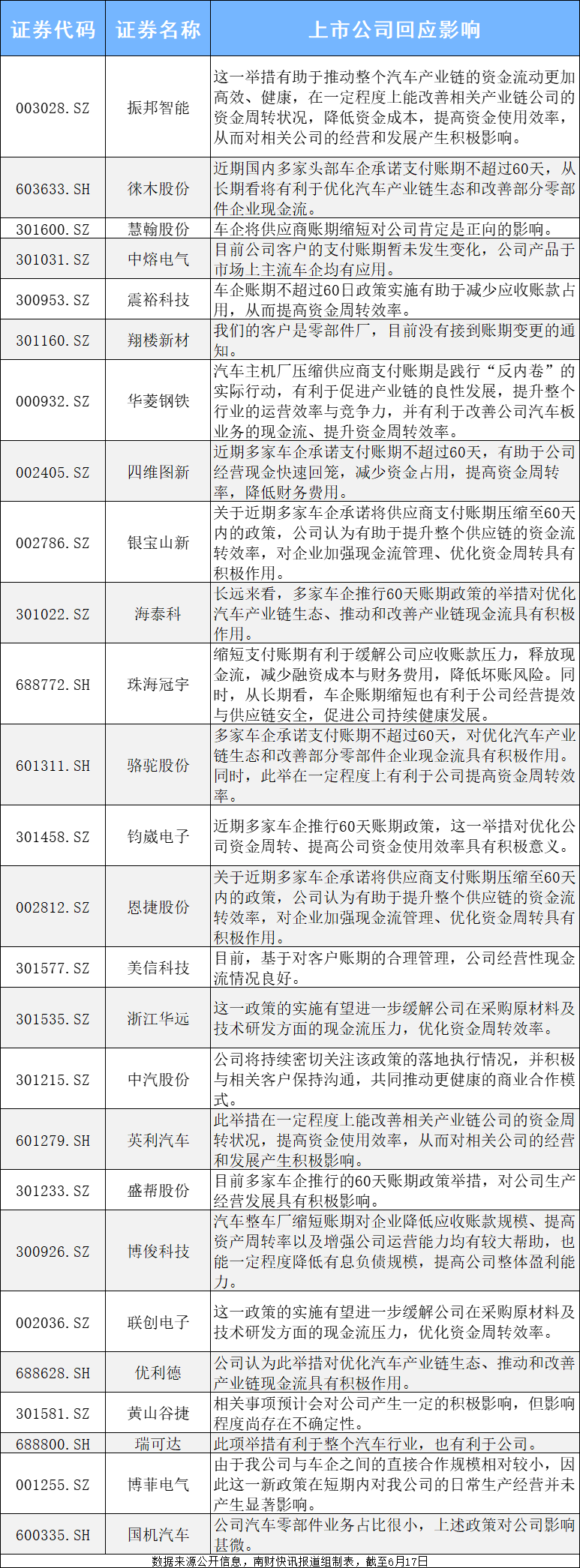
车企承诺支付账期不超60天!多家上市公司回应影响
2 1 Shi Ji Jing Ji Bao Dao· 2025-06-17 13:46
Core Viewpoint - Major automotive companies in China have committed to a payment term of no more than 60 days for suppliers, which is expected to enhance the cash flow of small and medium-sized enterprises in the supply chain and promote a healthier industry ecosystem [1][2]. Group 1: Industry Impact - The commitment to a 60-day payment term is seen as crucial for building a collaborative and win-win development ecosystem between vehicle manufacturers and parts suppliers, which is essential for sustainable industry growth [1]. - The automotive industry has historically faced long payment terms, with an average accounts payable turnover of 182 days, significantly exceeding the international standard of 90 days, leading to cash flow challenges for suppliers [2][7]. - Shortening payment terms is anticipated to alleviate financial pressure on suppliers, allowing them to invest more in research and development, thus driving industry innovation and upgrading the supply chain [2][3]. Group 2: Company Responses - Companies such as Huahan Co. and Yuli Technology have expressed that the reduction in payment terms will positively impact their cash flow and operational efficiency [3][4]. - Several listed companies have reported that the new policy will enhance the efficiency of capital flow within the supply chain, reduce financial costs, and improve overall business operations [4][5]. - Some companies, however, indicated that their exposure to the automotive parts business is minimal, and thus the impact of the new policy may be limited [4][6]. Group 3: Challenges Ahead - Analysts have pointed out that breaking the inertia of long-standing payment practices will be challenging, as some companies previously maintained payment terms exceeding 170 days [7]. - The complexity of payment models and the lack of a robust credit system in the industry may hinder the effective implementation of the new payment terms [7]. - There may be discrepancies in understanding the new payment terms between suppliers and automotive companies, particularly regarding the timing of when the 60-day period begins [7].
“价格战”后,车企驶向“价值战”
Da Zhong Ri Bao· 2025-06-17 02:53
Core Viewpoint - The automotive industry is currently facing a dual narrative of technological advancement and price competition, with a significant emphasis on the need for a shift from price wars to value wars focused on technology and service [1][3][7]. Group 1: Industry Challenges - The Chinese automotive industry is experiencing a decline in profit margins, with a profit rate of only 4.3% in 2024, dropping to 3.9% in the first quarter of 2025, which is below the average of 5.6% for downstream industrial enterprises [3]. - A total of 227 vehicle models saw price reductions last year, with electric vehicles experiencing an average price drop of 18,000 yuan, exceeding 9% [3]. - High inventory levels, reaching 3.5 million passenger vehicles by the end of April, including 850,000 electric vehicles, are pressuring companies to reduce prices [4]. Group 2: Industry Responses - The China Automotive Industry Association has called for an end to the chaotic price wars, urging companies to focus on technology and service rather than price competition [3][5]. - Industry leaders at the auto show expressed a consensus that companies should "compete on technology and service, not on price" [3][5]. - The shift towards a "value war" is seen as essential for sustainable growth, with a focus on technological innovation as the core breakthrough point [7]. Group 3: Innovations and Developments - The auto show showcased significant technological advancements, such as Huawei's autonomous valet parking and BYD's megawatt fast-charging technology, indicating a move towards high-quality, intelligent vehicles [7][8]. - Companies are also enhancing customer service experiences, with initiatives like cross-province test drive services and free vehicle pick-up for maintenance [8]. Group 4: Market Opportunities - The industry is exploring international markets as a strategy to counteract domestic price competition, with companies seeking to establish differentiated competitive advantages abroad [12]. - There is a growing interest in identifying niche markets for electric vehicles, as demonstrated by the success of models like the Wuling Hongguang MINIEV in specific regions [12].
被“玩坏”的终身质保能帮车企重拾份额吗?
Zhong Guo Qi Che Bao Wang· 2025-06-17 01:15
Core Viewpoint - The Chinese automotive market continues to show positive growth, with production and sales increasing by 12.7% and 10.9% respectively in the first five months of the year, despite ongoing price competition revealing underlying issues in the industry [2] Group 1: Industry Trends - The China Automotive Industry Association reported that from January to May, the production and sales of automobiles reached 12.826 million and 12.748 million units respectively, indicating a strong market performance [2] - The ongoing price competition has prompted industry leaders to call for a reduction in "involution" among companies, encouraging a shift towards value-added services rather than price cuts [2] - Several automakers have begun implementing policies to counteract price competition by offering lifetime warranty services, aiming to enhance customer value and service rather than engaging in price wars [2][3][4] Group 2: Company Initiatives - GAC Toyota has introduced a lifetime warranty for its entire lineup, covering key components such as the engine and transmission, valued at approximately 8,000 yuan [2] - FAW-Volkswagen has also launched a lifetime warranty policy for its flagship SUVs, covering major systems without mileage or time limits, and has seen a significant increase in orders for its models [3] - Li Auto has rolled out a "lifetime warranty relay plan" for its Li ONE owners, allowing for the transfer of warranty benefits to new vehicle purchases [4] Group 3: Consumer Perception and Challenges - While lifetime warranties are seen as beneficial for both companies and consumers, there are concerns regarding the stringent conditions attached, such as requiring maintenance at authorized dealerships [8][9] - Some consumers have reported discrepancies between the advertised lifetime warranty and the actual coverage, leading to dissatisfaction and perceptions of misleading marketing [9][10] - The automotive industry is facing challenges in effectively implementing customer-centric policies, with many companies struggling to transition from traditional pricing models to value-based pricing [10]
