供应链整合

Search documents
万辰集团拟13.79亿元揽收南京万优49%股权,“二代”接班直面零食线下多业态对垒
Cai Jing Wang· 2025-08-12 14:26
Group 1 - The core viewpoint of the article highlights the strategic acquisition by Wancheng Group to strengthen its control over the snack business through the purchase of a 49% stake in Nanjing Wanyou Commercial Management Co., Ltd. for 1.379 billion yuan [1][2] - Following the acquisition, Wancheng Group will hold a total of 75.01% of Nanjing Wanyou, enhancing its operational efficiency and market competitiveness, particularly in second and third-tier cities [2][5] - The company plans to consolidate its sub-brands into a unified brand "Haoxianglai Snacks," which includes brands like "Yadi Yadi," "Lai You Pin," and "Lu Xiaochan" [1][2] Group 2 - The acquisition is expected to increase the company's debt ratio from 67.57% to 90.97%, with a projected decline in net profit due to financial costs associated with the acquisition [2][3] - Wancheng Group aims to enhance its supply chain management and operational efficiency, with plans to improve logistics and inventory management, and to innovate product offerings in line with health trends [5][6] - The company has expanded its retail presence to 14,196 stores and is focusing on brand building, market expansion, and exploring new profit growth points through innovative store formats and product categories [5][6] Group 3 - The leadership transition to Wang Zeneng, the new general manager, is part of a broader strategy to solidify control and ensure stable decision-making within the company [3][4] - The competitive landscape in the snack industry is intensifying, with other brands like Three Squirrels and Lai Yifen also expanding their retail formats and product offerings [4][5] - Analysts predict that Wancheng Group may benefit from economies of scale in the retail sector, potentially leading to improved net profit margins as market concentration increases [5][6]
董宇辉出走1年 东方甄选股价暴涨超200% 正在内蒙古“游山玩水”的俞敏洪 做对了什么?
Mei Ri Jing Ji Xin Wen· 2025-08-11 05:39
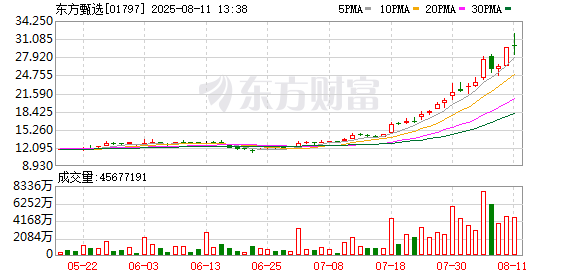
Core Viewpoint - The article discusses the transformation and recovery of Dongfang Zhenxuan (东方甄选) after the departure of its prominent host Dong Yuhui, highlighting the company's strategic shift from a host-driven model to a product-driven approach, resulting in significant stock price recovery and business growth. Group 1: Company Performance - After the split with Dong Yuhui, Dongfang Zhenxuan's stock price dropped over 23% on the first trading day, losing approximately 3 billion HKD in market value, reaching a low of 8.92 HKD [2][4] - As of August 11, 2025, the stock price reached 29.38 HKD, with a market capitalization exceeding 30 billion HKD, marking a 190% increase from the year's low of 10.12 HKD and a 229% increase from the low following Dong Yuhui's departure [8][11] - The company's self-operated product GMV (Gross Merchandise Volume) share increased to 39%, with over 600 product varieties and a cold chain coverage rate of 92%, indicating deep supply chain integration [11][12] Group 2: Strategic Shifts - Dongfang Zhenxuan has shifted its focus from seeking a new host to strengthening its supply chain and self-operated products, completing a transition from a host-driven to a product-driven model [11][16] - The launch of a self-operated sanitary napkin product sold out within minutes, demonstrating the effectiveness of the company's supply chain strategy and consumer trust [12][14] - The company aims to create a "Sam's Club online" by establishing a membership economy, with over 250,000 paid members and a repurchase rate 2.7 times higher than regular users [17][18] Group 3: Financial Metrics - The net profit for the company after distributing 50% to Dong Yuhui was reported at 141.414 million RMB [4] - The gross margin for self-operated products increased from 10% in the second half of 2024 to 21% in the first half of 2025, while operating profit margin rose from 3% to 7% [17] - Dong Yuhui's new venture, Yuhui Tongxing, conducted 265 live broadcasts in 2025, achieving a total viewership of 3.15 billion, with average sales per broadcast significantly increasing [18]

董宇辉出走1年,东方甄选股价暴涨超200%,正在内蒙古“游山玩水”的俞敏洪,做对了什么?
Mei Ri Jing Ji Xin Wen· 2025-08-11 05:37
Core Insights - The article discusses the transformation and recovery of Dongfang Zhenxuan after the departure of its prominent host, Dong Yuhui, highlighting the company's strategic shift from a host-driven model to a product-driven approach [3][10][13]. Financial Performance - After the split with Dong Yuhui, Dongfang Zhenxuan's stock price dropped over 23% on the first trading day, losing approximately 3 billion HKD in market value [3][10]. - As of August 11, 2025, the stock price reached 29.38 HKD, with a market capitalization exceeding 30 billion HKD, marking a 190% increase from its lowest point of 10.12 HKD earlier in the year [10][13]. - The company's self-operated product GMV (Gross Merchandise Volume) share increased to 39%, with over 600 product varieties and a cold chain coverage rate of 92% [13][14]. Strategic Shifts - Dongfang Zhenxuan has focused on supply chain integration and self-operated products, moving away from reliance on individual hosts [13][17]. - The launch of a self-operated sanitary napkin product sold out quickly, indicating strong consumer demand and trust in the brand [14][16]. - The company aims to build a membership economy, converting one-time transactions into long-term customer relationships, with over 250,000 paid members and a repurchase rate 2.7 times higher than regular users [19][20]. Market Positioning - Dongfang Zhenxuan is positioning itself as a platform for selecting quality products, emphasizing self-operated agricultural products and cultural dissemination [19][20]. - The company has achieved a significant increase in gross margin for self-operated products, rising from 10% in the second half of 2024 to 21% in the first half of 2025 [19][20].

广南(集团)(01203.HK)附属斥5616万元成功投得佛山地块
Ge Long Hui· 2025-08-06 10:05
Group 1 - The company, Guangdong Guangnan Group, has successfully acquired land use rights for a site in Lishui Town, Foshan, Guangdong Province, for a total cost of RMB 56.16 million [1] - The land covers an area of approximately 34,035.21 square meters and is designated for industrial use, specifically for livestock slaughtering and meat processing for the first 15 years of a 50-year term [1] - The strategic location of the site in a mature industrial area, near major highways and transportation networks, is expected to facilitate efficient transportation of livestock and products, reducing logistics costs and ensuring timely delivery to Hong Kong and other key markets in the Greater Bay Area [1] Group 2 - Acquiring the land use rights will enable the company to further integrate its operations across the food production value chain, from livestock slaughtering to meat processing and distribution [2] - This vertical integration is anticipated to enhance supply chain efficiency, improve product quality and safety, and strengthen the company's ability to meet the market demand for high-quality meat products [2] - The acquisition will serve as a platform for the company to expand its operational scale and achieve greater synergies in the slaughtering and food business sectors [2]
途虎养车上线“300亿无限大促”,激活汽车后市场消费新动能
Xin Jing Bao· 2025-08-06 09:19
Core Insights - Tuhu Car Service launched a "300 billion unlimited promotion" aimed at providing consumers with affordable car maintenance options, covering various services such as tires, maintenance, painting, washing, and waxing [1][3]. Group 1: Promotion Details - The promotion includes significant discounts, with tire prices reduced to as low as 50% off and additional incentives like a Huawei Pad for purchases [3]. - Maintenance services are offered at half price, with brands like Shell, Mobil, Castrol, Honeywell, and Fuchs included, allowing consumers to enjoy high-quality services at economical prices [3]. - Tuhu also provides affordable painting services starting at 148 yuan for minor repairs, with packages for larger areas priced at 289 yuan and 448 yuan [3]. - Car washing services feature summer discount packages, with prices as low as 0.1 yuan for specific services and 19.9 yuan for two standard washes [3]. Group 2: Strategic Implications - The "unlimited promotion" reflects Tuhu's long-term strategy of cost reduction through large-scale operations, digital management, and supply chain integration, benefiting consumers with lower prices [4][5]. - Tuhu's network has expanded to over 7,000 service centers, covering more than 95% of China's administrative regions, which enhances its ability to reach a broader customer base [4]. - The promotion is expected to stimulate consumer demand and invigorate the automotive service market, as evidenced by strong sales during previous promotional events [4][6].

利群股份董事长徐瑞泽:以零售为基供应链为翼 筑就企业创新发展路
Zheng Quan Ri Bao Zhi Sheng· 2025-08-04 16:12
Core Viewpoint - Lihua Group is transforming from a traditional retail company into a comprehensive supply chain and retail giant, focusing on sustainable development amidst changing market dynamics [1][2]. Supply Chain Integration - The company has established a robust supply chain by integrating upstream processes, including brand agency and logistics, to enhance efficiency from production to consumption [2][3]. - Lihua Group's supply chain strategy is supported by a 600,000 square meter smart logistics center and over 800 agency brands, emphasizing that retail is foundational while supply chain integration is a core competitive advantage [2][3]. Business Growth and Profitability - Lihua Group's external sales have surged due to its supply chain capabilities, with a 64.32% year-on-year increase in net profit attributable to the parent company after deducting non-recurring gains [4]. - The company is expanding its food processing sector, focusing on products like fries and vermicelli, which are now exported internationally, reflecting a commitment to food safety and quality [4][5]. Retail Innovation and Digital Transformation - The company is adapting to a more rational consumer market by innovating retail scenarios, shifting from one-stop shopping to one-stop experiences and social interactions [6][7]. - Lihua Group is leveraging digital tools, such as AI algorithms, to optimize inventory turnover and enhance customer service, ensuring a precise match between products and consumer needs [7]. Long-term Strategy and Investment - The company prioritizes long-term sustainable growth over short-term stock price fluctuations, investing heavily in logistics and food processing facilities to strengthen its market position [8][9]. - Lihua Group aims to maintain a diversified focus on retail services while building a comprehensive service chain that includes production, logistics, and sales [7][9].

老乡鸡招股书"变脸":独立加盟过半,中式快餐资本局生变?
Sou Hu Cai Jing· 2025-07-23 07:01
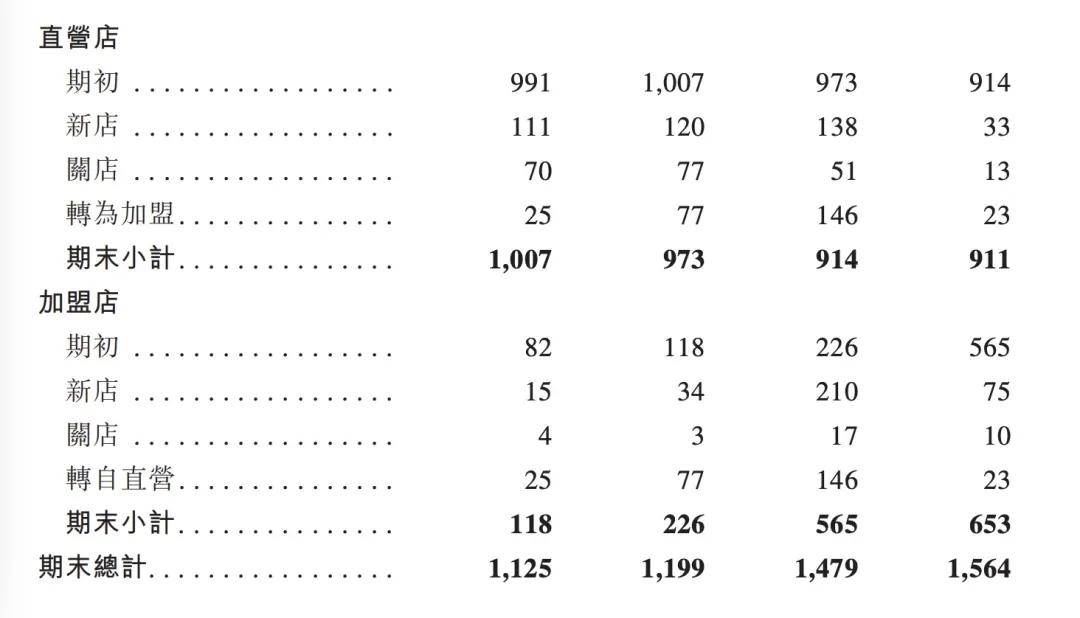
Core Viewpoint - The article discusses the strategic shift of Laoxiangji from a direct-operated model to a franchise model, highlighting its financial performance and the competitive landscape in the Chinese fast food industry, particularly in the context of its upcoming IPO [1][17]. Financial Data - Laoxiangji's projected revenue for 2024 is 6.288 billion RMB, with a net profit of 409 million RMB [1][15]. - The revenue from independent franchise stores has surpassed 51.1%, indicating a significant shift in the revenue model [1][5]. - The number of direct-operated stores decreased by 3, while franchise stores increased by 88, reflecting a strategic pivot towards franchising [1][2]. Industry Landscape - The Chinese fast food market has a low chain rate of 32.5%, significantly lower than Western fast food's 67.9%, due to challenges in standardization and supply chain complexity [8][9]. - Laoxiangji holds a dominant position in the East China market, with 86% of its stores located in this region, particularly in Anhui [5][11]. - The competitive landscape includes major players like Laoxiangji, Laoniangjiao, and Xiangcunji, with emerging brands like Yuyouzaijiyu and Micunbanfan posing significant challenges [11][13]. Capital Pathways - The trend of IPOs among Chinese fast food companies indicates a shift from regional competition to capital competition, driven by rising operational costs [14][17]. - Laoxiangji aims to become the first publicly listed Chinese fast food company, with an estimated valuation between 15 billion to 20 billion RMB based on its financial performance [15][16]. - The investor structure may include institutional investors seeking stability and retail investors chasing growth, necessitating a balanced approach in marketing and operational transparency [16][17].
京东:将投入10亿现金为1000道招牌菜寻找合伙人,已有7千人报名开发菜品
第一财经· 2025-07-22 15:55
Core Viewpoint - JD.com has launched the "Dish Partner" recruitment plan, investing 1 billion yuan to find partners for 1,000 signature dishes, aiming to establish 10,000 "Seven Fresh Kitchens" nationwide within three years [1] Group 1: Business Model and Operations - The "Seven Fresh Kitchen" is positioned as a cooperative quality dining production platform, where JD.com manages overall operations while partners focus on dish development [2] - As of now, nearly 7,000 applicants have registered, including brands like Jiahe Yipin and Ziyuan Baiwei Chicken [2] - The partnership model allows brand merchants or individual chefs to share in the profits from their dishes, while JD.com covers rent, labor, and operational costs [2][4] - The selection of locations for "Seven Fresh Kitchens" will prioritize areas with high ghost kitchen order volumes and consider existing partner store layouts to enhance business opportunities [2] Group 2: Pricing and Market Strategy - The price range for individual dishes is set between 10 to 30 yuan, with a focus on maintaining low prices through JD.com's supply chain efficiencies [4] - The aim is to improve food safety and quality, steering consumers away from low-quality takeout options [4] - The "Seven Fresh Kitchen" model is differentiated from competitors like Meituan by emphasizing fresh cooking and transparent kitchen practices to build consumer trust [5] Group 3: Competitive Landscape and Challenges - JD.com's strategy involves integrating supply chains, establishing technological barriers, and creating an ecological loop to compete with Meituan [5] - The sustainability of this model is under scrutiny, particularly regarding user habit formation, cost control, and balancing with the delivery ecosystem [5]


Temu出海记:拼多多跨境电商的低价风暴与全球电商版图新变局
Sou Hu Cai Jing· 2025-07-20 14:57
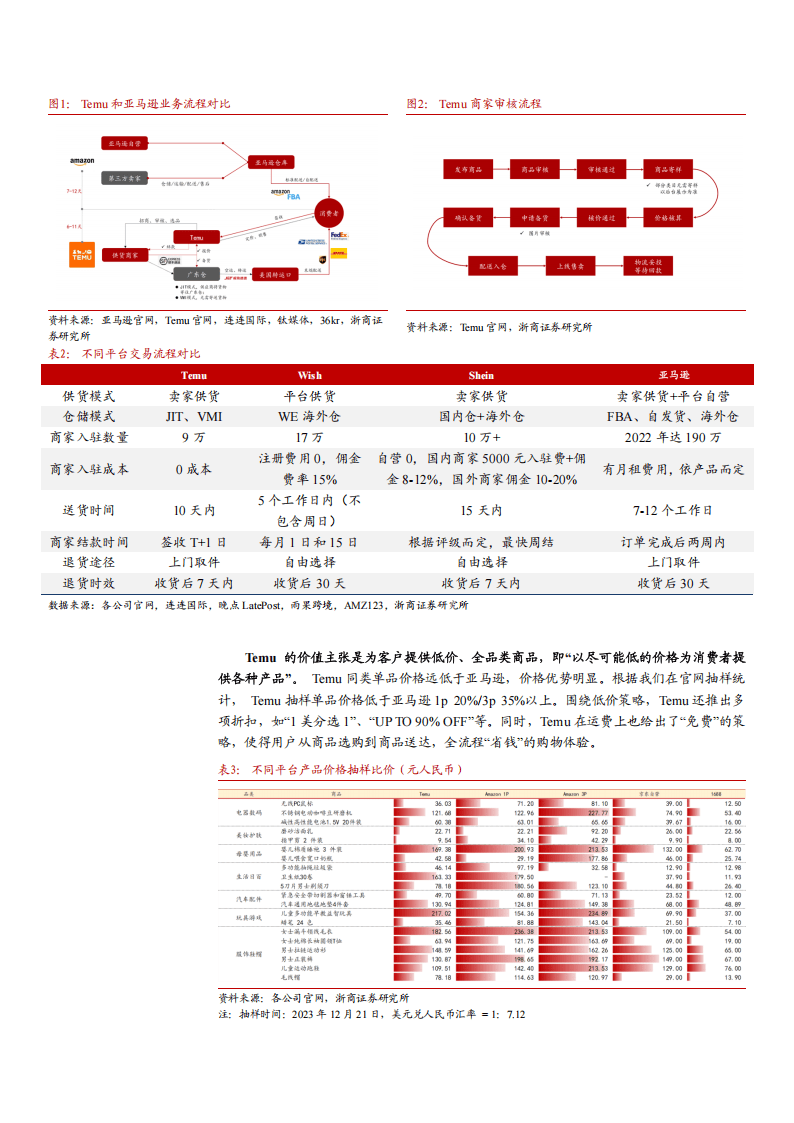
Core Insights - Temu, a cross-border e-commerce platform under Pinduoduo, has rapidly expanded its presence globally since its launch in September 2022, now covering 47 countries and regions [1] - The platform's unique business model focuses on extreme supply chain management and precise marketing strategies, offering consumers "extremely low prices" across a wide range of products [1][2] - Temu's pricing strategy includes significant discounts, with prices for similar products being over 20% lower than Amazon's self-operated items and over 35% lower than third-party sellers [1][5] Business Model and Strategy - Temu operates on a quasi-self-operated model where the platform manages pricing, marketing, and logistics, allowing merchants to focus solely on supplying goods [1][3] - The platform employs a "price racehorse mechanism" to select the lowest supply price products and enforces a policy to delist items with no sales within 14 days, encouraging cost optimization among merchants [1][2] - Temu's product categories have expanded from apparel to 29 categories, including home goods and electronics, with a monthly GMV exceeding $1 billion within just over a year of operation [2] Market Position and Growth Potential - The global e-commerce market is projected to reach $8.15 trillion by 2026, with increasing online penetration, providing a favorable environment for Temu's growth [3] - In the U.S. market, Temu targets cost-conscious consumers, focusing on the mid-to-low-end market segment, which is increasingly dissatisfied with the high prices of traditional platforms like Amazon [3][8] - Temu is expected to evolve from a purely self-operated model to a "self-operated + platform" model, allowing third-party merchants to join and diversify its revenue streams [3] Marketing and User Acquisition - Temu's marketing strategy includes high-frequency, large-scale advertising campaigns, such as the "Shop like a Billionaire" ad during the 2023 Super Bowl, which significantly boosted app downloads [2] - The platform utilizes social media channels like Facebook and TikTok for targeted advertising, combined with various promotional activities to rapidly grow its user base [2][8] Competitive Landscape - Temu's value proposition is centered around providing low-priced, all-category products, with a clear price advantage over competitors like Amazon [5] - A comparison of transaction processes reveals that Temu has a lower merchant entry cost and faster delivery times compared to other platforms, enhancing its competitive edge [5][6]
2025,酒旅商家拥抱电商巨头
3 6 Ke· 2025-07-12 01:19
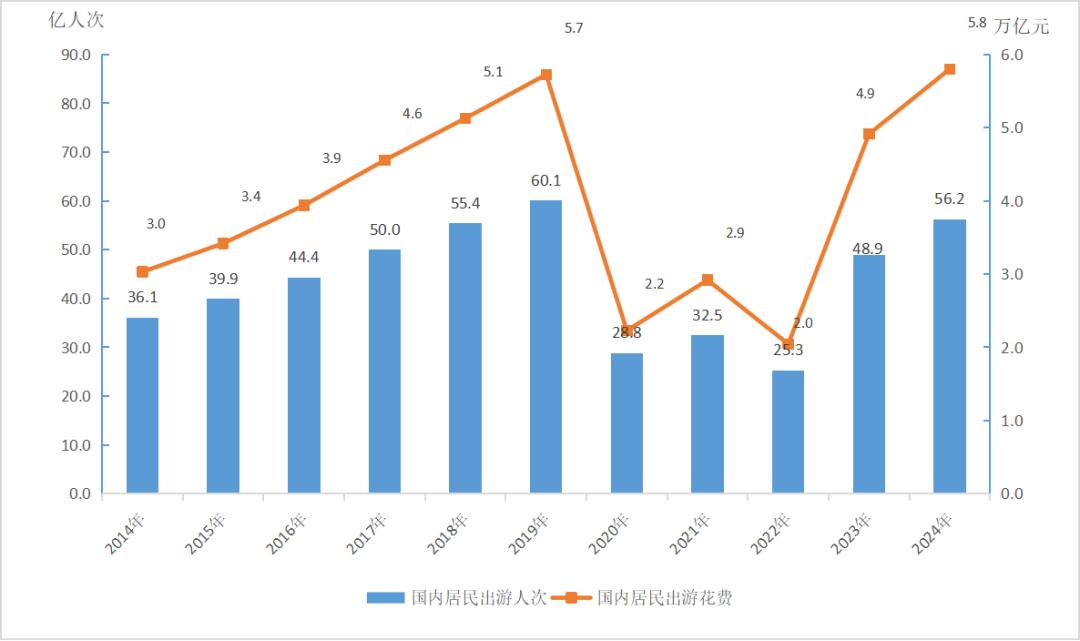
Core Insights - The online travel agency (OTA) market in China has remained stable for over 20 years, with significant market consolidation and a strong Matthew effect, making it difficult for new entrants to disrupt the existing players [2][3] - Major e-commerce platforms like JD.com and Alibaba have recently intensified their focus on the travel sector, aiming to leverage their vast user bases to integrate local services with travel offerings [2][11] - The travel industry is experiencing rapid growth post-pandemic, with companies like Ctrip reporting a revenue growth of 122% in 2023, indicating a strong recovery and ongoing demand [3][4] E-commerce Platforms' Strategies - JD.com announced a three-year zero-commission initiative for hotel merchants during the 618 shopping festival, while Alibaba merged its travel services to enhance synergy with its e-commerce operations [2][11] - Both companies are attempting to replicate their success in instant retail by converting their large e-commerce user bases into travel customers, emphasizing the importance of supply chain integration [18][19] - JD.com aims to disrupt the traditional OTA commission model by focusing on supply chain empowerment, which could potentially lower operational costs for hotels [21][22] Market Dynamics - The OTA market is characterized by a few dominant players, with Ctrip, Tongcheng, and Meituan holding an 84% market share, indicating a highly concentrated competitive landscape [7][8] - Despite the growth in the travel sector, the online travel market remains relatively rigid, with new entrants like Douyin and Feizhu struggling to gain significant market share [7][8] - The relationship between hotel merchants and OTA platforms has become increasingly strained, with many merchants expressing a desire for more equitable market conditions [12][13] Financial Performance - Ctrip reported a revenue of 43.3 billion yuan with a net profit of 17.2 billion yuan, reflecting a net profit margin exceeding 30%, while hotel chains like Jinjiang and Huazhu maintain much lower profit margins around 10-12% [14][15] - The financial disparity between OTAs and hotel chains highlights the ongoing reliance of hotels on OTA platforms for customer acquisition, despite the latter's higher profitability [15][17] Future Outlook - The entry of e-commerce giants into the travel sector presents both opportunities and challenges, as they seek to innovate and reshape the market dynamics [11][23] - The potential for supply chain improvements in the travel industry could lead to enhanced operational efficiencies for smaller hotels, which may welcome the involvement of platforms like JD.com [22][23] - The long-term success of these strategies will depend on the ability of e-commerce companies to navigate the complexities of the travel supply chain and establish a sustainable business model [22][23]