
供应链韧性

Search documents
中源家居股份有限公司关于召开2025年第二次临时股东会的通知
Shang Hai Zheng Quan Bao· 2025-11-07 21:00
Core Viewpoint - The company, Zhongyuan Home Co., Ltd., has announced the convening of its second extraordinary general meeting of shareholders for 2025, scheduled for November 26, 2025, to discuss various important matters including investment decisions and changes to the company's capital structure [2][20]. Meeting Details - The extraordinary general meeting will be held on November 26, 2025, at 14:30 in Hangzhou, Zhejiang Province [2]. - Voting will be conducted through a combination of on-site and online methods, utilizing the Shanghai Stock Exchange's network voting system [3][5]. - Shareholders must register to attend the meeting, with specific requirements outlined for both individual and corporate shareholders [11][12]. Investment Decisions - The board of directors has approved a proposal to invest $16 million in establishing a self-built production base in Vietnam, which aims to enhance the company's supply chain resilience and support business expansion [17][26]. - The investment will cover land acquisition, construction of facilities, and procurement of equipment [28]. - The project is expected to be implemented in phases, depending on market demand and funding availability [29]. Capital Changes - The company plans to change its registered capital and amend its articles of association following the repurchase and cancellation of 94,300 restricted shares, reducing the total share capital from 126,171,500 shares to 126,077,200 shares [21][22]. - This change is part of the company's strategy to align its capital structure with its operational needs and shareholder interests [31]. Shareholder Rights and Voting - Shareholders are encouraged to participate in the voting process, with provisions for those holding multiple accounts to aggregate their voting rights [7][9]. - The company will provide reminders and assistance to small and medium-sized investors to ensure their participation in the meeting [9][10]. Shareholder Equity Changes - A significant shareholder, Mr. Cao Yong, has reduced his stake in the company by 1%, from 69.97% to 68.97%, through a series of share sales between October 17 and November 7, 2025 [34][37]. - This reduction does not affect the control of the company, as the shareholder remains within the previously disclosed reduction plan [36].

京东助力海澜之家向“超级国货品牌”迈进的数智化之旅
Xin Hua Wang· 2025-11-07 11:56
Core Insights - The transformation of traditional textile industry into "smart manufacturing" is exemplified by the operations at Hai Lan Yun's smart factory, showcasing advanced technologies like laser cutting and intelligent body measurement systems [1][2] - The competitive landscape of the apparel industry is shifting from price wars to supply chain resilience, as highlighted by the collaboration between Hai Lan Zhi Jia and JD.com, which has enhanced inventory turnover efficiency by over three times [1][6] - The rise of domestic brands is reflected in the increasing engagement of younger consumers, with a notable growth in active female users online [3] Group 1: Supply Chain Innovations - Hai Lan Zhi Jia has implemented a "Deep Sea Data Model" in collaboration with JD.com, allowing for real-time monitoring of new products against historical bestsellers, leading to rapid identification of potential hits [1][4] - The partnership has resulted in a significant improvement in inventory management, with initial order quantities controlled between 500-1000 pieces, enabling dynamic replenishment to achieve sales of millions of units [1][6] Group 2: Technological Advancements - The Hai Lan Yun factory has achieved a custom order capability of one piece with a seven-day delivery time, significantly reducing the production cycle from 15 days to 4 days [2][6] - The factory's innovations include a laser cutting precision of millimeter-level and a cost-saving of over 20 million yuan annually through advanced fabric technologies [2] Group 3: Brand Development and Cultural Integration - Hai Lan Zhi Jia is diversifying its brand portfolio to include various segments such as men's, women's, and professional attire, while also enhancing brand value through cultural initiatives [4][6] - The company aims to instill national confidence in consumers by promoting comfort and dignity in clothing, as part of its long-term vision [4] Group 4: E-commerce and Consumer Trust - The collaboration with JD.com has led to a relatively low return rate for Hai Lan Zhi Jia, attributed to the quality perception and trust built through a robust membership system [5] - The continuous increase in self-operated sales on JD.com indicates a healthy channel ecosystem for the brand [5]

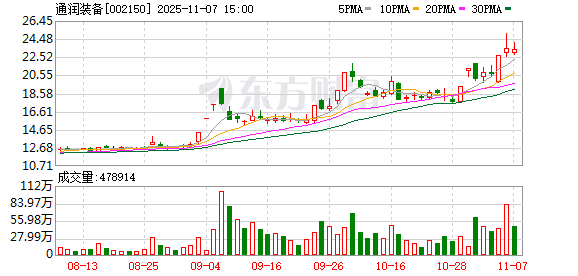
通润装备:公司双管齐下强化供应链韧性
Zheng Quan Ri Bao· 2025-11-07 09:12
Core Viewpoint - The company is enhancing supply chain resilience through a dual approach: implementing a digital inventory management system and diversifying suppliers to mitigate risks and ensure stable supply [2]. Group 1 - The company is building a digital inventory management system to track inventory dynamics in real-time, aiming to avoid stockouts [2]. - The company is promoting a diversified supplier layout to spread risks and ensure stable supply [2].


中源家居(603709.SH)拟投资1600万美元建设越南自建生产基地项目
智通财经网· 2025-11-07 08:39
本次投资建设越南自建生产基地项目事项,有助于增强公司供应链的韧性和安全水平,支撑公司业务的 拓展,有利于提升公司市场竞争力,推动公司的持续发展。 智通财经APP讯,中源家居(603709.SH)发布公告,为应对外部环境不确定性,增强公司供应链的韧性 和安全水平,满足公司业务拓展需求,公司拟出资1600万美元投资建设越南自建生产基地项目。上述投 资总额将用于公司越南自建生产基地项目产能建设、业务发展所必须的生产经营活动,包括但不限于购 置土地、建造厂房及附属设施、购置机器设备等。 ...
如何提升供应链韧性?这些企业给出实践方案
Zhong Guo Xin Wen Wang· 2025-11-07 02:05
中新网上海11月7日电 (记者李雨昕尹倩芸)在世界充满不确定性的当下,如何确保产业链供应链在风浪 中不断裂,是中外企业的"必答题"。 他解释道,沙特位于整个欧亚大陆的中心点,连接着从红海苏伊士运河到波斯湾两个关键的通道。这种 布局,对于提高供应链整个韧性与安全是至关重要的。 如果说"前移"是战略布局,那么实现供应链韧性的具体战术就是本土化。 正泰集团分享了本地化研发的实践。在中东极端高温、多沙尘环境下,电力设备的稳定性要求更高。为 此,企业在当地组建研发团队,针对实际需求,定制开发出适应性更强的一体式断路器产品。产品通过 认证后,甚至提升了当地对于断路器产品的国家标准。 正泰集团市场部战略规划总监吴忠璨介绍,如今,企业和当地数十家零部件企业共同打造了生态圈,基 地员工本土化率超过60%,真正实现了扎根本土。 "韧性"不仅是布局,更是技术和思维的升级。 当下,"韧性"这两个字,已成为供应链管理的重要考量。它不仅意味着抗风险能力,也关乎落地效率和 资源匹配。相比以往的成本导向,如今企业更关注供应链是否足够灵活,能否适应本地市场,能否应对 突发挑战。 在第八届虹桥国际经济论坛"企业开放合作提升全球产业链供应链韧性" ...
老铺黄金(06181):2026年度投资峰会速递:全渠道成长动能强劲,龙头强者愈强
HTSC· 2025-11-06 07:38
Investment Rating - The report maintains an investment rating of "Buy" for the company with a target price of HKD 1,200 [6]. Core Insights - The company has shown strong business performance since 2025, with effective price adjustments ensuring high gross margins despite new tax policies. The growth in membership and repurchase rates, along with positive market feedback on new products, indicates a robust future outlook [1][2]. - The company is leveraging a dual strategy of "cultural empowerment + craftsmanship innovation" to drive product innovation, maintaining a steady pace of new product launches that resonate well in the market [2]. - The company has expanded its offline high-end channel presence and initiated overseas expansion, with significant online sales growth. The opening of new stores in major domestic commercial centers and international locations marks a strategic move towards global presence [3]. - Recent tax policy changes are expected to increase procurement costs across the industry, but the company is well-positioned to leverage its pricing power and cost control capabilities to enhance its competitive advantage [3]. - The company completed a placement of new H shares, raising approximately HKD 27.07 billion to strengthen its supply chain resilience and meet seasonal demand, with a significant portion allocated for inventory reserves [4]. - Profit forecasts for 2025-2027 project net profits of RMB 49.1 billion, RMB 62.1 billion, and RMB 75.8 billion respectively, reflecting strong growth potential [5]. Summary by Sections Products - The company is innovating through the integration of intangible cultural heritage techniques with modern design, leading to successful product launches such as the "Seven Sons Gourd" and "Cross Pendant" series, which have received positive market responses [2]. Channels - The company has opened 10 new stores since 2025, including a flagship store in Shanghai and its first overseas store in Singapore, indicating a comprehensive domestic and international expansion strategy. Online sales have surged, with a reported 874% year-on-year growth in sales from July to September 2025 [3]. Future Outlook - The recent share placement enhances liquidity for inventory management during peak seasons, with a focus on maintaining a diversified procurement strategy to mitigate risks associated with fluctuating gold prices [4]. Financial Projections - The company anticipates significant revenue growth, with projected revenues of RMB 26.623 billion in 2025, reflecting a 213% increase from the previous year. The net profit margin is expected to remain strong, with a projected net profit of RMB 4.914 billion for 2025 [10][17].
第八届进博会丨越长越“高”!进博会八岁了
Xin Hua Wang· 2025-11-06 04:06
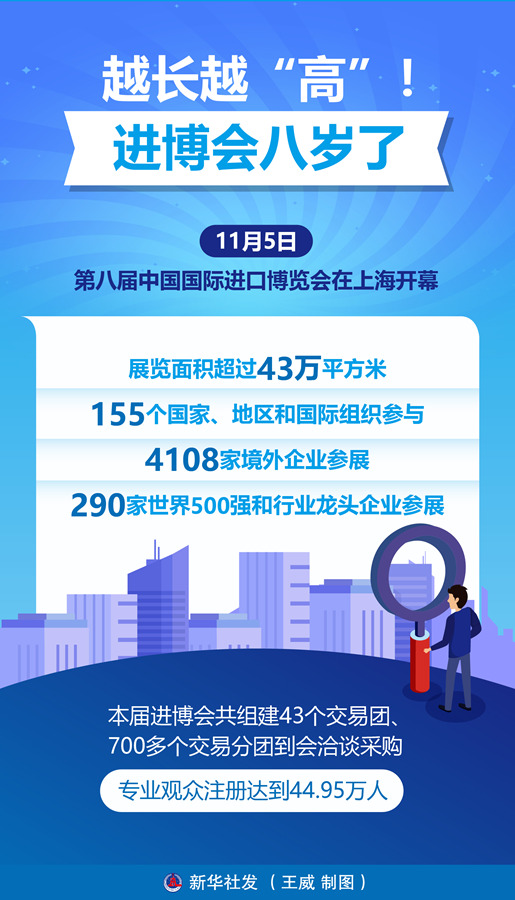
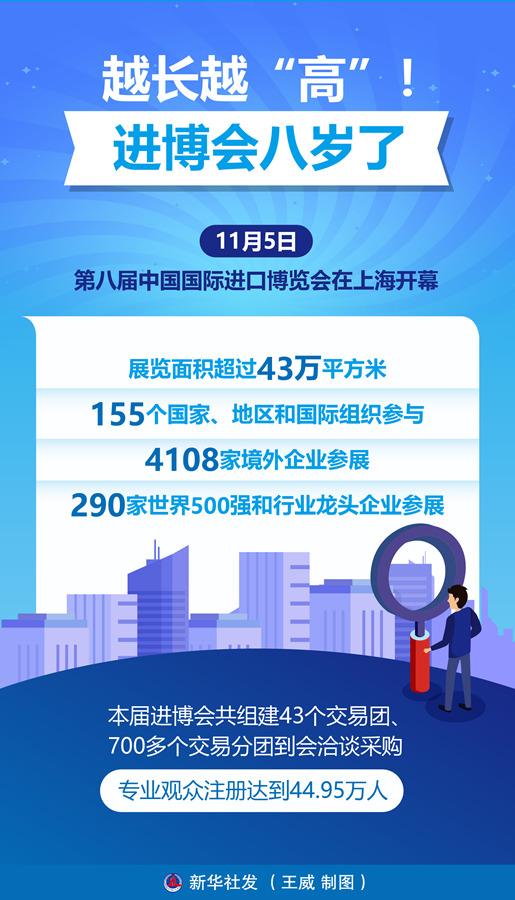
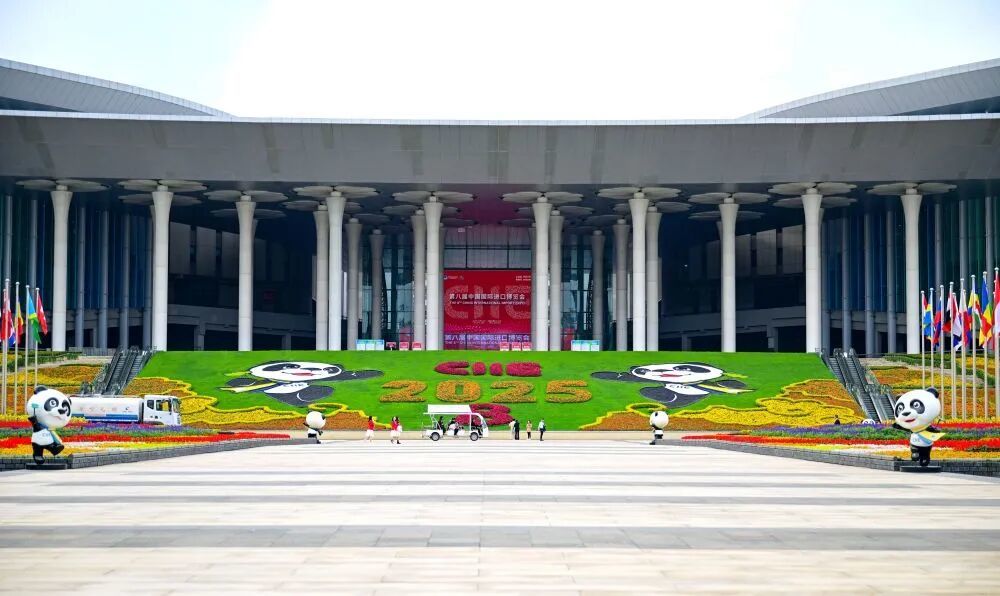
这是11月4日拍摄的第八届进博会举办场地——国家会展中心(上海)的南广场。新华社记者蔡湘鑫 摄 新华社记者叶昊鸣、杨有宗 在这里,中国经济与世界经济交融,汇聚成推动世界发展的源源动力。 11月5日,第八届中国国际进口博览会在上海开幕,"四叶草"喜迎八方来客。 展览面积超过43万平方米,155个国家、地区和国际组织参与,4108家境外企业参展,290家世界500强和行业龙头企业参展……在八方来客眼中, 进博会越长越"高"、越来越"壮"。 广阔的、迅速发展的市场,让人们看到一个活力满满、动力十足的中国。 连续4年参展,进博会已经成为美国企业欧加隆每年的"打卡项目"。本届进博会,欧加隆带来了在心血管领域的整体解决方案。 "对高品质生活的追求,让人们更加关注自身身体健康。我们积极支持健康中国,期待与更多合作伙伴一同推动血脂管理的科学化、规范化,共同 跃升健康繁荣未来。"欧加隆中国总裁吴泽发说。 聚焦供应链韧性、数字化转型等相关主题,联邦快递在本届进博会上全面呈现在中国市场的最新战略布局和创新成果。 新华社上海11月5日电 题:越长越"高"!进博会八岁了 11月5日,第八届中国国际进口博览会暨虹桥国际经济论坛开幕式在上 ...
越长越“高”!进博会八岁了
Xin Hua Wang· 2025-11-06 00:36
Group 1 - The eighth China International Import Expo (CIIE) opened on November 5, showcasing China's integration with the global economy and its role as a driving force for world development [2] - The exhibition area exceeded 430,000 square meters, with participation from 155 countries, regions, and international organizations, including 4,108 foreign enterprises and 290 Fortune 500 companies [4] - The event has become a significant platform for international trade and cooperation, with FedEx and other companies presenting their latest strategies and innovations aimed at enhancing supply chain resilience and digital transformation [4][5] Group 2 - The CIIE has attracted 43 trade delegations and over 700 sub-delegations, with professional audience registrations reaching 449,500 [5] - Over the past seven editions, the expo has attracted 23,000 foreign exhibitors and generated an intended transaction volume exceeding $500 billion [7] - This year's expo features 461 new products, technologies, and services across various cutting-edge fields, including low-altitude economy, humanoid robots, and green technology [9] Group 3 - Major global companies, including Merck, are showcasing significant medical products and innovations, with Merck planning to introduce over 40 new products and indications in China over the next five years [9][11] - The expo highlights China's commitment to open cooperation, with participation from 163 companies from the least developed countries, marking a 23.5% increase [12] - The event serves as a platform for countries to align their development needs with global opportunities, exemplified by the success stories of exhibitors from Bangladesh and other nations [11][12]
进博会,越长越“高”、越来越“壮”
Xin Hua She· 2025-11-05 14:17
Group 1 - The China International Import Expo (CIIE) has become a significant platform for international trade and cooperation, showcasing China's growing market potential and attracting global enterprises [1][4][11] - This year's expo features over 43,000 square meters of exhibition space, with participation from 155 countries and regions, including 4108 overseas companies and 290 Fortune 500 firms [3][4] - The event has facilitated substantial business interactions, with 43 trade delegations and over 700 sub-delegations attending for procurement discussions, and professional audience registration reaching 449,500 [4][6] Group 2 - The expo highlights the resilience of supply chains and digital transformation, with companies like FedEx presenting their latest strategies and innovations for the Chinese market [3][6] - Numerous new products and technologies are being launched, including 461 new offerings across various sectors such as low-altitude economy, humanoid robots, and green technology [8][10] - Companies like Merck are showcasing their approved drugs and vaccines in China, with plans to introduce over 40 new products in the next five years, emphasizing the importance of the expo for global health advancements [8][10] Group 3 - The CIIE serves as a bridge connecting China's development needs with global aspirations, enabling businesses from developing countries to access the Chinese market and expand internationally [11] - The event has seen a 23.5% increase in participation from enterprises in the least developed countries, reflecting its role in promoting inclusive global trade [11] - Initiatives like the "Shared Big Market" series aim to enhance import scales and facilitate exports, further integrating China into the global economy [11]
以韧性链、绿色底、智能芯、协同力开新局——2025中国国际石油化工大会勾勒行业“新增长”路径
Zhong Guo Hua Gong Bao· 2025-11-05 02:16
Core Viewpoint - The petrochemical industry in China is at a critical juncture during the "14th Five-Year Plan" period, requiring a focus on resilience, green low-carbon development, digital empowerment, and open cooperation to transform external pressures into internal growth [1] Group 1: Supply Chain Resilience - The petrochemical industry faces challenges in supply chain security due to high dependence on imported crude oil and key chemical raw materials amid geopolitical conflicts and tariff barriers [2] - Experts emphasize the need to create a resilient supply chain by diversifying sources of crude oil and chemical raw materials, and focusing on high-end materials and critical components [2][3] - Enhancing the supply capacity of new chemical materials, particularly high-end materials, is crucial for ensuring industry safety and resilience [2] Group 2: Green Development - A transition to a clean, low-carbon, and efficient energy system is essential for the petrochemical industry, which faces significant emission reduction pressures from domestic policies [3] - The industry is encouraged to shift from end-of-pipe treatment to source re-engineering, promoting green, circular, and low-carbon development [3] - Companies are developing green low-carbon plans, focusing on energy efficiency and integrating refining with renewable energy [3] Group 3: Digital Empowerment - Digital transformation is identified as a key driver for new growth, with a focus on enhancing overall productivity through intelligent optimization [4] - The application of artificial intelligence in the petrochemical sector is expected to improve efficiency, reduce costs, and ensure safety [4][5] - Companies are implementing digital strategies, including the establishment of large-scale AI models to enhance operational efficiency [5] Group 4: Open Cooperation - The development of China's petrochemical industry relies on global cooperation, which is essential for mutual benefits and high-quality development [6] - The restructuring of global petrochemical supply chains presents opportunities for China to fill gaps in high-value product areas [6] - Enhancing global resource allocation capabilities and aligning with international standards in technology and digital operations is vital for sustainable competitiveness [6]