兴趣消费

Search documents
进博会上观消费:更健康 更有趣 更智能
Zhong Guo Zheng Quan Bao· 2025-11-06 20:15
Group 1: Market Trends - The China International Import Expo showcases a variety of intelligent products and trendy items, reflecting new consumer themes, scenarios, and trends in the market [1] - Exhibitors express confidence in the Chinese market due to a transparent and stable policy environment, as well as a fair and inclusive market atmosphere [1][2] - The demand for health-related products is on the rise, with companies like lululemon noting that the Chinese market has become one of their fastest-growing regions [2] Group 2: Consumer Behavior - There is a noticeable increase in consumer awareness regarding health products, with a growing demand for high-quality, environmentally friendly, and natural health products [2] - Interest consumption is expanding, as seen with brands like PEZ and Pop Mart, which leverage emotional connections through popular IPs to attract consumers [3] Group 3: Technological Advancements - The trend of intelligent upgrades is evident, with companies like Samsung integrating AI into their products to enhance consumer experiences [4] - SYR Hansgrohe showcases AI applications in their products, such as a dual-tank soft water system that learns user habits and predicts water usage trends [4]

聚焦进博|提振中国消费,政商学界虹桥发声
Guo Ji Jin Rong Bao· 2025-11-06 14:16
Core Insights - The forum emphasized the importance of boosting consumption in China as a key driver for global economic growth, focusing on policy barriers and open sharing as dual engines for this initiative [1][12] - The goal during the "14th Five-Year Plan" period is to significantly increase the consumption rate, which was approximately 55% in 2020, compared to around 80% in developed countries [1][3] Policy Recommendations - A combination of policies is needed to address short-term consumption issues and restore consumer confidence, income, and assets [3] - Structural reforms in income distribution and a robust social safety net are crucial for enhancing consumption [3] - Rapid implementation of counter-cyclical policies alongside structural reforms is necessary to stimulate consumption [3] Economic Outlook - Experts predict that in five years, China's economy will achieve higher income levels and a more balanced demand structure, optimizing the balance between government investment, household consumption, and private sector investment [3][4] - The transition from an investment-driven economy to one led by domestic services and consumer spending is essential for sustainable growth [4] Consumer Trends - There is a notable shift in consumer preferences towards AI and environmentally friendly products, with domestic brands gaining popularity due to their cost-effectiveness and cultural relevance [9][11] - The luxury goods market is witnessing a change in consumer attitudes, focusing more on self-expression and sustainability, with a younger demographic driving this trend [11] Industry Insights - The AIPC (AI Personal Computing) market is projected to grow significantly, from $610 billion in 2025 to $9,920 billion by 2035, with a compound annual growth rate of 32.16% [8] - The automotive market is experiencing a shift towards electric vehicles, with expectations that by 2030, over 60% of sales will be from new energy vehicles [11] Conclusion - The forum concluded that breaking down policy barriers, building a unified national market, and activating new consumption scenarios are vital for stimulating both the Chinese and global markets [12]


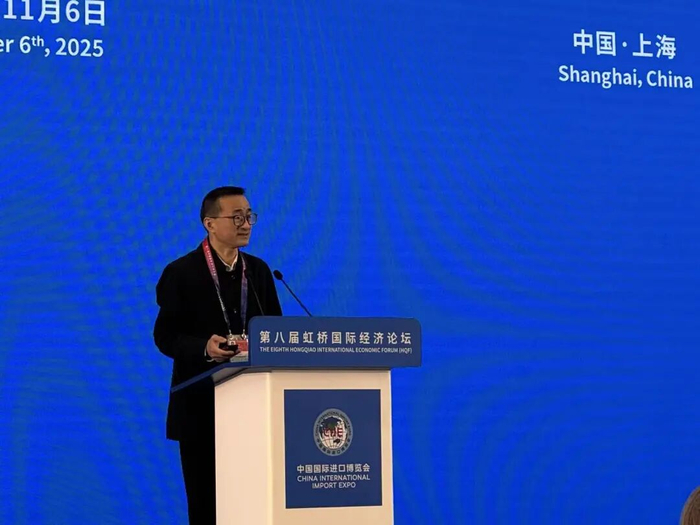
提振消费的“虹桥声音”:让中国消费成为全球增长的稳定器和加速器
Di Yi Cai Jing· 2025-11-06 13:35
Group 1: Policy and Economic Goals - The forum focused on the dual drivers of "policy breakthroughs" and "open sharing" to boost consumption in China, aiming to transform the country's market potential into global economic growth [1] - The "14th Five-Year Plan" emphasizes significantly increasing the consumption rate and enhancing the role of domestic demand in economic growth [1] - Specific measures proposed include implementing special actions to boost consumption, expanding the supply of quality consumer goods and services, and strengthening consumer rights protection [1] Group 2: Consumption Rate and Structural Changes - Liu Yuanchun highlighted the need for a combination of short-term and medium-term policies to address the low consumption rate, which was approximately 55% in 2020 compared to around 80% in developed countries [2] - The key to improving the consumption rate lies in transforming government functions and enhancing the investment-sharing system of state-owned enterprises [2][3] - Liu proposed seven specific recommendations, including addressing short-term consumption issues, focusing on income and asset confidence, and promoting durable goods consumption [3] Group 3: Future Economic Outlook - Michael Spence projected that by 2028, China's economy will exhibit higher income levels and a more balanced demand structure, with a shift from investment-driven growth to consumption-led growth [4] - The transition requires designing demand-side policies that facilitate this shift, alongside a clear definition of roles among public, private, and state-owned sectors [4] Group 4: Service Sector Opportunities - Lu Ming pointed out that while the service sector currently faces a supply-demand imbalance, it presents a significant structural opportunity for economic development [5] - The focus should be on making consumption a new growth driver and enhancing service consumption within urban areas [5][6] Group 5: Global Consumption Trends - Ye Guofu emphasized the rise of interest-based consumption and the global expansion of Chinese IP, indicating a significant moment for "Chinese creation" and "Chinese brands" [7] - The collaboration with over 180 global IPs positions companies like Miniso to lead in the global IP operation space [7] Group 6: AI and Technology Impact - Sara Camp from Intel noted that AI PCs will become a new growth point for consumption, creating a strong demand for device upgrades and new applications [8] - The global AI PC market is projected to grow from $610 billion in 2025 to $992 billion by 2035, with a compound annual growth rate of 32.16% [8] Group 7: Consumption as Economic Engine - Consumption is identified as the main engine of China's economic growth, contributing approximately 60% to economic growth during the "14th Five-Year" period [9] - The social retail total is expected to exceed 50 trillion yuan by 2025, highlighting the importance of breaking down barriers to consumption [9]
名创优品MINISO FRIENDS华南首店在深圳开业
Zhong Zheng Wang· 2025-10-28 01:29
Core Viewpoint - MINISO FRIENDS has opened its first store in South China, located in Shenzhen, aiming to create a new landmark for youth culture and lifestyle while showcasing the effects of "first store economy" [1] Group 1: Store Opening and Concept - The new store is positioned as a "mini IP paradise," integrating retail, experience, and social interaction into an immersive space [1] - The store features a unique commercial model focused on "small but exquisite," with thoughtful scene designs that create a strong IP atmosphere [1] Group 2: Product Offering - The store integrates popular global IPs such as Stitch, Disney, Zootopia, Harry Potter, and Sanrio, with a total of 70 IP series and over 4,000 individual products [1] - IP products account for over 80% of the store's offerings, highlighting the company's focus on IP-driven merchandise [1] Group 3: Future Strategy - The company plans to continue leveraging its "interest consumption" strategy to expand MINISO FRIENDS and other innovative store formats in key cities across the country [1] - This expansion aims to inject vitality into urban commercial innovation and solidify the company's position as a leading global IP operation platform [1]
“什么值得买”深化兴趣矩阵布局,以体系化升级构建兴趣消费新生态
Sou Hu Cai Jing· 2025-10-27 16:30
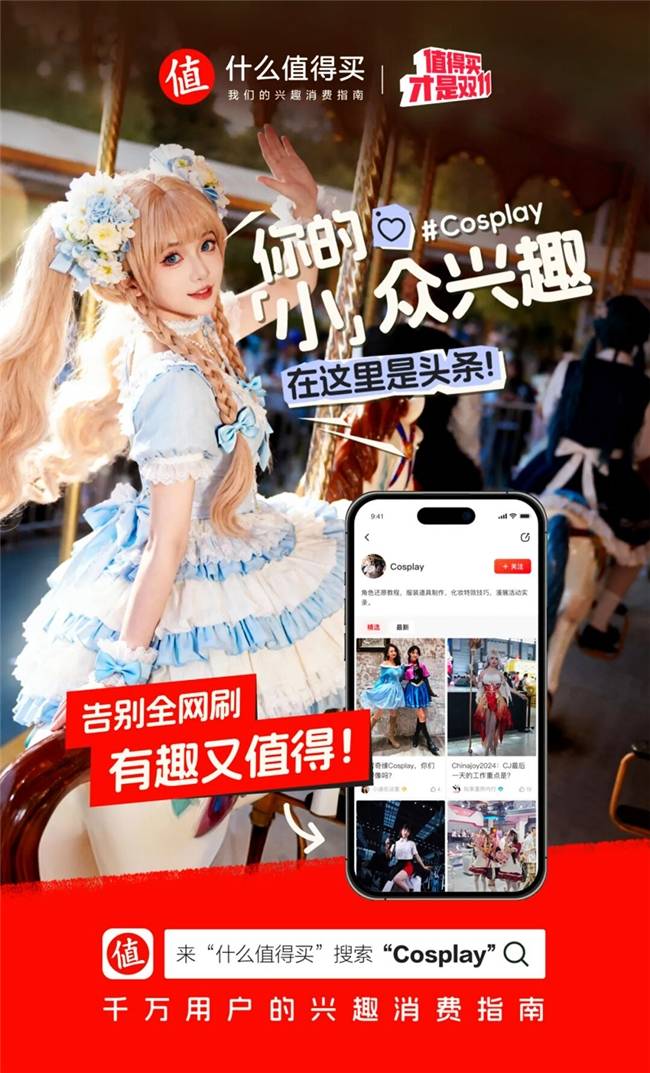
Core Insights - "What Worth Buying" has launched a series of themed posters in 10 high-speed train stations across 8 cities, emphasizing the platform's commitment to respecting diverse interests [1][3] - The platform has upgraded its "Interest Square" product, leveraging AI technology and promotional content to enhance its niche interest service system [1][6] Group 1: Product and Service Enhancements - Following the upgrade to its second-generation product in May, "What Worth Buying" has achieved comprehensive coverage of mainstream consumer interests and is now focusing on integrating niche interests into its interest matrix [3][12] - The new version of "Interest Square" has shifted from a tree structure to a flat structure that aligns better with interest exploration patterns, featuring 15 primary interest categories and numerous subcategories [6][12] Group 2: User Engagement and Experience - The platform aims to facilitate a seamless connection between "interest content" and "consumer decisions," allowing users to discover and make decisions based on their interests [3][6] - Users can create personalized interest spaces through the "self-built interest scene" feature, where AI will automatically integrate relevant content and product resources [12][13] Group 3: Marketing and Promotion Strategies - During the upcoming "Double 11" shopping festival, "What Worth Buying" will focus on "interest leadership" as a core operational strategy, enhancing user experience through AI-driven recommendations and upgraded user benefits [6][13] - The platform has planned thematic activities such as "Remarkable Domestic Products" and "Ten Thousand Possibilities of Home" to provide more exposure for niche interests during the promotional period [13]

MINISO FRIENDS华南首店亮相深圳,开启“迷你IP乐园”潮流新纪元
Jing Ji Wang· 2025-10-27 08:37
Core Insights - MINISO FRIENDS, the first store in South China, opened in Shenzhen, aiming to create a new landmark for youth culture through an immersive IP experience [1][2] - The store integrates retail, experience, and social interaction, marking a significant step in MINISO's development of its IP platform [1][4] Group 1: Store Concept and Design - The MINISO FRIENDS store focuses on a "mini IP paradise" concept, emphasizing a "small but exquisite" business model with thoughtful scene design to create a strong IP atmosphere [4][6] - The store features over 70 popular global IPs, including Disney and Harry Potter, with more than 4,000 SKUs, where IP products account for over 80% of the offerings [6] Group 2: Consumer Engagement and Experience - The store's design encourages an immersive experience, allowing consumers to explore in a "mini paradise," which was evident on opening day with long lines at the cash register [6][9] - The unique "Right Right Sauce" theme enhances consumer engagement, creating a warm and emotional connection through interactive installations and limited edition gifts [7] Group 3: Strategic Positioning and Future Plans - MINISO FRIENDS aims to penetrate high-quality commercial projects, acting as a lightweight pioneer in urban trend centers [9] - The company plans to continue expanding innovative store formats like MINISO FRIENDS in major cities, reinforcing its position as a leading global IP operation platform [9]
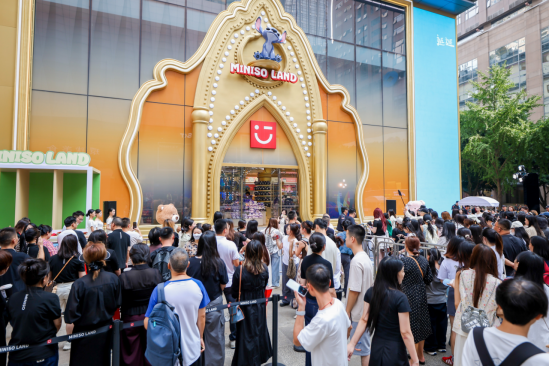
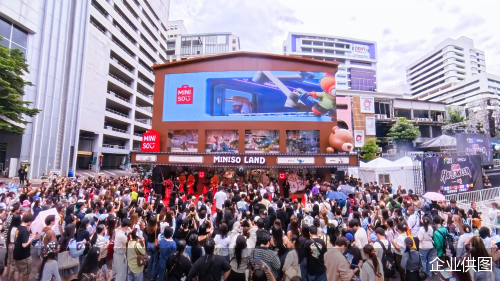
名创优品泰国首家MINISO LAND于曼谷开业,全球品牌升级再添新样本
Bei Jing Shang Bao· 2025-10-27 06:39
Core Insights - MINISO LAND, the first of its kind in Thailand, officially opened in Bangkok's Siam Square, marking a significant step in MINISO's brand upgrade and global strategy in Southeast Asia [1][3][9] Group 1: Store Concept and Design - The store features a unique design with vibrant colors and cutting-edge 3D visual displays, quickly becoming a trendy landmark for both local youth and international tourists [3][5] - It integrates over 80 global popular IPs and offers more than 8,000 SKUs across various categories, including plush toys and cultural products, catering to the emotional needs of Generation Z consumers [3][9] Group 2: Market Positioning and Strategy - Siam Square is recognized as a commercial hub and a benchmark for high-quality consumer experiences, making it an ideal location for MINISO LAND to attract quality foot traffic [5][6] - The store's layout encourages immersive exploration, transforming the retail space into a content experience platform, which is a new model for the Thai retail industry [6][9] Group 3: Brand Expansion and Performance - Since its international expansion in late 2015, MINISO has viewed Southeast Asia as a key market, with Thailand being a strategic focus due to its young population and high consumption potential [8][11] - The successful opening of MINISO LAND is expected to serve as a new model for further overseas market expansion, with plans to open in major Southeast Asian cities like Jakarta and Kuala Lumpur [11][12] Group 4: Cultural Integration and Partnerships - MINISO has partnered with the Thai National Tourism Bureau to launch a series of cultural tourism activities, leveraging its original IP "DUN Chicken" to promote Thai culture and tourism [12][14] - The brand's recognition as a "cultural ambassador" by the Thai government highlights its role in cultural exchange and elevates its commercial IP to a strategic cultural level [14]
名创优品MINISO FRIENDS华南首店深圳开业
Zheng Quan Ri Bao Zhi Sheng· 2025-10-26 10:38
Core Insights - MINISOFRIENDS, a new store concept by MINISO, has opened its first location in Shenzhen, aiming to create a "mini IP paradise" that combines immersive IP experiences with commercial space [1][2] - The store features over 70 global popular IPs and more than 4,000 SKUs, with IP products accounting for over 80% of the offerings, showcasing a unique retail experience [2] Group 1 - The opening of MINISOFRIENDS in Shenzhen is positioned as a new landmark for youth culture and lifestyle, reflecting the "first store economy" [1] - The store's design emphasizes a "small yet exquisite" commercial model, creating a strong IP atmosphere within a limited space [1][2] - MINISOFRIENDS aims to integrate deeply with local trends and culture, enhancing urban commercial vitality and consumer engagement [1] Group 2 - The successful launch of the Shenzhen store indicates a replicable business model for MINISOLAND and MINISOFRIENDS, targeting high-quality commercial projects [2] - The company plans to expand the MINISOFRIENDS concept across major cities in China, driven by an "interest consumption" strategy [2] - MINISO is positioning itself as a leading global IP operation platform, leveraging innovative store formats to inject lasting momentum into urban commercial innovation [2]
深度访谈500个男性消费者后,我们发现了这6个男性消费赚钱的秘密........
新消费智库· 2025-10-22 13:03
Core Viewpoint - The article challenges the perception that male consumption power is inferior, particularly among middle-aged men, highlighting that their spending in niche and interest-based categories can be substantial [2][5][25]. Group 1: Male Consumption Insights - Middle-aged men's consumption is often centered around hobbies and interests, which are overlooked by many, indicating a significant market opportunity [18]. - The consumption behavior of middle-aged men can be divided into self-pleasure and social-driven categories, with the former focusing on personal enjoyment and the latter on social status [19][20]. - There is a notable trend where middle-aged men are increasingly investing in items that can appreciate in value, reflecting a desire for financial gain alongside personal enjoyment [21]. Group 2: Market Dynamics - The article suggests that while female consumption often seeks emotional value, male consumption tends to emphasize the demonstration of value and social identity [22][23]. - There is a growing market for male consumption, particularly in overseas markets, leveraging China's manufacturing advantages to tap into this demographic [24]. - Middle-aged men possess both financial resources and leisure time, positioning them as significant players in the consumption market, especially in niche categories like fishing [25]. Group 3: Opportunities for Entrepreneurs - The article identifies video platforms as a promising avenue for male consumption businesses, suggesting that innovative expressions of male interests can lead to substantial market gains [27]. - Combining male consumption trends with international market opportunities presents a unique entrepreneurial landscape, particularly for those targeting affluent middle-aged men [28].

名创优品MINISO LAND重庆双首店盛大启幕,打造山城潮流引力场
Zhong Guo Zhi Liang Xin Wen Wang· 2025-10-21 14:05
Core Viewpoint - MINISO LAND has launched its first strategic stores in Chongqing, creating a buzz in the local consumer market and contributing to the city's economic development [1][3]. Group 1: Store Features and Design - The MINISO LAND stores in Chongqing feature an "immersive IP scene + large space" design, resonating with the city's unique culture and trends, and serving as a new landmark for shopping, socializing, and check-ins [3][5]. - The store in the Jiefangbei area spans over 1,600 square meters, while the store in the Guanyinqiao area covers over 1,400 square meters, both offering innovative layouts that enhance the shopping experience [5][6]. Group 2: Target Audience and Market Impact - The dual-store strategy targets both local young consumers and tourists, effectively covering the cultural and travel demographics in Chongqing [3][5]. - The stores have attracted significant foot traffic during their trial operations, indicating strong sales performance and a revitalization of consumer activity in the region [5][6]. Group 3: IP Strategy and Product Offering - MINISO LAND incorporates over 80% of global popular IP products, with more than 6,100 SKUs available, enhancing brand recognition and emotional connection with consumers [6][8]. - The company employs a dual strategy of "licensed IP + proprietary IP," continuously introducing international IP while developing original artist IPs, showcasing strong operational and commercial conversion capabilities [8][10]. Group 4: Future Expansion Plans - MINISO plans to continue expanding in high-potential cities, creating more "interest consumption" landmarks that combine IP appeal with local characteristics, thereby injecting new vitality into urban commercial upgrades [10].