技术突破

Search documents
人形机器人量产需打通三大堵点
Zheng Quan Ri Bao· 2025-08-13 16:23
Core Insights - The 2025 World Robot Conference showcased over 1,500 exhibits from more than 200 companies, marking a historic high in humanoid robot participation, indicating a nearing industrialization milestone [1] - The transition of humanoid robots from exhibition to real-life applications faces three major bottlenecks: technological breakthroughs, supply chain collaboration, and innovative business models [1][3] Technological Breakthroughs - Humanoid robots need to evolve from clumsy "mechanical imitation" to smooth "human-like evolution," requiring advancements in lightweight materials, bionic muscles, and spherical joints [1] - Companies like UBTECH and Songyan Power have made significant progress, with UBTECH's Walker series reducing robot weight from 77 kg in 2019 to 52 kg in 2025, enhancing flexibility [1][2] Supply Chain Collaboration - The industry must shift from "single-point breakthroughs" to "collaborative breakthroughs," as humanoid robots are complex technologies that require a cooperative ecosystem [2] - Vertical collaboration between manufacturers and core component suppliers is essential for accelerating technology iteration and cost optimization, while horizontal collaboration across various sectors is necessary to define needs and establish unified standards [2] Business Model Innovation - The current high costs are the biggest barrier to mass production of humanoid robots, necessitating a shift from "capital accumulation" to "cost control" [2] - A dual approach of scaling cost reduction and continuous technology iteration is recommended, similar to the path taken by the electric vehicle industry, focusing on design optimization and supply chain management [2] - Exploring flexible models such as leasing and service sharing can lower initial user costs and accelerate market validation [2][3]

格力电器董事长董明珠:家电行业很卷,因为大家不再追求技术上的突破!简单的就偷工减料,用价格来忽悠你
Sou Hu Cai Jing· 2025-08-05 04:05
Core Viewpoint - Gree Electric Appliances' chairman, Dong Mingzhu, emphasizes the intense competition in the home appliance industry, highlighting a trend where companies compromise on quality and rely on pricing strategies instead of technological advancements [1][3] Group 1: Company Insights - Gree Electric Appliances opened the "Dong Mingzhu Healthy Home Package" store on August 5 [1] - Dong Mingzhu believes that maintaining product quality will ultimately attract consumers, despite the industry's current focus on cost-cutting [3] - She pointed out that many air conditioners fail within a month, leading to high repair costs for consumers [3] Group 2: Industry Trends - The home appliance industry is described as "very competitive," with companies increasingly cutting corners on quality [1] - There is a growing concern about the reliability of appliances, as evidenced by the frequent breakdowns and associated repair costs [3]



董明珠:家电行业很卷,因为大家不再追求技术上的突破
Xin Lang Ke Ji· 2025-08-05 03:37
Core Viewpoint - Gree Electric Appliances' Chairman Dong Mingzhu emphasizes the intense competition in the home appliance industry, highlighting a trend where companies compromise on quality and rely on pricing strategies instead of technological advancements [1] Group 1: Company Insights - Gree Electric Appliances opened the "Dong Mingzhu Healthy Home Package" store on August 5 [1] - Dong Mingzhu asserts that maintaining product quality will ultimately attract consumers, despite the industry's current focus on cost-cutting [1] Group 2: Industry Trends - The home appliance industry is described as "very competitive," with companies increasingly opting for shortcuts in production rather than pursuing technological breakthroughs [1] - There is a concern that the industry is misleading consumers by prioritizing price over quality [1]
北交所7月份定期报告:上半年供给提质,北交所静待新催化
Dongguan Securities· 2025-07-31 11:07
Market Performance - As of July 30, 2025, the North Exchange 50 Index fell by 0.52% in July, underperforming compared to the Shanghai and Shenzhen main boards[6] - Year-to-date, the North Exchange 50 Index has increased by 38.72%, with a maximum increase of 44.57% during the period[7] Stock Activity - In July, 109 stocks rose while 159 stocks fell, with 1 stock remaining unchanged[17] - The average PE (TTM) for the North Exchange 50 Index is 67.79 times, significantly higher than the ChiNext Index at 33.79 times and the Sci-Tech Innovation Board at 139.68 times[24] Trading Volume - The total trading volume for July reached 559.192 billion yuan, with a volume of 25.587 billion shares traded[28] - The average margin financing balance for July was 5.504 billion yuan, reflecting a month-on-month increase of 2.07%[30] IPO and Market Dynamics - In July, 1 new stock was listed, bringing the total number of companies listed on the North Exchange to 269[36] - The trend of high-quality supply continues, with a high number of IPO applications indicating ongoing market interest[6] Investment Recommendations - Focus on three main lines: high-growth productivity sectors, innovation-driven industries like semiconductors and AI, and consumer-related companies benefiting from domestic demand policies[6]
乔锋智能(301603):国内数控机床小巨人 穿越周期实现高成长
Xin Lang Cai Jing· 2025-07-31 02:41
Group 1 - The company focuses on the mid-to-high-end CNC machine tool sector, with main products including vertical machining centers, gantry machining centers, and horizontal machining centers, applied in various industries such as general equipment, consumer electronics, automotive parts, molds, aerospace, and communications [1] - The CNC machine tool market in China is vast, with a market size in the hundreds of billions, low concentration, and high-end machine tools being dominated by foreign companies, indicating long-term potential for domestic substitution [1] - The company is expanding into high-growth downstream sectors, with continuous breakthroughs in key technologies for high-end machine tools, leading to rapid growth in contract liabilities and promising sustained performance growth [1] Group 2 - The CNC machine tool market has significant growth potential through import substitution and overseas expansion, with China's machine tool export surplus increasing since 2022, making it the fourth largest surplus country after Germany, Japan, and Italy [2] - Core technology breakthroughs are enabling the company to gradually penetrate the mid-to-high-end machine tool market, where competition is primarily driven by technology for high-end products, stability for mid-range products, and price for low-end products [2] - The company has seen rapid growth in contract liabilities due to its alignment with market demand, active expansion into general automation and consumer electronics markets, and the realization of self-production of key components, enhancing product competitiveness and gross margins [2] Group 3 - The company forecasts net profits attributable to shareholders of 270 million, 330 million, and 400 million yuan for 2025-2027, representing year-on-year growth of 32%, 22%, and 23% respectively, with corresponding PE ratios of 26, 21, and 17 times [2] - Based on comparable companies, a target price of 78.24 yuan is set for 2025, with an initial coverage rating of "buy" [2]
西方专家:中国不可怕,可怕的是3000吨的大国重器,将会改写规则
Sou Hu Cai Jing· 2025-07-27 08:43
Core Viewpoint - A technological breakthrough in hydrogenation reactor manufacturing by China is reshaping the global energy landscape, previously dominated by Western countries [1][5][19]. Group 1: Technological Breakthrough - The 3000-ton hydrogenation reactor developed by China One Heavy Industry marks a significant advancement, as the most advanced similar equipment globally weighed only 2000 tons prior to this [1][5]. - This reactor's primary function is to convert heavy crude oil, which constitutes a large portion of China's annual 500 million tons of crude oil imports, into lighter fuels like gasoline and diesel [3][5]. - The conversion efficiency of traditional refining equipment is often below 50%, while the new reactor can achieve over 85% conversion efficiency, effectively doubling the yield of refined products from low-quality crude oil [5][7]. Group 2: Economic Impact - The successful implementation of this technology allows China to reduce its crude oil imports by 125 million tons annually, saving substantial foreign exchange [7]. - The processing cost per ton of crude oil in domestic refineries has decreased by 120 yuan, equivalent to recreating the production capacity of two Daqing oilfields [7]. - China's share in the global petrochemical equipment market has reached 60%, attracting interest from international giants like BASF and Mitsubishi Heavy Industries for potential collaboration [7][17]. Group 3: Historical Context and Challenges - Before 2018, over 90% of high-end refining equipment was monopolized by four Western countries, leading to significant technological dependency and financial outflow from China [5][19]. - The development of the 3000-ton reactor faced skepticism, as previous attempts by other countries to scale up from 2000 tons had failed [9][15]. - Engineers in China overcame numerous technical challenges, including material selection and structural stability, to successfully manufacture the reactor [11][13]. Group 4: Global Repercussions - The introduction of this technology has prompted oil-exporting countries in the Middle East to adjust their export strategies, focusing on producing high-sulfur oil tailored for the Chinese market [7]. - Following the reactor's success, international interest has surged, with companies like ExxonMobil seeking to rent the technology, which China has declined [15][17]. - This breakthrough signifies a shift in China's manufacturing capabilities from being a follower to a leader in heavy equipment, impacting the global energy supply chain [17][19].


俄军占矿,钛氖双杀卡美欧脖子!
Sou Hu Cai Jing· 2025-07-18 06:05
Group 1 - Russia's military control over key lithium and titanium mines in Ukraine has resulted in a significant shift in the global supply chain, with Russia now controlling 87% of Ukraine's lithium reserves and causing a 14% spike in international lithium prices [1][6] - The takeover of gas plants in Mariupol and Odessa has allowed Russia to dominate 70% of the global neon gas market, leading to a tenfold increase in neon prices from $300 to $3000 per cubic meter, severely impacting semiconductor manufacturing in the US and South Korea [3][8] - The strategic resource control by Russia has disrupted the aerospace and renewable energy sectors in the West, as titanium is essential for components in F-35 fighter jets and offshore wind turbines, highlighting the vulnerability of Western industries to resource monopolization [6][9] Group 2 - The ongoing resource conflict illustrates that modern warfare is increasingly about controlling critical resources and supply chains, with key minerals like titanium and neon being likened to strategic weapons [9] - China's advancements in 9N-grade neon purification technology and its efforts to establish a circular economy in mining and application present an opportunity for the country to enhance its resource security amidst the geopolitical tensions [9]

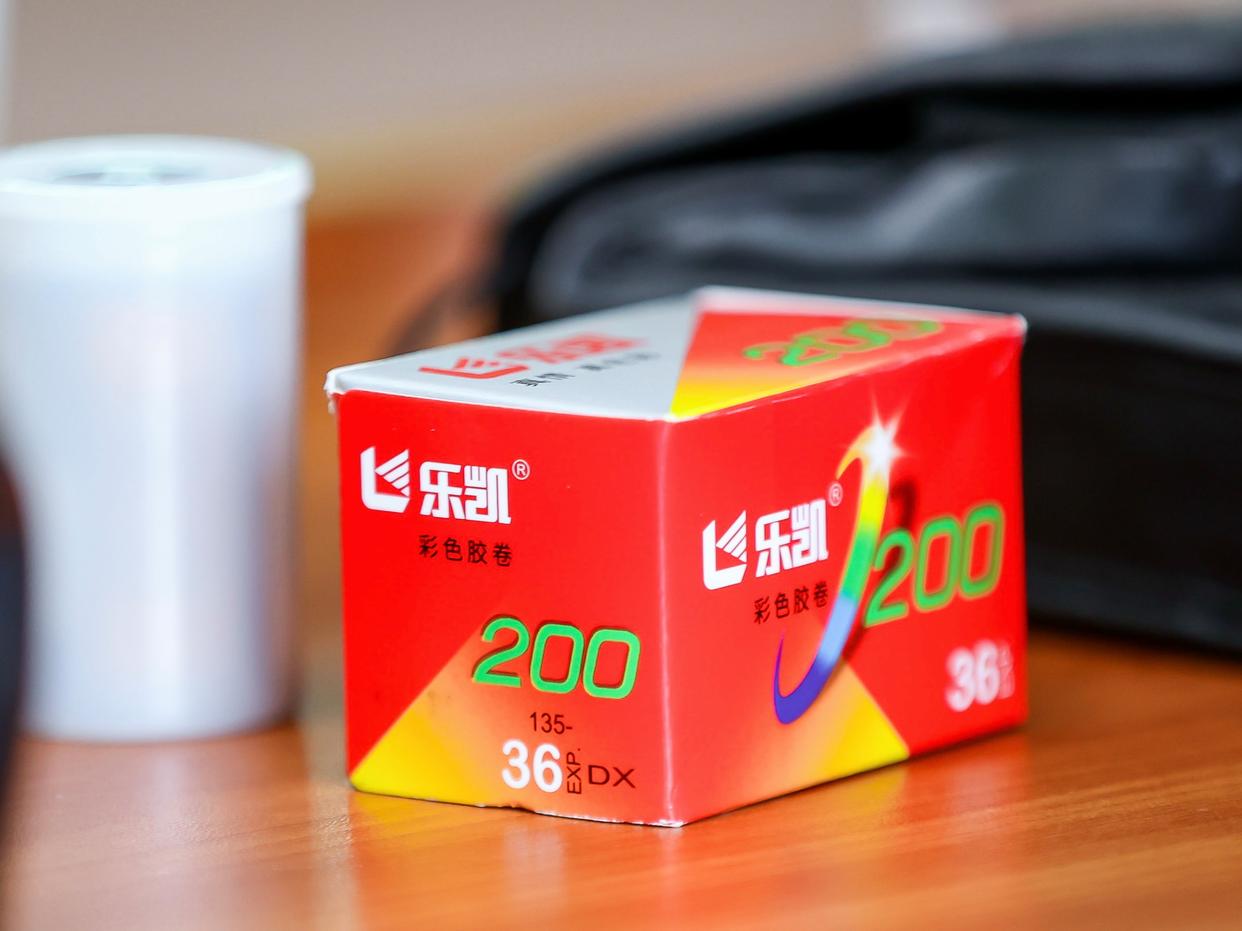
停产13年后,乐凯彩色胶卷重返市场
Xin Hua She· 2025-07-17 10:20
Core Viewpoint - The return of Lucky Color Film, specifically the C200 model, marks a significant revival of a classic product that resonates with the nostalgia of several generations in China, driven by the demand from the "Z generation" for film photography experiences [1][3]. Group 1: Product Launch - Lucky Color Film has officially launched the C200 color film after a 13-year hiatus, with a price of 52 yuan per roll and a promotional offer of two rolls for 99 yuan [1]. - The C200 film features a classic red box and white label design, aimed at being an economical entry-level product for consumers [1]. Group 2: Market Context - The revival of film photography aligns with the current consumer trend towards differentiated expression and the "blind box" creative experience [1]. - Lucky Film was once a pioneer in the domestic color film market, competing with international giants like Kodak and Fuji, but ceased production in 2012 due to market shrinkage and reliance on imported chemicals [3]. Group 3: Technological Advancements - The new C200 film represents a technological breakthrough achieved through 18 months of collaboration with universities, focusing on domestic sourcing of chemical materials and advancements in key technologies such as nano-coating and environmentally friendly development [3]. Group 4: Business Transformation - Lucky Film has transitioned into new material fields, including green printing materials and digital medical materials, indicating a strategic shift in its business model [5]. - The company has also introduced disposable and reusable cameras alongside the film, with plans to expand into mid-to-high-end product lines based on market feedback [5].

疫苗ETF(159643)涨超1.3%,创新药政策升级与技术突破驱动行业扩容
Sou Hu Cai Jing· 2025-07-03 02:14
Group 1 - The biopharmaceutical industry is entering a golden development period driven by policy support and technological breakthroughs, with the market size expected to exceed 1.3 trillion yuan in 2024, growing over 15% year-on-year [1] - The "Support Measures for High-Quality Development of Innovative Drugs" marks the transition to a 2.0 phase, focusing on a comprehensive policy loop from R&D to payment, enhancing the precision of support [1] - The dynamic adjustment of the medical insurance catalog is accelerating the market entry of domestic innovative drugs, with the total value of License-out transactions for Chinese innovative drugs reaching 51.9 billion USD in 2024, a 42% year-on-year increase [1] Group 2 - The Vaccine ETF tracks the vaccine biotechnology index, which reflects the overall performance of listed companies involved in vaccine R&D, production, and sales in the A-share market [2] - The index is growth-oriented, focusing on the biotechnology and healthcare sectors, making it suitable for investors interested in this niche market [2]
中国攻破“卡脖子”技术!电力心脏不再受制于人,东电再立新功!
Sou Hu Cai Jing· 2025-06-25 00:32
Core Viewpoint - China has achieved a significant breakthrough in the power sector by independently developing key technologies that were previously reliant on foreign imports, particularly in high-end power equipment such as transformers and large generator sets [1][3][5]. Group 1: Technological Breakthrough - The term "bottleneck" refers to critical technologies that China could not produce domestically and had to import, leading to vulnerabilities in the power supply [3]. - The successful development of a domestically produced 1 million kilowatt nuclear power main unit technology by Dongfang Electric Group marks a significant milestone, previously dependent on suppliers from the US and Japan [5]. - This achievement has resulted in hundreds of patents and has filled a technological gap in the domestic market [5][6]. Group 2: Economic Impact - The shift to domestic production is expected to save millions of dollars previously spent on imports, allowing funds to be redirected towards other technological research and development [6]. - The self-sufficiency in power equipment has increased from 60% five years ago to over 85% currently, indicating a substantial improvement in domestic capabilities [7]. Group 3: National Security and International Standing - The independence in power equipment production enhances national security by reducing reliance on foreign suppliers, which could disrupt power supply during international tensions [5][6]. - China's international standing has improved, transitioning from a "follower" to a "leader" in high-end manufacturing, with Dongfang Electric's products being exported to countries involved in the Belt and Road Initiative [6][9]. Group 4: Future Directions - The next goal for Dongfang Electric's research team is to develop energy storage technologies to maximize the use of renewable energy sources like wind and solar [9]. - The overall message emphasizes that self-reliance and innovation are crucial for future success in the power sector [9].