
智慧监管

Search documents
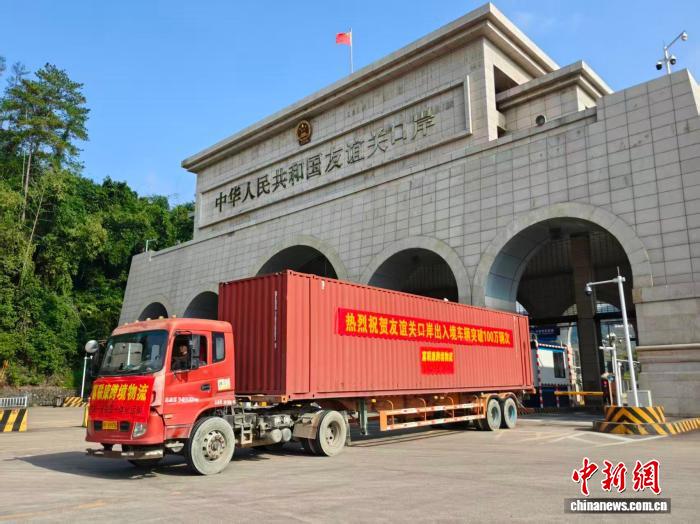
前11个月友谊关口岸进出口货物总值达5451.7亿元
Zhong Guo Xin Wen Wang· 2025-12-19 01:05
Core Insights - The total value of imports and exports at the Friendship Pass customs reached 545.17 billion yuan from January to November this year, marking a year-on-year increase of 28.6% and accounting for 39.3% of the total value of goods regulated by Guangxi ports, maintaining the leading position among all ports in Guangxi [1][2] Group 1: Trade Growth - The import and export trade in Pingxiang City, a key node for Guangxi's cooperation with ASEAN, continues to thrive, with long queues of trucks waiting to exit and Vietnamese trucks loaded with fresh fruits entering [1][2] - The significant growth in port traffic is attributed to continuous improvements in customs efficiency, with the daily average of vehicles entering and exiting exceeding 2,700, a more than 60% increase compared to the beginning of the 14th Five-Year Plan in 2021 [2][3] Group 2: Customs Efficiency - The renovation of the old customs checkpoint at the Friendship Pass was completed in May, expanding the main channel from "3 in 3 out" to "6 in 6 out" [2] - The customs authority has optimized both hardware and software to enhance clearance efficiency, increasing inspection spaces from 28 to 76 and implementing smart regulatory technologies such as a logistics control platform and intelligent inspection management systems [2][3] - Specialized windows and inspection areas have been established for perishable agricultural products, with appointment-based clearance and on-site testing laboratories to ensure priority checks and testing [2][3]

“共治”+“智治” 织密“三品一特”安全环境防护网
Si Chuan Ri Bao· 2025-12-18 00:18
Core Viewpoint - Sichuan is undergoing a transformative change in the regulation of "three products and one special" (food, medicine, industrial products, and special equipment) safety, aiming to establish a multi-party governance model that includes corporate responsibility, legal supervision, technical support, and broad social participation [1][2]. Group 1: Regulatory Changes - The newly introduced "Sichuan Elevator Safety Regulations" emphasizes the importance of ensuring wireless communication signal coverage in elevators, which is crucial for emergency situations [1]. - The regulations specify responsibilities for elevator manufacturing, usage, and maintenance, creating clearer boundaries for management and maintenance units [1]. Group 2: Food Safety Initiatives - Sichuan has maintained a high-pressure stance on food safety, conducting seven special rectifications this year targeting school food and counterfeit meat products [1]. - The province encourages food producers to establish internal risk reporting and control mechanisms to identify and eliminate safety hazards early [1]. Group 3: Community Involvement in Supervision - Sichuan has initiated the "You Point, I Inspect" food safety activity, engaging over 1.2 million participants and conducting targeted inspections on 97,000 batches, enhancing the resonance between regulation and public opinion [2]. - More than 45,000 "Food Safety Tianfu" volunteers and 2,930 delivery riders are actively involved in food safety supervision and risk assessment [2]. Group 4: Technological Integration - The province is leveraging technology for smart regulation, utilizing the Tianfu Market Smart Supervision Platform to create comprehensive risk profiles of market entities [2]. - A food safety credit risk classification system categorizes enterprises based on credit, production conditions, and product risks, allowing for differentiated regulatory approaches [2]. Group 5: Focus on High-Risk Products - In the food sector, initiatives like "Internet + Bright Kitchen" are being implemented in key locations such as schools to enhance regulatory coverage [3]. - Special inspections are being conducted on high-risk household products like electric bicycles and gas stoves, as well as on products for the elderly and children [3].
封关启新程 开放谱新篇——专访海南自贸港建设相关部门
证券时报· 2025-12-18 00:00
Core Viewpoint - The official launch of the Hainan Free Trade Port's full island closure operation marks a new phase in China's efforts to build a high-level open economy [1]. Group 1: Institutional Innovation - Hainan has established 173 institutional innovation cases, with 82 recognized at the national level and 37 promoted nationwide, focusing on trade, investment, and regulatory improvements [5]. - The province has introduced the first national negative list for cross-border service trade and established a "single window" for international investment [5]. Group 2: Foreign Investment Growth - Hainan's foreign investment has shown a significant increase, with actual foreign capital utilization reaching 166.7 billion yuan from 2020 to 2024, averaging a growth rate of 15.8% per year [7]. - The number of countries and regions investing in Hainan has expanded to 176, with foreign direct investment averaging 5.576 billion USD annually, reflecting a growth rate of 55.49% [7]. Group 3: International Cooperation - Hainan has established partnerships with 40 foreign free trade zones, with trade volume projected to reach 277.89 billion yuan by 2024, doubling from 2020 [9][12]. - The province has signed cooperation agreements with several global free zones, enhancing industrial collaboration [9]. Group 4: Customs and Regulatory Measures - The customs authority will implement smart regulation at secondary ports, focusing on three categories of goods: zero tariffs, relaxed trade management, and tax exemptions for processing [14]. - A credit management system for over 80,000 foreign trade entities has been established to enhance customs efficiency and reduce inspection frequency for certified enterprises [15]. Group 5: Future Development Strategies - Hainan aims to expand institutional openness and deepen reforms in key areas such as trade and investment liberalization, with a focus on sectors like healthcare, agriculture, and aerospace [18][19]. - The province plans to build a modern industrial system that integrates technology and innovation, enhancing sectors like tourism, high-tech industries, and tropical agriculture [19].

南海千帆渡 开放向未来——海南自由贸易港封关启新程
证券时报· 2025-12-18 00:00
Core Viewpoint - The official launch of the Hainan Free Trade Port marks a significant step in China's commitment to high-level opening-up and the construction of an open world economy, focusing on "zero tariffs, low tax rates, and simplified tax systems" [1] Group 1: Institutional Innovation - Institutional integrated innovation is the core engine of the Free Trade Port's construction, with Hainan cultivating 21 batches of 173 institutional innovation cases, 82 of which have been recognized by the state, and 37 promoted nationwide [2] - A series of groundbreaking measures have established a comprehensive open institutional system, laying a solid foundation for the port's operation [2] Group 2: Attracting Global Investment - From 2020 to 2024, Hainan is expected to attract actual foreign investment of 166.7 billion yuan, with an average annual growth of 15.8%, involving investments from 176 countries and regions [2] - The proportion of "zero tariff" goods has increased significantly from 21% to 74%, covering 6,637 tax items essential for enterprise production, further relaxing the threshold for tax-free policies on domestic sales with a value-added processing of 30% [2] - 54 companies have issued 129 related announcements within the year, reflecting strong confidence in the Free Trade Port's prospects [2] Group 3: Smart Regulation - The Haikou Customs has established a "smart regulation and credit regulation" system, utilizing big data risk control models for rapid customs clearance of three categories of goods [3] - The policy framework of "open at the front line, controlled at the second line, and free within the island" has effectively ensured the free flow of goods while reinforcing risk prevention measures [3] Group 4: Future Development - Hainan Free Trade Port aims to expand institutional opening-up and deepen reforms in key areas, creating a modern industrial system and a first-class business environment [3] - The port will leverage its closure operation as an opportunity to play a strategic hub role in the dual circulation pattern, exploring paths for high-level opening-up and accumulating experience for national economic cooperation [3]
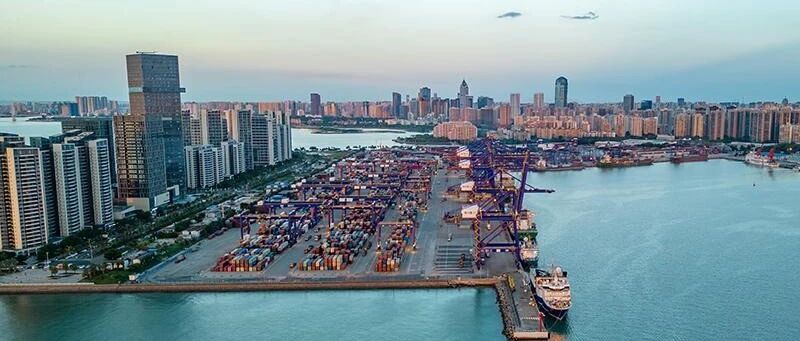
税收红利重塑产业布局征管环节将开放而有序
Zheng Quan Shi Bao· 2025-12-17 23:48
Core Viewpoint - The unique tax system of "zero tariffs, low tax rates, and simplified tax structure" is a competitive advantage for Hainan Free Trade Port, which will release greater policy dividends as the island officially enters a closed operation phase [1] Tax Policy and Industry Ecology - A series of tax incentives exclusive to Hainan Free Trade Port will gradually reshape the commodity circulation and industrial layout after the island's closure [2] - The "zero tariff" policy will shift to a negative list model, exempting goods not listed from tariffs, expanding the covered goods from 1,900 to approximately 6,600, which includes 74% of production materials, a 53% increase from before [2] - The policy for duty-free domestic sales of processed goods with a value-added rate of 30% will be optimized, removing the requirement for 60% of revenue to come from encouraged business activities, thus broadening the scope of beneficiaries [2] Industrial Development and Policy Support - The changes will fundamentally alter Hainan's industrial layout, transitioning from a "multi-point distribution" model to a "core agglomeration area + regional collaboration" model [3] - Key industries such as raw material-dependent manufacturing, deep processing of agricultural products, and biomedicine are expected to benefit significantly, potentially forming high-end manufacturing and specialty agricultural processing zones [3] - The combination of "import duty exemption - value-added processing - domestic sales duty exemption" will empower private enterprises to integrate deeply into the dual circulation pattern and achieve industrial upgrades [3] Legal and Regulatory Framework - Hainan is establishing a transparent and orderly tax environment through defined eligibility criteria, anti-tax avoidance clauses, and strict anti-money laundering mechanisms [4] - The core requirement of "substantive operation" distinguishes Hainan from traditional tax havens, ensuring that tax incentives are linked to real economic activities [5] Simplified Tax System Reform - The ongoing "simplified tax system" reform aims to enhance Hainan's global competitiveness by consolidating various taxes into a sales tax, which will be levied at the retail stage [6] - The reform will be implemented gradually, with transitional policies allowing for tax deductions or refunds on pre-reform inventory to prevent arbitrage [6] - A comprehensive regulatory system is suggested to address potential issues arising from the simplified tax system, including tax evasion and cash transaction monitoring [7]
南海千帆渡 开放向未来——海南自由贸易港封关启新程
Zheng Quan Shi Bao Wang· 2025-12-17 23:39
(更多报道见A5版~A7版) (原标题:南海千帆渡 开放向未来——海南自由贸易港封关启新程) 证券时报记者 吴少龙 12月18日,海南自由贸易港正式启动全岛封关运作。这是我国坚定不移扩大高水平对外开放、推动建设 开放型世界经济的标志性举措。作为承载国家战略的开放前沿,海南自贸港以"零关税、低税率、简税 制"为核心,在制度创新、外资集聚、国际合作、智慧监管等方面多点突破,书写着中国与世界共享发 展机遇的新篇章。 制度集成创新是自贸港建设的核心引擎。截至目前,海南已培育21批173项制度集成创新案例,82项获 国家认可、37项向全国推广。从全国首张跨境服务贸易负面清单到省级营商环境建设厅的首创,从"土 地超市"到全域"禁塑"制度,一系列突破性举措构建起系统完备的开放制度体系,为封关运作筑牢根 基。封关后,海南将持续推动政策贯通叠加,对标国际高水平经贸规则,在运行机制、监管模式等方面 深化创新,形成更多具有全国示范意义的制度成果。 开放红利的持续释放吸引全球资源加速集聚。2020年至2024年,海南实际使用外资达1667亿元,年均增 长15.8%,176个国家和地区在琼投资;与40个境外自贸区(港)建立伙伴关系,2 ...
多部门发文,事关消费者网购
Sou Hu Cai Jing· 2025-12-14 19:12
Core Viewpoint - The article discusses the issuance of guidelines by the State Administration for Market Regulation, in collaboration with other departments, aimed at enhancing the quality of products and services on online trading platforms, particularly focusing on the live-streaming e-commerce sector [1][2]. Group 1: Enhancing Product and Service Quality - The guidelines emphasize improving consumer satisfaction and safety, transitioning from quantity to quality in online transactions [1]. - A series of innovative measures are proposed, including supporting platforms to utilize data advantages for on-demand production and encouraging the establishment of Chief Quality Officer systems [2][4]. - Platforms are encouraged to develop customized data products and services, enhancing online sales channels for foreign trade products [4]. Group 2: Quality Management and Training - The guidelines call for improved online service quality management rules, promoting the use of technologies like 3D modeling and AR/VR for better product display [4]. - Platforms should establish a quality management training mechanism for live-streaming marketers, focusing on quality-centric selection processes [8]. - A "blacklist" system is to be implemented for operators and marketers who violate quality laws [8]. Group 3: Regulatory Measures and Compliance - The introduction of a "product digital passport" plan aims to enhance traceability and verification of product quality [2][13]. - The guidelines propose the establishment of a national industrial product quality safety monitoring and early warning platform using big data and AI for proactive regulation [2][13]. - Strict measures will be taken against false advertising and misleading marketing practices, particularly in high-risk sectors like food and pharmaceuticals [8][12]. Group 4: Consumer Protection and After-Sales Service - The guidelines advocate for a comprehensive after-sales service system, ensuring platforms provide efficient dispute resolution and consumer rights protection [12][14]. - Platforms are encouraged to simplify the process for consumers to report quality disputes and enhance the convenience of consumer rights protection [12][14]. - The establishment of a "one-click evidence submission" feature for consumer rights protection is also recommended [14].
市场监管总局等部门关于提升网络交易平台产品和服务质量的指导意见
Xin Lang Cai Jing· 2025-12-12 10:19
Core Viewpoint - The guidance aims to enhance the quality of products and services on online trading platforms, which is crucial for improving the online consumption environment, meeting the growing needs of the people, and promoting the innovation and healthy development of the platform economy [1][7]. Group 1: Overall Requirements - The initiative is guided by Xi Jinping's thought and aims to implement the spirit of the 20th National Congress and subsequent plenary sessions, focusing on a people-centered development approach [2][8]. - By 2030, the goal is to significantly improve the quality of platform products and services, effectively address key quality issues, enhance standardization, and optimize the online trading environment [2][8]. Group 2: Enhancing Product and Service Quality - The plan includes promoting quality innovation in online sales of various sectors such as home appliances, textiles, and food, and encourages collaboration among platforms, manufacturers, and research institutions for quality improvement [3][9]. - It emphasizes the need for standardized online service quality management and encourages the use of advanced technologies like 3D modeling and AR/VR for better user experience [3][9]. - The initiative aims to cultivate trustworthy online business entities and improve credit evaluation mechanisms to ensure transparency and accountability [3][9]. Group 3: Strengthening Quality Management - Platforms are encouraged to adopt comprehensive quality management systems and establish chief quality officer roles to enhance oversight and continuous improvement [4][10]. - There is a focus on improving the quality management capabilities of platform operators, including establishing a quality control system that encompasses supplier management and product recall processes [4][10]. - The initiative also aims to enhance the quality awareness of live-streaming e-commerce practitioners through training and establishing a blacklist for non-compliance [4][10]. Group 4: Addressing Illegal Business Practices - The guidance includes measures to combat counterfeit products and misleading marketing practices, ensuring that platforms enforce strict verification of product information [5][11]. - It aims to regulate unfair competition and pricing violations, ensuring that platforms and operators adhere to legal pricing practices [5][11]. Group 5: Strengthening Quality Supervision - The plan promotes the implementation of a "product digital passport" to enhance traceability and verification of product quality [6][11]. - It emphasizes the use of advanced technologies for smart regulation and the establishment of a national quality safety monitoring platform [6][11]. - The initiative calls for improved collaboration between regulatory bodies to ensure effective oversight and enforcement of quality standards [6][11]. Group 6: Creating a Safe Online Consumption Environment - The guidance encourages transparency in information disclosure by platforms and operators, including the publication of service agreements and consumer complaint information [12][12]. - It aims to enhance after-sales service systems and streamline dispute resolution processes to improve consumer rights protection [12][12]. - The initiative supports the establishment of online mechanisms for resolving quality disputes and encourages consumer organizations to engage in public interest litigation [12][12].
市场监管总局等部门发布关于提升网络交易平台产品和服务质量的指导意见
Mei Ri Jing Ji Xin Wen· 2025-12-12 10:14
Core Viewpoint - The recent guidelines issued by the State Administration for Market Regulation aim to enhance the quality of products and services on online trading platforms, which is crucial for improving the online consumption environment and fostering the healthy development of the platform economy [1][2]. Group 1: Overall Requirements - The guidelines emphasize a people-centered development approach, aiming for significant improvements in product and service quality on platforms by 2030, with a focus on addressing key quality issues and enhancing consumer satisfaction [2]. Group 2: Enhancing Product and Service Quality - The initiative encourages innovation in online product quality, particularly in sectors like home appliances, electronics, and food, promoting standardized quality across online and offline sales [3]. - It supports the development of online service quality management rules, including the use of advanced technologies for better consumer interaction and service quality commitments [3]. - The guidelines advocate for the cultivation of trustworthy online business entities, emphasizing quality grading and the establishment of a credit evaluation mechanism for platform operators [3]. Group 3: Strengthening Comprehensive Quality Management - Platforms are encouraged to adopt comprehensive quality management systems, integrating international standards and enhancing their internal auditing processes [4]. - The guidelines stress the importance of improving the quality management capabilities of platform operators, including establishing a full-chain quality control system [5]. - There is a focus on enhancing the quality awareness of live-streaming e-commerce practitioners, promoting quality-centric selection mechanisms and training [5]. Group 4: Addressing Illegal Business Practices - The guidelines call for strict measures against fraudulent practices such as selling counterfeit products and misleading marketing, ensuring that platforms enforce compliance with product information disclosure [6]. - There is a strong emphasis on combating misleading advertising, particularly in sensitive sectors like food and healthcare, and ensuring accountability for false claims [6]. - The guidelines also address unfair competition and pricing violations, mandating transparency in pricing and discouraging predatory pricing practices [6]. Group 5: Strengthening Quality Supervision - The implementation of a "digital passport" for products is proposed to enhance traceability and verification of product quality [6]. - The guidelines advocate for the use of advanced technologies like big data and AI to improve regulatory capabilities and ensure effective monitoring of online transactions [6]. - There is a call for enhanced collaboration between regulatory bodies to ensure comprehensive oversight of online trading activities [6]. Group 6: Creating a Safe Online Consumption Environment - The guidelines promote transparency in information disclosure by platforms and operators, encouraging the public sharing of service agreements and quality information [6]. - They advocate for the establishment of a robust after-sales service system, ensuring consumer rights are protected and disputes are resolved efficiently [6]. - The guidelines aim to facilitate consumer rights protection, promoting mechanisms for quick resolution of quality disputes and enhancing consumer advocacy [6].
高效通关让中欧班列越跑越快
Shan Xi Ri Bao· 2025-12-10 00:21
Core Insights - The implementation of the "one ticket multiple vehicles" model at Xi'an Customs has significantly improved logistics efficiency, allowing trucks to pass with even a single container, reducing cargo detention costs by nearly 60% [1] - The use of AI technology in smart supervision has drastically reduced approval times from an average of 4 hours to just 5 minutes, enhancing operational efficiency [1] - The reduction of domestic segment freight costs for imported goods has provided substantial tax relief for enterprises, with a total of 11.9 million yuan saved for 378 companies in the first ten months of the year [2] Group 1: Logistics and Customs Innovations - The "one ticket multiple vehicles" model allows for flexible cargo transport, enabling trucks to operate on-demand rather than waiting for full container loads [1] - Smart supervision has transitioned from "hour-level" to "minute-level" processing, streamlining customs operations and improving overall efficiency [1] - The establishment of a 24/7 customs support team ensures rapid response and efficient processing for export enterprises [4] Group 2: Economic Impact and Growth - In the first ten months of the year, the number of China-Europe freight trains departing from Xi'an reached 5,063, marking a 16.2% increase year-on-year, maintaining the highest operational metrics in the country [3] - Xi'an International Port Station has become the first station in the country to exceed 30,000 China-Europe freight train trips, accounting for over 25% of the national total [4] - The introduction of tax refund policies has significantly improved cash flow for businesses, reducing the average turnaround time for funds by nearly one month [2] Group 3: Future Developments - Xi'an Customs plans to continue advancing smart logistics supervision systems and expand inspection facilities to further enhance regulatory efficiency [5] - The ongoing innovations in customs services are expected to strengthen Xi'an's role in the Belt and Road Initiative and promote higher levels of international trade [5]