牛市

Search documents
杨德龙:2026年牛市行情愈演愈烈 赚钱效应明显提高
Xin Lang Cai Jing· 2026-01-12 07:31
Group 1 - The A-share market has started 2026 with a strong bullish trend, marked by a historic 17 consecutive days of gains in the Shanghai Composite Index [1][7] - The trading volume has significantly increased, surpassing 30 trillion yuan for two consecutive days, indicating a phase of rising prices and volumes, officially launching the spring offensive [1][7] - The current bull market is seen as a once-in-a-decade investment opportunity, with a substantial shift of household savings towards the capital market due to low bank deposit rates [1][7] Group 2 - The real estate market is still in an adjustment phase, with a fundamental change in expectations for housing price increases, particularly in second and third-tier cities [2][8] - The market has broken through the 4150-point mark, moving away from key integer levels and forming an upward trend, with a slow bull market expected to last 3 to 5 years or longer [2][8] - Investment opportunities are anticipated to expand beyond technology and banking sectors to include consumer staples, new energy leaders, non-ferrous metals, and military industries, enhancing the market's profitability [2][8] Group 3 - The current bull market is tasked with three historical missions: enhancing household wealth, stabilizing the real estate market through stock market wealth effects, and supporting the development of new productive forces, particularly in technology innovation [3][9] - Emerging industries such as commercial aerospace and brain-computer interfaces are showing active performance, with expectations for continued strength in technology sectors like robotics and semiconductors in 2026 [3][9] Group 4 - Investment in technology stocks, especially leading companies, should be viewed within the context of the AI revolution, representing a long-term trend opportunity [4][10] - The Hong Kong stock market has also seen a significant rebound, indicating a similar slow bull market trend as in the A-share market, with expanding investment opportunities [4][11]
融资余额突破2.6万亿!市场最“激进”的钱猛攻三个赛道
Sou Hu Cai Jing· 2026-01-12 01:57
Group 1 - The core viewpoint is that aggressive capital is significantly increasing its positions in the market, with A-share financing balance reaching a historical high of over 2.6 trillion yuan, indicating a heated market sentiment [1] - Leveraged funds are primarily favoring the electronics, non-ferrous metals, and defense industries, with net purchases exceeding 8 billion yuan each in a single week [3] - A recent investor survey shows that over 40% of investors are optimistic about the Shanghai Composite Index reaching 4,200 points next week, with increased confidence in the commercial aerospace and satellite internet sectors [4] Group 2 - The movement of leveraged funds often indicates the strength of short-term market trends, suggesting a potential for volatility if the trend reverses [4] - The strategy recommended includes respecting market trends while remaining cautious, focusing on sectors with sustained capital inflow that align with industry trends, such as electronics and military industry, while avoiding overbought stocks [4] - Attention should be paid to sectors and stocks that have seen significant net repayments of leveraged funds, as this may signal a retreat in market enthusiasm [4]



但斌、王庆最新发声:从“924”到现在肯定是个牛市
Di Yi Cai Jing Zi Xun· 2026-01-11 13:13
Market Overview - The A-share market has entered a new phase in 2026, with the Shanghai Composite Index reaching 4120.43 points and total trading volume exceeding 30 trillion yuan [2] - Analysts believe that the market is in a bull phase since the "924" rally, with a focus on improving the quality of listed companies and their competitive advantages [2][6] Investor Sentiment - There has been a shift in investor risk appetite since the "924" rally, leading to a recovery in market sentiment [4] - Analysts predict that undervalued value stocks will be further revalued as investor sentiment stabilizes [4][5] Sector Performance - Growth stocks, particularly in the technology sector, have shown performance since the "924" rally, with a notable revaluation of these stocks [3][4] - The market is currently characterized by structural opportunities, especially in sectors driven by AI and technological advancements [4] International Investor Interest - International investors are increasingly participating in Chinese assets, with a shift in sentiment following profitable investments [7][8] - Morgan Stanley has upgraded its rating on Chinese stocks from neutral to overweight, indicating a belief in a slow bull market [8][9] Future Outlook - The market is expected to continue benefiting from technological advancements and improved competitive environments across various industries [8] - Analysts emphasize the importance of enhancing company quality and profitability to sustain long-term market growth [6]

[1月9日]指数估值数据(大盘继续上涨,牛市到什么阶段;港股指数估值表更新;抽奖福利)
银行螺丝钉· 2026-01-09 14:08
Core Viewpoint - The overall market is experiencing an upward trend, with the index approaching a rating of 3.90 stars, indicating a potential for further growth in the near future [1]. Group 1: Market Performance - All market segments, including large, medium, and small-cap stocks, have seen increases, with small-cap stocks showing the most significant gains [2]. - The CSI 1000 and 2000 indices are now considered overvalued, while the CSI 500 and low-volatility indices are quickly approaching overvaluation [2]. - Since 2018, the CSI 500 low-volatility index has nearly doubled, driven by valuation increases, profit growth, and low-volatility rebalancing [2]. Group 2: Market Phases and Trends - The current bull market is characterized by structural trends, where not all sectors rise or fall together, indicating a rotation in market styles [2]. - The A-share market has seen a significant increase of over 60% since September 2024, with three notable upward waves contributing to a total rise of approximately 74% [2][3]. - Market liquidity is a key driver of the current upward trend, influenced by the Federal Reserve's interest rate cuts and the overall global liquidity environment [3][5]. Group 3: Liquidity Factors - The Federal Reserve's anticipated interest rate cuts through 2026 are expected to maintain a favorable liquidity environment [5]. - A significant amount of deposits, approximately 30 trillion yuan, is set to mature in 2026, with a portion likely to flow into financial assets, including stocks [8][10]. - The current low interest rates on deposits are expected to redirect some funds into the stock market, although not all will enter equities [10][11]. Group 4: Corporate Earnings Growth - Corporate earnings are recovering, with a notable increase in profits for the technology sector, which is leading the market [17][18]. - Some sectors, such as consumer goods, are still experiencing declines in earnings, indicating a mixed performance across different industries [20]. - Continuous monitoring of corporate earnings growth will be essential in 2026 to gauge market expectations [21][22]. Group 5: Investment Strategy - As the market approaches a rating of 3.90 stars, the optimal phase for stock fund investments may have passed, suggesting a shift towards asset allocation and profit-taking strategies [23][24]. - The focus for 2026 should be on managing asset allocation rather than aggressive stock fund purchases [24]. Group 6: Hong Kong Market Insights - The Hong Kong market has also returned to a rating of 3.90 stars, with updated valuations provided for various indices [25]. - The valuation table for Hong Kong indices includes metrics such as P/E ratios and dividend yields, offering insights for potential investors [26].

杨德龙:大盘实现16连阳站上4100点 牛市趋势进一步确立
Xin Lang Cai Jing· 2026-01-09 09:49
Group 1 - The Shanghai Composite Index has broken through the 4100-point mark for the first time in 10 years, with a trading volume exceeding 3 trillion yuan, indicating a strong bullish sentiment in the market [1][6] - The market has experienced a 16-day consecutive rise, suggesting that the 4000-point level is not the end of a market cycle but rather the beginning of a new one [1][6] - The bullish trend is supported by significant inflows of capital, particularly from retail investors, following a period of market adjustment in December [1][6] Group 2 - The underlying logic supporting the bull market in 2026 remains unchanged, including policy support, a shift of household savings to the capital market, and continuous foreign investment [2][7] - The bull market is expected to fulfill three historical missions: enhancing wealth for approximately 300 million stock investors and 700 million mutual fund investors, stabilizing the real estate market, and promoting technological innovation [2][8] - The real estate market is anticipated to stabilize and recover, particularly in core areas and first-tier cities, as investors may use returns from the stock market to improve housing conditions [8] Group 3 - The bull market is projected to last 3 to 5 years, or even 5 to 10 years, with annual growth rates expected to be between 10% and 20%, fostering a sustainable profit-making environment for investors [3][9] - Compared to the high valuations in the US stock market, A-shares and Hong Kong stocks are still near historical average valuation levels, indicating significant upside potential [3][9] - The transition from a golden investment period in the real estate market to a new golden investment period in the stock market is underway, driven by the shift of household savings [4][9] Group 4 - The bull market typically progresses through several stages, with the current phase characterized by a gradual upward trend and reduced market divergence expected in 2026 [10] - Key indicators to monitor include the issuance of new funds exceeding 10 billion yuan in a single day and daily trading volumes rising above 4 trillion yuan, which could signal a need for caution [10] - The market is currently in a continuation phase rather than a late-stage phase, suggesting that investors should maintain confidence and patience while focusing on quality stocks or funds [11]
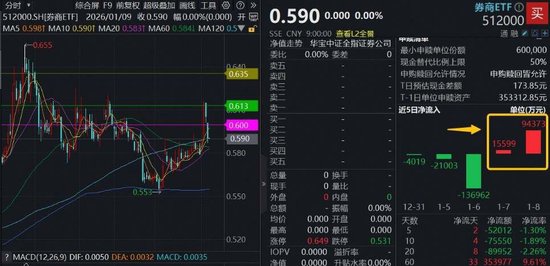
沪指15连阳,两融余额首破2.6万亿元,再创新高!巨资涌入滞涨券商,顶流券商ETF(512000)单日狂揽9.4亿元
Xin Lang Cai Jing· 2026-01-09 01:27
Core Viewpoint - The Chinese stock market is experiencing a strong upward trend, with the Shanghai Composite Index achieving a "15 consecutive days of gains" and reaching a new high of 4093.87 points during this bull market [1][8]. Group 1: Market Performance - The margin trading balance has accelerated, increasing by over 100 billion yuan in just 11 trading days since December 22, 2025 [1][8]. - Margin trading activity has also increased, with trading volumes exceeding 300 billion yuan for two consecutive days [1][8]. - The brokerage sector is expected to benefit from high trading activity and supportive policies aimed at stabilizing growth and boosting the capital market [1][8]. Group 2: Institutional Outlook - Multiple foreign institutions express strong confidence in the potential of the Chinese market for 2026, with Goldman Sachs predicting a 20% increase in the MSCI China Index and a 12% increase in the CSI 300 Index [1][8]. - UBS forecasts a 14% growth in earnings for the MSCI China Index in 2026 [1][8]. Group 3: Brokerage Sector Valuation - The current valuation of the brokerage sector remains at historical lows, with the price-to-book ratio (PB) of the CSI All Share Securities Companies Index at 1.52, which is at the 42.86 percentile of the past decade [3][10]. - This low valuation contrasts sharply with the high growth and performance expectations, highlighting a significant disconnect [3][10]. Group 4: Investment Tools - The brokerage ETF (512000) tracks the CSI All Share Securities Companies Index and includes 49 listed brokerage stocks, making it an efficient investment tool for both large and small brokerages [5][12]. - The brokerage ETF has an average daily trading volume exceeding 1 billion yuan this year, positioning it as a leading liquidity provider in the A-share market [5][12].
收入腰斩,85后美女所长武超则又升职了!还有首席经济学家到龄退休了
Xin Lang Cai Jing· 2026-01-09 01:21
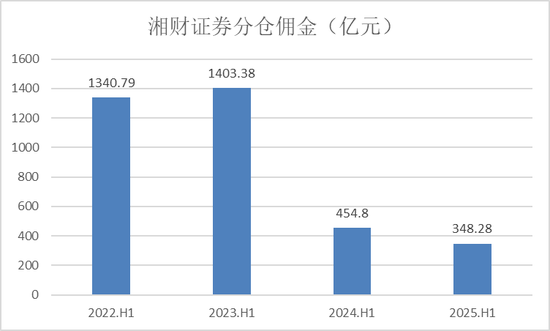
Group 1 - The article discusses significant personnel changes in the investment banking sector, particularly at CITIC Securities, highlighting the retirement of notable figures and the hiring of younger analysts [1][15] - Li Kang, the chief economist at Xiangcai Securities, has retired at the age of 61, having had a long career in various leadership roles within the industry [1][15] - The article notes that CITIC Securities has seen a decline in its research department's performance, with mid-2025 revenue reported at only 348 million, down from previous years where it was in the tens of millions [1][15] Group 2 - Wu Chaoze has been appointed as the head of the Institutional Business Committee at CITIC Securities, expanding her responsibilities from research to include institutional and international business [3][17] - Wu has been with CITIC Securities since 2012 and has recently transitioned from a chief analyst role to a senior executive position, indicating a shift from operational to strategic responsibilities [3][17] - The article highlights Wu's accolades, including being named the top analyst in the telecommunications sector for seven consecutive years and becoming one of the youngest research directors in the industry at the age of 32 [6][20] Group 3 - The article mentions that CITIC Securities has experienced a significant drop in revenue over the past five years, with total revenue decreasing from approximately 30 billion to 21.1 billion in 2024 [10][25] - The firm has also seen a notable increase in profit for mid-2025, with a reported growth of 57.7% compared to previous periods [10][25] - The decline in revenue is attributed to a reduction in commission income, which has halved from 1 billion in 2021 to only 508 million in 2024, indicating a severe downturn in the firm's research income [12][27]

国信证券晨会纪要-20260109
Guoxin Securities· 2026-01-09 01:05
Group 1: Macro and Strategy - The core conclusion indicates that the incremental capital entering the A-share market in 2025 is characterized by active funds such as leveraged and private equity funds, with a significant inflow from insurance capital, while public equity funds are experiencing net redemptions [7][10] - It is expected that in 2026, the total incremental capital will reach 2 trillion yuan, driven by a recovery in risk appetite among residents, particularly from high-net-worth individuals [10][9] - The market environment in 2025 shows similarities to 2020, but the structure of incremental capital differs, suggesting a gradual increase in resident participation in the market [10][9] Group 2: Agricultural Industry - The agricultural sector is witnessing a potential upward trend in beef prices due to the implementation of import guarantee measures, indicating a reversal in the livestock cycle [15] - As of December 31, 2025, the price of live pigs was 12.67 yuan/kg, reflecting a week-on-week increase of 10.37%, while beef prices reached 60.91 yuan/kg, up 20.61% year-on-year [16][15] - The report highlights the importance of supply-demand dynamics in the agricultural sector, with a focus on the recovery of pork prices and the potential for sustained growth in beef prices [15][16] Group 3: Chemical Industry - The potassium fertilizer market is experiencing a tight supply-demand balance, with domestic production expected to decrease while imports are projected to rise, leading to a historical high in import volumes [24][25] - The price of potassium chloride as of December 31, 2025, was 3,282 yuan/ton, showing a year-on-year increase of 30.45%, driven by the need for food security [24][25] - The report anticipates a long-term price stability for phosphate rock due to increasing demand from new energy materials, with the market price for 30% grade phosphate rock remaining high [25][26] Group 4: Automotive Industry - The general aviation market is poised for steady development, driven by policy support, technological advancements, and market expansion [18][19] - The report emphasizes the potential for growth in low-altitude operations, with a focus on high-value applications such as logistics and maritime transport [20][21] - The global general aviation market is projected to grow, with an expected compound annual growth rate of 4.72% by 2029, indicating significant opportunities for domestic players [19][20] Group 5: Media and Internet Industry - The media sector has shown resilience, with a 2.27% increase in the industry index, outperforming major indices [22] - Upcoming IPOs for companies like Minimax and Zhiyu are anticipated to attract attention, particularly in the AI application sector [22][23] - The report highlights the strong performance of films during the New Year period, indicating a recovery in consumer spending in the entertainment sector [23][24]

2026年牛市展望系列 1:入市增量资金有望超两万亿
Guoxin Securities· 2026-01-08 12:10
Group 1 - The core conclusion indicates that in 2025, the A-share market will see significant inflows of incremental funds, primarily from leveraged funds and private equity, while public funds are experiencing net redemptions [1][4] - The current inflow of funds is expected to be mainly from high-net-worth individuals, with ordinary residents likely becoming the main source of market funds by 2026 as their risk appetite recovers [1][3] - The macroeconomic and microeconomic context of 2025 shows similarities to 2020, but the structure of incremental funds differs, leading to an estimated total inflow of 2 trillion yuan in 2026 [1][4] Group 2 - In 2025, the main source of incremental funds in the A-share market will be active funds, with a notable inflow of 4.2 billion yuan from insurance funds and 4 billion yuan from private equity in the first half of the year [2][13] - The inflow of funds in 2025 can be divided into two phases: the first half saw a recovery in the market supported by policies and industry catalysts, while the third quarter experienced a surge in private equity and leveraged funds [2][19] - The sectors that attracted the most incremental funds in the first half of 2025 included technology and dividend sectors, while the third quarter saw significant inflows into non-ferrous metals, electronics, and new energy sectors [2][20] Group 3 - The process of resident funds entering the market is still in its early stages, primarily driven by high-net-worth individuals, with overall risk appetite among residents gradually improving [3][32] - Despite signs of recovery in risk appetite, the majority of resident funds have not yet entered the market on a large scale, with many still preferring low-risk investment products [3][36] - The current low expectations for income and housing prices among residents are major factors hindering a broader entry of resident funds into the market [3][41] Group 4 - The expected net inflow of micro funds in 2026 is projected to reach 2 trillion yuan, with significant contributions from retail investors and insurance funds [4][55] - The structure of incremental funds in 2025 shows a shift compared to 2020, with a greater reliance on leveraged funds and private equity rather than resident funds [4][50] - The anticipated inflow from insurance funds is expected to be around 700 billion yuan, while public and foreign funds are also expected to improve [4][57]
少数派周良:本轮牛市的目标是历史新高
Xin Lang Cai Jing· 2026-01-08 10:39
Core Viewpoint - The Chinese stock market is poised for a bull market driven by five key factors, which have not yet been fully reflected in market valuations, suggesting potential for significant growth in the coming years [3][9]. Group 1: Interest Rate Reduction - The yield on China's 10-year government bonds is at 1.9%, while the average dividend yield of the CSI 300 index is 2.5%, surpassing long-term government bonds [4][13]. - Compared to the U.S. market, where the S&P 500 index has a price-to-earnings ratio of 25 and a dividend yield of 1.2%, Chinese stocks offer better value with lower valuations and higher yields [4][13]. Group 2: Capital Overflow - The real estate market, which previously attracted significant investment, has lost its capacity to absorb funds as property prices have peaked and declined [5][14]. - There is a substantial amount of excess savings, estimated at 50 trillion, with household deposits reaching 162 trillion, creating a need for alternative investment channels, primarily the stock market [5][14]. - The CSI 300 index has seen a consistent increase of around 15% over the past two years, improving investor sentiment and encouraging more capital inflow into the stock market [5][14]. Group 3: Economic Driver - The decline in real estate prices has led to a significant reduction in household wealth, estimated to be over 100 trillion, negatively impacting consumer confidence and spending [6][15]. - The government has emphasized the importance of stabilizing and activating the capital market as a key measure to restore consumer confidence through wealth effects [6][15]. Group 4: Profit Support - After nine consecutive quarters of negative growth, non-financial listed companies are expected to return to positive profit growth in 2025, with a projected growth rate of 14% for the MSCI China index in 2026, driven by sectors like internet platforms and high-end manufacturing [7][16]. - The recovery in corporate profits is seen as a confirmation of economic resilience, providing fundamental support for a gradual bull market in stocks [7][16]. Group 5: Global Landscape - The competitive dynamics between China and the U.S. have shifted, with China taking a more proactive stance in trade disputes, leading to a change in the balance of power [8][17]. - As global investors reassess the competitive landscape, there is an anticipated increase in long-term investment demand for Chinese assets, which is expected to be sustained over time [8][17]. - In a strong market environment, investment strategies should prioritize high-growth, technology, and small-cap stocks, while value stocks can serve as stable long-term holdings [8][17].