
经济不确定性

Search documents
美联邦政府“停摆”如何影响全球市场
Xin Hua She· 2025-10-02 12:05
Core Points - The U.S. federal government has entered a shutdown for the first time in nearly seven years, leading to the suspension or delay of certain public services and impacting economic data releases [1] - Analysts predict that the shutdown will negatively affect the U.S. economy and create ripple effects in global markets, undermining confidence in U.S. economic governance [1] Impact on International Trade - Customs will remain open, but many technical staff will be on unpaid leave, causing delays in documentation and inspections, particularly affecting perishable goods and pharmaceuticals [2] - The last shutdown saw cargo dwell times at major ports increase by 15% to 20% [2] - Trade merchants will face difficulties in obtaining import/export licenses due to insufficient personnel, leading to delays in certifications and approvals [2] - The potential for irreversible job cuts during the shutdown could weaken U.S. consumer demand, impacting European exports, especially for German industrial firms [2] - The delay or cancellation of key economic data releases will create uncertainty for foreign businesses operating in the U.S. market [2] Impact on Financial Markets - The shutdown signals systemic dysfunction and political instability, heightening investor risk concerns and potentially leading to increased prices for safe-haven assets like gold [3] - Historical data indicates that shutdowns typically result in a significant rise in the Chicago Board Options Exchange Volatility Index, reflecting heightened market volatility [3] - The current high valuations in global asset markets leave little room for error, making the shutdown a negative event that could suppress global market risk appetite [3] - Prolonged shutdowns could lead to further declines in the U.S. dollar index and increased volatility in dollar-denominated assets, with global repercussions due to the dollar's dominance [3] Impact on Confidence in the U.S. - The shutdown reveals flaws in the U.S. governance system, shaking confidence in U.S. economic management and potentially affecting its role in the global economy [4] - Short-term impacts on U.S. sovereign credit ratings are not expected, but each week of shutdown could reduce GDP by 0.1% to 0.2% [4] - Concerns about U.S. government credibility and fiscal health are heightened due to the shutdown [4] Impact on Europe - The shutdown is expected to have a nonlinear impact on the European economy, with potential GDP losses of €4 billion for a two-week shutdown and €16 billion for an eight-week shutdown [5] - The situation exacerbates existing global economic uncertainties and could lead to a series of economic consequences if prolonged [5] - Observers express concern over the U.S. government's ability to maintain basic operations, which could have broader implications for global economic stability [5]
黄金价格创历史新高!
Sou Hu Cai Jing· 2025-10-02 03:16
Core Viewpoint - The uncertainty surrounding the first U.S. government shutdown in seven years has led to a significant rise in gold prices, reaching record highs as investors seek safe-haven assets [1][2]. Group 1: Gold Market Performance - As of Tuesday's close, the New York spot gold price reached a record high of $3,858.45 per ounce, with futures trading hovering around $3,900 [1]. - Gold futures have increased by over 45% since the beginning of 2025, trading slightly below $3,895 per ounce as of Wednesday afternoon [1]. - Other precious metals, particularly silver, have also seen significant gains, with silver futures up nearly 59% since the start of the year, trading above $47 per ounce [1]. Group 2: Economic Context - The recent economic turmoil is largely attributed to President Trump's trade war, which has imposed substantial new tariffs on imports, increasing costs for businesses and consumers [2]. - The current government shutdown may exacerbate consumer pessimism, as hiring has sharply declined and inflation is slowly rising [2]. - Despite the government shutdown, Wall Street has shown limited reaction, although U.S. Treasury yields fell following disappointing hiring data released by ADP Research [2]. Group 3: Global Demand for Gold - Analysts note strong demand for gold from central banks worldwide, particularly amid escalating geopolitical tensions, such as the ongoing conflicts in Gaza and Ukraine [2].
Gold prices flirt with near record high but stock futures slide as government shutdown begins
Fastcompany· 2025-10-01 16:21
Core Viewpoint - The U.S. federal government shutdown has commenced, leading to increased uncertainty regarding employment and economic conditions [1] Group 1 - The shutdown occurred one minute into October, indicating an immediate impact on government operations [1]

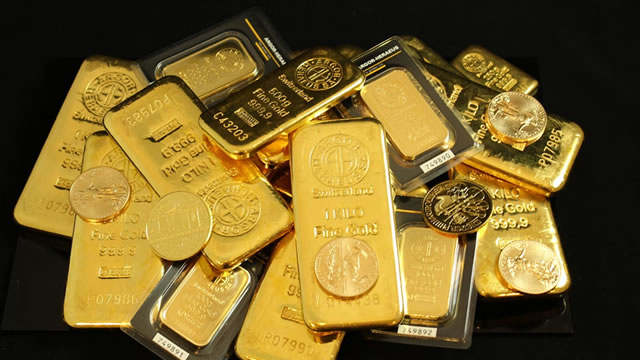
Gold price today, Monday, September 29: Gold eclipses $3,800 as government shutdown looms
Yahoo Finance· 2025-09-29 11:32
Core Insights - Gold futures opened at $3,788.80 per ounce, reflecting a 0.4% increase from the previous close of $3,775.30, with early trading pushing prices above $3,800 [1] - The price of gold has shown significant growth, with a 2.7% increase from the opening price of $3,688.20 on September 22, and a 10.4% increase from $3,432.50 on August 29, 2025, indicating strong upward momentum [4] Market Context - Gold rose above $3,700 on September 22, coinciding with record highs for the S&P 500 and Nasdaq Composite, but has faced slight retreats as Wall Street grapples with interest rate predictions amid potential government shutdowns [2] - A government shutdown could enhance gold's value due to increased demand during economic uncertainty [3] Historical Performance - Over the past year, gold prices have surged by 41.9% from an opening price of $2,670 on September 27, 2024, showcasing its strong performance in the market [4] - Goldman Sachs Research has projected that gold could reach $3,700 per troy ounce by the end of 2025, representing a 40% increase from its January 2 opening price of $2,633, driven by rising demand from central banks and tariff policy uncertainties [12] Investment Strategy - Investing in gold is recommended as a stabilizer in a balanced portfolio, particularly during economic downturns, as it helps limit unrealized losses in equities and protects against inflation [6][8] - Gold is viewed as an insurance policy against economic calamities, with experts suggesting that a small allocation to gold can serve as a hedge [7][9]
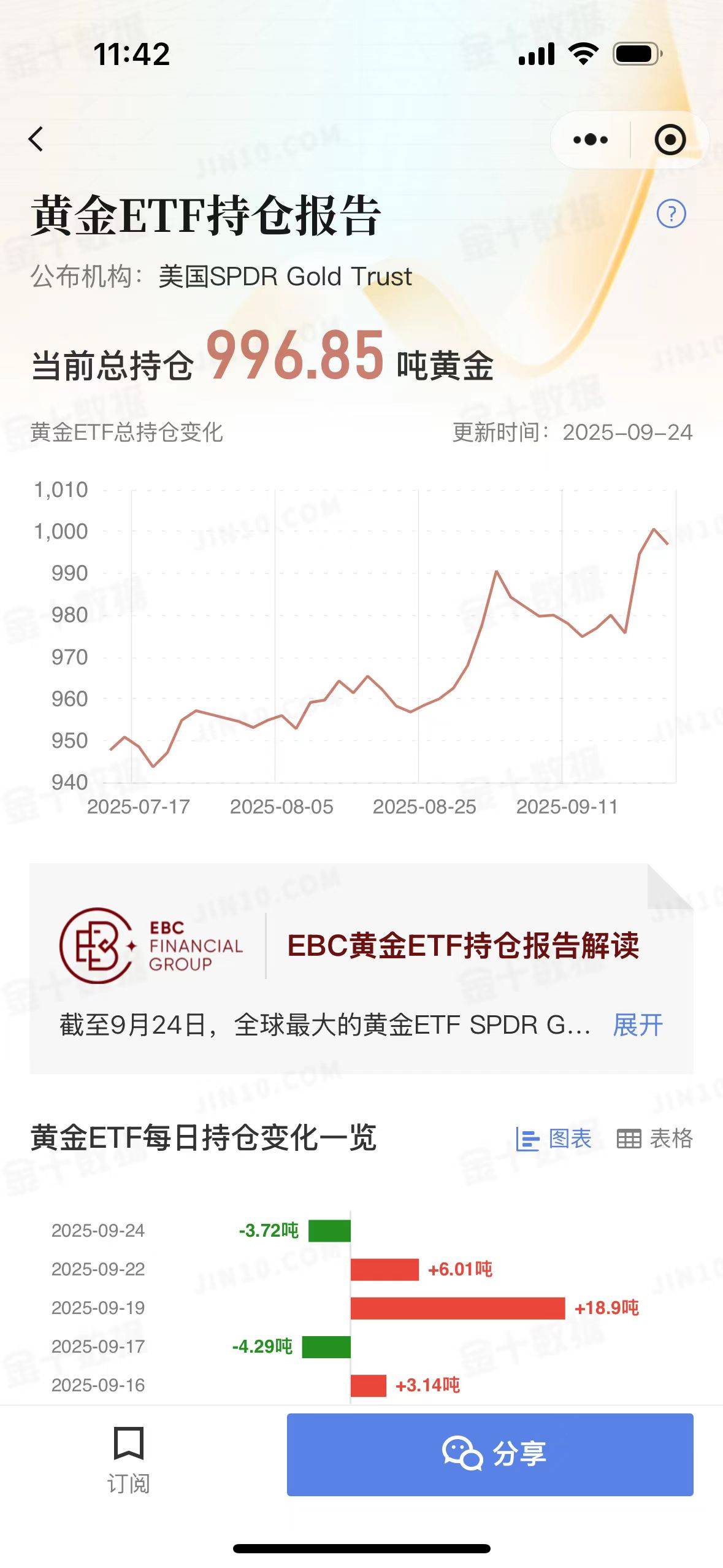
黄金ETF持仓量报告解读(2025-9-25)经济不确定性推动金价上涨
Sou Hu Cai Jing· 2025-09-25 05:40
Core Viewpoint - The SPDR Gold Trust, the world's largest gold ETF, reported a total holding of 996.85 tons of gold as of September 24, 2025, reflecting a decrease of 3.72 tons from the previous trading day, indicating profit-taking by investors at high price levels [5]. Group 1: Gold ETF Holdings - As of September 24, 2025, SPDR Gold Trust's holdings were 996.85 tons, down 3.72 tons from the previous day [5]. - The decrease in gold ETF holdings marks the end of a previous trend of continuous increases, suggesting a shift in investor sentiment [5]. Group 2: Gold Price Movements - On September 24, gold prices peaked at just below $3780 per ounce before falling to a low of $3717.46, closing at $3735.88, a drop of $28.05 or 0.75% [5]. - The price drop followed comments from Federal Reserve Chairman Jerome Powell, which dampened expectations for interest rate cuts, alongside a strengthening U.S. dollar and rising U.S. Treasury yields [5][6]. Group 3: Market Influences - Investors are closely monitoring the core PCE price index report to gauge the likelihood of future interest rate cuts, with market expectations for two 25 basis point cuts in October and December at probabilities of 93% and 79%, respectively [6]. - The potential government shutdown due to legislative gridlock adds to market uncertainty, increasing demand for safe-haven assets like gold [6]. Group 4: Technical Analysis - Technical indicators suggest a cautious outlook for gold, with the RSI showing a decline and prices expected to oscillate between $3750 and $3700, awaiting new market catalysts [7]. - Key resistance levels are identified at $3791 (historical high) and $3800 (psychological level), while support is noted at $3700, with a breach potentially leading to deeper corrections [7].
经济不确定性犹存 瑞士央行倾向保留政策空间
Jin Tou Wang· 2025-09-25 03:56
Group 1 - The USD/CHF exchange rate opened at 0.7944 and showed a slight increase of 0.08% to 0.7948, with a high of 0.7951 and a low of 0.7941 during the day [1] - Switzerland's consumer prices rose by 0.2% year-on-year in August, maintaining the central bank's price stability target range of 0-2% for the third consecutive month [1] - The market's expectation for the central bank to maintain a zero interest rate increased from 85% to 91% following the inflation data release, alleviating pressure for further rate cuts [1] Group 2 - The early indicators suggest moderate growth in the Swiss economy, reducing the necessity for rate cuts to stimulate economic activity [1] - The Relative Strength Index (RSI) for USD/CHF is fluctuating between 45-50, indicating no clear trend direction, while the Stochastic oscillator shows potential for a slight rebound [2] - The price is fluctuating around the mid-band of the channel, with significant "squeeze effect," where a breakout above or below the channel will signal the initiation of a short-term trend [2]
金价今年涨了40%!创1979年石油危机以来最大涨幅,“滞胀”风险大增
Sou Hu Cai Jing· 2025-09-16 09:40
Core Insights - Gold prices have surged to record highs, reaching $3719.50 per ounce, marking the largest increase since the 1979 oil crisis, with a 40% rise this year alone [1][2] Group 1: Economic Factors - The uncertainty stemming from the Trump administration's tariff policies has significantly influenced gold prices, leading both small and large investors to flock to gold as a safe haven [2] - The U.S. dollar has experienced its weakest first half in over fifty years, contributing to the appeal of gold [2] - Investors are increasingly concerned about "stagflation," a combination of high inflation and low growth, reminiscent of the conditions during the 1979 gold price surge [2][5] Group 2: Investment Trends - High-net-worth individuals are increasing their physical gold holdings, with a notable influx of wealthy clients seeking secure storage for their gold [4] - Investment in gold ETFs has risen sharply, with net assets in physical gold ETFs listed on the New York Stock Exchange increasing by 43% this year [4] - Hedge funds have allocated 47% of their commodity net positions to gold as of early September, indicating strong market interest [4] Group 3: Market Reactions - The anticipated interest rate cuts by the Federal Reserve are attracting short-term investors to the gold market, further driving up prices [4] - Other precious metals, such as silver and copper, have also seen significant price increases, with silver reaching its highest settlement price since September 2011 [5]

数百万人购买力受影响 关税正变成美国普通家庭的经济负担
Zhong Guo Xin Wen Wang· 2025-09-11 05:51
Group 1 - The article highlights that the new tariff policies in the U.S. are becoming a significant economic burden for ordinary American families, with estimated annual costs ranging from $1,600 to $3,800, and projections for 2025 hovering around $2,300 to $2,400 [1][2] - The impact of tariffs is profound, affecting various aspects of daily life, including prices of groceries, gasoline, new cars, and electronics, as companies increasingly pass on rising costs to consumers [1][2] - Economic uncertainty has intensified due to tariffs, with economists warning of rising consumer prices and disruptions in global supply chains [1][2] Group 2 - The future trajectory of U.S. tariff policies remains highly uncertain, but protectionist measures are expected to continue, impacting the global economy [2] - In the short term, consumers and businesses should prepare for ongoing increases in costs and prices, with recent data showing a 4% rise in import prices and a 2% rise in domestic prices since early 2025 [2] - Long-term projections indicate a negative impact on the U.S. economy, with potential GDP declines of 6% and wage reductions of 5%, leading to a significant lifetime income loss of $22,000 for a middle-income family [2]
US job growth missed expectations in August amid economic uncertainty
Fox Business· 2025-09-05 12:51
Labor Market Overview - The U.S. economy added 22,000 jobs in August, significantly below the 75,000 estimate by economists [1] - The unemployment rate rose to 4.3% in August, up from 4.2% in July, aligning with expectations [1] Job Revisions - Job gains for June were revised down by 27,000, changing from a gain of 14,000 to a loss of 13,000; July's job creation was revised up by 6,000 from 73,000 to 79,000 [2] - Overall, employment in June and July was 21,000 jobs lower than previously reported [2] Sector Performance - Private payrolls added 38,000 jobs in August, falling short of the projected 75,000 [3] - Government payrolls declined by 16,000 jobs, with federal government employment down by 15,000 and state governments shedding 13,000 jobs [4] - The manufacturing sector lost 12,000 jobs, exceeding the estimated decline of 5,000 jobs [5] - Healthcare employment added 31,000 jobs, below the average monthly gain of 42,000 over the past year [5] - Social assistance employment increased by 16,000 jobs, reflecting growth in individual and family services [6] Labor Force Metrics - The labor force participation rate remained stable at 62.3%, while the employment-population ratio was unchanged at 59.6% [6] - Both metrics have declined by 0.4 percentage points over the year [6]

美国8月企业招聘意愿降至历史低位,裁员人数激增
Sou Hu Cai Jing· 2025-09-04 12:53
Group 1 - The recruitment plans of U.S. companies fell to a historical low in August, with only 1,494 new jobs announced, marking the lowest level for August since records began in 2009 [1][2] - Layoff announcements surged to nearly 85,980, the highest for August since 2020, indicating significant pressure on the labor market [1][2] - The data suggests a cooling trend in the labor market, with expectations that the upcoming government employment report will confirm the slowdown in hiring activity [1][2] Group 2 - Recruitment plans are primarily concentrated in the aerospace, defense, industrial goods, and retail sectors, indicating that most industries are delaying or reducing hiring [2] - The layoff figures, when excluding pandemic effects, represent the highest for any August since the 2008 recession, highlighting the severity of current labor market pressures [2] - The report supports the assessment that the labor market is slowing down, with a notable decline in recruitment activities observed in recent months [2]