美国债务危机

Search documents
这是美国国内金融资本的一场暗战,特朗普禁止哈佛招收国际生
Sou Hu Cai Jing· 2025-05-25 03:04
Group 1 - The core argument revolves around the conflict between Trump and Harvard, which symbolizes a deeper struggle involving global financial capital and the survival of U.S. debt [1][5][10] - Harvard is described as a giant hedge fund, with its endowment functioning as a significant player in the global financial market, utilizing complex investment strategies to achieve excess returns [3][5] - Trump's criticism of Harvard is not merely about educational policies but reflects a broader challenge to the influence of financial capital on U.S. politics and economics [5][6][8] Group 2 - The discussion includes contrasting views on U.S. debt management, with one perspective advocating for extending debt duration while another suggests aggressive measures like currency devaluation and high inflation to alleviate debt pressure [5][6] - The concept of credit sovereignty is introduced, highlighting the struggle for control over the dollar's expansion and asset pricing, with Trump representing national interests against financial capital [6][8] - The current crisis in the U.S. is characterized by financial capital undermining the dollar's credit system, raising questions about the future stability of the U.S. financial framework [10]

一枚涨到80万!比特币价格创新高,家用电脑不停挖,多久能挖一枚
Sou Hu Cai Jing· 2025-05-24 15:36
Core Insights - Bitcoin price surpassed $110,000 in May 2025, equivalent to approximately 800,000 RMB, marking a historical high and raising questions about its value and nature [1][3] Group 1: Bitcoin Fundamentals - Bitcoin was created in 2009 by the pseudonymous Satoshi Nakamoto and operates on a decentralized blockchain technology, which allows for secure and unalterable transaction records [1][3] - The total supply of Bitcoin is capped at 21 million coins, giving it an anti-inflationary characteristic, leading some to refer to it as "digital gold" [1][3] Group 2: Price Surge Drivers - U.S. policy developments, particularly the GENIUS Stablecoin Act, have injected liquidity into the digital currency market, encouraging institutional investment [3] - Companies, including Strategy, have accumulated over $50 billion in Bitcoin, increasing market demand [3] - Rising macroeconomic risks, such as the U.S. debt crisis and geopolitical tensions, have led investors to view Bitcoin as a hedge, decoupling its price movements from traditional assets like gold [3] Group 3: Mining Challenges - Mining Bitcoin requires significant computational power, with a high-end home computer yielding only 0.0018 Bitcoin per day, necessitating 556 days to mine a single coin [5] - The cost of electricity for mining can exceed the value of the Bitcoin mined, making it economically unfeasible for average individuals [6] Group 4: Regulatory Landscape in China - China has banned Bitcoin mining due to its high energy consumption, which contradicts the country's carbon reduction goals [9] - The financial risks associated with Bitcoin's price volatility and its use in illicit activities have led to stringent regulations [9] Group 5: Future Outlook - Predictions for Bitcoin's price by the end of 2025 range from $150,000 to $200,000, but these projections come with significant risks related to policy changes and market competition [11] - The narrative surrounding Bitcoin reflects both a technological revolution and a speculative market, suggesting that for most individuals, the dream of quick wealth is unrealistic [11]

降息又变,黄金开涨
Jin Tou Wang· 2025-05-23 12:11
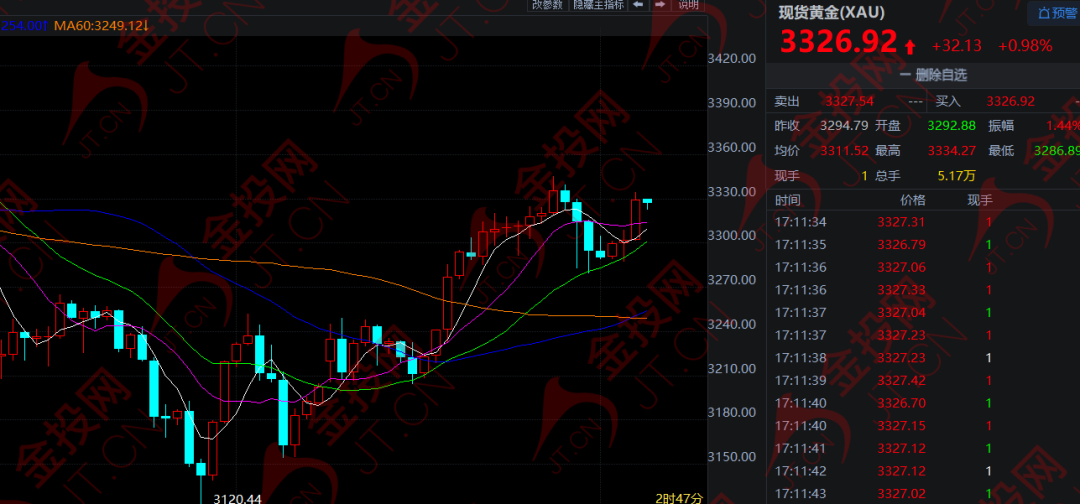
隔夜,现货黄金触及3345美元的两周高点,随后急转直下,最终收于3294美元附近。今日欧市盘中,黄金小幅上涨,目前在3326美元附近徘徊。 消息面上,特朗普税改法案在众议院通过。 当地时间22日,美国总统特朗普签署的减税法案在众议院以微弱优势通过。当天众议院以215票赞成、214票反对的微弱优势表决通过了特朗普的税改法 案。所有民主党议员和两名共和党议员投了反对票,另有一名共和党议员投弃权票。法案接下来将提交至共和党拥有微弱多数优势的参议院审议。 该法案计划在未来十年内减税逾4万亿美元,并削减至少1.5万亿美元支出。该法案将把美国债务上限提高4万亿美元,低于参议院所希望的5万亿美元。 财政部预测,如不提高上限,美国最早可能在八月或九月出现违约,从而增加了时间表的紧迫性。 于是,投资者对美国债务危机的担忧情绪进一步加剧。上周,穆迪公司将美国主权信用评级从最高等级Aaa下调至Aa1,导致美国国债收益率飙升(债券 价格下跌)。 经济数据方面,美国劳工部公布的数据显示,截至5月17日的一周,美国初请失业金人数下降2000人,经季调后为22.7万人,低于预期的23万人,显示就 业市场在5月仍保持稳定增长态势。 经济学家 ...
丁一凡:面对毫无信誉的美国政府,我们不宜“得饶人处且饶人”
Sou Hu Cai Jing· 2025-05-21 23:50
Group 1 - The core point of the news is the recent US-China trade negotiations, which resulted in a temporary suspension of tariffs and a reduction of certain tariffs, signaling a potential easing of trade tensions between the two countries [1][17] - The negotiations progressed faster than expected, with the US agreeing to only a 10% base tariff instead of the previously proposed 145% [1][4] - The US's approach to the negotiations reflects a sense of urgency from the Trump administration, as they seek to find a way to ease trade tensions without incurring further economic damage [2][5] Group 2 - The current trade situation is characterized by a significant imbalance, with the US imposing additional tariffs on China under the pretext of issues like fentanyl, which complicates the negotiation landscape [4][5] - The upcoming 90-day suspension period is seen as a critical window for China to leverage the US's impending debt crisis as a bargaining chip in future negotiations [10][11] - China's strategy in the negotiations is to maintain a strong position, recognizing that the trade war has impacted the US more significantly than it has affected China [5][17] Group 3 - The historical context of the negotiations indicates that previous experiences with the Trump administration have equipped China with better strategies to handle potential future confrontations [13][14] - The reliance of the US on Chinese supply chains, particularly in areas like rare earth materials, gives China leverage in the negotiations [14] - The overall sentiment is that while the recent negotiations represent a temporary victory for China, there remains a high level of uncertainty regarding future interactions with the Trump administration [9][17]
【期货热点追踪】铜价或将冲击9950美元!LME铜库存创11个月新低,美国债务危机或成隐形推手?
news flash· 2025-05-21 10:56
Core Insights - Copper prices are expected to challenge the $9,950 mark as LME copper inventories hit an 11-month low, indicating potential supply constraints [1] - The ongoing U.S. debt crisis may act as an invisible driver for copper prices, influencing market dynamics [1] Group 1 - LME copper inventories have reached their lowest level in 11 months, suggesting tightening supply conditions [1] - The anticipated rise in copper prices to $9,950 reflects market speculation and potential demand increases [1] - The U.S. debt crisis is highlighted as a possible factor affecting copper market trends, potentially leading to increased volatility [1]
德银:大家都知道美债不可持续,但不知道何时会崩溃
Hua Er Jie Jian Wen· 2025-05-21 06:23
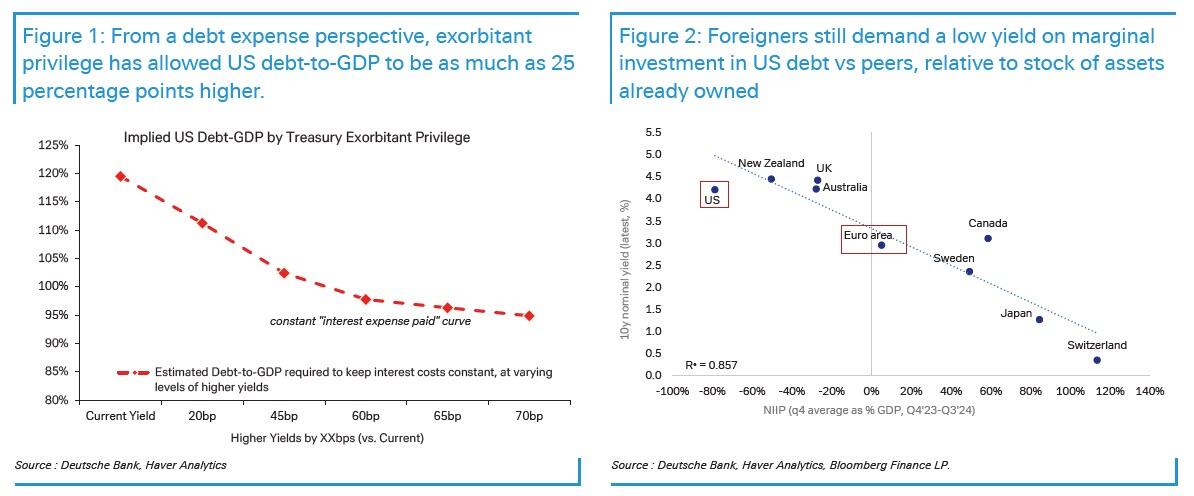
Core Insights - The U.S. debt crisis is on an unsustainable path, with the timing of its collapse being the biggest unknown factor [1] - The "excess privilege" of borrowing at low costs is diminishing, weakening the dollar's status as a reserve currency [1] - Moody's downgrade of the U.S. sovereign rating has not led to a market downturn, indicating investor acceptance of rapid debt expansion [5] Financial Projections - Interest and mandatory spending will rise from 73% of federal spending in 2024 to 78% by 2035 [8] - The fiscal deficit is projected to increase from 6.4% of GDP to approximately 9% by 2035 [8] - The debt-to-GDP ratio is expected to rise from the current 98% to 134% by 2035 [8] Historical Context - Moody's rationale for the downgrade is based on the assumption that the 2017 tax cuts will continue, leading to significant increases in debt and deficits [5] - Historical trends indicate that the debt-to-GDP ratio could exceed 200% in the coming decades [5][8]
“股汇债”三杀,30年期美债收益率突破5%!穆迪下调美国主权信用评级,36万亿美元债务雪球正在以“每秒5万美元”滚动
Mei Ri Jing Ji Xin Wen· 2025-05-19 09:07
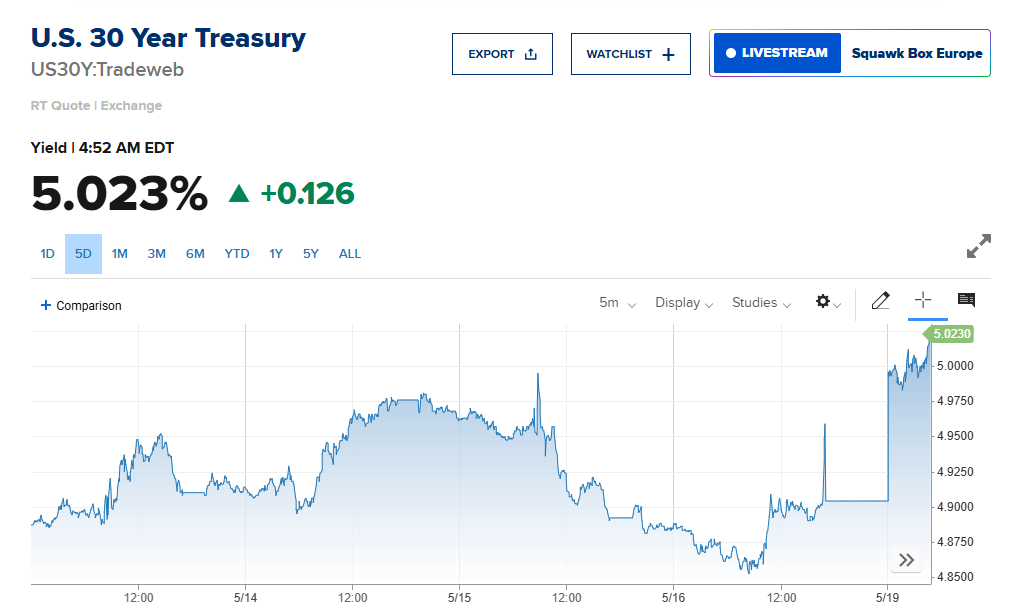
Core Viewpoint - Moody's downgraded the U.S. sovereign credit rating from Aaa to Aa1 due to rising government debt and interest payments, marking the first time all three major rating agencies have downgraded the U.S. from its highest rating since 1994 [1][5][9] Group 1: Rating Downgrade Details - The U.S. federal government debt has reached $36.2 trillion, accounting for 124% of GDP, with projections indicating it could rise to 134% by 2035 [4][5] - The fiscal deficit for FY2024 is projected to be $2.1 trillion, exceeding 6.4% of GDP, and is expected to rise to 9% by 2035 under high-interest conditions [5][10] - Moody's cited the inability of current fiscal plans to significantly reduce mandatory spending and deficits as a reason for the downgrade [4][5] Group 2: Market Reactions - Following the downgrade announcement, U.S. stock futures, Treasury futures, and the dollar index all weakened, with the 30-year Treasury yield rising to 5.023%, the highest since November 2023 [2][15] - Historical context shows that previous downgrades have led to significant market volatility, with the Dow Jones experiencing a maximum single-day drop of 5.55% in 2011 [16][17] Group 3: Expert Opinions - Analysts express concerns that the downgrade reflects a long-standing issue of unsustainable debt levels and political dysfunction, which could lead to increased borrowing costs and reduced demand for U.S. debt [7][18] - Richard Francis from Fitch highlighted the uncertainty surrounding large-scale spending cuts and the persistent high deficit, which is projected to remain around 120% of GDP [7][14] - Experts warn that the downgrade could undermine the perception of U.S. Treasuries as a risk-free asset, potentially leading to a shift in investment strategies [17][18]

中国3月减持美债189亿美元,债务危机损害美债信用
Hua Xia Shi Bao· 2025-05-17 14:19
Group 1: U.S. Treasury Securities and Foreign Holdings - In March, China's holdings of U.S. Treasury securities decreased by $18.9 billion to $765.4 billion, continuing a trend of holding below $1 trillion since April 2022 [2] - China reduced its long-term U.S. Treasury holdings by $27.6 billion in March, becoming the third-largest holder of U.S. debt [3] - Japan's holdings of U.S. Treasury securities increased by $4.9 billion in March, reaching $1.1308 trillion, maintaining its position as the largest foreign holder [3] Group 2: Credit Rating Downgrades - Moody's downgraded the U.S. credit rating from "Aaa" to "Aa1" due to rising debt and interest payment growth rates exceeding those of similarly rated sovereign nations [4] - Moody's was the last major agency to maintain the U.S. sovereign debt's AAA rating, citing a lack of consensus among U.S. governments to address fiscal deficits [4][5] - Other rating agencies, including Fitch and S&P, have previously downgraded the U.S. rating due to fiscal deterioration and debt ceiling negotiations [5] Group 3: Trade Policies and Economic Impact - In April, Trump initiated a global trade war, which is seen as a strategy to address the U.S. debt crisis, with negotiations yielding significant tariff reductions [6] - The U.S. budget surplus in April reached $258 billion, the second-highest on record, driven by increased tariff revenues and strong tax collections [7] - The U.S. has seen a 6.90% depreciation of the dollar this year, leading to an increase in foreign exchange reserves, with expectations of continued diversification in reserve investments [7]

中美的分手,从美债开始
Sou Hu Cai Jing· 2025-05-13 06:30
Group 1 - The article discusses the historical context of U.S. military actions and its relationship with China, highlighting that the U.S. has not achieved victory against China in past conflicts [3][5][9] - It emphasizes the ongoing U.S. strategy of sanctions and blockades against China since its establishment, which has intensified as China has grown stronger [5][7] - The article notes that the U.S. has increasingly found itself in a position of dependency on China for certain technologies and materials, particularly in high-tech sectors [7][9] Group 2 - The article outlines the U.S. government's dual approach of criticizing China while simultaneously seeking economic cooperation, particularly in the context of U.S. debt [12][13] - It highlights China's significant reduction in U.S. Treasury bond purchases, with nearly $300 billion sold in a year, indicating a shift in China's financial strategy [13][17] - The article concludes that China is actively working to reduce its reliance on the U.S. dollar and enhance the internationalization of the renminbi, alongside increasing gold purchases [17]

中美谈判:谈或谈成可能性大吗?
李迅雷金融与投资· 2025-05-10 08:15
Core Viewpoint - The high tariffs exceeding 120% between China and the U.S. are unsustainable due to the strong economic interdependence, leading to expectations for negotiations to lower tariffs [1][2][3] Summary by Sections Tariff Overview - The U.S. has imposed tariffs on Chinese goods, starting with a 10% rate and escalating to 145% without prior communication with China, contrasting with the previous trade conflict where negotiations were ongoing [2][4] - China responded with tariffs of 125%, indicating a significant escalation in trade tensions compared to the 2018 trade disputes [4][5] Negotiation Dynamics - Recent statements from Chinese officials suggest a willingness to engage in discussions, but emphasize that negotiations should not be limited to tariff reductions alone [3][5] - The U.S. has introduced policies that restrict investments and impose additional scrutiny on Chinese companies, which should also be part of any negotiation framework [5][6] Broader Economic Implications - The U.S. Trade Representative's actions against China's maritime logistics and shipbuilding industries could severely impact China's shipping and shipbuilding sectors, which dominate globally [6] - The potential for a U.S. debt crisis could create conditions favorable for negotiations, as the U.S. faces significant debt pressures [10][11] Political Context - The current U.S. administration is characterized by a strong anti-China sentiment, driven by key advisors advocating for aggressive trade policies [7][8][9] - The unpredictability of U.S. political dynamics may lead to shifts in negotiation strategies, especially under pressure from domestic economic conditions [12] Long-term Outlook - The ongoing trade conflict may be just the beginning of a broader struggle between the U.S. and China, with both sides likely to continue exerting pressure in various domains [13][14]