
美债期货

Search documents
美伊冲突如何影响期货市场?
Zhong Xin Qi Huo· 2026-03-02 06:57
1. Report Industry Investment Rating No relevant information provided. 2. Core Viewpoints of the Report - The U.S.-Iran conflict has significant impacts on various sectors, with prices in energy, precious metals, chemicals, and container shipping likely to be affected [8][9]. - The development of the conflict has three scenarios, each with different impacts on the market [8][27]. - Different sectors will respond differently to the conflict, with some being more directly affected and others being more indirectly affected [9][10][11]. 3. Summary by Directory Event Development Progress - On February 28 local time, the U.S. and Israel launched airstrikes against Iran, and Iran retaliated by targeting U.S. military bases in the Middle East. Iran's Supreme Leader Ayatollah Khamenei was reported killed in an attack on the same morning [21][23][59]. - As of March 1, most vessels around the Strait of Hormuz remained congested and awaiting passage [22][59]. - Three scenarios for subsequent event development are envisioned: symbolic Iranian retaliation and rapid regime transition; stable Iranian regime and intensified retaliation; prolonged but contained conflict [27][62]. Crude Oil - Crude prices have been supported by U.S.-Iran tensions since January, and after the February 28 military escalation, the market will test whether geopolitical risks translate into actual supply disruptions [9][31][63]. - If conflicts remain limited to military targets and end quickly, Brent crude is expected to trade between $70–$78/bbl before retreating. If production or transport is impacted, short-term price elasticity will increase [9][31][63]. - China's domestic crude futures may see additional support from rising tanker costs and increased demand for alternative crudes, widening the spread between domestic and international benchmarks [9][31][63]. Chemicals - Chemicals like methanol, MEG, fuel oil, and LPG may rise short-term due to geopolitical, cost, and transport concerns, but major facilities in the region remain largely undamaged [10][50]. - Continued attention is needed on conflict duration and strait accessibility [10][50]. Natural Gas - The impact of the Iran situation on the global natural gas market depends primarily on traffic through the Strait of Hormuz [11][38][69]. - A phased slowdown in trade flows following a conflict escalation would provide bullish support to gas prices in Europe and Asia. If a sustained and significant drop in Middle Eastern LNG exports emerges later, it would further stimulate price increases in Eurasian gas markets [11][38][69]. Precious Metals - Precious metals may benefit from rising safe-haven demand in the short term, but the sustainability of rallies depends on the severity and longevity of geopolitical tensions [12][39][70]. - Gold and silver prices could challenge recent highs in March [13][40][70]. Container Shipping - Freight rates on Middle Eastern container routes have already increased, and war surcharges are a key focus. Other routes may follow [14][41][71]. - The Middle East accounts for ~5% of global container volume, with ~3% transiting the Strait of Hormuz [14][41][71]. - The April contract highs could reach 1,450–1,500 points [14][41][72]. Non-Ferrous Metals - The U.S.-Iran military conflict is likely to intensify concerns over potential supply shocks in the near term, providing upward impetus to base metal prices [15][42][73]. - In the medium term, base metals are expected to continue to exhibit a volatile but bullish trend [15][42][73]. Ferrous Metals - The impact of the U.S.-Iran conflict on ferrous metals is primarily sentiment-driven, with minimal direct supply or cost transmission [16][44][74]. - Higher oil prices may raise seaborne iron ore transport costs, but with a lag [16][44][74]. Agriculture - The U.S.-Iran conflict affects the agriculture sector mainly through oil price volatility, with synthetic rubber being the most sensitive [17][45][75]. - Traditional crops may see mild gains from higher fertilizer costs, but historical data shows low sensitivity in agricultural markets [18][45][75]. U.S. Treasuries - A prolonged conflict could erode the safe-haven appeal of U.S. assets [19][46][76]. - Treasury yields are more tied to domestic fundamentals than geopolitics [19][46][76]. Chinese Government Bonds - Risk-off sentiment may support bond markets, but policy uncertainty looms [20][48][78]. - Short-term, bonds may see upward momentum, but pre-meeting policy speculation could lead to range-bound trading. Medium-term, potential RRR/cut cuts may support a bullish bias [20][48][78].
政治不确定性上升,美债收益率走高
Hua Tai Qi Huo· 2026-01-25 08:48
1. Report Industry Investment Rating - Not provided in the given content 2. Core Viewpoints - In the past two weeks, the U.S. Treasury yields have generally risen, with the curve showing differentiation. The short - and medium - term yields have increased, while the ultra - long - term yields have decreased. The Fed is unlikely to cut interest rates in January [2]. - Geopolitical and trade frictions have recently intensified. The sharp fluctuations of Japanese ultra - long - term government bonds due to fiscal concerns have become an amplifier for the repricing of global term premiums and are transmitted to the long - end of U.S. Treasuries through cross - market trading mechanisms. The narrative of "selling U.S. assets" has emerged periodically [2]. - In the long run, high debt and refinancing pressure are still the core constraints for U.S. Treasury fluctuations [2]. 3. Summary by Relevant Catalogs 3.1 Market Analysis 3.1.1 U.S. Treasury Interest Rates - As of January 23, the yield of the 10 - year U.S. Treasury has increased by 5bp in two weeks, reaching 4.24%. Compared with two weeks ago, the yield of the 2 - year U.S. Treasury has increased by 11bp, and the yield of the 30 - year U.S. Treasury has decreased by 3bp [3]. 3.1.2 U.S. Treasury Market - In terms of actual bond issuance, the duration of U.S. Treasury issuance in early January has slightly increased. The issuance of 3 - year bonds is $57.54 billion, 10 - year bonds is $38.92 billion, and 30 - year bonds is $21.97 billion. The U.S. fiscal deficit in December has dropped to $144.75 billion, and the 12 - month cumulative deficit has slightly increased to $1.67 trillion [3]. 3.1.3 Derivatives Market - The net short position of U.S. Treasury futures has slightly decreased. As of January 20, the net short positions of speculators, leveraged funds, asset management companies, and primary dealers have decreased to 5 million and 60 thousand contracts, indicating that the short - hedging demand in the interest rate market has begun to decline in the short term. The federal funds rate futures market has shifted from a net long to a net short position in the past two weeks, dropping to 98.2 thousand contracts [3]. 3.2 Dollar Liquidity and U.S. Economy 3.2.1 Monetary Policy - The core features of the Fed's December meeting are a turning point in the policy framework and increased internal differences. The Fed has cut interest rates by 25bp for the third consecutive time, in line with expectations, but the dot - plot maintains the guidance of only one interest rate cut next year, indicating that the pace of easing will significantly slow down. It has also announced the launch of monthly reserve management purchases of $40 billion in short - term Treasury bills. Currently, the implied overnight interest rate shows that the Fed is unlikely to cut interest rates in January [4]. 3.2.2 Fiscal Policy - As of January 21, the balance of the U.S. Treasury's TGA deposit has increased by $8.76 billion in two weeks, while the Fed's reverse repurchase tool has decreased by $491 million in two weeks, reflecting that the Treasury's bond issuance has absorbed funds, but the overall money market is still in an abundant state [4]. 3.2.3 Economic Situation - As of January 17, the Fed's weekly economic indicator is 2.34 (compared with 1.88 two weeks ago), indicating a short - term strengthening of the economy on a month - on - month basis [4]. 3.3 Key Interpretations - In the past two weeks, trade and geopolitical frictions between the U.S. and Europe have ignited risk sentiment. The sharp decline of Japanese ultra - long - term government bonds due to fiscal concerns and weak auctions has become an amplifier for global interest rate repricing. Through relative value trading, duration hedging, and asset rebalancing mechanisms, the increase in Japanese ultra - long - term interest rates has been quickly transmitted to the long - end of U.S. Treasuries [9]. - Recently, the narrative of "selling U.S. assets" has emerged, putting pressure on the valuation of risk assets. The increase in the long - end interest rate of U.S. Treasuries has led to a decline in the credibility of U.S. dollar assets. Some European pension institutions have reduced their holdings of U.S. Treasuries, intensifying the market impact of this narrative. The increase in U.S. Treasury yields has directly raised the discount rate, suppressing the valuation of stocks and credit assets, while safe - haven assets such as gold have benefited [9]. - In the long run, the root cause of this round of fluctuations lies in the structural problems of the high U.S. debt scale and rising refinancing pressure. Any external shock or liquidity disturbance may be magnified into a concentrated re - evaluation of the term premium, and the volatility center of U.S. Treasuries may rise periodically [10].
ATFX汇市前瞻:元旦周交易所休市 美联储会议纪要成亮点
Xin Lang Cai Jing· 2025-12-29 09:48
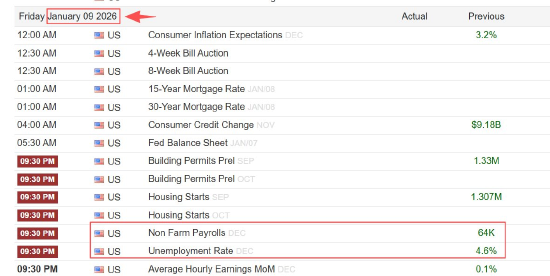
Group 1 - The core point of the article is that the U.S. non-farm payroll report, originally scheduled for release on December 29, has been postponed to January 9, 2026, due to delays caused by the government shutdown in October and November [1][5] - The absence of the non-farm payroll report this week is expected to result in lower volatility for the U.S. dollar and precious metals compared to traditional non-farm weeks [1][5] - The Federal Reserve's monetary policy meeting minutes will be released on Wednesday, January 3, which is a significant event for market participants as it may influence the direction of the U.S. dollar [5][11] Group 2 - Major global exchanges will be closed on January 1, 2026, for New Year's Day, including the New York Stock Exchange and the CME, which will halt trading in various futures contracts [3][4][8] - On December 31, 2025, many exchanges will also have early closures or suspend trading, but the New York Stock Exchange will operate normally, indicating that the U.S. stock market will not be affected by the New Year's Eve [9]

日本加息,没有“黑天鹅”
虎嗅APP· 2025-12-19 14:37
Core Viewpoint - The article discusses the significant impact of Japan's anticipated interest rate hike on global capital markets, particularly focusing on the implications for risk assets and the "yen carry trade" [4][7]. Group 1: Impact of Japan's Interest Rate Hike - Japan is expected to raise its policy interest rate from 0.50% to 0.75%, marking a 25 basis point increase, which has led to increased market anxiety and a decline in global risk assets [4][7]. - The long-standing low-interest environment in Japan has made the yen a key source of low-cost funding for global investments, particularly in high-risk assets like U.S. tech stocks and cryptocurrencies [8][9]. - An increase in borrowing costs for yen will pressure highly leveraged positions, potentially leading to forced deleveraging and selling of risk assets, starting with U.S. Treasuries and high-leverage derivatives [10][12]. Group 2: Market Reactions and Predictions - The likelihood of a market shock similar to July 2024 is considered low, as the current rate hike is largely anticipated by the market [15]. - If the Bank of Japan signals a more hawkish stance or raises rates by 50 basis points, it could exert short-term pressure on risk assets, including stocks and cryptocurrencies, while U.S. Treasury yields may rise initially [15][16]. - The medium to long-term outlook for assets like U.S. stocks and A-shares will depend on liquidity conditions and economic fundamentals, with potential risks of stagflation in the U.S. economy [16].

非农数据掀波澜:美债收益率曲线交易热度飙升 利差扩至四年高位
智通财经网· 2025-12-16 23:38
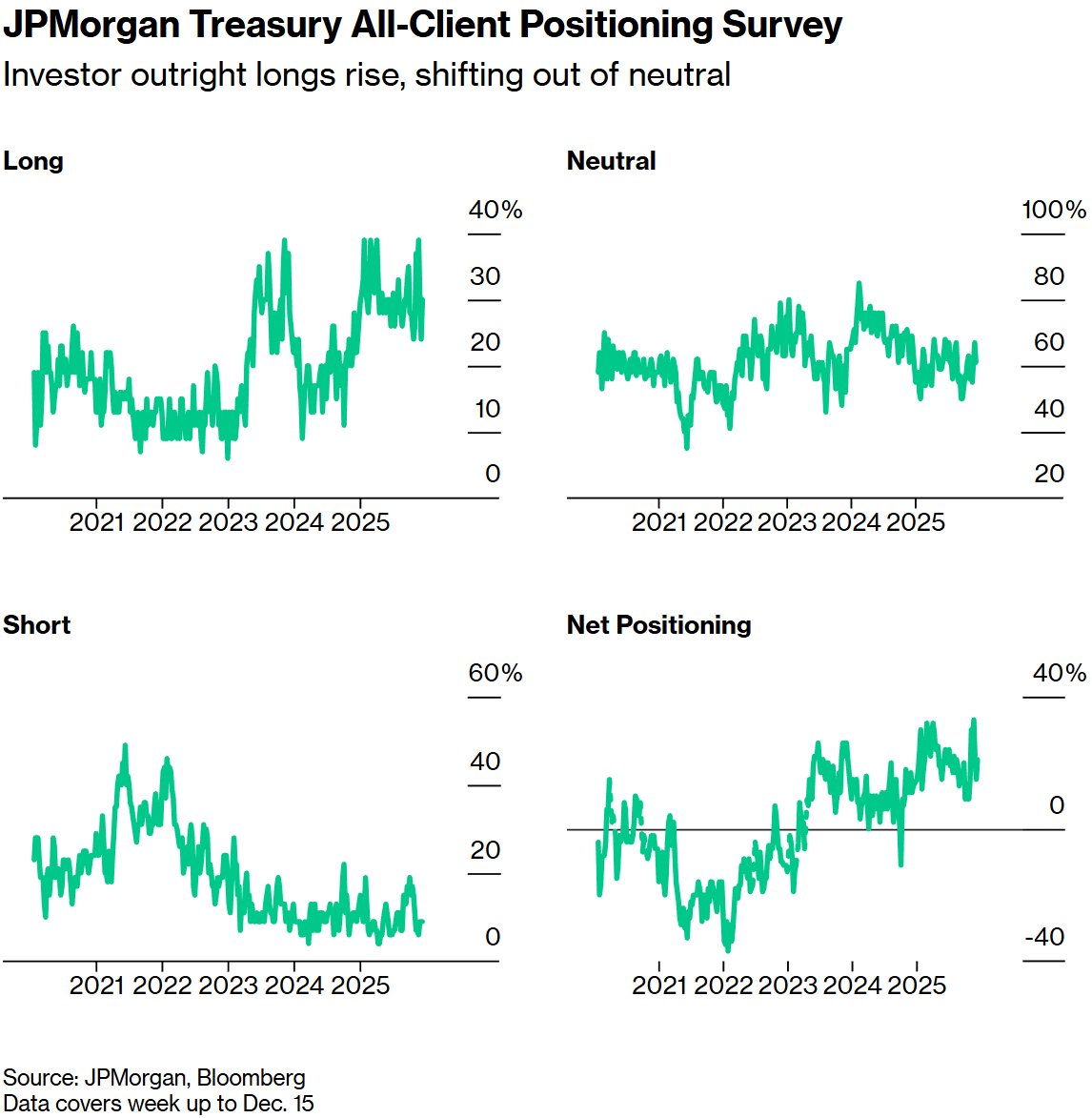
Group 1 - The unexpected rise in unemployment rate in November adds uncertainty to the mixed signals surrounding the U.S. economic outlook, leading bond traders to favor short-term U.S. Treasuries over long-term ones [1] - The yield spread between 2-year and 30-year U.S. Treasuries has widened to its largest extent in over four years, reflecting market expectations that the Federal Reserve will likely cut rates at least twice next year despite persistent inflation and strong economic growth [1] - The "curve steepening" trade is gaining traction, betting that the yield gap between short-term and long-term debt will continue to expand, with the upcoming release of November consumer price data set to further test this trade [1] Group 2 - A significant large-scale spread trade in the futures market aligns with the widening yield spread between 2-year and 30-year Treasuries, indicating a profit of $3 million within a day as the spread increased from 132 basis points to approximately 137 basis points [2] - As of the week ending December 15, investor direct long positions increased by 6 percentage points, shifting from neutral to long, while direct short positions remained unchanged [2] Group 3 - In the SOFR options market, there has been a notable increase in risk exposure for options expiring on March 26, June 26, and September 26, particularly for various call and put options, as traders hedge against potential dovish and hawkish policy scenarios from the Federal Reserve [5] - The largest open interest is observed at the 96.50 strike price for March 26 options, with significant positions also at the 96.375 strike price [7] Group 4 - The premium for put options used to hedge U.S. Treasury risks has continued to tilt towards bearish options, indicating strong demand for Treasuries amid expectations that long-term yields will underperform compared to short- and medium-term yields [10] - The steepness of the yield curve between 2-year and 30-year Treasuries reached its highest level since November 2021, exceeding 137 basis points [10]
标普500指数恐录得4月份以来首个月度下跌,芝商所故障影响市场
Sou Hu Cai Jing· 2025-11-28 12:18
Core Insights - The Chicago Mercantile Exchange (CME) experienced a technical failure that impacted trading, potentially leading to the first monthly decline in the S&P 500 index since April [1] - The technical issue affected multiple markets, including crude oil and U.S. Treasury futures, and has lasted longer than a similar incident in 2019 [1] - Despite the trading disruptions, individual stocks like Alphabet Inc. and Amazon showed resilience, with Alphabet's stock rising over 1% [1] Market Impact - The S&P 500 index futures were relatively flat before the technical failure occurred [1] - Market participants are expected to pause trading due to risk considerations until the issue is resolved, as they may face losses otherwise [1] - The onset of the Black Friday shopping season may influence stock performance, with some traders looking to exploit potential price discrepancies [1]
美联储“裱糊”困境引发无序震荡 美债市场年末不确定性或增长
Zhong Guo Jin Rong Xin Xi Wang· 2025-11-03 07:31
Core Viewpoint - The U.S. bond market is at a crossroads of monetary policy shifts and fiscal sustainability, facing unprecedented complexities due to diverging views within the Federal Reserve and increasing market uncertainties [1][2]. Group 1: Monetary Policy Changes - The Federal Reserve lowered the federal funds rate target range by 25 basis points to 3.75% to 4.00%, marking the second rate cut of the year [2]. - There is a notable split within the Federal Reserve, with some members advocating for larger rate cuts while others prefer to maintain current rates, indicating a lack of consensus [2][5]. - Market expectations for a December rate cut have fluctuated significantly, dropping from 90% to approximately 70% [5]. Group 2: Inflation and Economic Data - U.S. inflation remains stubbornly high, with September inflation reaching its highest level since January, driven by rising prices of essential goods [3]. - The ongoing government shutdown has hindered the collection of critical economic data, complicating the Federal Reserve's decision-making process [3]. - Tariff policies are contributing to rising consumer costs, with estimates suggesting that consumers bear 50% to 70% of the total tariff costs [3]. Group 3: U.S. Debt and Fiscal Concerns - The U.S. federal debt has surpassed $35 trillion, with the debt-to-GDP ratio reaching 143%, a historical high [5]. - Concerns over high fiscal deficits and excessive bond issuance are leading some investors, like Bill Gross, to sell U.S. Treasury futures, anticipating rising yields [5]. Group 4: Market Volatility and Investment Strategies - The bond market is expected to experience increased volatility due to multiple factors, including Federal Reserve policy uncertainty and the upcoming presidential election [6]. - Investors are adjusting their strategies in response to market uncertainties, with suggestions to shift towards longer-term bonds to mitigate exposure to short-term policy fluctuations [6].

战术性资产配置周度点评(20250914):宽松在望:美联储降息预期持续强化-20250915
GUOTAI HAITONG SECURITIES· 2025-09-15 12:17
Group 1 - The report maintains a tactical asset allocation view, recommending an overweight position in A-shares, a neutral position in US Treasuries and gold, and an underweight position in the US dollar [1][11][12] - The report expresses optimism about A-shares due to improved economic outlook, strong government support for capital market development, stable market liquidity, and improving risk appetite [11][12] - The report highlights that the US labor market's cooling has reinforced expectations for a "preventive" easing of monetary policy by the Federal Reserve, with the market fully pricing in a rate cut in September [9][11] Group 2 - The report indicates that multiple factors are likely to support the continued performance of Chinese assets, maintaining a tactical overweight view on A-shares [12][14] - The report notes that the US Treasury market is expected to have a neutral tactical allocation due to the marginal cooling of the US economy and labor market, which has strengthened expectations for easing monetary policy [12][14] - The report suggests that gold prices may benefit from rising geopolitical tensions and adjustments in Federal Reserve monetary policy expectations, maintaining a neutral tactical view on gold [12][14] Group 3 - The report states that the Federal Reserve's expectations for rate cuts are likely to weaken the interest returns on the US dollar, leading to a tactical underweight view on the dollar [13][14] - The report provides a tactical asset allocation summary, indicating an overweight in A-shares, Hong Kong stocks, and US stocks, while maintaining neutral positions in European and Indian equities [14][15] - The report outlines the performance of various asset classes, with A-shares showing a year-to-date increase of 15.48% and a weekly increase of 1.52% [7][21]
杰克逊霍尔央行年会前夜,资金豪赌鲍威尔放鸽,押注50基点降息
Hua Er Jie Jian Wen· 2025-08-20 00:40
Group 1 - Traders are heavily betting on a 50 basis point rate cut by the Federal Reserve next month, despite a significant increase in the July PPI [1] - The number of options contracts betting on a 50 basis point cut has reached 325,000, with a premium cost of approximately $10 million, potentially yielding a profit of $100 million if the cut occurs [1] - Market sentiment is shifting, with short positions decreasing to a monthly low, indicating a change in investor stance [1][2] Group 2 - According to Morgan Stanley's client survey, direct short positions have decreased by 4 percentage points, reflecting the lowest level of direct shorts since July 14 [2] - There is a warning that if Fed Chair Powell does not exhibit the expected dovish tone, the front end of the yield curve could face bearish corrections [3] - Institutional investors are showing a mixed positioning, with asset managers increasing net long positions in long-term bonds, while hedge funds are increasing net short positions in 10-year Treasury futures [3]
杰克逊霍尔央行年会前夜,资金豪赌鲍威尔“放鸽”,押注“50基点降息”
Hua Er Jie Jian Wen· 2025-08-20 00:23
Group 1 - Traders are heavily betting on a 50 basis point rate cut by the Federal Reserve next month, despite a significant increase in the July PPI [1] - The number of options contracts betting on a 50 basis point cut has reached 325,000, with a premium cost of approximately $10 million, potentially yielding a profit of $100 million if the cut occurs [1] - Market sentiment is shifting, with investors moving from short positions to neutral positions ahead of Powell's speech [2] Group 2 - The percentage of direct short positions among JPMorgan clients has decreased by 4 percentage points, indicating a reduction in bearish sentiment [2] - There is a warning that if Powell does not align with the current dovish expectations, the front end of the yield curve could face bearish corrections [3] - Asset managers have increased net long positions in most bond futures, particularly in long and ultra-long bonds, while hedge funds have increased net short positions in 10-year Treasury futures [3]