贸易保护主义

Search documents
宝马CEO警告:忽视中国或危及未来经济成功,合作是关键
Xin Lang Cai Jing· 2026-02-19 14:49
Group 1 - The chairman of BMW Group, Zipse, emphasized the importance of cooperation with China, the world's largest automotive market, to ensure future economic success [1][3] - German automakers, including BMW, Volkswagen, and Mercedes-Benz, are facing declining sales in China and are lagging in the development of electric motors, software platforms, and autonomous driving systems [1][3] - Zipse stated that ignoring China's vast market and innovative potential would result in missing significant opportunities for global growth and economic success [1][3] Group 2 - German Chancellor Merz is set to visit China, accompanied by CEOs from major German automotive companies, signaling a strategic partnership and a shift in Europe's approach to its largest trading partner [3][4] - Merz aims to establish a "strategic partnership" with China during his visit, addressing future cooperation and responding to U.S. tariff pressures [3][4] - The visit is seen as a move to diversify economic and diplomatic relationships in response to U.S. protectionism, indicating a potential shift in Germany's strategic positioning [4][6]


219:211!美国投票结果公布,特朗普被联手踢出局,中国机会来了
Sou Hu Cai Jing· 2026-02-19 03:52
Group 1 - The U.S. Congress passed a resolution opposing certain tariff policies of Trump, indicating that electoral pressures outweigh party loyalty, as evidenced by six Republican votes against the President [1] - The American Chamber of Commerce has warned that tariffs are causing significant economic losses for millions of small businesses, leading to calls for a tariff exemption mechanism [3] - A report from the New York Federal Reserve revealed that 90% of the costs of tariffs are borne by U.S. consumers and businesses, resulting in an additional annual expenditure of $1,000 per American household [5] Group 2 - The rising tariffs have posed existential challenges for businesses, with over 12,000 small businesses, particularly in manufacturing and retail, going bankrupt due to tariff policies in 2025 [7] - U.S. manufacturing exports declined by 8.3% in 2025, as many companies relocated production to avoid tariffs, contradicting the intended goals of Trump's policies [9] - The passage of the resolution signals a growing domestic opposition to trade protectionism, suggesting that adjustments to tariff policies are likely, which could create opportunities for China in the global market [11] Group 3 - For Chinese enterprises, the increasing domestic opposition to tariffs in the U.S. may lead to a more stable market outlook, allowing for more confidence in long-term contracts and trade, especially in sectors like electric vehicles and lithium batteries [13] - The demand from U.S. retailers and manufacturers for high-quality Chinese products is rising, indicating a potential for increased trade cooperation [13] - China's ongoing efforts to optimize the business environment and enhance product competitiveness will further provide global development opportunities, regardless of U.S. tariff policy adjustments [13]
美关税压力难阻增势 南非汽车出口创新高
Xin Lang Cai Jing· 2026-02-18 13:07
南非汽车商业委员会在其最新季度汽车制造业商业状况回顾报告中说,南非2025年共对全球109个国家 和地区出口创纪录的41.43万辆汽车,较2024年增长5.9%。 报告显示,受美国加征关税影响,南非2025年对北美汽车出口量从2024年的2.56万辆降至6530辆。 同期,由于对日本汽车出口下降,南非对亚洲汽车总出口量从2024年的2.93万辆降至1.98万辆。此外, 南非对欧洲汽车出口上升,由2024年的29.58万辆增至33.27万辆,占南非2025年汽车出口总量的 80.3%。 南非汽车商业委员会首席贸易与研究官诺曼·兰普雷克特在报告中说,尽管南非几个主要出口市场的贸 易保护主义行为有所加剧,但南非汽车出口仍展现出韧性。(据新华社电) (来源:经济日报) 转自:经济日报 南非汽车商业委员会2月17日发布报告显示,尽管美国加征关税对南非汽车业造成影响,但南非汽车出 口在2025年仍实现增长,出口量创历史新高。 ...
特朗普以为能压垮中国,一年后美国彻底清醒了
Sou Hu Cai Jing· 2026-02-18 06:48
Core Viewpoint - The article discusses how China has successfully countered the trade war initiated by the U.S. under Trump, demonstrating resilience and strategic depth rather than succumbing to pressure [1][8]. Group 1: Trade War Tactics - The U.S. initially believed that high tariffs and technology blockades would force China to concede, underestimating China's resolve and strategic response [3][5]. - China implemented measured countermeasures, targeting key U.S. sectors such as agriculture and energy, thereby inflicting pain on American farmers and businesses [5][6]. - The U.S. aimed to exploit China's reliance on its market and technology, but China's response was calculated and strategic, focusing on self-reliance and innovation [6][8]. Group 2: Strategic Responses - China increased investment in research and development to address technology vulnerabilities, promoting a self-sufficient industrial chain [6][8]. - The country expanded its market reach through initiatives like the Belt and Road and partnerships with ASEAN, reducing dependence on any single market [6][8]. - China maintained a commitment to multilateral trade systems and dialogue, gaining support from the international community while highlighting U.S. unilateralism [6][8]. Group 3: Outcomes of the Trade War - The U.S. objectives, such as reducing trade deficits, were not achieved; instead, domestic inflation increased, burdening American citizens [8][10]. - China's technological advancements accelerated due to the U.S. restrictions, leading to greater unity and determination within China [8][10]. - The trade war has reinforced China's position, allowing it to uphold its development rights and national dignity, showcasing resilience against external pressures [10][12].

美媒:中国欠特朗普一声谢谢,没有美国制裁,中国搞不到那么多钱
Sou Hu Cai Jing· 2026-02-17 08:22
Core Viewpoint - Trump's trade policy, initiated at the beginning of his second term, has led to significant increases in tariffs on imports, particularly targeting China, Canada, Mexico, and European countries, resulting in global supply chain disruptions and rising costs for American consumers [1][3][5]. Group 1: Tariff Increases and Global Reactions - Trump's administration raised tariffs on Chinese goods from 34% to 125%, while also imposing tariffs on Canadian energy products (10%) and Mexican agricultural products, leading to widespread discontent among trade partners [1][3]. - Canada retaliated with a 25% tariff on U.S. whiskey and motorcycles, while Mexico imposed tariffs on corn and pork, affecting U.S. farmers [3][5]. - European countries, particularly Germany, faced a 15% tariff on automotive exports, disrupting production chains and prompting a collective response against U.S. unilateralism [3][5]. Group 2: China's Economic Positioning - Despite the tariffs, China's trade surplus reached nearly $1.2 trillion in 2025, a 20% increase, as it capitalized on the market opportunities left by the U.S. [5][11]. - Indonesia's collaboration with China in nickel mining exemplifies how countries are increasingly turning to China for investment and technology, integrating deeply into China's supply chain [5][13]. - China's strategic response included implementing rare earth export controls, reinforcing its dominance in global supply chains and ensuring compliance with international standards [9][11]. Group 3: Shifts in Global Alliances - Countries like Brazil and Indonesia have shifted their economic alliances towards China, with Chinese electric vehicles capturing 89% of the Brazilian market by 2025 [7][9]. - The U.S. has seen a decline in global favor, with a 46% approval rating, while emerging markets increasingly prefer China as a partner [9][11]. - Trump's tariffs, intended to isolate China, have inadvertently strengthened China's global economic ties and led to a reconfiguration of supply chains, with countries seeking alternatives to U.S. products [11][13].
219:211!中方表态不到24小时,美国会通过决议,特朗普遭背刺
Sou Hu Cai Jing· 2026-02-17 07:53
Core Viewpoint - The U.S. House of Representatives passed a resolution challenging the Trump administration's tariffs on Canadian goods, marking a rare congressional check on executive power, especially with six Republican members breaking party lines to support the measure [1][3][10]. Group 1: Tariff Impact - Trump's tariffs, initiated in early 2025, included a 25% additional tariff on most Canadian goods and a 10% tariff on energy products, leading to a 15% decline in Canadian exports to the U.S. and an average annual increase of $1,500 in costs for American consumers [5][10]. - The tariffs resulted in a 20% reduction in trade volume between the U.S. and Canada, with Midwestern farmers losing significant export opportunities due to market closures [5][9]. Group 2: Political Dynamics - Six Republican lawmakers expressed deep concerns over the economic negative impacts of Trump's tariff policy, indicating a fracture within the Republican Party [3][10]. - Trump's threats against dissenting Republican members highlight internal party divisions and dissatisfaction with his trade policies [3][10][11]. Group 3: International Relations - Canadian Prime Minister Justin Trudeau's early 2026 visit to China aimed to enhance cooperation in energy and technology, which Trump perceived as a challenge to U.S. global dominance [7][9]. - Following the House resolution, Chinese investments in Canada, particularly in electric vehicle components and high-tech sectors, are expected to increase, indicating a shift in supply chain dynamics [11][12]. Group 4: Future Implications - The House's action signals a potential shift in congressional oversight of trade policies, with future emergency measures likely facing increased scrutiny [11][12]. - Economic reports suggest that removing tariffs could lower U.S. inflation by 0.5 percentage points, but Trump's opposition to such proposals indicates ongoing trade tensions [12].
太打脸了!美顾问访华后说出大实话:美国根本没赢,贸易战白打了
Sou Hu Cai Jing· 2026-02-17 05:40
Group 1 - The core argument is that despite the U.S. imposing tariffs on China during the Trump administration, China has not only remained unscathed but has made significant advancements in various sectors, even surpassing the U.S. in some areas [1] - Steven Ratner, a former advisor during the Obama administration, noted that the U.S. has not won the trade war, highlighting China's progress in fields like electric vehicles, industrial robotics, and pharmaceuticals [1] - China has doubled the U.S. in installed power generation capacity and has a clear cost advantage, while the U.S. lacks coherent industrial policies, which hampers its global competitiveness [1] Group 2 - The U.S. attempts to extend tariff threats to Iran's trade partners, particularly targeting China, which imports 80% of Iran's oil, indicating a miscalculation of China's response [3] - The U.S. struggles with internal issues, including a focus on short-term profits by private capital, which hinders long-term investments in research and innovation, leading to a competitive disadvantage against China [3] - The bipartisan consensus in the U.S. on blaming China for domestic issues reflects a misunderstanding of the root causes of its economic challenges [3] Group 3 - France's call for the EU to impose a 30% tariff on Chinese goods is seen as misguided, as it fails to address the deeper issues affecting European industry, such as the loss of cheap energy sources due to the Russia-Ukraine conflict [5] - France's significant trade relationship with China, particularly in wine and brandy, highlights the potential economic repercussions of its aggressive stance against China [5] - The EU's lack of unity on trade policies towards China suggests that France's actions could harm its own interests while benefiting the U.S. [5] Group 4 - The essence of international competition lies in strengthening domestic capabilities rather than engaging in tariff wars, as emphasized by Ratner [7] - The U.S. and Europe must recognize that protectionism is not a viable solution and that deep cooperation with China is necessary to enhance competitiveness in emerging sectors [7] - The interconnectedness of the global economy means that protectionist measures could ultimately harm the countries that implement them [7]
法国不再掩饰!向全球发出通告,27国可能对中国商品加征30%关税,但法财长强调不能搞一刀切
Sou Hu Cai Jing· 2026-02-16 23:33
最近全球经贸圈最炸裂的一幕,不是美国又在太平洋搞军演,也不是日本新首相高市早苗放什么狠话,而是法国突然掀了桌子——直接摊牌。 回过头看,之前闹得满城风雨的电动汽车关税风波,就是它先点的火。 现在它不满足于小打小闹,想拉整个欧盟下水,搞一场全面围堵。 理由?简单粗暴——看着中欧贸易逆差数字涨到眼红。 2024年,欧盟对华逆差3045亿欧元;2025年,这个窟窿又扩大到3200亿欧元左右。 法国人坐不住了,觉得中国货"抢"了他们的市场,必须动手。 但法国人开的方子,实在歪得离谱。 第一招,就是"一刀切"加税。 不管你是卖螺丝钉、纺织品,还是光伏板、家电,统统加30%。 这种懒政式操作,等于把复杂问题简化成蛮力对抗。 第二招更阴,居然想照搬1985年美国对付日本的"广场协议"。 当年美国联合几个盟友,硬生生把日元逼升值,结果日本出口成本飙升,制造业一蹶不振,经济陷入"失去的三十年"。 现在法国人想如法炮制,鼓动欧盟联手施压,让欧元对人民币一次性贬值20%到30%,说白了,就是逼人民币被动升值,削弱中国制造的价格优势。 这算盘打得噼里啪啦响,可刚落地,自家后院就起火了。 2月9号那天,法国政府直属的智库"高等战略与规 ...
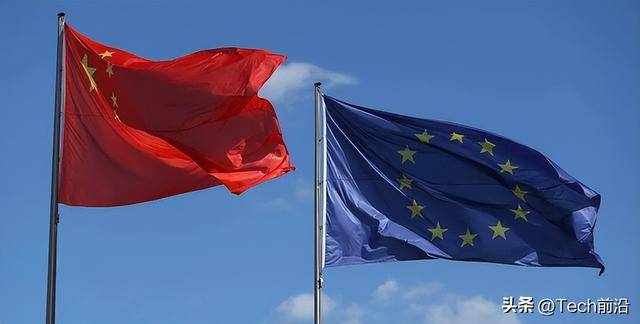
欧盟内讧升级!法国要对中国加税30%,德国却喊话:要向中国学习
Sou Hu Cai Jing· 2026-02-16 12:19
2026年初的欧洲政坛弥漫着不同寻常的紧张气氛。 2月11日,法国政府智库"高等战略与规划委员会"发布了一份引发轩然大波的研究报告。该份报告直指 中国工业体系拥有"欧洲难以复制的优势",其能源与用地成本比欧洲低30%至40%,高度一体化的产业 链和规模经济形成系统性竞争优势,甚至提出建议,主张对中国商品全面加税30%。这份被媒体解读 为"新广场协议"雏形的报告 与之相对,这德国总理默茨同日强调"反对狭隘保护主义""向中国学习"的演讲形成尖锐对立,将欧盟内 部关于中国政策的矛盾彻底公开化。 截止2025 年11 月, 中国与欧盟货物贸易进出口额为691.9亿美元 经济安全与市场开放的路线之争 目前法国推动的"欧洲优先"战略正在具体化为三项关键的措施:即将于下月公布的《工业加速法案》规 定了产品中"欧洲含量"的最低比例;针对关键领域外国投资的新限制条款,要求共享技术、雇佣当地工 人并与欧洲企业建立合资企业;以及对华贸易的"精准限制"清单。 这些政策背后是冰冷的数据——欧盟55%的制造业面临着来自中国的竞争消压力,其中德国受影响程度 达70%,法国则为36%。中国电动车在欧洲市场份额从5年前的3%飙升到了18%,直 ...
马克龙想效仿美国,对华搞“广场协议”,中国凭什么答应?
Sou Hu Cai Jing· 2026-02-16 09:29
Core Viewpoint - The French government think tank has released a report indicating that European industries are being overwhelmed by China, and urgent measures are needed to avoid a crisis of survival [1] Group 1: Proposed Solutions - The report suggests two potential solutions: imposing a 30% tax on all Chinese goods or implementing a "Plaza Accord" style agreement to devalue the euro against the yuan by 30% [3] - The imposition of tariffs is seen as a form of trade protectionism aimed at raising import costs to protect domestic industries [3] - However, the effectiveness of such measures is contingent on various factors, including supply chains and infrastructure, making rapid development challenging [3] Group 2: Economic Implications - High tariffs on foreign goods may lead to increased costs for domestic consumers, ultimately burdening the local population [5] - Devaluing the currency is intended to stimulate exports by allowing more euros to be obtained for the same amount of yuan, thus encouraging European industrial exports [5] - Nonetheless, currency devaluation can lead to negative consequences such as decreased purchasing power and heightened inflation [5] Group 3: Historical Context and Feasibility - The report draws parallels to the 1980s Plaza Accord, which aimed to devalue the dollar to enhance U.S. export competitiveness but did not resolve the underlying economic issues [7] - The French approach to replicate the Plaza Accord with China is deemed unrealistic, as China is unlikely to accept coercive agreements [7] - The historical context suggests that industrial development relies on strong capabilities rather than suppressing competitors, questioning the effectiveness of such strategies [9]