CPO技术

Search documents
智立方股价下跌4.16% 公司回应CPO设备为自研
Jin Rong Jie· 2025-08-08 17:31
Group 1 - The stock price of Zhili Fang is reported at 43.10 yuan, down by 1.87 yuan from the previous trading day, with a trading volume of 72,675 hands and a transaction amount of 317 million yuan [1] - Zhili Fang operates in the specialized equipment manufacturing industry, focusing on the research, production, and sales of industrial automation equipment, primarily used in consumer electronics, automotive electronics, and semiconductors [1] - The company stated on its investor interaction platform that its CPO equipment is self-developed, enhancing product performance and overall competitiveness through technological innovation [1] Group 2 - On the same day, the net outflow of main funds for Zhili Fang was 57.27 million yuan, with a cumulative net outflow of 124 million yuan over the past five days [1]
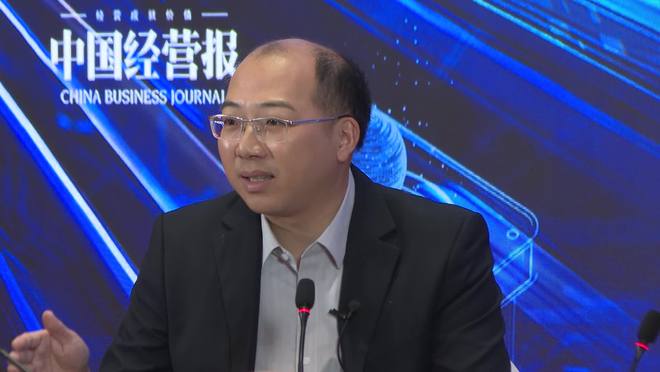
仕佳光子黄永光:中国光电子产业已从“突破技术封锁”转向“构建生态优势”
Zhong Guo Jing Ying Bao· 2025-08-08 03:29
Core Viewpoint - The core viewpoint emphasizes that technological breakthroughs, commercial logic, and resource integration are essential for Chinese optical chip companies to thrive in international competition [1][12]. Company Overview - Shijia Photonics is a high-tech enterprise focused on the research and production of passive and active optical chips, optical fiber connectors, and related products [3]. - The company achieved a significant milestone in 2012 by developing PLC chips, breaking foreign monopolies, and capturing over 50% of the global market share by 2015 [3]. Market Position and Achievements - In the gigabit network era, Shijia Photonics has become a key supplier of DFB chips, holding a substantial market share [3]. - The company has also emerged as the largest supplier in the AWG wavelength division multiplexing chip segment, contributing to advancements in high-speed optical modules [4]. Domestic Industry Landscape - The "bottleneck" issues in the domestic optical chip industry have largely been resolved, with most vacuum and testing equipment now domestically produced [5]. - The focus has shifted from merely breaking technological barriers to building ecological advantages within the optical electronics sector [5]. Global Competitive Strategy - Chinese optical chip manufacturers are increasingly gaining market share globally, with seven Chinese companies listed in the top 10 global optical module rankings [6]. - The advantages of Chinese firms include a strong engineering workforce, rapid response to customer needs, and a complete supply chain [6][7]. Future Directions - The future development focus includes silicon photonics and integrated optical chips, with significant investments planned in these areas [11][12]. - Shijia Photonics is also exploring applications in emerging fields such as lidar, gas sensing, quantum networks, and vehicle communication [12].


AI算力研究框架
2025-08-05 03:20
Summary of Key Points from the Conference Call Industry Overview - The AI computing power infrastructure is becoming a new investment driver, with large internet companies actively promoting it, while the industry cycle is still in its early stages [2][3][5] - The 5G industry has entered a mature phase, with capital expenditures stabilizing and declining, leading to limited short-term opportunities [2][3] Core Insights and Arguments - The AI investment boom was ignited by ChatGPT in early 2023, leading to a comprehensive rotation in the tech sector, with optical modules and other segments performing notably well [2][5] - The AI sector and satellite internet themes are showing potential opportunities during the A-share bear market from 2023 to 2024 [2][6] - The AI computing semiconductor industry is expected to experience a global surge in 2024, with significant improvements in performance and orders for the optical module industry, benefiting companies like Huadian [2][7] - The demand for 800G optical modules is expected to increase significantly, with shipments projected to reach 9 million units in 2024 and 35 million units by 2026, with Xuchuang holding about 40% of the global market share [4][18] Market Dynamics - The AI computing sector is currently undergoing a significant transformation, with a notable increase in demand for computing power driven by large model training and inference processes [5][14] - The market is expected to transition from a bear market to a bull market by late 2024 to early 2025, despite facing several negative factors [10][11] - The introduction of new technologies, such as CPO (Co-Packaged Optics), may disrupt traditional optical module forms, but its short-term impact is limited due to slow ramp-up and yield issues [9][22] Financial Performance and Projections - Companies like Shenghong Technology have exceeded expectations since late April 2025, driven by increased orders and Nvidia's financial performance [4][11] - The average price of 800G optical modules is around $500, with a projected decline of 8% to 10% by 2026, despite a significant increase in demand [18] Challenges and Opportunities - The AI industry is still in its early stages, with significant growth in computing power demand, particularly for high-performance computing cards [12][14] - Domestic companies face challenges related to yield and capacity, while international markets are impacted by trade restrictions [13][32] - The liquid cooling technology is expected to become a crucial direction for data centers in the next 5 to 10 years due to increasing power consumption and cooling requirements [28][31] Future Trends - The future of the AI computing power sector appears strong, with ongoing demand for high-performance computing cards and the gradual release of new products like Nvidia's GP300 [12][11] - The optical module industry is expected to see continued growth, driven by demand from major clients like Google and Nvidia [16][18] - New technological directions in the optical module field focus on lower power consumption, higher bandwidth rates, and miniaturization, which will shape future developments [22][17] Conclusion - The AI computing power industry is poised for significant growth, driven by technological advancements and increasing demand from major tech companies, despite facing challenges in supply and market dynamics [32][34]

AI产业深度汇报系列:无源+有源,光电器件业内领先
2025-08-05 03:19
Summary of the Conference Call Records Company Overview - The company discussed is Tianfu Communication, which specializes in optical devices and has a diverse product line including passive and active components. The company has established its headquarters and R&D center in Suzhou, with additional facilities in Japan and Jiangxi, and sales offices in Shenzhen and Wuhan [1][2]. Industry and Market Position - Tianfu Communication has a significant presence in the optical device industry, focusing on laser radar and medical testing sectors. The company has expanded its global operations with production capabilities in Suzhou, Jiangxi, and Thailand, with the first phase of the Thailand factory contributing to performance in 2024 and the second phase expected to be operational by Q2 2025 [1][2]. Product Lines - The product lines are categorized into passive and active businesses. Passive products include FAU components and MPO fiber optic connectors, while active products focus on the 800G and 1.6T optical engines from Melos, with the latter expected to see quarterly growth starting in 2025 [1][4]. Financial Performance - Since its IPO in 2015, Tianfu Communication has maintained growth despite industry cyclicality. The company experienced significant revenue and profit increases during the 5G construction peak (2019-2020) and continued to grow even during the slowdown in domestic 5G construction (2021-2022). The revenue has rapidly increased since 2023 due to the AI wave, with expectations for this trend to continue through 2025 [5][6]. Profitability - The company enjoys high gross and net profit margins, attributed to strict cost control and a focus on high-end product strategies. The expense ratio remains stable at around 11%, supported by the revenue growth from active products [6]. Historical Development - Tianfu Communication has a history of breaking the Japanese monopoly in the ceramic precision components market by mastering the complete processing technology. The company has expanded its product offerings over the years, including fiber optic adapters and transceiver components, which has increased its market share in China [3][7]. Competitive Advantages - The company has established a competitive edge in the optical communication field, being one of the first to go public among optical chip companies. It has continuously innovated and expanded its product lines to meet the growing demands of the data center and cloud computing markets [8][9]. Future Directions - Tianfu Communication is focusing on the development of 1.6T high-speed transmission equipment and CPO (Co-Packaged Optics) technology, with expectations for 1.6T devices to gradually ramp up production in Q2 to Q3 of this year. CPO technology is projected to reach mass production levels by 2026-2027, which will provide additional business growth opportunities [10]. The company aims to continue expanding its product lines and deepening its industry chain involvement while maintaining strong profitability and cost management [10].

沪指重返3600点关口 创新药板块持续升温
Shang Hai Zheng Quan Bao· 2025-07-29 17:53
Market Overview - The A-share market exhibited a strong oscillation pattern, with the Shanghai Composite Index surpassing the 3600-point mark, closing at 3609.71 points, up 0.33% [2] - The total trading volume in the Shanghai and Shenzhen markets reached 180.32 billion yuan, an increase of over 60 billion yuan compared to the previous day [2] Pharmaceutical Sector Performance - The pharmaceutical and biotechnology sector led the market, with the Shenwan Pharmaceutical and Biotechnology Index closing up 2.06%, driven by significant gains in innovative drugs and CROs [3] - Notable stocks such as Ruizhi Pharmaceutical, Aoxiang Pharmaceutical, and Jiuzhou Pharmaceutical hit the daily limit, while leading innovative drug company Heng Rui Pharmaceutical rose nearly 3% after a previous limit-up [3] - Heng Rui Pharmaceutical announced a collaboration with GSK, granting exclusive rights for the HRS-9821 project and up to 11 additional projects, with a potential total transaction value of approximately 12 billion USD [3] - WuXi AppTec reported a net profit of 8.561 billion yuan for the first half of the year, a year-on-year increase of 101.92%, and plans to distribute a cash dividend of 3.5 yuan per 10 shares [3] AI Hardware Sector Dynamics - The AI computing hardware sector showed strong momentum, with the PCB concept experiencing a surge, and the CPO concept seeing multiple stocks reach new highs [5] - CPO leader Zhongji Xuchuang rose by 9.41%, achieving a historical high, with a year-to-date increase of approximately 70% [5] - According to Guojin Securities, CPO technology significantly reduces power consumption by 30% to 50% while enhancing data transmission speed and bandwidth density, which is crucial for supporting large model iterations [5] Market Sentiment and Future Outlook - The A-share market is expected to continue its upward trend, driven by favorable funding conditions and policy expectations [6] - Recent data indicates an increase in public and retail investor participation, with the balance of margin trading nearing 2 trillion yuan, reflecting a strong willingness to enter the market [6] - Guotai Junan Securities anticipates that the funding environment will support further market growth, particularly in large financial assets [7]

AI算力4大“隐形冠军”!中央汇金+社保基金押注百亿,有望一骑绝尘!
Xin Lang Cai Jing· 2025-07-26 11:36
Core Insights - The global demand for AI computing power is experiencing unprecedented explosive growth, while the process of domestic substitution is accelerating [1] - The A-share market is witnessing significant development in three major technology sectors: computing power, CPO (Co-Packaged Optics), and PCB (Printed Circuit Board) [1] Group 1: Computing Power Infrastructure - Gansu Qingyang has successfully deployed a domestic 100,000-card intelligent computing cluster, utilizing a fully autonomous architecture and Ascend chips, marking a significant advancement in China's computing power infrastructure [1] - This achievement breaks international technological barriers and signifies a leap from "usable" to "optimal" computing power infrastructure [1] Group 2: CPO Technology - CPO technology integrates optical modules with chip packaging, significantly reducing signal transmission losses and greatly enhancing the energy efficiency and bandwidth of data centers and AI servers [1] - Morgan Stanley predicts that the CPO market will surge from $8 million in 2023 to $9.3 billion by 2030, with a staggering compound annual growth rate (CAGR) of 172% [3] Group 3: PCB Market - The PCB sector is also showing strong growth, driven by the rapid increase in AI inference demand, with applications in servers, switches, and optical modules [3] - Prismark forecasts that the AI server PCB market will achieve a CAGR of 32.5% from 2023 to 2028 [3] Group 4: Investment Opportunities - ZTE Corporation is actively pursuing a "computing power network" strategy, providing comprehensive ICT infrastructure solutions and has won multiple domestic intelligent computing center projects [4] - ZTE has collaborated with NVIDIA to develop a 51.2T CPO switch, setting a new industry record for single-chip bandwidth, which is already applied in Meta's data center [4] - Huada Technology, a leading AI server PCB supplier, has orders booked until 2026 and has made significant breakthroughs in 800G optical module PCB signal integrity [4] - Shengyi Technology, the second-largest copper-clad laminate manufacturer globally, holds over 20% market share in the high-frequency and high-speed CCL market and has achieved a 99.5% yield rate for 800G optical modules [5] - The company has also developed high thermal conductivity PCBs for liquid-cooled servers, successfully applied in the 100,000-card intelligent computing cluster in Qingyang [5] - The top potential stock, H3C, leads the domestic switch market and ranks among the top three globally in AI server shipments, having launched the 51.2T 800G CPO silicon optical switch [4][5]




黄仁勋:未来复合型芯片可能有桌子那么大|链博会
Zhong Guo Jing Ying Bao· 2025-07-19 09:42
Group 1 - The core discussion at the third Chain Expo involved NVIDIA's CEO Jensen Huang and Alibaba Cloud's founder Wang Jian, focusing on the future of chip development and the role of silicon technology in artificial intelligence [1] - Huang emphasized that the next generation of chips will be composite chips, potentially as large as a table, and will transition from single-chip architectures to multi-chip composite systems [1] - Huang mentioned that NVIDIA is the first company to utilize this technology, which he referred to as CPO, allowing for the connection of different dimensions of information [1] Group 2 - The Chain Expo showcased over 110 well-known domestic and foreign enterprises, demonstrating the latest practices in advanced manufacturing across various sectors such as rail transportation, aerospace, and industrial automation [2] - The event highlighted that modernization is achieved through manufacturing, and international cooperation is essential for accelerating the development of advanced manufacturing [2]
大数据ETF(159739)上涨超2%!CPO光模块概念午后活跃
Xin Lang Cai Jing· 2025-07-08 06:36
Group 1 - The CPO optical module concept is gaining traction, with the CSI Cloud Computing and Big Data Theme Index rising by 2.13% as of July 8, 2025, with notable increases in stocks such as Tianfu Communication up by 13.56% [1] - CPO technology is recognized as a key infrastructure for AI computing power due to its low power consumption and high bandwidth characteristics, with applications expected in various sectors including smart transportation, energy, finance, and healthcare [1] - The global edge AI market is projected to grow from 321.9 billion yuan in 2025 to 1,223 billion yuan by 2029, reflecting a compound annual growth rate (CAGR) of 39.6%, while China's edge AI market is expected to increase from 80.2 billion yuan to 307.7 billion yuan during the same period, with a CAGR of 39.9% [1] Group 2 - The CSI Cloud Computing and Big Data Theme Index tracks 50 listed companies involved in cloud computing and big data services, with the top ten weighted stocks accounting for 51.84% of the index [2] - The top ten stocks in the CSI Cloud Computing and Big Data Theme Index include companies such as iFlytek, Zhongji Xuchuang, and New Yisheng, indicating a strong concentration in the index [2]
锐捷网络(301165):AI时代的网络先锋
Tianfeng Securities· 2025-07-04 15:19
Investment Rating - The report initiates coverage with a rating of "Buy" for the company [6]. Core Viewpoints - The company is positioned to benefit significantly from the development of AI, with projected revenues increasing from 139.65 billion to 182.69 billion CNY from 2025 to 2027, and net profits expected to rise from 7.78 billion to 11.79 billion CNY during the same period [4][6]. Summary by Sections 1. Industry Leading Network Solutions Provider - The company focuses on three main product lines: network equipment, network security, and cloud desktop solutions, with network equipment contributing over 70% of revenue [15][21]. - The company emphasizes independent research and development, with over 50% of its workforce dedicated to R&D, and has established eight R&D centers globally [27][28]. - Revenue has shown consistent growth, with a compound annual growth rate (CAGR) of 17.48% from 2017 to 2024, and overseas revenue has significantly increased [36][45]. 2. New Development Opportunities in the Switch Market - The global and Chinese switch markets are steadily growing, with the Chinese market expected to reach 749 billion CNY by 2024 [50][52]. - The rise of white box switches, which offer cost advantages and operational flexibility, is notable, as they allow users to purchase hardware and install software independently [57][58]. - AI is driving the upgrade of data center switches, with significant growth in demand for high-speed ports, particularly 200G and 400G devices [64][67]. 3. Significant Competitive Advantages and Growth Value - The company targets large clients, successfully penetrating the high-end market for operators, and has won significant contracts with major telecom companies [98][100]. - The company maintains a strong focus on product development, achieving a leading market share in several sectors [105]. - The establishment of self-owned production lines ensures delivery capabilities, and the company has built a robust technical service system for rapid response [3][104]. 4. Financial Forecast and Investment Recommendations - The company is projected to achieve revenues of 139.65 billion, 160.84 billion, and 182.69 billion CNY from 2025 to 2027, with net profits of 7.78 billion, 9.70 billion, and 11.79 billion CNY respectively [4][5]. - The report suggests that the company has substantial growth potential due to its deep engagement in the switch product market and active overseas expansion [4].
Ethernet跟InfiniBand的占有率越差越大
傅里叶的猫· 2025-06-21 12:33
Core Insights - The article discusses the competitive landscape of AI networking, highlighting the advantages of InfiniBand over Ethernet in large data centers, particularly in the context of NVIDIA's dominance in the GPU market [1][6][13]. Broadcom Tomahawk 6 - Broadcom announced the shipment of the Tomahawk 6 (TH6) switch chip, which utilizes 3nm technology and supports up to 102.4Tbps switching capacity, doubling the capacity of current mainstream Ethernet switch chips [2][4]. - The TH6 chip is priced at under $20,000, nearly double that of its predecessor, but offers significant performance improvements that justify the cost [2][4]. AI Network Optimization - TH6 excels in both scale-out and scale-up architectures, allowing connections to up to 100,000 XPUs and supporting 512 XPU single-hop connections, significantly reducing latency and power consumption [3][9]. - The chip features Cognitive Routing 2.0 technology, optimized for modern AI workloads, enhancing global load balancing and dynamic congestion control [3][9]. Market Trends - The introduction of TH6 is expected to drive rapid growth in the demand for 1.6T optical modules and data center interconnects, marking a new technology upgrade cycle in the global AI infrastructure market [4][10]. - The global optical circuit switch hardware sales are projected to grow at a CAGR of 32% from 2023 to 2028, outpacing Ethernet and InfiniBand switches [10]. Ethernet vs InfiniBand - Approximately 78% of top supercomputers use Ethernet solutions based on RoCE, while 65% utilize InfiniBand, indicating a competitive dynamic between the two technologies [13][16]. - InfiniBand has gained traction in the early stages of generative AI infrastructure deployment due to NVIDIA's market position, although Ethernet is expected to regain momentum as cloud service providers invest in self-developed ASIC projects [16]