IP授权

Search documents
2025 IPX世界文旅流量大会在深启幕 全球千余热门IP鹏城“引流吸金”
Shen Zhen Shang Bao· 2025-08-27 23:26
Group 1 - The "2025 IPX World Cultural Tourism Flow Conference" was held in Shenzhen from August 27 to 29, organized by the Shenzhen Cultural Tourism Promotion Association, involving over 50 business associations [1] - The conference featured more than 30 forums and activities, two major exhibitions, and an IP licensing matchmaking event, covering an exhibition area of 15,000 square meters with over 1,000 popular IPs from 21 countries and regions [1][2] - The event is expected to attract over 35,000 professional visitors, showcasing the global trend of deep integration between IP licensing, creative design, cultural and creative toys, and the cultural tourism industry [1] Group 2 - The main forum focused on "Intelligent Observation of the World: New Chapter in Cultural Tourism," with experts discussing how phenomenon-level IPs can reconstruct urban dialogue through culture and technology [2] - Representatives from companies like Tencent Cultural Tourism and the Guangdong-Hong Kong-Macao Greater Bay Area Low-altitude Economy Drone Association will brainstorm on digital transformation in cultural tourism and emerging sectors [2] - The conference also included the 12th Shenzhen International IP Licensing Industry Expo and the 3rd Shenzhen International Cultural and Creative Exhibition & Trendy Toy Exhibition, featuring over 30,000 exhibits across the entire industry chain [2]
锦泓集团: 锦泓时装集团股份有限公司2025年半年度报告摘要
Zheng Quan Zhi Xing· 2025-08-27 11:25
Core Viewpoint - The company, Jin Hong Group, reported a decline in revenue and net profit for the first half of 2025, primarily due to the impact of convertible bond interest payments and reduced government subsidies, although core profitability remained stable when excluding non-recurring factors [1][2]. Financial Summary - Total assets decreased by 10.23% to approximately 5.31 billion RMB compared to the end of the previous year [1]. - Net assets attributable to shareholders increased slightly by 0.45% to approximately 3.63 billion RMB [1]. - Revenue for the reporting period was approximately 1.99 billion RMB, down 4.04% year-on-year [1]. - Total profit decreased by 22.89% to approximately 148.45 million RMB [1]. - Net profit attributable to shareholders was approximately 113.72 million RMB, a decrease of 23.03% [1]. - The net cash flow from operating activities fell by 45.23% to approximately 197.51 million RMB [1]. - The weighted average return on net assets decreased by 1.14 percentage points to 3.12% [1]. - Basic and diluted earnings per share were both 0.32 RMB, down 23.26% from the previous year [1]. Brand Performance - Teenie Weenie brand's IP licensing revenue grew significantly by 61.97% to approximately 22.79 million RMB, while its main business revenue decreased by 3.78% to approximately 1.56 billion RMB [2]. - VGRASS brand's main business revenue fell by 11.57% to approximately 351 million RMB [2]. - Yuanxian brand's revenue increased by 20.95% to approximately 51.57 million RMB [2]. Marketing and Brand Strategy - Teenie Weenie brand enhanced its youthful image through innovative marketing and collaborations, including a new male brand ambassador and a themed marketing campaign that achieved significant online exposure [8]. - VGRASS brand focused on high-end positioning and cultural heritage, successfully hosting events that attracted considerable media attention and consumer engagement [8][11]. - Yuanxian brand leveraged national media exposure and cultural events to promote its heritage products, enhancing brand recognition and consumer loyalty [10][12]. Operational Developments - The company is enhancing its digital operations and supply chain collaboration to improve efficiency and decision-making capabilities [14][15]. - A focus on customer needs and scenario-based product development has been emphasized across all brands to improve competitiveness [12][14]. - The company is implementing a matrix organizational structure to enhance operational efficiency and decision-making effectiveness [16].

【机构调研记录】融通基金调研汇嘉时代、潮宏基等3只个股(附名单)
Sou Hu Cai Jing· 2025-08-27 00:13
Group 1: HuiJia Times - The company has seen an increase in the proportion of fresh products in its Urumqi Beijing Road Shopping Center supermarket by 1.87%, with cooked food up by 5% and bakery products up by 0.8% [1] - The company is focusing on optimizing its product structure and enhancing investor returns through improved dividend yields [1] - New store openings include a supermarket in Kuitun expected to open by the end of 2024 and a department store in the first half of 2026, with accelerated expansion in Urumqi and quality regions [1] Group 2: ChaoHongJi - The company has launched high-weight series products such as Zhenjin Zhenzuan and cultural IP collaborations, aiming to increase customer spending [2] - Online subsidiary profits have increased by 70.64% year-on-year, supporting the integration of online and offline sales [2] - As of June 30, the company has 1,540 stores, with a net increase of 72 stores, and has expanded internationally with new locations in Kuala Lumpur, Thailand, and Cambodia [2] Group 3: TianFu Communication - In the first half of 2025, the company achieved revenue of 2.456 billion yuan, a year-on-year increase of 57.84%, and a net profit of 899 million yuan, up 37.46% [3] - The growth in active business is attributed to the increased delivery of high-speed active products, with a strong demand for these products [3] - The company is expanding its production capacity in Thailand, with the first phase already in operation and the second phase in development [3]


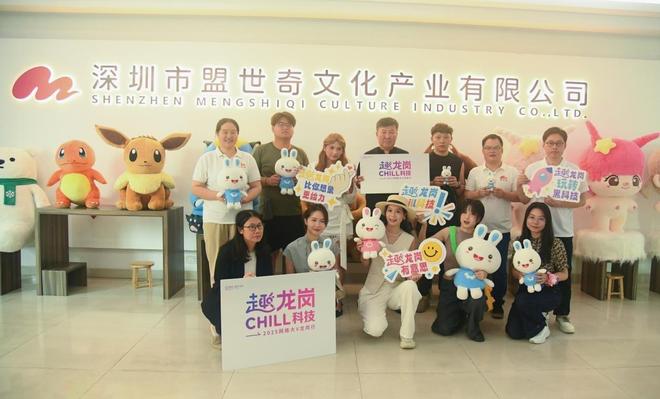
网络大V走访龙岗文创:原来这些火爆全网的IP是龙岗造
Nan Fang Du Shi Bao· 2025-08-21 03:46
Core Insights - The integration of traditional cultural symbols with AI design, AR interaction, and smart manufacturing is creating innovative opportunities in the cultural and creative industry in Longgang District, Shenzhen [1][3]. Group 1: Longgang's Cultural and Creative Industry - Longgang District has established a digital creative industry corridor spanning 46 kilometers and covering 32 square kilometers, housing over 10,000 enterprises, with projected revenue exceeding 220 billion yuan in 2024 [3]. - The district's cultural industry is characterized by "IP incubation + data-driven + cultural tourism integration," showcasing strong growth among local creative enterprises [3]. Group 2: Alliance of Technology and IP in Plush Toy Industry - Alliance of IP licensing and AI technology is revitalizing the century-old plush toy industry, with Shenzhen's Alliance of Wonder Culture Industry Co., Ltd. leading this transformation [6][8]. - The company has developed over 10,000 IP derivative products, with a projected GMV of over 300 million yuan in 2024, leveraging partnerships with major firms like Tencent and Alibaba [8]. - The company has implemented an "IP potential assessment model" to enhance the success rate of IP collaborations, significantly improving the identification of high-value IPs [8][11]. Group 3: Data-Driven Creativity at Li Xiang Creative - Li Xiang Creative has evolved from a design company to a full-service provider in IP derivatives, corporate gifts, and urban cultural creativity, with over 1,000 SKUs launched [15]. - The company utilizes a product database and market feedback to enhance the precision of its creative processes, ensuring that cultural products resonate with market demands [15][17]. Group 4: AR and Cultural Symbol Activation at Innovation Micro-Yue - Innovation Micro-Yue is pioneering the integration of AR technology with cultural symbols, transforming static souvenirs into interactive cultural experiences [19][20]. - The company has shifted from OEM production to cultural empowerment, collaborating with over 50 scenic spots and museums, achieving annual sales exceeding 200 million yuan [22]. - The firm emphasizes the transformation of cultural symbols into perceivable digital assets, utilizing smart manufacturing for scalable production [24]. Group 5: Insights from Influencers - Influencers noted that Longgang's cultural industry thrives on a combination of supportive policies, advanced technology, and a symbiotic ecosystem, which has led to a unique development path [26][27]. - The district's focus on AI, AR, and smart manufacturing is reshaping the creative value chain, making cultural symbols quantifiable and widely disseminated [27].
大麦娱乐(1060.HK):三丽鸥中国区业绩亮眼 看好阿里鱼业绩继续高增
Ge Long Hui· 2025-08-14 02:54
Core Viewpoint - The company is optimistic about the strong performance of its IP licensing business, highlighted by the successful collaboration between Alibaba Fish and Sanrio, with steady progress in online and offline activities [1] Group 1: Financial Performance - Sanrio's Q1 FY2026 (April to June 2025) report shows that the China region achieved revenue of 376 million RMB, a year-on-year increase of 120%, with licensing revenue reaching 251 million RMB, up 158% [1] Group 2: Future Projections - The company expects net profit attributable to shareholders for FY2026-2028 to be 964 million, 1.178 billion, and 1.409 billion RMB, representing year-on-year growth of 165.21%, 22.12%, and 19.62% respectively [1] - The closing price on August 11, 2025, corresponds to a PE ratio of 32.98, 27.00, and 22.58 for the respective years [1] Group 3: Strategic Partnerships - The strong performance of Sanrio in China and its emphasis on the significant contribution of China to its growth indicate a solid and positive partnership, which is expected to be based on long-term operations and steady development [1] - Marketing activities planned by Alibaba Fish for Sanrio are anticipated to provide experience for the development and operation of other collaborative IPs in China, potentially leading to more new IP signings [1]
“丝绸苏州2025”十周年特展举行
Su Zhou Ri Bao· 2025-08-13 00:26
Core Viewpoint - The "Silk Suzhou 2025" special exhibition, celebrating its 10th anniversary, aims to showcase the cultural heritage and contemporary vitality of Chinese silk, set to take place from October 10 to 12 at the Suzhou International Expo Center [1] Group 1: Exhibition Overview - The exhibition has been a significant national platform since its inception in 2016, focusing on the achievements of the Suzhou and Chinese silk industry, promoting trade cooperation, and leading industry trends [1] - The special exhibition is co-hosted by the China Silk Association, Jiangsu Silk Association, and Suzhou Silk Industry Association, with an exhibition area of 10,000 square meters [1] Group 2: Event Features - The event will feature six themed exhibition areas and utilize diverse formats such as exhibitions, sales, roadshows, live broadcasts, and innovative experiences to create immersive communication and cooperation scenarios [1] - Collaborations with top national IPs like "Black Myth: Wukong" will result in the creation of themed co-branded products [1] - A "Silk Industry Innovation Accelerator" will be established for exhibitors, providing 12 types of specialized services including supply chain finance, cross-border logistics, and IP licensing [1]
影视点评:周末单日票房均破3.7亿元,《731》定档918
Huafu Securities· 2025-08-04 09:42
Investment Rating - The industry rating is "Outperform the Market" [15] Core Insights - The weekend box office exceeded 3.7 billion yuan, with significant attention on films scheduled for August [2][3] - The summer box office has reached a new high, with diverse genres including animation and anti-war films [3] - The animated film "Wang Wang Mountain Little Monster" has achieved a box office of 1.33 billion yuan within two days of release [3][4] - The anti-war film "Nanjing Photo Studio," produced by China Film, is projected to have a total box office of 4.12 billion yuan [5] Summary by Sections Industry Dynamics - The summer box office on August 2 and 3 reached 3.7 billion yuan and 3.8 billion yuan respectively, marking a record for the past 25 years [3] - The film "Nanjing Photo Studio" debuted with a box office of 3.81 billion yuan in its first week, becoming a major success [5] - The film "731," directed by Zhao Linshan, is set to be released on September 18, with high anticipation reflected in its viewership metrics [5] Investment Recommendations - Recommended companies to focus on include Shanghai Film, China Film, Happiness Blue Sea, Wanda Film, and Hengdian Film [6] - Distribution focus should be on Maoyan Entertainment, while cinema chains like Wanda Film and Happiness Blue Sea are also highlighted [6]
中国国际授权业峰会在沪举行,解码IP行业发展路径
Sou Hu Cai Jing· 2025-07-15 05:32
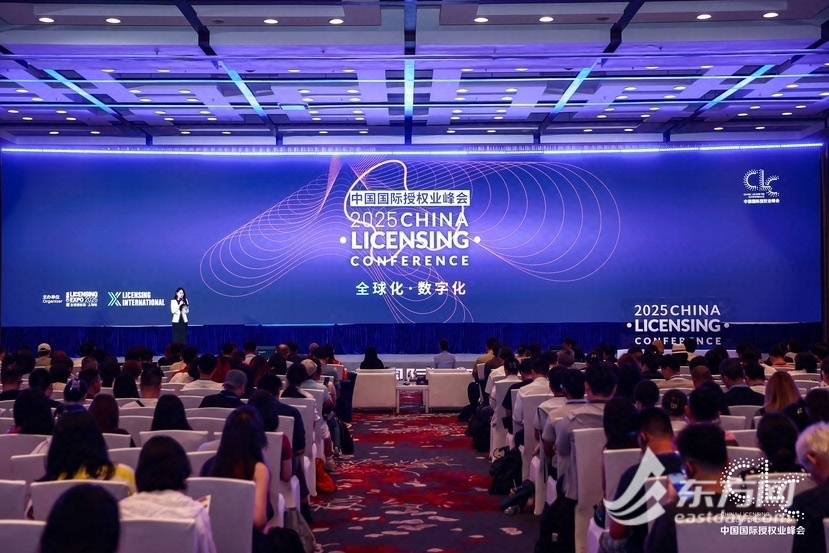
Core Insights - The recent popularity of Labubu has drawn attention to the IP licensing industry, highlighted by the 2025 China International Licensing Industry Summit held in Shanghai, focusing on "Globalization and Digitalization" [1][3] Industry Growth - The licensing industry in China has rapidly developed in recent years, with the International Licensing Industry Association reporting a record global sales figure of $369.6 billion for licensed goods and services in 2024, representing a 3.7% increase from 2023 [3] - Specific sectors such as music (+11.6%), celebrity endorsements (+8.8%), fashion (+8.1%), and art (+7.4%) have shown strong growth, indicating significant potential and opportunities within the licensing industry [3] Summit Highlights - The summit gathered executives from various companies including Bandai Namco, Bilibili, and Tencent Video, featuring 8 keynote speeches and 3 roundtable discussions that addressed globalization opportunities, digital empowerment, and cultural innovation [3][4] - Over 530 representatives from brands and agencies across multiple sectors, including Adidas and NBA China, participated to discuss trends and future opportunities in the Chinese licensing industry [4] Data Analysis - The summit analyzed dynamic changes in licensing revenue across major countries and regions, as well as fluctuations in the proportions of licensed and licensed categories, providing industry benchmarks for understanding the global licensing market [6] - Discussions included topics such as licensing methods, domestic innovation and international expansion, and the rise of national cultural IPs, aiming to explore new paths for brand development and collaboration in the licensing field [6] Event Organization - The summit was co-hosted by the Global Licensing Expo Shanghai and the International Licensing Industry Association, aiming to facilitate efficient matching between IPs and brand merchants while promoting the development of the entire licensing industry chain in China [7] - Since its establishment in China in 2017, the Global Licensing Expo Shanghai has served over 1,800 IP brands and more than 200,000 professional attendees across various industries [7]
锦泓集团(603518):TW授权加速落地,云锦价值禀赋凸显
Tianfeng Securities· 2025-07-03 04:15
Investment Rating - The investment rating for the company is "Accumulate" [6] Core Views - The company is experiencing significant growth in its IP licensing and cloud brocade business, with IP licensing revenue expected to reach 33.56 million yuan in 2024, a year-on-year increase of 88%, and a gross margin of 99%. The cloud brocade business is projected to generate 81.37 million yuan, reflecting a 64% year-on-year growth with a gross margin of 75% [2][4] - The company is successfully integrating its IP with consumer experiences, enhancing brand value through innovative retail formats and online engagement strategies, such as live streaming events that attract over 250,000 viewers [2][3] - The company is adjusting its profit forecasts, expecting revenues of 4.6 billion yuan, 4.9 billion yuan, and 5.2 billion yuan for 2025 to 2027, respectively, with net profits projected at 360 million yuan, 430 million yuan, and 490 million yuan [4][10] Summary by Sections Business Development - The company is set to open a flagship store in Suzhou in April 2025, featuring six themed areas that blend classic and modern aesthetics [1] - The cloud brocade, recognized as the pinnacle of Chinese silk weaving, is being commercialized through high-end art products, fashion accessories, and cultural creative items, with an average of 30 new SKUs launched monthly [3] Financial Performance - The company has adjusted its revenue forecasts for 2025 to 2027, now estimating revenues of 46 billion yuan, 49 billion yuan, and 52 billion yuan, with corresponding net profits of 3.6 billion yuan, 4.3 billion yuan, and 5.0 billion yuan [4][10] - Earnings per share (EPS) are projected to be 1.03 yuan, 1.24 yuan, and 1.44 yuan for the same period [4] Market Position - The company is positioned in the textile and apparel industry, focusing on innovative retail strategies and leveraging its IP assets to enhance consumer engagement and brand loyalty [6][2]
276亿市场,为何国产球星卡还不如“小马宝莉”?
3 6 Ke· 2025-06-06 11:33
Core Insights - The emergence of a truck carrying 6,000 rare star cards valued at 20 million yuan from Shanghai marks a significant moment for the domestic star card market, highlighting the potential value of these collectibles [1] - The history of domestic star cards in China spans over 30 years, evolving from promotional items to collectible cultural products, with a pivotal moment occurring in 1998 when commercial operations began [2][4] - The market for collectible cards in China is projected to reach 27.66 billion yuan by 2025, indicating a growing interest and investment in this sector [5][20] Industry Evolution - Domestic star cards began in the mid-1990s as promotional items for football clubs, but the 1998 launch of the "98甲A联赛球星卡" marked the transition to a collectible market [2][4] - The rise of the internet facilitated the growth of online trading platforms, allowing collectors to form national communities, although the domestic market struggled due to weak sports IP influence [4][6] - The COVID-19 pandemic in 2020 significantly boosted the domestic star card market, with a consumption growth rate of 205%, surpassing the global average [6] Market Dynamics - The most collectible domestic star cards are those associated with Olympic and world champions, reflecting a strong national sentiment [6][8] - High-value transactions have been recorded, with individual cards selling for over 25,000 yuan, indicating a willingness among consumers to invest in domestic star cards [9] - The domestic star card market faces challenges, including a lack of strong sports culture, high competition from international brands, and the need for better IP development [12][15][19] Future Opportunities - The domestic star card market can learn from successful IP strategies in other sectors, such as leveraging local sports events and historical figures to create more relatable products [22][24] - Innovative approaches, such as integrating AR technology and creating immersive experiences, could enhance consumer engagement and transform star cards into dynamic cultural products [24][26] - The market's growth potential is supported by a significant number of companies entering the space, with approximately 2,830 card-related enterprises expected by 2025 [20]