
绿色金融

Search documents
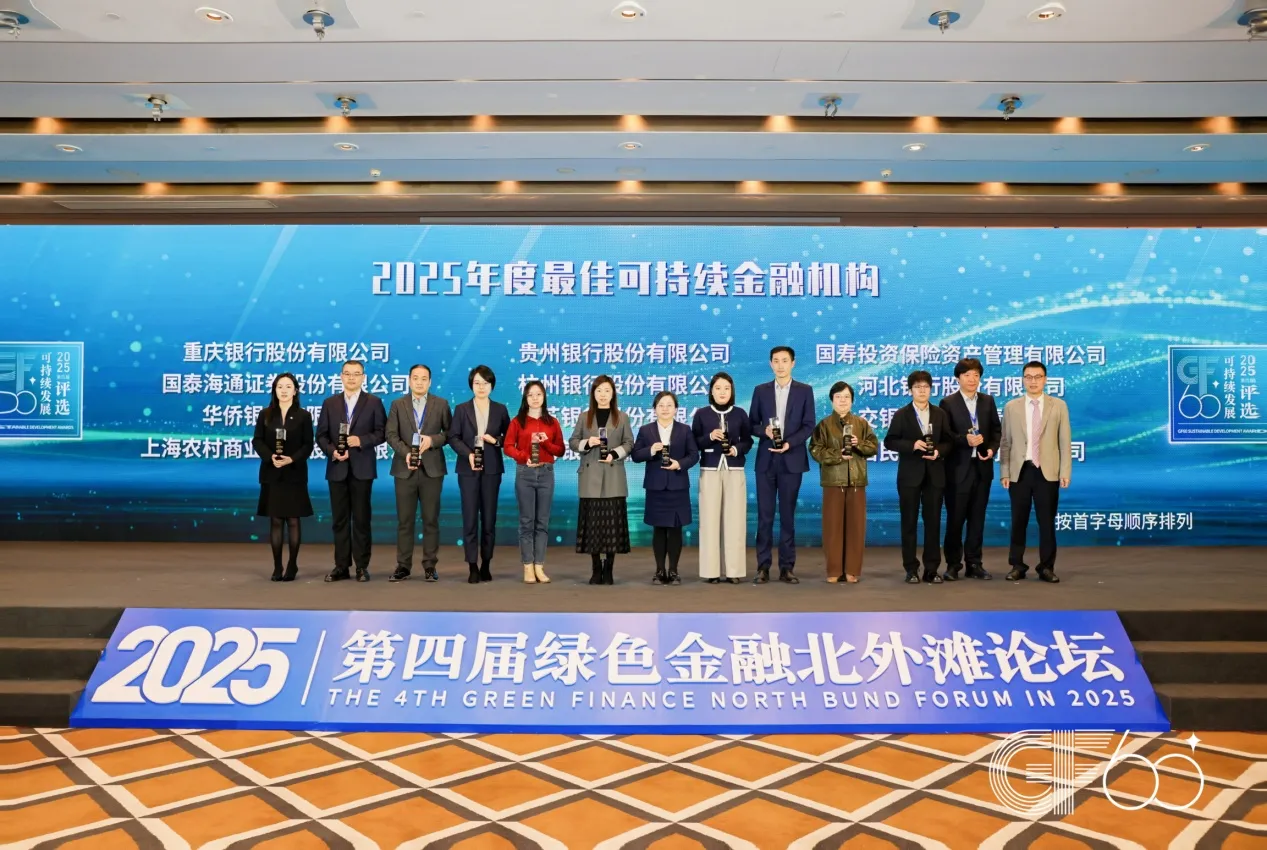
重庆银行荣膺GF60 “最佳可持续金融机构”
Cai Jing Wang· 2025-12-16 01:53
Group 1 - The core viewpoint of the news is that Chongqing Bank has been recognized as the "Best Sustainable Financial Institution" for the second consecutive year at the GF60 awards, highlighting its ongoing influence in the field of green finance and sustainable development [1][4]. Group 2 - The GF60 platform, initiated by financial regulatory bodies, institutions, industry leaders, and academia, aims to promote international exchange and cooperation in green finance, focusing on the actual actions and contributions of financial institutions towards environmental issues [3]. - Chongqing Bank has established a foundational product system around the "green" theme, including "green credit, green bonds, green consumption, and green leasing," and has developed over 20 specialized products covering energy saving, pollution reduction, carbon reduction, and greening [3]. - The bank has pioneered several innovative financial products, such as "Industrial Green Efficiency Loan" and "Collective Forest Land Management Rights + Ecological Product Value Mortgage Loan," contributing to urban low-carbon development and ecological construction [3]. Group 3 - Chongqing Bank integrates ESG governance into its development strategy and has developed the first ESG digital rating system for a legal bank in the central and western regions, optimizing the entire process of credit asset quality [4]. - The bank's green finance business scale has approached 100 billion yuan, maintaining an annual growth rate of over 30% for five consecutive years, demonstrating strong development momentum [4]. - Looking ahead, Chongqing Bank aims to continue contributing to the green low-carbon transition of the economy and society, guided by the "dual carbon" goals and actively participating in the construction of the Chongqing Green Finance Reform and Innovation Pilot Zone [4].


华泰期货:书写期货服务实体经济新篇章
Qi Huo Ri Bao Wang· 2025-12-16 01:23
编者按:为深入学习贯彻习近平总书记重要讲话精神,认真落实中央经济工作会议部署,即日起,中国 期货业协会与期货日报联合推出"期货行业学习宣传贯彻中央经济工作会议精神"专栏,为期货行业切实 服务国家战略、服务实体经济汲取智慧、积蓄力量,敬请关注。 中央经济工作会议擘画了我国明年经济工作的宏伟蓝图,为金融行业发展注入了坚定信心、指明了根本 方向。会议深刻指出我国经济"长期向好的支撑条件和基本趋势没有改变",并强调"稳中求进、提质增 效"的工作总基调。 作为连接金融市场与实体产业的关键节点,期货公司贯彻落实会议要求,核心在于全面提升服务实体经 济的质量和效能。华泰期货始终将"以客户为中心"作为行动纲领,努力成为国内领先的衍生品综合服务 商与风险管理专家。 作为资本市场的重要一环,期货行业必须深刻领会会议精神,将自身发展融入国家大局,以高质量金融 服务助力经济高质量发展。 提高政治站位 深刻把握新时代期货行业的使命担当 会议将"坚持内需主导,建设强大国内市场""坚持创新驱动,加紧培育壮大新动能""坚持'双碳'引领,推 动全面绿色转型"置于突出位置,清晰地标注了金融服务实体经济的战略坐标。期货及衍生品市场作为 价格发现的 ...
国泰君安期货商品研究晨报:绿色金融与新能源-20251216
Guo Tai Jun An Qi Huo· 2025-12-16 01:21
2025年12月16日 国泰君安期货商品研究晨报-绿色金融与新能源 观点与策略 | 镍:过剩结构性转向,关注印尼政策风险 | 2 | | --- | --- | | 不锈钢:供需双弱运行,钢价低位震荡 | 2 | | 碳酸锂:复产消息反复,宽幅震荡 | 4 | | 工业硅:逢高做空为主 | 6 | | 多晶硅:报价抬升 | 6 | 国 泰 君 安 期 货 研 究 所 请务必阅读正文之后的免责条款部分 1 商 品 研 究 2025 年 12 月 16 日 镍:过剩结构性转向,关注印尼政策风险 不锈钢:供需双弱运行,钢价低位震荡 张再宇 投资咨询从业资格号:Z0021479 zhangzaiyu@gtht.com 【基本面跟踪】 镍基本面数据 | | | 指标名称 | T | T-1 | T-5 | T-10 | T-22 | T-66 | | --- | --- | --- | --- | --- | --- | --- | --- | --- | | | | 沪镍主力(收盘价) | 114,690 | -900 | -3,340 | -3,160 | -4,240 | -7,290 | | 期 | | 不锈钢 ...
时时皆绿 金融有为:中国银行深圳市分行2000亿元绿色贷款赋能生态建设
21世纪经济报道· 2025-12-16 00:19
Core Viewpoint - Shenzhen is recognized as a leader in green transformation and development, supported by robust green finance initiatives, particularly through the China Bank Shenzhen Branch, which has significantly contributed to the city's green financial landscape [1][2]. Group 1: Green Finance Achievements - As of November, the green loan balance of China Bank Shenzhen Branch exceeded 2,000 billion, leading the market in Shenzhen [1]. - During the 14th Five-Year Plan period, the bank's cumulative green bond underwriting exceeded 330 billion, serving over 700 green enterprises [1]. - The bank has established itself as a leader in green financial services, providing comprehensive support to various sectors, including renewable energy and carbon neutrality projects [2][4]. Group 2: Innovative Financial Products - In July 2024, the bank participated in the "carbon reduction loan" initiative, providing 30 million to a clothing company that utilizes photovoltaic power for production [6]. - The bank has facilitated several firsts in green finance, including the first carbon emission rights pledge loan and the first offshore RMB green bond for the Shenzhen government [6][7]. - These innovations are part of a broader strategy to enhance the green financial product system, contributing to the sustainable development of the region [5][7]. Group 3: Institutional Framework and Mechanisms - The implementation of the first national green finance regulation, the "Shenzhen Special Economic Zone Green Finance Regulations," in March 2021, has laid a solid foundation for green finance development [8]. - The establishment of a green finance committee and the publication of annual environmental information disclosure reports have positioned the bank as a leader in transparency and accountability in green finance [8][9]. - The bank's headquarters has achieved carbon neutrality for 2024, showcasing a replicable model for low-carbon transformation within financial institutions [8].

江苏省首单生态农业领域生物多样性贷款落地兴化
Jiang Nan Shi Bao· 2025-12-15 23:47
Core Viewpoint - The successful issuance of a 55 million yuan loan by Xinghua Rural Commercial Bank to support an ecological agriculture project marks a significant breakthrough in green finance innovation in the Taizhou region, being the first biodiversity loan in Jiangsu Province [1][2]. Group 1: Loan Details and Project Impact - The loan is specifically allocated for the construction of a high-efficiency agricultural planting base, adhering to biodiversity financial standards and global biodiversity frameworks [1]. - The project aims to enhance grape yield and quality, meeting market demand for high-quality agricultural products while promoting local green agriculture and biodiversity protection [1]. - Expected environmental benefits include a reduction in chemical fertilizer usage by over 60%, a decrease in pesticide use by 80%, and an increase in water resource utilization efficiency from below 50% to 90% [1]. Group 2: Bank's Commitment to Green Finance - Xinghua Rural Commercial Bank integrates green development concepts into its credit service system, with a green loan balance reaching 2.586 billion yuan by the end of November 2025 [2]. - The bank has established a green approval channel, using biodiversity protection outcomes as a core assessment criterion for credit granting, thereby empowering ecological agriculture development [2]. - Future plans include enhancing the green finance system, optimizing green credit product matrices, and expanding financing channels for biodiversity protection and ecological agriculture [2].
时时皆绿 金融有为:中国银行深圳市分行2000亿元绿色贷款赋能生态建设
2 1 Shi Ji Jing Ji Bao Dao· 2025-12-15 23:11
Core Viewpoint - Shenzhen is recognized as a leading city in green transformation and development, supported by robust green finance initiatives from the Bank of China Shenzhen Branch, which has achieved significant milestones in green loans and bonds [1][2]. Group 1: Green Finance Achievements - As of November, the Bank of China Shenzhen Branch's green loan balance exceeded 200 billion yuan, leading the market in Shenzhen [1]. - During the 14th Five-Year Plan period, the bank's cumulative green bond underwriting exceeded 33 billion yuan, serving over 700 green enterprises [1]. - The bank has established itself as a pioneer in green finance innovation and a leader in the growth of green finance scale [1]. Group 2: Support for Green Projects - The bank has supported the carbon-neutral experimental park "Biocircle No. 3" with a 10 million yuan loan, enabling it to achieve an 85% green electricity usage rate [2]. - The bank has a long-standing partnership with BYD Group, expanding its services from traditional credit to bond underwriting and supply chain financing as the company leads global electric vehicle sales [2][3]. - The bank's collaboration with companies like Grinmei has spanned over 15 years, providing loans for battery recycling and resource utilization [3]. Group 3: Innovative Financial Products - In July 2024, the bank issued Shenzhen's first 30 million yuan "carbon reduction loan" to a clothing company, linking loan rates to emission reduction outcomes [4]. - The Shenzhen government launched 1 billion yuan offshore RMB green bonds, with the bank serving as the sole global coordinator and green structure advisor [4]. Group 4: Mechanisms and Institutional Support - Shenzhen has established a comprehensive ecological civilization system, with the green finance framework being a critical component [6]. - The implementation of the first green finance regulation in March 2021 has encouraged the establishment of specialized green finance systems within banks [6]. - The bank has formed a green finance committee and has been publishing environmental information disclosure reports for four consecutive years, setting a transparency benchmark [6][7]. Group 5: Integration into Urban Development - The bank is integrating green finance into urban development through targeted green credit support, product innovation, and transparent environmental disclosures [7]. - The bank's headquarters is set to achieve carbon neutrality by 2024, becoming the first zero-carbon financial institution in Shenzhen [6][7].

中信银行成都分行:廿八载初心如磐绘答卷 新时代金融赋能谱新篇
Si Chuan Ri Bao· 2025-12-15 22:07
Core Viewpoint - The article highlights the proactive role of CITIC Bank Chengdu Branch in promoting high-quality economic development in Sichuan, aligning with national financial strategies and focusing on serving the real economy and improving people's livelihoods [1][9]. Group 1: Financial Performance and Strategy - As of November 2025, CITIC Bank Chengdu Branch's total assets and loan balances are leading among local joint-stock banks, demonstrating its commitment to serving the real economy and enhancing people's livelihoods [1]. - The bank has achieved a 19.6% growth rate in loans to private enterprises and a 21.5% growth rate in medium- and long-term loans to the manufacturing sector as of November 2025 [4]. - The bank's loans to technology enterprises increased by 77.44% year-on-year, supporting Sichuan's goal of becoming an innovation hub in Western China [4]. Group 2: Focus on Key Sectors - The bank has established a comprehensive service system for technology enterprises, achieving a 95.6% coverage rate for national-level specialized and innovative enterprises in Sichuan [4]. - Green finance initiatives have led to a 25.1% increase in green credit balances as of November 2025, supporting ecological protection efforts [4]. - The bank's inclusive finance strategy has resulted in a significant increase in loans to small and micro enterprises, exceeding the average growth rate of all loans by 12 percentage points [5][6]. Group 3: Organizational Development and Innovation - CITIC Bank Chengdu Branch emphasizes the integration of party-building work with business development, enhancing its competitive advantages through organizational innovation [2][3]. - The bank has launched initiatives such as the "Party Member Pioneer Team" and "Party Member Demonstration Posts" to drive business growth in key areas like technology finance and inclusive loans [2]. - The bank's wealth management and comprehensive financing services have seen significant growth, with retail customer asset management increasing by 12.53% as of November 2025 [7]. Group 4: Digital Transformation and Regional Collaboration - The bank is advancing its digital banking initiatives, implementing a four-tier service system to enhance operational efficiency and customer engagement [8]. - CITIC Bank Chengdu Branch is actively participating in the Chengdu-Chongqing economic circle, creating strategic financial products to support local enterprises and allow investors to benefit from regional development [8]. - The bank's international business has maintained a leading position among local joint-stock banks, with cross-border RMB settlement exceeding 10 billion yuan [8].

以文铸魂 履责于行赋能黑龙江发展新质生产力
Zhong Guo Zheng Quan Bao· 2025-12-15 20:19
"金融是国民经济的血脉,是新质生产力的重要组成部分,也是培育和发展新质生产力的重要引擎。"江 海证券有限公司党委书记、董事长赵洪波日前在接受中国证券报记者专访时如是表示。 发展新质生产力,科技创新是核心驱动力。在此背景下,江海证券积极响应时代号召,紧跟科技变革的 步伐。赵洪波表示:"江海证券认真落实哈投集团的数字转型战略,依托集团在资源整合与科技赋能方 面的有力支持,筑牢数字化转型的坚实底座。" "十五五"规划建议提出,要加快建设金融强国。赵洪波表示,作为地方券商,江海证券深入贯彻落实党 中央决策部署,立足黑龙江本土券商责任担当,以夯实文化软实力为根基,以做好金融"五篇大文章"为 着力点,全链条服务发展新质生产力,将自身改革发展融入国家战略、服务地方经济,坚定不移走中国 特色金融发展之路,为建设金融强国、推进中国式现代化贡献力量。 ● 本报记者 徐昭 马爽 践行金融为民 打造有温度的文化品牌 近年来,江海证券以实际行动书写金融为民的温暖篇章。赵洪波介绍,江海证券以"融·党建"品牌铸魂 领航,深入践行中国特色金融文化,以"义利并举、金融向善"夯实文化根基,致力打造有温度的金融品 牌、提供有温度的金融服务,在守护 ...
宁波银行深圳分行:以“五大金融”为引领,探索服务实体经济新路径
Guan Cha Zhe Wang· 2025-12-15 14:53
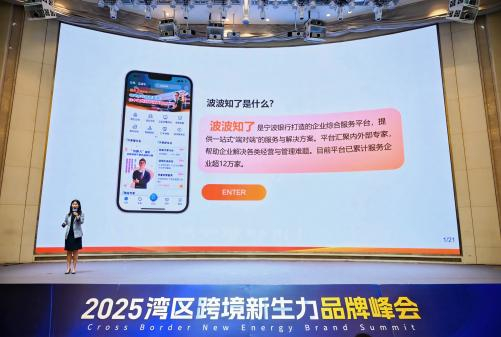
Core Insights - Shenzhen, known for its innovation-driven economy, is undergoing a new round of industrial upgrading and transformation, with financial institutions exploring differentiated development paths in response to national policies on various financial sectors [1] Group 1: Technology Finance - Ningbo Bank's Shenzhen branch has developed a comprehensive service platform called "Bobo Zhiliao" to support enterprises in overseas market expansion, integrating trade data from over 200 countries to assist import-export businesses [2] - The bank has introduced an "AI Foreign Trade Customer Acquisition" tool that automates the collection of overseas business contacts and sends business emails, potentially improving customer acquisition efficiency for small and medium-sized enterprises [2] - The platform has served over 10,000 enterprises in the Shenzhen area, reflecting the bank's transition from traditional credit services to technology-enabled solutions [4] Group 2: Green Finance - In alignment with the "dual carbon" goals, the bank offers "ESG and Dual Carbon Services," which include a carbon database and expert guidance to help companies manage carbon emissions and comply with EU carbon tax regulations, significantly reducing costs and time for businesses [6] - The bank's "Smart Water, Electricity, and Gas" service has benefited over 1,200 enterprises, saving approximately 167 million yuan in costs and reducing carbon emissions by 2.6 million tons [6] Group 3: Inclusive Finance - The bank has formed 19 specialized teams to address the financing challenges faced by small and micro enterprises, providing over 3.8 billion yuan in credit support to 528 such businesses [8] - As a pilot bank for the "Park Loan" initiative, the bank collaborates with innovation parks to offer tailored financial solutions for technology enterprises, demonstrating a commitment to integrating park resources and reducing customer acquisition costs [9] Group 4: Pension Finance - The bank is focusing on the elderly demographic by extending financial services into communities and schools, enhancing financial literacy and risk awareness among older adults [11] - Community activities, such as the "Bay Area Senior Model Competition," aim to engage the elderly while incorporating financial education, although there is room for further development in pension product innovation [11] Group 5: Digital Finance - The bank has conducted numerous workshops on financial digitalization, launching systems like "Kunpeng Treasury" and "Financial Manager" to provide enterprises with comprehensive fund management solutions, serving over 700 groups and 105 listed companies [13] - The integration of various financial management functions aims to streamline processes and reduce manual intervention, enhancing operational efficiency for businesses [15]

ESG投资周报:本月新发绿色债券73只,银行理财稳步发行-20251215
GUOTAI HAITONG SECURITIES· 2025-12-15 14:35
Market Overview - The A-share market experienced a pullback from December 8 to December 12, 2025, with the CSI 300 index down by 0.71%, the ESG 300 index down by 0.73%, and the CSI ESG 100 index down by 0.97%[5] - The average daily trading volume for the entire A-share market was approximately 3.15 trillion yuan, indicating a contraction in liquidity[5] ESG Fund Issuance - No new ESG fund products were issued in December 2025; however, a total of 206 ESG public fund products were issued in the past year, with a total share of 1,086.49 million[8] - As of December 15, 2025, there are 944 existing ESG fund products, with the largest share being ESG strategy funds at 45.09% of the total net asset value of 1,164.52 billion yuan[8] Green Bond Market - A total of 73 ESG bonds were issued in December 2025, amounting to 52.7 billion yuan, with 19 new green bonds issued in the week of December 8 to December 12, 2025, with a planned issuance scale of approximately 22.36 billion yuan[13] - The total issuance of ESG bonds over the past year reached 1,231 bonds, with a total amount of 1,366.8 billion yuan[13] Trading Activity - The weekly trading volume of ESG green bonds from December 8 to December 12, 2025, totaled 45,529.30 billion yuan, with the interbank bond market accounting for 75.77% of the total trading volume[16] - Repo transactions dominated the trading methods, comprising 95.18% of the total trading volume, while cash transactions accounted for only 0.01%[16] Bank Wealth Management Products - In December 2025, 71 ESG wealth management products were issued, primarily focused on pure ESG and environmental protection themes[18] - The total number of existing ESG bank wealth management products reached 1,203, with pure ESG products making up 54.20% of the total[18] Risk Factors - Potential risks include the possibility that ESG policy enforcement may not meet expectations, a lack of unified data reporting standards, and the issuance scale of products falling short of projections[19]