物理AI

Search documents
从漂泊少年到AI帝国掌舵者,黄仁勋为何能铸造英伟达传奇?
3 6 Ke· 2025-07-21 11:49
Core Insights - Jensen Huang, the founder of NVIDIA, has led the company to a market capitalization exceeding $4 trillion, making it the first publicly traded company to reach this milestone, surpassing tech giants like Microsoft and Apple [1] - NVIDIA's market value has grown more than threefold from $1 trillion in 2021 to $4 trillion in 2025, driven by the surge in AI large model applications [1] Group 1: Background and Early Life - Jensen Huang was born in 1963 in Tainan, Taiwan, to an intellectual family, which instilled a strong educational foundation [4] - At the age of 10, Huang moved to the United States, where he faced challenges in a boarding school environment that shaped his resilience and determination [5] - His fascination with technology began at 13 when he encountered an Apple computer, leading him to explore programming and the potential of technology [6] Group 2: Education and Early Career - Huang excelled academically, entering Oregon State University at 16 to study electronic engineering, where he developed a passion for technology [7] - After graduating, he worked at AMD as a chip designer and later pursued a master's degree at Stanford, where he recognized the potential in graphics rendering technology [9] - Huang's experience at LSI Logic exposed him to the demand for specialized chips, influencing his future entrepreneurial vision [10] Group 3: Founding NVIDIA - In 1993, Huang co-founded NVIDIA with a vision to focus on graphics processing, identifying a gap in the market for specialized graphics chips [13] - The early years of NVIDIA were challenging, with the company facing financial difficulties and a near bankruptcy situation, which Huang navigated through strategic decisions [14][15] - The launch of the RIVA 128 chip in 1997 marked a turning point for NVIDIA, leading to profitability and establishing the company as a key player in the graphics processing market [16] Group 4: Competitive Strategies and Challenges - Huang demonstrated strong business acumen by strategically acquiring competitors and navigating market challenges, such as the financial crisis following the launch of GeForceFX [17] - NVIDIA's innovation in CUDA technology transformed GPUs into general-purpose computing platforms, which was initially met with skepticism but later validated by significant advancements in AI [18][20] Group 5: AI Revolution and Market Position - By 2025, NVIDIA had captured nearly 90% of the AI chip market, driven by innovations like the A100 and H100 GPUs, which significantly enhanced computational efficiency for AI applications [20][21] - Huang's vision for the future includes the development of physical AI, integrating AI capabilities into the physical world, which could revolutionize various industries [23][24] Group 6: Engagement with China - Huang has emphasized the importance of the Chinese market for NVIDIA, actively engaging in partnerships and promoting the company's products in China [27][28] - The approval of export licenses for NVIDIA's H20 chip to China signifies a strategic move to strengthen the company's presence in this critical market [28][29]



天娱数科推进物理AI应用
news flash· 2025-07-21 06:22
天娱数科(002354)正在通过基于VLA的方案,积极加速物理AI技术的落地应用。公司致力于整合虚 拟与物理智能系统,以推动人工智能在现实世界中的广泛应用。这一创新将有助于提升AI在各行业的 适应能力,并促进相关技术的成熟与普及。(天娱数科官方公众号) ...

黄仁勋,还想再赢一次
3 6 Ke· 2025-07-21 03:23
Core Insights - Huang Renxun's visit to China highlights the importance of the Chinese market for Nvidia, which is a key player in the AI industry and has seen a significant decline in its market share in China [1][29][30] - Nvidia's market share in China's AI chip sector has dropped from 95% in 2022 to 50% in 2025, resulting in a loss of $4.5 billion [30][32] - The company is facing challenges from cloud giants like Google, Microsoft, and Amazon, who are developing their own GPUs, which poses a threat to Nvidia's dominance [26][28] Group 1: Nvidia's Market Position - Nvidia has become a major player in the AI industry, with its GPU technology being essential for AI computing [20][22] - The company has seen its revenue from the Chinese market decrease from 21% to 13% over two years [32] - Huang Renxun's efforts to reintroduce products like the H20 and the new RTX Pro series GPU in China indicate the company's strategy to regain market presence [30][32] Group 2: Strategic Partnerships - Huang Renxun's historical relationship with Lei Jun of Xiaomi has evolved, with Nvidia's Orin chip now being a standard in Xiaomi's automotive ventures [10][12] - The collaboration between Nvidia and Xiaomi is seen as a significant opportunity for both companies in the automotive sector [12][29] - Nvidia's Drive Orin-X chip is projected to have an installation volume of 2.1 million units in 2024, solidifying its position in the global autonomous driving chip market [12] Group 3: Future Directions - Huang Renxun is exploring new market opportunities, particularly in the realm of Physical AI, as a potential next trillion-dollar market [33] - The company aims to address the challenges posed by self-developed GPUs from cloud service providers and regain its foothold in the Chinese market [26][30] - Nvidia's focus on innovation and strategic partnerships will be crucial for its continued growth and market leadership in the evolving tech landscape [1][29]
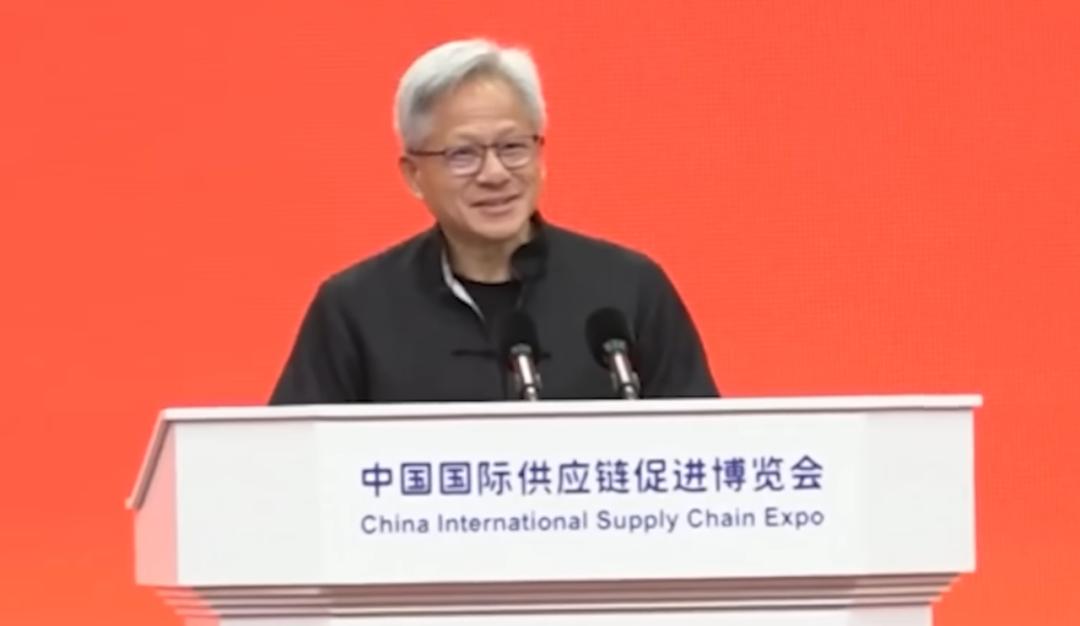
中银晨会聚焦-20250721
Bank of China Securities· 2025-07-21 01:33
Group 1: Key Insights on Macro Economy - The "urban renewal" is highlighted as a significant focus for future urban work, with infrastructure and real estate investment expected to be boosted [5][6] - The central urban work conference emphasized transitioning urbanization from rapid growth to stable development, focusing on quality and efficiency [5][6] - The meeting underscored the importance of "innovation" as a key theme, aiming to stimulate high-tech industry investment through urban renewal initiatives [7] Group 2: Insights on Intelligent Driving Industry - Intelligent driving is positioned as a leading application of physical AI, with the potential to drive investment opportunities across the industry chain [8][10] - The report identifies a shift in competitive focus among domestic automakers from merely increasing the number of operational cities to achieving nationwide functionality of intelligent driving features [9][10] - The technological paradigm shift towards data-driven and knowledge-driven approaches is enhancing the generalization performance of intelligent driving systems, paving the way for faster deployment of high-level intelligent driving [9] Group 3: Insights on Defense and Aerospace Industry - The company, 菲利华, is positioning its quartz fiber electronic cloth as a core material for M9 PCBs in the computing era, benefiting from the trend of domestic substitution [12][13] - The semiconductor and optical materials sectors are expected to gain from the increasing demand for high-purity, high-temperature resistant quartz products, with the global semiconductor quartz product market projected to grow from $3.226 billion in 2024 to $7.321 billion by 2031 [13] - 菲利华 is actively expanding its production capacity in the quartz fiber electronic cloth market, aiming to capture early advantages in this emerging sector [12][14]




TMT+每周洞见
2025-07-21 00:32
Summary of Key Points from the Conference Call Industry Overview - The optical communication industry holds a core position in the global AI sector, experiencing high growth in demand and strong stock performance. The industry is characterized by three new trends: accelerated iteration, evolution of model architecture (using communication to enhance computing power), and rapid penetration of silicon photonics technology, which is driving product value reconstruction [2][5][6]. Core Insights and Arguments - **Investment Opportunities**: With the recovery of overseas chip supply, domestic computing infrastructure investment opportunities have increased. Concerns regarding local infrastructure have eased, and the promotion of domestic chips is accelerating. Domestic computing investment is picking up speed, with IDC remaining a crucial infrastructure component. Orders formed in Q2 and Q3 will lead to capacity expansion and mergers, providing long-term performance and valuation anchors [2][6]. - **Company Performance**: Shenghong Technology, a representative in the PCB segment, is benefiting from the return of overseas computing power as a main focus. The company is expected to see a 40%-50% quarter-over-quarter increase in net profit for Q2, with an annual performance forecast of 5 billion yuan, potentially reaching 7-8 billion yuan by 2026, corresponding to a current market value of about 20 times [2][9]. - **Market Position**: Shenghong has maintained a stable supply share during the Blackwell and Blackwell Ultra product cycles, capturing nearly half of the market share in products like the HGX8 server D2 version. The company’s 6G HDR technology meets NBL 72 requirements and is accelerating the development of next-generation HDI certification [9][11]. Additional Important Insights - **AI Hardware Trends**: Recent updates in the AI hardware sector include new product launches from Gorx, Meta's announcement of a significant AI training project, and Nvidia's resumption of HR supply in China. Domestic companies like NewEase and Zhongji Xuchuang have exceeded market expectations in their performance forecasts [3][4]. - **Physical AI Development**: Physical AI is seen as the next generation of AI, focusing on understanding and interacting with the physical world. Companies like Suocheng Technology are actively positioning themselves in this field, with their core competency being physical solvers that excel in real-time simulation [13][14]. - **Bilibili's Growth**: Bilibili (B Station) has approximately 107 million daily active users, with an average daily usage time of about 108 minutes. The company is leveraging AI technology to enhance advertising efficiency and expand its client base. Expected profits for this year are around 2 billion yuan, with projections of 3 billion yuan for next year, indicating significant growth potential [17][21]. - **Future Outlook for Bilibili**: The company is on a path to profitability improvement, with ongoing developments in gaming, advertising, and other innovative business areas indicating substantial growth potential. The current PS valuation is at a historical low, suggesting room for recovery [22]. Conclusion - The optical communication and AI hardware industries are poised for significant growth, driven by technological advancements and increased domestic investment. Companies like Shenghong Technology and Bilibili are well-positioned to capitalize on these trends, with promising financial forecasts and strategic initiatives in place.

物理AI时代来临:天娱数科如何凭借Behavision平台抢占技术制高点?
Zheng Quan Shi Bao Wang· 2025-07-20 13:29
Core Insights - The rise of "Physical AI" is becoming a new focal point in global technology competition, with significant implications for human-machine interaction [2][4] - Tianyu Shuke, a pioneer in embodied intelligence, has developed the Behavision platform, establishing a complete closed loop of "perception-reasoning-execution" for the industrialization of Physical AI [2][3] Company Developments - Tianyu Shuke's Behavision platform integrates various models, including the Tianxing large model and the "Wise Questions" 3D intelligent industry model, creating a synergistic model matrix [2] - The Tianxing model utilizes 260TB of multimodal data, enabling cross-perception reasoning capabilities, while the "Wise Questions" model employs Sim2Real simulation technology for efficient training [2] - The company has built a standardized robot ontology classification system and an atomic skill library, supporting various types of robotic actions [3] Industry Standards and Ecosystem - Tianyu Shuke is not only a technology leader but also a standard setter, with its solutions recognized in the China Academy of Information and Communications Technology's "AI Agent Industry Map 1.0" [3] - The company has established a 3D motion capture and multimodal data collection base, storing 1.2 million structured 3D motion data sets and 500,000 multimodal behavior data sets [3] - The "human-shaped robot space 6D motion capture long-range data" sets are available on national data trading platforms, providing low-cost, high-quality data services to SMEs [3] Future Outlook - The emergence of Physical AI signifies a new stage in AI development, focusing on enabling machines to understand and interact with the physical world [4] - As the industry chain continues to improve, Physical AI is expected to unlock significant potential in smart manufacturing and service robots, with Tianyu Shuke's practices serving as a key paradigm [4] - The ability to dominate the technical standards and scene implementation of Physical AI will determine the future leadership in the next generation of AI development [4]
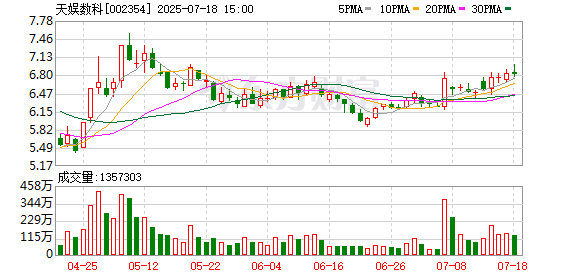
重视物理AI和世界模型(WFM)投资机会
citic securities· 2025-07-20 07:50
Investment Rating - The report maintains an investment rating of "Outperform the Market" for the computer industry, indicating an expected return that will exceed the CSI 300 index by 10% or more over the next six months [5]. Core Insights - The report emphasizes the significance of Physical AI and World Models (WFM) as the next wave in AI, particularly in robotics, which will enhance reasoning and execution capabilities, enabling robots to understand the physical world [1][9]. - NVIDIA has launched two major platforms, Cosmos and Omniverse, aimed at accelerating the development of Physical AI systems and industrial digital twins, which are crucial for the evolution of the industry [3][11]. - The domestic Physical AI industry is forming, with companies like Suochen Technology leading in the CAE sector, leveraging extensive physical simulation data for industry applications [3][12]. Summary by Sections Industry Investment Rating - The computer industry is rated as "Outperform the Market" with a projected relative return of 69% over the next 12 months compared to the CSI 300 index [5]. Industry Trends - Physical AI aims to enable intelligent agents to understand and interact with the real world effectively, encapsulated in robots and autonomous vehicles [2][10]. - The World Model is a generative AI model that helps in understanding the dynamics of the real world, utilizing various data inputs to predict spatial relationships and movements [2][10]. Key Developments - NVIDIA's Cosmos platform facilitates efficient data processing and management for Physical AI systems, while the Omniverse platform integrates various technologies for industrial applications [3][11]. - The report highlights the advantages of domestic CAE companies like Suochen Technology, which utilize generative Physical AI technology for real-world applications [3][12]. Market Performance - The computer industry index increased by 2.32% this week, outperforming the Shanghai Composite Index by 1.63 percentage points, driven by the active AI-related themes [13][14]. - AI-related companies within the computer sector have shown strong performance, with significant gains in stocks like Suochen Technology [17][18].


黄仁勋:物理AI将触发机器人的“GPT时刻”!宇树、智元上市概念来袭!最强股8连板!
私募排排网· 2025-07-19 09:49
Core Viewpoint - The article discusses the emergence of "Physical AI" as the next wave in artificial intelligence, particularly in the robotics sector, as highlighted by NVIDIA CEO Jensen Huang during his recent visit to China. This technology aims to enhance robots' capabilities to perceive and interact with the physical world, marking a significant evolution in AI applications [2][11]. Group 1: Physical AI Overview - Physical AI, also known as generative physical AI, empowers autonomous machines to understand and operate within the physical environment, enabling complex operations [2]. - Huang identifies four stages of AI evolution: Perception AI, Generative AI, Agentic AI, and Physical AI, with the latter being the ultimate goal [3][4][5][6]. - NVIDIA's platforms, Cosmos and Omniverse, are integrated to create the first end-to-end Physical AI platform, facilitating training and testing in a virtual environment [8]. Group 2: Market Response and Opportunities - Following Huang's statements, A-share companies related to AI hardware have seen significant stock price increases, indicating strong market interest [2]. - Key companies in the robotics industry, such as Zhiyuan Robotics and Yushu Technology, have recently secured substantial orders and received policy support, further driving the sector's growth [12][17]. - The article lists several A-share companies involved in Physical AI and robotics, highlighting their recent stock performance and business collaborations with NVIDIA [10][14][15]. Group 3: Industry Insights - Huang emphasizes China's advantages in the robotics sector, including strong AI technology, excellent mechatronics capabilities, and a robust manufacturing base [11]. - The article notes that the domestic robotics industry is experiencing a surge in positive developments, including significant orders and technological advancements [12][17]. - A list of A-share companies with expected profit growth in the first half of 2025 is provided, showcasing the financial health and potential of the robotics sector [18].

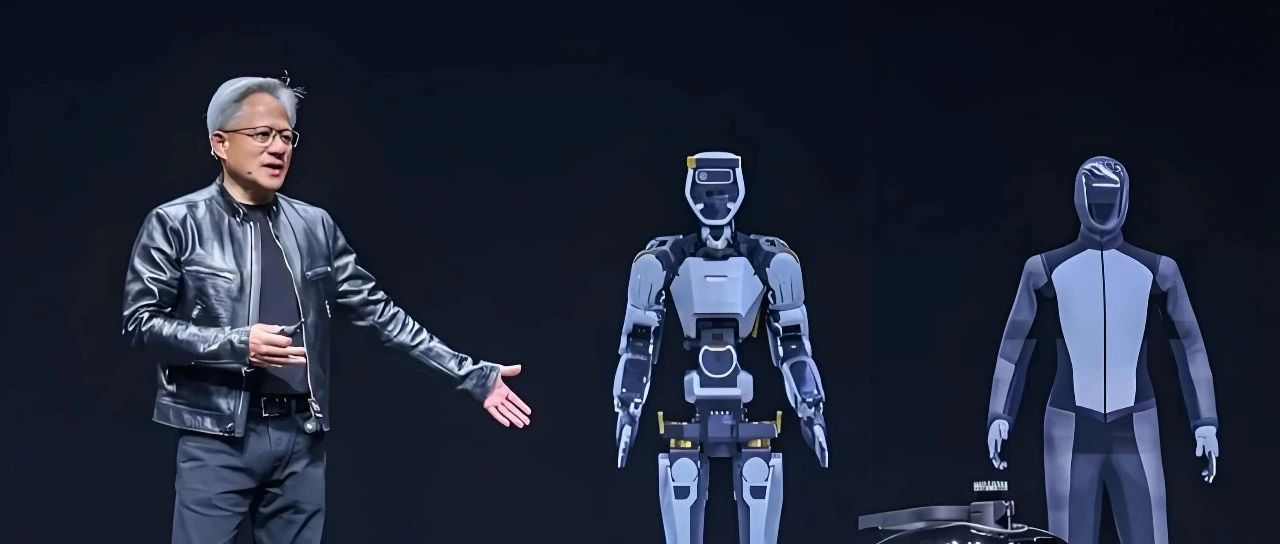
黄仁勋“链上”中国行:点赞10余家中国企业,一夜市值暴涨万亿元
Hua Xia Shi Bao· 2025-07-18 14:33
Core Insights - Huang Renxun, CEO of NVIDIA, emphasized the importance of the Chinese market during his recent visit, highlighting the unique value it offers due to advancements in technology [3][4] - NVIDIA is set to begin selling the H20 chip in China, with a new RTX Pro series graphics card tailored for the Chinese market, following the approval of export licenses by the U.S. government [2][4] - NVIDIA's market capitalization reached $4.18 trillion, marking it as the first company in history to surpass the $4 trillion mark [4][5] Group 1 - Huang Renxun's appearance in traditional Chinese attire at the China Supply Chain Expo and his praise for over 10 Chinese companies indicate a strategic focus on collaboration with local firms [2][4] - The CEO's recent visits to China, including meetings with government officials and major clients, reflect NVIDIA's commitment to strengthening its presence in the Chinese market [4][6] - Huang highlighted the transformative impact of AI, likening its significance to that of electricity and the internet, and praised China's open-source AI as a catalyst for global progress [4][5] Group 2 - Despite NVIDIA's leading position in the GPU market with a 70% share, competition is intensifying, particularly from Huawei, which has captured 23% of the market [6][7] - Huang acknowledged the rapid improvement of China's self-sufficiency in GPU production, projecting that by 2027, China's self-sufficiency could rise to 82% [6][7] - The collaboration between NVIDIA and Chinese companies is seen as mutually beneficial, allowing NVIDIA to access a larger market while enhancing China's technological ecosystem [7][8]
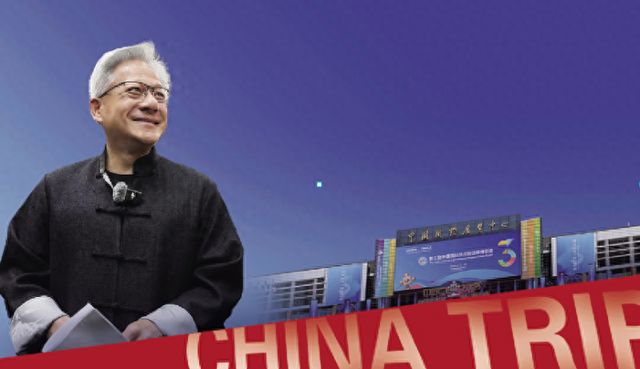
AI端侧深度之智能驾驶(上):技术范式迭代打开性能上限,竞争、监管、应用加速高阶智驾落地
Bank of China Securities· 2025-07-18 06:40
Investment Rating - The report rates the industry as "Outperform" [1] Core Insights - The report emphasizes that advanced intelligent driving is expected to be the first application of physical AI, driven by rapid technological iterations, competitive strategies from Chinese automakers, and supportive regulatory policies [1][5][35] - The report identifies that the current focus of competition among automakers has shifted from the number of cities where autonomous driving is available to achieving nationwide coverage and from basic functionalities to more advanced features like parking assistance [1][20] - The report highlights that the penetration of L2+ intelligent driving functions is increasing, with expectations for significant growth in urban NOA (Navigation on Autopilot) capabilities in the coming years [1][23][35] Summary by Sections Industry Overview - Intelligent driving is positioned as the first scenario for physical AI implementation, with the potential to provide significant societal benefits such as reducing accidents and improving traffic efficiency [18][19] - The report notes that the penetration rate of L2+ intelligent driving functions in China is projected to reach 57.4% by 2024, with L3 level vehicles expected to be commercially available soon [13][35] Technological Developments - The report discusses a paradigm shift in intelligent driving technology from rule-based to data-driven and knowledge-driven approaches, enhancing the performance and safety of autonomous systems [36][37] - It highlights the transition from modular architectures to end-to-end architectures, which optimize data flow and reduce information loss, thus improving the overall efficiency of intelligent driving systems [36][46] Competitive Landscape - The report indicates that competition among automakers is intensifying, with companies like BYD pushing advanced driving features down to lower-priced models, thereby accelerating the adoption of high-level intelligent driving [1][35] - It also mentions that regulatory support is crucial for the commercial rollout of L3 and L4 level autonomous vehicles, with various regions in China expanding pilot programs for these technologies [35][36] Investment Opportunities - The report suggests that companies involved in the supply chain for automotive components, particularly those focusing on SoC (System on Chip), sensors, and communication technologies, are likely to benefit from the increasing penetration of advanced intelligent driving [1][5][35] - Specific companies highlighted for potential investment include Horizon Robotics, Black Sesame Technologies, Rockchip, and others involved in the intelligent driving ecosystem [1][5]