
数字经济

Search documents
巅峰对决,创新闪耀!2025“兴火·燎原”创新马拉松西部赛区决赛圆满收官
Xin Lang Cai Jing· 2026-01-19 08:17
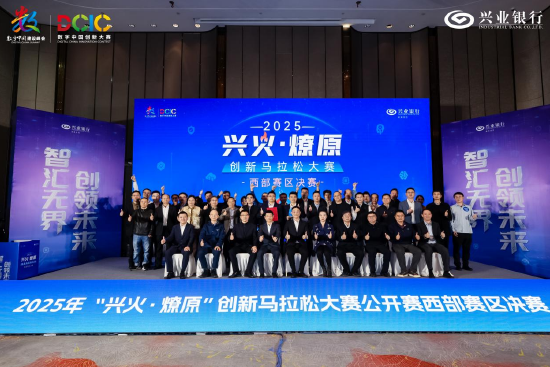
Core Insights - The 2025 "Xinghuo·Liaoyuan" Innovation Marathon Western Regional Finals successfully concluded in Wuhan, gathering top innovation teams, financial experts, scholars, and industry leaders to explore new paths for technology-driven high-quality financial development in the West [2][17] - The event serves as a platform for collaboration and innovation, aligning with the urgent needs for industrial upgrading and improving livelihoods in the West, emphasizing the concept of "technology empowering finance, and finance serving the real economy" [2][17] Group 1: Event Overview - The competition attracted 201 projects covering various fields such as financial technology, industrial digitalization, and smart livelihood [30] - The finals showcased impressive projects addressing pain points in the banking industry, including intelligent risk control and data security [22][7] Group 2: Key Contributions - Ouyang Hongbing, a professor at Huazhong University of Science and Technology, highlighted that digital economy and green transformation are core directions for industrial upgrading, with financial technology being a crucial link for their collaborative development [4][19] - The event's innovative projects, such as intelligent data management systems and AI-driven risk governance frameworks, align with the financial needs of industrial transformation [22][4] Group 3: Award Winners - The top three projects that advanced to the national finals include: - "Dynamic Micro-Isolation System for Cloud Platforms" by Beijing Qiangwei Lingdong - "Retail Business Marketing Platform for Accelerated Digital Precision Marketing" by Yingtian Di - "AI Reconstruction of Industrial Decision-Making" by Pushi Tu Intelligent [10][25] Group 4: Future Directions - The event underscored the need to focus on breakthroughs in hard technology and digital empowerment of industries, positioning financial technology as a key engine for promoting high-end and green development in the region [5][20]


国家统计局权威解读2025中国经济年报
证券时报· 2026-01-19 08:05
Core Viewpoint - China's economy is expected to achieve a stable and positive growth trajectory in 2026, with opportunities outweighing challenges and favorable conditions prevailing over unfavorable factors [2][20]. Economic Performance - In 2025, China's GDP reached 140 trillion yuan, marking a 5.0% increase from the previous year, solidifying its position as a leading global economy [2][4]. - The contribution rate of China's economy to global growth is projected to be around 30% during the "14th Five-Year Plan" period [4]. - The total economic output has consistently increased, surpassing significant milestones of 110 trillion, 120 trillion, 130 trillion, and 140 trillion yuan [5]. Industrial Development - The proportion of high-tech manufacturing value added in the total industrial value added rose to 17.1% in 2025 [8]. - The growth rates for industrial robots and civilian drones were 28% and 37.3%, respectively, indicating rapid development in new sectors [9]. - The manufacturing sector's value added in high-tech industries grew by 9.4% [35]. Consumer Trends - Final consumption expenditure contributed over 50% to economic growth in 2025, with total retail sales of consumer goods exceeding 50 trillion yuan, a 3.7% increase from the previous year [13][32]. - Service retail sales grew by 5.5%, outpacing goods retail sales, highlighting a shift towards service consumption [16]. - The proportion of service consumption in per capita household expenditure remained stable at 46.1% [17]. Innovation and R&D - R&D expenditure intensity reached 2.8%, surpassing the OECD average for the first time [10][35]. - Significant advancements in technology and innovation were noted, with breakthroughs in artificial intelligence, quantum technology, and other frontier fields [11]. Policy and Future Outlook - A series of proactive macroeconomic policies are set to support economic development in 2026, including measures to boost consumption and stabilize market expectations [22][23]. - The government plans to implement actions to enhance consumer spending and address restrictions in the consumption sector [24]. - The overall economic environment remains resilient, with positive signals emerging from various economic indicators [21].
国家统计局权威解读2025中国经济年报
券商中国· 2026-01-19 07:50
Core Viewpoint - China's economy is expected to develop towards new and better directions, achieving its target for 2025 with a GDP growth of 5.0%, reaching a total of 140 trillion yuan [2][3][4]. Economic Growth and Performance - In 2025, China's GDP reached 140 trillion yuan, marking a 5.0% increase from the previous year, solidifying its position as a leading global economy [2][3]. - China's economic growth rate is among the highest among major economies, contributing approximately 30% to global economic growth [3][4]. - The economy has successfully navigated multiple unexpected challenges during the "14th Five-Year Plan" period, demonstrating resilience and growth [4]. Industrial and Technological Advancements - The proportion of high-tech manufacturing value added in industrial output rose to 17.1% in 2025, indicating a shift towards new economic drivers [5][6]. - Significant advancements in technology and innovation were highlighted, with notable achievements in various sectors, including aerospace and transportation [6]. - The manufacturing sector's value added from equipment and high-tech industries reached 36.8% and 17.1%, respectively, showcasing a strong industrial transformation [6]. Consumption Trends - Final consumption expenditure contributed over 50% to economic growth in 2025, with total retail sales of consumer goods exceeding 50 trillion yuan, growing by 3.7% [8][9]. - Service consumption has become a significant highlight, with service retail sales growing by 5.5%, outpacing goods retail sales [9][11]. - Emerging consumption models, such as e-commerce and new retail formats, have shown robust growth, with online consumption increasing rapidly [10][11]. Policy and Future Outlook - The government is prepared to implement proactive macroeconomic policies to support economic growth in 2026, focusing on consumption and investment [15]. - Positive signals in the economy have been observed, including an increase in industrial output and service sector performance [13][14]. - International organizations have raised their growth forecasts for China, reflecting confidence in the country's economic prospects [16].

国家统计局局长就2025年全年国民经济运行情况答记者问
Guo Jia Tong Ji Ju· 2026-01-19 07:45
Economic Overview - In 2025, China's GDP reached 140 trillion yuan, marking a 5.0% increase from the previous year, with a stable urban unemployment rate of 5.2% and foreign exchange reserves exceeding 3.3 trillion USD [5][6][9] - The contribution of final consumption expenditure to economic growth was over 52%, indicating a strong consumer market [18][27] High-Quality Development - The proportion of high-tech manufacturing value added in total industrial value added rose to 17.1%, with a notable increase in the contribution of final consumption to economic growth [6][12] - The R&D expenditure intensity reached 2.8%, surpassing the OECD average for the first time, and China's innovation index entered the global top ten [7][22] Industrial Production - The industrial added value reached 41.7 trillion yuan, growing by 5.8%, with manufacturing value added at 34.7 trillion yuan, reflecting a stable industrial base [39] - The growth rates for high-tech and equipment manufacturing industries were 9.4% and 9.2%, respectively, indicating a shift towards higher value-added production [39][40] Consumer Market Dynamics - The total retail sales of consumer goods exceeded 50 trillion yuan, growing by 3.7%, with service retail sales increasing by 5.5%, highlighting a shift towards service consumption [27][28] - Online retail sales grew by 8.6%, with e-commerce and new retail models contributing significantly to consumer spending [28][29] Policy Impact - The implementation of proactive macroeconomic policies, including the promotion of consumption and investment, effectively supported economic stability and growth [55][56] - The "Two New" policies and the promotion of high-quality development have led to significant improvements in service consumption and industrial output [55][56] Future Outlook - Despite challenges, the long-term positive trend of China's economy remains intact, supported by strong fundamentals and ongoing reforms [32][35] - The focus on innovation and the integration of new technologies are expected to drive future economic growth and enhance productivity [22][56]
专访丨中国高质量发展为世界经济注入稳定性——访世界经济论坛执行董事马尔万·凯鲁兹
Xin Hua She· 2026-01-19 07:41
Group 1 - The core viewpoint is that China's transition from high-speed growth to high-quality development injects stability and momentum into the global economy amid increasing geopolitical conflicts and economic fragmentation [1] - The shift towards high-quality development is strategically significant for China, aiming for more sustainable and resilient growth, with a strong focus on innovation, productivity, and long-term stability [1] - China has become a major contributor to global renewable energy capacity, attracting $818 billion in clean energy investments in 2024, a 20% increase from the previous year [1] Group 2 - China is recognized for its investments in advanced manufacturing and green technologies, with nearly 40% of the world's "lighthouse factories" identified by the World Economic Forum located in China, showcasing its leadership in applying Fourth Industrial Revolution technologies [2] - As the world's largest manufacturing nation, China's development has global implications, particularly in addressing climate change and supply chain instability through its green technology and advanced manufacturing advantages [2] - The importance of utilizing multilateral mechanisms to promote healthy competition and mutually beneficial cooperation is emphasized, especially in the context of rising trade protectionism [2] Group 3 - The World Economic Forum's 2026 annual meeting will be held in Davos, Switzerland, focusing on the theme of "the spirit of dialogue," highlighting that dialogue is essential for building trust, which is the foundation for global economic growth and stability [3]
国家统计局:国民经济运行总体平稳 经济发展向新向优
Guo Jia Tong Ji Ju· 2026-01-19 07:38
Economic Overview - In 2025, China's GDP is projected to exceed 140 trillion yuan, reaching 1401879 billion yuan, with a year-on-year growth of 5.0% [2] - The contribution rates to economic growth from various sectors are: primary industry at 5.8%, secondary industry at 32.8%, and tertiary industry at 61.4% [2] Sector Performance - Agricultural production is stable, with an increase in the value added of agriculture, forestry, animal husbandry, and fishery by 4.1%, contributing 0.3 percentage points to economic growth [3] - Industrial growth is robust, with a year-on-year increase of 5.8%, contributing 1.7 percentage points to economic growth, while manufacturing increased by 6.1% [3] - The service sector shows strong support, with information transmission, software, and IT services growing by 11.1% and leasing and business services by 10.3%, together contributing 1.0 percentage points to economic growth [3] Domestic Demand and Trade - Final consumption expenditure contributed 52.0% to economic growth in 2025, with a higher contribution of 52.9% in the fourth quarter [5] - Capital formation contributed 15.3% to economic growth in 2025, with 16.0% in the fourth quarter [5] - Net exports showed resilience, contributing 32.7% to economic growth in 2025, with 31.1% in the fourth quarter [5] High-Quality Development - The digital economy is thriving, with a year-on-year revenue growth of 11.9% in the information transmission, software, and IT services sector [7] - The value added of equipment manufacturing and high-tech manufacturing increased by 9.2% and 9.4% respectively, outpacing overall industrial growth [7] - Investment in high-tech services grew by 3.5%, exceeding the overall fixed asset investment growth rate [7]
十大宽基ETF,单周净流出近2000亿元
3 6 Ke· 2026-01-19 07:29
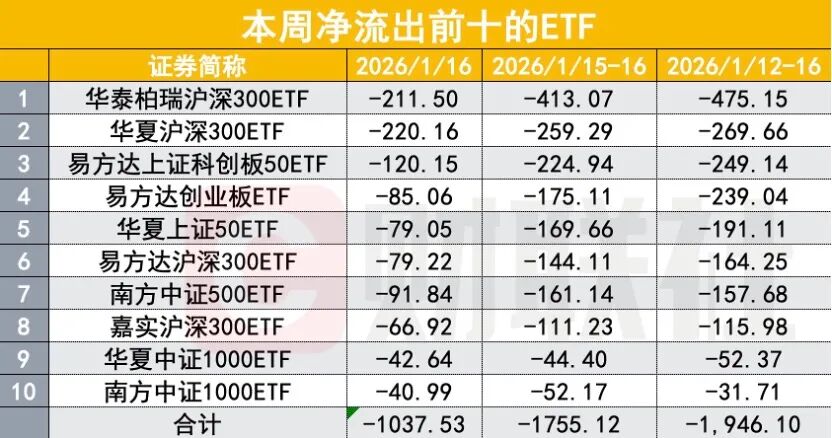
Core Viewpoint - The recent data reveals a significant outflow of funds from broad-based ETFs, with a total net outflow of 191.4 billion yuan during the week of January 12-16, marking a historical high for domestic ETFs [1][2]. Summary by Category Fund Flows - Broad-based ETFs experienced a net outflow of 1,914 billion yuan, with the CSI 300 ETF, ChiNext ETF, and SSE 50 ETF being the main contributors to this outflow [1]. - The CSI 300 ETF led the outflow with 1,037.5 billion yuan, where 935.24 billion yuan was withdrawn in the last two trading days, accounting for 90% of the total outflow [1][2]. - Eight ETFs recorded a net outflow exceeding 10 billion yuan, with the total outflow from the top ten broad-based ETFs reaching 1,946.1 billion yuan, setting a new record in the history of domestic ETFs [2][3]. Specific ETF Performance - The top outflowing ETFs included: - Huatai-PB CSI 300 ETF: -475.15 billion yuan - Huaxia CSI 300 ETF: -269.66 billion yuan - E Fund Sci-Tech 50 ETF: -349.14 billion yuan - E Fund ChiNext ETF: -239.04 billion yuan - Huaxia SSE 50 ETF: -191.11 billion yuan [2][3]. - The A500 ETF, the second-largest broad-based ETF, saw a net outflow of 74 billion yuan, dropping its scale below 300 billion yuan [5]. Industry ETFs - In contrast, industry-specific ETFs saw a net inflow of nearly 600 billion yuan, with significant investments in the Hong Kong Stock Connect Internet ETF, Software ETF, Satellite Communication ETF, and Non-ferrous Metals ETF [1][7]. - Specific industry ETFs that attracted substantial inflows included: - E Fund Sci-Tech Chip ETF: nearly 20 billion yuan - Guotai Semiconductor Materials Equipment ETF: over 10 billion yuan - Southern Non-ferrous Metals ETF: over 10 billion yuan [7][8]. Market Context - The total scale of domestic ETFs approached 6.3 trillion yuan as of January 12, despite the significant outflow, the current scale remains around 6.1 trillion yuan [3]. - The regulatory environment is tightening, with measures aimed at cooling down the overheated market, including increased margin requirements and scrutiny of stocks with excessive short-term gains [9][10].
法治为基,商业有序:论企业文化中的法治内核与商业秩序构建
Sou Hu Cai Jing· 2026-01-19 07:14
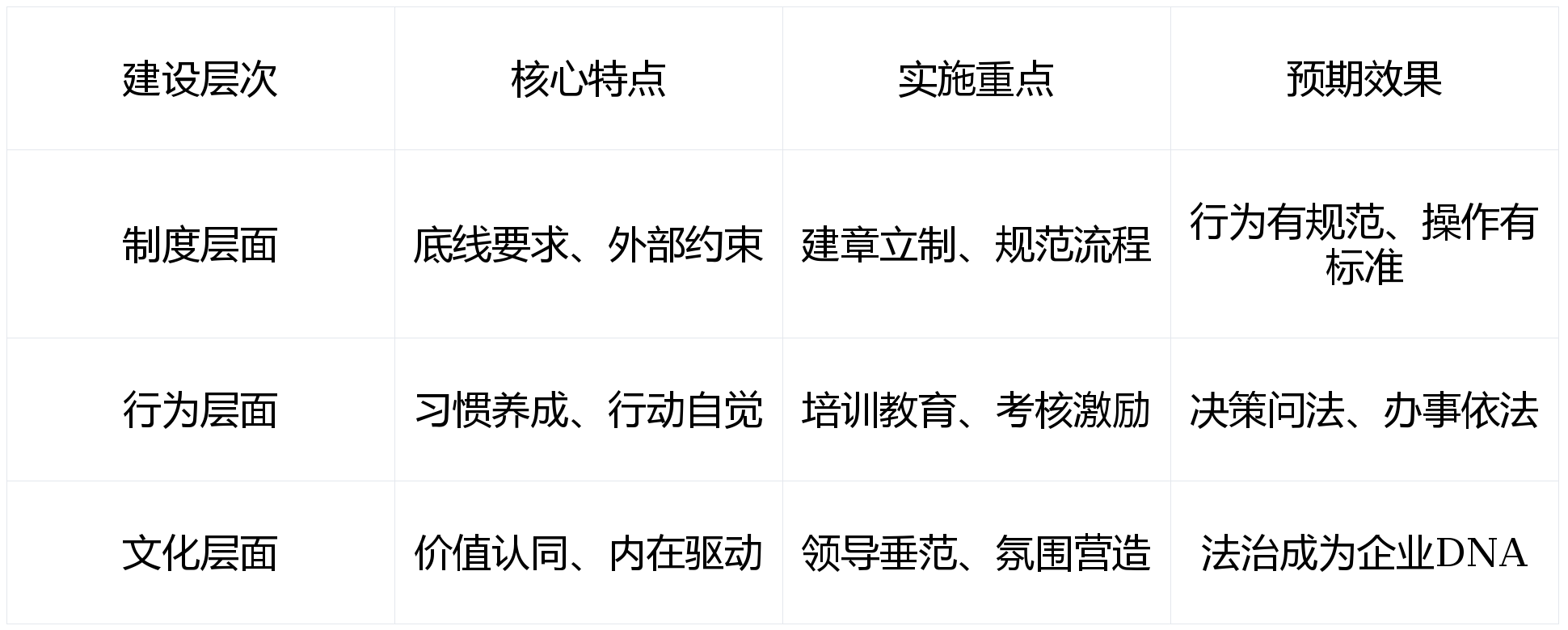
Core Viewpoint - The article emphasizes the importance of a rule-of-law business environment as a fundamental guarantee for healthy corporate development, highlighting that "the rule of law is the best business environment" as stated by President Xi Jinping [1]. Group 1: Rule of Law as a Foundation - The rule of law is essential for ensuring transaction safety, reducing market uncertainty, and promoting business innovation [1]. - A market economy is fundamentally a rule-of-law economy, where orderly business activities and stable expectations stimulate innovation and investment [1]. - The rule of law provides comprehensive protection for business activities through three core mechanisms: establishing rules, safeguarding rights, and resolving disputes [1]. Group 2: Construction of Legal Culture in Enterprises - The construction of corporate legal culture is a systematic project that evolves from compliance as a "bottom line requirement" to cultural "internal recognition" [2]. - Institutional construction is the cornerstone of corporate legal culture, exemplified by China Shipbuilding Group's comprehensive regulatory framework [3]. - Successful institutional design should be systematic, operable, and dynamic, ensuring that regulations are effectively executed and adapted to changing environments [3]. Group 3: Dynamic Balance of Law and Business Order - The relationship between law and business order is dynamic, requiring a balance that ensures orderly business activities while allowing space for innovation [8]. - Law provides a stable framework for business activities, ensuring fair competition and efficient resource allocation [9]. - Legal frameworks must adapt to new business models, balancing innovation with necessary regulations to prevent deviations from established norms [10]. Group 4: Practical Pathways for Legal Culture in Enterprises - Leadership is crucial in the construction of legal culture, with leaders' legal awareness directly influencing the depth and breadth of legal culture within the enterprise [13]. - Institutional construction is a core aspect of legal culture, requiring a comprehensive system that covers all operational management processes [14]. - Digital transformation offers new tools for enhancing legal management efficiency, with companies leveraging information technology for contract management and compliance monitoring [16]. Group 5: Future Trends in Legal Culture Construction - The integration of law and business will deepen, transforming legal work from a supportive function to a strategic support role [18]. - Digital technologies will be widely applied in legal construction, improving the efficiency and precision of legal work [18]. - The ability to manage legal risks in international operations will become a key factor in corporate competitiveness, necessitating a robust legal framework for overseas operations [18].

10万亿度电,观察中国能源体系变革的窗口
Xin Lang Cai Jing· 2026-01-19 06:51
Core Insights - China's total electricity consumption is projected to exceed 10 trillion kilowatt-hours by 2025, marking a significant milestone as it surpasses the combined electricity consumption of the EU, Russia, India, and Japan, and is more than double that of the United States [1] - The increase in electricity demand is driven by the rise of new productive forces, competitive pricing advantages, and the electrification of residential life, indicating a structural revolution towards a greener energy system [1] Group 1 - The contribution of the tertiary sector and urban residents to the annual electricity growth is 50%, highlighting their role as the main drivers of this increase [1] - The proliferation of electric vehicles and the emergence of new consumption scenarios, alongside the demand from emerging industries like AI and the digital economy, are accelerating the transition towards a high value-added industrial structure [1] Group 2 - By May 2025, China's cumulative installed capacity of photovoltaic power generation is expected to exceed 1 billion kilowatts, accounting for 30% of the total installed capacity and nearing half of the global share [2] - The share of thermal power generation is projected to decrease to approximately 40%, indicating a significant shift towards renewable energy sources [2] Group 3 - The transition to a new power system dominated by renewable energy sources is essential, addressing challenges such as the volatility of wind and solar power and the mismatch between energy supply and demand [2][3] - A new energy infrastructure that integrates generation, grid, load, and storage is necessary, focusing on four pillars: transitioning coal power, developing large-scale energy storage, creating a smart system for supply-demand balance, and optimizing transmission networks [2][3] Group 4 - The establishment of a unified national electricity market and the reform of pricing mechanisms are crucial for driving the green transition, ensuring that electricity prices reflect supply-demand dynamics and environmental costs [3] - The milestone of 10 trillion kilowatt-hours signifies not only a peak in energy production capacity but also the need for a modern energy system that is secure, efficient, clean, flexible, and interactive, supporting China's modernization efforts [4]
5年跨过4个千亿级台阶,济南“十四五”规划圆满收官
Qi Lu Wan Bao· 2026-01-19 06:42
Core Insights - The report highlights the significant achievements and future goals of Jinan City, emphasizing the completion of the "14th Five-Year Plan" by 2025, marking a pivotal period of development for the city [1] Economic Development - Jinan's GDP is projected to surpass four trillion yuan over five years, maintaining its position among the top 20 cities in China, with six districts achieving over one hundred billion yuan in GDP [1] - The average annual growth rate of general public budget revenue is 3.9%, with 45 major projects exceeding one billion yuan implemented [1] - The industrial economy has seen a historic leap, with revenues from large-scale industrial enterprises exceeding one trillion yuan, and key industries such as electronics, automotive, and steel each surpassing one hundred billion yuan [1] Innovation and Technology - Jinan has accelerated the cultivation of new productive forces, with the number of high-tech enterprises exceeding 7,000 and R&D expenditure as a percentage of GDP rising from 2.62% to 3% [2] - The city ranks 27th in the global research city list by Nature magazine, improving by 30 places since 2021 [2] - The establishment of the Quantum National Laboratory and the increase in national and provincial key laboratories from 5 to 20 and 98 to 126, respectively, highlight Jinan's commitment to innovation [2] Infrastructure and Urban Development - The city has received approval for its overall land spatial planning, enhancing its urban carrying capacity [3] - Major infrastructure projects include the operation of eight rail transit lines and the construction of 900 kilometers of urban roads, contributing to a comprehensive transportation network [3] - The area for centralized heating has increased by 10 million square meters, and the city has improved its flood prevention capabilities [3] Social Welfare and Quality of Life - Jinan has made significant strides in rural revitalization, with continuous growth in grain planting area and total output, and a rural water supply rate of 99% [4] - The city has implemented 103 livelihood projects, with fiscal spending on social welfare consistently around 80% [4] - The healthcare system has expanded with over 750 new medical institutions, and the average life expectancy is projected to reach 81 years [4] Environmental Sustainability - Jinan has achieved notable progress in ecological civilization, with energy consumption per unit of GDP expected to decrease by 26% and water consumption by 29% [5] - The city has completed tasks related to rainwater and sewage systems, and the proportion of good-quality water bodies has remained at 100% for five consecutive years [5] - The construction of parks and the restoration of historical mining sites reflect Jinan's commitment to environmental protection [5] Governance and Safety - The city has improved its governance modernity, effectively managing the impacts of the pandemic while ensuring economic and social development [6] - Jinan has been recognized as a national model city for legal governance and has made significant progress in social stability and safety measures [6]