人民币国际化

Search documents
准备好,我们正在经历一次大的经济转折点
大胡子说房· 2025-11-21 09:46
很多人应该感受到了。 当下我们面临的,是一次大的经济转折点。 对我们所有人来说,现在能不能看懂,以及看懂后怎么做,就变得非常重要了。 那,今年都有哪些变化是透露出这种信号的呢? 第一个,是中美在贸易战中,美国的妥协。 今年川普上台后,故技重施,加征对等关税,限制芯片出口等等。 套路是老的,但结果是不一样的。 我记得4月7日的时候,川普搞了对等关税后,美国市场遭受了一轮股债汇三杀。 而我们这边的市场呢,也遭受到一轮大的下滑。 但也只是低迷了一天,我们的平准版资金就入市了,连带着保险、社保的资金入市,狂拉银行,最后 稳住了大盘。 后面呢,我们和美国进行了谈判,是延期了90天。 那90天又90天,直到10月30日才确定,双方休战一年。 这大概就是简单版本的故事线。 这里面值得注意的是什么。 首先,是我们的态度。 从第一次的加关税开始,我们就是很直接的态度。 正面硬刚,奉陪到底。 但别忘了,2018年的时候,是我们飞到美国去谈判的,而且后面美国撕毁协议之后,我们是被迫接受 了加关税的。 所以这一次的双方博弈,大家是能明显感受到,优势是在我们这一方的。 甚至,迫使美国松口说,想要和中国合作。 其次,是最终的结果。 双方 ...


柬埔寨将黄金储备放在中国,意味着什么?
商业洞察· 2025-11-21 09:23
Core Viewpoint - Cambodia has decided to store 54 tons of gold in the Shanghai Gold Exchange, marking the first instance of a country storing gold in China, which is a significant step towards promoting the internationalization of the Renminbi and establishing a financial system independent of the West [4][6][10]. Group 1 - The 54 tons of gold are newly purchased by Cambodia, not transferred from other countries [5]. - This event is part of a broader strategy to encourage friendly nations to store their gold reserves in China, thereby indirectly linking the Renminbi with gold reserves [10][12]. - The strategic value of gold is increasing as the dominance of the US dollar in global reserves is declining, with its share expected to drop from approximately 72% in 2000 to about 58% by Q1 2025 [10]. Group 2 - Cambodia's decision to store gold abroad is influenced by security concerns, as smaller nations face risks of geopolitical conflicts and instability [16][20]. - The freezing of $15 billion in Bitcoin assets belonging to a Cambodian group by the US has prompted the need for secure storage options outside the US [20]. - The lack of neutral countries in Europe due to the Russia-Ukraine conflict further solidifies China's position as a viable option for gold storage [21][22]. Group 3 - There is a growing consensus globally regarding China's rising power, with a recent report indicating an increase in positive perceptions of China among various countries [25][26]. - Low-income countries, particularly in Africa and Southeast Asia, view China more favorably due to its more favorable lending conditions compared to Western nations [30][32]. - Cambodia's choice to store gold in China reflects both its immediate needs and China's increasing international standing, serving as a potential model for other countries with similar foreign exchange reserve sizes [33].

2026年香港经济展望:在交汇中重塑平衡
工银国际· 2025-11-21 07:11
Economic Growth Outlook - Hong Kong's GDP growth is expected to reach approximately 3.5% in 2026, with an average growth rate of around 3% from 2025 to 2029, significantly higher than developed economies like the US and Europe, which are below 2%[1][16]. - In Q3 2025, Hong Kong's GDP grew by 3.8% year-on-year, with private consumption increasing by 2.1% and fixed capital formation rising by 4.3%[16]. Financial Market Resilience - The Hong Kong Monetary Authority injected liquidity multiple times in 2025 to stabilize the currency, resulting in a significant drop in Hibor rates, indicating a robust liquidity environment[2]. - By November 2025, net inflows from southbound trading exceeded 1.2 trillion RMB, marking a historical high and demonstrating the resilience of Hong Kong's financial system[2]. Trade and Export Recovery - Hong Kong's overall export value fell by 7.8% in 2023 but rebounded to a growth of 8.7% in 2024, with a further increase of 13.4% in the first nine months of 2025[3][16]. - The service trade sector is expanding, particularly in finance, professional services, and high-end logistics, supported by policy initiatives aimed at enhancing high-value service exports[3]. Fiscal Health and Policy Support - The fiscal deficit for 2025 is projected at approximately 67 billion HKD, about 2.0% of GDP, down from 2.7% in 2024, indicating improving fiscal health[18]. - The government plans to attract more businesses to Hong Kong through streamlined approval processes and tax incentives, enhancing the investment climate[19]. Green Finance and Innovation - As of August 2025, the Hong Kong government issued around 240 billion HKD (approximately 31 billion USD) in green bonds, establishing a key pricing benchmark in the market[26]. - The government has allocated 10 billion HKD for new industrial acceleration plans to support advanced manufacturing and innovation[25].
资本市场增强吸引力包容性 明年A股怎么看?
Jing Ji Ri Bao· 2025-11-21 02:21
Core Viewpoint - The A-share market is expected to establish a "low volatility slow bull" foundation by 2026, supported by a more stable macroeconomic environment, clearer industrial directions, and a friendlier regulatory framework [1] Group 1: Macroeconomic Outlook - The macroeconomic backdrop is characterized by a projected growth rate of around 5% in 2025 and approximately 4.9% in 2026, with a fiscal deficit rate likely maintained at 4% [3] - The positive momentum in China's capital market is accumulating, with a focus on moderate recovery rather than aggressive growth [2][3] - The global financial order is expected to undergo profound restructuring, with a revaluation of Chinese asset values anticipated to accelerate [2][4] Group 2: Industry Trends - "New quality productivity" is a recurring theme, with sectors like artificial intelligence, biotechnology, and aerospace leading market narratives [5] - The market structure is shifting towards "new economy" sectors, with significant growth in the market capitalization of industries such as semiconductors and renewable energy [6] - Chinese companies are increasingly positioned to compete globally, leveraging their comprehensive advantages in cost, engineering capabilities, and market scale [6] Group 3: Globalization and Capital Flow - The trend of Chinese enterprises going global is emerging, with a shift from merely exporting goods to providing capital goods and solutions to emerging markets [7] - High expectations for capital inflows from real estate and low-yield bonds into equity assets, with estimates suggesting up to 6 trillion RMB could flow into the stock market [8][4] Group 4: Investment Strategies - The combination of AI and advanced manufacturing is seen as a key growth driver, with significant investment opportunities in sectors benefiting from AI applications [9] - The "outbound + RMB internationalization" strategy is identified as crucial for improving corporate profitability and valuation over the next five years [9] - The A-share market is transitioning towards a more structured investment culture, with a focus on long-term capital and improved financial product offerings [11]



中国卢森堡发 40 亿欧债,千亿资金追捧背后的人民币野心!
Sou Hu Cai Jing· 2025-11-21 02:12
主权债券这玩意儿,本质是国家拿信用当门票,跟全球投资者借钱,到期连本带息还上。 利率多少,直接看市场信不信你。 本文仅在今日头条发布,谢绝转载。 11月18号,财政部在卢森堡发了40亿欧元债券。消息一出来,全球投资者疯抢,认购倍数超25倍,总认购金额超1001亿欧元。 你可能会想,咱外汇储备3万多亿美元,这40亿欧元算个啥?为啥还要跑去欧洲借钱? 咱们这不是为了借钱,是为了抢椅子。 国际金融市场上椅子就那么多,美元坐主位,欧元坐副位,中国得先搬张小板凳坐下,再慢慢换沙发。 美国国债利率低,因为大家觉得它能还;那些经济快崩的国家,利率再高也没人敢碰,怕钱打水漂。 但中国这次不一样。 咱外汇储备够厚,40亿欧元对国家来说就是零花钱。 表面看,中国在"练外功",提升在欧洲金融市场的影响力。但实际上,这是在为"练内功"铺路,为人民币国际化打地基。 美元为啥能称霸全球?因为它在国际贸易结算、外汇储备、跨境支付各个环节都是老大。 人民币现在在国际支付中的占比才3%左右,跟美元差距太大。要国际化,必须解决"信用成本"问题。 主权债券就是答案。 通过在卢森堡发债,欧洲投资者能直观感受到中国政府的偿债能力和信用水平,慢慢建立信 ...

俄罗斯发行350亿人民币主权债券!
Sou Hu Cai Jing· 2025-11-20 23:09
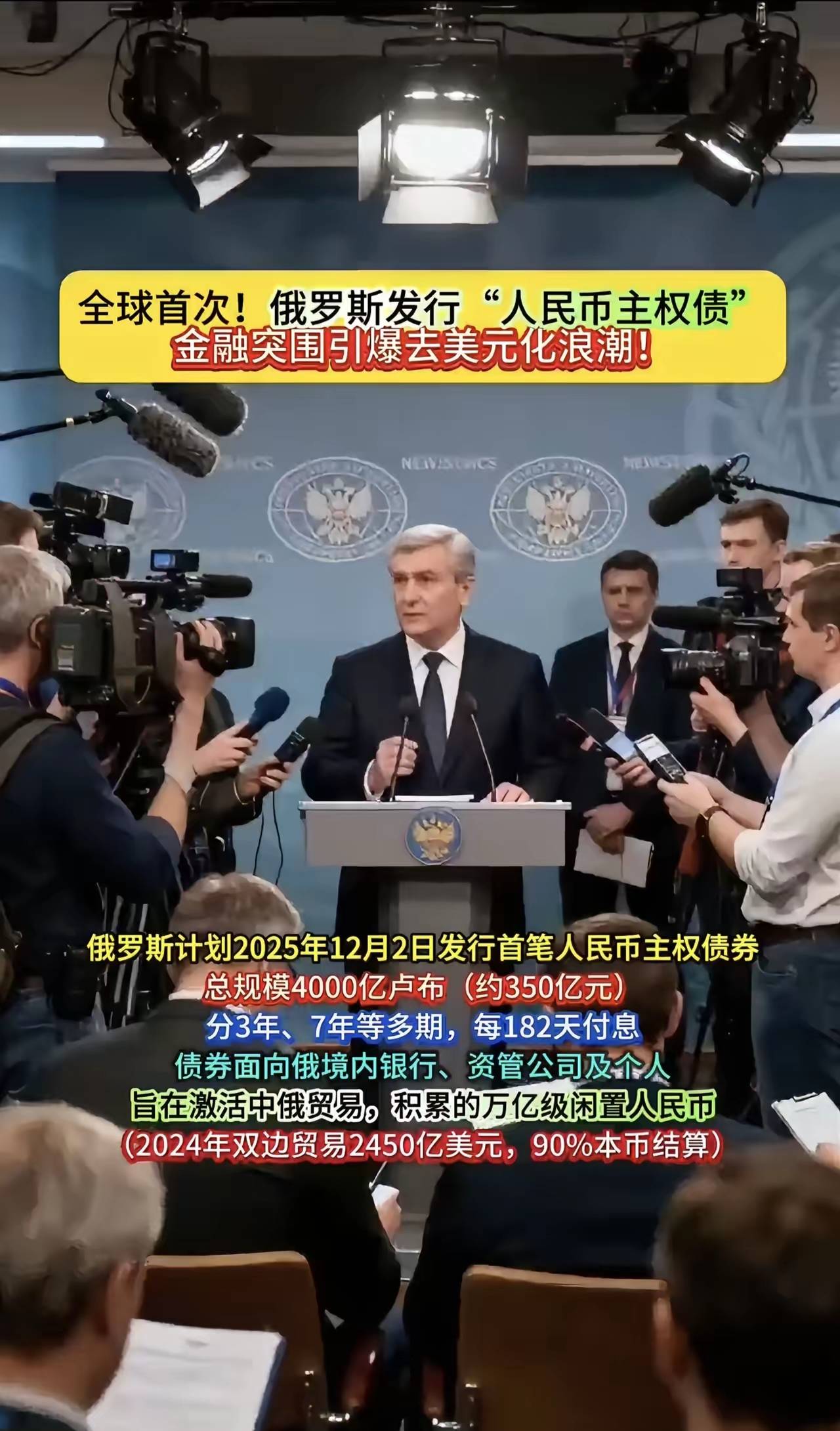
Core Insights - Russia is issuing RMB-denominated sovereign bonds to alleviate wartime fiscal pressure, utilizing the large amount of RMB accumulated from trade with China, where over 90% of transactions are settled in local currencies [1][4] - Brazil is also planning to issue similar bonds, aiming to stimulate its economy by leveraging its own RMB reserves, indicating a trend towards the internationalization of the RMB [1] Group 1 - The bond issuance by Russia amounts to 400 billion rubles, approximately 35 billion RMB, with maturities of three and seven years [4] - The bonds will be offered to domestic banks, asset management companies, and individuals, with interest payments made every 182 days [4] - The initiative aims to activate Sino-Russian trade, with projected bilateral trade reaching 245 billion USD in 2024, 90% of which will be settled in local currencies [4]
你抛美债,我抛中债?境外纷纷减持中国债,大量资金流向美国?
Sou Hu Cai Jing· 2025-11-20 22:41
Core Insights - The trend of foreign investors reducing their holdings in Chinese bonds while increasing their investments in U.S. Treasuries is noteworthy and reflects underlying economic factors [1][3][10] Group 1: Data Analysis - As of October 2025, foreign institutions held approximately 3.2 trillion yuan in Chinese bonds, a decrease of about 11.1% from 3.6 trillion yuan in the same period of 2024 [1] - In contrast, foreign investors net increased their holdings of U.S. Treasuries by approximately 280 billion dollars in the first three quarters of 2025, with a significant portion coming from Asia [1][3] Group 2: Economic Factors - The divergence in interest rate policies between China and the U.S. is a primary factor influencing this trend, with U.S. 10-year Treasury yields around 4.2% compared to China's 2.8%, creating a yield spread of 1.4 percentage points [3] - Currency fluctuations also play a critical role, as the Chinese yuan has depreciated by about 3.5% against the dollar since the beginning of 2025, impacting the total returns for foreign investors [3][10] Group 3: Investor Behavior - The reduction in Chinese bond holdings is primarily driven by hedge funds and short-term investment funds, which are more sensitive to yield changes [4] - Approximately 60% of the foreign investors reducing their Chinese bond holdings are private investment institutions, while 40% are official institutions, indicating that market-driven factors are predominant [4] Group 4: Market Fundamentals - The fundamentals of the Chinese bond market remain robust, with stable economic growth, sound fiscal conditions, and low default risk supporting the attractiveness of Chinese bonds [5][10] - The ongoing improvement of market access mechanisms, such as Bond Connect and QFII, is expected to enhance the investment environment for foreign investors [6][7] Group 5: Long-term Outlook - Historical trends suggest that the current adjustments may be temporary fluctuations within a longer-term upward trajectory of foreign participation in the Chinese bond market [4][10] - The internationalization of the yuan and its increasing use in global trade may enhance the demand for Chinese assets in the future [9] Group 6: Market Dynamics - The competition and cooperation between the Chinese and U.S. bond markets are likely to persist, fostering improvements in both markets [8] - The stability and predictability of regulatory policies are crucial for maintaining investor confidence in the Chinese bond market [8][10]
资本市场增强吸引力包容性
Jing Ji Ri Bao· 2025-11-20 22:16
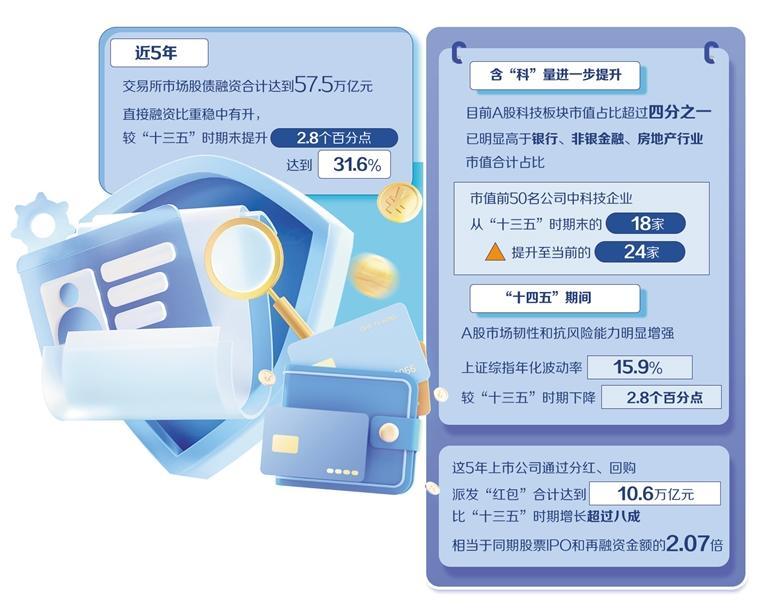
Group 1: Market Outlook - The A-share market is expected to establish a "low volatility slow bull" foundation by 2026, supported by a more stable macroeconomic environment, clearer industrial directions, and a friendlier regulatory framework [2][3] - International investment banks like UBS and Goldman Sachs have updated their outlooks, indicating a significant increase in the weight of A-shares in global asset allocation [2] Group 2: Macroeconomic Context - Citic Securities predicts a macroeconomic growth rate of around 5% in 2025 and approximately 4.9% in 2026, with a fiscal deficit rate likely maintained at 4% [4] - The economic recovery is characterized by moderate demand-side support and a balanced fiscal and monetary policy approach [4] Group 3: New Economic Drivers - The term "new quality productivity" is frequently mentioned, highlighting sectors like AI, biotechnology, and aerospace as key drivers of market transformation [6][7] - The integration of AI with advanced manufacturing is seen as a crucial growth lever, with significant implications for various sectors [11] Group 4: Globalization and Market Structure - Chinese companies are increasingly shifting from a domestic demand-driven model to a global demand-oriented approach, exporting capital goods and solutions to emerging markets [8] - The market structure is evolving, with new economy sectors like semiconductors and renewable energy gaining market share, while traditional industries are undergoing digital transformation [7] Group 5: Investment Trends - There is an anticipated flow of up to 6 trillion RMB from real estate and deposits into the stock market, marking a transition from stock market competition based on existing assets to new incremental allocations [10] - The focus on long-term investment strategies is expected to grow, with reforms aimed at enhancing the supply of quality financial products and increasing dividend payouts from listed companies [9][12]
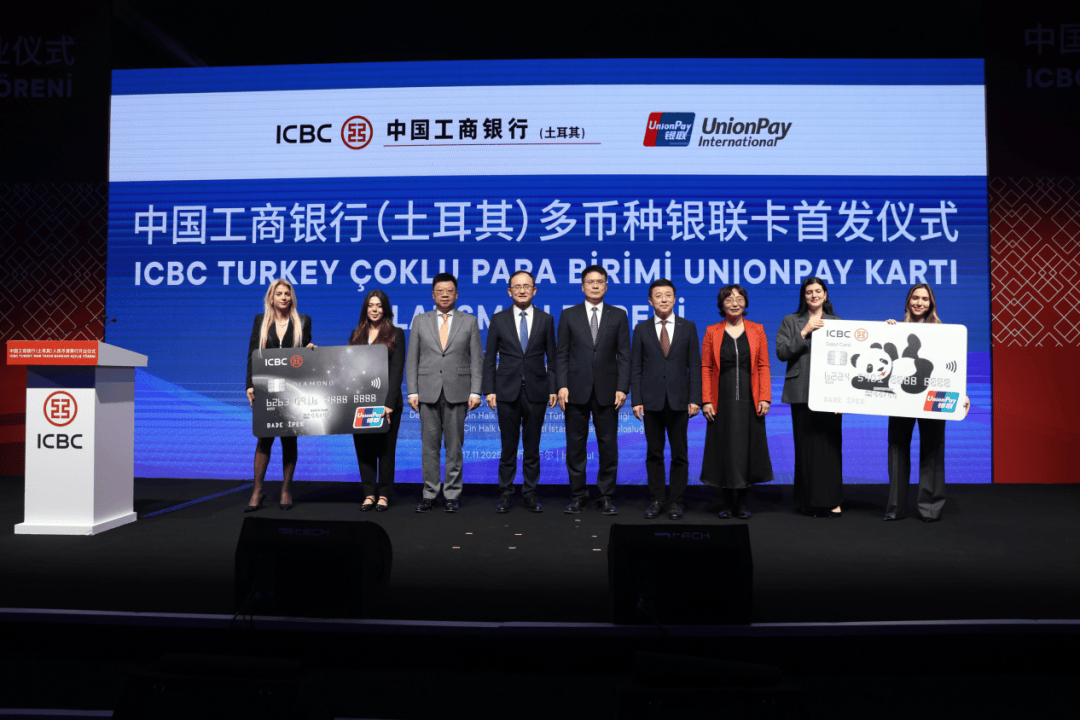
中国银联联合工商银行在土耳其首发多币种银联卡
Sou Hu Cai Jing· 2025-11-20 11:00
Core Viewpoint - The collaboration between China UnionPay and Industrial and Commercial Bank of China marks a significant step in enhancing cross-border trade and promoting the internationalization of the Renminbi through the launch of multi-currency debit and credit cards in Turkey [1][3]. Group 1: Partnership and Product Launch - China UnionPay and Industrial and Commercial Bank of China have launched multi-currency debit and credit cards in Turkey, which support transactions in Renminbi, Turkish Lira, British Pound, US Dollar, and Euro [1][3]. - The issuance of these cards aims to provide local residents with secure and efficient global payment options while facilitating bilateral trade between China and Turkey [1][3]. Group 2: Strategic Importance - This initiative is seen as a milestone in UnionPay's international business development and a response to China's high-level opening-up strategy [3]. - The launch of these cards is expected to enhance the convenience of cross-border payments for foreign nationals visiting China and improve financial connectivity [3][4]. Group 3: Future Plans - UnionPay plans to continue deepening collaboration with local partners in Turkey to enhance cross-border payment services and support the Belt and Road Initiative and Turkey's "Middle Corridor" initiative [4]. - The company has established a comprehensive localized payment service network in Turkey over nearly two decades, achieving widespread acceptance among local merchants and ATMs [4].

解读深港金融科技三年行动方案:联手打造全球级中心路径
Nan Fang Du Shi Bao· 2025-11-20 10:20
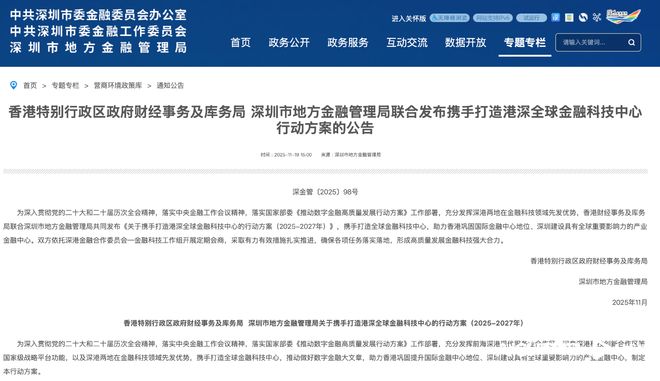
11月19日,香港特别行政区政府财经事务及库务局与深圳市地方金融管理局联合发布《关于携手打造港 深全球金融科技中心的行动方案(2025-2027年)》(以下简称《行动方案》),明确未来三年将围绕 六大方面推出20项重点任务,并提出"到2027年底,落地20个以上深港跨境数据验证平台金融领域应用 场景"等具体目标。这份首次由深港两地联合发布的金融科技专项行动方案,被视为两地携手打造全球 金融科技中心的"施工图"和"任务书"。 从"要素流动"迈向"制度型开放" 《行动方案》开宗明义,旨在"充分发挥深港两地在金融科技领域先发优势,携手打造全球金融科技中 心,助力香港巩固提升国际金融中心地位、深圳建设具有全球重要影响力的产业金融中心"。 "印象中,这是深港联合发文的第一个《行动方案》,标志着深港合作进入到一个新阶段。"广东省体制 改革研究会执行会长彭澎在接受南都·湾财社记者采访时指出。 南开大学金融学教授田利辉认为,这一合作具有深远的战略意义。"相较于新加坡、伦敦等其他国际金 融科技中心,深港合作的战略意义在于助推人民币国际化、抢占全球金融科技规则话语权。"田利辉进 一步分析称,"深港的优势是'科创+金融+政策'协同 ...