量子计算

Search documents
看好工程机械、量子计算、核聚变、机器人和农机
SINOLINK SECURITIES· 2025-10-26 09:04
Investment Rating - The report suggests a positive outlook for the machinery equipment sector, with specific recommendations for stocks such as XCMG, Hengli Hydraulic, SANY Heavy Industry, Zoomlion, LiuGong, and YTO Group [10]. Core Insights - The machinery equipment index rose by 4.71% in the last week, outperforming the CSI 300 index, which increased by 3.24% [13][15]. - Year-to-date, the machinery equipment index has increased by 35.02%, ranking fifth among 31 primary industry categories [15]. - The report highlights a significant increase in engineering machinery exports, with a total of $43.855 billion from January to September 2025, marking a year-on-year growth of 13.3% [4][23]. - The report emphasizes the potential growth in quantum computing and controllable nuclear fusion as new economic growth points, supported by top-level policy and funding [4][23]. - Tesla's humanoid robot production plans are seen as a strategic opportunity for the robotics sector, with expectations for significant commercialization by 2026 [4][23]. Summary by Sections Market Review - The SW Machinery Equipment Index increased by 4.71% last week, ranking fourth among 31 primary industry categories [13][15]. - Year-to-date performance shows a 35.02% increase in the SW Machinery Equipment Index, compared to an 18.44% increase in the CSI 300 Index [15]. Key Data Tracking General Machinery - The general machinery sector continues to face pressure, with the manufacturing PMI at 49.8% in September, indicating contraction [22]. - Forklift sales in September reached 130,380 units, a year-on-year increase of 23% [22]. Engineering Machinery - In September, total excavator sales reached 19,858 units, a year-on-year increase of 25.4%, with both domestic and international sales showing strong growth [31]. Railway Equipment - The railway equipment sector is experiencing steady growth, with fixed asset investment in railways maintaining a growth rate of around 6% [42]. Shipbuilding - The shipbuilding sector is seeing a slowdown in price declines, with the global new ship price index at 185.58 as of September 2025 [44]. Oilfield Equipment - The oilfield equipment sector is stabilizing at the bottom, with an increase in global rig counts and expected growth in oil and gas extraction demand [46]. Industrial Gases - A decrease in raw material prices is expected to improve profitability in the steel sector, which may boost demand for industrial gases [50]. Gas Turbines - The gas turbine sector is showing robust growth, with GEV reporting a 39% year-on-year increase in new gas turbine orders in the first three quarters of 2025 [52].






天价 AI 薪酬,微软 CEO 年薪 9650 万!Meta AI 裁员竟按代码行数决定去留?拼多多给员工发100g黄金|Q资讯
Sou Hu Cai Jing· 2025-10-26 06:26
Group 1: Meta AI Layoffs - Meta has announced a significant layoff of approximately 600 positions in its AI department, representing about 20% of its workforce in the "superintelligence lab" [1] - The layoffs will affect the FAIR research department and AI teams related to products and infrastructure, but will not impact the newly established TBD Lab, which is still actively hiring [1] - The layoffs have notably impacted prominent AI researcher Tian Yuandong, who publicly shared his experience on social media [2] Group 2: TikTok Organizational Changes - TikTok has restructured its operations, shifting the reporting relationships of its operations department to the product team, which now oversees core functions like content and user growth [3] - This adjustment follows a previous organizational change in August, indicating a trend towards consolidating responsibilities within the company [3] Group 3: Microsoft CEO Compensation - Microsoft CEO Satya Nadella's total compensation for the 2025 fiscal year has reached $96.5 million, marking a 22% increase from the previous year and the highest since he took the role [7][8] - This compensation places Nadella ahead of other tech CEOs, including Apple's Tim Cook and Nvidia's Jensen Huang [7][8] Group 4: Moonshot AI Financing - Moonshot AI is reportedly nearing completion of a new funding round amounting to several hundred million dollars, following a previous valuation exceeding $3.3 billion [9] - The company has experienced a rollercoaster journey since its inception, with significant fluctuations in its market presence [9] Group 5: Mercedes-Benz Voluntary Departures - Mercedes-Benz has initiated a voluntary departure program, with approximately 4,000 employees having opted to leave as part of a broader plan to encourage around 30,000 employees to exit [10] - The program offers substantial severance packages based on tenure, with significant compensation for long-serving employees [10] Group 6: Pinduoduo Employee Rewards - Pinduoduo has begun distributing gold rings and "golden chickens" as anniversary gifts to employees, with the amount of gold awarded based on years of service [11][14] - This initiative is part of the company's celebration of its tenth anniversary, reflecting its commitment to employee recognition [11][14] Group 7: Google Quantum Chip Breakthrough - Google has announced a major breakthrough with its quantum chip "Willow," achieving a speed approximately 13,000 times faster than the fastest supercomputers [16] - This marks the first time a quantum computer has successfully executed a verifiable algorithm that surpasses classical computing capabilities [16] Group 8: OpenAI Acquisitions and Developments - OpenAI has acquired a startup named Software Applications, founded by former Apple employees, to enhance AI-driven user interfaces for Mac [19] - The acquisition aims to integrate the AI assistant "Sky" into ChatGPT, furthering OpenAI's mission to improve task completion through AI [19] Group 9: Ant Group's New AI Application - Ant Group has launched a new AGI multimodal application called "Lingguang," which is currently in internal testing and available on various platforms [21] - The application features capabilities for quick research and summarization, enhancing information processing efficiency for users [21]





专家谈·“十五五”关键部署绘蓝图 诸多重要提法释放哪些信号?梳理解读↓
Yang Shi Wang· 2025-10-26 03:59
Group 1 - The core objective of the "15th Five-Year Plan" is to achieve significant results in high-quality development, which aligns with the primary task of Chinese-style modernization [3][5] - The plan emphasizes the importance of maintaining a reasonable proportion of the manufacturing industry and constructing a modern industrial system centered on advanced manufacturing [8] - The focus of the "15th Five-Year Plan" is on economic construction, with key areas including technology, new industrial chains, domestic markets, consumption, and people's livelihoods [10] Group 2 - The "15th Five-Year Plan" outlines strategic and innovative measures to build a strong domestic market, accelerate agricultural modernization, enhance social welfare, and promote a comprehensive green transition [12] - The plan highlights the need to combine investments in physical assets and human capital, emphasizing that expanding domestic demand and investing in people are two sides of the same coin [15][17] - The future five years will see a push for high-level opening-up, encouraging high-quality enterprises to enter China while supporting Chinese companies in forming their own industrial chains [20][22] Group 3 - The plan aims to accelerate self-reliance in high-level technology and lead the development of new quality productivity, seizing opportunities from the new round of technological revolution and industrial transformation [30] - It stresses the importance of original innovation and tackling key core technologies, promoting deep integration of technological and industrial innovation [32] - The plan calls for breaking down barriers to market flow and optimizing resource allocation to create a virtuous cycle of demand and supply [39] Group 4 - The plan identifies key areas for technological breakthroughs, particularly in artificial intelligence, quantum computing, and advanced nuclear energy technologies, which are expected to see explosive growth in the next five years [45][49]
科技周报 | 谷歌芯片实现量子计算新突破;苹果iPhone Air开售
Di Yi Cai Jing· 2025-10-26 03:55
Group 1: Quantum Computing Breakthrough - Google has announced a significant breakthrough in quantum computing with the Willow chip, marking the first successful hardware implementation of a verifiable algorithm that outperforms the fastest classical supercomputers by 13,000 times [1] Group 2: iPhone Air Launch - The iPhone Air officially launched on October 22, but its market reception was notably cooler compared to the iPhone 17 series, with only 13 customers in line at a flagship store [2] - The iPhone Air 256GB version has a market premium of 350 yuan, while the 1TB version has a premium of 500 yuan, making it the least premium model in the iPhone 17 series [2] Group 3: Tesla's Optimus V3 Announcement - Tesla's CEO Elon Musk announced that the Optimus V3 humanoid robot will be launched in the first quarter of next year, with plans for a production capacity of 1 million units in the V4 phase and potentially up to 100 million units in the V5 phase [3] Group 4: Honor Robotics Progress - Honor Robotics team won the Manipulation challenge at the IROS 2025 competition, and the company aims to invest $10 billion over the next five years to build a global AI terminal ecosystem, focusing on AI and robotics [4] Group 5: Meituan's S-team Expansion - Meituan's CEO announced the addition of two new members to the S-team, focusing on hardware and software services, indicating a routine adjustment in leadership without structural changes [5] Group 6: New Stone's Funding - New Stone, a driverless vehicle manufacturer, completed over $600 million in Series D financing, with plans to deploy 5,000 driverless vehicles in the UAE by the end of next year [7] Group 7: Game License Approvals - The National Press and Publication Administration approved 166 game licenses in October, with 159 for domestic games and 7 for imported games, marking the second-highest number of approvals this year [8] Group 8: Peng Brain Technology Funding - Shenzhen Peng Brain Technology, a subsidiary of Skyworth Group, announced the completion of several million yuan in angel financing to advance brain-computer interface technology [9] Group 9: Ecovacs Financial Performance - Ecovacs reported a 25.93% year-on-year increase in revenue to 12.877 billion yuan and a 130.55% increase in net profit to 1.418 billion yuan for the first three quarters of 2025 [10] Group 10: Midea Group's Subsidiaries Performance - Midea Group's subsidiaries, Hekang New Energy and Kelu Electronics, reported significant revenue and profit growth in the first three quarters of 2025, with Hekang achieving a 98.61% revenue increase [11]



未来科学:上海与世界
Guo Ji Jin Rong Bao· 2025-10-26 03:39
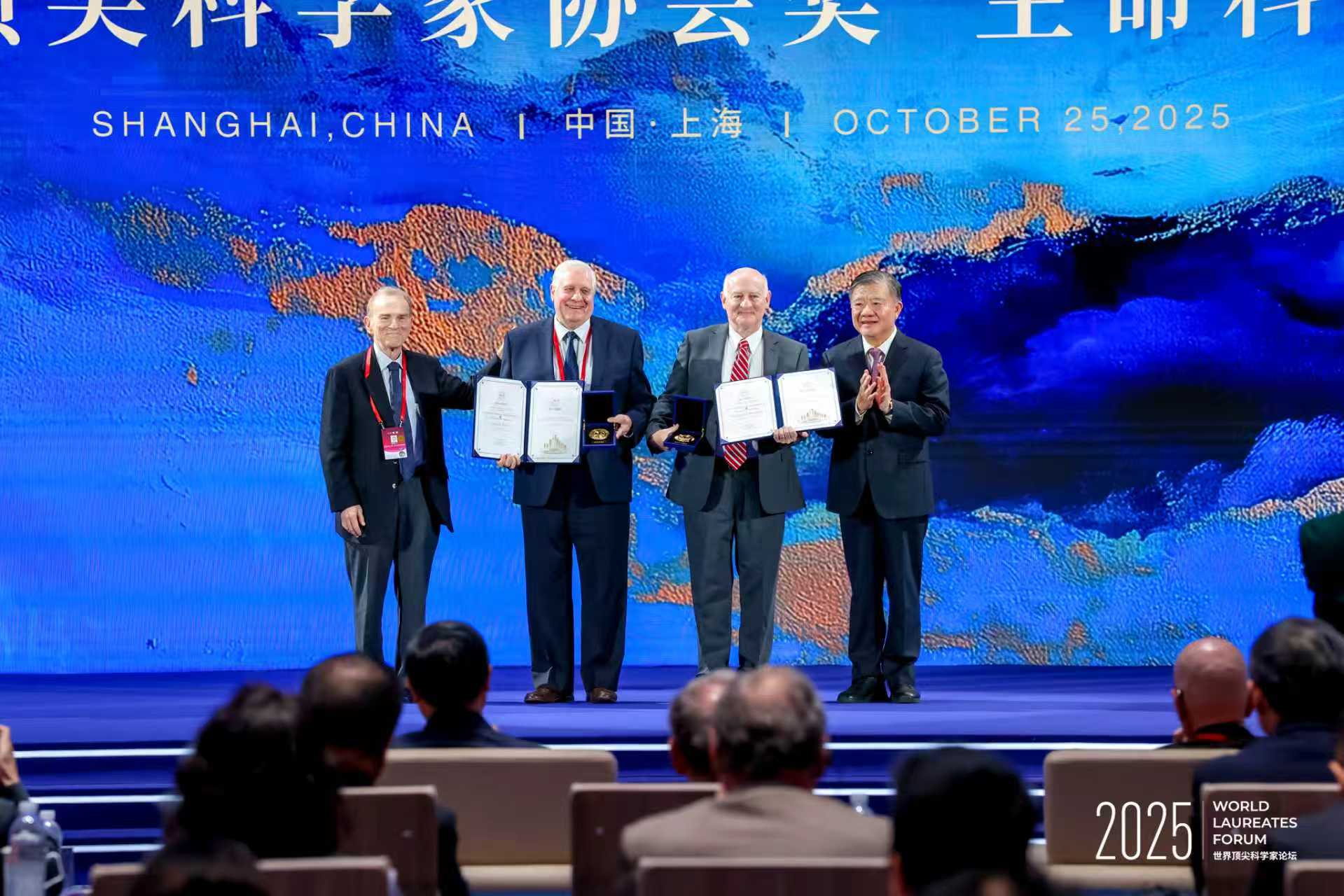
开幕式上,现场颁发2025世界顶尖科学家协会奖"智能科学或数学奖"与"生命科学或医学奖"两大奖项,分别由孙理察(Richard SCHOEN)、斯科特·埃默尔 (Scott D. EMR)和韦斯·桑德奎斯特(Wesley I. SUNDQUIST)三位科学家获得。 世界顶尖科学家协会奖,于2021年在上海发起创设,由红杉慈善基金会独家提供永久资金支持、面向全球科学家评选的科学大奖,今年由上海临港科技创新 发展基金会承办。 顶科协奖设立"智能科学或数学奖"、"生命科学或医学奖"两个单项奖,单项奖金金额为1000万元人民币,最多可由4人共同获奖并分享,为全球奖金最高的 科学奖项之一。 10月25日,2025世界顶尖科学家论坛开幕式暨2025世界顶尖科学家协会奖颁奖典礼在上海临港中心举行。 以"未来科学:上海与世界(Science in Future)"为主题,今年顶科论坛共有来自全球10余个国家约150位科学家参加,其中包括4位诺贝尔奖得主、4位图灵 奖得主,以及16位中国两院院士、百余位中外优秀青年科学家等。 期间,以"一代耀一代·去突破"为主题的2025世界顶尖科学家科学教育论坛暨第二届科技女生赋能论坛上,欧 ...
人工智能泡沫即将破灭,但下一个泡沫已在酝酿之中
3 6 Ke· 2025-10-26 00:07
Core Viewpoint - The article argues that the current AI bubble is nearing its breaking point, with significant investments failing to yield substantial returns, and the industry is now pivoting towards quantum computing as the next speculative opportunity [1][4][10]. Investment Trends - Nearly half of global private investment is flowing into AI, which has been a major driver of the recent growth in the S&P 500 index [1]. - Venture capital and investment banks have spent hundreds of billions on AI in recent years, but the technology is reaching its limits and profitability remains elusive [4]. Performance and Utility of AI - A report from MIT indicates that 95% of AI pilot projects have not improved company profits or productivity, with many AI tools actually hindering developer efficiency [3]. - The recent release of ChatGPT-5, which required significantly more resources than its predecessor ChatGPT-4, showed only marginal performance improvements [2]. Financial Viability - OpenAI's subscription model, priced at $200 per month, is reportedly leading to substantial losses, suggesting that a price point closer to $2000 would be necessary for financial sustainability [3]. Market Sentiment and Future Outlook - Major investors, including Goldman Sachs, are warning that the AI bubble is likely to burst soon, which could have widespread repercussions for companies involved in AI infrastructure [4]. - The article suggests that the impending collapse of the AI bubble will impact all stakeholders in the tech and finance sectors [5]. Quantum Computing as a New Trend - Tech giants like Google, Microsoft, and Amazon are developing their own quantum computers, with significant investments flowing into smaller quantum computing firms as well [7]. - There is skepticism about whether quantum computing can genuinely solve the challenges faced by AI, as the necessary algorithms for practical applications are still largely undeveloped [9]. Challenges in Quantum Computing - The hardware for quantum computing is still years away from being fully operational, and the software required to leverage its capabilities is complex and not yet available [8][9]. - The notion that quantum computing could revolutionize AI is questioned, as current scientific understanding suggests that the potential benefits may be overstated [10].
美股狂欢夜:三大指数共创新高,半导体大涨,中概股高开高走!
Sou Hu Cai Jing· 2025-10-25 19:28
Core Insights - The U.S. stock market experienced significant movements, with the Dow Jones Industrial Average surpassing 47,000 points for the first time, while the S&P 500 and Nasdaq also reached new historical highs. However, Tesla's stock fell by 3.4% despite a 12% increase in total revenue, marking a 37% drop in net profit, the lowest in five years [1][2][5] - A delayed inflation report revealed that the September CPI rose by 3% year-over-year, which was below market expectations of 3.1%. This slight difference has led to a near-zero probability of interest rate hikes by the Federal Reserve, with a 98.5% chance of a rate cut in December [2][5] - The semiconductor sector emerged as a standout performer, with the Philadelphia Semiconductor Index rising by 1.89% to a record high. AMD surged by 7.63%, and IBM's stock rose by 7.9% following a breakthrough in quantum computing [5][10] Company Performance - Tesla's net profit fell by 37%, and its operating profit margin dropped to 5.8%, making it the only major tech stock to close lower [5][10] - AMD and Micron Technology saw significant stock increases of 7.63% and 5.96%, respectively, driven by positive developments in the semiconductor industry [5][10] - Chinese concept stocks showed strength, with the Nasdaq Golden Dragon China Index rising by 0.57%. Notable gains included Alibaba up by 1.63% and Baidu up by 1.89% [7][10] Market Trends - The U.S. market is experiencing a strong rally, with the A-share market also performing well, as the Shanghai Composite Index rose by 2.88% over the week [9][10] - The European market mirrored the U.S. trends, with the FTSE 100 and DAX indices reaching new highs [8] - The semiconductor industry is viewed positively in the short, medium, and long term, with increasing domestic orders and a global recovery cycle [10]


2025年10月社交媒体用户榜与电商新纪元
Sou Hu Cai Jing· 2025-10-25 15:50
Core Insights - The article highlights the transformation of social media and e-commerce landscapes by 2025, emphasizing the integration of social platforms into daily life and commerce [1][11] User Growth and Trends - The global social media landscape has reached 4.3 billion active users, with a notable rise in immersive platforms like "Lingjing," which has 800 million users and a daily engagement time of 158 minutes, up 47% year-on-year [2][5] - Video content platforms have surpassed 2.5 billion users, with short videos accounting for 60% of this growth [2] - Localized social networks are experiencing explosive growth, particularly in Southeast Asia and Latin America, with "Jawa Connection" doubling its user base [2][5] - Tool-based social applications are emerging, with "Collaborator" platform gaining 12 million users by integrating practical functions with social networking [2] E-commerce Evolution - Traditional e-commerce is facing rising customer acquisition costs, prompting a shift towards social platforms as new growth areas [2] - The integration of e-commerce within social interactions is evolving beyond simple "content + purchase" models into complex commercial ecosystems [2][5] Innovative Marketing Strategies - Brands are embedding commercial activities within social contexts, as seen with a beauty brand achieving an 18% conversion rate through themed group promotions [5] - "Lingjing" allows users to virtually try on digital clothing, leading to a threefold increase in sales for a local designer brand [5] - Local merchants on "Jawa Connection" leverage cultural connections for marketing, proving that cultural affinity can be more crucial than sheer traffic [5] Content as Commerce - Successful social e-commerce players recognize that content serves as an elegant storefront, with video narratives becoming integral to product promotion [7] - Knowledge-sharing platforms are creating "solution-based e-commerce," where expert recommendations lead to higher conversion rates [7] - The "Sangyu Circle" app for seniors combines e-commerce with health management, achieving a remarkable 45% monthly repurchase rate [7] Trust Mechanisms - Trust mechanisms are critical for the sustainability of social e-commerce, with blockchain technology enhancing transparency in product sourcing [8] - AI quality control systems are standard, monitoring content for misleading claims and providing visual product reputation reports [8] - Community self-regulation is emerging, with experienced members maintaining content quality, as demonstrated by a photography group resisting misleading products [8] Future Outlook - The evolution of social e-commerce is ongoing, with advancements in brain-computer interfaces and emotional computing expected to redefine user experiences [9][11] - AI-generated personalized content is on the rise, hinting at a future of highly individualized e-commerce narratives [9] - Quantum computing may revolutionize logistics, enabling rapid delivery services that blur the lines between social interaction, entertainment, and shopping [11]

存储行业有持续超预期的可能,建议关注相关材料
SINOLINK SECURITIES· 2025-10-25 15:02
Investment Rating - The report indicates a positive investment outlook for the chemical industry, particularly highlighting the strong performance of the communication and electronics sectors, with the Shenwan Chemical Index rising by 2.14% [1]. Core Insights - The report emphasizes the ongoing recovery in demand for storage chips, with Samsung and SK Hynix raising DRAM and NAND flash prices by up to 30% in Q4, indicating a "super cycle" in the storage chip market [3]. - The report notes significant developments in the AI industry, including the launch of OpenAI's ChatGPT Atlas and a $10 billion partnership between Anthropic and Google Cloud, reflecting a positive trend in industry sentiment [1]. - The report suggests focusing on the storage industry chain, which is expected to maintain a favorable outlook due to rising demand and pricing power [1]. Summary by Sections Market Overview - The Brent crude oil average price for the week was $63.37 per barrel, up 2.22% from the previous week, while the WTI average was $59.31 per barrel, up 1.75% [10]. - The basic chemical sector underperformed the index with a decline of 1.11%, while the petrochemical sector outperformed with a gain of 1.09% [10]. Key Events - The report highlights the upcoming trade discussions between the US and China, scheduled for October 24-27, which may ease trade tensions [1]. - The report also mentions the Chinese government's focus on fostering emerging industries, with a target for the "three new" economy to account for over 18% of GDP by 2024 [2]. Price Movements - The report provides insights into price changes for key chemical products, noting that the price of titanium dioxide has stabilized despite cost pressures [29]. - The report indicates that the price of carbon dioxide dimethyl carbonate has decreased by 1.22% to 3680 yuan/ton, reflecting weak demand [28]. Industry Trends - The report discusses the recovery in the tire industry, with improved operating rates and rising rubber prices, driven by both domestic and international demand [26]. - The report notes that the dye market is experiencing stable prices, with demand remaining weak and trade activity limited [27].
朱明:人工智能是当今最大的“大潮”
Sou Hu Cai Jing· 2025-10-25 14:57
Core Insights - The 20th Central Committee's Fourth Plenary Session emphasizes the need to "seize the high ground in technological development" in response to increasing global competition in technology, particularly under geopolitical pressures [1][3]. Group 1: Technological Development - The 21st century is characterized as an era of technological development and competition, with a focus on achieving breakthroughs in several core frontier areas over the next five years [3]. - Artificial intelligence (AI) is identified as a major trend, with advancements in algorithms and large models, as well as domestic server capabilities, positioning China to potentially surpass the U.S. in certain AI applications [5]. - The development of AI is particularly strong in the "AI+" applications, with expectations for new breakthroughs in foundational theories over the next five years [5]. Group 2: Quantum Computing and Energy - China is making significant strides in quantum computing, with a solid foundation and the potential for breakthroughs in the near future [7]. - In the energy sector, advancements in nuclear energy, including the integration of nuclear fusion and fission technologies, are expected to mature, particularly with the development of fourth-generation nuclear power plants [9]. - The focus on small-scale nuclear fusion aims to enhance efficiency, with expectations for explosive growth in these areas during the 14th Five-Year Plan [9].