
降本增效

Search documents
前三季度净利润近乎“腰斩” 金牌家居:主要受三方面因素影响
Zhong Guo Jing Ying Bao· 2025-11-23 11:02
Core Viewpoint - The company, Jinpai Home, reported a significant decline in net profit for the first three quarters of 2023, attributing this to several factors including industry pressures and strategic investments [1][3]. Financial Performance - For the first three quarters of 2023, Jinpai Home achieved a revenue of 2.368 billion yuan, a slight decrease of 2.01% year-on-year [3]. - The net profit attributable to shareholders was 64.71 million yuan, representing a substantial decline of 45.87% year-on-year, nearly "halving" [3]. - After excluding non-recurring gains and losses, the adjusted net profit was only 29.80 million yuan, with a further decline of 63.42% [3]. Strategic Initiatives - The company is actively pursuing its "Four-Horsepower" strategy, focusing on new retail, home decoration channels, and overseas business, although these areas are still in the incubation stage [3][4]. - Sales, management, and financial expenses totaled 448 million yuan, accounting for 18.93% of revenue, an increase of 8.73 percentage points year-on-year, which negatively impacted overall profit [3]. Business Segments - Retail channels generated revenue of 1.357 billion yuan, marking a year-on-year growth of 18.42%, with new retail being a core growth driver [3][4]. - The home decoration channel saw its store count increase to 1,499, up by 41 stores since the end of June, indicating ongoing channel expansion [3]. - The bulk channel revenue decreased by 23.79% to 696 million yuan, while overseas channel revenue fell by 12.01% to 223 million yuan, primarily due to industry conditions and overseas tariffs [3]. Future Outlook - The company anticipates improvements in profitability as the new retail and overseas strategies are accelerated, alongside ongoing cost-reduction and efficiency-enhancement measures [4][5].



营收销量双增长,吉利靠私有化极氪在新能源存量竞争中谋变
Sou Hu Cai Jing· 2025-11-22 04:42
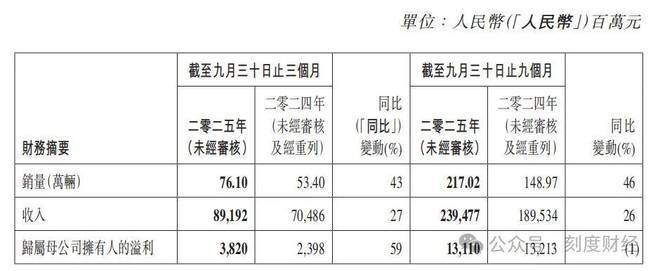
Core Viewpoint - Geely's acquisition of all shares of Zeekr reflects the company's strategy to enhance its high-end electric vehicle segment while facing challenges in synergy realization and profitability [1][3][20]. Financial Performance - In Q3 2025, Geely reported revenue of 89.19 billion yuan, a 27% increase year-on-year, and a net profit attributable to shareholders of 3.82 billion yuan, up 59% [2][5]. - For the first three quarters of 2025, total revenue reached 239.48 billion yuan, a 26% increase, while net profit slightly decreased by 1% to 13.11 billion yuan [2][4][7]. - Total vehicle sales for the first three quarters were 2.17 million units, a 46% increase compared to the previous year [4][6]. Sales and Market Position - Geely's sales in Q3 2025 reached 761,000 units, a 43% increase year-on-year, driven by strong performance in both fuel and electric vehicles [5][6]. - The company is positioned second in the domestic market, trailing BYD by only 3.6 percentage points in market share as of October 2025 [1]. Challenges and Strategic Moves - Despite revenue and sales growth, Geely's net profit faced pressure due to losses from the Zeekr brand, which reported a loss of 523 million yuan in the first three quarters of 2025 [7][9]. - The integration of Zeekr is expected to streamline operations and reduce costs, with projected annual savings of 10%-20% in R&D expenses and a potential 15% reduction in battery costs [19][22]. Industry Trends - The automotive industry is shifting from a multi-brand expansion strategy to a focus on brand integration and efficiency, driven by market competition and financial pressures [20][22]. - Geely's strategy aligns with broader industry trends, as companies seek to consolidate resources and improve operational efficiency amid slowing growth in electric vehicle sales [20][23].
华住集团-S(1179.HK):Q3收入超预期 经营及开店持续向好 中长期成长潜力大
Ge Long Hui· 2025-11-21 13:36
Core Viewpoint - The company reported Q3 2025 earnings with revenue of 6.961 billion yuan, a year-on-year increase of 8.1%, and a net profit attributable to shareholders of 1.469 billion yuan, up 15.4% year-on-year, indicating better-than-expected revenue growth and improved profitability in domestic and DH segments [1][2] Financial Performance - Q3 2025 overall GMV reached 30.6 billion yuan, reflecting a year-on-year increase of 17.5% and a sequential improvement in growth rate [2] - Adjusted EBITDA for Q3 2025 was 2.513 billion yuan, up 18.9% compared to the previous quarter's 11.4% growth, with Legacy-Huazhu contributing 2.446 billion yuan, a 16.9% increase [2] - The company’s adjusted net profit for Q3 2025 was 1.520 billion yuan, representing a 10.8% increase [2] Operational Metrics - Q3 2025 showed significant recovery in operational metrics, with overall occupancy, ADR, and RevPAR showing minor declines compared to the previous year, indicating stabilization in the industry [3] - The company opened 750 new stores and closed 185, resulting in a net increase of 565 stores, with a notable acceleration in the mid-range segment [3] - The company aims to become a leader in the mid-to-high-end market by 2030, with a pipeline of 2,748 stores as of Q3 2025 [3] Strategic Initiatives - The company is focusing on optimizing pricing strategies, enhancing membership and supply chain capabilities, and expanding its mid-to-high-end brand matrix, as well as exploring high-end, lower-tier, and overseas markets for long-term growth [3]
高工锂电年会直击⑦:第三轮锂电扩产带动新一轮降本增效
高工锂电· 2025-11-21 11:29
Core Insights - The article discusses the advancements and trends in the lithium battery industry, highlighting the significant reduction in unit costs due to technological innovations and increased production efficiency [3][4][5]. Group 1: Industry Growth and Production Capacity - By 2025, the shipment of power batteries is expected to exceed 1 TWh for the first time, with a projected growth of nearly three times over the next decade [3]. - The lithium battery industry is anticipated to enter a "third round" of capacity expansion, with over 700 GWh of new effective capacity expected to be added in 2026 [3]. - Domestic equipment efficiency is improving, allowing for stable delivery of lithium batteries, with leading battery companies currently operating at full capacity and some orders extending into the next year [4]. Group 2: Cost Reduction and Efficiency - The enhancement of production efficiency and cycle times has led to significant cost reductions by minimizing material and component waste while spreading fixed costs [5]. - The industry faces ongoing challenges to improve efficiency and reduce costs as diverse battery technologies continue to be introduced [6]. Group 3: Technological Innovations - EK's marketing director presented solutions focused on high efficiency, zero carbon, and intelligent control systems, emphasizing the importance of integrated systems for energy optimization [11][12]. - Magnetic levitation conveyor technology was introduced, offering advantages such as high speed (up to 5 m/s), low maintenance costs, and adaptability to complex production scenarios [17][18]. - Laser application technology has evolved to meet the demands of lithium battery production, achieving high speeds and consistency in various processes [21][22]. Group 4: Environmental and Energy Efficiency Solutions - The introduction of energy-efficient dehumidification systems for solid-state batteries aims to significantly reduce energy consumption, with innovations achieving a 50% reduction in energy use compared to traditional systems [25][26]. - The use of graphene-based infrared heating modules can lead to over 40% energy savings and a 30% increase in drying speed during the coating process [30][31]. Group 5: Automation and Smart Manufacturing - The integration of machine vision technology in lithium battery production aims to enhance quality, efficiency, and cost-effectiveness, with significant improvements in defect detection and operational efficiency [34][36].

一汽解放(000800) - 000800一汽解放投资者关系管理信息20251121
2025-11-21 10:00
Group 1: Cost Reduction and Efficiency Improvement - The company is committed to cost reduction and efficiency improvement across the entire value chain, including R&D, procurement, production, and operations. Current initiatives are progressing as planned, benefiting from technological innovations and supply chain synergies, leading to preliminary results in cost reduction efforts [2][3]. Group 2: Competitive Advantages in the Industry - The company has established a robust and complete independent R&D system, covering key components from engines to complete vehicles. In the new energy sector, it has developed a comprehensive industrial ecosystem, including self-developed batteries and electric drive systems, enhancing its competitive edge [2][3]. - The marketing strategy is customer value-oriented, with nearly 1,000 dealers, over 1,800 service providers, and 230 spare parts suppliers, ensuring a nationwide service radius of 48.5 kilometers, which is industry-leading [3]. Group 3: International Expansion and Localization - The company is actively pursuing internationalization, with exports covering 100 countries and regions. In 2025, it plans to establish subsidiaries in eight countries, including Uzbekistan and Indonesia, to support its international strategy [3][4]. Group 4: New Energy Strategy and Future Plans - The company launched the "15333 Strategy" for new energy in 2021, focusing on a comprehensive layout across the entire supply chain. It aims to enhance product differentiation and competitive strength through technological advancements and marketing innovations [4][5]. - Future plans include increasing investment in new energy resources, continuously launching new products, and developing comprehensive solutions throughout the user lifecycle [4]. Group 5: Financial Performance and Market Challenges - The company reported improved profitability in Q3, driven by increased sales and optimized product structure, alongside strict cost control measures [4][5]. - Concerns about stock price performance are acknowledged, with the company emphasizing its commitment to value management and investor trust, despite external market pressures [5][6]. - The company has distributed approximately 6.29 billion yuan in dividends since its listing in 2020, aiming to enhance internal value and maximize shareholder returns [6][7].

丰元股份(002805) - 2025-011投资者关系活动记录表
2025-11-21 09:48
Group 1: Production Capacity and Utilization - The company has established a total lithium iron phosphate production capacity of 225,000 tons, with 75,000 tons currently under construction. The capacity utilization rate is expected to increase significantly starting from Q4 2025 due to rising downstream market demand [2][4]. - The oxalic acid production capacity has reached 100,000 tons per year, utilizing advanced processes such as "improved carbohydrate oxidation method," which features high yield, low energy consumption, and strong economic efficiency [3][4]. Group 2: Customer Collaboration and Market Strategy - The company employs a dual approach in customer collaboration: enhancing long-term partnerships with existing core clients through joint R&D and service improvements, while also engaging with other leading enterprises to optimize customer structure [4][5]. - The core development strategy focuses on the lithium battery cathode materials business, capitalizing on the growth of the global power battery and energy storage market by improving operational efficiency and profitability through various initiatives [4][5]. Group 3: Cost Control Measures - The company aims to reduce costs and enhance efficiency by leveraging advanced production techniques to improve efficiency and reduce energy consumption and waste [5][6]. - Strategies include securing upstream resources to mitigate raw material price fluctuations and optimizing internal management processes to further reduce costs [5][6]. Group 4: Pricing Strategy - The company will continuously monitor industry trends and strengthen its competitive edge, engaging in proactive business communication with clients regarding pricing strategies based on market dynamics and customer feedback [6].

云南铜业:2025年公司聚焦极致经营工作重点,着力推动公司高质量发展
Zheng Quan Ri Bao· 2025-11-21 09:17
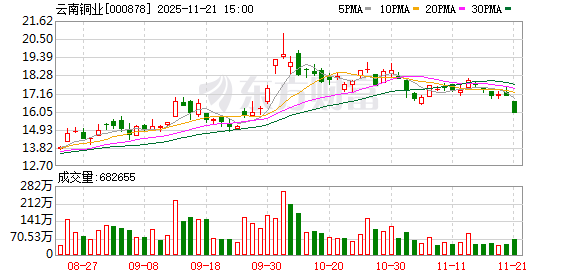
Core Viewpoint - Yunnan Copper announced its strategic focus on "digital transformation, resource expansion, mining optimization, smelting improvement, recycling, and refining of rare metals" to enhance its competitive edge and ensure high-quality development [2] Group 1: Strategic Focus - The company is increasing its efforts in urban mining and the extraction of rare metals [2] - By 2025, the company aims to focus on extreme operational efficiency, targeting a further reduction in main product costs compared to 2024 levels [2] - The company has achieved a competitive cost structure for its main products through years of cost reduction and efficiency improvements [2] Group 2: Profit Contribution and Supply Chain - The company is enhancing the profit contribution from by-products such as sulfuric acid, selenium, tellurium, platinum, palladium, and rhenium to improve overall competitiveness [2] - Increased procurement of urban mining materials is being prioritized to ensure raw material supply and mitigate challenges posed by processing fees [2]

楚天科技(300358) - 楚天科技投资者关系管理信息20251120
2025-11-21 09:16
编号:2025-011 | | 特定对象调研 □分析师会议 | | --- | --- | | | 媒体采访 □业绩说明会 | | 调研活动类别 | □新闻发布会 □路演活动 | | | 现场参观 其他 | | 参与单位名称 | 康曼德资本、中泰证券、人保资产、国信证券 | | 时 间 | 2025 年 11 月 20 日下午 14:00-16:00 | | 地 点 | 公司会议室 | | 上市公司接待 | 董事会秘书:黄玉婷 | | 人员姓名 | 证券事务代表:周德伟 | | | 一、内容提要: | | | 1、厂区参观 | | | 2、会议室座谈 | | | 二、主要关注的问题与回复如下: | | | 1、公司的海外市场拓展方向和策略介绍。 | | | 国际市场拓展,公司目前主要聚焦东南亚、中东非、欧洲、 | | | 美洲、印度新澳五大区域,推动高质量销售与服务落地,依托行 | | | 业稀缺的整体解决方案能力、高性价比服务及渠道优势拓展客户。 | | 交流内容 | 后续欧洲、美洲区域订单与业绩有望实现逐步突破,中东非、 | | | 东南亚区域已取得阶段性突破性成果,整体海外业务已进入快速 | | ...

中金岭南:公司全面落实“攀高计划2.0”部署
Zheng Quan Ri Bao Zhi Sheng· 2025-11-21 09:12
Core Viewpoint - The company is actively implementing its "Climbing Plan 2.0" to address challenges in the supply of lead, zinc, and copper concentrates, as well as declining processing fees for smelting enterprises, by initiating cost reduction and efficiency enhancement measures [1] Financial Performance - In the first half of the year, the company achieved operating revenue of 31.089 billion yuan, a year-on-year increase of 1.54% [1] - The net profit attributable to shareholders of the parent company was 559 million yuan, reflecting a year-on-year growth of 3.12% [1] - For the first three quarters of 2025, the company reported operating revenue of 48.459 billion yuan, up 11.79% year-on-year [1] - The net profit attributable to shareholders of the listed company reached 841 million yuan, marking a year-on-year increase of 5.18% [1] Strategic Initiatives - The company has launched a special action plan focused on cost reduction and efficiency enhancement, outlining over 20 key measures across six dimensions: increasing volume and efficiency, improving quality and efficiency, reducing costs and increasing efficiency, innovating for efficiency, collaborating for efficiency, and ensuring safety while reducing costs [1]

尚品宅配(300616)2025年三季报点评:Q3业绩扭亏为盈 期间费用率收窄
Xin Lang Cai Jing· 2025-11-21 06:39
Core Viewpoint - The company reported a significant narrowing of revenue decline in Q3 2025, driven by AI empowerment and channel optimization, indicating a strategic shift towards "whole-house star-level customization" to meet consumer demands [2][3]. Financial Performance - For the first three quarters of 2025, the company achieved revenue of 2.55 billion yuan, with a net profit attributable to shareholders of -79 million yuan and a net profit excluding non-recurring items of -91 million yuan, reflecting a year-on-year revenue decline of 6.7% but a narrowing of losses [1]. - In Q3 2025, the company reported revenue of 1 billion yuan, with a net profit attributable to shareholders of 1 million yuan and a net profit excluding non-recurring items of -3 million yuan, showing a year-on-year revenue decline of 2.3% but a return to profitability [1]. Strategic Initiatives - The company is focusing on product upgrades through integrated solutions for doors, walls, and cabinets, which cater to home decoration needs, resulting in a significant reduction in revenue decline to -2.34% in Q3 2025 [2]. - AI-driven operational enhancements are being implemented to improve design efficiency, reduce labor costs, and minimize raw material waste, contributing to an increase in gross margin [2]. Channel Development - The company is deepening its presence in the domestic market through initiatives like the "Study Tour" for recruitment, with a total of 21 direct-operated stores and 1,823 franchise stores as of the first half of 2025, optimizing store structure [2]. Profitability Metrics - The gross margin for Q3 2025 was 32.5%, reflecting a year-on-year decrease of 1.6 percentage points and a quarter-on-quarter decrease of 0.8 percentage points [2]. - The company achieved a net profit margin of 0.1% in Q3 2025, an increase of 0.9 percentage points year-on-year [2]. Investment Outlook - As a leading player in the custom home furnishing industry, the company is expected to see a turning point in profitability due to improved channel quality and an increase in high-ticket orders, with projected net profits of -43 million yuan, 62 million yuan, and 107 million yuan for 2025-2027 [3]. - The target price is set at 17.9 yuan per share, maintaining a "strong buy" rating based on absolute valuation methods [3].
