电动化

Search documents
汽车行业周报:整车竞争加剧,智驾有望构筑差异化竞争力-20250608
KAIYUAN SECURITIES· 2025-06-08 15:30
行 业 研 究 2025 年 06 月 08 日 投资评级:看好(维持) 行业走势图 数据来源:聚源 -24% -12% 0% 12% 24% 36% 48% 2024-06 2024-10 2025-02 汽车 沪深300 相关研究报告 《限定场景 L4 热潮起,自动驾驶逻辑 持续演绎—行业点评报告》-2025.5.29 《关注智驾商业落地及优质主机厂和 零部件公司 — 汽 车 行 业 周 报 》 -2025.5.25 《上海车展回顾——智能化普及,机 器人崛起—汽车行业周报》-2025.4.27 整车竞争加剧,智驾有望构筑差异化竞争力 ——行业周报 | 赵旭杨(分析师) | 徐剑峰(联系人) | 王镇涛(联系人) | | --- | --- | --- | | zhaoxuyang@kysec.cn | xujianfeng@kysec.cn | wangzhentao@kysec.cn | | 证书编号:S0790523090002 | 证书编号:S0790123070014 | 证书编号:S0790124070021 | 本周观点:关注智驾商业落地及优质主机厂和零部件公司 (1)车企开启新一轮价格调整 ...





汽车行业2025年6月投资策略:RoboX商业化落地加速,关注板块二季度业绩
Guoxin Securities· 2025-06-08 14:33
Core Insights - The report maintains an "Outperform" rating for the automotive sector, emphasizing the acceleration of RoboX commercialization and the focus on the sector's performance in Q2 2025 [1][3] - The automotive industry is transitioning towards electric and intelligent vehicles, with significant growth expected in the domestic market, particularly for new energy vehicles [11][12] Sales Tracking - In May 2025, retail sales of passenger cars in China reached 1.93 million units, a year-on-year increase of 13%, with cumulative retail sales for the year at 8.802 million units, up 9% [1] - Wholesale figures for the same month showed 2.329 million units, marking a 14% increase year-on-year, with cumulative wholesale sales for the year at 10.797 million units, up 12% [2] Market Performance - The automotive sector saw a 1.88% increase in May, outperforming the CSI 300 index by 0.04 percentage points, while the overall automotive sector has risen 29.05% since the beginning of 2025 [2] - The inventory warning index for automotive dealers in May 2025 was 52.7%, indicating improved market conditions as it decreased by 5.5 percentage points year-on-year [2] Investment Recommendations - The report suggests focusing on domestic brands and the opportunities in incremental components driven by electric and intelligent trends, highlighting companies like Leap Motor, Xpeng, and Geely for vehicle recommendations [3][11] - For intelligent components, companies such as Coboda, Huayang Group, and Junsheng Electronics are recommended, while for robotics, Top Group and Sanhua Intelligent Control are highlighted [3][11] Company Earnings Forecasts - Key companies are projected to have varying earnings per share (EPS) and price-to-earnings (PE) ratios, with Leap Motor expected to have an EPS of -0.05 in 2025 and a PE of -1126, while Geely is forecasted to have an EPS of 1.36 and a PE of 13 [4] Industry Outlook - The automotive industry is expected to maintain a 2% annual compound growth rate over the next 20 years, with new energy vehicle sales projected to reach 1.216 million units in 2024, reflecting a 37% increase [12][16] - The report anticipates that by 2025, the sales of new energy vehicles will exceed 1.5 million units, with a year-on-year growth of over 20% [21]



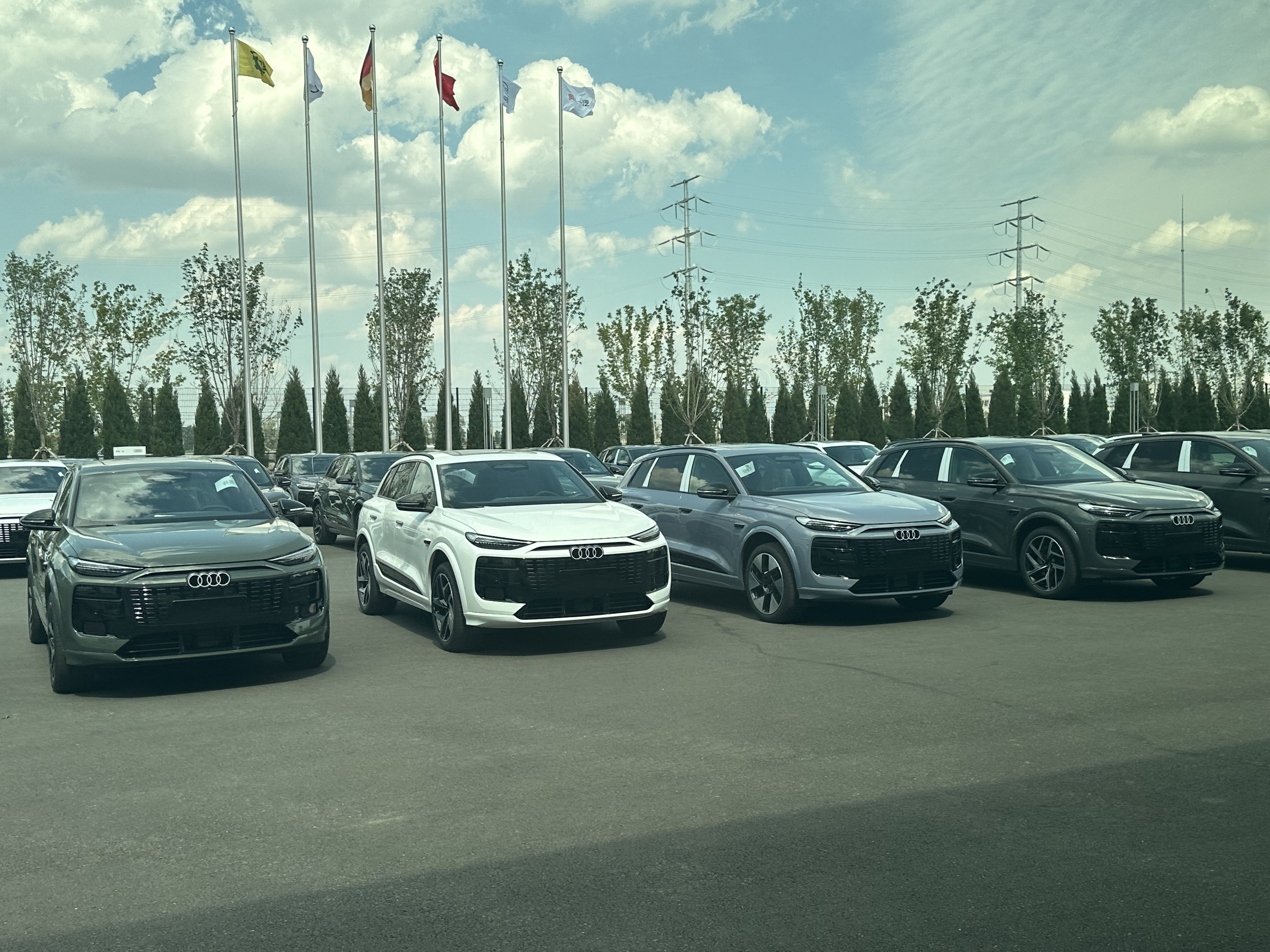
奥迪一汽新能源工厂首揭面纱,核心工艺车间配备近千台机器人
Guo Ji Jin Rong Bao· 2025-06-08 12:50
Group 1 - The Audi Q6L e-tron, as the first model based on the PPE luxury electric platform, marks a significant step in Audi's electrification strategy [1][4] - The vehicle features advanced technology, including Huawei's Qian Kun intelligent driving system, which utilizes dual lidar and visual fusion for L2-level driving assistance [4] - The Q6L e-tron has an extended wheelbase of 2995mm, catering to Chinese consumer preferences, and includes an 88-inch AR HUD and a five-screen interactive cockpit [4] Group 2 - The Audi Q6L e-tron is equipped with an 800V high-voltage battery system that supports a peak charging power of 270kW, allowing for a range of 765km [5] - The Audi FAW New Energy Company factory, where the Q6L e-tron is produced, integrates advanced automation with nearly 1000 robots, achieving 100% automated welding and a 90% efficiency increase in parts handling [5] - The factory's annual production capacity is planned to reach 150,000 vehicles, with a vehicle rolling off the line approximately every 120 seconds [5] Group 3 - The factory operates under a "zero emissions plan," utilizing 100% green energy and achieving a 95% carbon reduction through closed-loop recycling of aluminum materials [6] - Water resource management is emphasized, with 100% recycling of production and domestic wastewater, saving over 105,000 cubic meters of water annually [6] - The local supply chain is robust, with 50% of suppliers located within 30 kilometers of the factory, achieving a localization rate of 90% [6]


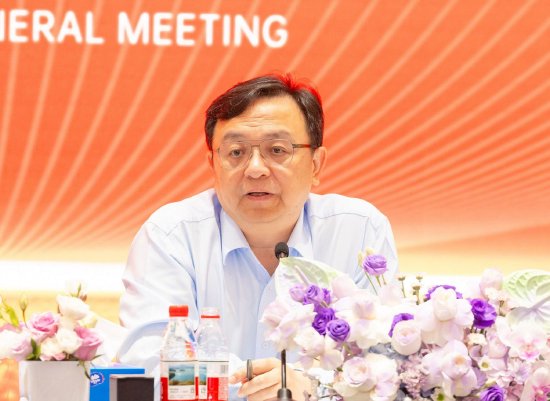
王传福:高端化是比亚迪下一场必须打的硬仗,未来几年还将推出一系列新技术
Xin Lang Ke Ji· 2025-06-07 03:49
Core Insights - The core discussion at BYD's 2024 annual shareholder meeting focused on the company's core strategies and future development, particularly in smart driving and international expansion [1] Group 1: Smart Driving and Safety - Wang Chuanfu emphasized the importance of safety in the development of smart driving technologies, aligning with recent national regulations that support the long-term health of the automotive industry [3] - BYD has launched several advanced technologies this year, including the "Tianshen Eye" smart driving assistance system and the "Lingyuan" smart vehicle-mounted drone system, indicating a strong focus on both electrification and smart technology [3] - The company plans to leverage its workforce of 130,000 engineers to address technical pain points and introduce new technologies in the coming years [3] Group 2: Internationalization and Brand Premiumization - Wang Chuanfu outlined the internationalization strategy, noting that BYD's products and technologies are well-received in various overseas markets, with expectations for continued monthly sales growth [3] - In May, BYD's overseas sales of new energy passenger vehicles and pickups reached 89,000 units, reflecting a year-on-year increase of 133.6% [3] - The premiumization strategy is highlighted by the importance of the Tengshi brand, which aims to integrate advanced technology with emotional value, marking a critical battle for BYD [4] Group 3: Long-term Vision and Commitment - Wang Chuanfu expressed a commitment to long-termism, stating that BYD aims to use green technology for sustainable development and will focus on self-promotion rather than disparaging competitors [4] - The company acknowledges short-term pressures but remains dedicated to innovation and positive contributions to the industry [4]
比亚迪刷屏!王传福重磅发声,信息量大!
Zhong Guo Ji Jin Bao· 2025-06-06 14:16
Core Viewpoint - BYD is focusing on two critical areas: brand premiumization and internationalization, as highlighted during the 2024 annual shareholder meeting [2] Group 1: Electric and Intelligent Development - The transition from the first half of electrification to the second half of intelligence is ongoing, with BYD acknowledging that there are still shortcomings in the electrification phase [4] - Key issues such as slower charging speeds compared to refueling and battery performance in low temperatures need to be addressed to fully replace fuel vehicles [5] - Safety is emphasized as the top priority in intelligent driving, with significant potential for future advancements in algorithms and sensor integration [5] - BYD plans to introduce major core technologies annually over the next three years, aiming to tackle significant challenges at each launch [5] Group 2: Market Strategy and Supply Chain - In response to concerns about price wars and supply chain issues, BYD's management asserts that they will not engage in price wars but will focus on technological innovation and efficiency to deliver value to users [6] - The company is reducing the number of suppliers while increasing procurement volumes from selected suppliers to enhance competitive advantages [6] Group 3: International Expansion - BYD is accelerating its global expansion, having entered markets such as Kazakhstan, Serbia, and Switzerland, with expectations for strong overseas sales this year [7] - The company reported approximately 90,000 units sold overseas last month, with a positive outlook for continued growth in international markets [7] Group 4: Brand Strategy and Challenges - Concerns were raised regarding BYD's brand marketing strategy, with a need for better emotional connections with consumers [8] - The company acknowledges its shortcomings in marketing and aims to improve brand perception by enhancing customer service and channel management [9] - BYD recognizes the importance of high-end market performance and is committed to addressing challenges in its premiumization strategy [9] - The company has identified brand premiumization and internationalization as two key areas for future focus, leveraging technology as a core component of its strategy [9] Group 5: Financial Overview - As of June 6, BYD's A-shares closed at 359.96 CNY per share, with a market capitalization of 1,105.2 billion CNY [10]

比亚迪股东大会直击 王传福:国外汽车价格比较稳定
2 1 Shi Ji Jing Ji Bao Dao· 2025-06-06 06:18
记者 黄敏 2025年6月6日上午,比亚迪(002594.SZ,01211.HK)召开了2024年年度股东大会。该公司董事长王传 福在股东大会上表示,电动化的上半场还有一定遗憾,比如充电速度比加油慢,电池低温性能依然没有 达到燃油车的程度。这些技术上的发展,逐步完成了的话,能让消费者体验更好,才可能把燃油车彻底 终结。针对出海业务,王传福称,目前逐步进入爆发期,海外某些地方的高端化甚至比国内发展更快, 国外汽车价格比较稳定。 "行业洗牌与变革是肯定的" 关于智能化的下半场,王传福称,如何把安全做到极致,现在的智能驾驶,传感器、激光雷达等,只是 一个开始,以后会构建多少算法,传感器之间的匹配,想象空间巨大。比亚迪未来三年将推出一系列技 术变革,并期待每一场发布会都能解决巨大的痛点,也期待工程师夜以继日的探索。 王传福称,燃油车时代,丰田等车企的地位是无法撼动的;而在另一场时代里面,绿色发展时代,传统 资源不能支撑全球可持续发展的时候,是需要变革的,行业需要重新洗牌,洗牌顺序是谁并不重要,但 变革肯定要发生。 "国外汽车价格比较稳定" 王传福表示,比亚迪将智能驾驶列为公司重要战略之一,并将安全放在首要位置。如何保 ...
北汽集团零部件企业重组启幕,欲加速电动智能化转型
Bei Ke Cai Jing· 2025-06-06 04:45
Core Viewpoint - Bohai Automotive is planning a significant asset restructuring involving the acquisition of four automotive parts companies from Hainachuan, aiming to improve its financial performance and accelerate its transition towards electrification and intelligence in the automotive sector [1][5]. Group 1: Financial Performance - Bohai Automotive has reported continuous losses for four consecutive years, with a total net loss exceeding 1.6 billion yuan (approximately 0.24 billion USD) from 2021 to 2024 [2]. - The net losses for the years are as follows: 90 million yuan, 62 million yuan, 199 million yuan, and 1.264 billion yuan, with 2024 being the most severe year, showing a year-on-year decline of over five times [2]. - The losses are attributed to factors such as the bankruptcy of its wholly-owned subsidiary, reduced market demand, declining revenue from wheel business, and rising aluminum prices [2]. Group 2: Acquisition Details - Bohai Automotive intends to acquire 51% of Beijing Beiqi Moulding Technology Co., Ltd., 51% of Hainachuan Andautuo (Langfang) Seat Co., Ltd., 100% of Yingnafa Intelligent Technology (Beijing) Co., Ltd., and 50% of Langfang Laini Wiring System Co., Ltd. [2][3]. - The four target companies specialize in automotive exterior parts, seating systems, intelligent networking technology, and wiring systems, respectively, and hold competitive advantages in their respective segments [3]. Group 3: Strategic Intent - The acquisition is seen as a strategy to enhance performance and facilitate the transition towards electrification and intelligence in the automotive industry [5]. - Industry analysts emphasize that traditional parts manufacturers must adapt to the evolving automotive landscape, focusing on electrification and intelligent solutions to remain competitive [5]. - The restructuring may also involve business integration between Bohai Automotive and Hainachuan, aiming for a shift towards lightweight, intelligent, and new energy sectors [5]. Group 4: Current Status of Restructuring - The restructuring is currently in the planning stage, with no formal agreements signed yet, and the specific transaction details are still under discussion [6].

比亚迪王传福:电动化上半场还有遗憾
Di Yi Cai Jing· 2025-06-06 04:09
Group 1 - The core viewpoint is that BYD is transitioning from the first half of electrification to the second half of intelligence, with a series of new technologies expected to be launched in the next three years [1] - Wang Chuanfu, the chairman of BYD, acknowledges that there are still regrets in the electrification phase, such as slower charging speeds compared to refueling and battery performance in low temperatures not yet matching that of fuel vehicles [1] - The company aims to enhance consumer experience through technological advancements, which are essential for phasing out fuel vehicles completely [1] Group 2 - In the context of intelligent driving, Wang emphasizes the importance of achieving extreme safety, stating that current technologies like sensors and LiDAR are just the beginning, with significant potential for future algorithm development and sensor integration [1] - The company is committed to addressing major pain points in upcoming technology releases, with expectations for engineers to continuously innovate [1] - Wang notes that the automotive industry is undergoing a transformation towards green development, necessitating a reshuffling of market positions, although the order of this reshuffling is not the primary concern [1] Group 3 - Regarding BYD's high-end brand, Tengshi, Wang highlights the rigorous safety testing conducted on their products, particularly in complex driving scenarios [2] - The company is focused on ensuring vehicle stability during emergency maneuvers, which enhances driver confidence compared to traditional fuel vehicles [2] - BYD's overseas sales strategy is showing promising results, with approximately 90,000 vehicles exported last month, indicating a potential for sustained growth in international markets [2] Group 4 - The company observes that the high-end market is developing rapidly in certain overseas regions, particularly in Southeast Asia and Australia, which is crucial for its future growth [2] - Wang mentions that the overseas automotive market is stabilizing in terms of pricing, which could benefit BYD's expansion efforts [2] - The company aims to replicate the explosive growth seen in the domestic market in its international ventures, with a focus on high-end strategies [2]
千余款车型同台竞技 比拼产品价值
Zhong Guo Zheng Quan Bao· 2025-06-04 21:16
Core Viewpoint - The 2025 Guangdong-Hong Kong-Macao Greater Bay Area Auto Show showcases over 1,000 vehicle models from more than 100 brands, emphasizing the importance of technological innovation and high-quality products in the automotive industry [1][2]. Group 1: Event Overview - The auto show features 112 vehicle brands and 1,039 models, including global and national premieres, under the theme "Facing Technology, Facing the Future, Facing the Market" [1]. - Notable exhibitors include BYD, Xiaomi, NIO, Changan, Geely, and SAIC Volkswagen, with significant new model launches and technological advancements [2][3]. Group 2: Technological Innovations - The Huawei and Jiangqi collaboration launched the Zun Jie S800, priced from 708,000 yuan, with over 1,000 pre-orders within an hour, indicating strong market interest [3]. - The Zun Jie S800 will upgrade to Huawei's ADS 4 intelligent driving system in Q3 2025, showcasing the trend towards smart vehicle technology [3]. Group 3: R&D Investments - Xiaopeng Motors reported a quarterly R&D investment of nearly 2 billion yuan, aiming to become a global AI automotive company [4]. - GAC Group emphasizes user-centric innovation, with over 55 billion yuan invested in R&D to meet diverse consumer needs [4][5]. - Huawei's R&D investment reached 179.7 billion yuan in 2024, with over 10 billion yuan allocated to automotive intelligence, highlighting the competitive focus on core technology breakthroughs [5].


三一重工20250604
2025-06-04 15:25
Summary of SANY Heavy Industry Conference Call Company Overview - **Company**: SANY Heavy Industry - **Industry**: Construction Machinery Key Points Financial Performance - **Q2 Revenue Growth**: Expected to be between 10% and 15%, slightly lower than Q1, but within normal fluctuations [2][3] - **Cash Flow Improvement**: Significant improvement due to optimized revenue collection and payment processes, with inventory turnover rates increasing [2][17] Market Trends - **Domestic Excavator Market**: Price stability with intense competition in small excavators; company is shifting focus to medium and large excavators to enhance market share [2][11][30] - **Overseas Market Performance**: Stable growth in Southeast Asia and Africa, with high equipment utilization; however, the Russian market is facing a decline due to rising terminal rates [2][6] Strategic Initiatives - **Direct Sales Increase**: Plans to increase direct sales proportion, especially in Europe and the US, currently over 50% [2][7][9] - **Market Expansion**: Exploring opportunities in Russia, Brazil, and Africa, with potential capacity deployment in these regions [2][14] Product and Technology - **Electric Products Growth**: Increasing revenue share from electric products, with significant growth expected in concrete pumps and loaders [4][22] - **Focus on Large Excavators**: Shift in product strategy towards medium and large excavators to adapt to market competition [11][30] Regional Insights - **Southeast Asia**: Highest equipment utilization, particularly in Indonesia, with expected double-digit growth [6] - **North America**: Current inventory levels are approximately five months, with a gross margin around 20% despite high tariffs [12][13] Capital Expenditure - **Future Capital Expenditure**: Expected to be around 20-30 billion yuan, focusing on optimizing existing capacity rather than acquiring new land [15][16] Competitive Landscape - **Market Share Stability**: Anticipated slight fluctuations in market share, with medium and large excavators expected to maintain around 30% market share [4][31] Challenges and Risks - **Domestic Industry Adjustment**: Domestic market adjustments have a significant impact on capital market sentiment, but the company's performance remains stable due to strong overseas contributions [34] Corporate Governance - **Board Transition**: No specific timeline for board transition; the leadership team is relatively young, averaging in their forties [32][33] Investor Relations - **Shareholder Communication**: Company has a strong track record in shareholder communication, with a current price-to-book ratio of approximately two [35] Additional Notes - **Dealer Profitability**: Over 60% of excavator dealers reported profitability in the first half of the year, indicating a positive trend [25] - **Cost Optimization Measures**: Various cost control measures implemented, including supply chain improvements and management expense reductions [26][27] This summary encapsulates the key insights and strategic directions discussed during the conference call, providing a comprehensive overview of SANY Heavy Industry's current position and future outlook in the construction machinery industry.