
智慧农业

Search documents
传统产业升级“加速器”:新质生产力的三大内在逻辑与四大实践路径
Xin Lang Cai Jing· 2026-02-09 10:49
Core Viewpoint - Traditional industries are a crucial part of China's economy and modernization efforts, and their transformation and upgrading are essential for adapting to technological revolutions and enhancing supply chain resilience [1][3]. Group 1: Internal Logic of Empowering Traditional Industries - Revolutionary breakthroughs in key technologies drive the iteration of production paradigms, with digital, intelligent, and green technologies transforming traditional production methods [3][10]. - The application of data, technology, and talent as new production factors can optimize and upgrade traditional industry structures, enabling a shift from experience-driven to data-driven production [3][10]. Group 2: Value Creation Model Reconstruction - New quality productivity fosters cross-industry integration, breaking traditional boundaries and creating new business models, such as smart manufacturing and smart agriculture [4][11]. - The deep integration of traditional industries with modern services enhances the value chain, extending it into high-value areas like R&D and lifecycle management [4][11]. Group 3: Pathways for Transformation and Upgrading - Focusing on high-end development, the industry should strengthen foundational innovation and enhance the supply capacity of high-end products, aiming for international competitiveness [5][12]. - Emphasizing intelligent transformation, the industry should accelerate the construction of new infrastructure and support digital and intelligent upgrades in traditional sectors [6][13]. - Promoting green transformation involves establishing a clean and low-carbon production system, enhancing resource recycling, and implementing green manufacturing practices [7][14]. Group 4: New Ecosystem of Cross-Industry Cooperation - Deepening integration between traditional industries and digital economies can foster new business models, such as platform economies and supply chain finance [8][15]. - The development of service-oriented manufacturing should be promoted, transitioning from pure manufacturing to a model that combines manufacturing with services [8][15]. - Encouraging cross-application of technologies like AI and big data can enhance traditional industries' quality and efficiency through collaborative innovation [8][15].


山清水秀与风清气正的双向奔赴
Zhong Guo Fa Zhan Wang· 2026-02-09 06:35
Core Viewpoint - Guangxi Zhuang Autonomous Region has made significant economic progress during the "14th Five-Year Plan" and is now focusing on the "AI+" strategy for the next five years, aiming for modernization and sustainable development [1][4]. Economic Growth - Guangxi's GDP grew at an average rate of 4.8% over the past five years, with an increase of over 740 billion yuan compared to 2020 [2] - The total industrial output value exceeded 800 billion yuan, with key industries like non-ferrous metals, steel, and food reaching over 100 billion yuan in output [2] - The region's infrastructure has improved significantly, with over 10,000 kilometers of expressways and extensive 5G network coverage [2] Technological Advancements - Guangxi is focusing on artificial intelligence, with the core AI industry in the industrial sector expected to exceed 89 billion yuan by 2025 [2] - Production of lithium batteries for automobiles, solar cells, and industrial robots has seen substantial growth, with increases of 54.5%, 43.1%, and 86.3% respectively [2] - New industries and products contributed over 50% to industrial growth, indicating a successful transition to future industries [2] Environmental and Ecological Progress - Guangxi has maintained a high air quality with over 95.1% of days rated as good, and over 98.2% of surface water quality rated as good [3] - The region has seen a recovery in rare species populations, highlighting its ecological advantages as a key asset [3] Future Development Plans - The "15th Five-Year Plan" aims for an average GDP growth of around 5% and the establishment of an AI cooperation hub with ASEAN [4] - Guangxi plans to integrate AI across various sectors, including manufacturing, agriculture, tourism, and governance [4] - The development of the Pinglu Canal Economic Belt is expected to reshape logistics and industrial layouts, enhancing high-quality development [5] Governance and Social Welfare - The region emphasizes the importance of both political and natural ecology for sustainable development, aiming for a harmonious balance [6] - Guangxi is committed to improving public services and ensuring that development benefits the population, with a focus on employment and social welfare [7] - The government aims to be accountable to the people, ensuring that all efforts are directed towards enhancing the quality of life for citizens [7]
解读中央经济工作会议•述评 | 中国经济提质增效为中亚国家发展创造广阔机遇
Xin Lang Cai Jing· 2025-12-19 09:13
Group 1 - The core viewpoint of the Central Economic Work Conference emphasizes the policy tone of "seeking progress while maintaining stability and improving quality and efficiency" as China transitions from the "14th Five-Year Plan" to the "15th Five-Year Plan" [1] - The conference highlights the importance of "domestic demand as the main driver," "innovation-driven development," and "opening up to the outside world" as key tasks for economic growth [1] Group 2 - China is constructing a domestic demand-driven growth system, which provides stable and diverse market opportunities for Central Asian countries, with a focus on boosting consumption and increasing residents' income [2] - In the first five months of this year, trade between China and the five Central Asian countries reached 286.42 billion yuan, a year-on-year increase of 10.4%, with imports from these countries growing by 21% [2] Group 3 - The conference underscores the significance of innovation as the primary driving force for development, aligning with Central Asian countries' needs for industrial upgrading and digital transformation [4] - Cooperation in areas such as smart agriculture, digital payments, 5G communication, and smart cities is flourishing, promoting digital upgrades in local industries [4] Group 4 - China is committed to opening up and promoting win-win cooperation across multiple fields, establishing a solid institutional guarantee for China-Central Asia cooperation [7] - By June 2025, China's investment in Central Asian countries is expected to exceed 30 billion USD, with completed contract revenues in engineering projects reaching 75.6 billion USD, covering various sectors including energy, agriculture, infrastructure, and digital economy [7]

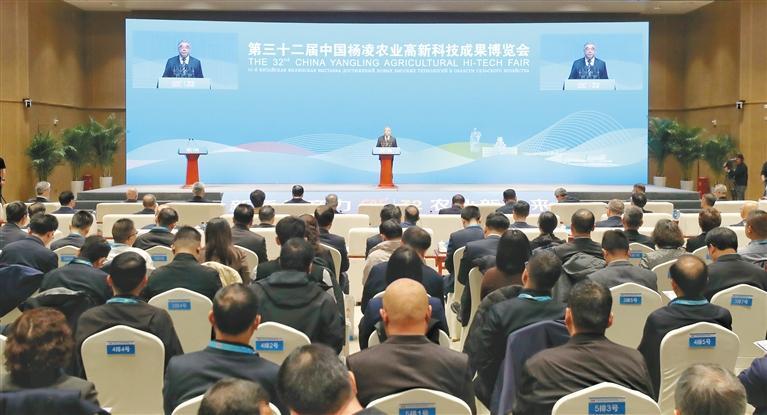
第32届中国杨凌农业高新科技成果博览会开幕
Shan Xi Ri Bao· 2025-10-26 00:13
Core Points - The 32nd China Yangling Agricultural High-tech Achievements Expo opened on October 25, focusing on "New Quality Productivity and Agricultural New Future" [2][4] - The event aims to promote high-quality agricultural development and modernization, emphasizing the importance of agricultural technology innovation [4][6] Group 1: Event Overview - The expo is held in Yangling Demonstration Zone and features speeches from various officials, including national and provincial leaders [2][3] - It serves as a high-level platform for showcasing agricultural technology achievements, promoting international cooperation, and facilitating the transformation of agricultural innovations [6][7] Group 2: Themes and Objectives - The theme of the expo highlights the need for developing new quality productivity in agriculture, which is essential for achieving high-quality development [4][5] - The event aligns with national strategies to modernize agriculture and rural areas, ensuring food security and enhancing agricultural production efficiency [4][5] Group 3: Key Activities and Participation - The expo includes various activities such as exhibitions, forums, and conferences, focusing on agricultural technology, investment, and trade [7] - Notable international guests and representatives from various countries attended the opening ceremony, indicating the event's global significance [3][6]
数字游民“链”上乡村,无锡鸿山以产业链党建激活农文旅融合新动能
Xin Hua Ri Bao· 2025-10-20 23:42
Core Viewpoint - The Wuxi Hongshan Tourism Resort is implementing the "Hongshan Warm Village Digital Nomad Village" project as a pilot to integrate party building with the agricultural, cultural, and tourism industry chain, providing a replicable model for rural revitalization in the new era [1] Group 1: Organizational Development - The Hongshan Tourism Resort has established a comprehensive party building network by incorporating party organizations from various units along the agricultural, cultural, and tourism industry chain [2] - The project emphasizes a collaborative community involving street party committees, branch interactions, and active participation from party members and the public [2] - A "Red Chain Think Tank" has been formed, and partnerships with four universities have been established to promote industry-academia-research collaboration [2] Group 2: Digital Empowerment - The project aims to create a "digital + rural" industrial ecosystem, integrating ecological, factor, and service chains [3] - Modern service infrastructure projects, such as drone delivery networks and zero-carbon village technologies, are being implemented to digitize public services in rural areas [3] - A platform for talent, projects, and capital has attracted over 30 creative leaders and young talents, focusing on e-commerce, intangible cultural heritage digitization, and smart agriculture [3] Group 3: Talent and Industry Synergy - The initiative promotes a model of "party building to attract talent, using talent to boost industry, and leveraging industry for rural development" [4] - A "Digital Nomad Circle" has been established to create a livable and workable environment, attracting talents from digital industries and cultural tourism [4] - The project has facilitated five industry-academia-research cooperation projects and incubated three rural specialty brands, enhancing innovation and entrepreneurship in rural areas [4]
Agricultural Hi-Tech Fair to be Held in Northwest China's Yangling to Promote Agri-Tech Cooperation
Globenewswire· 2025-10-14 07:53
Core Insights - The 32nd China Yangling Agricultural Hi-Tech Fair will be held from October 25 to 29, 2025, focusing on "New Quality Productive Forces for a New Agricultural Future" [1] - The event is expected to attract participants from over 50 countries, covering a total exhibition area of 140,000 square meters [2] - The fair will feature a combination of offline and online events, showcasing advancements in agricultural technology, including core germplasm, farm machinery, water-saving tech, smart agriculture, and digital agriculture [3] Event Significance - Launched in 1994, the fair has become one of China's largest agricultural tech expos, facilitating over 500 international exchange activities and attracting nearly 2,000 overseas agri-related enterprises [4] - The establishment of the SCO Demonstration Base for Agricultural Technology Exchange and Training in 2019 has enhanced the fair's role as a key platform for agricultural cooperation among SCO member countries [5] - The 2024 fair saw participation from all 26 SCO member countries, showcasing diverse products such as handicrafts, chocolates, beverages, and art [5] Parallel Initiatives - This year's fair will coincide with the SCO Agricultural Expo, featuring zones for product displays, tech training, and various workshops aimed at agricultural development and poverty alleviation [7] - The event will also include the launch of SCO ecological origin standards and agricultural product supply-demand matchmaking sessions, promoting global enterprise expansion [7] Global Impact - The China Yangling Agricultural Hi-Tech Fair serves as a bridge linking Chinese agriculture to the global market, enhancing international agricultural cooperation [8]
一亩田纳斯达克上市首日暴跌31.7% 农业电商第一股面临盈利考验
Xin Lang Zheng Quan· 2025-08-25 09:45
Core Insights - Yimutian Group (YMT) officially listed on NASDAQ, becoming the first Chinese agricultural internet company to do so, but its stock price fell 31.71% on the first day of trading [1][2] - Despite being labeled as the "first stock of agricultural e-commerce," Yimutian has yet to achieve profitability, raising concerns about the viability of its business model [1][3] Market Performance - On its debut, Yimutian's stock opened at $5.88, a 43.41% increase from the IPO price of $4.10, but closed at $2.80, reflecting investor skepticism about the company's future [2] - The IPO raised approximately $22 million, with funds earmarked for expanding its offline "Wolai Cai" agricultural brokerage service network and enhancing international business [2] Financial Performance - Yimutian has not achieved profitability, with revenues showing a declining trend from 156 million RMB in 2022 to an expected 161 million RMB in 2024, while net losses decreased from 116 million RMB to 34.9 million RMB [3] - The company's revenue sources are primarily from digital agricultural trade services and other digital agricultural solutions, with membership fees and value-added services being the most stable income streams [3] Business Model and Market Position - Founded in 2011, Yimutian has evolved from an information service platform to a comprehensive digital agriculture enterprise, claiming to be a leading B2B platform for bulk agricultural products in China [4] - The company connects agricultural producers with buyers, including wholesalers and retailers, facilitating efficient market access through an online and offline approach [4] Investment and Ownership - Yimutian's founder, Deng Jinhong, has a background in information engineering and previously worked at Baidu, where he identified challenges in the agricultural sector that led to the establishment of Yimutian [5] - Major investors include Sequoia China, which held 15.9% of shares prior to the IPO, while Deng retains 17.77% ownership and significant voting control [6] Challenges and Future Outlook - Yimutian faces significant cost pressures, particularly with its "Wolai Cai" model, which requires substantial investment in offline operations that may not yield immediate returns [7] - The company must address issues of user retention and competition from larger players like Alibaba and JD.com, which have established agricultural platforms [7][8] - The market's cautious attitude towards loss-making companies highlights the need for Yimutian to demonstrate a clear path to sustainable profitability [9]
威胜信息20250730
2025-08-05 03:20
Summary of Weisheng Information Conference Call Company Overview - **Company**: Weisheng Information - **Period**: First half of 2025 Key Financial Metrics - **Revenue**: 1.364 billion CNY, a quarter-on-quarter increase of 46% [2][3] - **Net Profit**: 166 million CNY, a quarter-on-quarter increase of 19% [2][3] - **New Orders**: 1.627 billion CNY, a year-on-year increase of 8.3% [2][3] - **Backlog Orders**: 3.956 billion CNY, a year-on-year increase of 12.63% [2][3] - **R&D Investment**: 7.6% of revenue, with R&D personnel making up 51.5% of the workforce [2][4] - **Return on Equity**: 9.18% [3] - **Debt Ratio**: 34.8% [3] - **Cash Flow**: Net inflow of 178 million CNY, a year-on-year improvement of 11% [3] Innovation and Product Development - **New Products**: Launched 36 innovative products, generating 642 million CNY in revenue, accounting for 47% of total revenue, with a year-on-year growth of 49% [2][4][5] - **AI Applications**: Developed multiple AI technologies and products, focusing on integrating lightweight AI models into various terminal devices [2][10][13] Shareholder Returns - **Share Buyback**: 150 million CNY used to repurchase 4.23 million shares [5] - **Dividends**: First interim dividend of 2.5 CNY per 10 shares, with total dividends and buyback amounting to 81.7% of net profit [5] International Expansion Strategy - **"Going Global" Strategy**: Actively expanding into international markets, with significant progress in: - **Southeast Asia**: Local factory in Indonesia operational [6][7] - **Middle East**: Factory in Saudi Arabia under construction [6][7] - **Americas**: Land and factory procurement completed in Mexico [6][7] - **Other Regions**: Subsidiary approvals in UAE, Bangladesh, and Egypt [2][6] Market Trends and Opportunities - **China's Grid Investment**: Expected to exceed 800 billion CNY, focusing on smart distribution network upgrades [9] - **New Procurement Models**: Shift from provincial to regional joint procurement may increase competition but also larger order opportunities [22] Collaboration and Partnerships - **Partnership with Huawei**: Enhanced digital capabilities and market competitiveness through collaboration in power digitalization [4][12][15] Future Outlook - **Revenue Growth**: Anticipated increase in international revenue to match or exceed employee ratios [17] - **Profitability**: Expected higher profit margins in overseas markets compared to domestic due to less competition [18] Risk Management - **Project Security**: Ensuring project funding is backed by government guarantees or insurance to mitigate risks in new markets [19] Sustainability Initiatives - **Zero Carbon Goals**: Actively participating in national zero carbon projects and developing standards for international markets [20] Financing Strategies - **RWA Financing**: Exploring Real World Assets (RWA) for cross-border financing, particularly in the Middle East [21][23] This summary encapsulates the key points from the Weisheng Information conference call, highlighting the company's financial performance, innovation efforts, international expansion, and strategic outlook.

总编有约·“两高四着力”大家谈丨畅通教育、科技、人才良性循环
He Nan Ri Bao· 2025-07-17 23:31
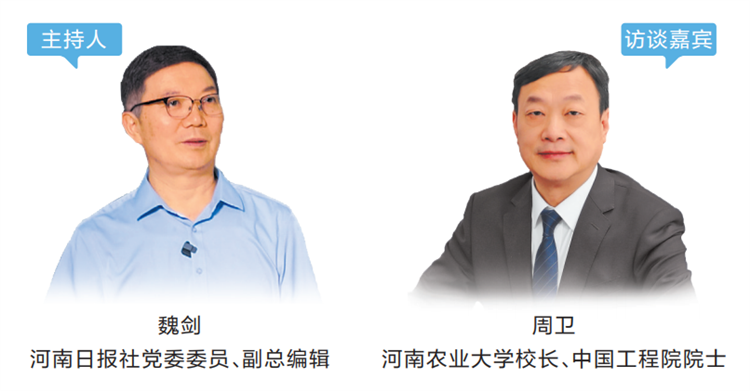
Core Viewpoint - The integration of education, technology, and talent development is a strategic requirement emphasized in the 20th National Congress report and the 3rd Plenary Session of the 20th Central Committee, highlighting the need for a collaborative approach to enhance innovation and productivity in the agricultural sector [2] Group 1: Integration Strategies - A virtuous cycle mechanism among education, technology, and talent is essential, requiring a systematic approach and top-level design for policy formulation and resource allocation [2] - The current higher education system faces challenges such as an inadequate evaluation system, inefficient results transformation, talent supply-demand mismatch, and insufficient collaborative innovation [2][3] Group 2: Initiatives by Henan Agricultural University - Henan Agricultural University is focusing on deepening reforms in the agricultural sector by optimizing professional settings and developing emerging interdisciplinary programs like smart agriculture and food processing [3] - The university has initiated a "famous schools and enterprises integration innovation strategy" to promote collaborative education and resource integration [3] - The establishment of the "China Modern Agriculture Joint Graduate School" aims to create an innovative platform for integrated development in education, technology, and talent [3] Group 3: Talent Development Efforts - The university emphasizes talent as a primary support, having introduced 3 academicians from the Chinese Academy of Engineering and cultivated 1, ranking third among agricultural universities in China [4] - A talent recruitment campaign named "Hundred Talents Gathering at Agricultural University" has been launched, focusing on attracting high-level talents through various strategic approaches [4] - The university aims to align its talent cultivation with national strategies and industry needs, enhancing collaboration with leading enterprises and establishing research institutes and laboratories [4]
共建“一带一路”惠及更多民众
Jing Ji Ri Bao· 2025-06-20 21:58
Core Points - China has announced the establishment of three cooperation centers focused on poverty alleviation, educational exchange, and desertification prevention within the China-Central Asia cooperation framework, along with a trade facilitation platform [1] - A commitment of 1.5 billion RMB in grants for Central Asian countries has been made to support livelihood and development projects, alongside the provision of 3,000 training opportunities over the next two years [1] - The Belt and Road Initiative (BRI) emphasizes a people-centered approach, targeting poverty reduction, job creation, and improved living standards through small-scale, impactful projects [1] Group 1: Project Development - The "small yet beautiful" livelihood projects are diversifying and expanding in scope, working in tandem with major landmark projects under the BRI [2] - As of November 2024, over 30 Luban Workshops have been established across Asia, Europe, and Africa, training nearly 10,000 students and providing over 31,000 vocational training sessions [2] Group 2: Sustainability and Digitalization - BRI livelihood projects are increasingly integrating green and digital transformations, with cooperation extending to renewable energy and digital infrastructure [3] - China has collaborated with over 100 countries on green energy projects, significantly benefiting local communities through sustainable energy solutions [3] - Digital initiatives, such as the ICT broadband backbone network project in Tanzania, have drastically reduced communication costs, enhancing access to digital services for rural populations [3] Group 3: Diverse Participation - The participation in BRI livelihood projects is becoming more diverse, involving governments, enterprises, financial institutions, and local healthcare organizations [4] - There is a growing emphasis on building connections from central to local levels, fostering cooperation on issues like green development and poverty alleviation [4] - Future BRI efforts will focus on integrating major projects with small-scale initiatives across various sectors, enhancing the overall impact on communities [4]