居民收入

Search documents
扩大内需不是只有宏观叙事
Sou Hu Cai Jing· 2026-02-03 14:58
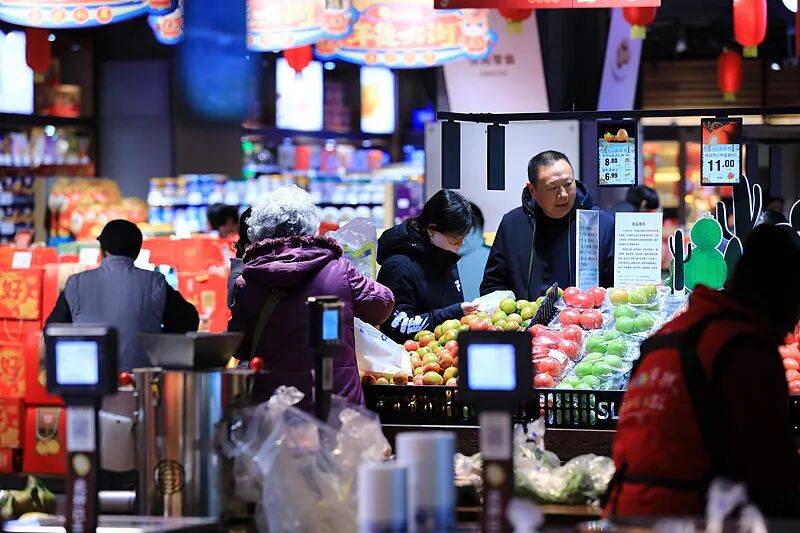
Core Viewpoint - Expanding domestic demand does not necessarily require grand narratives; addressing issues can be achieved incrementally by releasing pent-up consumer demand, which can enhance the Chinese economy's outlook [2][9] Economic Growth and Consumer Spending - China's GDP growth is projected to be 5% in 2025, outperforming major global economies, with the U.S., Europe, and Japan experiencing negative growth when adjusted for inflation [2] - The consumption share of GDP in China is low, expected to be 52% in 2025, with household consumption accounting for less than 40%, compared to the global average of around 75% [2] - Over the past three years, the consumption share has decreased from 56% to 52%, while exports have reached record highs, with a trade surplus of $1.19 trillion in 2025, constituting over 40% of the global total [2] Income and Social Security - The growth of residents' income has historically lagged behind economic growth, with per capita disposable income projected to reach 43,400 yuan in 2025, a 3.5 times increase since 2010 [3][5] - The proportion of residents' income to GDP is expected to be only 43.15% in 2024, about 20 percentage points lower than the global average, which limits consumption expansion [3] Consumer Behavior and Market Trends - There is a significant potential for expanding domestic demand, as regional and demographic differences in economic and consumption structures are evolving [3] - The total amount of residents' savings is projected to reach 167 trillion yuan by 2025, with a growth rate of 9.71%, indicating a substantial pool of potential consumer spending [5] - The rise of outdoor activities and experiences, such as "city walks," has created new consumer demands, leading to growth in related markets [6][7] Role of UGC Platforms - User-generated content (UGC) platforms like Xiaohongshu are crucial in matching supply with consumer demand, enhancing the precision of market offerings [8] - These platforms distribute traffic to ordinary users, fostering community diversity and improving the accuracy of capturing micro-level consumer needs [8] Service Sector Growth - The service sector's share of the economy is expected to reach 57.7% by 2025, with service consumption projected to be 46.1%, indicating a shift towards more personalized and experiential spending [9] - As service consumption increases, it is anticipated to surpass goods consumption, creating new opportunities for entrepreneurship and supply capabilities [9]

青海茫崖:三产协同积蓄开局起步新动能
Zhong Guo Jing Ji Wang· 2026-02-02 06:10
Economic Performance - In 2025, the GDP of Mangya City is projected to reach 12.04 billion yuan, with a year-on-year growth of 4.6% [1] - The primary industry is expected to achieve 0.02 billion yuan, growing by 9.1%, while the secondary industry is forecasted to reach 10.163 billion yuan, also growing by 4.6%, and the tertiary industry is anticipated to complete 1.858 billion yuan, with a growth of 4.8% [1] Industrial and Investment Growth - The industrial added value above designated size is expected to grow by 4.1% year-on-year [1] - Fixed asset investment is projected to increase significantly by 48.5% year-on-year, with general industrial investment growing by 8.7% and construction investment by 27.7% [1] Consumer Market and Income - The total retail sales of consumer goods in the city are expected to reach 0.305 billion yuan, with a year-on-year increase of 3.1%, indicating a steady recovery in consumer demand [1] - The per capita disposable income for residents is projected to be 47,544 yuan, reflecting a year-on-year growth of 3.4% [2]
海南省2025年GDP达8108.85亿元 同比增长4.0%
Zhong Guo Xin Wen Wang· 2026-01-24 02:12
Economic Growth - Hainan's GDP is projected to reach 810.885 billion yuan in 2025, with a year-on-year growth of 4.0% at constant prices [1] - The primary industry is expected to contribute 164.255 billion yuan, growing by 4.4%, while the secondary industry will add 146.386 billion yuan, with a growth of 1.0% [1] - The tertiary industry is anticipated to generate 500.244 billion yuan, reflecting a growth of 4.6% [1] Agricultural and Industrial Performance - The total output value of agriculture, forestry, animal husbandry, and fishery is projected to be 263.186 billion yuan in 2025, with a year-on-year increase of 4.7% [1] - Industrial growth is accelerating, with a year-on-year increase of 9.9% in the added value of above-scale industries [1] - Equipment manufacturing and high-tech manufacturing sectors are experiencing significant growth, with increases of 103.1% and 28.1%, respectively [1] Service Sector and Tourism - The added value of the service sector is expected to grow by 4.6% year-on-year in 2025 [1] - The tourism market is showing strong performance, with 106.075 million visitors and total tourism expenditure of 225.432 billion yuan, representing growth of 9.1% and 10.5%, respectively [1] Investment and Consumption - Fixed asset investment in Hainan is projected to decline by 16.5% in 2025 [2] - Social retail sales are expected to grow by 5.0%, with significant increases in home appliances (17.6%), communication equipment (56.6%), and automobiles (33.0%), particularly in new energy vehicles, which are expected to grow by 51.3% [2] Trade and Income - The total service import and export value is projected to be 69.255 billion yuan, with a year-on-year increase of 22.1%, while the total goods import and export value is expected to be 276.003 billion yuan, showing a slight decline of 0.7% [2] - Per capita disposable income is expected to reach 36,306 yuan, with a nominal growth of 4.2% and a real growth of 4.3% after adjusting for price factors [2] Long-term Economic Outlook - During the 14th Five-Year Plan period, Hainan's economy is expected to grow at an average annual rate of 5.7%, surpassing the national average by 0.3 percentage points [3] - The economic total is projected to cross three trillion yuan thresholds within five years, exceeding 800 billion yuan [3] - The construction of the Hainan Free Trade Port is entering a new phase, boosting confidence across various sectors and promoting stable economic recovery [3]
最新!2025年河北GDP公布
Xin Lang Cai Jing· 2026-01-22 13:01
Economic Performance - The GDP of Hebei Province for 2025 is reported at 49,305.2 billion yuan, reflecting a year-on-year growth of 5.6% at constant prices [1] - The primary industry added value is 4,514.5 billion yuan, growing by 3.4% [1] - The secondary industry added value is 17,622.4 billion yuan, with a growth rate of 5.4% [1] - The tertiary industry added value is 27,168.3 billion yuan, showing a growth of 6.1% [1] Employment and Income - A total of 900,000 new urban jobs were created, achieving 104.6% of the annual target [2] - The per capita disposable income for residents reached 36,439 yuan, an increase of 5.1% compared to the previous year [2] - Urban residents' per capita disposable income is 47,544 yuan, growing by 4.2%, while rural residents' per capita disposable income is 23,319 yuan, increasing by 5.9% [2] - The income gap between urban and rural residents has narrowed, with a ratio of 2.04, down by 0.03 from the previous year [2] - The per capita consumption expenditure for residents is 25,464 yuan, marking a 5.0% increase year-on-year [2] - Urban residents' per capita consumption expenditure is 30,522 yuan, up by 4.1%, while rural residents' per capita consumption expenditure is 19,488 yuan, increasing by 5.8% [2]
西宁2025年民生答卷亮点纷呈
Xin Lang Cai Jing· 2026-01-21 18:32
Group 1: Agricultural Production - In 2025, Xining's total grain production reached 241,000 tons, an increase of 6,000 tons or 2.6% compared to the previous year [1] - The grain planting area was 915,000 mu, a slight decrease of 1,000 mu or 0.1% from the previous year [1] - The comprehensive yield per mu for grain was 263.2 kg, which is an increase of 6.9 kg or 2.7%, surpassing the provincial average by 1.3 percentage points [1] - Notable increases in yield per mu were observed in wheat (253.4 kg, up 1.1%), barley (154.3 kg, up 16.8%), while miscellaneous grains saw a decrease (151.5 kg, down 4.5%) [1] - The total output of major livestock and poultry was 67,000 tons, with pork production at 14,000 tons (up 3.3%), beef at 38,000 tons (up 19.5%), mutton at 14,000 tons (up 9.4%), and poultry at 1,000 tons (up 12.2%) [1] Group 2: Resident Income and Consumption - In 2025, the per capita disposable income for all residents in Xining was 38,727 yuan, reflecting a year-on-year growth of 4.8%, which is 0.3 percentage points lower than the provincial average [2] - Rural residents had a per capita disposable income of 19,369 yuan, growing by 6.0%, matching the provincial average [2] - Urban residents' per capita disposable income was 45,605 yuan, with a growth of 4.1%, slightly higher than the provincial average by 0.1 percentage points [2] - The per capita consumption expenditure for all residents was 25,951 yuan, an increase of 3.8% year-on-year [2] - Rural residents' per capita consumption expenditure was 16,193 yuan (up 7.3%), while urban residents' was 29,418 yuan (up 2.8%) [2] - The Consumer Price Index (CPI) in Xining decreased by 0.2% compared to the previous year, with a "six increases and two decreases" trend observed in the prices of eight major categories of goods and services [2]
晒成绩!2025北京这些民生数据与你有关,今年还有这些好消息→
Xin Lang Cai Jing· 2026-01-21 13:24
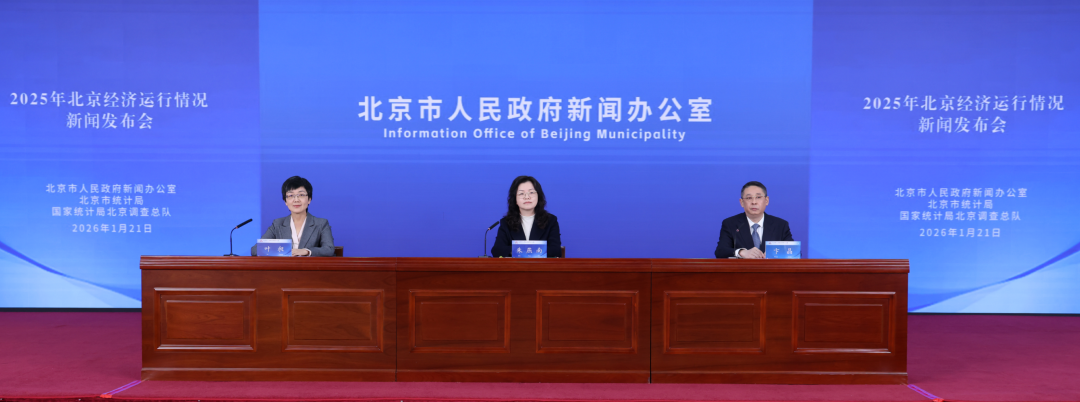
Core Viewpoint - Beijing's economic performance in 2025 shows stable development in employment and income, with a focus on high-quality employment and income growth driven by various policies and initiatives [3][5][10]. Employment - The urban surveyed unemployment rate in Beijing remained stable at an annual average of 4.1%, consistent with the previous year, with monthly fluctuations between 4.0% and 4.3% [4]. - Employment initiatives targeted at youth, particularly college graduates, and support for disadvantaged groups have been emphasized to promote local employment and transition employment [4][10]. - The unemployment rate peaked at 4.3% in July due to the influx of new labor from college graduates, but stabilized in the fourth quarter [4]. Income - Per capita disposable income in Beijing increased from 69,000 yuan at the end of the 13th Five-Year Plan to 89,000 yuan by the end of the 14th Five-Year Plan in 2025 [5]. - Wage income and net transfer income contributed significantly to this growth, with both categories showing a year-on-year increase of 4.9%, contributing 73.6% to the rise in disposable income [5]. - Rural residents' income growth outpaced urban residents, with a year-on-year increase of 5.4%, leading to a reduction in the urban-rural income ratio to 2.29 [5]. Consumer Prices - The Consumer Price Index (CPI) in Beijing showed a low and stable trend, with a year-end increase of 1.0% after a period of decline in the first three quarters [6]. - Food prices decreased by 2.0%, significantly impacting the CPI, with fresh vegetables seeing a notable decline of 4.2% [6][7]. - Service prices remained stable overall, with some categories experiencing price increases, such as home services and education, which rose by 17.4% and 0.8%, respectively [8]. Future Outlook - The 15th Five-Year Plan emphasizes improving the quality of life and increasing income, with a focus on stabilizing employment for key groups such as college graduates and rural laborers [9][10]. - Despite structural employment challenges, favorable economic conditions and supportive policies are expected to maintain a stable labor market and income growth [10]. - Price stability is anticipated, with measures in place to ensure food supply and manage service prices during peak demand periods [10].
全省居民人均可支配收入36120元
Xin Lang Cai Jing· 2026-01-19 18:11
Group 1: Agricultural Production - The total grain production in Sichuan for 2025 is projected to be 36.625 million tons, an increase of 287,000 tons or 0.8% compared to the previous year [1] - The grain planting area is expected to reach 9.6185 million acres, an increase of 97,000 acres or 0.1% year-on-year [1] - The grain yield is anticipated to be 380.8 kg per acre, an increase of 2.6 kg per acre or 0.7% from the previous year [1] - The total meat production (pork, beef, lamb, and poultry) is projected to be 6.669 million tons, an increase of 211,000 tons or 3.3% [1] - Pork production is expected to be 5.02 million tons, a growth of 4.7%, while beef production is projected at 390,000 tons, a growth of 5.1% [1] Group 2: Resident Income and Consumption - The per capita disposable income in Sichuan is projected to be 36,120 yuan, a nominal increase of 5.2% and a real increase of 5.5% after adjusting for price factors [2] - Urban residents' per capita disposable income is expected to be 49,428 yuan, a nominal increase of 4.4%, while rural residents' per capita disposable income is projected at 22,494 yuan, a nominal increase of 5.6% [2] - The per capita consumption expenditure in Sichuan is anticipated to be 26,073 yuan, a nominal increase of 4.8% and a real increase of 5.1% [2] - The consumer price index (CPI) in Sichuan is expected to decrease by 0.3% compared to the previous year, while the core CPI, excluding food and energy, is projected to rise by 0.5% [2] Group 3: Employment Situation - The average urban survey unemployment rate in Sichuan is projected to be 5.3%, remaining stable compared to the previous year [3] - The unemployment rate is expected to fluctuate throughout the year, with a peak of 5.4% in the first and third quarters and a low of 5.1% in the second quarter [3] - By December, the urban survey unemployment rate is anticipated to be 5.2% [3]
(经济观察)“暖”数据传递中国民生保障温度
Zhong Guo Xin Wen Wang· 2026-01-19 12:26
Group 1: Employment Stability - The overall employment situation in China remains stable, with an average urban survey unemployment rate of 5.2% in 2025, lower than the expected target of around 5.5% [1] - The unemployment rate in 31 major cities averaged 5.1%, consistent with the previous year, and remained between 5.0% and 5.3% throughout the year [1] - The unemployment rate for urban labor aged 30-59 was 4.0%, 1.2 percentage points lower than the national urban average, indicating a stable employment foundation for this demographic [1] Group 2: Income Growth - In 2025, the per capita disposable income of residents reached 43,377 RMB, reflecting a real growth of 5.0%, in line with economic growth [3] - Rural residents' income growth outpaced urban residents by 1.5 and 1.8 percentage points in nominal and real terms, respectively, leading to a reduction in the urban-rural income gap from 2.34 to 2.31 [3] - The growth in income is supported by stable increases in wage income, operating net income, and transfer net income [3] Group 3: Price Stability - The Consumer Price Index (CPI) in China remained stable in 2025, with a year-on-year increase of 0.8% in December, the highest since March 2023 [4] - The overall CPI for the year was flat compared to the previous year, while the core CPI, excluding food and energy, rose by 0.7%, an increase of 0.2 percentage points from the previous year [4] - Favorable climate conditions and sufficient supply of food contributed to the stability of prices, with ongoing policies aimed at boosting consumption expected to further support price stability [4]
供需两侧发力促“十五五”服务消费扩量提质
Di Yi Cai Jing· 2026-01-12 12:40
Core Insights - The next five years are expected to be a historic phase for the rapid expansion and quality improvement of service consumption in China, with a focus on enhancing the proportion of service consumption and improving its quality through various measures [1] Group 1: Service Consumption Growth - The conditions for mature service consumption are accumulating, with China's per capita GDP expected to rise from over $10,000 in 2019 to $14,300 by 2025, leading to an increase in service consumption expenditure [2] - By 2024, per capita service consumption expenditure is projected to reach 46.1%, indicating significant growth potential compared to countries like the US (68.5%) and the UK (59.1%) [2] - The middle-income group in China is expected to exceed 800 million in the next decade, indicating a substantial increase in the consumer base with payment capacity [2] Group 2: Government Initiatives - Recent government policies aimed at promoting high-quality service consumption include the issuance of several action plans and financial support measures, such as a 500 billion yuan loan for service consumption and pension [3] - The introduction of new technologies like AI, 6G, and the metaverse is creating diverse new service consumption scenarios, enhancing both online and offline consumption experiences [3] Group 3: Challenges in Service Consumption - Despite growth potential, challenges remain, including a slowdown in disposable income growth, with an average annual increase of 5.5% from 2014 to 2024, and a widening income gap as indicated by a Gini coefficient above 0.42 [4][5] - The income distribution is highly unequal, with the top 10% holding about 40% of the wealth, while the bottom 50% only holds 15% [4] - Structural issues in income sources, such as a decline in property income growth, and significant disparities in income between urban and rural residents, pose additional challenges [4][5] Group 4: Supply-Side Bottlenecks - There is a mismatch in supply and demand, with a saturation of traditional services but a shortage of high-quality, personalized services, particularly in sectors like elderly care and education [6] - The low standardization and quality of services hinder consumer confidence, with issues such as inconsistent service quality and risks associated with prepaid services [6] - Market entry barriers and a rigid regulatory framework limit innovation and competition in various service sectors, affecting service efficiency and business model innovation [6] Group 5: Recommendations for Improvement - To enhance service consumption, measures should be taken to improve residents' income through employment stabilization and social security reforms, which can boost consumer confidence [7] - Policy innovations should focus on enriching high-quality service supply by supporting infrastructure development in sectors like culture, tourism, and healthcare, and attracting foreign investment [8] - Expanding new service consumption scenarios through cultural and community initiatives can help integrate various consumption experiences and enhance service accessibility [9] - Establishing a comprehensive service consumption standard system and improving consumer protection mechanisms are essential for building trust and enhancing service quality [10] - Adapting service consumption strategies to demographic changes, such as the aging population and childcare needs, will be crucial for future growth [10]
国内高频 | 服务消费相关指标走强(申万宏观·赵伟团队)
赵伟宏观探索· 2025-12-10 16:03
Core Viewpoint - The article discusses the current state of industrial production, construction, and demand trends in China, highlighting weak performance in various sectors while noting some marginal improvements in construction and consumer activity. Industrial Production - The operating rate of blast furnaces continues to decline, with a week-on-week decrease of 1.1% to 81.1% and a year-on-year decrease of 0.8 percentage points [2] - Steel apparent consumption has also decreased, with a week-on-week decline of 2.68% and a year-on-year drop of 2.4 percentage points to 1.2% [2] - Social inventory of steel continues to decline, down 2.9% week-on-week [2] Construction Industry - Cement production and demand show marginal improvement, with the national grinding operating rate increasing by 0.5% week-on-week to 38.9% [23] - Cement shipment rates decreased by 0.8% week-on-week to 44.4%, with a year-on-year decline of 2.1% [23] - Cement inventory ratio continues to decline, down 1.9% week-on-week [23] Demand Trends - The average daily transaction area of commercial housing in 30 major cities decreased by 24% week-on-week and 20.8 percentage points year-on-year [46] - The migration scale index remains stable, with a year-on-year increase of 0.5 percentage points to 19.8% [58] - Movie attendance and box office revenue saw significant increases, with attendance up 322.0% year-on-year and revenue up 313.9% [64] Price Trends - Agricultural product prices are generally rising, with vegetable prices increasing by 2.1% week-on-week, while pork prices fell by 0.7% [88] - The South China industrial product price index rose by 1% week-on-week, with energy prices up 0.3% and metal prices up 1.7% [100]