
服务类消费

Search documents
内外兼修-2026年宏观经济与资本市场展望
2025-12-29 01:04
Summary of Key Points from Conference Call Records Industry Overview - **Global Manufacturing and Export Trends**: The global manufacturing sector is expected to show an upward trend in 2026, which will support China's exports. The U.S. inventory cycle is entering a replenishment phase, and the Federal Reserve is anticipated to cut interest rates, which will further boost global industrial production and, consequently, Chinese exports [4][24]. Core Insights and Arguments - **Impact of U.S. Tariffs**: China has gained significant experience in mitigating the negative impacts of U.S. tariffs, leading to a stable export growth despite tariff increases. Future tariff impacts are expected to diminish further [5]. - **Outbound Capacity Strategy**: The current strategy for outbound capacity focuses on "Belt and Road" countries, aiming to find new demand growth points rather than indiscriminate expansion. This approach is expected to enhance brand penetration and positively impact domestic capital goods and intermediate goods exports [6]. - **Real Estate Market Adjustments**: The real estate sector has undergone significant adjustments since 2021, with a negative contribution to fixed asset investment. However, the rate of decline is expected to narrow, although falling property prices and deteriorating household balance sheets may suppress consumer spending [7][8]. - **Durable Goods Subsidy Policy**: The effectiveness of the durable goods subsidy policy is likely to weaken, with recent data showing a negative contribution due to high base effects. Long-term demand may be overstretched, leading to diminishing returns from such policies [10]. - **Consumer Spending Dynamics**: The adjustment in the real estate market affects consumer spending through reduced income and wealth effects. Data indicates a decline in residents' willingness to repay loans and an increase in savings, reflecting a drop in consumer confidence [9]. Additional Important Insights - **Fiscal Policy Challenges**: Broad fiscal revenues are under pressure, with local government debt risks increasing. Central government borrowing is seen as a necessary measure to counteract economic downturns and facilitate fiscal reforms [14][18]. - **Future Economic Growth Targets**: The average GDP growth target before 2035 is set at approximately 4.17%. Short-term adjustments to growth targets for 2026 may occur to alleviate growth constraints [2][19]. - **Investment Focus Areas**: Future investments should prioritize industrial investments over physical assets, with a focus on early-stage technology projects. The central bank is expected to maintain a moderately accommodative monetary policy, potentially involving rate cuts [23][24]. - **Service Sector Growth Potential**: There is significant potential for growth in service sectors such as education, healthcare, and elder care, which are expected to become key drivers of domestic demand in the coming years [12][24]. Conclusion - The overall outlook for 2026 indicates a supportive environment for exports and service consumption, with a focus on fiscal and monetary policy adjustments to stimulate economic growth. The emphasis on strategic investments and service sector development will be crucial for sustaining economic momentum in the face of existing challenges.
2025年关下的车市 20家车企撒钱补贴,“翘尾效应”为何失灵?
2 1 Shi Ji Jing Ji Bao Dao· 2025-12-15 23:46
Core Viewpoint - The automotive market is experiencing a tug-of-war between the increase in rigid expenses due to the reduction of purchase tax exemptions and the continuation of national subsidy policies like "trade-in" programs, although details remain uncertain [1][14]. Group 1: Tax Policy Changes - Starting January 1, 2026, the purchase tax for new energy vehicles will shift from full exemption to a 50% reduction, with the current tax rate of 10% effectively becoming 5%, and the exemption cap dropping from 30,000 yuan to 15,000 yuan [2][15]. - For a new energy vehicle priced at 300,000 yuan, the purchase tax will be 15,000 yuan, while for a vehicle priced at 500,000 yuan, the tax will be 35,000 yuan after applying the maximum exemption [2][15]. Group 2: Market Reactions and Sales Trends - Despite the proactive measures by over 20 automakers to introduce "tax coverage" policies, the industry remains cautious about the fourth-quarter market outlook, with expectations of no significant "tail effect" as seen in previous years [2][6]. - In December 2023, the retail sales of passenger vehicles dropped to 297,000 units, a year-on-year decrease of 32% and a month-on-month decrease of 8% [3][16]. - The anticipated "tail effect" has turned into a "flat tail," with November retail sales of 2.225 million units showing a year-on-year decline of 8.1% and a month-on-month decline of 1.1% [8][22]. Group 3: Consumer Behavior and Market Dynamics - The uncertainty surrounding the continuation of national and local subsidies has led consumers to adopt a wait-and-see approach, impacting immediate purchasing decisions [7][21]. - The introduction of "tax coverage" policies by automakers has inadvertently altered consumer buying patterns, leading to a decrease in immediate demand for vehicle purchases [6][20]. Group 4: Battery Supply and Demand - The demand for batteries is intensifying, with automakers scrambling to secure supplies due to production constraints caused by battery shortages [9][23]. - The cumulative installed capacity of domestic power batteries reached 578.0 GWh from January to October, reflecting a year-on-year growth of 42.4% [9][23]. - The battery supply is facing pressure from both the automotive sector and the rapidly growing energy storage market, which is diverting production capacity [10][24]. Group 5: Future Market Outlook - The automotive industry is expected to see a growth rate of approximately 3% to 5% for the year, with a cautious consensus forming around the potential for a 3% growth in 2026 as policies gradually phase out [12][26]. - Future opportunities are anticipated to arise from structural adjustments and value exploration, particularly in lower-tier markets and service consumption [13][27].

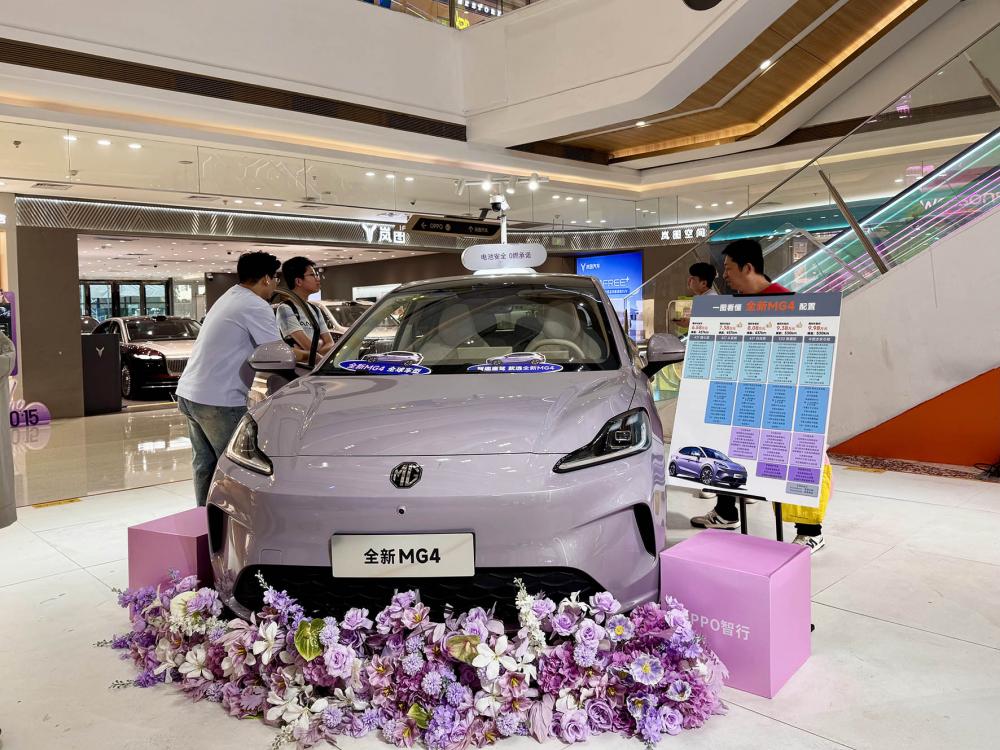
极氪、小米、问界等超20家车企宣布兜底购置税,最高省1.5万
21世纪经济报道· 2025-12-14 15:00
Core Viewpoint - The automotive market is experiencing a tug-of-war between increased costs due to the reduction of purchase tax exemptions and the continuation of national subsidies for trade-ins, leading to uncertainty in consumer and manufacturer decisions [1][3]. Group 1: Policy Changes and Market Reactions - Starting January 1, 2026, the purchase tax for new energy vehicles (NEVs) will shift from full exemption to a 50% reduction, with the current tax rate of 10% effectively becoming 5% for consumers [1]. - The maximum exemption limit will decrease from 30,000 yuan to 15,000 yuan, impacting the tax burden on consumers purchasing NEVs priced at 300,000 yuan and 500,000 yuan [1]. - The Central Economic Work Conference has confirmed the optimization of policies including the continuation of trade-in subsidies, setting a foundation for the extension of current national subsidies beyond 2025 [3]. Group 2: Market Performance and Sales Trends - Despite proactive measures from over 20 car manufacturers to offer purchase tax guarantees, the market remains cautious about the fourth-quarter performance, with expectations of a lack of significant sales spikes compared to previous years [4][5]. - Data from the China Passenger Car Association indicates a 32% year-on-year decline in retail sales of passenger cars in early December, with a 17% drop in the NEV segment [4][6]. - The anticipated "tail effect" in sales, typically seen in the fourth quarter, is not materializing as expected, with November sales down 8.1% year-on-year [5][6]. Group 3: Consumer Behavior and Market Dynamics - The certainty of tax reductions has not translated into expected consumer purchasing behavior, as many are opting to wait for clearer subsidy details before making decisions [6][9]. - The introduction of tax guarantee policies by manufacturers has inadvertently led to a more cautious consumer approach, suppressing immediate purchasing demand [5][6]. - The automotive market is witnessing a shift in focus towards lower-priced vehicles, particularly in the 200,000 yuan and below segment, as consumers become more price-sensitive [5]. Group 4: Supply Chain and Battery Demand - The demand for batteries is intensifying as manufacturers scramble to secure supplies, with some companies facing production delays due to battery shortages [8][9]. - The cumulative installed capacity of domestic power batteries reached 578.0 GWh from January to October, reflecting a 42.4% year-on-year increase [8]. - The upcoming reduction in purchase tax is driving a surge in demand for batteries, leading to potential supply constraints as manufacturers rush to meet the concentrated demand [9][10]. Group 5: Future Market Outlook - Predictions for 2026 indicate a slowdown in the growth rate of domestic passenger car sales, with estimates suggesting a decline from 8% in 2025 to -2% in 2026 [13]. - The market is expected to shift focus towards structural adjustments and value extraction, with opportunities emerging in underdeveloped markets and service-oriented consumption [13][14]. - The automotive industry is likely to face increased pressure to differentiate based on product functionality, performance, and pricing as market dynamics evolve [14].

【广发宏观郭磊】7月底政治局会议的关键细节
郭磊宏观茶座· 2025-07-30 10:14
Core Viewpoint - The meeting emphasizes the importance of the "15th Five-Year Plan" as a critical period for achieving socialist modernization, focusing on "consolidating the foundation and making comprehensive efforts" [1][6][7] - The overall economic outlook is positive, with key economic indicators performing well and a strong emphasis on maintaining economic recovery momentum [1][9][10] Economic Policy - The meeting highlights the need for macroeconomic policies to be "continuous, stable, flexible, and predictable," aiming for sustained growth and maximizing policy effects [2][10][11] - Emphasis is placed on implementing proactive fiscal policies and moderately loose monetary policies to support economic stability [11][12] Consumption and Investment - The meeting stresses the importance of expanding service consumption and stimulating effective investment, particularly in the context of weak fixed asset investment growth [3][12] - The "old-for-new" policy has already released some elasticity in durable goods consumption, and there is a call to cultivate new growth points in service consumption [3][12] Supply-Side Policies - The meeting calls for deepening the construction of a unified national market and optimizing market competition order, while also addressing issues of local government debt and hidden debts [4][13] - Policies will focus on promoting high-quality development and addressing overcapacity in key industries [4][12] Capital Market - The meeting emphasizes enhancing the attractiveness and inclusiveness of the domestic capital market, aiming to consolidate the positive momentum in capital market recovery [5][14] - There is a focus on ensuring that the capital market functions effectively and supports long-term investment [5][14] Transition from 14th to 15th Five-Year Plan - The meeting outlines the need for a smooth transition from the "14th Five-Year Plan" to the "15th Five-Year Plan," with a focus on urban renewal and managing hidden debts [5][14] - The importance of maintaining strategic determination and confidence in achieving long-term economic goals is highlighted [7][8]

【广发宏观团队】对中期影响深远的三个政策线索
郭磊宏观茶座· 2025-04-27 09:26
广发宏观周度述评(第12期) 广发宏观周度述评(第1-11期,复盘必读) 内容 第一, 对中期影响深远的三个政策线索。 4月25日政治局会议明确指出"外部冲击影响加大"及"要强化底线思维",并部署了一系列稳增长具体举措。从"加紧实 施"这一表述来看,目前稳增长具有一定的紧迫性,后续政策节奏有望加快。 值得注意的是,除了短期视角,本轮政策稳增长举措中也展现出一些新的中期线索。如去年底中央经济工作会议指出的,"实践中,我们不断深化对经济工作的规 律性认识";以及3月5日国新办吹风会解读政府工作报告时指出的,"充分体现了9月26日中央政治局会议以来,党中央对宏观调控思路的创新"。 线索一:服务类消费可能成为新的风口。3月5日国新办发布会指出本轮稳增长"打破了消费是慢变量的常规";而从本次政治局会议精神来看,政策侧重点可能已从 商品消费进一步扩展向服务类消费。在耐用消费品的政策红利释放之后,服务类消费空间更大。[1]2024年全国居民人均服务性消费支出占居民人均消费支出比重 达46.1%,而且部分商品消费是服务消费的场景带动的。要发展服务类消费,那么重要的不仅是有形商品创新,还包括应用场景和商业模式创新。[2]如《求 ...