
流动性担忧

Search documents
中东战事或有反复,伊朗否认谈判
Hua Tai Qi Huo· 2026-03-26 05:47
Report Industry Investment Rating - Gold: Neutral [8] - Silver: Neutral [9] - Arbitrage: Short the gold-silver ratio at high levels [9] - Options: Hold off [9] Core Viewpoints - The rebound of precious metal prices is mainly catalyzed by the cooling of liquidity concerns due to the easing of geopolitical conflicts, and the market risk appetite has been significantly restored. However, geopolitical risks still exist, and the US does not seem to have the initiative to end the war at any time. If the US and Iran cannot reach an agreement on the armistice conditions, the possibility of conflict escalation cannot be ruled out. Therefore, it is expected that the gold price will be mainly in a volatile pattern in the near future, and the Au2606 contract may fluctuate between 980 yuan/gram and 1060 yuan/gram. Silver has a similar macro logic to gold, and its price is also expected to maintain a volatile pattern, with the Ag2606 contract fluctuating between 17,500 yuan/kilogram and 18,500 yuan/kilogram [8][9] Market Analysis - Geopolitical situation: Iran's officials have denied the negotiation with the US. Iran has put forward five conditions for a ceasefire, including the enemy's cessation of "aggression and assassination", prevention of war recurrence, compensation, full end of military operations on all fronts, and recognition of Iran's sovereignty over the Strait of Hormuz. Non-belligerent ships can pass through the Strait of Hormuz safely after coordination, and COSCO Shipping Lines has resumed new booking business (ordinary containers) to the UAE, Saudi Arabia, Bahrain, Qatar, Kuwait, and Iraq [1] - Futures market: On March 25, 2026, the Shanghai gold futures main contract opened at 977.00 yuan/gram and closed at 1013.96 yuan/gram, up 3.75% from the previous trading day. The trading volume was 41,087 lots, and the open interest was 129,725 lots. The night session closed at 1016.92 yuan/gram, up 0.29% from the afternoon session. The Shanghai silver futures main contract opened at 16,900.00 yuan/kilogram and closed at 18,111.00 yuan/kilogram, up 6.01% from the previous trading day. The trading volume was 967,928 lots, and the open interest was 214,737 lots. The night session closed at 18,000 yuan/kilogram, down 0.61% from the afternoon session [2] - US Treasury yields and spreads: On March 25, 2026, the yield of the 10-year US Treasury bond closed at 4.338%, up 0.79 BP from the previous trading day. The spread between the 10-year and 2-year Treasury bonds was 0.451%, up 0.17 BP from the previous trading day [3] - Position and trading volume changes on the Shanghai Futures Exchange: On March 25, 2026, on the Au2606 contract, the long position increased by 10,730 lots, and the short position increased by 1,662 lots. The total trading volume of the Shanghai gold contract was 529,275 lots, down 28.14% from the previous trading day. On the Ag2606 contract, the long position increased by 1,201 lots, and the short position increased by 2,174 lots. The total trading volume of the silver contract was 1,496,495 lots, down 22.99% from the previous trading day [4] - Precious metal ETF holdings: The gold ETF holdings were 1,052.99 tons, up 0.29 tons from the previous trading day. The silver ETF holdings were 15,514 tons, unchanged from the previous trading day [5] - Precious metal arbitrage tracking: On March 25, 2026, the domestic premium of gold was -21.27 yuan/gram, and the domestic premium of silver was -716.96 yuan/kilogram. The price ratio of the main gold and silver contracts on the Shanghai Futures Exchange was about 55.99, down 2.12% from the previous trading day. The overseas gold-silver ratio was 63.16, down 0.40% from the previous trading day [6] - Fundamental data: On March 25, 2026, the trading volume of gold on the Shanghai Gold Exchange T+d market was 80,426 kilograms, down 8.48% from the previous trading day. The trading volume of silver was 456,886 kilograms, down 14.48% from the previous trading day. The gold delivery volume was 11,872 kilograms, and the silver delivery volume was 30 kilograms [7]
长江期货贵金属周报:流动性担忧发酵,价格延续回调-20260323
Changjiang Securities· 2026-03-23 08:02
Group 1: Report Industry Investment Rating - No relevant content provided Group 2: Core Viewpoints of the Report - The Fed's March FOMC meeting kept interest rates unchanged, Iran closed the Strait of Hormuz, crude oil prices continued to rise, and the market expected no rate cuts this year, leading to a correction in precious metal prices. The mid - term price centers of gold and silver are expected to move up, and the prices of platinum and palladium are expected to have support below but still face short - term adjustment pressure. It is recommended to wait and see and trade cautiously. [7][10][12] Group 3: Summary by Directory 01. Market Review - Due to the Fed's 3 - month interest rate hold, Iran closing the Strait of Hormuz, rising crude oil prices and the market's expectation of no rate cuts this year, the gold price corrected. As of last Friday, the price of US gold was reported at $4492 per ounce, down 10.6% for the week. The upper resistance level is $4700, and the lower support level is $4300 [7] - The silver price also corrected under the same factors, with a weekly decline of 15.9% as of last Friday. It was reported at $67.8 per ounce, with a lower support level of $63 and an upper resistance level of $76 [10] 02. Weekly Viewpoints - The Fed's 3 - month interest rate hold, Iran closing the Strait of Hormuz, rising crude oil prices and the market's expectation of no rate cuts this year led to a correction in precious metal prices. The mid - term price centers of gold and silver are expected to move up. The platinum and palladium lease rates remain relatively high, and their prices are expected to have support below but face short - term adjustment pressure. It is recommended to wait and see and trade cautiously [12][14] 03. Overseas Macroeconomic Indicators - The report presents data and trends on the US dollar index, euro - US dollar exchange rate, pound - US dollar exchange rate, real interest rates, US Treasury yields, inflation expectations, yield spreads, and the Fed's balance - sheet size [16][18][20] 04. Important Economic Data of the Week - The US February PPI annual rate was 3.4%, higher than the expected 2.9% and the previous value of 2.9% [26] - The number of initial jobless claims in the US for the week ending March 14 was 205,000, lower than the expected 215,000 and the previous value of 213,000 [26] 05. Important Macroeconomic Events and Policies of the Week - The Fed's FOMC kept the federal funds rate target range at 3.5% - 3.75% in March, and the latest dot - plot shows one expected rate cut this year, while the market previously expected two [27] - The US February PPI rose 0.7% month - on - month, higher than the expected 0.3% and the previous value of 0.5%, and the year - on - year increase reached 3.4%, a one - year high [27] 06. Inventory - This week, the COMEX gold inventory decreased by 15,467.36 kg to 997,000.15 kg, and the SHFE gold inventory increased by 1,428 kg to 106,845 kg [14][29] - The COMEX silver inventory decreased by 280,800.97 kg to 10,347,986.85 kg, and the SHFE silver inventory increased by 35,929 kg to 362,495 kg [14][29] 07. Fund Holdings - As of March 17, the CFTC speculative fund net long position in gold was 163,351 contracts, a decrease of 2,328 contracts from last week [14][33] - The CFTC speculative fund net long position in silver was 21,036 contracts, a decrease of 2,700 contracts from last week [14][33] 08. Key Points to Watch This Week - On Tuesday, March 24, at 21:45, the preliminary value of the US SPGI manufacturing PMI for March will be released [35] - On Thursday, March 26, at 20:30, the number of initial jobless claims in the US for the week ending March 21 will be released [35]
【笔记20260309— 适时TACO】
债券笔记· 2026-03-09 10:24
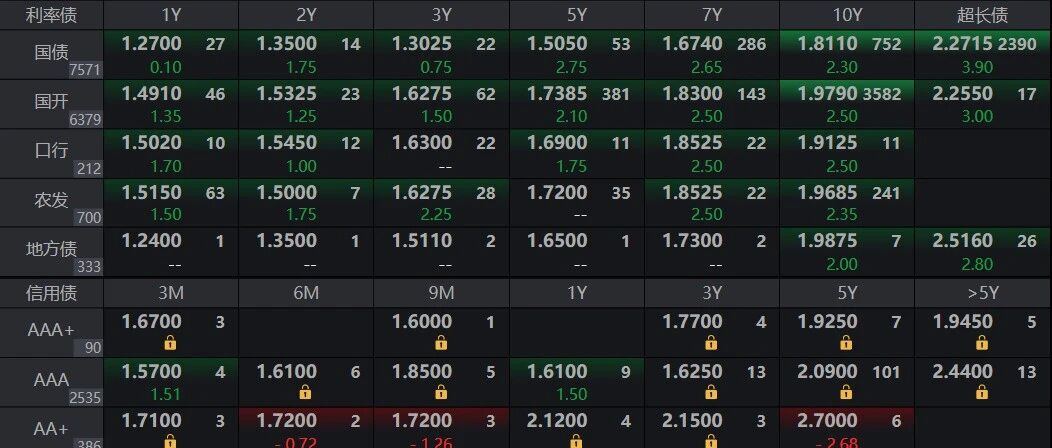
Group 1 - The market is not always correct, and its mistakes can present profit opportunities [1] - Recent geopolitical conflicts have led to stock market declines and increased liquidity concerns, with inflation data exceeding expectations [5] - The U.S. non-farm payroll data significantly underperformed expectations, contributing to a drop in U.S. stock markets [5] Group 2 - The central bank conducted a 485 billion yuan reverse repurchase operation, with a net withdrawal of 865 billion yuan due to 1,350 billion yuan reverse repos maturing [3] - The interbank funding rates remained stable, with DR001 around 1.32% and DR007 around 1.45% [3] - The 10-year government bond yield rose to approximately 1.811% amid cautious market sentiment [5]

黄金市场“多空双杀”
Shang Hai Zheng Quan Bao· 2026-01-30 22:34
Core Viewpoint - The international gold market experienced a dramatic reversal, ending an eight-day rally, with London gold prices plummeting over 7% to below $5000 per ounce after reaching a record high of over $5500 per ounce [1] Group 1: Market Dynamics - The gold market saw a nearly 30% increase in less than a month, leading to profit-taking by large hedge funds as a rational decision to lock in gains and smooth out portfolio volatility [1][2] - The surge in gold prices triggered a release of overheated market sentiment, with many investors using high leverage, resulting in forced liquidations when prices dropped suddenly [2] - The volatility was exacerbated by the upcoming Chinese New Year, which raised uncertainty in the international market, prompting investors to secure profits [1][2] Group 2: Participant Behavior - The rebound in gold prices on January 30 was primarily driven by retail investors, as institutional players opted to reduce holdings or remain on the sidelines due to high volatility [3] - The market's reaction to the potential appointment of a hawkish Federal Reserve chairman, Kevin Walsh, contributed to concerns over liquidity, leading to declines in various asset classes, including gold [3] Group 3: Market Complexity - The gold market's complexity has increased, with a mix of participants including quantitative funds, high-frequency traders, retail investors, and long-term institutional investors, each with different strategies [4][5] - The widespread use of high-leverage tools like futures and options has amplified price movements, making the market highly sensitive to any news [5] - Current market conditions are such that even minor news can trigger significant price reversals, reflecting a tight market sentiment and rapid pricing adjustments [5] Group 4: Future Outlook - Short-term adjustment risks are rising, with increased speculative interest likely to heighten volatility, although long-term investment demand may counterbalance profit-taking pressures [6] - Seasonal demand during the Chinese New Year is expected to support gold prices until mid-February, after which any negative macroeconomic catalysts could lead to corrections [6] - UBS maintains that a long position in gold remains a valid strategy, although a cautious approach is currently recommended [7]
“多空双杀”
Shang Hai Zheng Quan Bao· 2026-01-30 20:04
Core Viewpoint - The international gold market experienced a dramatic reversal, ending an eight-day rally, with London gold prices plummeting over 7% to below $5000 per ounce after reaching a record high of over $5500 per ounce [1][2]. Group 1: Market Dynamics - The recent surge in gold prices, nearly 30% within a month, led to profit-taking by large hedge funds, which contributed to the market's volatility [1][2]. - The spike in volatility was exacerbated by high leverage used by many investors, resulting in forced liquidations when prices dropped suddenly [2]. - The market's extreme sensitivity to news and macroeconomic data has made it prone to rapid price fluctuations, with a single piece of information capable of reversing market sentiment [5][6]. Group 2: Participant Behavior - The complexity of market participants, including quantitative funds, high-frequency traders, retail investors, and long-term institutional investors, has intensified the competition and volatility [5]. - Retail investors were identified as the primary buyers during the rebound after the initial drop, as institutional investors tended to reduce their positions or remain on the sidelines [3][5]. Group 3: Future Outlook - Short-term adjustment risks are rising, with increased speculative interest likely to amplify volatility; however, long-term investment demand may counterbalance profit-taking pressures [6]. - Seasonal demand during the Chinese New Year is expected to support gold prices until mid-February, after which any negative macroeconomic catalysts could lead to corrections [6][7].
美国政府重启缓解流动性担忧,降息预期左右贵金属短期价格走向 | 投研报告
Zhong Guo Neng Yuan Wang· 2025-11-17 02:29
Core Viewpoint - The non-ferrous metal sector experienced a weekly increase of 1.07% from November 10 to November 14, ranking among the top in all primary industries [1][2] Summary by Category Performance Overview - Precious metals sector rose by 2.77%, energy metals by 2.47%, and industrial metals by 1.56% during the week, while small metals and new materials sectors declined by 1.42% and 3.22% respectively [1][2] Industrial Metals - The U.S. government resumed operations, alleviating liquidity concerns, which led to a strong but volatile performance in industrial metals. The further upward movement in prices will depend on domestic and international supply-demand dynamics [2] - As of November 14, copper prices were reported at $10,846 per ton (up 1.41% week-on-week) and 86,900 CNY per ton (up 1.12% week-on-week). Supply concerns were heightened as Codelco's copper production fell by 7.2% year-on-year [3] Aluminum - Domestic sales of new energy vehicles exceeded 50%, coupled with rising overseas energy prices, contributed to a strong performance in aluminum prices. As of November 14, LME aluminum was priced at $2,859 per ton (up 1.41% week-on-week) and 21,840 CNY per ton (up 0.99% week-on-week) [4] - The theoretical demand for electrolytic aluminum increased, with social inventory rising by 0.45% to 629,900 tons [4] Precious Metals - The resumption of U.S. government operations eased liquidity concerns, influencing short-term price movements in precious metals. As of November 14, COMEX gold closed at $4,084.40 per ounce (up 1.91% week-on-week) and SHFE gold at 953.20 CNY per gram (up 3.47% week-on-week) [5] - The market anticipates a reduction in interest rate expectations, with projections dropping from 95% to around 50% for a December rate cut, impacting gold prices [5]
美国政府长期停摆,国内出口超预期转负
Guo Mao Qi Huo· 2025-11-10 08:55
1. Report Industry Investment Rating - There is no information provided regarding the report industry investment rating in the given content. 2. Core Viewpoints of the Report - The commodity market may maintain a volatile trend. Currently, domestic and international macro - factors are mixed. Concerns about the continuous shutdown of the US federal government, the decline in China's export growth, and geopolitical factors will continue to affect the commodity market, especially the crude oil market [3]. 3. Summary According to Relevant Catalogs PART ONE: Main Views - **Market Review**: This week, domestic commodities fluctuated. Industrial products fluctuated, and agricultural products declined from high levels. The US government shutdown in the first half - week led to risk - aversion sentiment, dragging down global asset prices, while the fall of the US dollar index in the second half - week relieved market pressure and most commodities rebounded [3]. - **Overseas Situation**: The continuous shutdown of the US federal government may impact people's livelihood and society. On October 31, the SRF injected huge liquidity into the market. In October, US private enterprises added 42,000 jobs, the ISM services PMI reached 52.4, but the non - farm employment decreased by 9,100. The eurozone's October composite PMI rose to 52.5, and the service industry PMI reached 53, indicating a stable economy, which may support the European Central Bank to suspend interest rate cuts [3]. - **Domestic Situation**: In October, China's exports were $305.4 billion with a year - on - year growth rate of - 1.1%, and imports were $215.3 billion with a growth rate of 1%. The decline in export growth was affected by holidays, high - base effects, and a temporary callback in external demand. The meeting between Chinese and US leaders on October 30 eased trade frictions, and port shipments increased significantly from October 26 to November 2. The central bank resumed open - market treasury bond trading in October, with a net investment of 20 billion yuan, a net investment of 200 billion yuan in medium - term lending facilities, and a net investment of 400 billion yuan in outright reverse repurchases. A 700 - billion - yuan outright reverse repurchase operation will be carried out on November 5, which will support the macro - economy [3]. - **Commodity Outlook**: The commodity market may maintain a volatile trend due to mixed domestic and international macro - factors, including the US government shutdown, China's export situation, and geopolitical factors [3]. PART TWO: Overseas Situation Analysis - **US Economic Data**: The ADP data showed that US private enterprises added 42,000 jobs in October, the largest increase since July 2025. The 10 - month ISM services PMI was 52.4, a new eight - month high. However, the non - farm employment decreased by 9,100, leading to selling in US stocks and cryptocurrencies. The SOFR rate soared 18 basis points to 4.22% [3][10]. - **Eurozone Economic Data**: The eurozone's October composite PMI reached 52.5, and the service industry PMI was 53, a 17 - month high. The economy showed stable expansion, with the service industry performing better than manufacturing, and significant economic differentiation among countries. This may support the European Central Bank to suspend interest rate cuts [3]. - **OPEC+ Situation**: On November 2, OPEC+ announced production plans for 2026, with WTI showing certain changes in production and price expectations [21]. PART THREE: Domestic Situation Analysis - **Foreign Trade Data**: In October, China's exports were $305.4 billion with a year - on - year growth rate of - 1.1%, and imports were $215.3 billion with a growth rate of 1%. The decline in export growth was affected by holidays, high - base effects, and a temporary callback in external demand. The meeting between Chinese and US leaders eased trade frictions, and port shipments increased [26]. - **Monetary Policy**: The central bank resumed open - market treasury bond trading in October, with a net investment of 20 billion yuan, a net investment of 200 billion yuan in medium - term lending facilities, and a net investment of 400 billion yuan in outright reverse repurchases. A 700 - billion - yuan outright reverse repurchase operation will be carried out on November 5, which will support the macro - economy [29]. PART FOUR: High - Frequency Data Tracking - **Industrial Data**: As of November 7, the operating rate of PTA in the polyester industry chain was 76%, and the POY operating rate was 90%. The national blast furnace operating rate (247 enterprises) and the operating rates of various links in the polyester industry chain showed certain trends [32]. - **Automobile Data**: In October, the sales volume and year - on - year growth rate of automobile manufacturers showed certain changes, with different growth rates in different periods [41]. - **Agricultural Product Data**: As of November 7, the average wholesale price of 28 key - monitored vegetables and the 200 - index of agricultural product wholesale prices showed certain trends, with price increases of 2.16% and 0.78% respectively [42].
铜周报:流动性担忧引发铜价短线回调-20251110
Yin He Qi Huo· 2025-11-10 03:08
1. Report Industry Investment Rating - Not provided in the document 2. Core View of the Report - In the short - term, concerns about liquidity due to the US government shutdown and negative feedback from high copper prices have caused copper prices to fall from their highs. However, in the long - term, the tight supply of copper mines is difficult to ease, and emerging consumption such as energy storage and AI has become a growth point. It is still recommended to adopt a strategy of buying on dips. Long - term non - US supply is generally tight, and after the inventory declines later, inter - period positive spreads (buying near - term and selling far - term) can be considered. After the import ratio rebounds, there are also opportunities for inter - market positive spreads [7][9][10] 3. Summary by Relevant Catalogs 3.1 Comprehensive Analysis and Trading Strategy - **Macro - aspect**: The record - high shutdown of the US government has increased short - term liquidity concerns in the market, and the uncertainty of a December interest rate cut has led to a rebound in the US dollar index, putting pressure on copper prices. But in the long - run, the expectation of US monetary easing remains unchanged, and the short - term liquidity problem will be resolved after the government reopens [7] - **Copper Mine**: In September, China imported 258.7 million tons of copper ore and concentrates, and the cumulative import volume from January to September was 2,263.4 million tons, a year - on - year increase of 7.7%. Supply - side disturbances in copper mines have increased, with the production of Grasberg, QB Phase II, etc. falling short of expectations. On November 7, the SMM imported copper concentrate index (weekly) was - 42.04 US dollars per ton, an increase of 0.11 US dollars per ton from the previous period [7][30] - **Scrap Copper**: As of Friday, the refined - scrap copper price difference was 2,988 yuan per ton. The operating rate of recycled copper rod enterprises this week was 27.57%, up 4.77 percentage points from last week and 2.65 percentage points year - on - year. Due to the uncertainty of the tax refund policy, most recycled copper rod enterprises in Jiangxi have stopped production, resulting in a strong demand for taxed scrap copper raw materials, and most of the taxed scrap copper raw materials in Ningbo and Guangdong are transported to Jiangxi. From January to September 2025, the domestic supply of scrap copper increased by 4.18%. In September, China imported 21.23 million tons of scrap copper, and the cumulative import volume from January to September was 169.89 million tons, a year - on - year increase of 1.53% [38][42] - **Refined Copper**: In October, SMM's electrolytic copper production in China decreased by 2.94 million tons month - on - month, a month - on - month decrease of 2.62% and a year - on - year increase of 9.63%. The cumulative increase was 11.96%. SMM expects that in November, electrolytic copper production will decrease by 0.4 million tons month - on - month, a decrease of 0.37% and a year - on - year increase of 8.21%. The cumulative year - on - year increase is 11.62%. In December, after the concentrated maintenance in October and November, production may increase slightly, but some smelters have a low willingness to increase production due to high copper prices [5][48] - **Consumption**: Domestically, demand has weakened marginally. The real estate market continues to drag down the market, and the production schedules of photovoltaic and air - conditioning industries have declined significantly. The main support for the market in the later stage comes from orders from the two power grids, the automotive industry, and energy - storage batteries. Downstream buyers have a low acceptance of high prices, but there is an increase in purchases around 85,000 yuan per ton [6] - **Inventory**: As of November 6, the copper inventory in the mainstream regions of China increased by 0.32 million tons to 20.33 million tons compared with Monday, and increased by 2.07 million tons compared with last Thursday, showing a continuous 5 - week weekly inventory accumulation. The bonded - area inventory decreased by 0.03 million tons to 8.82 million tons. As of November 7, the LME inventory decreased to 13.5 million tons, but it is expected to increase later. The COMEX inventory has increased to over 35 million tons, and the COMEX - LME price difference is maintained at 3% - 4% [10][14][17] - **Price Difference and Ratio**: The COMEX - LME price difference is maintained at 3% - 4%, and a large amount of copper from South America is still being shipped to the US. It is recommended to consider inter - period positive spreads (buying near - term and selling far - term) after the inventory declines later. After the previous export window opened, the LME inventory is expected to increase periodically, and the import ratio may rebound slightly. After the ratio rebounds, there are opportunities for inter - market positive spreads [10] 3.2 Copper Price Trends in 2025 - Throughout the year, copper prices have been affected by multiple factors such as US trade policies, production plan adjustments of major mines, and supply - side disturbances. For example, in March, the US imposed a 25% tariff on copper, which drove up copper prices; in April, due to the US imposing reciprocal tariffs globally, copper prices plummeted panic - stricken; in September, Grasberg adjusted its production plan [12][13] 3.3 Copper Market Data - **Copper Concentrate Market**: In August 2025, the global copper concentrate production decreased. In Peru, the copper production from January to August was about 1.81 million tons, a year - on - year increase of 2.6%. In August, the copper production was 419.8 tons, a month - on - month decrease of 4.94% and a year - on - year decrease of 10.05%. In Chile, due to a collapse accident in a new mining area of the world's largest underground copper mine in July, the state - owned copper company Codelco lowered its annual copper production forecast [31][32][36] - **Scrap Copper Market**: As of Friday, the refined - scrap copper price difference was 2,988 yuan per ton. The operating rate of recycled copper rod enterprises this week was 27.57%, up 4.77 percentage points from last week and 2.65 percentage points year - on - year. Due to the uncertainty of the tax refund policy, most recycled copper rod enterprises in Jiangxi have stopped production, resulting in a strong demand for taxed scrap copper raw materials, and most of the taxed scrap copper raw materials in Ningbo and Guangdong are transported to Jiangxi [38] - **Crude Copper Market**: In July 2025, the crude copper production was 1.0585 million tons, a year - on - year increase of 20.6%. From January to July, the cumulative production was 6.9996 million tons, a year - on - year increase of 12.76%. In September, China imported 50,100 tons of anode copper, a year - on - year decrease of 32.84%. From January to September, the cumulative import of anode copper was 578,700 tons, a cumulative year - on - year decrease of 15.58% [44][46] - **Domestic Copper Supply**: In October, SMM's electrolytic copper production in China decreased by 2.94 million tons month - on - month, a month - on - month decrease of 2.62% and a year - on - year increase of 9.63%. The cumulative increase was 11.96%. SMM expects that in November, electrolytic copper production will decrease by 0.4 million tons month - on - month, a decrease of 0.37% and a year - on - year increase of 8.21%. The cumulative year - on - year increase is 11.62%. From January to September, China imported 2.5416 million tons of refined copper, a cumulative year - on - year decrease of 4.06%; the export of refined copper was 489,500 tons, a year - on - year increase of 28.15% [48][52] - **Downstream Operating Rates**: In October, the operating rates of refined - copper rod, copper tube, enameled wire, and copper cable enterprises all decreased month - on - month, but are expected to increase slightly in November. The operating rate of copper foil enterprises increased in October and is expected to continue to rise in November. The operating rate of SMM's copper plate and strip enterprises decreased slightly in October and is expected to increase slightly in November [58] - **Consumption Areas** - **Air - Conditioning Consumption**: In September 2025, China's domestic air - conditioning production was 10.567 million units, a year - on - year decrease of 13.5%; sales were 10.884 million units, a year - on - year decrease of 10.2%. In November, the production schedule of domestic air - conditioners was 12.76 million units, a year - on - year decrease of 23.7% [62] - **Automobile Consumption**: In September, automobile production and sales were 3.276 million and 3.226 million units respectively, a month - on - month increase of 16.4% and 12.9% and a year - on - year increase of 17.1% and 14.9%. From January to September, automobile production and sales were 24.333 million and 24.363 million units respectively, a year - on - year increase of 13.3% and 12.9%. From January to September, the production and sales of new - energy vehicles were 11.243 million and 11.228 million units respectively, a year - on - year increase of 35.2% and 34.9% [66] - **Power Grid Investment**: From January to September 2025, China's power grid investment reached 437.8 billion yuan, a year - on - year increase of 9.9%, but the growth rate dropped significantly compared with that from January to August [69] - **Real Estate Market**: From January to September 2025, the sales area of newly - built commercial housing in China was 658 million square meters, a year - on - year decrease of 5.5%; the housing completion area was 311 million square meters, a year - on - year decrease of 15.3% [70][74] - **Overseas Data**: In the US, the sales of newly - built houses and the number of newly - started private residential buildings, as well as automobile sales, and in Europe, the registration volume of passenger cars all show certain trends and changes [76][77] - **Photovoltaic and Wind Power**: From January to September 2025, China's new photovoltaic installed capacity was 240.27GW, a year - on - year increase of 79.39GW or 49.34%. From January to September, the new wind - power installed capacity was 61.09GW, a year - on - year increase of 21.97GW or 56.16% [80] - **Global New - Energy Vehicle Sales**: In August 2025, the global new - energy vehicle sales were 1.7134 million units, a year - on - year increase of 16.97%. From January to September, the new - energy vehicle sales in the US were 1.2903 million units, a year - on - year increase of 10.01% [87] 3.4 Industry News and Macro Data - In October, SMM's electrolytic copper production in China decreased month - on - month. The CSPT group did not set a TC guidance price for the fourth quarter in its third - quarter meeting. Indonesia granted Amman Mining a 400,000 - ton copper - concentrate export quota. The US and euro - zone manufacturing PMIs showed different trends. Anglo Asian Mining signed a sales contract for copper concentrates. Glencore plans to shut down a smelter in Canada. Codelco lowered its annual copper production forecast. The US government shutdown has affected market liquidity. The US employment market has shown signs of stabilization. The US included copper in its new critical - mineral list. The Fed's December interest - rate cut direction is unclear. Tanzania reopened its border with Zambia [88]
流动性担忧加剧,交易员大举押注联邦基金利差
智通财经网· 2025-10-31 01:20
Core Insights - The market is increasingly concerned about liquidity, leading traders to record levels of activity in a specific segment of the U.S. interest rate futures market, betting on potential changes in overnight loan rate spreads if the Federal Reserve takes action to alleviate financing pressures [1][2] - The Chicago Mercantile Exchange Group reported that the trading volume of futures related to the Secured Overnight Financing Rate (SOFR) and the federal funds rate reached historical peaks, with over 400,000 contracts traded for the one-month SOFR-federal funds basis [1] - The current SOFR is 4.27%, while the effective federal funds rate is 4.12%, indicating a spread of 15 basis points [1] Group 1 - Recent market pressure signals have led some Wall Street strategists to believe that the Federal Reserve will take action to improve market liquidity, although no measures were announced by Chairman Jerome Powell [2] - The lack of direct action from the Federal Reserve regarding repo rates initially caused disappointment in the market, resulting in a new wave of activity in SOFR-federal funds basis trading, particularly for November contracts [2] - Traders are repositioning in anticipation of a potential policy shift from the Federal Reserve, while also aiming to mitigate risks amid ongoing financing pressures [2] Group 2 - The liquidity pressures are expected to persist into November, driven by the continued reduction of the Federal Reserve's balance sheet and the U.S. Treasury's issuance of more short-term debt, which will absorb significant cash from the market [2]
流动性担忧支撑较强 沪锡期货盘面重心略微上移
Jin Tou Wang· 2025-08-20 07:07
Core Viewpoint - The domestic futures market for non-ferrous metals is experiencing a decline, with tin futures showing a slight upward trend, indicating mixed signals in supply and demand dynamics [1] Supply Side - The operating rate in Yunnan and Jiangxi has slightly decreased by 0.41% to 59.23%, although it has significantly rebounded from previous lows [1] - The mining sector remains tight, but the reduction in refined tin production is less than expected, and the issuance of mining licenses is expected to lead to a more relaxed supply situation in the future [1] Consumption Side - The photovoltaic industry is facing internal competition policies, leading to a lack of trading activity, while traditional consumption sectors are entering a seasonal downturn, making the overall outlook pessimistic [1] Inventory - Social inventory of tin ingots has slightly decreased, with a total of 10,392 tons reported as of August 15, 2025, an increase of 114 tons from the previous week [1] Market Outlook - The fundamental contradictions remain due to the slow recovery of raw material tin mines and recurring concerns over overseas liquidity [1] - The LME's low inventory reduction trend has not changed, and the recent strengthening of the LME's monthly structure indicates high concentration of warehouse receipts, supporting a slight upward shift in domestic and foreign tin prices [1] - Short-term expectations suggest that Shanghai tin will follow LME trends with a strong oscillation, with continued attention on the structure of LME tin and the concentration of warehouse receipts [1]