安全溢价

Search documents
巴菲特芒格:智慧这件事,往往始于安静地读下去……
聪明投资者· 2026-03-29 02:05
Group 1 - The article highlights Huang Renxun's recent interviews following the GTC 2026 conference, emphasizing his unique perspectives that differ from market consensus [1][2] - It mentions that Huang participated in at least four interviews, with a focus on one particular engaging dialogue featuring four hosts with entrepreneurial backgrounds [1] - The discussions are noted for their depth, covering industry, investment, and policy insights, creating a dynamic exchange of ideas [1] Group 2 - Liu Yuhui's recent comments are mentioned, providing reassurance to Chinese assets, indicating that safety premium may be the most significant pricing factor for global asset classes [2] - The article references Tao Dong's insights on extreme risk aversion among Middle Eastern funds, suggesting that supply chain crises could surpass those of 2022, impacting two categories of risk assets significantly [2] - It also notes the IPO acceptance of Yushu, indicating that robotic applications are expanding from niche scenarios [2]

基金集体撤离泡泡玛特
21世纪经济报道· 2026-03-27 10:19
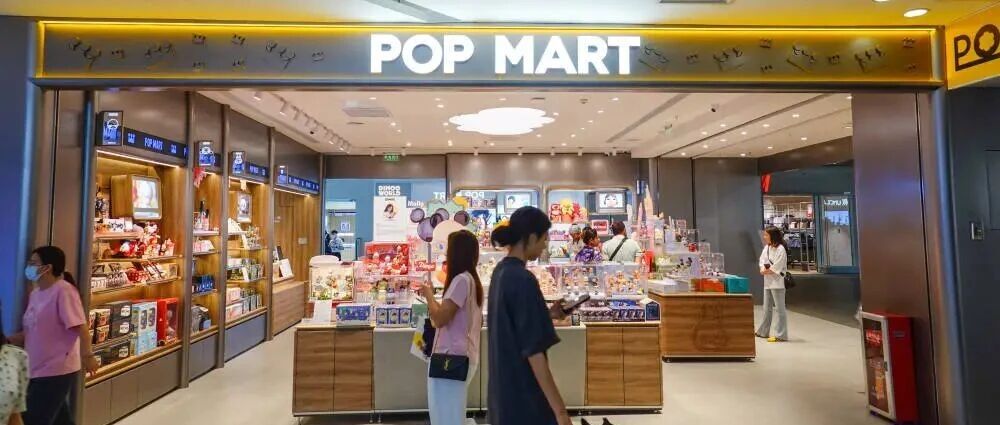
Core Viewpoint - The article discusses the significant decline in Pop Mart's stock price following its 2025 annual financial report, which showed a revenue growth of 185% to 37.12 billion RMB, slightly below market expectations. This has led to a loss of investor confidence and a sharp drop in stock value, indicating a shift in market sentiment towards new consumption sectors [1][4][10]. Financial Performance - Pop Mart's revenue for 2025 reached 37.12 billion RMB, with a year-on-year growth of 185%, but fell short of the anticipated 38 billion RMB [1][4]. - The company's stock price plummeted by 22.51% on the day of the report, marking the largest intraday drop since April 2025, and has since seen a total decline of over 55% from its peak [1][8][10]. Market Dynamics - The article highlights a shift in investor preference towards "safe premium" assets, particularly in hard technology and core manufacturing sectors, as geopolitical tensions rise, leading to a decline in interest in new consumption stocks like Pop Mart [2][12]. - The overseas market growth for Pop Mart has significantly slowed, with revenue from the Americas dropping from a 1265% growth rate in Q3 to 633% in Q4, indicating a cooling of international expansion [4][5]. Dependency Risks - Pop Mart's reliance on a single IP, LABUBU, which contributed 38.1% of its revenue, raises concerns about its IP incubation capabilities and potential risks associated with over-dependence on a few successful products [5][6]. - The company is attempting to diversify its offerings by launching new products, including small appliances and jewelry, to create a "second growth curve" [6][12]. Institutional Investor Behavior - Institutional investors have been withdrawing from Pop Mart, with public funds reducing their holdings from approximately 516.99 million shares in Q3 2025 to 415.35 million shares by Q4 2025, reflecting a significant decrease in total market value [10][11]. - Despite the sell-off, some fund managers remain optimistic about Pop Mart's future growth potential, suggesting that the company is still in its early development phase and could reach 100 billion RMB in revenue [7][10]. Future Outlook - Analysts predict that 2026 may be a year of structural growth for new consumption companies, with a focus on identifying individual stocks with clear profit models and appropriate valuations, as the market becomes more discerning [12][14]. - The article suggests that while the new consumption sector may face challenges, there are still opportunities for companies with strong market positions and pricing power [12][14].
刘煜辉最新发声:美伊进入类似“胆小鬼博弈”场景,中国资产是全球最确定的安全资产
对冲研投· 2026-03-24 03:35
Group 1 - The core argument of the article emphasizes that "safety" has become the most critical variable in global capital markets, replacing "efficiency" as the most scarce asset, with "safety premium" expected to be the most significant factor in asset pricing in the future [1][7][11] - The ongoing conflict has highlighted the systemic collapse of the old U.S.-centric order based on oil dollars, while China has strategically prioritized safety in its development plans, indicating a shift towards a new order [2][10][49] - China's strategic resource allocation towards safety has resulted in a robust supply chain advantage, positioning it favorably in the global market amidst the turmoil [3][5][56] Group 2 - The article outlines three potential scenarios regarding the U.S.-Iran conflict, with the first being a quick resolution leading to a return to normal oil prices, the second involving a prolonged conflict that disrupts oil supply, and the third being a "chicken game" where neither side backs down [14][27][30] - The potential for a significant supply shock exists if the Strait of Hormuz is blocked, which could lead to a drastic revaluation of oil prices, as the current overcapacity of 250 million tons could turn into a severe shortage [21][22][47] - The article warns that if the conflict continues for another ten days, a physical disruption in oil production could occur, leading to a critical supply gap in the market [43][48] Group 3 - The article discusses the implications of rising oil prices on the AI and semiconductor supply chains, highlighting the vulnerability of these sectors due to their reliance on energy from the Gulf region [30][32][38] - A significant disruption in the semiconductor supply chain could lead to a reevaluation of the market capitalizations of major U.S. tech companies, potentially triggering liquidity crises within the financial system [39][63] - The current high inflation and interest rates in the U.S. could exacerbate the situation, leading to a classic stagflation scenario if supply chain disruptions occur [62][71][75] Group 4 - The article posits that Chinese assets are becoming the most reliable safe assets globally, as the U.S. dollar system faces significant challenges due to the ongoing conflict and its implications for global credit [76][78][89] - The shift towards prioritizing safety over efficiency in global economic dynamics is seen as a fundamental change, with China positioned to benefit from this new paradigm [78][88] - The article concludes that the competition between major powers will ultimately favor China, as its supply chain advantages will reshape global asset pricing and order [87][89]
刘煜辉最新发声给中国资产吃“定心丸”:安全溢价可能是全球大类资产最重要的定价因子……
聪明投资者· 2026-03-22 23:48
Core Viewpoint - The global capital market's underlying logic has fundamentally reversed, with "security" replacing "efficiency" as the most scarce asset, and "security premium" becoming the largest asset pricing weight in the future [2][5]. Group 1: Current Global Situation - The focus of the current situation is the ongoing war, which is causing significant volatility in capital markets as they price in the conflict [3][8]. - The existing U.S. hegemony, centered around the petrodollar, is facing systemic collapse due to ongoing conflicts, while China has strategically prioritized security in its development plans [3][4]. - The conflict has highlighted the importance of security as a core variable in global markets, with security premium emerging as a crucial pricing factor for various asset classes [5][7]. Group 2: Implications for the Oil Market - If the conflict continues, particularly with the potential for the Strait of Hormuz to be blocked, it could lead to a significant supply shock, reversing the current oil surplus into a substantial deficit [16][38]. - The current oil market has a surplus capacity of 250 million tons annually, but a blockade could result in a supply reduction of around 1 billion tons, necessitating a market revaluation [12][16]. - The pricing of oil is already reflecting these risks, with Brent and WTI crude futures around $100, while spot prices in Dubai and Oman exceed $150 [16][17]. Group 3: U.S. Economic Challenges - The U.S. faces a significant challenge as its asset pool, heavily reliant on AI and technology, is at risk of physical disruption due to geopolitical tensions [4][49]. - A supply chain disruption could lead to a liquidity crisis, particularly affecting tech giants that depend on shadow banking and leveraged loans [31][49]. - If the U.S. economy enters a state of stagflation, it could exacerbate the risks associated with the dollar and U.S. Treasury securities, leading to a potential credit crisis [59][60]. Group 4: China's Strategic Position - China has positioned itself advantageously with a robust supply chain that is less affected by the ongoing conflict, allowing it to maintain a strong strategic position [44][45]. - The strength of China's supply chain enables it to exert significant pricing power in global markets, contributing to the appreciation of the renminbi [45][46]. - The current geopolitical landscape suggests that China is likely to emerge as a dominant player, leveraging its supply chain capabilities to reshape global asset pricing and order [69][70].
异动盘点0320 | 油气股今早下挫,部分黄金股回暖;石油股普涨,金银股盘中大跌后反弹
贝塔投资智库· 2026-03-20 04:01
Group 1 - Pearl Holdings (01176) experienced a significant drop of over 33% during trading, currently down 25.64%, due to the inability of independent valuers and auditors to complete their valuation and audit work for the fiscal year 2025, affecting various financial aspects including investment properties and receivables [1] - Some gold stocks showed recovery, with Zijin Mining International (02259) up 6.89%, Lingbao Gold (03330) up 7.31%, and China Gold International (02099) up 2.59%, as the precious metals market rebounded after a sharp decline, with spot gold rising above $4,700 [1] - Paig BioPharma-B (02565) rose over 6% following the announcement of a strategic cooperation agreement with Shanghai Tengrui Pharmaceutical for the commercialization of its core product in mainland China [1] Group 2 - Crystal International (02232) saw a post-earnings decline of over 4%, currently down 2.03%, despite reporting revenues of $2.641 billion for the year ending December 31, 2025, a 6.95% increase year-on-year, and a profit attributable to shareholders of $225 million, up 12.05% [2] - Oil and gas stocks fell sharply, with Shandong Molong (00568) down 4.49% and Sinopec Oilfield Service (01033) down 4.81%, as international oil prices dropped sharply, with Brent crude down 3% to $100 [2] Group 3 - China Duty Free Group (01880) rose over 2% after announcing an agreement to acquire the entire issued share capital of DFS Cotai Limitada and related business assets from DFS Group, which is ultimately owned by LVMH [3] - Weisheng Holdings (03393) increased over 5% following a visit from the Hungarian ambassador, discussing cooperation opportunities in the energy digitalization sector [3] Group 4 - Bolecon Vision Cloud-B (02592) fell over 6%, hitting a new low since its listing, after announcing plans for clinical trials of its eye drop product for treating myopia, with the application for clinical trials submitted in December 2025 [4] - Jiaxin International Resources (03858) surged over 12%, currently up 10.65%, as tungsten concentrate prices rose significantly, reflecting a 124% increase since the beginning of the year [4] Group 5 - Aerospace Holdings (00031) dropped over 14% after issuing a profit warning, expecting a net loss of approximately HKD 270 million to 290 million for the year ending December 31, 2025, compared to a loss of HKD 83.85 million in 2024 [5] Group 6 - U.S. oil stocks saw a general increase, with Occidental Petroleum (OXY.US) up 2.06% and Chevron (CVX.US) up 1.42%, as analysts predict Brent crude prices could reach an average of $130 per barrel in Q2 and Q3 if energy infrastructure is attacked [6] - Tesla (TSLA.US) fell 3.18% following an investigation by the NHTSA into its "Full Self-Driving" system due to multiple accidents [6] Group 7 - Gold and silver stocks initially experienced a sharp decline but later rebounded, with Gold Fields (GFI.US) and AngloGold Ashanti (AU.US) seeing reduced losses after significant drops in spot gold and silver prices [7] - Alibaba (BABA.US) fell over 7% after reporting Q3 revenue of RMB 28.4843 billion, a 2% year-on-year increase, but a 67% decline in adjusted net profit [7]

一个挺劲爆的小作文
表舅是养基大户· 2026-03-18 13:34
Group 1 - The article discusses the recent surge in oil prices and the drop in gold prices due to renewed conflicts in the Middle East, indicating ongoing market volatility [1] - It emphasizes the importance of a long-term perspective in investment strategies, particularly in light of current geopolitical tensions [2] - A notable piece of information circulating in the bond market is that the Brazilian central bank is purchasing Chinese 5-year government bonds, which serves as a starting point for discussing various perspectives on the bond market [3] Group 2 - A key data point mentioned is that the proportion of enterprises using currency hedging tools and the use of RMB in cross-border trade payments has reached 30%, collectively exceeding 60% [5] - The proportion of RMB settlement in China's foreign trade has doubled over the past five years, increasing from 15% to 30% [5] - The article provides a table showing the RMB settlement proportion in goods trade from 2020 to 2026, indicating a steady increase [6] Group 3 - Brazil is highlighted as a significant case study due to its status as China's largest trading partner since 2009, with bilateral trade nearing $160 billion in 2024 [9] - In 2023, Brazil's exports to China surpassed $100 billion, showcasing the complementary nature of the trade relationship [11] - The article notes that if the RMB proportion in trade continues at an average of 30%, it represents a substantial amount of money that Brazil will need to invest or spend [11] Group 4 - The article mentions BYD's expansion in Brazil, which has garnered attention from the U.S., indicating the significance of this development in the context of international trade and competition [12][15] - Brazil's strategy of reducing U.S. Treasury holdings over the years is discussed, with a total reduction exceeding $70 billion over five years, aligning with the increasing trade volume with China [18] Group 5 - The article raises the question of how foreign entities will invest the RMB they acquire through trade, suggesting that there is a growing need for RMB-denominated assets [19] - It outlines several measures taken by the Chinese central bank to facilitate the use of RMB, including issuing offshore RMB bonds and enhancing the RMB yield curve in Hong Kong [20][21][22] Group 6 - The article discusses the concept of security premiums in investment, suggesting that regions with geopolitical stability and strong military presence should be given more weight in investment decisions [27] - It highlights the recent volatility in Dubai's real estate market, which dropped nearly 40% amid regional conflicts, questioning the resilience of financial centers in times of crisis [28] Group 7 - The article notes that the RMB central parity rate has reached a new high, reflecting the currency's strength amid external uncertainties [35][36] - It suggests that the current global financial landscape is undergoing a rebalancing, where the weight of various currencies and markets is being adjusted to better reflect their economic capabilities [41][42] Group 8 - The article concludes with observations on the A-share market, noting a significant rebound in the technology sector and the cautious trading behavior observed in the market [45][52] - It mentions Tencent's quarterly report meeting expectations, while also highlighting the challenges faced by Tencent Music amid increasing competition [56][57]



关于今天的政府工作报告,聊聊投资相关的十大趋势
表舅是养基大户· 2026-03-05 13:33
Group 1 - The core viewpoint of the article emphasizes the transformation of institutional advantages into strong development momentum in China, as highlighted in the government work report [2][3]. - The report outlines ten long-term trends that are crucial for understanding the future economic landscape [3]. Group 2 - Trend 1: Security is the premise of development, with military capabilities closely linked to manufacturing and AI. The report notes that China's manufacturing value added has maintained the global first position for 16 consecutive years [6][8][10]. - Trend 2: Food and energy security are essential for resilience, with non-fossil energy consumption reaching 21.7% and a focus on energy transition and diversification of energy import networks [14][15][18]. - Trend 3: The average life expectancy in China has increased to 79.25 years, indicating a need to address the challenges of an aging population and the opportunities in the "silver economy" [19][20]. - Trend 4: "Investing in people" is becoming a key fiscal paradigm, with increased funding for consumer demand and child-rearing subsidies [21][22]. - Trend 5: Technological self-reliance will be a long-term strategy, with a focus on upgrading industries and addressing core technology challenges [28][31]. - Trend 6: The integration of industry, research, and finance is crucial for new productive forces, with an emphasis on supporting technology-driven enterprises [33][37]. - Trend 7: The engineer dividend is a significant competitive advantage, with an increase in the average education level of the labor force to 11.3 years [38][41][43]. - Trend 8: New consumption scenarios will be created, with a focus on service consumption opportunities [45]. - Trend 9: The trend of "anti-involution" will penetrate corporate culture, encouraging companies to adopt supportive environments for employees [48][50]. - The report also mentions ongoing adjustments in the real estate market and the importance of quality housing for personal investment and living standards [52][53].


美伊冲突下的海运:供应链“乱纪元”,运价创新高
Changjiang Securities· 2026-03-04 01:30
Investment Rating - The industry investment rating is "Positive" and maintained [10] Core Insights - The escalation of the US-Iran geopolitical conflict has led to a surge in oil tanker rates, with VLCC rates reaching a historical high of $420,000 per day as of March 2, 2026. The market has shifted from prioritizing efficiency to prioritizing safety and certainty in pricing [2][4][8] - The oil supply chain has entered a "chaotic era," with a focus on the safety premium for Chinese shipowners, recommending companies like China Merchants Energy Shipping and COSCO Shipping Energy Transportation [2][8] - The conflict has disrupted global shipping and industrial chain efficiency, leading to increased shipping demand for product tankers, chemical tankers, and container shipping opportunities [2][8] Summary by Sections Geopolitical Impact - The US-Iran conflict and the blockade of the Strait of Hormuz have significantly impacted oil tanker rates, with VLCC rates driven by a tight supply-demand balance and geopolitical shocks. The demand for compliant oil transportation has increased due to sanctions on non-compliant oil-exporting countries [4][5] - As of March 1, 2026, oil tanker traffic through the Strait of Hormuz has dropped to zero, with limited alternative land pipeline capacity to compensate for the loss [5] Market Dynamics - The energy supply chain disruption has led to increased shipping demand for refined oil and LNG, with significant price increases observed in European natural gas markets [6] - The Middle East's energy chain damage is expected to boost demand for product tankers and chemical tankers, with a potential spillover effect on the oil tanker market [6][8] Container Shipping - The geopolitical tensions have raised risk premiums in container shipping, with major shipping companies suspending bookings in the Middle East and imposing war surcharges [7][8] Investment Recommendations - The report suggests a shift in the shipping industry's underlying logic from efficiency to safety, recommending continued investment in Chinese shipowners and focusing on product tankers, chemical tankers, and container shipping opportunities [8]

美伊冲突下的海运:供应链乱纪元,运价创新高
Changjiang Securities· 2026-03-04 00:43
Investment Rating - The industry investment rating is "Positive" and maintained [11] Core Insights - The escalation of the US-Iran geopolitical conflict has led to a surge in oil tanker rates, with VLCC rates reaching a historical high of $420,000 per day as of March 2, 2026. The market has shifted from prioritizing efficiency to prioritizing safety and certainty in pricing [2][5][9] - The oil supply chain has entered a "chaotic era," with a focus on the safety premium for Chinese shipowners, recommending companies like China Merchants Energy Shipping and COSCO Shipping Energy Transportation [2][9] - The conflict has disrupted global shipping and industrial chain efficiency, leading to increased shipping demand for product tankers, chemical tankers, and container shipping opportunities [2][9] Summary by Sections Geopolitical Impact - The US-Iran conflict and the blockade of the Strait of Hormuz have significantly impacted oil tanker operations, with the oil passage volume through the Strait expected to be 14.3 million tons per day in 2024, accounting for nearly 40% of global oil shipping volume [5][6] Market Dynamics - The demand for compliant oil transportation has increased due to US sanctions on non-compliant oil-exporting countries, while supply has been tightened by major purchases of VLCC capacity by Long Jin Shipping [5][6] - The blockade has led to a zero passage rate for oil tankers through the Strait as of March 1, 2026, with limited alternatives available through land pipelines [6] Investment Opportunities - The disruption in the energy chain has created opportunities in product oil, LNG shipping, and chemical tankers, with companies like COSCO Shipping Energy and China Merchants Energy Shipping positioned to benefit from these trends [7][9] - The container shipping sector is also expected to see price increases due to heightened risk premiums in the Middle East, with companies like MSC and CMA CGM adjusting their pricing strategies [8][9]
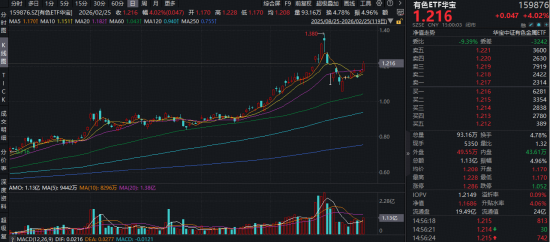
超245亿主力资金狂涌!有色ETF(159876)猛拉4%!“工业牙齿”钨一年暴涨220%,机构:后市还可能接着涨!
Xin Lang Cai Jing· 2026-02-25 11:26
Core Viewpoint - The non-ferrous metal sector has seen a significant inflow of over 24.5 billion in main funds, leading the market in capital absorption, with Northern Rare Earth topping the A-share capital absorption list [1][8]. Group 1: Macro Perspective - The U.S. government is utilizing the Pentagon's AI project to establish "reference prices" for critical minerals and build a global metal trading group, indicating a shift in the global metal market from "cost efficiency first" to "safety premium first" [3][10]. - According to Galaxy Securities, the prices of key mineral resources such as copper, tungsten, and rare earths are expected to rise due to the "safety premium" [3][10]. Group 2: Industry Perspective - Spot gold has approached 5,200 USD per ounce, while tungsten, known as the "industrial tooth," has experienced a strong upward trend since last year, with prices increasing over 220% throughout the year [3][10]. - Five Mining Securities believes that China's dominant position in the tungsten industry chain will remain unchallenged for the next 5-10 years [3][10]. - According to CICC, the global tungsten supply-demand gap is expected to continue to widen from 2026 to 2028, supporting a sustained increase in tungsten price levels [3][10]. Group 3: Performance Perspective - The non-ferrous ETF (159876) has seen over half of its constituent stocks disclose performance forecasts, with more than 80% of stocks expecting earnings growth and over 30% anticipating a doubling of earnings [3][10]. - Bank of China Securities suggests that as the market enters the second phase of a bull market—driven by profit growth—there will be opportunities for revaluation in the non-ferrous metal sector, supported by financial attributes and industry trends [3][10]. - The non-ferrous ETF covers a wide range of metals, including copper, aluminum, gold, rare earths, and lithium, allowing for effective exposure to the sector's beta trends [3][10].