盘古

Search documents
AI让气象预报更准确,期待人工智能更好地落地生根
Ren Min Ri Bao· 2026-01-27 01:36
Core Insights - Artificial intelligence (AI) is rapidly transforming various sectors, including agriculture, healthcare, and logistics, by enhancing productivity and service delivery [1] - The "Fenghe" system represents a significant advancement in AI-driven meteorological services in China, showcasing the integration of complex knowledge systems with diverse user needs [1] - The future of AI in industries hinges on the effective connection between technology and demand, aiming to elevate AI from being merely usable to truly transformative [1] Group 1: AI in Meteorology - The application of AI in meteorology is expanding, with new models emerging to enhance the industry's capabilities [2] - Prior to "Fenghe," the China Meteorological Administration launched several AI models, including "Fenglei" for severe weather prediction and "Fengqing" for global forecasting [2] - The introduction of AI technology, combined with traditional forecasting methods and expert experience, is improving the accuracy of weather predictions [2] Group 2: Advancements in Meteorological Services - AI models are being developed for extreme precipitation forecasting, severe weather warnings, and data assimilation, contributing to the digital and intelligent transformation of meteorological services [3] - These advancements are providing essential support for better meteorological services, enhancing their role in daily life and production [3]
2025年中国车载语音行业概览:AI+车载语音重塑人车交互新体验(精华版)
Tou Bao Yan Jiu Yuan· 2025-12-29 12:02
Investment Rating - The report indicates a positive outlook for the in-vehicle voice industry in China, with a projected compound annual growth rate (CAGR) of 26.9% from 2025 to 2030, suggesting strong investment potential [5][28]. Core Insights - The Chinese in-vehicle voice industry is currently undergoing a significant transformation driven by AI large models, with major companies like iFlytek, Baidu, and Huawei leading the development of lightweight models for automotive applications [2]. - The penetration rate of voice control in passenger vehicles is steadily increasing, expected to rise from 73.4% in 2022 to 83.6% in 2024, indicating a shift from high-end to standard configurations across all price segments [3][24]. - The competitive landscape of the in-vehicle voice industry is highly concentrated, with the top five companies holding a market share of 86.7%, highlighting the dominance of key players [5]. Summary by Sections Industry Overview - The in-vehicle voice system integrates voice as the primary interaction method, allowing drivers and passengers to control vehicle functions and access information without manual operation, enhancing driving safety and cabin intelligence [7]. Current Trends - The in-vehicle voice systems are evolving from basic command execution to cognitive interaction, with a focus on personalized and emotional services [2][11]. - The hybrid voice system has become the mainstream solution, balancing the advantages of embedded and cloud-based systems, thus improving response speed and recognition accuracy [8]. Market Dynamics - The market size for in-vehicle voice systems in China is projected to grow from CNY 3.946 billion in 2025 to CNY 12.994 billion in 2030, driven by the ongoing electrification and intelligence of vehicles [28]. - The rapid growth of the passenger vehicle market, alongside increasing consumer demand for intelligent interaction experiences, is propelling the expansion of voice control systems [31][32]. Competitive Landscape - Major suppliers are actively developing AI large models, with different focuses: smart voice technology companies are optimizing model functions, internet tech firms are integrating voice with content services, and automakers are creating proprietary models linked to vehicle control systems [4][26]. Consumer Preferences - There is a notable increase in consumer preference for voice interaction features, which significantly influences purchasing decisions, prompting manufacturers to standardize and upgrade voice systems [35][40]. - The demand for seamless, intelligent, and personalized interaction experiences is driving the evolution of in-vehicle voice systems, with a focus on enhancing dialogue naturalness and functionality [41].
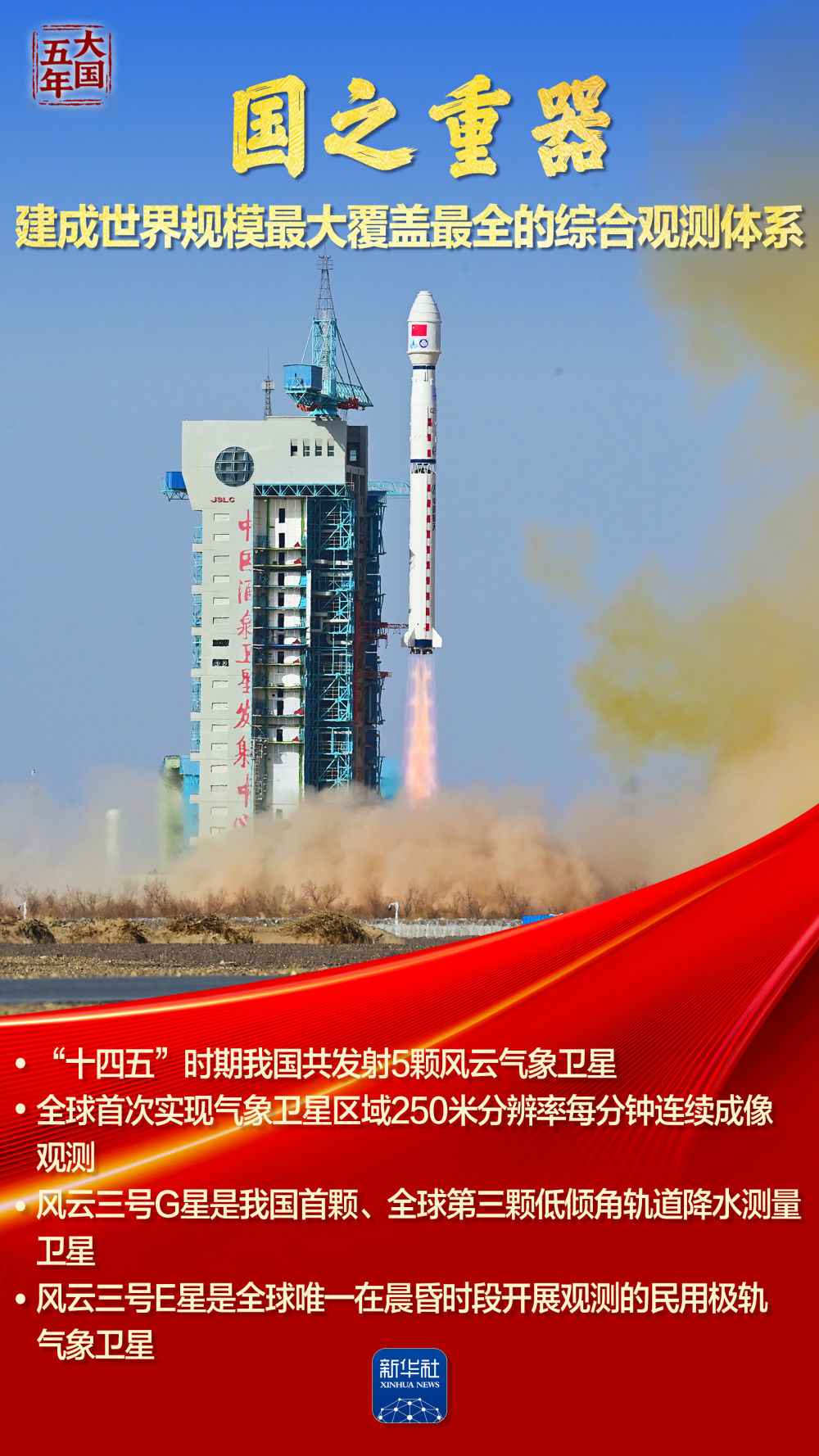
大国五年丨观云识天,护航国计民生
Xin Hua She· 2025-12-05 09:20
Core Insights - Meteorological services have become a crucial support for meeting public expectations and promoting economic and social development during the 14th Five-Year Plan period [1] Group 1: Technological Advancements - The global first achievement of meteorological satellite with a regional resolution of 250 meters for continuous imaging every minute [3] - Fengyun-3G satellite is China's first and the world's third low-inclination orbit precipitation measurement satellite [3] - Fengyun-3E satellite is the only civil polar meteorological satellite conducting observations during dawn and dusk [3] - High-level self-reliance and strength achieved through meteorological detection equipment and technologies such as Fengyun satellites, Beidou sounding, and weather radars [7] Group 2: Forecasting Accuracy - The monitoring rate for hazardous weather has increased to 83% [10] - The lead time for severe convective weather warnings has been advanced by 13% [10] - Regional heavy rain, high temperature, and cold wave events can be forecasted 3 to 7 days in advance [10] - National significant weather events can be predicted 15 days ahead, and global climate anomalies can be forecasted 6 months in advance [10] - Climate annual outlook products can be released 1 year in advance [10] Group 3: Service Expansion - The life meteorological service index has increased to over 70 types, covering various aspects of daily life [21] - Refined meteorological services encompass clothing, food, housing, transportation, tourism, shopping, and entertainment, covering over 50,000 scenic spots nationwide [21] - Health meteorological warning products for high temperatures and pollen allergies are popular among the public [21] - Meteorological information is integrated into major media, mainstream information, and life service platforms [21] Group 4: Economic Impact - Economic losses due to meteorological disasters have decreased by an average of 0.12 percentage points of GDP during the 14th Five-Year Plan period [14] - Artificial rainfall and snow operations have cumulatively increased precipitation by approximately 1,677 million tons [14] - Early warnings for winter wheat dry hot wind have contributed to an increase in grain production by 8.3 billion jin [15] - The optimization of the "One Road Three Parties" warning linkage mechanism has led to a 51% reduction in traffic accidents on improved road sections [15] Group 5: Data Sharing and Collaboration - A seamless and comprehensive intelligent digital meteorological forecasting business system has been established, with spatial resolution refined to 5 kilometers globally and 1 kilometer nationally [12] - 17 industries have achieved the integration and rapid release of 82 types of warning information, with alerts delivered to emergency responders within 1 minute [18] - Over 12 categories and 100 types of meteorological data products have been shared with society, serving 153 countries and regions, and nearly 1.3 million users across 21 industries in China [25]

AI洞悉“天机” 风云不再“莫测”
Ke Ji Ri Bao· 2025-10-23 23:48
Core Viewpoint - The rapid development of artificial intelligence (AI) technology is enhancing the accuracy and efficiency of weather and climate predictions, with AI models expected to match or exceed traditional physical models in both temporal and spatial resolution [1]. Group 1: AI Weather Models - AI weather models, such as Pangu, Fengwu, and Fuxi, are increasingly being utilized in typhoon prediction and short-term climate forecasting, showcasing their potential to improve prediction accuracy and efficiency [2]. - The advantages of AI weather models include faster computation times, higher accuracy in forecasts (e.g., typhoon path predictions), and built-in optimization modules for various predictive studies [2][3]. - AI models have successfully predicted the El Niño-Southern Oscillation (ENSO) phenomenon for over 18 months, significantly surpassing traditional models [2]. Group 2: Integration of AI and Traditional Methods - Current AI weather models face challenges, such as unclear physical mechanisms behind predictions and insufficient temporal resolution, with some models refreshing data only every six hours compared to traditional models that do so in minutes [4]. - The integration of high-performance computing (HPC) with AI is proposed as a solution to enhance prediction accuracy and overcome computational limitations [4][5]. - Future developments in weather forecasting are expected to rely on a combination of HPC and AI, requiring advanced supercomputing systems capable of handling massive computational demands [5].
中国算力进入拐点
Di Yi Cai Jing Zi Xun· 2025-09-29 02:21
Group 1: Industry Trends - Nvidia's CEO Jensen Huang predicts a tenfold increase in AI inference, leading to a $5 trillion annual market for AI infrastructure capital expenditures [2] - The collaboration between Nvidia and OpenAI aims to build AI data centers with a capacity of up to 10GW, equivalent to deploying 4-5 million GPUs, setting a high barrier for competitors [3] - The competition in the global computing power market is entering a critical phase, with increasing demand driving companies to form alliances with Nvidia, such as Oracle and Intel [2][3] Group 2: Competitive Landscape - Huawei has announced a comprehensive open-source strategy, planning to invest 150 billion RMB annually for ecosystem development and support over the next five years [5] - Huawei's decision to open-source its software is aimed at fostering a broader ecosystem and gaining long-term trust from internet companies, while focusing on monetizing its Ascend hardware [5][6] - The Chinese computing power industry is transitioning from hardware breakthroughs to ecosystem construction, with significant advancements in key metrics like computing density and energy efficiency [6][7] Group 3: Ecosystem Development - The competition in the computing power ecosystem involves not just hardware but also developer ecosystems, application ecosystems, and standard systems [6] - Nvidia's CUDA platform has created a significant lock-in effect for AI applications, making it challenging for competitors to overcome this ecosystem advantage [7] - Huawei is actively collaborating with open-source communities and projects to build its ecosystem, contributing to over 60 open-source projects and 370,000 lines of code [7][8]


奇安信(688561):U(688561)2025年半年报点评:提质增效效果显著,“AI+”持续赋能
Huachuang Securities· 2025-09-01 05:28
Investment Rating - The report maintains a "Strong Buy" rating for the company, with a target price of 47.12 CNY [2][8]. Core Views - The company reported a revenue of 1.742 billion CNY for the first half of 2025, a year-on-year decline of 2.30%. The net profit attributable to shareholders was a loss of 770 million CNY, an improvement from a loss of 820 million CNY in the same period last year [2][8]. - The company has shown significant improvements in efficiency, with a reduction in total expenses (R&D, sales, and management) by 14.37% year-on-year, amounting to 1.530 billion CNY [2][8]. - The company is actively integrating AI into its products, achieving notable results with various AI-enabled offerings [2][8]. - The company has accelerated its international expansion, securing significant contracts in overseas markets, including a project with a state-owned bank and a rail transit system [2][8]. Financial Summary - For 2025, the company is projected to achieve revenues of 4.612 billion CNY, with a growth rate of 6.0% [4][9]. - The net profit is expected to narrow to a loss of 320 million CNY in 2025, with further improvements anticipated in subsequent years, potentially turning profitable by 2027 [4][9]. - The company's total assets are projected to increase from 14.867 billion CNY in 2024 to 15.727 billion CNY by 2027 [9][4]. - The company’s debt-to-equity ratio is expected to rise from 31.5% in 2024 to 42.7% in 2027, indicating a potential increase in leverage [9][4].

一个不怕任何事的顶级思维
洞见· 2025-06-25 10:17
Core Insights - The article emphasizes that all experiences, including hardships and challenges, contribute to personal growth and development [46]. Group 1: Personal Growth Through Adversity - The narrative illustrates that difficulties can serve as stepping stones to success, as seen in the life of Panasonic's founder, who turned his health and educational challenges into motivation for continuous learning and resilience [5][6]. - The story of Lei Jun highlights that setbacks, such as the failure of the software "Pangu," were crucial for his later success, teaching him the importance of understanding customer needs [25][24]. - The article suggests that every hardship faced can lead to greater wisdom and strength, reinforcing the idea that adversity is a natural part of life [30][28]. Group 2: Lessons from Betrayal and Trust - The experiences of individuals like Jia Zhangke illustrate that being deceived can lead to a deeper understanding of human nature and the importance of caution in relationships [35][40]. - The narrative emphasizes that learning from betrayal can enhance one's ability to navigate future interactions, making individuals more discerning and wise [41][42]. - The article posits that encountering deceit is essential for recognizing the complexities of human relationships and the realities of life [44][43]. Group 3: Embracing Solitude - The article discusses the value of solitude, as exemplified by Lin Fengmian, who found creative inspiration during his isolated periods [64][66]. - It argues that enduring loneliness can lead to personal growth and artistic development, suggesting that solitude is a time for self-reflection and enhancement [66][67]. - The piece concludes that rather than fearing solitude, individuals should embrace it as an opportunity for personal enrichment and deeper understanding of themselves [66][68].


下一个十年,AI的大方向
Hu Xiu· 2025-06-12 01:16
Core Insights - The article reflects on the evolution of artificial intelligence (AI) over the past decade, highlighting the rise and decline of major players in the industry, particularly the "AI Four Dragons" [3][4] - It suggests that the next decade (2025-2035) may shift focus from visual recognition to visual generation technologies [4][5] - The article discusses the emergence of various AI models in China, including those from major companies like Baidu, Alibaba, and Tencent, indicating a competitive landscape [4][6] Industry Developments - The AI landscape has seen significant advancements in large models, with a variety of applications emerging, such as text generation, audio generation, image generation, and video generation [4][5][6] - The article notes that these advancements are being monetized, with many companies starting to charge for their services, except for code generation in China [6] Historical Milestones - Key milestones in AI development include the introduction of the Transformer model in 2017, which revolutionized the field by consolidating various specialized models into a more unified approach [7] - The launch of ChatGPT in 2023 marked a significant turning point, prompting major companies like Google to accelerate their AI initiatives [8] - The article also references the release of OpenAI's Sora visual model in 2024, which highlighted the industry's challenges and led to renewed focus on text and context generation [8] Philosophical Considerations - The article raises questions about the future direction of AI, debating whether the next decade will be dominated by Artificial General Intelligence (AGI) or AI-Generated Content (AIGC) [11] - It draws parallels with the skepticism surrounding reusable rocket technology, suggesting that innovation often faces initial resistance before its value is recognized [13][14][15]
深圳龙岗“All in AI”战略背后的三重逻辑
2 1 Shi Ji Jing Ji Bao Dao· 2025-05-22 06:16
Core Insights - The establishment of the first government-affiliated agency focused on artificial intelligence and robotics in Longgang District is seen as a significant breakthrough in institutional innovation [1][2] - The agency aims to serve as a core leader in industry development, an integrator of innovation resources, and a comprehensive service provider for enterprises [1][3] Group 1: Strategic Initiatives - Longgang District has launched the "All in AI" strategy, which includes a series of policies for AI and robotics development, technological innovation, and talent development [1][2] - The agency will coordinate planning, ecological construction, enterprise services, and scene promotion for the AI and robotics industry [1][3] Group 2: Historical Context and Future Vision - The current AI revolution is compared to the electrification of the 19th century and the information revolution of the 1990s, indicating its foundational impact across various industries [3] - Longgang aims to achieve deep application of global AI technology in over 80% of key industries by 2027, with a target to exceed 100 billion yuan in industry scale [9] Group 3: Infrastructure and Resource Allocation - The agency will facilitate the coordination of resources such as data, computing power, models, and financial support to enhance the industrial ecosystem [5][6] - Longgang has established a computing power platform with a current capacity of 2000P, aiming to build a resource pool of 10,000P by the end of the year [6] Group 4: Economic Impact and Growth Projections - The AI industry cluster in Longgang is projected to reach an added value of 4.052 billion yuan in 2024, with a growth rate of 6.5% [8] - The establishment of the agency is expected to accelerate the dual drive of AI industrialization and the industrialization of AI, creating a closed loop of technological innovation and industrial upgrading [8]
迎接充满未知的全新文明——读《第三种存在:从通用智能到超级智能》
Shang Hai Zheng Quan Bao· 2025-05-05 18:18
Group 1 - The emergence of superintelligence is predicted to occur by 2026, which could represent a pivotal moment in human history, potentially leading to a choice between submission to or rebellion against this new intelligence [2][3] - The author, Zhu Jiaming, posits that artificial intelligence is creating a "third existence" that fundamentally alters human civilization, distinct from physical and spiritual existence [2][3] - The development of AI is marked by three waves: machine learning, deep learning, and the current trend of generative AI models, which have significantly advanced AI capabilities [4][5][6] Group 2 - The introduction of AI into economic activities challenges traditional economic theories, particularly the assumption of "rational agents" and the concept of resource scarcity [8][9] - AI's efficiency surpasses human labor, leading to a potential redefinition of economic principles such as division of labor and employment goals [9][10] - The integration of AI into various sectors is expected to create new academic disciplines, such as AI economics and AI sociology, to explore the interactions between AI and societal structures [10] Group 3 - Concerns about AI's potential to surpass human control have sparked discussions about the need for humanity to undergo a transformation towards a new human identity [11][12] - The concept of transhumanism suggests that humans can transcend their natural limitations through technology, with advancements in bioengineering supporting this vision [12] - The relationship between human intelligence and AI is seen as one of mutual understanding, with AI playing a crucial role in future wealth creation [12]