高炉

Search documents
高频经济周报(2026.03.08-2026.03.14):生产延续季节性回暖,人员流动有所回落-20260315
Shenwan Hongyuan Securities· 2026-03-15 05:59
Report Investment Rating - No information about the industry investment rating is provided in the report. Core Viewpoints - The industrial production is showing signs of recovery, with some indicators rising and others falling. The flow of people has declined, while freight prices have increased slightly. The movie market has weakened, and prices continue to decline. Construction shows seasonal improvement, and the real estate market has rebounded. Container throughput has increased slightly, and shipping indices have recovered. The performance of major asset classes is mixed [2]. Summary by Directory 1. Major Asset Classes - This week, bond indices, stock indices, and commodities showed mixed performance, and foreign currencies, except for the US dollar, generally declined. Among bond indices, the AA+, AA, and AA- corporate bond indices of ChinaBond rose the most, with a gain of 0.04%, while the 10-year ChinaBond Treasury bond index fell the most, with a decline of 0.15%. Among stock indices, the ChiNext index rose the most, with a weekly gain of 2.51%, and the Sci-Tech Innovation 50 index fell the most, with a decline of 2.88%. Among commodities, the Nanhua Energy and Chemicals Index rose the most, with a gain of 9.76%, and the Nanhua Precious Metals Index fell the most, with a decline of 1.52%. Foreign currencies depreciated against the RMB, with the Japanese yen having the largest decline of 1.17%, and the US dollar appreciated against the RMB, with a weekly gain of 0.07% [2][6]. 2. Industrial Production - Production has recovered. In the upstream, the operating rate of petroleum asphalt plants decreased by 0.30 pcts week-on-week to 23.00%, the blast furnace operating rate increased by 0.67 pcts week-on-week to 78.36%, and the crude steel output decreased by 0.10% week-on-week. In the real estate chain, the rebar operating rate increased by 2.62 pcts week-on-week to 38.38%, the float glass operating rate decreased by 0.10 pcts to 71.42%, and the mill operation rate decreased by 1.94 pcts week-on-week to 14.62%. In the consumer goods chain, the polyester filament operating rate increased by 4.3 pcts week-on-week to 88.79%, the PTA operating rate increased by 0.64 pcts week-on-week to 80.33%, and the methanol operating rate decreased by 1.22 pcts week-on-week to 85.61%. In the automotive chain, the operating rate of automobile semi-steel tires increased by 3.68 pcts week-on-week to 77.71%, and the operating rate of automobile all-steel tires increased by 4.32 pcts week-on-week to 70.22% [2][9]. 3. People and Freight Flow - The flow of people has declined, and freight prices have increased slightly. The 7DMA of the national migration scale index decreased by 14.30% week-on-week, the 7DMA of the number of domestic flights decreased by 7.34% week-on-week, and the 7DMA of the number of international flights decreased by 4.63% week-on-week. The subway passenger volume in Shanghai, Shenzhen, and Guangzhou increased week-on-week, while that in Beijing decreased. The 4WMA of the road logistics freight rate index increased by 0.03% week-on-week, and the total volume was slightly higher than the same period last year [2][28]. 4. Consumption - The movie market has weakened, and prices continue to decline. The previous period's automobile wholesale and retail sales decreased month-on-month, but the 4WMA of the year-on-year growth rate of wholesale and retail sales increased. This period's movie box office decreased by 64.00% week-on-week, and the 7DMA of the number of moviegoers decreased by 63.00% week-on-week. Agricultural product prices decreased slightly, with pork prices decreasing by 4.99% week-on-week and vegetable prices decreasing by 5.18% week-on-week [2][44]. 5. Investment - Construction shows seasonal improvement, and the real estate market has rebounded. This period's cement inventory ratio decreased by 0.3% week-on-week, the cement price index decreased by 0.38% week-on-week, and the cement shipping rate increased by 5.2% week-on-week. The rebar inventory increased by 2.6% week-on-week, the proportion of profitable steel mills nationwide decreased by 1.73% week-on-week, and the apparent demand for rebar increased by 80.0% week-on-week. Overall, the terminal demand for construction shows seasonal improvement. The 7DMA of the commercial housing transaction area in 30 large and medium-sized cities increased by 4.7% week-on-week. By city tier, the commercial housing transaction areas in first- and third-tier cities increased, while that in second-tier cities decreased. The 7DMA of the second-hand housing transaction area in 16 cities increased by 4.31% week-on-week, and the national second-hand housing listing price index decreased by 0.8% week-on-week. The land transaction area in 100 cities increased, and the land transaction premium rate decreased week-on-week [2][54]. 6. Exports - Container throughput has increased slightly, and shipping indices have recovered. This period's port cargo throughput decreased by 0.42% week-on-week, and container throughput increased by 1.4% week-on-week. The BDI index increased by 0.90% week-on-week, the domestic SCFI index increased by 14.85% week-on-week, and the CCFI index increased by 1.70% week-on-week [2][70].
高频经济周报:生产延续季节性回暖,人员流动有所回落-20260315
Shenwan Hongyuan Securities· 2026-03-15 04:21
1. Report Industry Investment Rating No information provided. 2. Core View of the Report The report analyzes the economic situation from multiple aspects during the period of 2026.03.08 - 2026.03.14, indicating that industrial production is recovering, personnel flow is decreasing, freight prices are slightly rising, the film market is weakening, prices are continuing to decline, construction is seasonally warming up, the real - estate market is recovering, exports show a slight increase, and the performance of major asset classes is mixed [4]. 3. Summary According to the Directory 3.1. Large - scale Assets - This week, bond indices showed mixed performance, stock indices showed mixed performance, commodities showed mixed performance, and foreign currencies, except the US dollar, generally declined. Among bond indices, the AA +, AA, and AA - indices of ChinaBond corporate bonds rose the most, with a gain of 0.04%, while the 10 - year ChinaBond Treasury bond index fell the most, with a decline of 0.15%. Among stock indices, the ChiNext index rose the most, with a weekly gain of 2.51%, and the Sci - tech Innovation 50 index fell the most, with a decline of 2.88%. Among commodities, the Nanhua Energy and Chemicals Index rose the most, with a gain of 9.76%, and the Nanhua Precious Metals Index fell the most, with a decline of 1.52%. Foreign currencies against the RMB generally fell, with the Japanese yen having the largest decline of 1.17%, and the US dollar appreciated against the RMB, with a weekly gain of 0.07% [4][9]. 3.2. Industrial Production - Production has recovered. In the upstream, the operating rate of petroleum asphalt plants decreased by 0.30 pcts week - on - week to 23.00%, the blast furnace operating rate increased by 0.67 pcts week - on - week to 78.36%, and the crude steel output decreased by 0.10% week - on - week. In the real - estate chain, the operating rate of rebar increased by 2.62 pcts week - on - week to 38.38%, the operating rate of float glass decreased by 0.10 pcts week - on - week to 71.42%, and the mill operation rate decreased by 1.94 pcts week - on - week to 14.62%. In the general consumer goods chain, the operating rate of polyester filament increased by 4.3 pcts week - on - week to 88.79%, the PTA operating rate increased by 0.64 pcts week - on - week to 80.33%, and the methanol operating rate decreased by 1.22 pcts week - on - week to 85.61%. In the automobile chain, the operating rate of automobile semi - steel tires increased by 3.68 pcts week - on - week to 77.71%, and the operating rate of automobile all - steel tires increased by 4.32 pcts week - on - week to 70.22% [4][12]. 3.3. People and Goods Flow - Personnel flow has decreased, and freight prices have risen slightly. In terms of personnel flow, the 7 - day moving average (7DMA) of the national migration scale index decreased by 14.30% week - on - week, the 7DMA of the number of domestic flights decreased by 7.34% week - on - week, and the 7DMA of the number of international flights decreased by 4.63% week - on - week. The subway passenger volume in Shanghai, Shenzhen, and Guangzhou increased week - on - week, while that in Beijing decreased. In terms of freight flow, the 4 - week moving average (4WMA) of the road logistics freight rate index increased by 0.03% week - on - week, and the total volume was slightly higher than the same period last year [4][32]. 3.4. Consumption - The film market has weakened, and price performance has continued to decline. In the previous period, automobile wholesale and retail sales decreased month - on - month, and the 4WMA of the year - on - year growth rate of wholesale and retail sales increased. This period, the weekly box office of movies decreased by 64.00% week - on - week, and the 7DMA of the number of movie - goers decreased by 63.00% week - on - week. Agricultural product prices decreased slightly, with the pork price decreasing by 4.99% week - on - week and the vegetable price decreasing by 5.18% week - on - week [4][48]. 3.5. Investment - Construction shows seasonal warming, and the real - estate market has recovered. This period, the cement inventory - to - capacity ratio decreased by 0.3% week - on - week, the cement price index decreased by 0.38% week - on - week, and the cement shipment rate increased by 5.2% week - on - week. The rebar inventory increased by 2.6% week - on - week, the proportion of profitable steel mills nationwide decreased by 1.73% week - on - week, and the apparent demand for rebar increased by 80.0% week - on - week. Overall, the terminal demand for construction shows seasonal warming. The 7DMA of the commercial housing transaction area in 30 large and medium - sized cities increased by 4.7% week - on - week. By city - tier, the commercial housing transaction areas in first - and third - tier cities increased, while that in second - tier cities decreased. The 7DMA of the second - hand housing transaction area in 16 cities increased by 4.31% week - on - week, and the national second - hand housing listing price index decreased by 0.8% week - on - week. The land transaction area in 100 cities increased, and the land transaction premium rate decreased week - on - week [4][58]. 3.6. Exports - Container throughput has increased slightly, and shipping indices have recovered. This period, the port cargo throughput decreased by 0.42% week - on - week, and the container throughput increased by 1.4% week - on - week. The BDI index increased by 0.90% week - on - week, the domestic SCFI index increased by 14.85% week - on - week, and the CCFI index increased by 1.70% week - on - week [4][74].
开工看开局丨成本降,效率反而高
Xin Lang Cai Jing· 2026-02-28 00:40
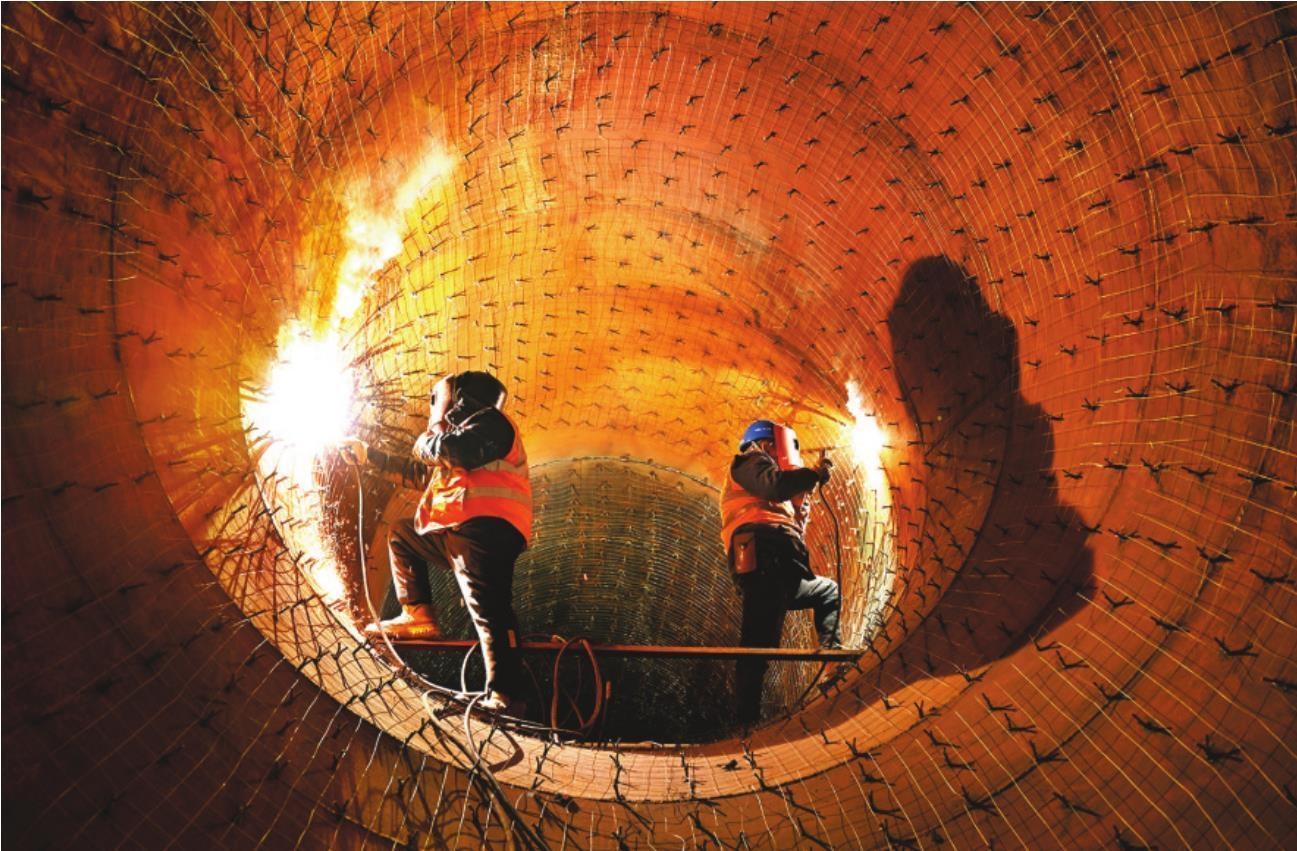
Core Viewpoint - The article highlights the transformation of Fushun New Steel Co., Ltd. through the automation and modernization of its steel production processes, particularly with the introduction of new high-capacity blast furnaces, which align with national policies for green and intelligent manufacturing [1][2]. Group 1: Automation and Efficiency - The newly constructed 1400 cubic meter blast furnace operates with full automation, allowing workers to control the entire production process from a control room, significantly reducing the need for manual labor [1]. - The new blast furnace has resulted in a production cost reduction of 70 yuan per ton of iron, alongside a substantial increase in production efficiency due to the automated processes [1]. Group 2: Environmental Impact - The new high furnace meets ultra-low emission standards, achieving a 15% reduction in carbon emissions, contributing to the company's green transformation efforts [1]. Group 3: Construction Innovations - The construction of the blast furnace utilizes modular prefabrication techniques, which have shortened the construction period from 18-20 months to 15 months, enhancing efficiency in the building process [2]. Group 4: Industry Development - Fushun City is actively promoting the resumption of 203 projects, including 168 ongoing projects related to Fushun New Steel's blast furnace, to optimize and upgrade the industrial structure [3].
成本降,效率反而高
Xin Lang Cai Jing· 2026-02-27 22:33
Group 1 - The core point of the article highlights the automation and modernization of the steel production process at Fushun New Steel Co., which has implemented a new 1400 cubic meter blast furnace to enhance efficiency and reduce costs [2][3] - The company has invested 1.58 billion yuan in upgrading its facilities, replacing five small blast furnaces with two modern ones, with the first furnace already operational since December 2025 [2] - The new blast furnace is expected to lower production costs by 70 yuan per ton, significantly increase production efficiency through full automation, and reduce carbon emissions by 15% to meet ultra-low emission standards [2][3] Group 2 - The construction of the new blast furnace utilizes a modular construction approach, which has reduced the construction period from 18-20 months to 15 months [3] - Fushun City is actively promoting the optimization and upgrading of its industrial structure, with 203 projects expected to resume or start construction in the first quarter, including 168 ongoing projects related to Fushun New Steel [3]

宏观专题报告:开年经济“新变化”?
Shenwan Hongyuan Securities· 2026-02-12 09:13
Group 1: Production Trends - In January, the manufacturing PMI dropped to 49.3%, a decrease of 0.8 percentage points, indicating a contraction in manufacturing activity[3] - The average PMI over the past two months shows a recovery trend, rising 0.5 percentage points to 49.7% compared to November 2025[15] - The operating rate of blast furnaces in the metallurgical chain increased by 2.2 percentage points year-on-year to 1% during the weeks leading up to the Spring Festival[21] Group 2: Demand Insights - Export activity is expected to remain strong due to a delayed Spring Festival, with foreign trade cargo volume increasing by 13.9% year-on-year in the weeks leading up to the festival[5] - Retail sales are projected to see a slight rebound of around 1.9% in January-February 2026, supported by extended holiday periods and local consumption stimulus policies[40] - The demand for consumer goods has been impacted by previous "trade-in" policies, leading to a low performance in retail sales for household appliances and vehicles[43] Group 3: Price Dynamics - The Producer Price Index (PPI) is expected to show weak recovery, with January PPI rising to -1.4% year-on-year, indicating limited upward pressure from upstream prices[57] - The Consumer Price Index (CPI) is anticipated to exhibit a "V-shaped" trend due to the timing of the Spring Festival, with food prices providing moderate support[7] - The overall inflationary pressure remains subdued, with core CPI expected to stay low due to weak demand and reduced government subsidies[7] Group 4: Investment Outlook - Investment is expected to improve moderately in early 2026, supported by government debt financing and new policy measures aimed at infrastructure projects[49] - The net financing of government bonds in January showed positive performance, indicating a supportive environment for infrastructure investment[49] - The operating rates for asphalt and grinding processes maintained resilience, reflecting stable investment activity in the construction sector[49]
“月度前瞻”系列专题之六:再议宏微观“温差”?-20260112
Shenwan Hongyuan Securities· 2026-01-12 10:13
Group 1: Economic Trends - By the end of 2025, production indicators such as high furnace operation and PTA operation showed a decline, while the manufacturing PMI rose by 0.9 percentage points to 50.1% in December[3] - The overall consumer goods industry PMI increased by 1 percentage point to 50.4% in December, despite a decline in retail sales of automobiles and home appliances[19] - The construction PMI rose by 3.2 percentage points to 52.8% at the end of 2025, despite low cement shipment rates and rebar consumption[26] Group 2: Factors Behind Economic Divergence - The new momentum in economic growth, particularly in AI-related sectors, contributed approximately 1.5 percentage points to GDP growth, while traditional sectors lagged[31] - Consumer high-frequency indicators faced "demand overdraft risks," while service consumption showed resilience, with service retail growth continuing to rise since September[37] - The previous impact of debt restructuring on investment slowed down, but the easing of this effect may lead to a return of investment to high-frequency indicators[41] Group 3: Expectations for Early 2026 - The "old-for-new" consumption policy is expected to face downward pressure, but service consumption may benefit from increased policy support, potentially enhancing resilience[45] - Infrastructure and service sector investments are anticipated to exceed expectations in early 2026 due to the easing of debt restructuring effects and the implementation of proactive investment policies[52] - The delayed Spring Festival in 2026 may extend the "export rush" window, potentially boosting January export figures compared to the previous year[7]
宏观经济高频数据统计周报-20251230
Zhe Shang Guo Ji Jin Rong Kong Gu· 2025-12-30 05:48
Production Sector - The coke oven operating rate is at 70.33%, down by 0.15% from the previous week[7] - The blast furnace operating rate is at 78.3%, also down by 0.15% from the previous week[7] - The PX operating rate decreased to 88.40%, a decline of 0.81%[7] - The PTA operating rate is at 72.84%, down by 0.97%[7] - The full steel tire operating rate is at 61.95%, a decrease of 2.19%[7] - The semi-steel tire operating rate increased to 72.05%, up by 0.66%[7] Consumption Sector - Weekly box office revenue reached 751 million yuan, an increase of 3.4 million yuan from the previous week[7] - Average daily retail sales of passenger cars reached 77,378.5 units, up by 1,567.2 units[7] - Average daily wholesale sales of passenger cars reached 96,624 units, an increase of 2,044.55 units[7] Real Estate and Infrastructure - The transaction area of commercial housing in 30 major cities was 301.91 million square meters, up by 44.90% from the previous week[7] - The transaction area of second-hand houses in major cities increased to 218,053.72 square meters, up by 9,046.58 square meters[7] - The land transaction area in 100 major cities decreased to 3,073.04 million square meters, down by 1,417.45 million square meters[7] - The land premium rate in 100 major cities increased to 2.14%, up by 0.94%[7] Trade and Transportation - The Shanghai Export Container Freight Index (SCFI) rose to 1,656.32, an increase of 103.40[8] - The Baltic Dry Index (BDI) fell to 1,877.00, a decrease of 244.00[8] - The average wholesale price of pork is at 17.67 yuan per kilogram, up by 0.11 yuan[8] - The average wholesale price of vegetables decreased to 5.68 yuan per kilogram, down by 0.15 yuan[8] - The average daily number of domestic flights (excluding Hong Kong, Macau, and Taiwan) reached 12,430.43, an increase of 225.71 flights[8]
国内高频 | 一线城市新房成交改善(申万宏观·赵伟团队)
赵伟宏观探索· 2025-09-16 16:03
Core Viewpoint - The article highlights improvements in industrial production, sustained high levels of infrastructure construction, and a rebound in real estate transactions, indicating a potential recovery in the economy [2][5][24]. Group 1: Industrial Production - Industrial production has shown improvement, with the blast furnace operating rate increasing by 3.5% week-on-week and 3.5 percentage points year-on-year to 83.9% [5][12]. - The chemical production chain has also seen a rise, with soda ash and PTA operating rates increasing by 1.1% and 5.5% respectively, year-on-year changes being +2.7 percentage points to 12.5% and +8.5 percentage points to 75% [12][16]. - The automotive sector has experienced an uptick, with the operating rate of semi-steel tires rising by 6% week-on-week and 5.8 percentage points year-on-year to 73.5% [12]. Group 2: Construction and Infrastructure - Infrastructure construction remains at a high level, with national grinding operating rates and cement shipment rates increasing by 4.3% and 1.2 percentage points respectively, year-on-year changes being +5.8 percentage points to 44.7% and +1.1 percentage points to 46.4% [16][22]. - The asphalt operating rate has slightly decreased by 1.8% week-on-week but remains at a high level year-on-year at 38.4% [22]. Group 3: Real Estate and Demand - Real estate transactions have improved, with the average daily transaction area of new homes rising by 9.6 percentage points year-on-year to 6.3 million square meters, particularly in first and second-tier cities [25][28]. - Port cargo throughput related to exports has shown strong performance, with year-on-year increases of 1.3 percentage points to 8.5% [32]. Group 4: Price Trends - Agricultural product prices have rebounded, with prices for eggs, vegetables, and pork increasing by 1.3%, 0.8%, and 0.3% respectively [57]. - Industrial product prices are showing divergence, with the Nanhua Industrial Price Index increasing by 0.1% week-on-week, while energy and chemical prices decreased by 0.2% [63].

国内高频 | 一线城市新房成交改善(申万宏观·赵伟团队)
申万宏源宏观· 2025-09-16 11:58
Group 1: Industrial Production - Industrial production has shown improvement, with blast furnace operating rates increasing by 3.5% week-on-week and 3.5 percentage points year-on-year to 6.2% [2][5] - The chemical production chain has also seen a rebound, with soda ash and PTA operating rates rising by 1.1% and 5.5% respectively, year-on-year changes of 2.7 percentage points to 12.5% and 8.5 percentage points to -6.3% [2][12] - The automotive semi-steel tire operating rate has improved, increasing by 6% week-on-week and 5.8 percentage points year-on-year to 73.5% [12] Group 2: Construction and Infrastructure - Infrastructure construction remains at a high level, with national grinding operating rates and cement shipment rates rising by 4.3% and 1.1% respectively, year-on-year changes of 5.8 percentage points to -5.5% and 1.1 percentage points to -4.4% [2][16] - Asphalt operating rates have slightly decreased by 1.8% week-on-week but remain at a high level year-on-year at 12.4% [2][22] Group 3: Real Estate and Demand - Real estate transactions have improved, with the average daily transaction area of new homes rising by 9.6 percentage points year-on-year to 6.3%, particularly in first and second-tier cities [2][25] - Port cargo throughput related to exports has shown strong performance, with year-on-year increases of 3% to 7.2% and 7.8% to 13.4% for cargo and container throughput respectively [2][32] Group 4: Price Trends - Agricultural product prices have rebounded, with prices for eggs, vegetables, and pork increasing by 1.3%, 0.8%, and 0.3% respectively [3][57] - Industrial product prices are showing divergence, with the Nanhua Industrial Price Index increasing by 0.1% week-on-week, while energy and chemical prices decreased by 0.2% and metal prices increased by 0.3% [3][63]

国内高频 | 工业生产持续分化(申万宏观·赵伟团队)
赵伟宏观探索· 2025-09-02 16:36
Core Viewpoint - The article highlights the divergence in industrial production, the continued recovery in infrastructure construction, and the weakness in real estate transactions, indicating mixed signals in the economy [2][4][29]. Group 1: Industrial Production - Industrial production shows divergence, with the blast furnace operating rate increasing by 0.9 percentage points year-on-year to 6.8%, while the apparent consumption continues to weaken, down 1.9 percentage points to 0% [2][4]. - The chemical sector shows significant declines, with soda ash and PTA operating rates down 4.1 percentage points to 1.7% and 5.5 percentage points to 12.1%, respectively [11]. - The automotive sector also experiences weakness, with the semi-steel tire operating rate down 0.3 percentage points to 6.2% [11]. Group 2: Construction and Infrastructure - Infrastructure construction continues to recover, with the asphalt operating rate increasing by 0.1 percentage points to 9.2% [2][23]. - Cement production and demand show a decline, with the national grinding operating rate and cement shipment rate down 3.3 percentage points to 9% and 1.3 percentage points to 4.2%, respectively [17]. Group 3: Real Estate and Demand - Real estate transactions remain weak, with the average daily transaction area for new homes showing a year-on-year increase of 9.6% but still at a low level [2][29]. - The migration scale index shows a year-on-year decline of 7.6% to 12.8%, indicating reduced movement intensity [2][40]. Group 4: Price Trends - Agricultural product prices are declining, with pork, eggs, and fruit prices down by 0.2%, 0.2%, and 0.5% respectively, while vegetable prices have increased by 1.7% [56]. - Industrial product prices are rebounding, with the Nanhua Industrial Price Index up by 0.2%, and the metal price index also increasing by 0.2% [62].