
超级增程技术

Search documents
独家对话顾捷:特斯拉的未破难题,与小鹏的六年“增程暗战”
2 1 Shi Ji Jing Ji Bao Dao· 2026-02-12 06:59
Core Viewpoint - The Chinese automotive industry is experiencing a transformation in power technology with the rise of "super range extension" technology, as brands like Xiaopeng, Zhiji, Buick, and Leap Motor seek to balance between the future of pure electric vehicles and the current hybrid solutions [1] Group 1: Xiaopeng's Strategic Shift - Xiaopeng, traditionally focused on pure electric vehicles, is entering the range-extended vehicle market with the X9 model, which is set to launch in November 2025 [1] - The company has been preparing for this transition for three to four years, with early considerations for range extension integrated into the development of its pure electric P7+ model [1][2] - Xiaopeng's Vice President, Gu Jie, emphasizes that the decision to pursue range extension was made in 2024, following extensive internal preparations [2] Group 2: Technological Innovations - The super range extension technology represents a partial innovation on existing range extension technologies, with Xiaopeng focusing on enhancing pure electric range and charging efficiency while minimizing engine noise during operation [2] - Xiaopeng's use of silicon carbide (SiC) technology in its vehicles began with the G9 model in 2022, marking a significant step in energy efficiency [3] - The company has successfully reduced SiC usage by 60% while achieving a comprehensive efficiency of 93.5% for its electric drive system [5] Group 3: Competitive Landscape - Xiaopeng faces competition from traditional automakers that prioritize fuel efficiency and from new entrants in the range-extended vehicle market, necessitating a focus on energy consumption efficiency [2] - The company aims to leverage its expertise in pure electric technology to differentiate itself in the increasingly competitive super range extension market [2][4] Group 4: Market Trends and Future Outlook - By the end of 2025, the market share of range-extended vehicles is expected to increase, with projections indicating a rise from 26% to 29% by December 2025 [7] - Xiaopeng's strategy includes a focus on platformization to enhance product competitiveness and scalability, allowing for rapid market introduction of its "one vehicle, dual energy" models [10][11] - The company is also preparing for future challenges and opportunities in the range-extended vehicle segment, with plans for further technological advancements and market expansion [43][44]

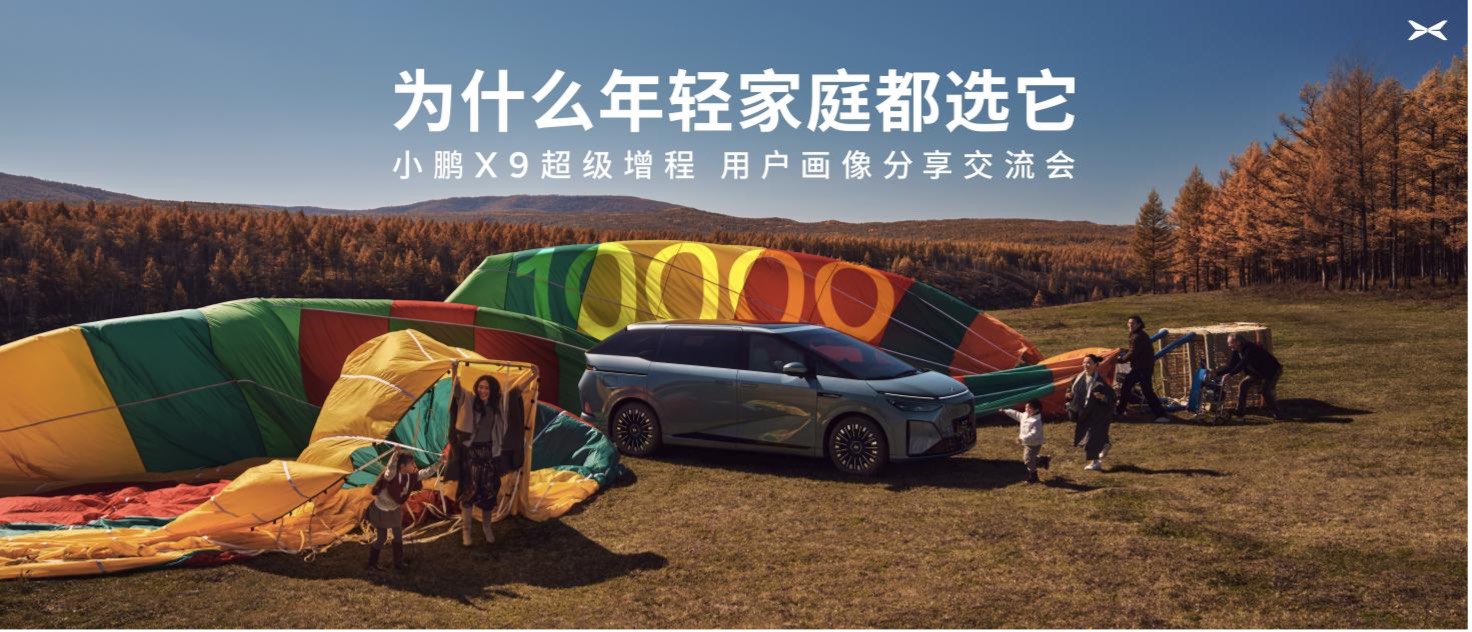
小鹏X9超级增程用户画像分享:90后占比近六成,年轻家庭第一台MPV
Jing Ji Wang· 2026-01-20 06:45
Core Insights - Xiaopeng Motors' X9 Super Range has established a new benchmark for high-end MPV travel and experience, featuring six core product strengths that provide a worry-free travel experience across various scenarios [2] Market Performance - The X9 has achieved a remarkable year-on-year delivery growth of 289.1%, with 5,424 units delivered in December 2025, making it a standout performer in a sluggish MPV market [2] - The X9 has become the top choice for personal users in the high-end MPV segment, leading its competitors by approximately 35 percentage points in personal user deliveries [2] User Demographics - The X9 has a high first-time buyer ratio of 21%, nearly double the industry average, with 57.2% of buyers being born in the 1990s and 13.7% in the 2000s, indicating a significant appeal to younger families [5] - Female users account for 22% of X9 buyers, reflecting its attractiveness among family-oriented consumers [5] Product Features - The X9 boasts the longest range in its class at 1,602 km, with a 63.3 kWh battery and a pure electric range of 452 km, effectively eliminating range anxiety for users [12] - It features a unique three-row electric folding design, allowing for versatile space configurations to meet various travel needs [10] - The vehicle is equipped with advanced driving assistance capabilities, achieving full-scene coverage from highways to urban areas, enhancing user convenience [10] Technological Innovations - The X9 incorporates a pioneering "big battery + big fuel tank" combination, allowing for rapid charging and compatibility with 92-octane gasoline, making it suitable for regions with limited fuel availability [12] - The vehicle's ice and snow stability system is designed to address real-world challenges faced by northern families, providing effective solutions for adverse weather conditions [12] Brand Positioning - The X9 has gained recognition as a preferred choice among high-end users, with a significant portion of buyers coming from luxury brands, particularly BBA (Benz, BMW, Audi) owners [6] - Its modern design and advanced technology have made it a popular choice for tech-savvy and fashion-conscious consumers, further solidifying its position in the market [6]

小鹏X9超级增程,一门关于操控、空间、能耗与成本的极致平衡术
2 1 Shi Ji Jing Ji Bao Dao· 2025-12-12 05:42
Core Viewpoint - The launch of the Xiaopeng X9 Super Extended Range model has led to a significant increase in sales, indicating the effectiveness of Xiaopeng's self-developed next-generation range extension technology [1][5]. Group 1: Sales Performance - The Xiaopeng X9 has struggled with sales, averaging around 1,200 units per month from January to November, with a peak of 2,767 units in May. However, after the introduction of the Super Extended Range technology, sales rose to 2,260 units in November, nearing the May peak, not including nearly 1,000 units sold overseas [1]. Group 2: Technological Innovations - The Super Extended Range X9 features an upgraded rear-wheel steering system, achieving a turning radius of 5.4 meters, which is better than the luxury model Mercedes EQS at 5.45 meters. It also includes an "Ice and Snow Stability System" designed for challenging driving conditions in western and northern China [2]. - The vehicle has undergone extensive testing in snow conditions, demonstrating capabilities such as climbing a 10-degree slope without slipping and maintaining stability at 60 km/h [2]. - The Super Extended Range X9 introduces an industry-first three-row electric folding system, allowing for flexible seating arrangements and maximizing cargo space [3]. - The integration of nine technologies into a single rear axle assembly has improved space utilization to 95.8%, while the use of one-piece die-casting and advanced materials has further enhanced efficiency and reduced weight [4]. Group 3: Cost Efficiency - Despite the comprehensive upgrades, the starting price of the Super Extended Range X9 has decreased by 60,000 yuan, positioning it as a competitive offering in the market [5]. - The reduction in costs is attributed to the use of hybrid silicon carbide materials in the electric drive system, which has lowered costs by 60% while maintaining performance. Additionally, the adoption of lithium iron phosphate batteries has allowed for a pure electric range of 460 km [6]. - Xiaopeng's focus on technological advancements over price competition aligns with its strategy to balance performance, space, energy consumption, and cost [6].
蔚来跌超6%三季度亏30亿,理想由盈转亏,零跑盈利,造车新势力洗牌加剧
2 1 Shi Ji Jing Ji Bao Dao· 2025-12-02 02:43
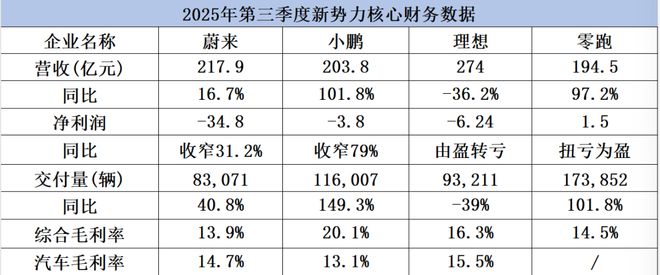
Core Viewpoint - The competitive landscape of new energy vehicle manufacturers is reshaping as Q3 2025 financial reports are released, highlighting significant performance variations among companies, with some showing improved profitability while others struggle with losses [1][3]. Group 1: Company Performance - Xiaopeng Motors achieved a revenue of 203.8 billion yuan, a year-on-year increase of 101.8%, despite a net loss of 3.9 billion yuan, which narrowed by 79% [2][5]. - NIO reported a revenue of 217.9 billion yuan, a year-on-year increase of 16.7%, but remains the largest loss-maker among new energy vehicle companies with a net loss of 34.8 billion yuan, although this loss narrowed by 31.2% [2][13]. - Li Auto, once profitable, faced a revenue decline of 36.2% to 274 billion yuan, resulting in a net loss of 6.24 billion yuan, ending its streak of 11 consecutive profitable quarters [2][10]. - Leap Motor recorded a revenue of 194.5 billion yuan, a year-on-year increase of 97.2%, and achieved a net profit of 1.5 billion yuan, marking its second consecutive profitable quarter [2][16]. Group 2: Strategic Adjustments - Xiaopeng Motors is shifting its strategy by embracing range-extended electric vehicles (REEVs) and enhancing its overseas market presence, with a focus on models like the Xiaopeng X9 [5][8]. - NIO is refocusing on its core automotive business, reducing costs, and aiming for improved sales efficiency while cutting down on non-core expenditures [13][14]. - Li Auto is pivoting towards AI technology, emphasizing the transformation of vehicles into smart terminals, while still facing challenges in its electric vehicle transition [11][10]. - Leap Motor is entering the REEV market and targeting the high-end SUV segment, attempting to elevate its brand image beyond its previous focus on cost-effectiveness [16][17]. Group 3: Market Dynamics - The Chinese new energy vehicle market is transitioning from growth to competition for existing market share, with companies needing to enhance their product, technology, and brand strengths to survive [3][17]. - The competitive landscape is characterized by companies learning from each other and adjusting their strategies to remain relevant in a rapidly evolving market [3][17]. - The overall profitability of the new energy vehicle sector is under scrutiny, with the upcoming financial results expected to determine which companies will thrive in the future [17].

蔚来跌超6%三季度亏30亿,理想由盈转亏,零跑盈利,造车新势力洗牌加剧
21世纪经济报道· 2025-12-02 02:37
Core Insights - The competitive landscape of new energy vehicle manufacturers is undergoing significant changes as companies report their Q3 2025 financial results, with Xpeng showing remarkable revenue growth while still facing losses [1][3] - NIO is attempting to recover from substantial losses by focusing on cost-cutting measures, although it remains the most unprofitable among its peers [1][3] - Li Auto has shifted from profitability to losses, facing challenges in its transition to pure electric vehicles, compounded by a recent recall incident [1][3] - Leap Motor has achieved profitability for the second consecutive quarter but faces challenges with its long-term pricing strategy affecting gross margins [1][3] Financial Performance Summary - Xpeng reported a revenue of 203.8 billion, with a year-on-year growth of 101.8%, and a net loss of 3.9 billion, which is a 79% reduction compared to the previous year [2] - NIO's revenue was 217.9 billion, with a year-on-year increase of 16.7%, but it recorded the largest net loss of 34.8 billion, a 31.2% reduction year-on-year [2] - Li Auto's revenue was 274 billion, down 36.2% year-on-year, with a net loss of 6.24 billion, marking a shift from previous profitability [2] - Leap Motor achieved a revenue of 194.5 billion, with a 97.2% year-on-year growth, and a net profit of 1.5 billion, marking a significant turnaround [2] Strategic Adjustments - Xpeng is focusing on enhancing its supply chain and product offerings, launching new models like the X9 Super Range Extender to address market needs [5][7] - Li Auto is pivoting towards AI technology, emphasizing the transformation of vehicles into smart terminals, while still facing challenges in its core automotive business [10] - NIO is narrowing its focus to core automotive operations, reducing costs, and aiming for improved sales efficiency while still grappling with significant losses [11][12] - Leap Motor is entering the range extender market and targeting the high-end SUV segment, although it faces challenges in changing consumer perceptions [14] Market Dynamics - The Chinese new energy vehicle market is transitioning from growth to competition for existing market share, with companies needing to adapt their strategies to survive [3][15] - The competitive edge is shifting towards comprehensive strengths in product definition, technology implementation, cost control, and brand perception [15]
造车新势力Q3财报:李斌、李想、何小鹏终于活成了对方的模样
2 1 Shi Ji Jing Ji Bao Dao· 2025-12-01 22:38
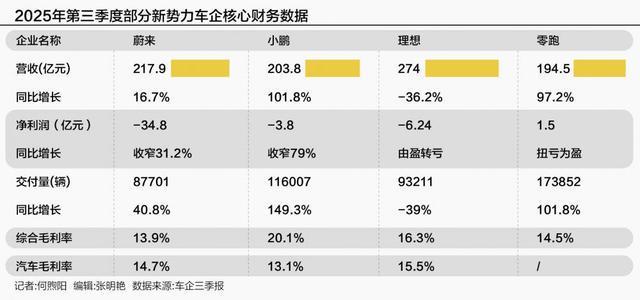
Core Insights - The competitive landscape of new energy vehicle manufacturers in China is undergoing significant changes as Q3 2025 financial reports are released, with companies adjusting strategies to improve profitability and market positioning [1][2] Company Summaries XPeng Motors - XPeng Motors has seen a remarkable turnaround with a revenue increase of 101.8% year-on-year, despite a net loss of 380 million yuan, which has narrowed by 79% compared to the previous year [1][3] - The company achieved a record delivery volume of 116,000 vehicles in Q3, marking a 149.3% increase year-on-year [4] - XPeng is launching the X9 Super Extended Range model, which has received four times the pre-order volume compared to its predecessor, indicating strong market interest [5] NIO - NIO has managed to reduce its net loss by 31.2% year-on-year, although it remains the largest loss-maker among new energy vehicle manufacturers [1][3] - The company is focusing on cost reduction and efficiency, with a significant cut in R&D expenses by 28% year-on-year [8] - NIO's delivery volume reached 87,000 vehicles in Q3, with a goal to achieve a gross margin of 20% for the ES8 model in Q4 [9] Li Auto - Li Auto reported a revenue of 27.4 billion yuan in Q3, a decline of 36.2% year-on-year, marking the end of its 11-quarter profitability streak with a net loss of 624 million yuan [6][7] - The company is shifting its focus towards AI technology, aiming to transform vehicles into intelligent products, while still facing challenges in its pure electric vehicle transition [7] - Li Auto's delivery volume fell by 39% year-on-year, indicating a need for strategic reassessment [6] Leap Motor - Leap Motor achieved a revenue of 19.45 billion yuan in Q3, with a year-on-year growth of 97.2%, and reported a net profit of 150 million yuan, marking its second consecutive profitable quarter [10][11] - The company is entering the extended range market with its new D19 model, targeting the competitive 300,000 yuan SUV segment [10] - Despite strong sales growth, Leap Motor's profitability remains low, raising concerns about its long-term financial health [11] Industry Trends - The Chinese new energy vehicle market is transitioning from growth to a more competitive landscape, where companies must leverage product, technology, and brand strengths to survive [2] - The focus on profitability is becoming increasingly critical as the market matures, with companies needing to adapt their strategies to meet evolving consumer demands and competitive pressures [1][10] - The competitive dynamics are shifting as companies learn from each other, blurring the lines of their original market positioning [2]

智己LS9以超级增程对标插混 依靠上汽做“高配不高价”标杆
Zhong Guo Zheng Quan Bao· 2025-11-13 20:07
Core Insights - The launch of the LS9 marks a significant milestone for the company, entering the competitive high-end six-seat SUV market with a starting price of 326,900 yuan, achieving over 5,000 pre-orders within 25 minutes of its release [1][2] - The LS9 is positioned as a flagship model, showcasing the company's five years of development and the deep integration of resources from SAIC Group, enhancing its competitiveness in the high-end electric vehicle market [2][3] Company Strategy - The LS9's launch is part of SAIC Group's strategic focus on the high-growth segment of six-seat electric SUVs, leveraging decades of technological accumulation and cross-industry resource integration [2][4] - The company emphasizes its priority access to top-tier technologies, such as the Lingxi digital chassis and the Super Xiaoyao battery developed in collaboration with CATL, which enhance the vehicle's performance and efficiency [2][4] Market Positioning - The LS9 targets consumers at a life advancement stage, addressing the need for a vehicle that balances family comfort and personal driving enjoyment, thus solving the pain points of traditional models [3][5] - A recent survey indicates that 75% of six-seat SUV users seek both comfort for family travel and driving pleasure, highlighting the importance of user-centric design in the LS9 [3][4] Technological Innovation - The LS9 adopts a super range-extender technology, which is projected to capture a 28% market penetration in the high-end SUV segment by 2025, surpassing plug-in hybrid models [4][5] - The vehicle offers a 1,500 km electric driving experience with minimal performance degradation, even in high-altitude conditions, and achieves a 10% to 15% lower energy consumption compared to similar plug-in hybrid models [4][5] Brand Development - The successful launch of the LS9, following the L6 and LS6 models, signifies the brand's transition into a phase of significant achievements after five years of foundational work [5][6] - The company has chosen a path focused on core technological advancements rather than superficial feature competition, positioning itself as a strong contender in the electric vehicle market [6]

智己LS9以超级增程对标插混依靠上汽做“高配不高价”标杆
Zhong Guo Zheng Quan Bao· 2025-11-13 20:03
Core Insights - The launch of the LS9 marks a significant milestone for the company, entering the competitive high-end six-seat SUV market with a starting price of 326,900 yuan, achieving over 5,000 pre-orders within 25 minutes of its release [1][2] - The LS9 is positioned as a flagship model, showcasing the company's five years of development and the deep integration of resources from SAIC Group, emphasizing the importance of technological innovation and market understanding [1][4] Company Strategy - The LS9 leverages SAIC Group's extensive technical foundation and cross-industry collaborations, allowing for the prioritization of advanced technologies such as the Lingxi digital chassis and the Super Xiaoyao battery, which enhance the vehicle's performance and efficiency [2][3] - The company aims to address the growing consumer demand for a balance between family comfort and personal driving enjoyment, as indicated by a survey showing that 75% of six-seat SUV users desire both [2][3] Market Positioning - The LS9 adopts a super-range extension strategy, responding to industry trends and consumer needs, with projections indicating that by 2025, the penetration rate of range-extended models in the 300,000 to 400,000 yuan high-end SUV market will reach 28%, surpassing plug-in hybrid models [3] - The vehicle's design focuses on user experience, incorporating features like 4D mechanical massage to meet the needs of family and business scenarios, aligning with the market shift from mere configuration to enhanced user experience [3][4] Technological Innovation - The LS9's technology aims to provide a seamless electric driving experience, achieving a 1,500 km range with minimal performance degradation, even in high-altitude conditions, and offering a 10% to 15% lower energy consumption compared to similar plug-in hybrid models [3] - The company's commitment to core technologies, such as digital chassis and intelligent driving, reflects a strategic decision to avoid superficial configuration competition and focus on substantial technological advancements [4]
35万元起,全球续航最长大七座小鹏X9超级增程正式开启预售
Xin Lang Ke Ji· 2025-11-06 14:00
Core Insights - Xiaopeng Motors has launched its new range extender technology, Kunpeng Super Range Extender, addressing five major pain points of traditional range extender users, including short electric range and slow charging speed [1] - The new model, Xiaopeng X9 Super Range Extender, is now available for pre-sale with prices starting at 350,000 yuan for the Max version and 370,000 yuan for the Ultra version [1] - The Xiaopeng X9 boasts the longest range for a seven-seater vehicle globally, with a CLTC pure electric range of 452 km and a comprehensive range of 1602 km [1] Technology and Performance - The Kunpeng Super Range Extender features a third-generation 1.5T high-efficiency turbocharged range extender, maintaining a stable cruising speed of 150 km/h even in low battery conditions [2] - It incorporates an industry-first fully integrated high-voltage oil-cooled generator, achieving high fuel generation efficiency [2] - The vehicle utilizes a unique 800V mixed silicon carbide coaxial electric drive, overcoming limitations of weak power in low battery situations [2] - The overall fuel consumption is 15% better than competitors in the same class, thanks to the integrated high-voltage oil-cooled generator and intelligent energy management system [2] Design and Safety - The Xiaopeng X9 features a 95.8% space utilization rate in its rear axle design, allowing for a spacious interior while integrating multiple systems [2] - The vehicle meets five-star safety design standards in both China and Europe, utilizing 87% high-strength steel and aluminum in its structure [2] - It includes advanced safety features such as a large energy-absorbing box in the front, designed to maximize occupant protection during collisions [2]
小鹏汽车-W午后曾涨超5% 何小鹏发视频回应机器人质疑
Zhi Tong Cai Jing· 2025-11-06 05:45
Core Viewpoint - Xpeng Motors' stock experienced volatility, initially dropping over 5% before recovering to a 3.14% increase, attributed to the unveiling of their new humanoid robot, IRON, at the Technology Day event [1] Group 1: Stock Performance - Xpeng Motors' stock rose by 3.14% to HKD 90.45, with a trading volume of HKD 30.82 billion [1] - The stock had previously seen a decline of over 5% during the early trading session [1] Group 2: Product Launch and Technology - The humanoid robot IRON was showcased at Xpeng's Technology Day on November 5, generating significant buzz on social media due to its lifelike walking capabilities [1] - In response to speculation about the robot's realism, CEO He Xiaopeng released an unedited video demonstrating the robot's mechanical structure, including visible components like fingers and microphones [1] - Xpeng's upcoming launch event for the X9 model, featuring the "Kunpeng" super-range technology, is scheduled for November 6 at 19:00 [1] - The X9 model is highlighted for its combination of a 63.3-degree fast-charging lithium iron phosphate battery and a 60L fuel tank, achieving a total range of 1,602 kilometers, making it the longest-range seven-seater vehicle globally [1]
