海湖庄园协议

Search documents
美元衰退已经不可避免
Sou Hu Cai Jing· 2025-05-05 11:26
众所周知,这一次特朗普关税冲击极大的损伤了美元的国际信用,尤其是美债不再被认为是传统避险资 产,几乎可以认为美元的下坡路已经开始。 全方位来看,美元要说民间交易还是外汇结算依旧稳定,包括美国也认为地位还在,且不会变化,实际 上并非如此。 货币这玩意是一个自上而下的影响传递,因为它是国家强制性行为,因此只要国家层面美元已变为,民 间变是迟早的事儿。 大多数华尔街专业人士都认为,美元失去世界储备货币地位的可能性很低——因为美国市场具有优越的 流动性(意味着投资者可以轻松地买卖资产)、高度发达的资本市场以及法治的声誉。 但如果美国的储备货币地位受到质疑,就会付出代价,即便再便利,没有安全性,也无用,这个是国际 资产信誉的核心。 于是就有了今年金融圈最劲爆的不公开秘密-海湖庄园协议,主旨就是要求非美货币贬值,要求其他经 济体购买超长期美债,50年或者100年。 在未来走向上,目前市场已经给出了一定雏形,但还未定型,即世界经济迅速而随意地抛弃美元,转而 使用其他货币或一篮子货币的灾难场景不太可能立即发生,因为美元深深植根于全球货币和金融体系, 而且没有足够的欧元计价资产来满足全球对AAA级债券的需求。 虽然美元的主导地 ...

即便“海湖庄园协议”不确定,但市场已经“提前布局”?
Hua Er Jie Jian Wen· 2025-04-02 01:49
Group 1 - Nomura Securities believes that even without a formal "Mar-a-Lago Agreement," the market may be betting on a depreciation of the dollar [1] - The dollar index has decreased from around 110 to 104.28 this year, representing a decline of approximately 5.2% [1] - Historical analysis shows that prior to significant policy agreements, markets often react in advance, as seen with the Plaza Accord in 1985 where the dollar index fell about 15% in the seven months leading up to the agreement [4] Group 2 - The lack of political unity among major countries and the slow recovery of most major economies, except Japan, contribute to the current market sentiment [5] - Concerns about the depreciation of the dollar may lead foreign investors to hedge against currency risks or sell U.S. assets [10] - Changes in market sentiment could drive capital outflows, particularly as foreign investors seek safer investment channels [8][10]
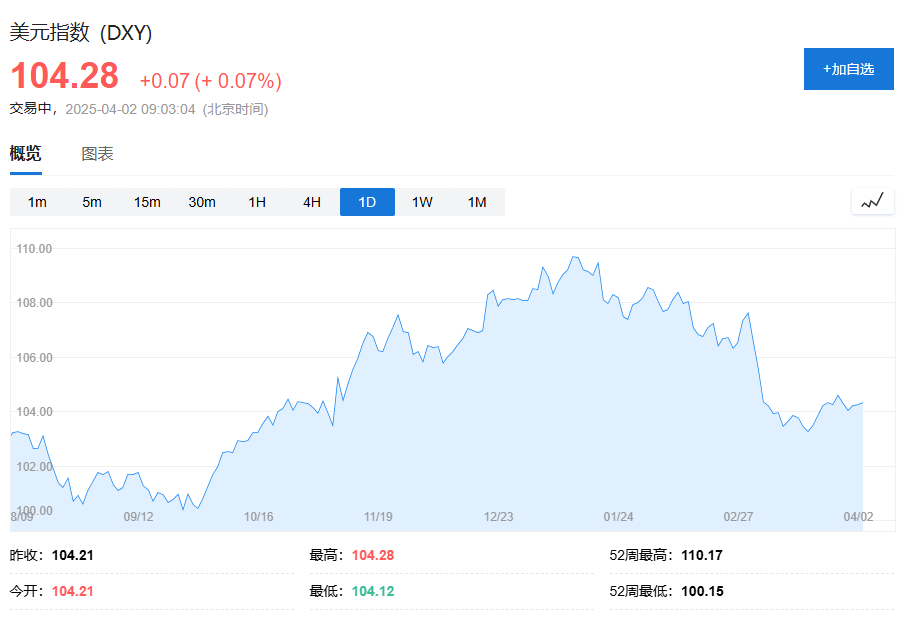
海外研究|从美元指数看“海湖庄园协议”叙事
中信证券研究· 2025-03-28 00:15
Core Viewpoint - The recent weakening of the US dollar index since March is attributed to unexpected strength in the euro due to fiscal stimulus plans and market speculation around "Trump Recession," rather than the narrative of the "Mar-a-Lago Accord" being the main cause [1][4]. Group 1: "Mar-a-Lago Accord" Concept - Stephen Miran's concept of the "Mar-a-Lago Accord" suggests that the dollar's trajectory will follow two phases: an initial phase of strong dollar due to tariffs, followed by a weaker dollar phase due to currency agreements [2][12]. - The first phase, characterized by tariffs, is currently in effect, aligning with the strong dollar narrative promoted by the Trump administration [12]. Group 2: Impact of "Mar-a-Lago Accord" Narrative - The narrative surrounding the "Mar-a-Lago Accord" has circulated widely in the market, but it has not significantly influenced pricing, despite its weak dollar target seemingly correlating with the dollar index's decline [4][12]. - Concerns about a US recession are not as pronounced as they were in Q4 2023, indicating that the market's apprehension regarding a downturn is less than half of previous levels [4]. Group 3: Future Outlook for the US Dollar Index - The expectation is that the "Mar-a-Lago Accord" narrative will not significantly impact the market in the short term, especially with the current economic data showing no clear signs of weakness [17]. - If Trump's tariff policies exceed expectations and the euro returns to a stronger fundamental position, the dollar index may experience a rebound [17].

美元崩盘倒计时?黄金暴涨与“海湖庄园协议”
雪球· 2025-03-23 05:31
Core Viewpoint - The article discusses the relationship between gold, the US dollar, and the Triffin Dilemma, emphasizing that the current crisis of the dollar presents investment opportunities in gold as a hedge against currency instability [5][24]. Group 1: The Lake House Agreement - The so-called "Lake House Agreement" suggests that the US may be attempting to engage in a financial war globally, although no official text exists [4]. - The agreement includes demands for trade partners to appreciate their currencies against the dollar and to classify countries as allies or adversaries for tariff purposes [4]. - The challenges of implementing such an agreement are acknowledged, particularly regarding its feasibility with allies and trade partners [4]. Group 2: Historical Context of Currency - The article traces the origins of credit currency back to 17th century England, where goldsmiths began issuing receipts that evolved into banknotes [6][8]. - The establishment of the Bank of England marked a significant shift in government financing, allowing for a stable source of revenue beyond taxes and loans from merchants [9]. - The article highlights the inherent monopoly of credit currency, where only the most trusted credit can be widely accepted [9]. Group 3: The Nature of Government Credit - The article discusses the paradox of government credit: if a government is too weak, its currency may be replaced; if too strong, it risks losing credibility [11]. - Historical examples from China illustrate how excessive issuance of paper currency during times of war led to loss of public trust and eventual economic collapse [19][20]. Group 4: The Triffin Dilemma - The Triffin Dilemma describes the conflict between the need for the US to run trade deficits to supply the world with dollars and the need to maintain the dollar's value [25][27]. - The article notes that the end of the Bretton Woods system in 1971 marked a significant shift, allowing the US to print money without the constraint of gold reserves [27][28]. - The ongoing challenge for the US is to balance international obligations with domestic economic stability, a task complicated by political pressures [29]. Group 5: Gold as a Hedge - The article concludes that gold serves as a "vote of no confidence" against fiat currencies, particularly the dollar, as central banks increase their gold reserves amid currency crises [32][34]. - It argues that while credit currency is a significant innovation, it requires a balanced government that is neither too strong nor too weak to maintain public trust [35]. - The potential for digital currencies to replace gold as a stable value store is also mentioned, indicating a shift in the future of monetary systems [35].

巴菲特:如果我是年轻女孩,我会想听她的故事……
聪明投资者· 2025-03-08 15:20
本周 推荐阅读: 在去年底今年初我们听过的20多场私募交流中,大家基本共识的"港股性价比最高",很快就迎来了这波 市场的正反馈。 当然,短期波动也在加剧中。 翻看一些私募1月底的产品月报,大家或多或少都谈到了特朗普上台后的新政以及DeepSeek震惊世界的 一跃。 都在重新审视扑面而来的现实:新政带来的剧烈震荡,以及AI开启应用时代,对于中国资产价 值的重估。 1、最近"海湖庄园协议"在华尔街和国内金融圈谈论度都很高。近日桥水基金创始人瑞·达利欧在对话中也被 问到看法: 《 "美债危机恐三年内爆发",达利欧谈"海湖庄园协议",警告美元会相对黄金等硬资产发生贬 值 》 2、海外投资大师对中国市场的乐观比很多人都要多,而且他还喊出了,卖美股买中国资产,要知道这可是 在美股刚刚开始调整那会儿: 《 "逆向投资大师"安东尼·波顿罕见发声:我们正处于中国新一轮牛市的初期 阶段 》 3、 "泡沫研究专家"最近的对话: 《 GMO传奇大佬格兰桑最新谈美股泡沫,称电力需求还会高速增 长 》 4、从巴菲特角度,黄金是"非生息资产",他永远不会投。但对于做配置的投资人而言,比如达利欧, 这是组合当中跟其他资产非常不相关的品种,可 ...
“美债危机恐三年内爆发”,达利欧谈“海湖庄园协议”,警告美元会相对黄金等硬资产发生贬值
聪明投资者· 2025-03-05 07:03
桥水基金创始人瑞·达利欧日前在彭博的一档访谈节目中继续深谈债务周期问题,再次介绍自己的新书 《国家如何破产》(How Countries Will Go Broke)。 50分钟的交流很多内容已经在这场对话中详细阐述,尤其是对于解决债务的"3%的方案", 达利欧建议 必须将财政赤字削减到GDP的3%。 (感兴趣的童鞋可以阅读这篇高浓度文章: 达利欧携新书《国家如 何破产》最新对话,谈及DeepSeek以及黄金、AI、美国债务危机等 ) 这次交流也有一些内容很值得看。 比如达利欧谈到最近备受关注的 "海湖庄园协议"( 特朗普及其经济团队提出的概念性计划,旨在通过 美元贬值、债务重组等措施重塑全球贸易和金融体系以解决美国经济问题) ,他认为这种可能性确实 存在,而且可能会部分秘密地进行。 但达利欧强调一点是,不要以为这会是美元相对于所有其他货币的贬值,事实上是美国相对于包括黄金 在内的硬资产的贬值。 当然,虽然认为黄金、比特币是货币贬值下的配置资产,达利欧也提醒,任何时候追涨心态都要不得, 黄金在多元资产组合里面有10-15%就挺适合了。 而涉及到债务重组问题,美国会不会宣布停止向其他国家支付债务,达利欧认为是可 ...
美债策略月报:2025年3月美债市场月度展望及配置策略
Zhe Shang Guo Ji· 2025-03-04 03:25
Economic Overview - February economic data shows mixed signals, with retail and housing sales declining, indicating a potential "stagflation" scenario[2] - January non-farm payrolls increased by 143,000, with the unemployment rate dropping to 4.01%[54] - CPI for January recorded a year-on-year increase of 3%, reflecting inflationary pressures despite some economic slowdown[48] Bond Market Insights - The 10-year U.S. Treasury yield is expected to find a low point around 4%, with the 10Y-2Y yield spread narrowing or even inverting[5] - In February, the yields for 30Y, 20Y, 10Y, and 2Y Treasuries changed by -29.7, -31.7, -33.1, and -28.2 basis points respectively[3] - The total issuance of U.S. Treasuries in February was $2.4 trillion, down from $2.63 trillion in January[19] Market Strategy Recommendations - The report recommends going long on long-duration Treasuries, including TLT, TMF, and 10-year and above Treasury futures[5] - The strategy is based on anticipated "bull flattening" in the bond market due to economic conditions and shadow "QE" from the Treasury[5] Risks and Considerations - Potential risks include an unexpected slowdown in the U.S. economy, faster-than-expected rate hikes by the Federal Reserve, and worsening geopolitical conditions[6] - The market is pricing in 2-3 rate cuts by the Federal Reserve in 2025, higher than the previous expectation of just one[4]
全球瞩目,“海湖庄园协议”究竟是什么?
华尔街见闻· 2025-02-27 11:09
Core Viewpoint - The recent rapid appreciation of the Japanese yen signals a potential restructuring of the international financial order, influenced by expectations of U.S. political maneuvers under the Trump administration, particularly the so-called "Mar-a-Lago Accord" [1][2][3]. Group 1: Yen Appreciation and Political Influence - The yen reached its strongest level against the dollar since October, trading around 148.5, with a cumulative decline of 4.88% in the dollar/yen exchange rate since the beginning of the year [2]. - Analysts from Citigroup suggest that the yen's movement reflects market pricing of potential political actions from the Trump administration, which may exert pressure on Japan's monetary policy [2][3]. Group 2: "Mar-a-Lago Accord" Concept - The "Mar-a-Lago Accord" concept originates from a report by Stephen Miran, detailing potential strategies for restructuring the global trade system, including tariff strategies and monetary policy implications [5]. - This concept has gained traction on Wall Street, with analysts and investors taking it seriously, indicating a possible significant shift in the international financial system if realized [6][7]. Group 3: Comparison with Historical Agreements - The "Mar-a-Lago Accord" is likened to the Plaza Accord and Bretton Woods Agreement, both pivotal in modern economic history, but it is fundamentally different in its approach, leaning towards unilateral actions rather than multilateral cooperation [9][10]. - The core elements of the "Mar-a-Lago Accord" may include a broader agenda than the Plaza Accord, potentially involving debt restructuring and the establishment of sovereign wealth funds [11][12]. Group 4: Debt Restructuring and Economic Implications - The U.S. currently holds $36 trillion in debt, primarily from Cold War-era military expenditures, necessitating a significant restructuring to enhance competitiveness and reduce borrowing costs [12]. - Proposed measures include revaluing U.S. assets like gold reserves and increasing defense spending contributions from NATO allies, which could alleviate the financial burden on the U.S. [12][12]. Group 5: Implementation Challenges - Despite the ambitious nature of the "Mar-a-Lago Accord," significant challenges exist, including the concentration of dollar reserves in Asia and the potential resistance from private sector holders of U.S. debt [20]. - Successful implementation could lead to a simultaneous decline in the dollar and long-term yields, easing financing pressures for the U.S. Treasury and enhancing the relationship between defense spending and reserve assets [21].