消费信贷

Search documents
深夜崩盘!英伟达2天蒸发3万亿,银行股集体跳楼!一场席卷全球的资本大逃亡正在上演
Sou Hu Cai Jing· 2026-03-01 07:10
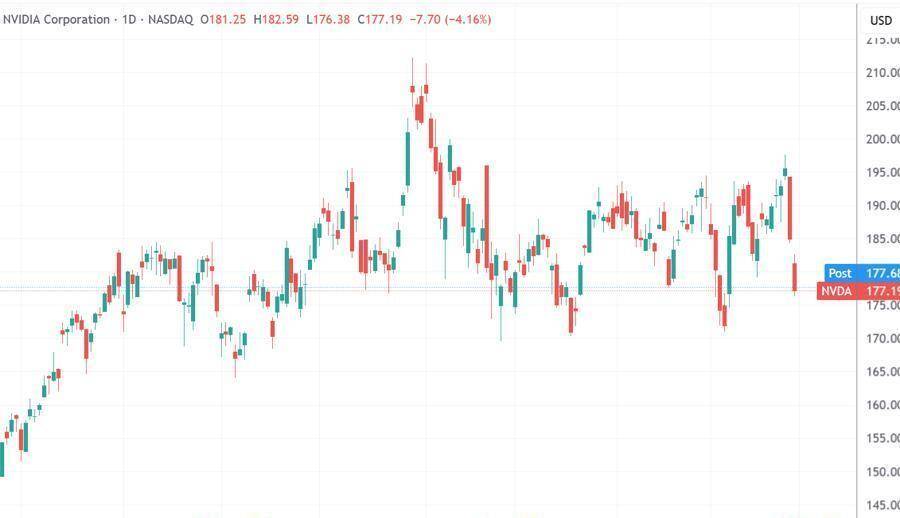
2026年2月28日凌晨,美国股市的收盘钟声敲响,却给全球投资者带来了一个不眠之夜。 道琼斯指数狂泻521点,跌幅1.05%,收在48977.92点。 纳斯达克指 数下跌0.92%,报22668.21点。 标普500指数跌0.43%,收于6878.88点。 整个2月份,纳斯达克指数累计暴跌3.38%,标普500指数下跌0.87%,双双创下了自 2025年3月以来、整整一年的最大单月跌幅。 道指虽然勉强在月线上涨了0.17%,实现了罕见的"十连阳",但周五这根大阴线,让这个记录显得摇摇欲坠。 市场的风暴眼,毫无悬念地集中在全球市值最高的公司——英伟达身上。 它的股价在周五再度重挫4.16%,报收于177.19美元。 仅仅这一天,它的市值就蒸 发了1871亿美元,换算成人民币大约是1.28万亿元。 而如果把时间拉长到最近两个交易日,情况更加触目惊心。 英伟达的市值在两天内累计蒸发了高达 4464亿美元,约合3.1万亿元人民币。 这个数字,相当于跌没了一家招商银行的总市值。 最让市场感到困惑和恐慌的是,这场暴跌发生在一份堪称"史诗级"的财报之后。 就在几天前的2月25日,英伟达发布了2026财年第四季度业绩。 报告 ...


延续实施养老托育家政等 社区服务业税费优惠政策
Xin Lang Cai Jing· 2026-01-20 19:55
Core Viewpoint - The announcement from six government departments aims to support the development of community family services such as elderly care, childcare, and domestic services by providing tax exemptions and extending financial incentives for personal consumption loans [1] Group 1: Tax Exemptions - Income from services related to elderly care, childcare, and domestic services will be exempt from value-added tax (VAT) [1] - Properties and land used by institutions providing these services will be exempt from property tax and urban land use tax [1] - These tax exemptions will be effective from January 1, 2026, to December 31, 2027 [1] Group 2: Consumer Loan Subsidies - The implementation period for the personal consumption loan interest subsidy policy has been extended to the end of 2026 [1] - The adjusted implementation period for this subsidy is from September 1, 2025, to December 31, 2026 [1] - Residents can enjoy interest subsidies on qualifying consumption during this period, with potential for further extension based on the policy's effectiveness [1]
告别“躺赚”!消费信贷市场利率下行成定局,消金与小贷走向殊途
Bei Jing Shang Bao· 2026-01-15 05:03
Core Viewpoint - The consumer credit market in China has experienced significant fluctuations over the past year, driven by stringent regulatory measures aimed at reducing financing costs and ensuring compliance within the industry [1][5]. Regulatory Changes - In 2025, the consumer credit market faced a series of regulatory reforms, including the introduction of new lending rules that set a cap on comprehensive financing costs at 24% and established a "white list" for lending services [3][4]. - By October 2025, regulators mandated that personal loan costs for consumer finance companies be reduced to 20%, with further guidelines indicating that new loans should not exceed four times the one-year Loan Prime Rate (LPR), which is currently set at 3.0% [4][5]. Market Dynamics - The regulatory environment has led to a significant shift in the consumer credit landscape, with a clear trend towards lower interest rates across various financial institutions. The maximum interest rates are now set at 24% for general loans, 20% for consumer finance companies, 18% for credit card installments, and 12% for small loan companies [7][9]. - The differentiation in interest rates reflects a regulatory strategy aimed at aligning risk and cost across different types of lending institutions, promoting a multi-tiered consumer credit system [9][10]. Industry Transformation - The ongoing regulatory changes are not merely about limiting interest rates but are intended to facilitate a transition from rapid, unregulated growth to a more sustainable and high-quality development model within the industry [6][15]. - Financial institutions are adjusting their strategies to comply with new regulations, focusing on cost reduction, optimizing customer acquisition, and enhancing risk management practices [13][11]. Consumer Protection and Market Fairness - The core objective of the regulatory framework is to protect consumer rights, ensure fair competition, and promote the alignment of consumer credit services with the real economy [6][15]. - The emphasis on lowering financing costs is designed to alleviate the debt burden on low- and middle-income consumers while preventing the emergence of high-risk lending practices [5][15]. Future Outlook - The regulatory landscape is expected to continue evolving, with a focus on balancing financial support for consumption and risk prevention. Institutions are encouraged to gradually reduce their financing costs while maintaining operational stability [15][16]. - The year 2026 is anticipated to be a critical juncture for the industry as institutions navigate the pressures of compliance and market adaptation [14].

新华汇富研究
新华汇富· 2025-12-24 06:19
Core Insights - AEON Credit's (900 HK) 3Q26 performance was robust, with a record high in loan size and continuous improvement in asset quality, meeting expectations with a revenue growth of 3.8% year-on-year to HK$460.9 million [1][2] - The company effectively controlled sales expenses, resulting in a 1 percentage point year-on-year reduction in operating expense ratio to 45%, and a net profit increase of 13.5% year-on-year to HK$119.1 million [1][3] - The total customer loans and receivables reached HK$7.7 billion, reflecting a quarterly growth of 3%, driven by successful marketing strategies [2][3] Financial Performance Summary - Revenue for 3Q26 was HK$460.9 million, with net interest income increasing by 5% to HK$354.9 million, and fees and commissions rising by 7% to HK$39.8 million [2][6] - Operating profit before impairment grew by 7% to HK$237.3 million, while impairment losses decreased by 4.6% year-on-year to HK$99.3 million, indicating improved asset quality [3][6] - The net profit margin for 3Q26 was 25.84%, up from 23.62% in the previous year, showcasing effective cost management and revenue growth [2][6] Market Strategy and Outlook - AEON Credit's marketing strategies, including competitive cashback offers and a diversified product range, are attracting younger customers, contributing to healthy loan growth [2][5] - The "One AEON" points platform launched in the first half of 2026 is expected to enhance customer loyalty and increase credit card spending at partner merchants [2][5] - The company maintains revenue forecasts for FY26-28 at HK$1.88 billion, HK$1.97 billion, and HK$2.00 billion respectively, with projected earnings per share of HK$1.17, HK$1.30, and HK$1.34 [5][6]
“还呗”高利率、暴力催收不断,还能在监管下“狂奔”多久?
Xin Lang Cai Jing· 2025-12-17 01:04
Core Viewpoint - "Huabei" is a lending product backed by the A-share listed company Focus Media, operated by Shanghai Shuhe Information Technology Co., Ltd. Despite its financial technology facade, it is revealed to be a high-interest trap with numerous alarming issues [1]. Summary by Sections Product and User Feedback - The annual interest rate for "Huabei" is advertised as 7.2%-35.99%, seemingly compliant with regulations, but hidden fees inflate the actual borrowing cost to the regulatory limit of 36% [3]. - Complaints indicate that fees such as "membership fees" and "guarantee fees" significantly increase the cost of borrowing, with users reporting that additional fees were not clearly disclosed at the time of borrowing [3]. Financial Performance - In 2024, Shuhe Technology reported a revenue of 9.681 billion yuan and a net profit of 942 million yuan, with year-on-year growth rates of 68.81% and 87.24% for the first half of 2025, respectively [4]. - The high profits are attributed to a combination of high-interest income and aggressive debt collection practices, raising concerns about user rights violations [4]. Collection Practices - Reports of aggressive collection tactics, including harassment and invasion of privacy, have emerged, with users receiving abusive messages and calls even after providing medical documentation for their inability to repay [5][6]. - The company's response to complaints often involves denial of responsibility, indicating a lack of accountability in managing third-party collection agencies [6]. Business Model and Regulatory Challenges - "Huabei" operates on a risk-sharing model where Shuhe Technology provides a guarantee of 5%-10% of the loan balance, transferring credit risk to the platform [7]. - The recent regulatory changes from the National Financial Regulatory Administration require banks to independently manage risk and limit the inclusion of service fees in the total borrowing cost, posing a significant threat to "Huabei's" existing business model [8]. Market Outlook - The combination of high-interest traps, poor post-loan management, and challenges in the lending model could jeopardize user rights and financial market stability [9]. - If "Huabei" fails to adapt its business strategy and address existing issues, it risks being eliminated from the market [9].


演员杜淳妻子没开通过花呗却遭频繁催收 平台回应
Xi Niu Cai Jing· 2025-12-03 01:56
Core Insights - The incident involving actress Du Chun's wife, Wang Canxi, highlights issues with Alipay's Huabei service, particularly regarding harassment from debt collection calls despite her never using the service [2][4] - Wang Canxi's experience has sparked widespread discussion among users who have faced similar issues, leading to her contacting Alipay and reporting the matter to the relevant authorities [4] - The root cause of the harassment was identified as her phone number being associated with a previous user who had overdue payments, which Alipay has since addressed [4] - Concerns about information security and user trust have been raised, as the platform's response to security measures was vague [4] User Experience and Trust Issues - Users have reported aggressive debt collection practices, including contacting family members, which has led to negative health impacts for some [5] - The frequency of complaints regarding Huabei on platforms like Black Cat Complaints exceeds 40,000, indicating a significant trust crisis among users [4] Market Position and Competition - The consumer credit market is highly competitive, with rivals like JD's Baitiao and Tencent's WeChat Loan gaining traction through their respective ecosystems [7] - Despite the challenges, Huabei retains advantages due to its integration within the Alipay ecosystem, suggesting potential for improvement if trust issues are addressed [7]

乐信(LX):业绩稳健但4Q25或面临挑战
HTSC· 2025-11-25 07:14
Investment Rating - The report maintains a "Buy" rating for the company with a target price of $6.00 [7]. Core Insights - The company's Q3 2025 performance showed steady results with a net profit of 510 million RMB, reflecting a year-on-year increase of 68% and a quarter-on-quarter increase of 2%. However, challenges are anticipated in Q4 2025 due to tightening loan supply and rising risks [1][4]. - The net profit take rate (NTR) increased to 2.0% in Q3 2025, primarily driven by reduced marketing expenses following a decrease in loan disbursements [1][4]. - The company is actively repurchasing shares, having utilized $25 million of its $50 million buyback plan [1]. Performance Summary Financial Performance - Q3 2025 net profit reached 510 million RMB, with a year-on-year growth of 68% and a quarter-on-quarter growth of 2% [1]. - The NTR improved to 2.0% from 1.92% in Q2 2025, attributed to lower marketing expenses [1][4]. - The company anticipates a significant decline in Q4 2025 profits to approximately 340 million RMB, a decrease of 34% from Q3 2025, due to reduced loan volumes and increased credit costs [4]. Risk Assessment - The first-day overdue rate increased slightly by 0.05% quarter-on-quarter, indicating a minor uptick in risk [2]. - The company has been cautious in provisioning, with credit costs rising by 3.9% quarter-on-quarter, now accounting for 4.15% of loan balances [2]. Loan Disbursement Trends - New loan disbursements in Q3 2025 decreased by 3.8% quarter-on-quarter to 50.9 billion RMB, primarily due to a reduction in the company's ICP business [3]. - The report forecasts a further decline in loan disbursements by approximately 10% in Q4 2025, driven by regulatory changes and increased risk aversion [3]. Valuation Adjustments - The net profit forecasts for 2025, 2026, and 2027 have been revised down to 1.81 billion RMB, 1.66 billion RMB, and 2.48 billion RMB, respectively, reflecting significant adjustments of -17.1%, -48.3%, and -31.2% [5][12]. - The target price has been adjusted down to $6.00 from $12.00, based on a revised expected price-to-book (PB) ratio of 0.53x for 2026 [5][14].

支付牌照价值重估 唯品会支付增资至2亿
Jing Ji Guan Cha Wang· 2025-11-10 10:36
Core Insights - The core point of the news is that Zhejiang Vipshop Payment Co., Ltd. has increased its registered capital from 100 million RMB to 200 million RMB, marking a 100% increase, which enhances its capital strength and risk resilience in the payment industry [1][2]. Group 1: Capital Increase and Strategic Importance - The capital increase directly enhances the payment institution's capital strength and aligns with regulatory requirements for stable operations in the payment sector [1][2]. - For Vipshop, this capital increase is not merely a financial supplement but a critical step in upgrading its financial technology infrastructure, providing a solid foundation for its core e-commerce business and related financial services [1][2]. Group 2: Strategic Value of Payment License - Vipshop Payment, established in 2011, holds a payment business license from the People's Bank of China, allowing it to conduct internet payment services [2]. - The payment license is seen as a "digital lifeline" for platforms like Vipshop, enabling control over cash flow and data flow, which is essential for building a competitive edge [2]. Group 3: Integration of Payment and Financial Services - The strategic significance of the capital increase is expected to be reflected in the core product "Vipshop Flower," which has evolved from a consumer installment tool to a key driver of transactions and financial connectivity [3]. - The integration of payment capabilities enhances user payment flexibility and willingness to consume, supported by a stable payment channel [3][4]. Group 4: Scene Finance and Competitive Landscape - The payment industry is experiencing dynamic changes, with Vipshop's capital increase and other platforms' activities indicating a shift towards "scene finance" [5]. - The successful model of integrating e-commerce, payment, and consumer finance has been validated by the growth of products like JD's White Bar and Meituan's Monthly Payment [5][6]. Group 5: Unique Advantages and Future Challenges - Vipshop's clear user profile and stable consumption scenarios provide it with unique advantages in the competitive landscape of scene finance [6]. - The focus on specific consumption scenarios allows for a higher degree of alignment with user needs, which is crucial for future competition [6].

大厂出海记(上):海外淘“金”的困局与蜕变
Sou Hu Cai Jing· 2025-10-19 10:22
Core Insights - The trend of Chinese tech giants expanding their financial services overseas is gaining momentum as they seek opportunities in less competitive markets while facing challenges in their domestic market [1][2][12] Group 1: Overview of Overseas Expansion - Major Chinese companies like Ant Group, Tencent, Didi, Meituan, and ByteDance are venturing into international markets, offering a variety of financial services from payments to digital banking and personal loans [1][2] - The overseas expansion is characterized by technology and business model exports, which not only promote Chinese products but also foster local inclusive finance [2][12] Group 2: Didi's International Financial Services - Didi has established a significant presence in Mexico, focusing on credit services and electronic payments, and has been recognized by local regulators for its financial offerings [4][7] - The company aims to enhance user experience by providing basic payment services and exploring savings and micro-loan options in Brazil and Mexico [6][7] Group 3: Ant Group's Strategy - Ant Group is leveraging its core strengths in payment technology and risk control to expand its international footprint, with a focus on cross-border digital payments and financial services [8][9] - The company has adopted a strategy of "technology licensing + strategic investment + ecosystem cooperation" to integrate into local markets while avoiding regulatory hurdles [9][12] Group 4: Tencent's Approach - Tencent's overseas financial strategy revolves around its WeChat ecosystem, offering cross-border payment solutions and supporting local digital banks with its cloud computing capabilities [10][11] - The company is cautious in its expansion, focusing on partnerships and technology empowerment rather than direct competition with local players [11][12] Group 5: Challenges and Market Dynamics - Chinese tech giants face significant challenges in their overseas ventures, including stringent regulatory environments, competition from local firms, and a lack of user trust [2][13][15] - The shift from East Asia to regions like the Middle East and Latin America reflects a strategic pivot to less saturated markets, aiming to meet local financial needs [17][18] Group 6: Future Directions - The focus of Chinese companies is shifting from individual service offerings to building comprehensive ecosystems that integrate various financial services with e-commerce, social media, and other platforms [17][19] - Companies are encouraged to adopt a long-term perspective, prioritize local compliance, and leverage advanced technologies to enhance their international operations [19][20]



美国IPO市场反弹,预计今年IPO数量达190家,融资额度破350亿美元
Sou Hu Cai Jing· 2025-09-01 09:14
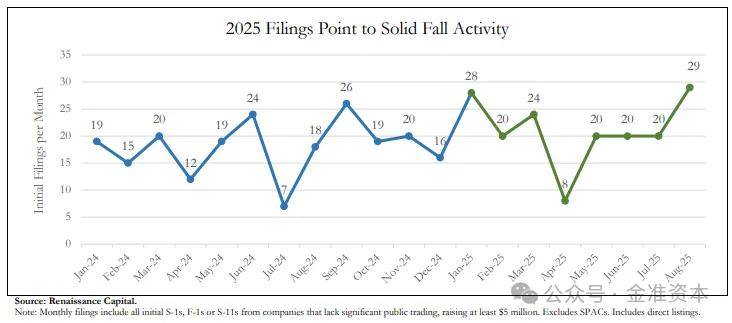
Group 1 - The US IPO market is expected to rebound in 2025, with 40-60 large IPOs anticipated, bringing the total to 190 and raising $35 billion [1] - Key sectors for potential IPOs include technology, fintech, and consumer goods, with Klarna and StubHub leading the way [1] - The list of companies to watch for potential IPOs in Q4 includes Avalara, Wealthfront, and Grayscale [1] - The momentum of the IPO rebound is expected to continue into 2026, with tech leaders like Databricks, Canva, and Proofpoint poised for recovery [1] Group 2 - As autumn approaches, trading activity is expected to reach its fastest pace since 2021, driven by a surge in IPO enthusiasm [2] - In August, 29 new IPO applications were submitted, with 10 seeking at least $50 million, double the number from the previous year [2] - A total of 113 US IPO companies submitted new or updated public applications in the past three months, with 15 seeking at least $50 million [2] - The thriving SPAC market is providing an alternative route for companies to go public [2] Group 3 - Technology IPOs are returning to the market at an encouraging pace, although overall activity remains below 2021 levels [4] - The pricing of tech IPOs this year has exceeded last year's levels, with many large transactions yielding substantial returns [4] - Retail investor enthusiasm for technology, fintech, cryptocurrency, and AI is driving this IPO rebound [4] Group 4 - Klarna, a leading IPO candidate, plans to raise $1 billion in its upcoming IPO, making it one of the largest IPOs of the year [5] - Other notable companies that submitted IPO applications in August include Netskope, Via Transportation, Figure, Pattern, and Gemini [5] Group 5 - Klarna offers "buy now, pay later" loans and has approximately 111 million active customers and 790,000 merchants across 26 countries as of June 2025 [7] - Klarna facilitated a total merchandise volume (GMV) of $112 billion in the 12 months ending June 30, 2025 [7]