
医药生物

Search documents
调研火爆,机构关注这些赛道
Huan Qiu Wang· 2026-02-23 01:47
Group 1 - Over 800 listed companies have disclosed institutional investor research records since the beginning of the year, with Daikin Heavy Industries being a popular target, attracting over 300 institutions for research [1][3] - In February, Tianneng Wind Power received research attention from over 200 institutions, indicating strong interest in the wind energy sector [1][3] - Daikin Heavy Industries revealed plans for major deliveries of overseas offshore wind monopile projects by 2026, primarily using the DAP delivery model [3] Group 2 - Tianneng Wind Power anticipates accelerated domestic offshore wind bidding and construction from 2025 to 2026, particularly in Guangdong, alongside global demand from Europe, Southeast Asia, Japan, and South Korea, suggesting sustained market growth [3] - Institutional interest is notably high in sectors such as machinery, automotive, and basic chemicals, with significant attention from institutions in the past month [3] - Citic Securities has conducted the most research, exceeding 200 times this year, reflecting a strong interest in A-share listed companies, particularly in bank stocks [3]



智通港股通资金流向统计(T+2)|2月23日
智通财经网· 2026-02-22 23:33
Core Insights - Tencent Holdings (00700), Xiaomi Group-W (01810), and Meituan-W (03690) ranked as the top three in net inflow of southbound funds, with net inflows of 1.457 billion, 1.029 billion, and 1.022 billion respectively [1] - WuXi Biologics (02269), Zijin Mining (02899), and Southern Hengtong Technology (03033) experienced the highest net outflows, with net outflows of -493 million, -457 million, and -363 million respectively [1] - In terms of net inflow ratio, Southern East Selection (03441), Yuan Da Pharmaceutical (00512), and Anhui Wanshan Expressway (00995) led the market with ratios of 1937.29%, 149.39%, and 144.79% respectively [1] Net Inflow Rankings - Tencent Holdings (00700) had a net inflow of 1.457 billion, representing an increase of 11.22% with a closing price of 548.000 [2] - Xiaomi Group-W (01810) saw a net inflow of 1.029 billion, with a net inflow ratio of 12.46% and a closing price of 37.100 [2] - Meituan-W (03690) recorded a net inflow of 1.022 billion, with a significant net inflow ratio of 30.48% and a closing price of 88.850 [2] Net Outflow Rankings - WuXi Biologics (02269) faced a net outflow of -493 million, with a net outflow ratio of -34.59% and a closing price of 41.400 [2] - Zijin Mining (02899) had a net outflow of -457 million, reflecting a -13.09% change with a closing price of 43.520 [2] - Southern Hengtong Technology (03033) experienced a net outflow of -363 million, with a net outflow ratio of -8.41% and a closing price of 5.380 [2] Net Inflow Ratio Rankings - Southern East Selection (03441) led with a net inflow ratio of 1937.29%, achieving a net inflow of 188 million and a closing price of 11.650 [3] - Yuan Da Pharmaceutical (00512) followed with a net inflow ratio of 149.39%, with a net inflow of 30.408 million and a closing price of 7.780 [3] - Anhui Wanshan Expressway (00995) had a net inflow ratio of 144.79%, with a net inflow of 12.383 million and a closing price of 13.580 [3]




美国1750亿美元关税退税,对A股的影响(附50股)
Sou Hu Cai Jing· 2026-02-21 11:41
Group 1 - The core point of the article is that the recent US Supreme Court ruling on the $175 billion tariff refund has significant implications for both China and the A-share market, despite the refund being an internal US matter [2][6][28] - The $175 billion in tariffs was primarily collected from imports, including a 10% tariff on Chinese goods, and is now being refunded to US importers [8][10] - The refund will indirectly benefit Chinese companies as US importers, who have been financially strained by tariffs, will use the refunded money to pay off debts to Chinese suppliers and resume orders [12][14][28] Group 2 - The immediate impact on the A-share market is expected to be positive, with a potential "opening red" for A-shares as market sentiment improves following the ruling [40][46] - The ruling is seen as a signal that the previous high tariffs on Chinese goods may not be a permanent state, which could lead to a more favorable environment for Chinese exports [20][48] - Structural opportunities in the A-share market are identified, focusing on five main lines: export-oriented sectors, domestic substitution, strategic resources, domestic consumption, and new energy [51][62][88] Group 3 - Export-oriented sectors, particularly those with high exposure to the US market, are expected to benefit directly from the tariff refunds, with companies like Midea Group and Haier expected to see improved performance [52][72][73] - Domestic substitution and self-sufficiency in sectors like semiconductors and military equipment are highlighted as long-term strategic focuses, with companies like SMIC and AVIC Shenyang Aircraft being key players [53][78][86] - Strategic resources such as rare earths and gold are also expected to see price support due to ongoing global supply chain disruptions, benefiting companies like Northern Rare Earth and Shandong Gold [56][87]




华泰 | 海外看中国:海外上市公司如何看中国修复
Xin Lang Cai Jing· 2026-02-20 01:40
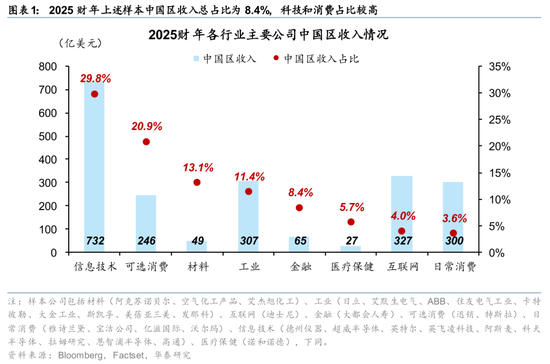
Core Insights - Domestic demand recovery is ongoing, with technological advancements and emotional consumption as structural highlights [1] - 45% of multinational companies reported improved performance in Q4 2025, while 33% expect further improvement [1][5] - The real estate sector continues to drag down growth, but there are notable structural strengths, particularly in technology and service consumption [1][5] Domestic Demand - Overall domestic demand remains weak, but there are structural highlights such as optimistic prospects for renovation in coatings and elevators [2][12] - Service and emotional consumption are experiencing high demand, with companies like Estée Lauder and Procter & Gamble reporting double-digit growth in specific product lines [2][12] - Companies are adapting to trade friction by increasing localization, with ABB reporting over 85% localization in China [2][12] Trade Friction - Localization strategies are being adopted by companies to mitigate the impact of trade tensions, with some firms shifting to local development and sales models [2][12] - Companies like SKF are facing supply chain pressures due to trade policy uncertainties, but are implementing measures to manage these risks [34] Technology - There is a slight decline in external demand for technology products, with a trend towards domestic substitution becoming evident [3][13] - Traditional companies are benefiting from increased demand driven by technological advancements, particularly in the semiconductor sector [3][13] - U.S. export restrictions and domestic competition are impacting overseas companies' revenues in China [3][13] Industry Summaries Materials and Industrial - Demand for materials and industrial products is generally weak, but there are structural demands in electronic gases due to the semiconductor industry [14][26] - The coatings sector is showing resilience due to renovation demand, while traditional electrical and elevator businesses are facing declines [14][27] Consumer Sector - The consumer sector shows significant differentiation, with companies like Uniqlo experiencing revenue declines due to increased competition [20][21] - High-end products in the beauty sector are performing well, while food and beverage sectors are facing slight declines [21][22] Financial Services - MetLife's operations in China are showing strong recovery, with a focus on optimizing distribution channels and enhancing service offerings [19][41] - The company is transitioning away from telemarketing and focusing on high-end customer segments [41] Technology Hardware - Semiconductor companies maintain a high revenue share in China, but face challenges from export controls and supply chain adjustments [23][30] - Companies like Intel and AMD are experiencing delays and increased competition from local manufacturers [30][31] Machinery - Caterpillar anticipates positive growth in the Chinese market, particularly in larger excavators, while SKF is facing challenges in the automotive sector [32][33] - Companies are adjusting their strategies to focus on local development and sales, with a shift in production towards Southeast Asia [39]
从诊室到“碳汇林”,医疗自愿碳中和的三明样本
2 1 Shi Ji Jing Ji Bao Dao· 2026-02-15 00:33
Group 1 - The medical industry is increasingly addressing carbon emissions as part of ESG initiatives, with 52 pharmaceutical and biotech companies in A-shares required to disclose their annual carbon emissions within two months [1] - A medical carbon sink demonstration forest covering 148 acres has been established in Changkou Village, Sanming City, which is recognized as the first "carbon ticket" village in China [1][8] - The average carbon emissions for a hospitalized patient is approximately 100 kilograms of CO2, necessitating the planting of three trees to offset this amount [4] Group 2 - The "voluntary carbon neutrality action" in Sanming combines healthcare and carbon sinks, allowing patients to offset their carbon emissions through tree planting and other green actions [3][4] - The carbon emissions from the medical industry are significant, arising from the use of surgical instruments, medical supplies, transportation, and food consumption during patient care [4] - The "medical green carbon index" concept has been proposed to quantify the effectiveness of integrating healthcare with green carbon initiatives by comparing annual carbon sink volumes with total carbon emissions from medical processes [5][6] Group 3 - The 148-acre medical carbon sink forest has an annual carbon sink capacity of 74 tons, with contributions from 26 medical teams and international volunteers [8] - The project aims to create a traceable and verifiable carbon neutrality mechanism, allowing patients to donate carbon sinks through a mini-program, which will be recorded as a "carbon benefit banner" to express gratitude to doctors [7][8] - Sanming City, known for its high forest coverage rate of 77.12%, is leveraging its dual pilot programs in medical and forestry reforms to provide a scientific measurement and authoritative verification platform for national medical carbon neutrality actions [7][8]
中国消费名品名单公布,江苏+20
Sou Hu Cai Jing· 2026-02-14 12:12
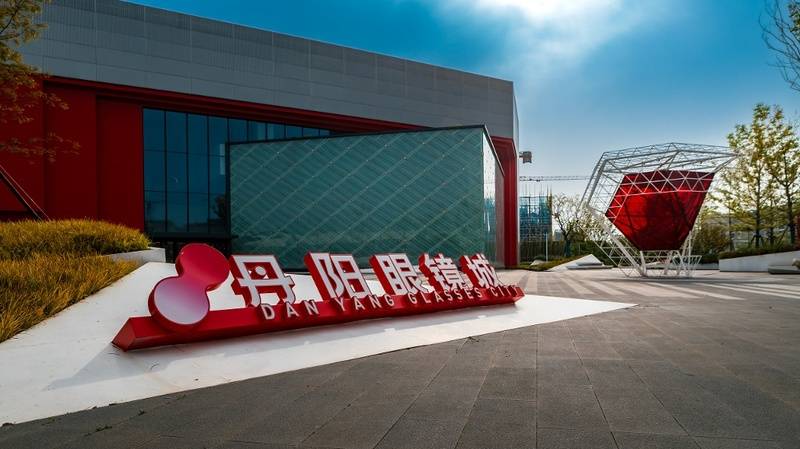
Core Viewpoint - Jiangsu Province has 20 brands recognized in the latest 2025 China Consumer Brand List, highlighting the province's commitment to high-quality consumer goods and brand development [1][3]. Group 1: Brand Recognition - The "China Consumer Brand" list includes 276 brands, consisting of 165 enterprise brands, 76 regional brands, and 35 brands for specific demographics [1][3]. - Notable brands from Jiangsu include Yanghe and Hengshun as "Historical Classics," while brands like Shenghong, Hongdou, and Saint Elephant are recognized as "Era Quality Products" [3]. Group 2: Regional Brands - Five regional brands from Jiangsu are recognized: Danyang Glasses, Changshu Outdoor Sportswear, Yixing Ceramics, Hangji Toothbrush, and Xinghua Condiments [3][13]. Group 3: Specific Demographic Brands - Brands catering to specific demographics include Goodbaby and Gong An Kang for "Maternal and Child Products," and Su Yun for "Assistive Products" [3][19]. Group 4: Compliance and Support - Companies on the list are required to operate with integrity, fulfill social responsibilities, and continuously provide high-quality products and services [3][19]. - Local governments will enhance promotion and support for these recognized brands, aiming to cultivate distinctive industries and quality consumer brands [3].



劲方医药-B获纳入恒生指数系列及MSCI指数成份股
Zhi Tong Cai Jing· 2026-02-13 14:36
Group 1 - The company has been included in multiple indices, such as the Hang Seng Composite Index (HSCI), Hang Seng Hong Kong Stock Connect Index, and Hang Seng Innovative Drug Index, effective March 9, 2026 [1] - The inclusion in the MSCI Global Small Cap Index will take effect after the market closes on February 27, 2026, reflecting the company's growing recognition in the market [1] - The Hang Seng Composite Index covers the top 95% of companies listed on the Hong Kong Stock Exchange, making it a significant benchmark for index funds and performance evaluation [1] Group 2 - The company will also be included in various other Hang Seng indices, such as the Hang Seng Composite Small Cap Index and the Hang Seng Healthcare Index, indicating broad market acceptance [2] - The board believes that inclusion in these important indices demonstrates investor recognition of the company's value and growth potential, which is expected to enhance stock liquidity and diversify the shareholder base [2] - The company aims to strengthen its leading position in the RAS sector and enhance its international competitiveness in innovative drug fields, driving value creation through its R&D advantages [2]
创业板指系列指数走强,创业板ETF易方达(159915)本周交投活跃,日均成交额近30亿元
Sou Hu Cai Jing· 2026-02-13 09:58
Group 1 - The ChiNext Mid-Cap 200 Index increased by 3.5%, the ChiNext Growth Index rose by 2.5%, and the overall ChiNext Index saw a 1.2% increase this week [1][3] - The average daily trading volume of the ChiNext ETF managed by E Fund (159915) approached 3 billion yuan [1] - China Galaxy Securities suggests that the spring market trend is likely to continue in the short term, with a high probability of sector rotation and an increased focus on the fundamentals of performance, particularly in the technology innovation sector [1] Group 2 - The ChiNext Mid-Cap 200 Index consists of 200 medium-sized stocks with good liquidity, reflecting the overall performance of representative companies in the ChiNext market [4] - The information technology sector accounts for over 40% of the ChiNext Mid-Cap 200 Index, while the power equipment, communication, and electronics industries together account for nearly 60% [4] - There are currently 17 ETFs tracking the ChiNext Index, 5 tracking the ChiNext Mid-Cap 200 Index, and 1 tracking the ChiNext Growth Index, with varying fee rates and tracking errors [4] Group 3 - The rolling price-to-earnings (P/E) ratio for the ChiNext Index is 42.7 times, for the ChiNext Mid-Cap 200 Index is 114.7 times, and for the ChiNext Growth Index is 41.4 times [3] - The rolling P/E ratio percentile indicates that the ChiNext Index is at a 41.3% percentile, while the ChiNext Growth Index is at 48.0% [3][5] - The cumulative performance over the past year shows the ChiNext Index increased by 47.9%, the ChiNext Mid-Cap 200 Index by 27.3%, and the ChiNext Growth Index by 70.3% [7]


蛇年大幅收涨:沪指24.83%,深指37.73%,创业板指62.31%
Guan Cha Zhe Wang· 2026-02-13 08:16
Core Viewpoint - The A-share market has shown a slow bull pattern in the Year of the Snake (2025), with significant gains across major indices, driven by policy support, economic recovery, and external environment fluctuations [2][4]. Market Performance - As of the last trading day of the Year of the Snake, the Shanghai Composite Index closed at 4082.07, the Shenzhen Component Index at 14100.19, the ChiNext Index at 3380.83, and the North Star 50 at 1529.77 [2]. - The Shanghai Composite Index increased by 24.83% for the year, while the Shenzhen Component Index rose by 37.73%. The ChiNext Index led with a 62.31% increase, followed by the North Star 50 and the Sci-Tech 50, which rose by 42.59% and 48.65%, respectively [2]. Sector Performance - In 2025, the non-ferrous metals sector topped the performance chart with a 109.89% increase, followed by the communication, electronics, and power equipment sectors, which rose by 90.78%, 58.08%, and 57.80%, respectively. Other sectors like computers, automobiles, and pharmaceuticals saw increases between 15% and 30% [3]. - Concept sectors also performed well, with the optical module (CPO) index leading at 119.25%, followed by the storage chip index at 98.63%, the lithography machine index at 74.61%, the semiconductor index at 70.07%, and the robotics index at 55.11% [3]. Individual Stock Performance - Nearly 4700 stocks saw price increases, with 779 stocks doubling in price and over 100 stocks increasing by more than 200%. The top three performers, excluding newly listed stocks, were Upway New Materials, Tianpu Co., and Jiamei Packaging, with increases exceeding 1800%, 900%, and 800%, respectively. Only 23 stocks fell by more than 40%, with 8 stocks declining over 50% [3]. Trading Activity - The A-share market experienced high trading activity, with daily trading exceeding 1 trillion yuan becoming the norm. The average daily trading volume rose to 1.89 trillion yuan, a nearly 70% increase compared to the previous year, with days exceeding 2 trillion yuan accounting for 35% of trading days [3]. Future Outlook - The investment environment for the A-share market in the Year of the Horse (2026) is expected to continue improving, with a slow bull market likely to persist. Key drivers include policy benefits, economic recovery, and technological leadership. Sectors such as semiconductors and artificial intelligence are anticipated to maintain strong performance, while caution is advised for cyclical sectors like non-ferrous metals and new energy [4].
澳洋健康实控人变更,三季报业绩增长超500%
Jing Ji Guan Cha Wang· 2026-02-13 03:43
Group 1: Corporate Governance Changes - In September 2025, the controlling shareholder, Aoyang Group, transferred 20% of its shares to Zhangjiagang Yuesheng Technology Co., Ltd., changing the actual controller to the Zhangjiagang Economic and Technological Development Zone Management Committee, officially integrating the company into the local state-owned assets system [2] - In January 2026, the company completed a board restructuring, appointing Gao Yan as the new chairman, while the former chairman, Shen Xueru, became the vice chairman. The share transfer was completed in November 2025 [2] Group 2: Financial Performance - According to the Q3 2025 report, the company's net profit attributable to shareholders for the single quarter was 8.56 million yuan, a year-on-year increase of 533.86%, but the revenue for the first three quarters was 1.36 billion yuan, a year-on-year decrease of 9.39% [3] - The non-recurring net profit for Q3 increased by 63.23% year-on-year, indicating an improvement in the core business profitability [3] Group 3: Market Dynamics - On February 3, 2026, the net inflow of main funds was 448,000 yuan, with the stock price rising by 2.12% and a trading volume of 54.62 million yuan; however, on January 30, there was a net outflow of 6.93 million yuan, leading to a 2.07% drop in stock price [4] - Year-to-date, the stock price has increased by 9.32%, but it has decreased by 3.77% over the past 60 days, showing a volatile trend [4] Group 4: Industry Environment - The pharmaceutical and biotechnology industry benefits from long-term trends such as an aging population and supportive policies for innovative drugs, which may provide structural opportunities for the company's medical services business [5] - However, high valuations need to be matched by performance growth to avoid volatility risks [5]
