短视频

Search documents
TikTok东南亚月活用户突破4.6亿丨出海周报
2 1 Shi Ji Jing Ji Bao Dao· 2025-11-03 06:32
Group 1: Trade Relations - The U.S. will cancel the 10% "fentanyl tariff" on Chinese goods, while the 24% reciprocal tariff will remain suspended for another year [2] - Both parties agreed to extend certain tariff exclusion measures and reached consensus on fentanyl cooperation, expanding agricultural trade, and handling specific corporate cases [2] Group 2: E-commerce and Digital Economy - Guangzhou's foreign trade import and export reached 923.68 billion yuan in the first three quarters, a year-on-year increase of 12.5% [3] - TikTok's Southeast Asia user base has surpassed 460 million, with Indonesia having the highest number of users at over 160 million [4] - Meituan's international delivery brand Keeta has officially launched operations in Abu Dhabi, expanding its presence in the UAE [5] Group 3: Financial Performance - Amazon reported third-quarter revenue of $180.169 billion, a 13% increase year-on-year, with net profit rising 38% to $21.187 billion [6] - eBay's third-quarter net revenue was $2.82 billion, exceeding market expectations, with a projected fourth-quarter revenue range of $2.83 billion to $2.89 billion [8] Group 4: Market Adjustments - Shopee announced its exit from the Colombian and Chilean markets due to strategic adjustments, while maintaining operations in Southeast Asia and other Latin American markets [9] - TEMU has opened its platform for local sellers in Brazil, marking a shift from cross-border to local sales [10] Group 5: Company Developments - Fengbo International secured $71 million in funding to accelerate platform development and expand international market reach [11] - Anker Innovations reported a revenue of 21.019 billion yuan in the first three quarters, with overseas business accounting for over 96% of total revenue [12] - Pop Mart opened its first store in the Middle East at Hamad International Airport in Qatar, marking a significant step in its global expansion strategy [14]


杭州网红大撤退
盐财经· 2025-11-01 05:43
Core Insights - The article discusses the decline of the rental market in Hangzhou, particularly for influencers and content creators, as the boom in the live streaming and short video industry has slowed down significantly [5][7][15]. Group 1: Market Conditions - In 2019, rental properties in Hangzhou were in high demand, but by 2025, the market has cooled significantly, with landlords offering incentives like rent-free months to attract tenants [5][7]. - The number of people in rental groups has decreased, indicating a downturn in the rental market [5][7]. - Influencers are increasingly sensitive to rental prices, with many expressing a desire for lower rents due to unstable incomes [11][13]. Group 2: Influencer Dynamics - Many influencers who initially moved to Hangzhou for opportunities are now leaving for cities like Chengdu and Changsha, as the promise of success in the "influencer capital" has diminished [7][9]. - The average monthly salary for mid-tier influencers has dropped by 30% year-on-year, reflecting the broader industry downturn [13]. - Influencers are no longer willing to pay a premium for desirable rental properties, indicating a shift in their priorities and financial realities [11][13]. Group 3: Housing Trends - The rental market previously thrived on the influx of influencers, with properties designed specifically for their needs, but this trend is reversing as demand decreases [16][21]. - The once-coveted luxury apartments are now less appealing, and many influencers are opting for more affordable housing options [11][21]. - The rise of hotel-style luxury apartments was a response to the needs of influencers, but the market is now adjusting to a new reality where such properties are less in demand [21][26]. Group 4: Future Outlook - The article suggests that the rapid growth of the influencer economy in Hangzhou may have peaked, leading to a reassessment of living and working conditions for content creators [15][27]. - As the market stabilizes, there is a potential shift towards more practical and sustainable living arrangements for influencers, with a focus on cost-effectiveness [15][27]. - The ongoing changes in the rental market reflect broader trends in the influencer economy, where adaptability and resilience are becoming essential for survival [15][27].

快手发布EMER框架,“自进化”AI重塑短视频推荐模式
Sou Hu Cai Jing· 2025-10-31 11:02
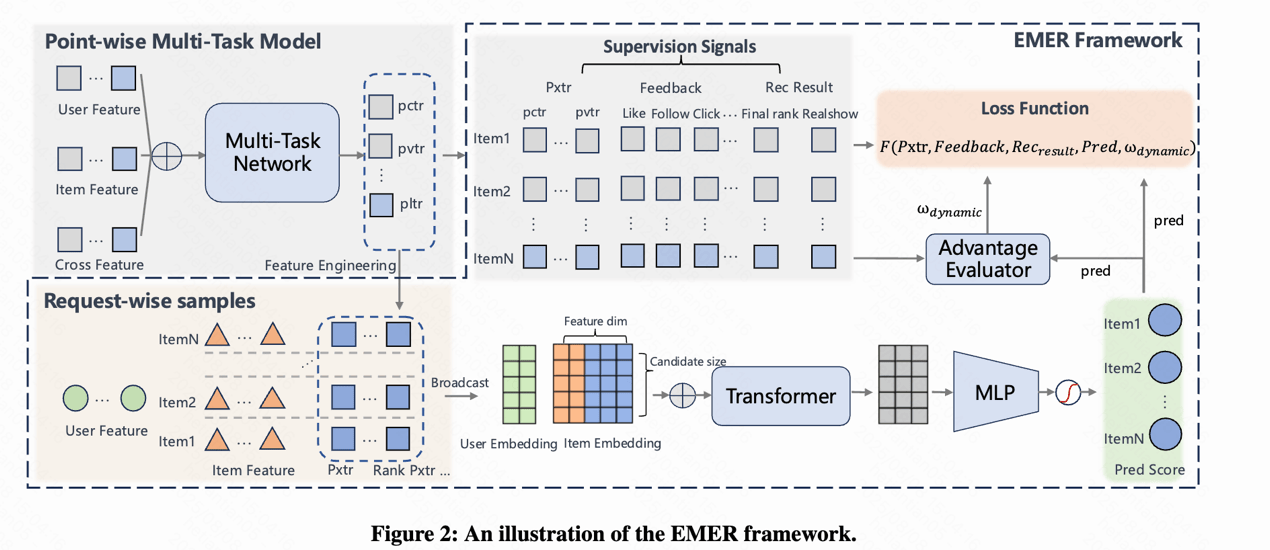
Core Insights - Kuaishou has launched a new end-to-end multi-objective fusion ranking framework called EMER, which enhances user retention and engagement metrics significantly [1][3][6] Group 1: Traditional Recommendation Challenges - The traditional recommendation system relied on manually designed formulas, which struggled to meet the complex and personalized needs of millions of users [2] - The limitations of the traditional approach included difficulties in balancing conflicting goals such as user retention and video views, leading to challenges in precise parameter tuning [2] Group 2: EMER Framework Innovations - EMER's core breakthrough is its ability to enable AI models to compare and select from a batch of candidate videos, aligning more closely with real-world recommendation scenarios [2] - The framework employs a method system based on "relative advantage satisfaction + multi-dimensional satisfaction proxy indicators," allowing for effective supervision and continuous optimization of user satisfaction [2] Group 3: Performance Metrics - The EMER framework has demonstrated significant improvements in key performance metrics: - Kuaishou's app saw a 0.133% increase in seven-day retention and a 1.199% increase in user stay time - The Kuaishou Lite version experienced a 0.196% increase in retention and a 1.392% increase in stay time - Video views increased by 2.996% [3][4] Group 4: Cross-Scenario Application - EMER has been successfully integrated into Kuaishou's end-to-end generative recommendation system, OneRec, resulting in an additional 0.56% increase in stay time, showcasing its robust cross-scenario and cross-link reuse capabilities [6]

京东“指责”抖音操纵平台舆论
YOUNG财经 漾财经· 2025-10-30 13:02
Group 1 - The core issue revolves around a 5 million yuan penalty notice sent by JD.com to Midea Group, which has sparked discussions about potential "choose one" practices in the market [3] - JD.com has denied the allegations of "choose one" practices, asserting that Midea has also clarified the misinformation surrounding the reports [3] - JD.com claims that the rumors have gained traction on platforms like Douyin and Toutiao, suggesting possible manipulation of public opinion and unfair competition by these platforms [3]



京东采销回应“定价”风波,指责抖音利用流量内容优势操控舆论
Guan Cha Zhe Wang· 2025-10-30 12:13
Core Viewpoint - The company firmly opposes unfair price competition from Douyin and aims to provide consumers with better and fairer prices, emphasizing the need for a fair competitive environment in the market [1][2]. Group 1: Response to Market Competition - The company publicly addressed the recent controversy regarding pricing and penalties, specifically the claim of a 5 million yuan fine against Midea, which was later denied by Midea [1]. - The company criticized Douyin and other short video platforms for spreading false information and manipulating public opinion, calling for regulatory scrutiny of such practices [1][2]. Group 2: Commitment to Consumers and Partners - The company aims to offer high-quality and affordable products and services to consumers, standing against Douyin's alleged coercive pricing strategies that require merchants to price higher on the company's platform [2]. - The company emphasizes its principle of sharing profits with brand partners to promote their long-term development and achieve a win-win situation [2].

扔掉人工公式:快手EMER框架,用“会比较、自进化”的模型重构短视频推荐排序
机器之心· 2025-10-30 03:49
Core Viewpoint - The article discusses the introduction of a new ranking framework called EMER by Kuaishou, which utilizes an end-to-end multi-objective ensemble ranking approach to enhance video recommendations, addressing the limitations of traditional manual ranking methods [1][46]. Group 1: Introduction of EMER - Traditional video recommendation systems relied on manually designed formulas to rank videos based on user engagement metrics, which faced challenges in meeting diverse user preferences [1][5]. - EMER replaces this outdated method with an AI model that learns to compare videos rather than assigning independent scores, allowing for a more nuanced understanding of user preferences [5][6]. Group 2: Technical Innovations - EMER innovates at three levels: data, features, and model architecture. It uses a full candidate set for training, incorporates relative ranking information, and employs a Transformer-based model to capture relationships between videos [6][9]. - The model's ability to see all candidate videos in a single request helps mitigate exposure bias and enhances the comparison basis for ranking [7][8]. Group 3: User Satisfaction Measurement - EMER defines user satisfaction through relative satisfaction metrics rather than absolute scores, allowing the model to learn user preferences more effectively [12][14]. - It employs multi-dimensional satisfaction proxy indicators to address the sparsity of user feedback, ensuring a comprehensive understanding of user satisfaction [15]. Group 4: Self-Evolution Mechanism - EMER includes a self-evolution module that dynamically adjusts the weight of different objectives based on real-time performance, enhancing the model's adaptability to changing user behaviors [20][21]. - This mechanism has shown significant improvements in multiple metrics without the trade-offs typically seen in traditional models [21][22]. Group 5: Validation and Results - EMER has been implemented in Kuaishou's main app and has demonstrated substantial improvements in key performance indicators such as seven-day retention and app stay time, outperforming previous manual ranking methods [30][34]. - The model's effectiveness has been validated through A/B testing, showing consistent enhancements across various metrics [31][36]. Group 6: Industry Implications - EMER addresses three core challenges in the industry: defining user satisfaction, understanding the comparative nature of ranking, and establishing effective learning objectives for models [47][48]. - The framework serves as a practical reference for other companies looking to optimize their recommendation systems, showcasing its potential for broader application in the industry [49].

杭州网红大撤退
36氪· 2025-10-28 10:17
Core Viewpoint - The article discusses the significant changes in the rental market in Hangzhou, particularly for internet celebrities and content creators, highlighting a shift from a booming market to a more challenging environment due to the slowdown in the live streaming and short video industry [5][8][17]. Group 1: Market Conditions - The rental market in Hangzhou has cooled down significantly, with landlords offering incentives like rent-free months and flexible payment options to attract tenants [6][8]. - The number of people in rental groups has decreased, indicating a decline in demand for rental properties [6][11]. - Many internet celebrities are leaving Hangzhou for other cities like Chengdu and Changsha, as the once-promising opportunities in the city have diminished [8][11]. Group 2: Changes in Tenant Behavior - Internet celebrities are now more price-sensitive and unwilling to pay premium rents for better accommodations, reflecting a shift in their financial stability [13][15]. - The belief in "feng shui" or the significance of living in historically successful properties has diminished among tenants, as they focus more on practical living conditions [13][15]. - The average monthly salary for mid-tier internet celebrities has decreased by 30% year-on-year, leading to a more cautious approach to housing [15]. Group 3: Industry Dynamics - The rental market previously thrived on the influx of internet celebrities, but as their numbers dwindle, the market is adjusting to a new reality [19][30]. - The competitive landscape for internet celebrities has intensified, with many struggling to maintain their status and income levels [21][22]. - The rise and fall of properties like Lijing International reflect the volatile nature of the market, where once-coveted locations are now less desirable [24][30]. Group 4: Future Outlook - The article suggests that the current environment may lead to a strategic retreat for many content creators, as they reassess their positions and consider relocating to lower-tier cities with better support [30][31]. - The shift in focus from individual success stories to a more pragmatic approach to living and working conditions indicates a broader trend in the industry [17][31]. - The potential for new opportunities in the market remains, but they will require adaptation to the changing landscape and a reevaluation of business strategies [26][30].

从靠天吃饭到知天而作,新农人在快手 “送技到垄头”
Sou Hu Cai Jing· 2025-10-27 21:39
Core Insights - The article discusses the transformation of rural areas through the integration of technology and information, highlighting the role of platforms like Kuaishou in bridging the information gap between urban and rural communities [2][3][25] Group 1: Information Gap in Agriculture - Traditional farmers often lack access to modern agricultural techniques and market information, leading to low productivity and financial losses [6][8] - Farmers face challenges in understanding agricultural policies and subsidies, resulting in missed opportunities for financial support [9][11] - The article emphasizes the cycle of "having grain but no buyers" and "having buyers but no grain," which is exacerbated by regional information disparities [8][9] Group 2: Role of Influencers in Rural Development - Influencers like @大虫儿, @农业小燕子, and @维丰助农 have emerged as key figures in disseminating agricultural knowledge and connecting farmers with markets [3][20] - These influencers utilize short videos and live broadcasts to simplify complex agricultural concepts and provide real-time market information [18][20] - Their efforts have led to significant improvements in agricultural practices, with increased adoption of techniques like "large ridge planting" resulting in higher yields [13][15] Group 3: New Agricultural Economy - The influx of young individuals returning to rural areas is creating a new wave of "vital new farmers" who leverage technology to enhance agricultural productivity [4][25] - Kuaishou has become an essential platform for rural communities, facilitating the flow of information and creating a sustainable "new agricultural business" model [27][28] - The article highlights the success of these influencers in building trust and community engagement, leading to a sustainable cycle of content creation, community interaction, and commercial conversion [28][29]

杭州网红大撤退
创业邦· 2025-10-27 10:11
Core Viewpoint - The article discusses the decline of the rental market in Hangzhou, particularly for influencers and content creators, as the boom in the live streaming and short video industry slows down, leading to a significant drop in demand for rental properties designed for this demographic [5][7][9]. Group 1: Market Conditions - The rental market in Hangzhou has cooled significantly, with landlords struggling to find tenants despite offering incentives like rent-free months and flexible payment options [5][9]. - Influencers who once flocked to Hangzhou for opportunities are now leaving for cities like Chengdu and Changsha, as the allure of quick success diminishes [7][9]. - The number of people in rental groups has decreased, indicating a broader trend of declining interest in the Hangzhou rental market [5][9]. Group 2: Influencer Behavior - Influencers are becoming more price-sensitive, often requesting lower rents due to unstable incomes and a shift in market dynamics [11][13]. - The once-popular belief in "feng shui" related to rental properties has diminished, as influencers focus more on practical considerations rather than perceived mystical benefits [11][13]. - The average monthly salary for mid-tier influencers has dropped by 30% year-on-year, reflecting the broader economic challenges faced by this group [13]. Group 3: Industry Dynamics - The rental market's growth was previously tied to the number and status of influencers, particularly in key districts like Binjiang and Jiubao [17]. - The rise of influencer culture led to a surge in demand for luxury rental properties, but this trend has reversed as the industry faces a downturn [17][20]. - The competitive landscape for influencers has intensified, with many struggling to maintain their status and income levels [21][30]. Group 4: Future Outlook - As the myth of quick wealth through live streaming fades, many young people are reassessing their living costs and career paths, leading to a more cautious approach to renting and career choices [15][31]. - The article highlights a shift in focus from individual influencers to companies and studios seeking office spaces, indicating a potential pivot in the market [30][31]. - The future of the rental market in Hangzhou remains uncertain, with ongoing discussions about the mutual dependency between the city and its influencer community [31].

杭州网红大撤退
投资界· 2025-10-27 08:18
Core Viewpoint - The article discusses the decline of the rental market in Hangzhou, particularly for influencers and content creators, as the once-booming industry faces challenges and many are leaving the city in search of better opportunities [4][5][19]. Group 1: Market Conditions - The rental market in Hangzhou has cooled significantly, with properties that were once in high demand now struggling to find tenants [5][7]. - Influencers who previously flocked to Hangzhou for opportunities are now leaving for cities like Chengdu and Changsha, indicating a shift in the influencer landscape [5][9]. - The average monthly salary for mid-tier influencers has decreased by 30% year-on-year, reflecting the broader downturn in the industry [8]. Group 2: Influencer Behavior - Influencers are becoming more price-sensitive and are unwilling to pay premium rents for properties that were once considered desirable [7][8]. - Many influencers are now opting for short-term rentals rather than long-term commitments, indicating a lack of confidence in the market [9][10]. - The once strong belief in the "feng shui" of rental properties has diminished, as influencers prioritize cost over perceived value [8][9]. Group 3: Industry Dynamics - The rise of MCN (Multi-Channel Network) agencies in Hangzhou had previously driven demand for rental properties, but as these agencies face challenges, the rental market is also affected [15][18]. - Major influencers and their teams are relocating back to cities like Guangzhou, leading to a further decline in demand for rental properties in Hangzhou [18][19]. - The influx of new companies and influencers into Hangzhou has slowed, with many now seeking opportunities in lower-tier cities due to better support policies [18][19].