
运输设备

Search documents
中集车辆获融资买入0.13亿元,近三日累计买入0.38亿元
Jin Rong Jie· 2025-07-30 01:11
7月29日,沪深两融数据显示,中集车辆获融资买入额0.13亿元,居两市第2413位,当日融资偿还额0.12 亿元,净买入49.12万元。 最近三个交易日,25日-29日,中集车辆分别获融资买入0.14亿元、0.12亿元、0.13亿元。 本文源自:金融界 作者:智投君 融券方面,当日融券卖出0.12万股,净卖出0.12万股。 ...

日本选举风波后,日元资产如何看
2025-07-22 14:36
Summary of Key Points from the Conference Call Industry Overview - The discussion primarily revolves around the Japanese economy and its currency, the yen, in the context of recent political developments and economic challenges [1][3][5]. Core Insights and Arguments - **Economic Stagnation and Inflation Risks**: Japan is facing stagflation risks due to external trade war pressures and rising domestic food prices, particularly affecting the export of transportation equipment due to high tariffs, which has weakened overall export data and reduced residents' purchasing power [1][3]. - **Political Landscape**: Following the recent Senate elections, the ruling Liberal Democratic Party (LDP) lost its majority, leading to a mismatch in government power and legislative authority. This has raised concerns about fiscal discipline, as the opposition advocates for fiscal expansion and tax cuts, while the ruling party is cautious about increasing debt levels [1][3][4]. - **Monetary Policy Normalization**: The Bank of Japan's move towards normalizing monetary policy has resulted in rising long-term Japanese government bond yields, compounded by high U.S. bond yields, which exacerbates Japan's debt issues and raises market concerns about fiscal management [1][5]. - **Short-term Outlook for Yen Assets**: Yen assets are expected to remain under pressure in the short term due to weak economic fundamentals, stalled U.S.-Japan trade negotiations, and internal political instability. A recovery in market risk appetite is contingent on the resolution of election-related uncertainties and clarity on tax reduction policies [1][3][4]. - **Structural Opportunities in Specific Sectors**: Despite the overall economic challenges, there are structural investment opportunities in sectors such as high-end manufacturing, particularly semiconductors and communication equipment, which are expected to perform well due to policy support [1][6][8]. Additional Important Content - **Military Spending**: Japan's military spending has reached a historical high in the new fiscal year, which could benefit domestic stocks if the opposition pushes for tax cuts. This increase in military expenditure is also a factor to consider in the broader economic context [1][6]. - **Impact of Political Risks on Currency**: The yen's performance is influenced by multiple factors, including internal political risks and debt constraints. While there are concerns about long-term credit risks if the opposition promotes fiscal stimulus, the current political risks are deemed limited, reducing the likelihood of significant currency depreciation [2][7][9]. - **High-end Manufacturing Investment**: The ruling party's cautious fiscal approach does not extend to high-end manufacturing, where there is active investment, indicating potential growth in this sector despite broader economic weaknesses [8]. This summary encapsulates the key points discussed in the conference call, highlighting the challenges and opportunities within the Japanese economy and its currency dynamics.
【财经分析】美对欧关税差异化冲击 意大利出口受累汇率“隐形税”
Xin Hua Cai Jing· 2025-07-18 03:02
Group 1 - Italy is facing dual pressures from the US-EU trade tensions, including a proposed 30% tariff on EU goods and a weakening dollar impacting export competitiveness [1][2] - Italy's exports to the US account for 10% of its total exports, with a trade surplus of €39 billion expected in 2024, indicating a higher dependency on the US market compared to the EU average [2][3] - The sectors most affected by the tariffs include beverages, automobiles, and other transportation equipment, with the average tariff impact on Italy being higher than the overall EU level [2][3] Group 2 - If the 30% tariff is implemented, Italy's exports to the US could decrease by nearly 20%, resulting in an economic loss of €12.4 billion [3] - The weakening dollar is creating an "invisible tax" on Italian exports, making US goods cheaper and foreign goods more expensive, which could further exacerbate the impact of any additional tariffs [4][5] - In May, Italy's imports from the US grew by 18.5%, while exports only increased by 2.5%, highlighting the adverse effects of the currency exchange rate [5] Group 3 - Over 6,000 Italian companies are directly exposed to the risks posed by increased US tariffs, with small and medium-sized enterprises being the most affected [6] - The export sector is crucial for Italy's economy, and the combination of tariffs and currency issues could lead to significant economic repercussions [7] - There is a risk that companies may relocate production to the US due to the declining attractiveness of investment in Europe [7]
“没有美国并非无法生存”!巴西总统卢拉强硬表态:没有义务使用美元进行贸易
Hua Er Jie Jian Wen· 2025-07-11 00:31
Group 1 - Brazilian President Lula stated there is no obligation to conduct trade in US dollars and emphasized the need to seek other trade partners [1][2] - Lula mentioned that trade with the US accounts for only 1.7% of Brazil's GDP, indicating that Brazil can survive without the US [1] - The proposed 50% tariff by Trump could severely impact key Brazilian export sectors, including steel products, transportation equipment, and non-metallic minerals [2] Group 2 - The US is Brazil's second-largest trading partner, following China, and the proposed tariffs are politically motivated, linked to the judicial proceedings against former President Bolsonaro [2] - Brazil currently has a trade deficit with the US, importing approximately $44 billion worth of US products while exporting about $42 billion [2]
爱沙尼亚5月份货物贸易进出口总额同比增长4.1%
Shang Wu Bu Wang Zhan· 2025-07-10 16:03
Group 1 - In May 2025, Estonia's total goods trade reached €3.43 billion, a year-on-year increase of 4.1% [1] - Exports amounted to €1.57 billion, growing by 1.9%, while imports were €1.86 billion, increasing by 6.1% [1] - The trade deficit was €280 million, which is an increase of €78 million compared to the same period last year [1] Group 2 - The most exported goods in May 2025 were electrical equipment, accounting for 15.3% of total exports, with an 11% year-on-year increase [1] - Agricultural products and food preparations made up 12.7% of exports, growing by 16% [1] - The largest import category was agricultural products and food, comprising 13.7% of total imports, with a 5% increase [1] Group 3 - In the first five months of 2025, Estonia's total goods trade reached €17.17 billion, a year-on-year increase of 9.6% [2] - Cumulative exports for this period were €7.85 billion, up by 9.3%, while imports totaled €9.32 billion, increasing by 9.8% [2] - The trade deficit for the first five months was €1.46 billion, which is an increase of €160 million compared to the previous year [2]
中国行业:分化加剧,破局在途
Hua Tai Qi Huo· 2025-07-06 12:56
Report Summary 1. Investment Rating The provided content does not mention the industry investment rating. 2. Core Viewpoints - In 2025, the core contradiction throughout the upstream, midstream, and downstream industries is the "structural gap during the new - old kinetic energy conversion period." In the first half of the year, the industry was affected by external uncertainties, with intensified internal differentiation, and overall prosperity relied on policy support. In the second half of the year, with the "two new" policies further boosting domestic demand and upgrading the industrial structure, the industry is expected to achieve a systematic leap from "quantity" to "quality" expansion [2][7]. 3. Summary by Directory Market Overview - **Upstream Materials**: In H1 2025, raw material prices were under pressure due to weak demand and Sino - US trade conflicts, showing significant differentiation. In H2, the structural differentiation will continue. Enterprises should focus on capacity elimination, tariff negotiations, and climate risks [8]. - **Midstream Manufacturing**: In H1 2025, it presented a differentiated pattern of "traditional under pressure, high - tech doing well." In H2, policies will support both demand and supply - side reforms, and traditional manufacturing is expected to break through cost dilemmas through intelligent and digital transformation [8]. - **Downstream Consumption**: In H1 2025, it showed a "weak recovery" pattern. In H2, the consumption market will continue to be structurally differentiated, and the recovery highly depends on policy implementation efficiency and business model innovation [9][10]. Upstream: Raw Material Price Fluctuations - **H1 2025 Situation**: Raw material prices were under pressure. Metal mining showed a divergence between black and non - ferrous metals; chemical raw materials had multi - directional fluctuations; energy sources like crude oil and coal were more differentiated; most agricultural products were at near - five - year lows [8][15]. - **H2 2025 Outlook**: The price differentiation will continue. Traditional raw materials' rebound depends on supply - side reforms and policy support, while emerging demand - driven products are more resilient. Enterprises should focus on capacity elimination, tariff reviews, and extreme weather [15][16]. Midstream: Short - term Stabilization, Continued New - Old Kinetic Energy Conversion - **Overall Situation**: In H1 2025, the manufacturing industry was affected by external factors, with traditional manufacturing under pressure and high - tech manufacturing supported by policies. After the tariff war, there was short - term stabilization, and both external and internal demands recovered to some extent [43][53]. - **Traditional Manufacturing**: In H1 2025, profits declined due to over - capacity and weak demand. In H2, policies will expand to more traditional manufacturing sectors, promoting transformation and efficiency improvement [59][75]. - **High - tech Manufacturing**: In H1 2025, it recovered significantly compared to the beginning of the year, benefiting from strong policy support. In H2, it is expected to continue to improve [69][75]. Downstream: Intensified Retail Differentiation, Weak Real Estate Recovery - **Retail Industry**: In H1 2025, online e - commerce grew due to the "trade - in" policy, while traditional physical retail was under pressure. In H2, the differentiation will continue, with emerging formats having growth potential and traditional retail relying on policy and innovation [82][93]. - **Leasing Industry**: In H1 2025, it was in a downturn. In H2, the "price - for - volume" trend will continue, and the de - stocking of commercial land will continue [92][93]. - **Real Estate Industry**: In H1 2025, it achieved "weak stabilization" under policy support. In H2, it is expected to continue to recover slowly with further policy optimization and improved supply - demand balance [99][115].
中国贸促会:4月全球经贸摩擦指数进一步走高
Xin Hua Cai Jing· 2025-06-27 08:16
Core Insights - The global trade friction index reached 131 in April, indicating a significant increase in trade friction measures, with a year-on-year rise of 37.6% and a month-on-month rise of 16% [1] Group 1: Trade Friction Measures - The U.S. government implemented "reciprocal tariffs" on April 2 due to trade deficits and non-tariff barriers, contributing to the rise in the global trade friction index [1] - The global import and export tariff measures index increased by 89 points year-on-year, while the index for China-related import and export tariff measures rose by 131 points [1] - The U.S. global trade friction index grew by 65 points year-on-year, with the import and export tariff measures index increasing by 199 points, and the China-related import and export tariff measures index rising by 200 points [1] Group 2: Country-Specific Insights - Among 20 monitored countries and regions, the U.S., Japan, and India had the highest global trade friction indices, with the U.S. leading in the amount of trade friction measures for 10 consecutive months [1] Group 3: Industry-Specific Insights - Trade friction measures are concentrated in 13 major industries, particularly in electronics, transportation equipment, light industry, chemicals, machinery, pharmaceuticals, non-ferrous metals, and agriculture, with the electronics industry having the highest trade friction index [1] Group 4: Sub-Index Data - A total of 105 import and export tariff measures were reported across the 20 monitored countries and regions, marking a year-on-year increase of 483% and a month-on-month increase of 250% [2] - There were 24 import and export restriction measures reported, reflecting a year-on-year increase of 60% and a month-on-month increase of 50% [2] - The EU saw a 79.3% month-on-month increase in the number of import and export tariff and restriction measures, while Canada and India reported a 100% year-on-year increase in related measures [2]
“全球经贸摩擦态势显著加剧”!
第一财经· 2025-06-27 06:24
Core Viewpoint - The article highlights the significant escalation of global trade frictions due to recent U.S. tariff policies, with a notable increase in the global trade friction index and related measures impacting various industries and countries [1][2][6]. Group 1: Global Trade Friction Index - In April, the global trade friction index rose to 131, with related measures involving an amount that increased by 37.6% year-on-year and 16% month-on-month [2]. - The global import and export tariff measures index surged by 89 points year-on-year, with the China-related portion increasing by 131 points [4]. - The U.S. trade friction index increased by 65 points year-on-year, with its import and export tariff measures index skyrocketing by 199 points, and the China-related tariff measures index rising by 200 points [4]. Group 2: Country-Specific Observations - Among 20 countries monitored, the U.S., Japan, and India have the highest trade friction indices, with the U.S. being the largest country in terms of trade restriction measures for 10 consecutive months [7]. - The European Union saw a 79.3% month-on-month increase in tariff and restriction measures, while Canada and India experienced a 100% year-on-year increase in related measures [8]. Group 3: Industry Impact - Thirteen major industries, including electronics, transportation equipment, light industry, chemicals, machinery, pharmaceuticals, non-ferrous metals, and agriculture, have become focal points of trade frictions, with the electronics sector experiencing the highest friction index [8]. - A total of 105 tariff measures were introduced across the monitored countries, marking a 483% year-on-year increase and a 250% month-on-month increase [8]. Group 4: China's Foreign Trade Resilience - Despite external pressures, China's foreign trade has shown strong resilience, with the total number of various certificates issued by the trade promotion system reaching 639,400 in May, a year-on-year increase of 12.51% [9]. - The value of preferential certificates issued by the trade promotion system amounted to $7.911 billion, reflecting a year-on-year growth of 36.05% [9]. Group 5: U.S.-China Business Relations - A recent survey by the American Chamber of Commerce in China indicates that 67% of member companies have no plans to relocate, affirming China as a primary investment destination [11]. - The ongoing cooperation between U.S. and Chinese businesses is emphasized, with significant participation from U.S. companies in upcoming trade events, indicating a continued interest in collaboration despite trade tensions [12][13].

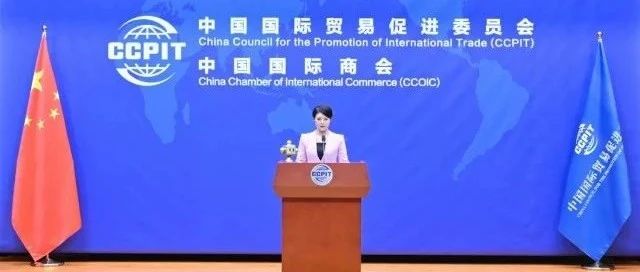
贸促会:全球经贸摩擦态势显著加剧,进出口关税措施指数同比飙升89个点
Di Yi Cai Jing· 2025-06-27 05:24
Group 1 - The main reason for the increase in the global trade friction index in April is the series of tariff policies implemented by the US government, which significantly escalated global trade tensions [1][3] - In April, the global trade friction index rose to 131, with related measures involving an amount that increased by 37.6% year-on-year and 16% month-on-month [1] - The US has been the country with the largest amount of trade restriction measures for ten consecutive months, with the electronics industry being the most affected sector [3] Group 2 - The number of tariff measures implemented by monitored countries increased by 483% year-on-year and 250% month-on-month, with 105 new measures introduced [3] - The import and export restriction measures also saw a year-on-year increase of 60%, with 24 new measures reported [3] - The trade friction index for China from 19 countries/regions was recorded at 153, indicating a high level of trade friction, particularly in the electronics, light industry, and machinery sectors [4] Group 3 - Despite external pressures, China's foreign trade has shown resilience, with a significant increase in the issuance of various certificates by the trade promotion system [5] - The value of preferential certificates issued by the trade promotion system reached $7.911 billion, reflecting a year-on-year growth of 36.05% [5] - The Regional Comprehensive Economic Partnership (RCEP) certificates also saw a year-on-year increase of 20.22% in value [5] Group 4 - A recent survey by the American Chamber of Commerce in China indicated that 67% of member companies have no plans to relocate, highlighting China as a primary investment destination [6] - The number of American exhibitors at the upcoming trade fair is expected to increase by 15%, indicating continued interest in the Chinese market [6] - The China Council for the Promotion of International Trade has facilitated numerous exchanges and cooperation projects between Chinese and American businesses over the past 20 years [7]
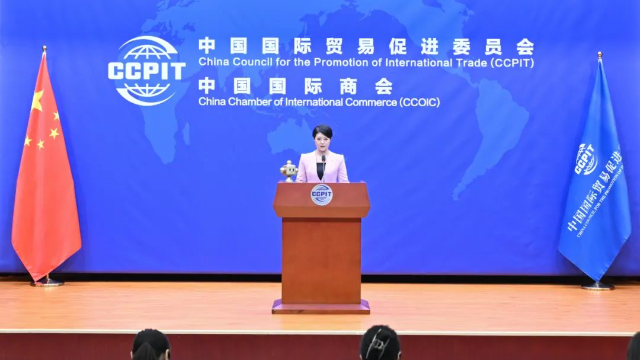
4月全球经贸摩擦指数涉及金额同比上升37.6%
news flash· 2025-06-27 02:26
Core Insights - The global trade friction index for April shows a significant year-on-year increase of 37.6% in the amount involved [1] - The United States, Japan, and India rank as the top three countries in terms of global trade friction index [1] - The U.S. has the highest amount of trade friction measures, maintaining the top position for ten consecutive months [1] Industry Insights - Among 13 major industries monitored, trade friction conflicts are concentrated in electronics, transportation equipment, light industry, chemicals, machinery, pharmaceuticals, non-ferrous metals, and agriculture [1] - The electronics industry has the highest trade friction index among the monitored sectors [1]