航天

Search documents
研报掘金丨浙商证券:维持联创光电“买入”评级,布局商业航天领域电磁弹射火箭发射
Ge Long Hui· 2025-12-26 08:00
Core Viewpoint - Lianchuang Optoelectronics is strategically entering the commercial aerospace sector with electromagnetic catapult rocket launches, while its laser and superconducting businesses are poised for growth [1] Group 1: Commercial Aerospace Development - By 2028, China's commercial aerospace sector is expected to establish its first high-temperature superconducting electromagnetic catapult test line [1] - As of September 5, three rockets manufactured at the Ziyang base have successfully launched, with the "Gushenxing No. 2" rocket by Xinghe Power entering a critical development phase [1] - The electromagnetic catapult verification platform is being debugged, aiming for the world's first electromagnetic catapult rocket launch by 2028 [1] Group 2: Superconducting Electromagnetic Catapult - Superconducting electromagnetic catapults represent a new solution for rocket launches, achieving breakthroughs in cost, frequency, and reliability [1] - Magnets are the most valuable single component in nuclear fusion equipment, accounting for approximately 28% of the construction cost of engineering verification reactors [1] Group 3: Nuclear Fusion Projects - Numerous domestic controlled nuclear fusion projects are under construction and are expected to peak in the coming years, positioning the company to benefit from the bidding for these projects [1] - The company focuses on its "laser + superconducting" business, which is expected to open up long-term growth opportunities [1] Group 4: Financial Projections - The company is projected to achieve a net profit attributable to shareholders of 500 million, 620 million, and 770 million yuan for the years 2025, 2026, and 2027, respectively [1] - Corresponding price-to-earnings ratios (PE) are expected to be 52, 42, and 34 times for the same years [1] - The company maintains a "buy" rating based on these projections [1]

太强了!8900亿矿业巨头,股价大涨创历史新高!沪指8连阳,这些板块拉爆了,有个股7连板...
雪球· 2025-12-26 07:51
↑点击上面图片 加雪球核心交流群 ↑ 沪指8连阳,截至收盘,沪指涨0.1%,深成指涨0.54%,创业板指0.14%。沪深两市成交额2.16万亿,较上一个交易日放量2357亿。 商业航天概念再度爆发,神剑股份7连板,中国卫星3连板,通宇通讯、隆基机械、上海港湾等十余股涨停。 有色大涨,紫金矿业、洛阳钼业均创历史新高。海南自贸概念反复活跃,海南发展6天5板。 造纸、白酒、算力硬件等板块跌幅居前,其中算力硬件概念表现较弱,长光华芯跌超11%。 01 8900亿紫金矿业 历史新高 今天盘中,沪铜期货主力合约、沪金期货主力合约、沪银期货主力合约、铂期货主力合约盘中集体创历史新高,碳酸锂期货主力合约盘中一度突破 13万元/吨关口。 有色金属板块集体走强,两大龙头股紫金矿业、洛阳钼业股价大涨,均创历史新高。 其中紫金矿业大涨4.68%,单日成交额95亿元,最新市值8915亿元。 | 33.53 +1.50 +4.68% CN 融 通 L1 | 64.82万人加自选 ( = = == > | | --- | --- | | 高 33.77 开 32.60 量 286.20万手 总市值 8915.54亿 | | | 低 32. ...




新华社出图·年度记忆|闪耀世界的中国科技之光
Xin Hua She· 2025-12-26 07:17
Group 1 - China's innovation index has entered the global top ten for the first time, marking a significant milestone in the country's technological advancement [1][2] - The year 2025 is a critical point for China as it concludes the "14th Five-Year Plan" and sets new goals for rapid breakthroughs in key core technologies [20] - The integration of technological innovation and industrial innovation is deepening, enhancing the role of innovation in driving development [20] Group 2 - Major breakthroughs in space exploration have been achieved, including the successful test of the "Dream Boat" manned spacecraft and the operation of the Jiangmen Neutrino Experiment, which is the world's first large-scale neutrino facility [5][16] - The launch of new high-speed real-time oscilloscopes with bandwidth exceeding 90GHz signifies China's advancement in the global electronic communication industry [11] - The successful operation of the "Haiqin" deep-sea unmanned remote-controlled vehicle demonstrates China's capabilities in deep-sea research [18] Group 3 - The release of Harmony OS on computers represents a significant step for Huawei in the computer operating system market [22] - The development of AI technologies is showcased through various exhibitions, highlighting the growing presence of artificial intelligence in daily life and industry [28][10] - The successful birth of the first cloned yak in Tibet indicates advancements in biotechnology and animal breeding [20]
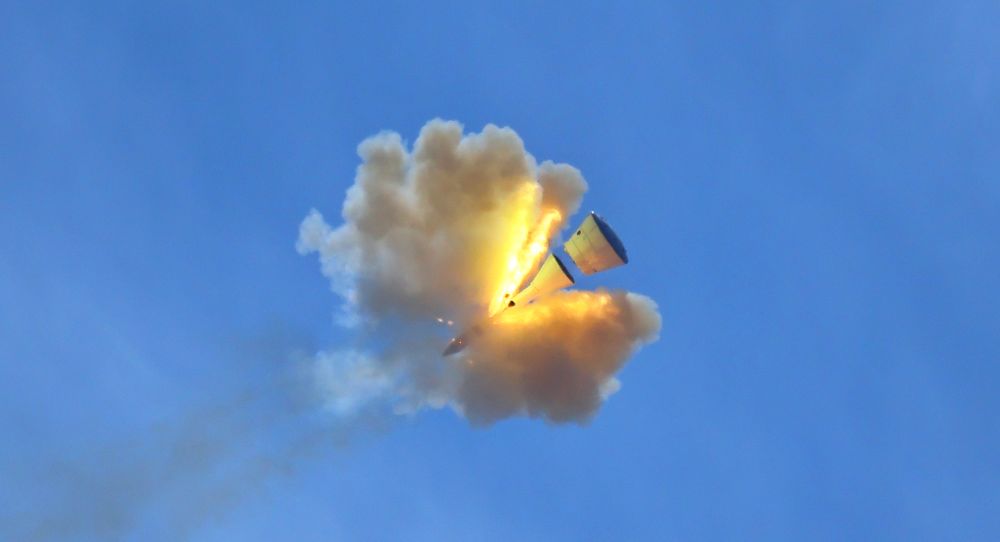
沪指8连阳
财联社· 2025-12-26 07:14
今日A股市场冲高回落, 沪指放量微涨0.1%,录得8连阳。 沪深两市成交额2.16万亿,较上一个交易日放量2357亿。 盘面上,市场热点快速轮动,全市场超3400只个股下跌。从板块来看 ,商业航天概念再度爆发 ,神剑股份7连板,中国卫星3连板,通宇通讯、隆基 机械、上海港湾等十余股涨停。锂电产业链走强,天际股份4天3板,佛塑科技、丰元股份、永兴材料涨停。海南自贸概念反复活跃,海南发展6天5 板,洲际油气、京粮控股涨停。福建板块局部拉升,厦门国贸3连板。 两市成交额:2.16万亿 市场热度: 31 0 较上一日: +2357亿 今日预测量能: 50 0 100 2.16万亿 | +2357亿 下载财联社APP获取更多资讯 下跌方面,造纸、白酒、算力硬件等板块跌幅居前。其中算力硬件概念表现较弱,长光华芯跌超11%。 截至收盘,沪指涨0.1%,深成指涨0.54%,创业板指0.14%。 上证指数 创业板指 深证成指 -3963.68 -13603.89 -3243.88 +4.06 +0.10% +72.48 +0.54% +4.53 +0.14% 市场概况 2853 1210 473 349 187 143 119 ...

新华社出图·年度记忆丨闪耀世界的中国科技之光
Xin Hua She· 2025-12-26 06:24
Group 1 - China's innovation index has entered the global top ten for the first time, showcasing rapid growth in technological innovation capabilities [1] - The year 2025 marks the conclusion of the "14th Five-Year Plan," with a focus on achieving breakthroughs in key core technologies and enhancing the integration of technological and industrial innovation [20] - Significant advancements in space exploration have been made, including successful tests of manned lunar exploration vehicles and the launch of major space science satellite missions [3][5][17] Group 2 - The 2025 World Internet Conference showcased advancements in robotics and artificial intelligence, indicating a strong presence of innovative technologies in various sectors [6][21] - The launch of a new generation of ultra-high-speed real-time oscilloscopes, achieving bandwidths exceeding 90GHz, highlights China's leadership in the global electronic communication industry [9] - The successful operation of the Jiangmen Neutrino Experiment, the world's first large-scale neutrino facility, represents a significant milestone in high-precision scientific research [14]
美专家:想要打败中国,美国唯一的机会,就是拉着全世界一起上
Sou Hu Cai Jing· 2025-12-26 06:15
Core Insights - The focus of the U.S. strategic community regarding China has shifted from immediate issues like tariffs and trade deficits to long-term considerations of rule-making and control over emerging domains [1][3] - The real competition between the U.S. and China is now seen in five key areas: deep sea, polar regions, space, cyberspace, and financial systems, which are crucial for future infrastructure and international rule-setting [3][7] Group 1: Emerging Domains - The U.S. is lagging in the deep-sea domain, which is vital for future technological industries, while China has invested years in building technological reserves and participating in international rule-making [7] - In the polar regions, China's strategy involves cooperation and infrastructure planning, while the U.S. struggles with limited capabilities and slow equipment updates [9] - The space sector is witnessing significant changes, with China drawing more countries into its technological framework, posing a long-term challenge to U.S. dominance [11] Group 2: U.S. Strategic Challenges - The U.S. is losing its credibility as a rule-maker, with allies increasingly questioning its reliability due to frequent sanctions and a self-centered approach [13] - The current U.S. strategy emphasizes the need to rebuild global alliances, but the international environment now demands tangible benefits rather than empty rhetoric [15] - There is a growing anxiety among U.S. experts that time is not on their side, as the competition in emerging fields is just beginning while the opportunity window is rapidly closing [15][16] Group 3: Future Outlook - The future will not be determined by who is the most aggressive, but by who invests in long-term relationships and infrastructure, emphasizing patience and collaboration over confrontation [16]
马斯克,今年赚了地球上其他人一生都赚不到的钱
财联社· 2025-12-26 06:03
Core Insights - In 2025, the global billionaire population experienced record wealth growth, driven by advancements in artificial intelligence and the technology sector [1] - The total wealth of billionaires reached $18.7 trillion, an increase of $3.6 trillion from the previous year, and up $10 trillion since 2020 [1] - The number of billionaires with a net worth exceeding $100 billion reached a record 19, compared to only one six years ago [1] Billionaire Rankings - Elon Musk leads the billionaire list with a net worth of $751.9 billion, primarily from Tesla and SpaceX [2] - Larry Page and Larry Ellison follow with net worths of $258.1 billion and $249.3 billion, respectively, both benefiting from their stakes in Google [2] - The top ten billionaires collectively saw their wealth increase by over $700 billion in the past year, with Musk alone gaining $330.9 billion [2] Wealth Growth Factors - Musk's significant wealth increase is attributed to the soaring valuations of Tesla and SpaceX, with SpaceX's valuation more than doubling to $800 billion [3] - Larry Ellison experienced a record wealth increase of nearly $100 billion in a single day due to a 36% surge in Oracle's stock price [3] - Google founders Larry Page and Sergey Brin also saw substantial wealth growth due to the release of the Gemini 3 model, which boosted Google's stock [4] - Nvidia's CEO Jensen Huang benefited from a 30.37% increase in Nvidia's stock price, contributing to his rise in the billionaire rankings [4]




沪指V行拉升!阳光电源、比亚迪、紫金矿业、中国中免均涨超5%
Mei Ri Jing Ji Xin Wen· 2025-12-26 06:02
12月26日(周五),上证指数在3970点附近突发跳水,但午后V型拉升,强势翻红。截至13:45,上证指 数报3965点,创业板指、深证成指等主要指数跟随翻红,商业航天再度强势,中国卫星一度涨停,股价 创出历史新高,总市值逼近1000亿大关。 全市场跟踪沪深300的ETF,费率最低的为沪深300ETF华夏(510330.SH)。 (文章来源:每日经济新闻) 盘面上,有色金属、电力设备行业涨幅领先,整体上大市值风格占优,阳光电源、比亚迪、紫金矿业、 中国中免均涨超5%,均为沪深300指数成分股。 ...

A股午评:沪指盘中跳水跌0.19% 超3900股下跌
2 1 Shi Ji Jing Ji Bao Dao· 2025-12-26 04:11
Core Viewpoint - The market experienced a significant fluctuation with all three major indices dropping after an initial rise, indicating volatility in investor sentiment and market dynamics [1][2] Market Performance - The total trading volume in the Shanghai and Shenzhen markets reached 1.45 trillion, an increase of 251.3 billion compared to the previous trading day [1][2] - Over 3,900 stocks in the market declined, reflecting a broad-based sell-off [1][2] Sector Highlights - The lithium battery industry chain showed strong performance, with Tianji Co. achieving three consecutive trading limits in four days, and other stocks like Hongyuan Pharmaceutical and Yongxing Materials also hitting trading limits [1][2] - The commercial aerospace sector remained active, with Shenjian Co. achieving seven consecutive trading limits and Jiuding New Materials reaching four consecutive limits, alongside gains for Jiayuan Technology and Zhongchao Holdings [1][2] - The photovoltaic sector saw localized gains, with companies like GCL-Poly and Yijing Optoelectronics hitting trading limits [1][2] - The Hainan Free Trade Zone concept was notably active, with Hainan Development achieving five trading limits in six days [1][2] Declining Sectors - The computing hardware sector underperformed, with Changguang Huaxin experiencing a decline of over 10% [1][2] Index Closing - At market close, the Shanghai Composite Index fell by 0.19%, while the Shenzhen Component Index rose by 0.17%, and the ChiNext Index decreased by 0.15% [1][2]
大面积涨停,这一板块再度爆发
第一财经· 2025-12-26 02:14
编辑 | 钉钉 | 600736 苏州高新 +9.98% | | | 6.61 | | --- | --- | --- | --- | | 002201 九鼎新材 | | +9.98% | 12.45 | | 603278 大业股份 | | +9.97% | 12.80 | | 603601 | 再升科技 | +9.81% | 13.32 | | 605598 | | +9.06% | 67.51 | | 300699 | 光威复材 | +8.89% | 35.02 | 12月26日早盘,商业航天板块延续强势,再度掀起涨停潮。神剑股份7连板, 佳缘科技20%涨停,泰 尔股份、中超控股、电科网安、钧达股份、航天发展、隆基机械等十余股均涨停。 | 代码 | 名称 | 涨幅%v | 现价 | | --- | --- | --- | --- | | 301117 | 佳缘科技 | +20.00% | 59.21 | | 300900 广联航空 | | +18.90% | 37.11 | | 300503 | 昊志机电 | +12.55% | 48.87 | | 301079 | 邵阳液压 | +11.75% | 34 ...