计算机

Search documents
中国银河证券:A股市场长牛、慢牛基础进一步夯实 关注“两条主线+两条辅助线”
Zhi Tong Cai Jing· 2026-01-19 00:20
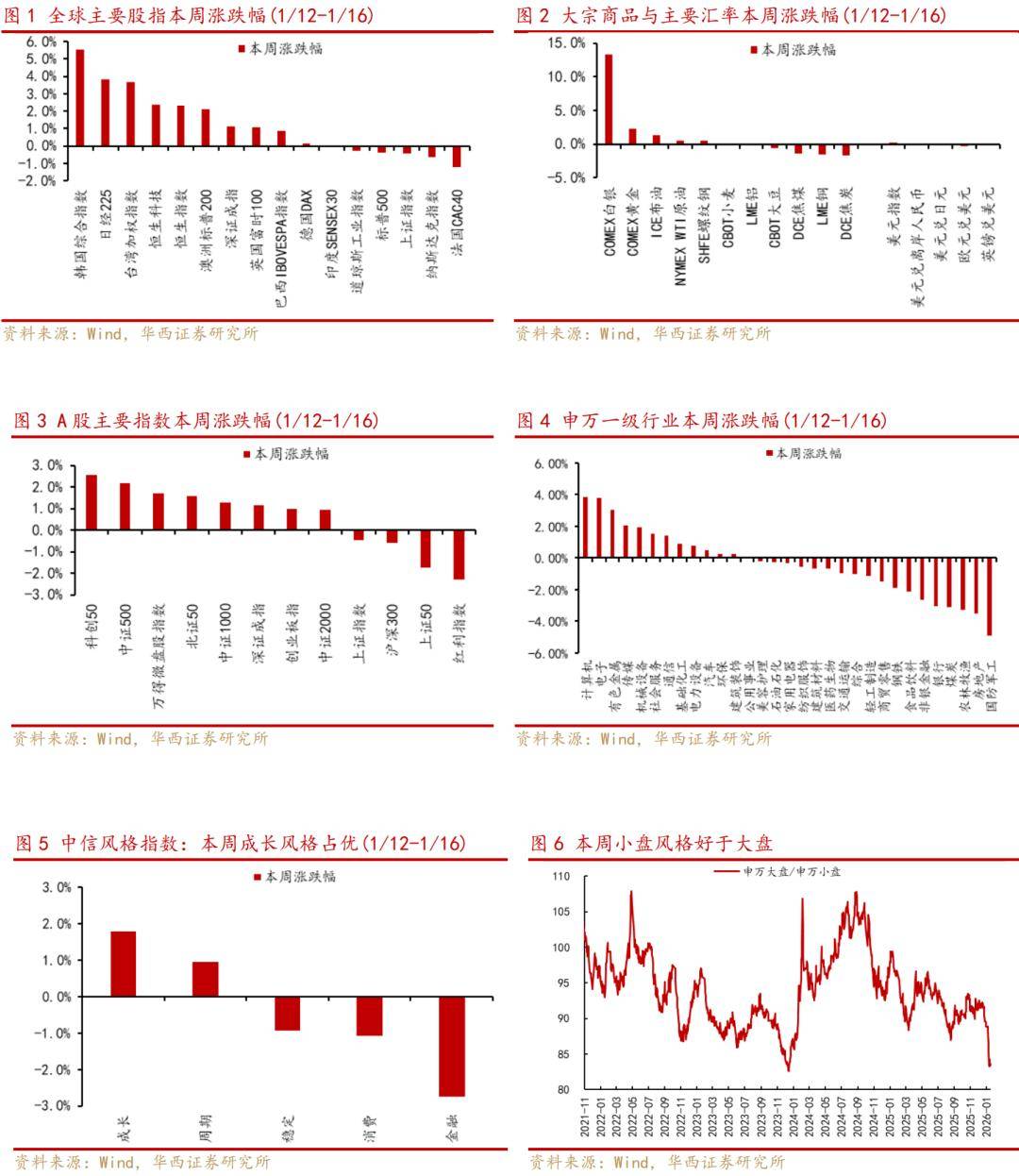
Core Viewpoint - The report from China Galaxy Securities indicates that investor sentiment has become highly active since the beginning of 2026, with a continuous increase in margin financing balance, reflecting policy signals aimed at guiding rational investment and maintaining market stability [1][4]. Group 1: Market Performance - During the week of January 12-16, the A-share market showed mixed performance, with the overall index rising by 0.49%. The Sci-Tech 50 index led with a 2.58% increase, while the Shanghai Composite Index and CSI 300 recorded declines [2]. - Small-cap stocks outperformed, with the CSI 1000 index rising by 1.27%, compared to a 0.57% drop in the CSI 300. Growth and cyclical styles also saw gains of 1.78% and 0.94%, respectively, while financial stocks fell by 2.73% [2]. Group 2: Fund Flows - A-share market trading activity significantly increased, with daily trading volume averaging 34,651 billion yuan, up by 6,131.1 billion yuan from the previous week. The average turnover rate rose to 2.705%, an increase of 0.47 percentage points [3]. - As of Thursday, the margin financing balance reached 27,187.27 billion yuan, an increase of 911.36 billion yuan from the previous week [3]. - In the week, 17 new equity funds were established, with a total issuance of 13.152 billion units, up by 12.191 billion units from the previous week, representing 68.17% of total issuance [3]. - From January 8 to January 14, global funds saw a net inflow of 4.111 billion USD into A-shares, accelerating from a previous inflow of 0.374 billion USD [3]. Group 3: Valuation Changes - The overall A-share index's PE (TTM) valuation increased by 0.28% to 23.28 times, placing it at the 94.63 percentile since 2010. The PB (LF) valuation also rose by 0.28% to 1.92 times, at the 56.28 percentile since 2010 [3]. Group 4: Investment Outlook - The report emphasizes that the recent increase in margin financing balance and the adjustment of financing margin ratios are intended to stabilize the market and promote rational investment. The central bank has implemented a series of monetary policy measures to support economic transformation and indicated that there is still room for further rate cuts, which is expected to boost market confidence [4].

新三板打造专精特新服务高地 2025年新增同意挂牌超300家
Zhong Guo Zheng Quan Bao· 2026-01-18 22:55
近日记者从全国股转公司获悉,2025年,全国股转公司新增受理挂牌申请318家(含直联15家),出具 同意挂牌函333家(含直联11家),一批质地优良、结构多元的企业通过新三板实现规范发展,八成新 增同意挂牌企业属于制造业,新三板在精准对接国家战略、服务实体经济方面成效显著。同时,新三板 与北交所的协同联动不断深化,为中小企业构建起全周期资本市场服务体系,切实发挥多层次资本市场 塔基作用。 增量企业质效双优 全国股转公司介绍,2025年新三板挂牌审核工作始终坚持质量导向,形成"增量带动存量"的良性发展格 局。数据显示,2025年新增同意挂牌企业最近一年平均营业收入达8.50亿元,平均净利润6072.24万元, 平均研发投入2892.79万元,分别是存量挂牌公司2024年对应指标的2.74倍、4.68倍、2.26倍,盈利能力 与创新能力显著优于存量企业。 业内人士表示,未来,随着各项改革措施的持续深化,新三板将进一步发挥培育规范功能,与北交所形 成更强协同效应,为创新型中小企业提供更优质的资本市场服务,助力实体经济高质量发展。 值得一提的是,三四板对接绿色通道的品牌效应持续凸显,成为服务专精特新企业的"快车道"。 ...
新三板打造专精特新服务高地
Zhong Guo Zheng Quan Bao· 2026-01-18 20:44
● 本报记者 杨洁 近日记者从全国股转公司获悉,2025年,全国股转公司新增受理挂牌申请318家(含直联15家),出具 同意挂牌函333家(含直联11家),一批质地优良、结构多元的企业通过新三板实现规范发展,八成新 增同意挂牌企业属于制造业,新三板在精准对接国家战略、服务实体经济方面成效显著。同时,新三板 与北交所的协同联动不断深化,为中小企业构建起全周期资本市场服务体系,切实发挥多层次资本市场 塔基作用。 增量企业质效双优 全国股转公司介绍,2025年新三板挂牌审核工作始终坚持质量导向,形成"增量带动存量"的良性发展格 局。数据显示,2025年新增同意挂牌企业最近一年平均营业收入达8.50亿元,平均净利润6072.24万元, 平均研发投入2892.79万元,分别是存量挂牌公司2024年对应指标的2.74倍、4.68倍、2.26倍,盈利能力 与创新能力显著优于存量企业。 2025年,新三板精准对接国家战略,将服务实体经济、普惠金融与专精特新培育紧密结合,形成特色鲜 明的市场定位。2025年新增同意挂牌企业中,50.75%为国家级专精特新"小巨人"企业,33.03%为省级 专精特新企业,新三板通过与工信部专精特 ...
成长股仍是优先主线
Xin Lang Cai Jing· 2026-01-18 17:25
Group 1 - The performance of various industry sectors was mixed, with notable gains in the computer, electronics, non-ferrous metals, and media sectors, driven by AI application concepts and the information technology innovation sector [1] - The electronics sector strengthened due to better-than-expected performance in storage chips and expectations of expanded demand for semiconductor equipment [1] - The non-ferrous metals sector maintained an upward trend supported by the strength of precious metals, industrial metals, and small metals sub-sectors [1] Group 2 - Growth stocks remain the market's priority, although there will be some internal structural shifts, with previously hot sectors like commercial aerospace, brain-computer interfaces, and AI applications experiencing short-term pullbacks [2] - As the earnings forecast disclosure period approaches, sectors with high earnings certainty such as AI computing power construction, storage chips, semiconductor equipment materials, innovative drugs, and CXO are recommended for allocation [2] - The continuous rise in commodity prices has increased market volatility, and regulatory tightening adds uncertainty, making stock opportunities potentially more reliable than commodities, while also highlighting the need to pay attention to underperforming sectors like rare earths [2]
湘财证券晨会纪要-20260118
Xiangcai Securities· 2026-01-18 14:46
Macro Commentary and Market Analysis - Recent macro data shows a rebound in exports with a year-on-year growth rate of 6.6% in December, up from 5.90% in November, leading to an annual cumulative growth rate of 5.50% [2][3] - M2 growth in December was 8.50%, expected to remain around 8% in 2025, indicating a "moderately loose" monetary policy that supports economic recovery [3] - M1 growth was only 3.80% in December, reflecting weak investment and consumption willingness among enterprises and residents [3] - M0 saw a significant increase of 10.2% in December, indicating strong cash demand and active payment activities [3] Industry and Company Analysis - The securities industry experienced a slight decline, with the brokerage index down 2.2%, underperforming the CSI 300 index by 1.6 percentage points [12] - The average daily stock trading volume reached 34,283 billion yuan, a 21.2% increase week-on-week, marking a historical high [13] - The financing scale for equity financing reached 1,113 billion yuan, with significant contributions from large-scale placements [14] - The current PB valuation of the brokerage index is 1.38x, which is at the 35th percentile of the last decade, indicating a low valuation relative to expected earnings growth [12][15] Investment Recommendations - The report suggests maintaining an "overweight" rating on the securities industry, highlighting the potential for valuation recovery due to favorable regulatory policies and increasing trading activity [15] - Focus is recommended on internet brokerages with strong beta attributes and firms with solid earnings certainty in an active market environment [15]
李立峰、张海燕:再论当前“春季行情”下的三条投资主线
Sou Hu Cai Jing· 2026-01-18 14:18
Market Review - The A-share market experienced a significant increase followed by a period of volatility, driven by a rapid rise in risk appetite among investors, particularly in small-cap and growth sectors. On January 14, the total trading volume across all A-shares reached a historic high of 3.99 trillion yuan, with margin financing balances hitting new records. However, regulatory adjustments to margin requirements led to a cooling off in trading activity, and the previously strong momentum in technology indices began to slow down. Commodities such as precious metals and crude oil saw price increases, while copper prices fluctuated at high levels and domestic coking coal prices declined. The US dollar index rose, and the offshore yuan appreciated against the dollar [1][2]. Market Outlook - Regulatory measures aimed at "counter-cyclical adjustment" are expected to support a "slow bull" market for A-shares. Following a surge in trading activity and margin financing, regulators signaled a need to mitigate risks by increasing the minimum margin requirement from 80% to 100%. This is part of a broader strategy to maintain market stability and prevent excessive volatility. Despite these measures, the overall valuation of A-shares remains reasonable, supported by macroeconomic policies, long-term capital inflows, and a moderate recovery in corporate earnings. As the end of January approaches, the focus will shift to earnings forecasts, particularly in technology sectors and areas experiencing price increases [2][3]. Key Focus Areas - The spring market rally has seen a rapid increase in trading activity, but regulatory signals have shifted the Shanghai Composite Index from a one-sided rise to high-level fluctuations. Since the rally began on December 17, various sources of capital have entered the market, including institutional funds and foreign investments, leading to a peak trading volume of nearly 4 trillion yuan. The margin financing balance surpassed 2.7 trillion yuan, indicating potential overheating risks. Regulatory interventions have prompted a transition to a more stable trading environment, while the overall trading volume remains high, reflecting sustained investor confidence [1][2]. Risk Premium and Valuation - As of January 16, the equity risk premium (ERP) for the CSI 300 index stood at 5.2%, close to the median level over the past decade. Compared to previous peaks in January 2018 and February 2021, the current ERP suggests that A-share valuations are relatively reasonable, although some sectors may be experiencing overheating. The sectors with the highest margin buying activity include electronics, power equipment, computers, military, and communications. Attention should be paid to the potential impact of reduced financing in high-volatility sectors [3][4]. Earnings Forecasts - The trend of a slow bull market for A-shares is expected to continue, with a focus on earnings forecasts as companies prepare to disclose their annual results. Macroeconomic policies are expected to support risk appetite, with the central bank implementing targeted monetary policies. The anticipated recovery in corporate earnings, particularly as the Producer Price Index (PPI) declines, will be crucial for market support. Key sectors to watch include technology, chemicals, and healthcare, especially those with high growth or turnaround potential in their earnings forecasts [4].

行情结束还是结构转向?
Huaan Securities· 2026-01-18 13:56
Market Insights - The report indicates that the increase in financing margin ratios is gradually being digested by the market, with the impact nearing its end. The central bank's structural interest rate cuts are expected to boost policy expectations, and additional policies may be introduced following the release of macroeconomic data for 2025, which could enhance market risk appetite [3][4] - The upcoming release of 2025 macroeconomic data on January 19 is anticipated to show a significant decline in GDP growth for Q4 compared to Q3. This, combined with various policy measures, suggests an increased probability of a "good start" for Q1, which is likely to uplift market risk appetite [4][11] Industry Allocation - The report asserts that the acceleration in market trends has not ended, but the structure of the upward trend is shifting towards computing power. The previous leading sectors, such as military and AI applications, have seen declines, raising investor concerns about the end of the current market phase. However, the report suggests that the current market phase may still extend with potential acceleration in sectors related to computing power [5][20] - As of January 12, 2026, the electric equipment sector has not yet reached new highs, indicating that the growth style and six major growth industries have not simultaneously achieved new highs. The report highlights that the electric equipment index has room for approximately 3% growth to meet this condition [20][23] - The report identifies that the communication and electronic sectors, which were previously strong, may experience a rapid rebound, with potential upward space of no less than 10%. The report emphasizes that the current market conditions do not satisfy the "stronger gets stronger" characteristic, as the leading sectors have not maintained their strength [20][24] - The report also notes that the turnover rates for the growth style and the communication sector are approaching their respective highs, but the communication sector still has a significant gap to close. This suggests that the current market phase has not yet concluded, and a rapid increase in turnover rates may accompany a rebound in the communication sector [27][31] Key Investment Themes - The report suggests two main investment themes: 1. The AI industry chain, particularly in computing power (CPO/PCB), supporting components (fiber optics/liquid cooling/power equipment), and applications (robots/games/software), is expected to continue its upward trend. The report anticipates that applications may experience high volatility, while computing power is likely to see accelerated growth [32][33] 2. Areas supported by favorable market conditions or significant events, such as storage and energy storage chains, military industry, and machinery, are also highlighted. The storage sector is expected to benefit from supply disruptions and increased AI demand, while the military sector may gain from commercial aerospace and geopolitical events [33]
计算机周观点第 31 期:千问发布 AI 助手,C 端进入超级 Agent 时代-20260118
GUOTAI HAITONG SECURITIES· 2026-01-18 13:43
Investment Rating - The report maintains an "Overweight" rating for the computer sector [4]. Core Insights - In January, Qianwen App achieved over 100 million monthly active users (MAU) and fully integrated with Alibaba's ecosystem to create a "Super Agent" [3][4]. - Alibaba Cloud is significantly increasing its investment in AI infrastructure, aiming to capture 80% of the incremental AI cloud market in China by 2026 [4]. - The brain-computer interface (BCI) industry is experiencing dual drives from policy and capital, with a focus on medical applications and ambitious targets set for 2027 and 2030 [4]. - AI4S is benefiting from policy support, with significant potential for applications in pharmaceuticals and new materials, as well as global innovation in AI applications [4]. Summary by Sections Qianwen App and AI Assistant - Qianwen App's MAU surpassed 100 million within two months of launch, integrating over 400 new features and becoming the first AI assistant to achieve a full-service chain from "search-decision-payment-fulfillment" [4]. Alibaba Cloud Investment - Alibaba Cloud plans to invest over 380 billion yuan in AI infrastructure over the next three years, with a goal to dominate the AI cloud market in China by 2026 [4]. Brain-Computer Interface Industry - The Shanghai government has issued a plan for BCI development, targeting high-quality "brain control" by 2027 and establishing a global innovation hub by 2030 [4]. - Zhejiang Qiang Brain Technology recently raised approximately 2 billion yuan for R&D and production, focusing on non-invasive technologies for rehabilitation [4]. AI4S Policy Support - The Chinese government has prioritized AI4S in its policy framework, with extensive support for its development across various sectors [4]. - Major tech companies like Apple and Google are collaborating to enhance their AI capabilities, indicating a robust market for AI innovations [4].





千问APP升级,Agent时代来临
Guotou Securities· 2026-01-18 13:38
Investment Rating - The report maintains an investment rating of "Outperform the Market - A" [5] Core Insights - The report highlights the upgrade of Alibaba's Qianwen APP, marking its transition from a "chat dialogue" tool to an "AI service era" with over 400 new functionalities integrated into Alibaba's ecosystem, including Taobao, Alipay, and Fliggy [1][10][23] - The upgrade is driven by three key technological advancements: AI coding capabilities for real-time tool construction, multimodal understanding for enhanced perception, and long-context processing for complex task execution [2][11] - The emergence of the AI Agent era is expected to reshape traffic entry points and accelerate application deployment, with large model apps becoming new traffic hubs in the "AI+" era [3][12] Summary by Sections Industry Performance - The computer sector outperformed the Shanghai Composite Index by 4.76% this week, with a weekly increase of 4.31% and a year-to-date increase of 13.10% [14][15][17] Market Trends - The report suggests focusing on new service demands related to traffic entry points and AI marketing companies, as well as products stemming from AI model upgrades [13] Important News - The report mentions significant developments such as Shanghai's plan for brain-computer interface industry cultivation and the State Grid's investment of 4 trillion yuan in new power systems during the 14th Five-Year Plan [21][22]

年用电量首超10万亿度 展现中国经济发展活力
Xin Lang Cai Jing· 2026-01-18 13:17
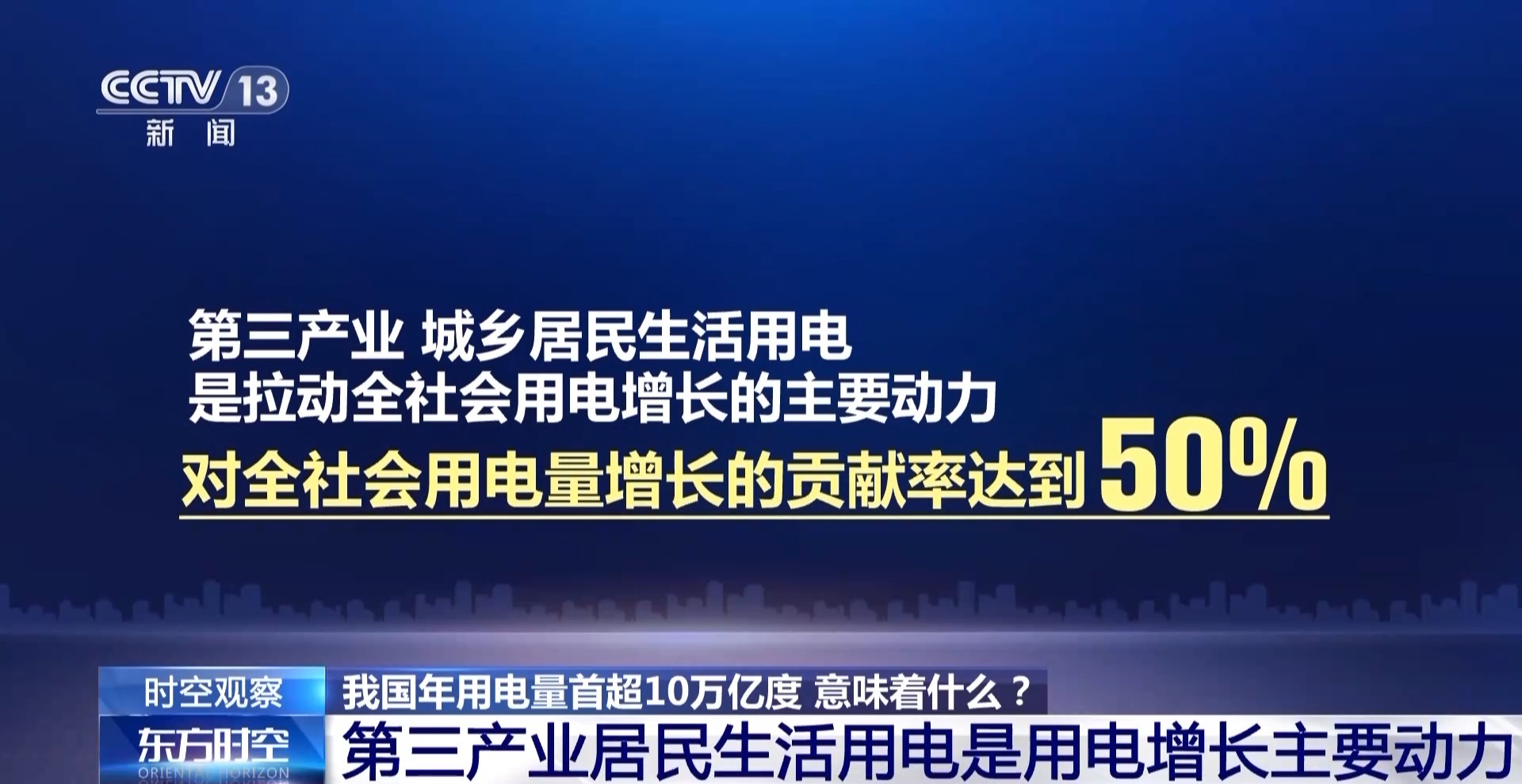
Group 1 - The core point of the article is that China's total electricity consumption is projected to exceed 10 trillion kilowatt-hours by 2025, marking a significant milestone as the first country to reach this level, which is more than double the annual electricity consumption of the United States and surpasses the combined consumption of the EU, Russia, India, and Japan [1][3][4] - In 2025, China's total electricity consumption is expected to reach 10,368.2 billion kilowatt-hours, representing a year-on-year growth of 5.0% [1][3] - The primary sectors contributing to this growth include the first industry with a consumption of 149.4 billion kilowatt-hours (up 9.9%), the second industry with 6,636.6 billion kilowatt-hours (up 3.7%), and the third industry with 199.4 billion kilowatt-hours (up 8.2%) [1][3] Group 2 - The third industry and residential electricity consumption are the main drivers of overall electricity growth, contributing to 50% of the increase [3][6] - The rapid growth in the third industry is attributed to sectors such as electric vehicle charging services, which saw a consumption growth rate of 48.8%, and information transmission, software, and IT services, which grew by 17.0% [3][6] - The electricity consumption in high-end manufacturing has surpassed traditional high-energy-consuming industries, indicating a structural shift towards knowledge-intensive and innovation-driven sectors [4][8] Group 3 - The electricity supply system's resilience is being tested as the country aims to achieve this unprecedented level of consumption, with a focus on building a clean and low-carbon power generation system and an efficient interconnected transmission network [4][6] - The digital economy is experiencing rapid growth, with the data industry in Guizhou seeing a staggering 95.01% increase in electricity consumption, driven by the "East Data West Computing" initiative [8] - The transition towards a high-tech, high-value-added industrial structure is evident, with the increasing share of green electricity supply signaling a positive outlook for a new energy system dominated by renewables [8]