咖啡

Search documents
星巴克在中国做错了什么?
Hu Xiu· 2025-08-08 12:09
Group 1 - The core argument is that Starbucks is not merely a coffee brand but a lifestyle brand, which differentiates it from competitors like Luckin Coffee [3][11][20] - Starbucks' founder Howard Schultz emphasizes that the company's competition is more aligned with social spaces like bookstores and tea houses rather than just coffee brands [4][11] - The media narrative of Starbucks being defeated by Luckin Coffee and forced to sell is a misinterpretation; the focus should be on how to adapt and continue operations [5][10] Group 2 - Starbucks has made three strategic errors in the Chinese market, which include mispricing products, failing to adapt to market changes, and losing insight into its target customers [24][39][52] - The first strategic error was not recognizing the importance of pricing in relation to the experience offered, leading to a misalignment with consumer expectations [22][23][24] - The second error involved ignoring the changing market environment and continuing aggressive expansion without adapting to new consumer behaviors [38][40][41] Group 3 - The third strategic error is a lack of understanding of the target customer base, as Starbucks has focused on expansion rather than providing exceptional service tailored to its clientele [52][56][57] - The company has shifted its focus to lower-tier markets without a clear strategy on how to cater to different consumer segments, which may dilute its brand identity [46][50][52] - Starbucks' initial success in China was due to favorable market conditions, but as those conditions have changed, the company faces significant challenges ahead [60]

皮爷咖啡华南首店关闭,公司回应来了
第一财经· 2025-08-08 10:16
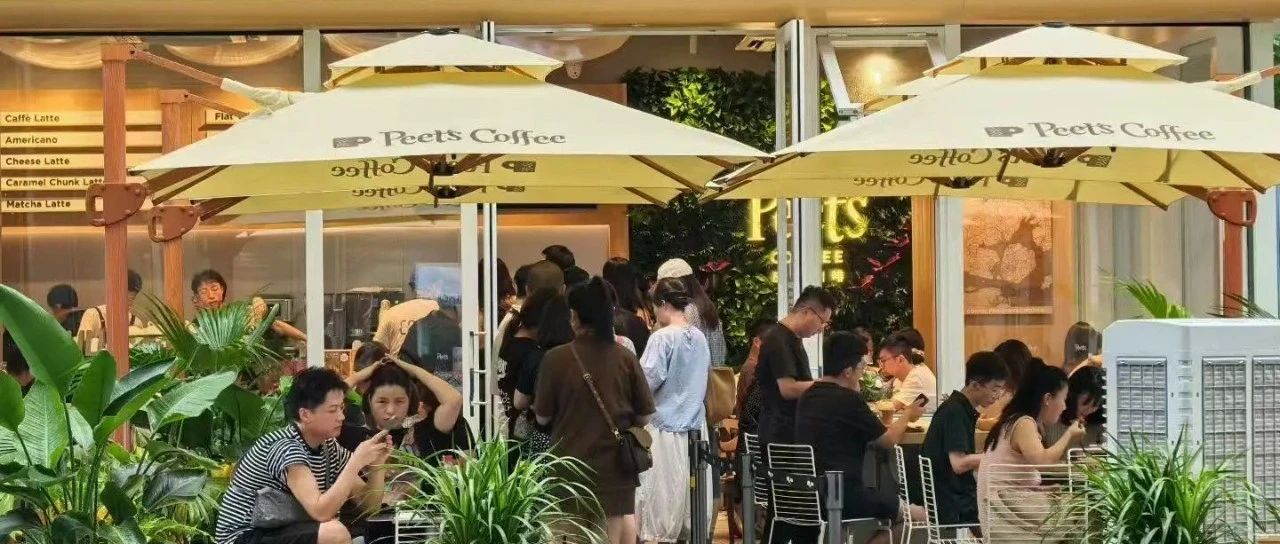
2025.08. 08 本文字数:2393,阅读时长大约4分钟 作者 | 第一财经 揭书宜 (注:我们会对线索进行核实。您的隐私将严格保密。) 近日,精品咖啡皮爷咖啡( Peet's Coffee)华南首店因租约到期关闭,引发广泛关注。皮爷深圳万象天地店开设于2021年9月,运营近4年。 今年早些时候,皮爷咖啡也关停了几家别的城市的门店。这不禁让消费者关注起了皮爷咖啡的运营情况。 对此,皮爷咖啡相关负责人回应第一财经记者:"南区个别门店的关闭,是我们常规的经营策略调整。这类优化是基于门店盈利表现和资产回报模型的 系统评估,是为了提升整体运营效率,并确保资源配置更加合理, 而非简单的收缩或退出 。我们三四年间完成从早期47家门店到今年260余家的规 模,同比收入呈双位数增长。" 在中国市场,皮爷咖啡2017年在上海开了首店之后,门店数量一直在稳步增长,约 90% 集中于一线和新一线城市。目前皮爷咖啡在全国有270家左右 的门店,进入了全国20个省、35个核心城市,在今年下半年,将按照计划,持续开店,从郑州到呼和浩特,从南昌到厦门,整体门店数量在扩张。 对于目前咖啡市场竞争激烈的情况,作为价格较高的精品咖啡,上述 ...

皮爷咖啡华南首店关闭,公司回应来了
Di Yi Cai Jing Zi Xun· 2025-08-08 09:32
Group 1 - Peet's Coffee has closed its first store in South China due to lease expiration, raising concerns about its operational status after shutting down several other locations earlier this year [1] - The company has expanded from 47 stores to over 260 stores in three to four years, with a year-on-year revenue growth in double digits [1] - Currently, Peet's Coffee operates around 270 stores across 20 provinces and 35 core cities in China, with plans to continue opening new locations in the second half of the year [1] Group 2 - The company emphasizes maintaining quality over engaging in price wars, indicating a selective approach to the competitive landscape, particularly in the delivery market [3] - Analysts note that many coffee and beverage brands are adopting a more cautious growth strategy, closing underperforming stores while opening new ones in better locations [3] - The restaurant industry in China is entering a phase of consolidation, where companies must adapt to changing consumer behaviors and market conditions, leading to a focus on innovation and quality [4]
9块9价格战、新茶饮跨界入局,皮爷咖啡们如何走出关店困境
Nan Fang Du Shi Bao· 2025-08-08 08:53
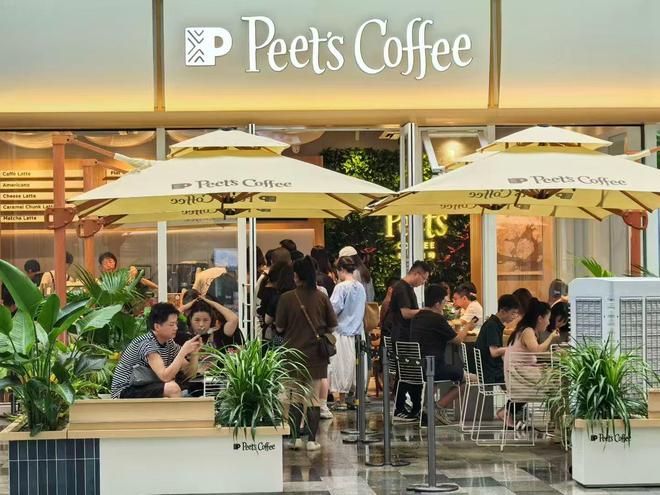
Core Viewpoint - The premium coffee market in China is facing significant challenges, with several international brands like Peets Coffee closing stores and local brands gaining market share through competitive pricing strategies [1][10][12]. Group 1: Store Closures and Market Exit - Peets Coffee has closed its first store in South China after four years, indicating a retreat from the market [1][5]. - Seesaw Coffee has reportedly closed nearly half of its stores nationwide and faced employee wage disputes [8][9]. - M Stand has significantly reduced its store opening pace, dropping from 248 new stores in 2023 to just 66 by November 2024 [9]. Group 2: Local Brands' Expansion - Local coffee chains like Luckin Coffee and Kudi Coffee are rapidly expanding, leveraging a "quality-price ratio" to capture market share [10][12]. - Luckin Coffee's store count reached 26,206, with a quarterly revenue of 12.359 billion yuan, significantly outpacing Starbucks' revenue of approximately 5.7 billion yuan [12]. - Kudi Coffee has maintained a strong expansion strategy, aiming for 50,000 stores by the end of 2025 [11]. Group 3: Price Wars and Consumer Behavior - The introduction of a "9.9 yuan" price point by Kudi Coffee and Luckin Coffee has reshaped consumer perceptions of coffee, making it a more accessible daily beverage rather than a luxury item [10][11][14]. - Starbucks has acknowledged the impact of these price wars on its sales, leading to adjustments in its pricing strategy [11]. - The shift in consumer mindset has resulted in a focus on "quality-price ratio," which is now a critical factor for coffee brands to retain customers [15]. Group 4: New Entrants from Tea Brands - Tea brands like Mixue and Guming are entering the coffee market, with Mixue's coffee brand aiming to open over 10,000 stores and offering competitive pricing [13][15]. - Guming has also expanded its coffee offerings, with prices for coffee products typically ranging from 9.9 to 19 yuan [15]. - The entry of these tea brands into the coffee sector reflects a broader trend of diversification and competition in the beverage market [14][15].

当“能坐着”成为一种工作福利
3 6 Ke· 2025-08-08 07:16
Core Viewpoint - The article discusses the trend in the service industry where standing while working is increasingly seen as a symbol of dedication and professionalism, contrasting with the growing number of job advertisements in manufacturing and other sectors that promote the ability to sit while working [1][2]. Group 1: Labor Dynamics - The value of labor in the service industry is shifting from completing tasks to maintaining a performance-oriented posture, where actions like standing, smiling, and speaking are evaluated as part of performance metrics [2][5]. - Employees in service roles often face physical ailments due to prolonged standing and lack of breaks, with common issues including varicose veins and chronic back pain [3][35]. - The expectation to remain standing and perform tasks without rest is not necessarily linked to efficiency but is instead a demonstration of commitment to the job [4][35]. Group 2: Performance and Monitoring - Service workers are required to engage in various performative actions, such as sweeping even when the floor is clean and running to serve customers, which do not necessarily enhance customer experience but create an appearance of busyness [5][27]. - Monitoring systems, including cameras and performance reviews, enforce compliance with these performative standards, leading to penalties for non-compliance, which can include fines and physical punishments [18][23]. - The management practices in these environments often prioritize superficial performance over genuine customer interaction, resulting in a disconnect between employees and their authentic emotions [27][30]. Group 3: Emotional and Physical Costs - The physical toll on employees manifests in various health issues, while the emotional strain leads to a phenomenon known as "emotional alienation," where workers become detached from their true feelings [35][37]. - The article highlights the broader implications of this performative labor culture, suggesting that it erodes the quality of human connection in service roles, ultimately affecting customer satisfaction [36][40]. - The cycle of monitoring and penalization creates a workforce that is more focused on appearance than on providing meaningful service, leading to a decline in overall service quality [26][30].

味之素投资v2food;京东拟开5家折扣店;Prada任命首席传播官
Sou Hu Cai Jing· 2025-08-08 02:02
Investment Dynamics - Ajinomoto Co., Inc. announced a strategic investment in Australian plant-based protein company v2food, aiming to build a global sustainable protein industry alongside its acquisition of the U.S. brand Daring Foods [3] - v2food's unique "v2 RepliTech™" technology optimizes the taste of plant proteins, and its collaboration with CSIRO enhances its R&D capabilities [3] - v2food plans to leverage Daring Foods' retail network and brand recognition in the U.S. to promote its product range [3] Brand Dynamics - Anta Group signed an agreement with South Korean e-commerce platform Musinsa to establish a joint venture in China, with Anta holding 40% and Musinsa 60% [5] - The joint venture allows Anta to share profits without heavy investment in store openings, reducing expansion risks while retaining options for future equity increases [5] Retail Developments - JD.com plans to open five discount supermarkets in Suqian, Jiangsu, and Zhuozhou, Hebei, marking its first large-scale discount supermarket format in China [8] - The discount supermarkets will feature a large store format with a wide range of SKUs, with the Zhuozhou store covering 5,000 square meters and offering over 5,000 competitively priced daily goods [8] - This move is part of JD.com's strategy to penetrate lower-tier markets, following successful pilot stores in Beijing [8] Real Estate Transactions - JLL announced the sale of eight prime retail properties in Hong Kong, all leased to McDonald's, providing stable income for investors [11] - The total market value of the assets is approximately HKD 1.2 billion, with options for full acquisition or individual bids [12] - The "sell and lease back" model employed by McDonald's may inspire other brands with substantial property holdings to consider similar strategies [12] Market Expansion - Bawang Tea Ji is accelerating its expansion in Asia, planning to enter the Japanese and South Korean markets after establishing a presence in Indonesia, Thailand, and Vietnam [16] - The company aims to leverage the growing consumer power in Asia, particularly among millennials, to replicate the success of coffee in the tea beverage sector [16] Financial Performance - Revolve reported a 9% increase in overall sales for Q2, reaching USD 309 million, with its department sales also growing by 9% to USD 268.4 million [19] - The growth is attributed to an increase in proprietary brand offerings, which help reduce costs and attract consumer attention [19] Collaborations and Product Launches - Starbucks collaborated with fragment design to launch a new beverage, "BBTEA by FRAGMENT," inspired by Hong Kong-style tea, along with a reusable cup featuring the fragment logo [21] - This collaboration emphasizes the creative integration of product offerings, enhancing brand engagement and consumer interest [21] Personnel Changes - Prada Group announced the promotion of Christopher Bugg to Chief Communications Officer, overseeing global communication strategies for the group and its brands [27] - Bugg's appointment is seen as a strategic move to strengthen the group's brand positioning following the acquisition of Versace [27] Board Appointments - a2 Milk Company appointed Grant Dempsey, former CFO of TPG Telecom and with a background in investment banking, to its board [29] - This appointment is viewed as a signal to enhance investor communication quality and provide diverse perspectives for future strategic expansion [29]






8.8犀牛财经早报:多家银行响应消费贷贴息 特斯拉据称解散Dojo超级计算机团队
Xi Niu Cai Jing· 2025-08-08 01:46
Group 1 - Multiple banks are responding to the government's consumer loan interest subsidy policy, aiming to optimize processes and ensure timely benefits for consumers [1] - The average return of active equity funds this year is 15.1%, with over 500 funds reaching historical net asset value highs, while performance disparity is evident with top funds gaining nearly 130% and some losing over 18% [1][2] - The A-share market saw a significant increase in trading volume in July, with total trading exceeding 15.6 trillion yuan for Shanghai and 21.4 trillion yuan for Shenzhen, marking a month-on-month growth of over 30% [2] Group 2 - The textile manufacturing industry reported positive growth in exports, with a notable performance from Jian Sheng Group, which achieved a revenue of 1.171 billion yuan in the first half of the year, up 0.19% year-on-year [2] - Hema plans to open nearly 100 new stores this fiscal year, countering rumors of store closures, with only 2% of its stores undergoing business adjustments [6] - Chifeng Gold announced the discovery of a new gold-copper ore deposit in Laos, with an estimated resource of 131 million tons, equivalent to 3.44 million ounces of gold [6] Group 3 - Huaxi Biological's controlling shareholder plans to increase holdings by 200 to 300 million yuan, with a maximum purchase price of 70 yuan per share [7] - Chengzhi Co. reported a significant decline in net profit for the first half of the year, down 89.78% to 19.13 million yuan, despite a revenue increase of 5.65% to 5.981 billion yuan [8]
40元咖啡接连“败走”中国,谁还买单?
Hu Xiu· 2025-08-08 00:35
一、"星巴克的祖师爷"败走中国? Peet's Coffee皮爷咖啡(下文简称"皮爷咖啡"),这个"星巴克的祖师爷",最近频繁陷入倒闭风波。 前两天,皮爷咖啡的华南首店因租约到期闭店。该门店位于深圳万象天地北区B1层,是皮爷咖啡在华南区开出的首家门店,目前,原址位置已经挂上了 新的品牌围挡。 皮爷咖啡的这家华南首店开业于2019年,近4年的时间里一直被外界认为是其在华南市场的标杆之作。在华南首店闭店之前,皮爷咖啡还在年初接连关闭 了广州首店、杭州西湖店、北京部分门店等。 根据公开数据显示,目前皮爷咖啡门店数量超过260家,与品牌定位的"精品咖啡"路线相符,扩张路线上也同样是"少而精"。2023年,皮爷咖啡曾加速市 场布局,当年新开门店数量达到98家,但在随后两年间扩张持续减速,2024年新开门店数量为51家,2025上半年新开门店数量仅为16家。 尽管从2024年皮爷咖啡的年报来看,销售额仍在强势增加:根据其母公司JDE Peet's2024年报显示,皮爷中国有机销售额强劲增长,调整后的息税前利润 (EBIT)有机增长23.8%,拉动母公司全球销售额达88.37亿欧元,同比增长7.9%。 但从近期其在中国市场 ...
咖啡氤氲展现消费升级图景
Sou Hu Cai Jing· 2025-08-07 22:54
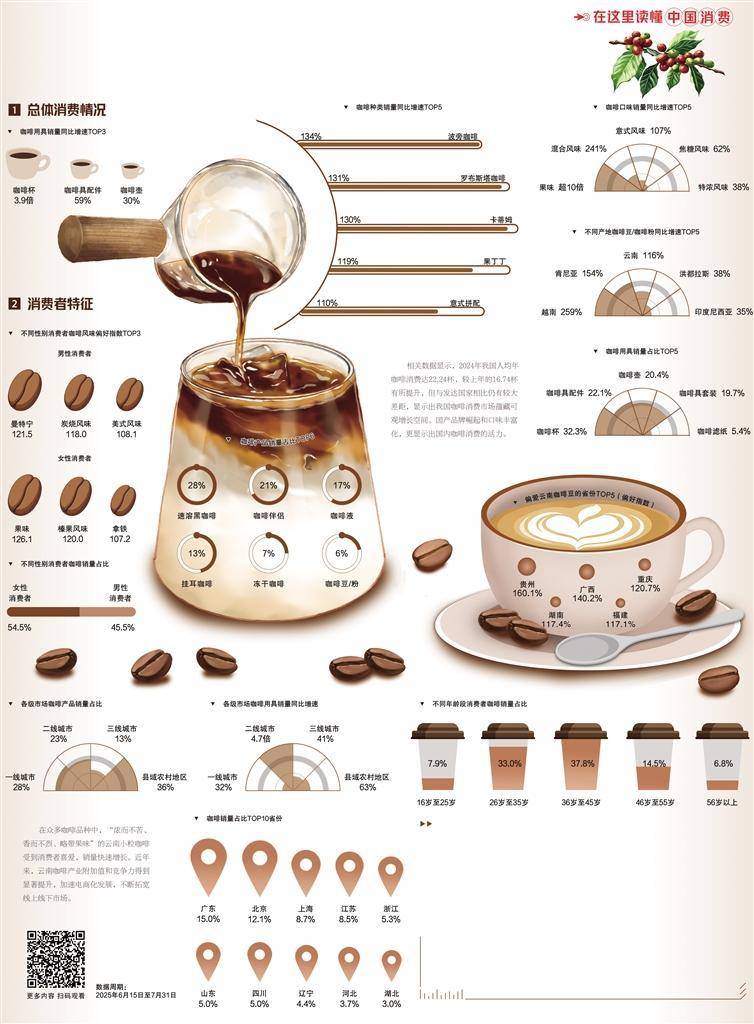
从消费选择层面看,速溶黑咖啡凭借便捷性和性价比,稳居销量榜首,成为大众首选;而以波旁咖啡为代 表的高品质咖啡,销量大幅增长,彰显精品化浪潮的强劲势头;在口味偏好方面,消费者的选择更趋多 元,果味、混合风味咖啡等口感层次丰富的品类高速增长,标志着消费者已从单一功能需求向个性化体验 满足转变,体现了消费观念的升级与进化。 值得关注的是,县域农村地区咖啡销量占比已超过一线城市,这不仅意味着咖啡消费已突破地域与层级限 制,在广袤县域市场开辟出新天地,更揭示出下沉市场蕴藏的巨大消费潜力,展现出我国消费市场的深度 与广度,为咖啡产业乃至整个消费品行业提供了广阔发展空间。 消费的纵深发展,正推动我国成为全球咖啡文化的融合交汇点。一方面,国产咖啡凭借地缘优势和不断提 升的品质强势崛起,日益赢得更多消费者的认可和喜爱;另一方面,国际资源加速涌入:海关数据显示, 2020年至2024年,我国咖啡净进口量增长13.08万吨,年均复合增长率达65.7%。本土品牌与国际品牌交融 共生,既丰富了市场供给,满足了消费者多样化需求,也为国内咖啡产业链的全方位升级与完善注入了强 大动力,推动产业向更高层次、更精细化方向发展。 从速溶咖啡的普及 ...
吴声2025年度演讲:场景革命十年,哲学生活方式到来
混沌学园· 2025-08-07 12:06
Core Viewpoint - The article discusses the concept of "scene creation" and the evolution of new business models driven by AI, emphasizing the importance of reconstructing meaning in various contexts and the emergence of new species in business [4][18]. Group 1: Scene Creation and Evolution - The past decade has been marked by the evolution of "scene creation," where meticulously designed scenarios drive the growth of new business entities [10][17]. - The case of "San Yi Niao" illustrates the shift from merely offering products to providing highly personalized home scene customization solutions, highlighting the importance of understanding user needs [13]. - "Red Star Macalline" has transformed into an "AI home life destination," integrating home appliances, furniture, and decoration into a cohesive experience, showcasing the power of scene branding [15][17]. Group 2: Instant Emergence and Meaning Reconstruction - The concept of "instant emergence" suggests that the evolution of AI applications occurs through carefully designed scenarios, which are essential for understanding the rapid changes in the business landscape [18][22]. - The article emphasizes that AI's evolution is not just about technology but also involves a cognitive revolution that redefines human existence and meaning [24][26]. Group 3: Connection Revolution and Business Multiplication - The "connection revolution" is exemplified by brands like "Three Squirrels," which have adapted their organizational methods to align with the values and needs of younger consumers, enhancing efficiency and innovation [38][39]. - Xiaomi's approach to car manufacturing reflects a restructured organizational system that leverages its consumer electronics expertise, demonstrating the importance of strong connectivity in achieving business success [40]. Group 4: Green Growth and Scene Specificity - "Star Charging" exemplifies a digital energy company that integrates scene strategies to enhance energy management efficiency, showcasing the potential for sustainable growth through specific scene applications [43]. - The article argues that the more specific the scene, the stronger the connection, as seen in the collaboration between "Fen Zhong Media" and "Alipay," which creates seamless transitions between physical and digital experiences [46][48]. Group 5: AI Hardware and Market Dynamics - The rise of AI hardware in China is attributed to the country's rich scene-based product definitions and robust supply chain capabilities, leading to accelerated market validation and implementation [73]. - The article highlights the importance of physical AI in enhancing user experiences, as demonstrated by brands like "AAC Technologies," which focus on creating seamless human-machine interactions [60][62].