
家电

Search documents
TCL电子:联手索尼,迎来全球化高端化发展里程碑-20260123
First Shanghai Securities· 2026-01-23 02:20
Investment Rating - The report assigns a "Buy" rating to the company with a target price of HKD 15.00, representing a potential upside of 37.7% from the current price of HKD 10.89 [6]. Core Insights - The company is expected to achieve a net profit of HKD 2.53 billion to HKD 2.57 billion in 2025, reflecting a growth of 45% to 60% compared to 2024, which aligns with the company's equity incentive targets [8]. - The TV segment has shown significant improvement, with a 5.3% increase in TV shipments to 21.08 million units in the first three quarters of 2025, and a remarkable 153% growth in global shipments of TCL MiniLED TVs [8]. - A joint venture with Sony is set to enhance global and high-end development, with TCL holding a 51% stake. This partnership is expected to leverage TCL's supply chain and cost control advantages alongside Sony's advanced imaging technology and brand value [8]. - The report anticipates that the collaboration will allow TCL to transition from "scale expansion" to "brand globalization," enhancing its market share in high-end segments [8]. Financial Summary - Revenue is projected to grow from HKD 78.99 billion in 2023 to HKD 153.96 billion by 2027, with a compound annual growth rate (CAGR) of 13.5% [4]. - The gross profit margin is expected to stabilize around 15.7% by 2027, with net profit increasing from HKD 744 million in 2023 to HKD 3.51 billion in 2027 [4][9]. - Earnings per share (EPS) is forecasted to rise from HKD 0.33 in 2023 to HKD 1.39 in 2027, indicating a strong growth trajectory [4][9]. - The company’s price-to-earnings (P/E) ratio is projected to decrease from 32.9x in 2023 to 7.8x by 2027, suggesting an attractive valuation as earnings grow [4].
A股开盘:沪指涨0.18%、创业板指涨0.16%,贵金属、医药商业及光伏板块走高
Jin Rong Jie· 2026-01-23 01:34
Market Overview - On January 23, A-shares opened slightly higher, with the Shanghai Composite Index rising by 7.53 points (0.18%) to 4130.11 points, and the Shenzhen Component Index increasing by 21.97 points (0.15%) to 14349.01 points [1] - The CSI 300 Index rose by 5.88 points (0.12%) to 4729.59 points, while the ChiNext Index increased by 5.37 points (0.16%) to 3334.02 points [1] - The Kweichow Moutai and other sectors such as precious metals, pharmaceuticals, and photovoltaics saw significant gains, while the oil and gas extraction sector experienced a decline [1] Company News - Xiaomi Group announced a buyback plan for up to HKD 2.5 billion of its Class B shares, which will be subsequently canceled [2] - Founder Technology expects a net profit of RMB 430 million to RMB 510 million, a year-on-year increase of 67.06% to 98.14% [2] - Zhaoyi Innovation anticipates a net profit of approximately RMB 1.61 billion, a growth of around 46% year-on-year, and plans to invest RMB 500 million in a DRAM chip project [2] - Qiangrui Technology is deepening cooperation with leading AI server manufacturers in liquid cooling testing [2] Investment and Projects - Chongda Technology plans to invest RMB 1 billion in a high-end integrated circuit carrier board project to enhance competitiveness [3] - Mingyang Smart Energy is planning to acquire 100% of Zhongshan Dehua Chip Technology Co., focusing on high-end semiconductor development in the photovoltaic sector [5] Industry Trends - The commercial aerospace sector is entering a golden era of dual growth in demand and supply, with rapid development in private rocket companies and satellite manufacturing [13][14] - The pre-prepared food industry is seeing regulatory developments aimed at enhancing food safety standards [7] - The chip industry is witnessing advancements with the development of "fiber chips" by researchers at Fudan University, marking a significant technological breakthrough [8] - The global home energy storage system market is projected to see a shipment volume of approximately 35 GWh in 2025, reflecting a nearly 50% year-on-year growth [10]

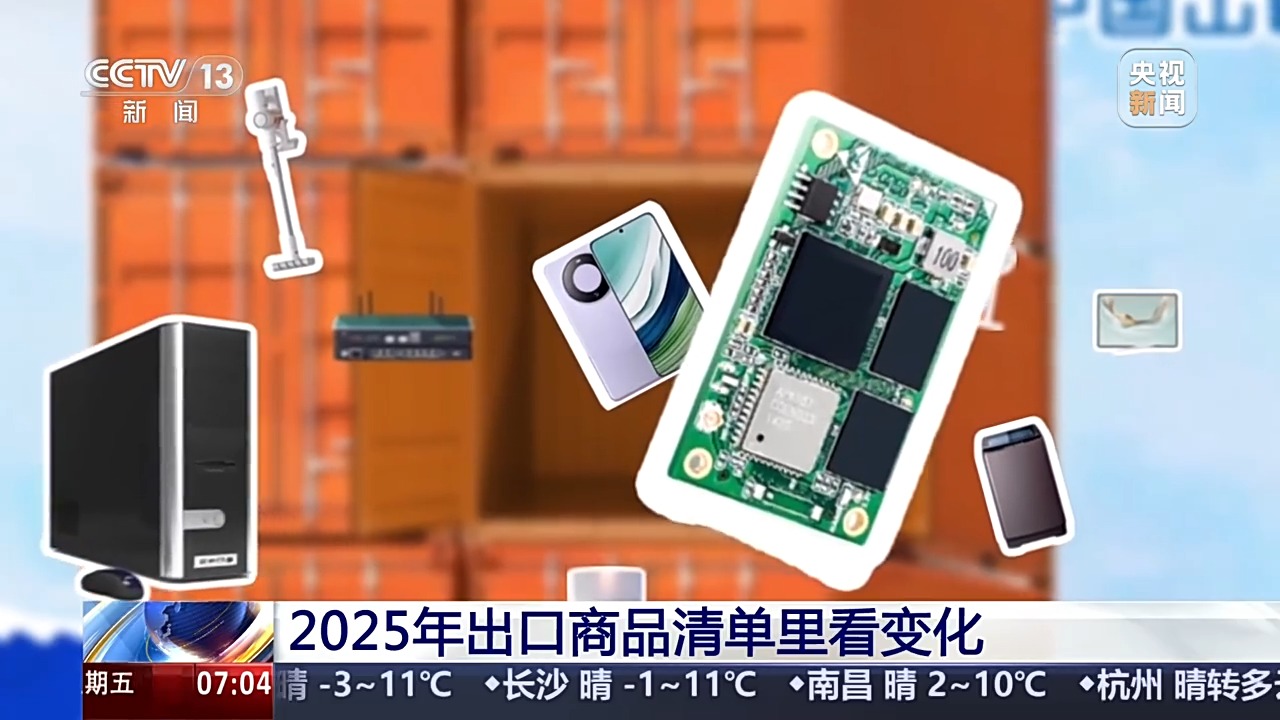
视频丨顶压前行、逆势增长 出口商品清单看中国外贸新变化
Yang Shi Xin Wen Ke Hu Duan· 2026-01-23 01:32
Core Viewpoint - China's foreign trade has shown resilience and growth over the past year, with notable changes in export products, particularly in high-tech sectors and emerging markets like Africa and Europe [2][4]. Group 1: Export Trends - The trend of "five increases and one decrease" indicates significant growth in exports to Asia, followed by Africa and Europe, with similar growth scales [2]. - High-tech products such as integrated circuits, smartphones, and data processing equipment have seen increased demand in Asia due to the region's push for green, smart, and digital transformation [4]. - In 2025, exports to Europe have shown new characteristics, with notable increases in products like transformers, air conditioners, and ice cream, contributing to a diverse export portfolio [6]. Group 2: Key Products - Transformers have experienced a 35.6% year-on-year increase in exports in 2025, driven by a supply gap in the U.S. and Europe and the need for updated electrical infrastructure [6][12]. - Drones have seen an impressive export growth of 45% in 2025, expanding their application beyond aerial photography to public service and specialized uses [14]. - The overall export product structure has shifted, with significant growth in categories like container ships and passenger vehicles, as well as high-tech products in biotechnology and aerospace [14]. Group 3: Market Dynamics in Africa - In Africa, exports of Chinese products have surged, with a 26.5% year-on-year increase, driven by consumer goods and major projects like offshore production platforms [6]. - In South Africa, multifunctional Bluetooth speakers have gained popularity, reflecting local consumer preferences for innovative designs [16]. - Nigeria has seen a 75% increase in sales of Chinese solar products, indicating a growing acceptance and integration of renewable energy solutions in the market [18][20].

港股开盘:恒指涨0.87%、科指涨0.96%,商业航天、黄金及新消费概念股普涨,阿里巴巴涨近4%
Jin Rong Jie· 2026-01-23 01:28
Market Overview - The Hong Kong stock market opened higher on January 23, with the Hang Seng Index rising by 0.87% to 26,861.36 points, the Hang Seng Tech Index increasing by 0.96% to 5,817.51 points, and the National Enterprises Index up by 0.96% to 9,201.85 points [1] - Major technology stocks saw significant gains, with Alibaba up by 3.88%, JD Group up by 2.63%, Xiaomi up by 0.74%, NetEase up by 0.77%, Meituan up by 0.31%, Kuaishou up by 1.26%, and Bilibili up by 1.4% [1] - Commercial aerospace stocks opened high, with Yunda Holdings rising over 5%, while new consumption concept stocks mostly increased, with Pop Mart rising over 4% [1] - Gold stocks generally rose, with Chifeng Jilong Gold Mining up over 4% [1] Corporate News - Prudential (02378.HK) invested approximately $375 million to increase its stake in PAMB to 70%, focusing on traditional life insurance business in Malaysia [2] - Nanjing Panda Electronics (00553.HK) expects a net profit of between 10 million to 15 million yuan for 2025, marking a turnaround from losses [3] - Delta Electronics (00179.HK) reported a revenue of $2.726 billion for the nine months ending December 31, 2025, a decrease of approximately $4 million compared to the same period last fiscal year [3] - AsiaInfo Technologies (01675.HK) anticipates revenue of approximately 6.2 billion to 6.35 billion yuan for 2025, with profits expected between 70 million to 110 million yuan [3] - Minmetals Resources (01208.HK) projects a total copper production of 506,900 tons in 2025, representing a year-on-year increase of 27% [4] - Charoen Pokphand International (03839.HK) issued a profit warning, expecting a net profit of approximately $32 million for 2025 [5] - Fosun Pharma (02196.HK) plans to spin off its subsidiary Fosun Antengene and list it on the Hong Kong Stock Exchange [6] - Hisense Home Appliances (00921.HK) and its subsidiaries subscribed to a trust financial product worth 2.035 billion yuan [7] - Xiaomi Group (01810.HK) repurchased 5.7138 million shares for approximately HKD 201 million at prices ranging from HKD 34.92 to HKD 35.24 [8] - Sunny Optical Technology (02382.HK) repurchased 1.25 million shares for approximately HKD 79.26 million at prices between HKD 62.45 and HKD 63.85 [9] - Kuaishou (01024.HK) repurchased approximately 380,000 shares for about HKD 29.97 million at prices ranging from HKD 78.55 to HKD 79.15 [10] - Jiangsu Ninghu Expressway (00177.HK) saw its controlling shareholder increase holdings by 28.4 million H-shares from January 9 to 21, 2026 [11] - Kanglong Chemical (03759.HK) completed a placement of 58.4408 million shares, raising a net amount of HKD 1.319 billion [12] - Ying Tai Medical (01501.HK) completed a placement of 35.20 million shares, raising approximately HKD 884 million [12] Institutional Insights - Industrial Securities suggests that the Hong Kong stock market may continue to trend upwards, noting that the recent tightening of funds is easing, leading to continued inflows from domestic investors [13] - Credit Suisse indicates a recovery in Hong Kong property prices, with some new developments experiencing strong sales, predicting a continued upward trend in property prices, albeit at a moderate pace due to cooling interest rate expectations [13] - CITIC Securities believes that the white liquor industry is at a turning point, suggesting that the current adjustment phase may present a bottoming opportunity for capital market investments as the Spring Festival approaches [13]

中信建投:保险资金入市比例提升 家电龙头股估值有望提升
Ge Long Hui A P P· 2026-01-23 01:15
Group 1 - The report from CITIC Securities indicates that under policy support, the proportion of "patient capital" insurance funds entering the market is gradually increasing, significantly influencing the style of the A-share market in recent years [1] - The expansion of OCI accounts is effectively smoothing profit statement fluctuations, which has notably increased the trend-based allocation demand for low-dividend stocks by insurance funds [1] - Leading home appliance stocks, with their long-standing advantages of high dividends, stable growth, and low valuations, align well with the allocation logic of insurance funds' OCI accounts, suggesting a potential for continuous inflow of insurance expansion funds and a steady rise in valuation levels [1]

菜鸟送装取一体服务覆盖超大件,国补半个月天猫大家电大涨超90%
Sou Hu Cai Jing· 2026-01-23 00:51
Core Viewpoint - The implementation of the new round of national subsidies in 2026 has significantly boosted the sales of large home appliances, particularly high-end products, with Tmall reporting over a 90% month-on-month increase in sales of large appliances [1][3]. Group 1: Sales Growth and Trends - Tmall's home appliance sector has seen a remarkable increase in sales, especially for mid-to-high-end products, with 100-inch ultra-large screen TVs, wallpaper TVs, and new Mini LED technology TVs doubling in sales year-on-year [3][6]. - The demand for smart, energy-efficient, and high-quality home appliances has surged, with popular items including voice-controlled smart appliances, frost-free ultra-thin energy-saving refrigerators, and multi-zone washing and drying sets [3][6]. Group 2: Service Enhancements - Cainiao has upgraded its delivery and installation services for large home appliances, achieving a 95% delivery rate for 100-inch TVs by implementing specialized lifting services and training workers [4]. - The logistics improvements have enabled next-day delivery for large appliances in major cities across the country, enhancing the overall customer experience [4]. Group 3: Future Growth Potential - The combination of national subsidy policies and brand innovation is expected to drive explosive growth for new products such as wall-mounted TVs, air conditioners with fresh air functions, and multi-zone washing machines in 2026 [6].


索尼退场,日本电视全军覆没
3 6 Ke· 2026-01-23 00:36
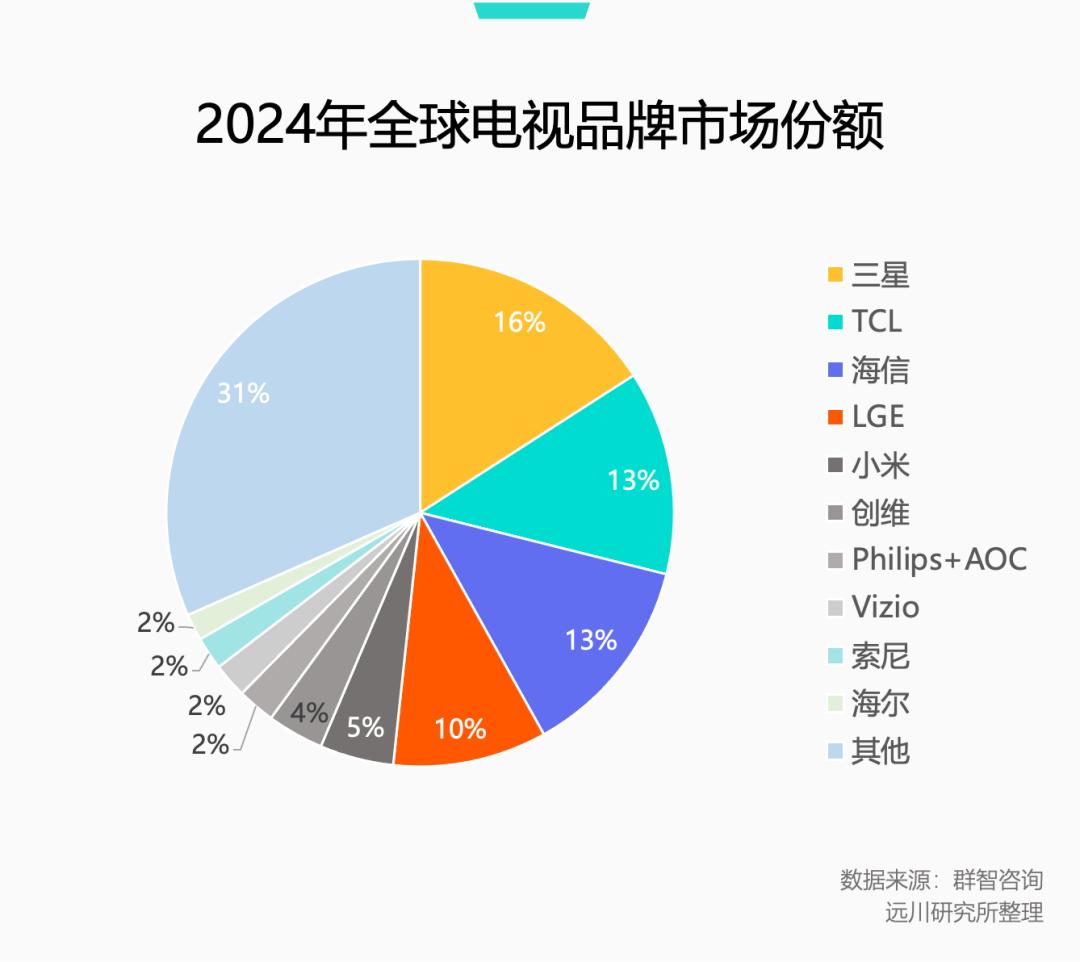
Core Viewpoint - Sony has announced a joint venture with TCL to manage its home entertainment business, with TCL holding a 51% stake, effectively transferring Sony's television operations and the BRAVIA brand to TCL, marking a significant shift in the consumer electronics market [1][5]. Group 1: Sony's Strategic Shift - Sony lacks display panel production capabilities, which are crucial for maximizing profits in the television market, relying on LG and TCL for panel supply and Mediatek for picture quality chips [1]. - Sony's television market presence is minimal, consistently ranking in the "others" category, and its television segment is less profitable compared to its other businesses like CIS chips, gaming, and music [1][5]. - The move signifies Sony's exit from the competitive global television market, following a trend where Japanese brands have been selling off their consumer electronics divisions [5][7]. Group 2: TCL's Positioning - For TCL, acquiring Sony's brand equity is a strategic asset that, combined with its own panel production capabilities, positions it to challenge Samsung's dominance in the global market [5]. - TCL is currently the only domestic television brand in China with display panel production capabilities, which is essential for maintaining competitive pricing and product quality [18][27]. Group 3: Decline of Japanese Brands - The exit of Sony marks the end of Japan's independent television brands, with other major players like Sharp, Toshiba, and Panasonic also having exited or significantly downsized their television operations [5][15]. - The decline of Japanese television brands is attributed to their loss of panel production capabilities, which has resulted in a lack of pricing power in the market [16][23]. - The financial crisis of 2008 and subsequent strategic missteps led to a shift in focus for Japanese companies from consumer electronics to higher-margin components, further diminishing their presence in the television market [7][12][13].





新一轮“以旧换新”精准发力消费升温 智能眼镜首入补贴,绿色消费唱起主角
Zhen Jiang Ri Bao· 2026-01-22 23:32
Group 1 - The consumer market is experiencing a "renewal" trend, driven by new government subsidies for smart devices, including smart glasses, which have seen increased customer interest and sales [1][2] - The new subsidy policy includes a 15% discount on traditional digital products and introduces smart glasses into the subsidy list, aligning with the trend of AI wearable devices [2] - Online and offline sales data indicate a positive impact from the subsidy, with brands like Huawei and Xiaomi selling over 4,000 units of subsidized smart glasses [2] Group 2 - The new subsidy policy emphasizes green and energy-efficient products, with only first-class energy efficiency appliances eligible for a 15% subsidy, signaling a shift towards sustainable consumption [3] - The automotive sector is also responding positively to the new vehicle replacement subsidy policy, particularly in the electric vehicle market, with significant customer engagement and interest [4] - Retailers are enhancing customer experience by offering one-stop services for old product recycling and new product delivery, reflecting a comprehensive approach to the new subsidy policy [5]

用最拼的招 卖最靓的货
Sou Hu Cai Jing· 2026-01-22 23:10
Group 1 - The core initiative "Guangdong Goods Going Global" aims to boost local consumption and showcase Guangdong's manufacturing capabilities through a series of promotional events [1][2] - The campaign includes 12 events in the first quarter, focusing on key categories such as home appliances, mobile phones, clothing, food, and beauty products, demonstrating a strong organizational effort and marketing intensity [1][3] - The initiative is part of a broader strategy to enhance domestic demand, with consumer spending projected to contribute 44.5% to GDP growth in 2024, highlighting the need for increased consumption [2] Group 2 - Guangdong's manufacturing sector is well-positioned to meet evolving consumer demands, with a diverse range of products from traditional industries to emerging sectors like smart appliances and electric vehicles [3][4] - The changing consumer landscape emphasizes emotional value and experiential marketing, requiring innovative approaches to engage modern consumers effectively [4][5] - The campaign not only aims to increase sales but also encourages traditional manufacturers to adopt new marketing strategies and upgrade their products, facilitating a shift from "workshop thinking" to "user thinking" [6]
2025年我国消费市场规模与质量实现双提升
Xin Lang Cai Jing· 2026-01-22 23:09
Group 1: Consumer Market Outlook - The core viewpoint is that China's consumer market is expected to maintain stable development in 2025, with both scale and quality achieving dual improvements, showcasing the advantages of a super-large market [1][3] - The total retail sales of social consumer goods are projected to exceed 50 trillion yuan for the first time, reaching 50.1 trillion yuan, with a growth rate of 3.7%. The contribution rate of final consumption expenditure to economic growth is estimated at 52% [1][3] - The implementation of a consumption upgrade policy, including a trade-in program, is expected to drive related sales to 2.61 trillion yuan, benefiting 366 million people [1][3] Group 2: Sector Growth and Trends - Retail sales of major consumer categories such as home appliances, furniture, cultural and office supplies, and communication equipment are expected to grow by 11%, 14.6%, 17.3%, and 20.9% respectively [1][3] - New consumption trends in green and smart products are flourishing, with retail sales of new energy vehicles increasing by 17.6%, and by 2025, 6 out of every 10 passenger cars sold are expected to be new energy vehicles [1][3] - The purchase of energy-efficient or water-efficient appliances is projected to increase by 20%, while smart glasses, smartwatches, and smart bands are expected to grow by over 40%. Health-related consumption is also expanding, with retail sales of sports and entertainment products increasing by 15.7% [1][3] Group 3: Foreign Investment and Economic Impact - The Ministry of Commerce indicates that foreign investment by Chinese enterprises will continue to develop healthily and steadily, with over 50,000 enterprises established abroad across 190 countries and regions by the end of 2025 [2][4] - The stock of foreign direct investment is expected to remain in the top three globally for nine consecutive years, with an estimated foreign direct investment of 174.38 billion USD in 2025, reflecting a growth of 7.1% from the previous year [2][4] - Chinese enterprises are actively fulfilling social responsibilities, creating over 2 million jobs annually and contributing to the construction of education, health, and environmental facilities, earning widespread praise from host countries [2][4]