造纸

Search documents
民丰特纸(600235.SH):收到第一期征收补偿款13000万元
Ge Long Hui· 2025-11-07 08:19
Core Viewpoint - Minfeng Special Paper (600235.SH) announced the receipt of the first phase of compensation for land acquisition amounting to 130 million yuan, with a portion allocated for other companies' housing compensation [1] Group 1 - The company received a total of 130 million yuan in compensation [1] - Out of the total, 1.0692 million yuan is designated for the compensation of other companies, which will be transferred to them [1]

研报掘金丨浙商证券:维持太阳纸业“买入”评级,底部夯实,25Q4预期改善
Ge Long Hui A P P· 2025-11-07 08:13
Core Viewpoint - The report indicates that Sun Paper's net profit attributable to shareholders for Q3 2025 is 720 million yuan, showing a year-on-year increase of 2.7% but a quarter-on-quarter decrease of 19.5%, primarily due to the decline in pulp and paper prices, suggesting that profitability is at a bottoming phase [1] Financial Performance - In Q3 2025, the profitability of corrugated paper remains under pressure, but recent industry price increase notices are frequent, indicating a potential recovery in profitability [1] - The company has issued a price increase notice for Q4, anticipating that the combination of the industry's peak season and the stabilization of pulp prices will support the implementation of these price hikes [1] Strategic Developments - The acceleration of the company's Laos forest land development is expected to enhance the self-sufficiency rate of wood chips and deepen the raw material supply barrier, leading to stronger profitability certainty amid cyclical fluctuations [1] - The company is recognized as a leading paper manufacturer with a diversified range of paper products and an integrated forest-pulp-paper operation, benefiting from a robust resource barrier in its Laos base [1] Investment Rating - The report maintains a "Buy" rating for the company, reflecting confidence in its future performance and strategic positioning within the industry [1]


青山纸业跌2.12%,成交额6.81亿元,主力资金净流出4485.36万元
Xin Lang Cai Jing· 2025-11-07 06:18
Core Viewpoint - Qing Shan Paper Industry's stock has experienced fluctuations, with a notable decline of 2.12% on November 7, 2023, closing at 3.69 CNY per share, while the company has seen a year-to-date increase of 44.82% in stock price [1] Financial Performance - For the period from January to September 2025, Qing Shan Paper Industry reported a revenue of 1.768 billion CNY, reflecting a year-on-year decrease of 11.87%, and a net profit attributable to shareholders of 64.99 million CNY, down 25.07% year-on-year [2] - The company has distributed a total of 321 million CNY in dividends since its A-share listing, with 175 million CNY distributed over the past three years [2] Stock Market Activity - As of November 7, 2023, the trading volume for Qing Shan Paper Industry was 681 million CNY, with a turnover rate of 8.17% and a total market capitalization of 8.269 billion CNY [1] - The stock has appeared on the "Dragon and Tiger List" 14 times this year, with the most recent appearance on October 20, 2023, where it recorded a net purchase of 51.29 million CNY [1] Shareholder Information - As of September 30, 2025, the number of shareholders for Qing Shan Paper Industry reached 207,900, an increase of 113.93% from the previous period, while the average circulating shares per person decreased by 53.26% to 10,640 shares [2] - Among the top ten circulating shareholders, Hong Kong Central Clearing Limited holds 17.0744 million shares, a decrease of 4.1228 million shares compared to the previous period [3] Business Overview - Qing Shan Paper Industry, established on April 1, 1993, and listed on July 3, 1997, primarily engages in the production and sales of paper products, including paper bags, board paper, and corrugated paper, as well as other products such as pharmaceuticals and electronic products [2] - The company's revenue composition includes 67.47% from the pulp industry, 15.32% from pharmaceuticals, 11.45% from paper processing, and smaller contributions from other sectors [2]

太阳纸业涨2.02%,成交额1.04亿元,主力资金净流入1088.14万元
Xin Lang Cai Jing· 2025-11-07 02:54
Core Viewpoint - Sun Paper Industry's stock has shown a modest increase in price and trading activity, reflecting a stable market position despite a slight decline in revenue year-on-year [1][2]. Company Overview - Sun Paper Industry, established on April 26, 2000, and listed on November 16, 2006, is located in Yanzhou District, Jining City, Shandong Province. The company specializes in the production and sale of various paper products, including mechanical paper, paper products, wood pulp, and paperboard [1]. - The company's revenue composition includes: 27.32% from corrugated boxboard, 21.99% from double offset paper, 10.55% from coated paper, and other categories contributing smaller percentages [1]. Financial Performance - For the period from January to September 2025, Sun Paper Industry reported a revenue of 28.936 billion yuan, a year-on-year decrease of 6.58%. However, the net profit attributable to shareholders increased by 1.66% to 2.5 billion yuan [2]. - The company has distributed a total of 4.915 billion yuan in dividends since its A-share listing, with 2.236 billion yuan distributed over the past three years [3]. Shareholder Information - As of September 30, 2025, the number of shareholders for Sun Paper Industry was 35,500, a decrease of 10.96% from the previous period. The average circulating shares per person increased by 12.31% to 78,181 shares [2]. - The top ten circulating shareholders include Hong Kong Central Clearing Limited, which holds 47.7596 million shares, an increase of 198,300 shares from the previous period. Other notable shareholders include Zhongtai Xingyuan Flexible Allocation Mixed A and Southern CSI 500 ETF, with varying changes in their holdings [3].
油脂市场情绪好转,等待利多因素发酵
Zhong Xin Qi Huo· 2025-11-07 01:22
1. Report Industry Investment Rating No relevant content provided. 2. Core Views of the Report - The sentiment in the oil and fat market has improved, and it is waiting for the fermentation of bullish factors. The protein meal market has seen a decline with reduced positions and light trading. The corn/starch market has shown stable to weak spot prices and an increase in positions on the futures market. The hog market is experiencing price fluctuations due to farmers' reluctance to sell at low prices. The natural rubber market has rebounded strongly, and its sustainability needs attention. The synthetic rubber market has seen a temporary improvement in sentiment as raw material prices have stabilized. The cotton market is fluctuating within a narrow range with limited upside and downside potential. The sugar market is testing its lower support in the short term. The pulp market has continued to rise, and the enthusiasm for futures - cash arbitrage has increased. The double - glue paper market has strengthened following the pulp market. The log market is oscillating at the bottom [1][6]. 3. Summary by Relevant Catalogs 3.1 Oil and Fats - **View**: The market sentiment has improved, waiting for bullish factors to ferment. The outlook is that palm oil, rapeseed oil, and soybean oil will oscillate. - **Logic**: Optimistic trade sentiment led to the rise of US soybeans on Wednesday, and domestic oils stopped falling and rose yesterday, with palm and rapeseed oils being relatively strong. The US government is in a "shutdown," and the market doubts the Fed's further interest rate cuts this year. US crude oil inventories increased unexpectedly. From an industrial perspective, US soybean data updates are suspended. The US soybean harvest is nearly over, and the market expects a high probability of a decline in US soybean yield. China's tariff adjustment policy boosts the export demand for US soybeans. Brazilian soybean planting is going smoothly. The arrival of imported soybeans in China may be at a relatively high level, and the de - stocking of domestic soybean oil is expected to be slow. In October, the production of Malaysian palm oil increased month - on - month, and the probability of inventory accumulation is high. Indonesia's palm oil inventory remains low due to increased consumption in biodiesel. India's vegetable oil imports may decline seasonally. With the large - scale listing of Russian rapeseed, the supply of domestic rapeseed oil is expected to increase [2][6]. 3.2 Protein Meal - **View**: The market has seen a decline with reduced positions and light trading. The outlook is that soybean meal and rapeseed meal will oscillate. - **Logic**: Internationally, US soybeans are oscillating at a high level, and the positive impact of China's purchases has been gradually digested. Attention should be paid to the US soybean yield and the growth of South American soybeans. The export volume of old - crop Brazilian soybeans in October decreased, but the discount is more favorable than that of the US. Brazilian soybeans will enter a critical growth period in November, and the impact of La Nina should be monitored. CBOT US soybeans are approaching a reasonable valuation, and new bullish factors are needed for an upward movement. Domestically, in the short term, the import and crushing profit of the January futures contract is still in the red, and profit margins need to be provided to stimulate ship purchases. In the medium term, the quantity of China's US soybean purchases will be gradually realized. The South American weather and the strength of the fourth - quarter consumption season will determine the upward potential of soybean meal. In the long term, there is expected to be no gap in soybean supply and demand in the fourth quarter of 2025 and the first quarter of 2026. The demand for soybean meal is expected to be stable or increase slightly, and rapeseed meal may follow the trend of soybean meal [6]. 3.3 Corn/Starch - **View**: Spot prices are stable to weak, and the futures market has increased positions and risen. The outlook is for oscillation. - **Logic**: The domestic corn price is generally stable with local fluctuations. In the Northeast, farmers are reluctant to sell as the temperature drops, and the supply pressure has eased. However, there are bottlenecks in transportation capacity, leading to increased freight costs and a slow - to - resolve shortage in the sales area. In November, the market is still under the pressure of new grain listing. The expected increase in production in the Northeast will drag down prices. Feed - using enterprises are mainly replenishing inventory based on rigid demand, and there is insufficient upward driving force for prices before large - scale inventory building occurs [7][8]. 3.4 Hogs - **View**: Farmers are reluctant to sell at low prices, and prices are oscillating. The outlook is for a weak oscillation. - **Logic**: The supply and demand are loose, but farmers' reluctance to sell at low prices after the price weakens has led to a low - level oscillation of hog prices. In the short term, the utilization rate of second - fattening pens has increased, but the rebound in hog prices has suppressed the enthusiasm for second - fattening. In the medium term, the number of sows capable of reproduction was at a high level in the first half of 2025, and the number of newborn piglets increased from January to September. It is expected that the hog slaughter volume will continue to increase in the fourth quarter. In the long term, the capacity of sows capable of reproduction has started to decline. With the dual drivers of "policy + losses," the reduction of sow production is expected to accelerate in the fourth quarter, and the supply pressure will gradually ease in the second half of 2026. The demand has increased slightly as the temperature drops. Group farms are actively selling, and the average weight has decreased. The enthusiasm for second - fattening has weakened [8]. 3.5 Natural Rubber - **View**: The market has rebounded strongly, and its sustainability needs attention. The outlook is for oscillation. - **Logic**: The rebound of the natural rubber market is in line with the rebound rhythm of commodities. The fundamental situation can provide some bottom support. The RU warehouse receipts have been continuously cancelled, and the new rubber registration progress is slow, with a lower valuation compared to NR. The import pressure in November may be relatively large, which will put pressure on the upside of NR. The short - term spread between RU and NR may be repaired. The recent price fluctuations are mainly affected by the macro - environment. If there is no further macro - driving force, the rubber price may face downward adjustment pressure. However, as it enters November, there may still be room for speculation about domestic rubber - cutting suspension and RU warehouse receipts, so the downside space is relatively limited [9][11]. 3.6 Synthetic Rubber - **View**: Raw material prices have stabilized, and sentiment has temporarily improved. The outlook is for oscillation. - **Logic**: The BR main contract has switched to the January contract and continued to rebound, returning to the level before Tuesday's decline. The improvement in sentiment is due to the better trading volume and temporary stabilization of butadiene prices, along with a strong rebound in the overall commodity market. The price of butadiene dropped rapidly last week to a record low this year. The supply - demand contradiction in the market has intensified, and the cautious attitude of downstream buyers has led to poor trading volume. Although the downstream buyers have gradually entered the market after the price dropped to a low level, and the supply side of butadiene intends to stop the price decline, buyers are still cautious. In the short term, attention should be paid to whether the improvement in trading sentiment can continue to support the butadiene price. In the medium term, the supply - demand of butadiene will remain in surplus in the next two months before the end of the year, and the price may decline further [12]. 3.7 Cotton - **View**: The market is fluctuating within a narrow range with limited upside and downside potential. The short - term outlook is for the January contract to oscillate within a range, and the long - term outlook is for a bullish oscillation. - **Logic**: The increase in the new - season Xinjiang cotton production is less than expected, and the purchase cost has increased, which supported the cotton price to oscillate strongly in October. The improvement in Sino - US trade relations and the reduction of import tariffs on US cotton are expected to promote US cotton exports to China and China's textile exports next year, but the short - term impact is limited. With the listing of new cotton, the supply has increased, and the cotton price is under pressure. At the same time, the profit from hedging has gradually emerged, and there is hedging pressure on the upside of the cotton price. The upper pressure on the January contract is 13,600 - 13,800 yuan/ton, and the lower support is 13,300 - 13,400 yuan/ton [13]. 3.8 Sugar - **View**: The market is testing its lower support in the short term. The long - term outlook is for a weak oscillation. - **Logic**: In the international market, the peak of Brazil's bi - weekly sugar production has ended, and the export volume in October has decreased, which may marginally improve the loose international trade flow. However, as the Northern Hemisphere enters the peak crushing season, the supply of new sugar will increase, and the downward pressure on international sugar prices remains. Brazil's cumulative sugar production has increased slightly year - on - year, and the market's expectation of Brazil's production increase has not changed. Thailand and India are expected to increase production in the new season. In the domestic market, the demand from August to September was average, and the industrial inventories in Guangxi and Yunnan have increased year - on - year. Although the tightening of import controls on syrups and premixes and the expected exhaustion of import licenses have made the domestic market relatively strong, there is still downward pressure on the domestic market as the southern sugar enters the peak crushing season [14][15]. 3.9 Pulp - **View**: The market has continued to rise, and the enthusiasm for futures - cash arbitrage has increased. The outlook is for oscillation. - **Logic**: The recent rise is due to the expected increase in the price of downstream paper driven by the increase in packaging paper prices and the improvement in the tender demand for cultural paper, as well as the increase in wood chip prices. From a medium - term perspective, the previously traded bearish factors have not completely ended. Although the bullish factors in downstream demand may bring short - term bullishness, the upward space is expected to be limited. On the fundamental side, the demand for softwood pulp has been low due to formula adjustments in recent years. There is export pressure from overseas to China, and the import price in US dollars remains weak. The hardwood pulp market has an obvious surplus situation. Although the demand has increased seasonally, it is difficult to support the price above the production cost. The futures main contract price is approaching the prices of some brands, and it is difficult for the futures to have a premium under the weak supply - demand background. The large number of expiring warehouse receipts this year will also put pressure on the futures price. However, there are also some bullish factors, such as the obvious increase in the price of packaging paper, the increase in the cost of hardwood imports, and the expected marginal improvement in cultural paper demand in November and December. The paper pulp futures market is inclined to a wait - and - see attitude [16]. 3.10 Double - Glue Paper - **View**: The market has strengthened following the pulp market. The outlook is for oscillation. - **Logic**: The price of double - glue paper in Shandong has remained stable. The market supply is abundant, and the consumption - side support is insufficient. The supply - demand relationship is still weak, and the support from wood pulp is limited. The new production facilities are operating stably, and the paper supply surplus is still severe. The demand side has seen the start of publishing tenders, but the social orders have not improved significantly, and the overall downstream consumption is still weak. Some factories are facing greater production and sales pressure. Although some paper enterprises have announced price increase plans in early November, the market is waiting and seeing, and most prices will remain stable at the end - of - month settlement. The publishing tenders have not yet started intensively, and the demand side has no obvious positive factors. The upstream wood pulp price is under pressure, and the cost support for double - glue paper is limited. The price of double - glue paper is expected to stabilize [17]. 3.11 Logs - **View**: The market is oscillating at the bottom. The outlook is for a weak oscillation. - **Logic**: The log market has remained weak and stable this week. On the one hand, traders are actively selling, and the decline in the sales volume of laminated wood has put pressure on the price of sawn timber, leading to downward pressure on the spot market. On the other hand, New Zealand log suppliers have adjusted their quotes, and there will be a greater pressure of blue - stained timber on the arrival of ships in the future, which will also put pressure on the spot market. The log peak season is gradually ending, and the port outbound volume will decline. After the peak season in mid - fourth quarter, the log inventory may accumulate again. Although the market has a short - term bearish sentiment, the log valuation is not high, and the inventory in the Jiangsu market is relatively low, so the downward space is limited. The speculative side is advised to wait and see [19].
永安期货纸浆早报-20251107
Yong An Qi Huo· 2025-11-07 01:19
Report Summary 1. Report Industry Investment Rating - No relevant information provided 2. Core View - No clear core view presented in the provided content 3. Summary by Related Catalogs SP Main Contract Closing Price - On November 6, 2025, the SP main contract closing price was 5368.00 [3] - The price fluctuations from October 31 to November 6 were -0.22971%, 1.80353%, -0.33924%, 1.36157%, and 0.14925% respectively [3] - The corresponding discount US dollar prices were 639.69, 650.56, 648.25, 657.08, and 657.08 [3] - The Shandong Yinxing basis was 263, 194, 212, 140, and 132; the Jiangsu, Zhejiang, and Shanghai Yinxing basis was 298, 219, 227, 155, and 157 respectively [3] Pulp Price and Profit - With a 13% VAT calculation, the import profits of Canadian Golden Lion, Canadian Lion, and Chilean Yinxing were -145.57, -533.29, and -41.01 respectively [4] - From October 31 to November 6, 2025, the national average prices of softwood pulp, hardwood pulp, natural pulp, and chemimechanical pulp remained unchanged; the same was true for the Shandong region [4] - During the same period, the prices of cultural paper (double - offset index, double - copper index), packaging paper (white card index), and living paper (living index) remained unchanged [4] - The profit margins of double - offset paper, double - copper paper, white card paper, and living paper changed, with the white card paper profit margin increasing by 1.9313 and the living paper profit margin decreasing by 0.2101 from November 3 to November 6 [4] Pulp Price Spreads - From October 31 to November 6, 2025, the softwood - hardwood spread was 1225, 1250, 1250, 1250, and 1240; the softwood - natural spread was 75, 100, 100, 100, and 100; the softwood - chemimechanical spread was 1675, 1700, 1700, 1700, and 1700; the softwood - waste paper spread was 3899, 3924, 3924, 3924, and 3924 respectively [4]
【环球财经】德国9月工业产出环比增长1.3%
Xin Hua She· 2025-11-06 15:43
Group 1 - The core point of the article is that Germany's industrial output showed a month-on-month increase in September, primarily driven by the automotive sector, but overall industrial performance remains weak [1][2]. Group 2 - In September, Germany's industrial output increased by 1.3% month-on-month, recovering from a 3.7% decline in August, but the overall industrial output for the third quarter decreased by 0.8% [1]. - The automotive sector, Germany's largest industrial segment, saw a significant month-on-month output increase of 12.3% in September, following a 16.7% decline in August due to summer factory closures and production line adjustments [1]. - Excluding the construction and energy sectors, industrial output in September increased by 1.9% [1]. - Year-on-year, Germany's industrial output in September decreased by 1% after seasonal adjustments [1]. - The Kiel Institute for the World Economy noted that the September industrial output growth was below expectations and insufficient to offset the previous month's losses, indicating a stabilization at low levels for the year [2]. - The industrial business conditions in Germany have deteriorated, characterized by declining competitiveness and weak private investment, which will continue to drag down industrial performance in the short term [2]. - Despite the challenges, businesses have improved their future outlook, hoping that increased government spending next year will enhance infrastructure and support long-term industrial growth [2].
德国9月工业产出环比增长1.3%
Xin Hua She· 2025-11-06 15:16
Group 1 - Germany's industrial output increased by 1.3% month-on-month in September, recovering from a 3.7% decline in August, but the overall industrial output for Q3 decreased by 0.8% [1][2] - The construction sector saw a month-on-month decline of 0.9% in September, while the energy sector experienced a growth of 1.3%. Excluding construction and energy, industrial output rose by 1.9% [1] - The automotive industry, Germany's largest industrial sector, reported a month-on-month output increase of 12.3% in September, following a significant 16.7% decline in August due to summer factory closures and production line adjustments [1] Group 2 - Year-on-year, Germany's industrial output fell by 1% in September, indicating that the recovery is primarily influenced by fluctuations in the automotive sector and does not signify a fundamental turnaround for German industry [2] - The overall manufacturing sector remains weak, particularly in energy-intensive industries such as chemicals, glass, and paper, which are either stagnant or experiencing output declines [2] - The Kiel Institute for the World Economy noted that the industrial output growth in September was below expectations and insufficient to compensate for the previous month's losses, with new orders remaining stable [2]
太阳纸业(002078):点评报告:底部夯实,25Q4预期改善
ZHESHANG SECURITIES· 2025-11-06 12:28
Investment Rating - The investment rating for the company is "Buy" (maintained) [8] Core Views - The company is expected to see improved performance in Q4 2025, with a focus on price increases in the paper market as demand recovers and raw material prices stabilize [2][5] - The company has a strong integrated business model in the forestry and paper industry, which helps mitigate cyclical fluctuations [4][5] - Revenue and profit forecasts for 2025-2027 indicate steady growth, with expected revenues of 429.4 billion, 490.8 billion, and 520.1 billion respectively, and net profits of 34.0 billion, 38.9 billion, and 43.9 billion [6] Summary by Sections Financial Performance - In Q3 2025, the company reported revenues of 9.823 billion yuan, a year-on-year decrease of 6.01% but a quarter-on-quarter increase of 6.6%. The net profit attributable to shareholders was 720 million yuan, up 2.7% year-on-year but down 19.5% quarter-on-quarter [1] - The gross margin for Q3 2025 was 14.07%, showing a slight year-on-year increase of 0.1 percentage points but a decrease of 3.2 percentage points from the previous quarter [4] Product Segmentation - Cultural paper prices decreased in Q3 2025, with average prices for double glue paper at 4,944 yuan/ton, down 5.7% quarter-on-quarter and 9.2% year-on-year. Price increases are anticipated in Q4 due to seasonal demand [2] - Dissolving pulp prices fell significantly in Q3 2025, averaging 6,517 yuan/ton, down 16.8% year-on-year and 8.5% quarter-on-quarter, but are expected to stabilize as costs decrease [2] - Boxboard prices showed mixed trends, with average prices for boxboard at 3,502 yuan/ton (down 0.5% quarter-on-quarter) and corrugated paper at 2,644 yuan/ton (up 3.7% quarter-on-quarter) [3] Strategic Developments - The company is optimizing its pulp and paper industry layout, with several new projects in progress that are expected to contribute to revenue in Q4 2025 [5] - The integration of forestry and pulp production is expected to enhance profitability and reduce the impact of market fluctuations [5] Earnings Forecast and Valuation - The company is projected to achieve revenues of 429.4 billion, 490.8 billion, and 520.1 billion from 2025 to 2027, with corresponding net profits of 34.0 billion, 38.9 billion, and 43.9 billion [6] - The price-to-earnings (P/E) ratios for the next three years are forecasted to be 12X, 10X, and 9X respectively, indicating a favorable valuation [6]
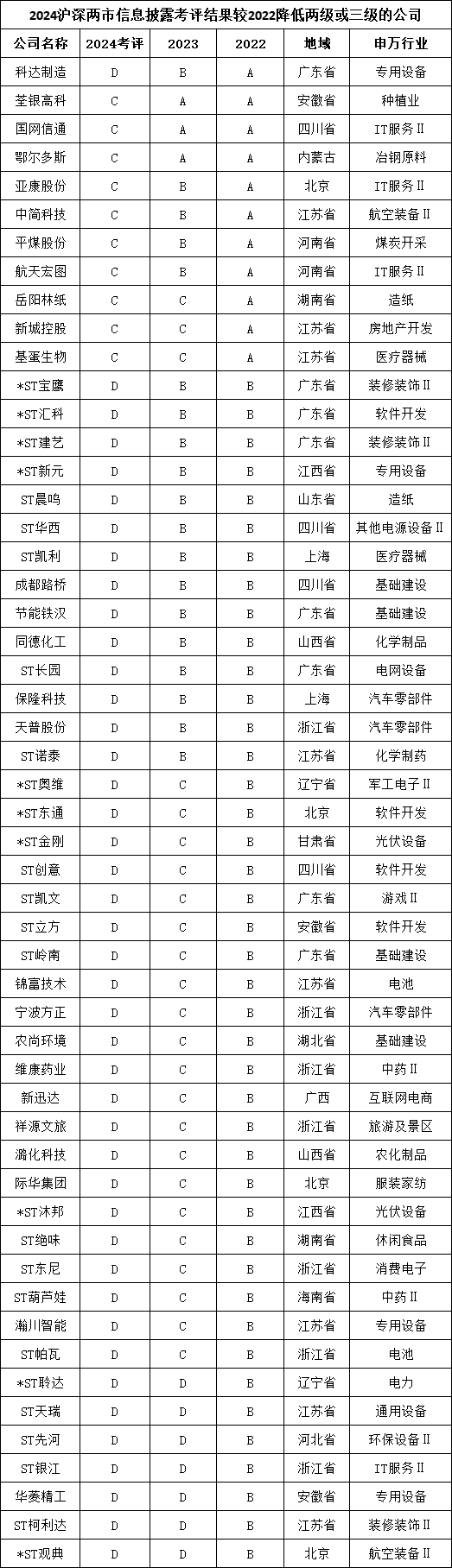
岳阳林纸信披评级两年下降两级,从A优秀降低至C合格,董秘易兰锴薪酬从69万涨至70万
Xin Lang Zheng Quan· 2025-11-06 10:57
Core Insights - The 2024 information disclosure evaluation results for listed companies show a significant decline in ratings compared to 2022, with Yueyang Lin Paper's rating dropping from A to C [1][2]. Group 1: Company Performance - Yueyang Lin Paper's information disclosure rating decreased by two levels from A in 2022 to C in 2024 [1]. - The company is located in the Hunan Free Trade Zone and was established on September 28, 2000, with its stock listed on May 25, 2004 [3]. - The main business of Yueyang Lin Paper includes the paper industry and ecological sector, with a revenue composition of 49.33% from printing paper, 22.61% from commodity pulp, and 14.55% from packaging paper [3]. Group 2: Management Information - The company’s Secretary of the Board, Yi Lankai, has served since August 27, 2019, with a salary of 690,000 in 2022, 330,000 in 2023, and 700,000 in 2024 [4]. - Yi Lankai, born in September 1978, holds a bachelor's degree and has held various positions within the company, including Deputy General Manager and General Manager Assistant [4].