高技术制造业

Search documents
9.5%,创新动能加快积聚
Xin Hua Wang· 2025-08-12 06:25
Group 1: Economic Growth and Innovation - The added value of high-tech manufacturing in China increased by 9.5% year-on-year in the first half of the year, contributing 23.3% to the overall industrial growth [1] - R&D expenditure as a percentage of GDP in China has approached 2.7%, surpassing the EU average and nearing the OECD average [2] - The number of effective invention patent applications in China reached nearly 5 million in the first five months, growing by 12.8% [2] Group 2: Technology and Industry Development - The number of technology contracts registered nationwide reached nearly 410,000, with a transaction value exceeding 3 trillion yuan, marking a year-on-year growth of 14.2% [2] - The production of industrial robots increased by 32% year-on-year in the first five months, while the added value of smart vehicle equipment manufacturing grew by 26.8% [4] - The core industries of the digital economy accounted for about 10% of GDP, with revenue from information transmission, software, and IT services growing by 11.4% [4] Group 3: Policy and Financial Support - The Chinese government is supporting 1,241 specialized "little giant" enterprises to enhance high-quality development [3] - A total of 1.7 trillion yuan in loans for technological innovation and technological transformation has been signed between banks and enterprises, which is 1.9 times that of the end of last year [7] - The establishment of a "technology board" in the bond market aims to promote the construction of a technology finance system [6]
前7月吸收外资同比增长17.3% 实际使用外资金额近8000亿元
Xin Hua Wang· 2025-08-12 06:19
Core Insights - The Ministry of Commerce reported that from January to July this year, the actual use of foreign capital in China reached 798.3 billion yuan, a year-on-year increase of 17.3%, equivalent to 123.9 billion USD, with a growth of 21.5% [1] Industry Analysis - The service sector attracted 598.9 billion yuan in foreign investment, reflecting a growth of 10% [1] - High-tech industries saw a significant increase in foreign investment, with a growth rate of 32.1%. Specifically, high-tech manufacturing grew by 33%, while high-tech services increased by 31.8% [1] Source of Investment - Foreign investments from South Korea, the United States, Japan, and Germany increased by 44.5%, 36.3%, 26.9%, and 23.5% respectively, including data from free port investments [1] Regional Distribution - The actual use of foreign capital in China's eastern, central, and western regions grew by 15.2%, 30%, and 41.2% respectively [1] Future Outlook - In the second half of the year, efforts to stabilize foreign investment will focus on promoting new investments while maintaining existing ones, enhancing investment attraction, and ensuring a stable business environment to leverage China's comprehensive investment advantages [1]
信创ETF(159537)涨超1.9%,行业景气度走强
Mei Ri Jing Ji Xin Wen· 2025-08-12 06:16
Core Insights - The high-tech manufacturing industry in China is showing signs of improvement, with the diffusion index A recorded at 0.4 and index B at 50.8 as of the week ending July 26, 2025 [1] Industry Performance - Dynamic Random Access Memory (DRAM) prices increased by $0.049 to $1.6180 per unit, while wafer prices rose by $0.03 to $2.70 per piece, indicating a positive trend in the industry [1] - Lithium hexafluorophosphate prices went up by ¥0.02 million to ¥4.95 million per ton, reflecting an increase in industry sentiment [1] - Prices for acrylonitrile, 6-amino penicillanic acid, and liquid crystal displays remained stable, suggesting steady conditions in the aerospace, computer, and pharmaceutical sectors [1] Policy and Market Developments - The China Photovoltaic Industry Association emphasized the importance of market-driven structural adjustments in the photovoltaic sector [1] - The 2025 World Artificial Intelligence Conference signed 31 projects in areas such as intelligent driving and robotics, with total investments exceeding ¥15 billion, indicating strong demand in the AI sector [1] Investment Opportunities - The Xinchang ETF (159537) tracks the Guozheng Xinchang Index (CN5075), focusing on information technology innovation by selecting listed companies involved in software development, cybersecurity, and cloud computing [1] - Investors without stock accounts can consider the Guotai Guozheng Information Technology Innovation Theme ETF Initiated Link C (020279) and Link A (020278) [1]
高质量完成“十四五”规划丨“十四五”期间我国减税降费预计超10万亿元
Xin Hua Wang· 2025-08-12 06:10
Core Insights - The National Taxation Administration of China announced that during the "14th Five-Year Plan" period, the cumulative new tax cuts and fee reductions are expected to exceed 10 trillion yuan [2] - From 2021 to the first half of this year, the cumulative new tax cuts and fee reductions reached 9.9 trillion yuan, with an expected total of 10.5 trillion yuan by the end of this year, averaging over 2 trillion yuan annually [2] - The focus of tax reduction policies is on supporting technological innovation and advanced manufacturing, with 3.6 trillion yuan in new tax cuts, accounting for 36.7% of the total [2] Tax Reduction and Beneficiaries - Among various economic entities, private enterprises and individual businesses benefited from 7.2 trillion yuan in new tax cuts, representing 72.9% of the total [2] - Small and medium-sized enterprises shared 6.3 trillion yuan in new tax cuts, making up 64% of the total [2] High-Quality Development and Manufacturing Sector - The manufacturing sector's sales revenue has maintained a steady share of around 29% of total enterprise sales from 2021 to 2024, with advancements in high-end and intelligent manufacturing [3] - Sales revenue in equipment manufacturing and high-tech manufacturing grew annually by 9.6% and 10.4%, respectively [3] R&D Tax Incentives - The R&D expense deduction policy has been continuously optimized, with companies enjoying 3.32 trillion yuan in deductions in 2024, an increase of 25.5% from 2021 [3] - The number of companies benefiting from this policy reached 615,000, reflecting a growth of 16.7% compared to 2021 [3] Tax Administration and Policy Implementation - The tax authorities are committed to effectively implementing tax and fee reduction policies, utilizing big data to ensure that policies reach taxpayers quickly and efficiently [3]

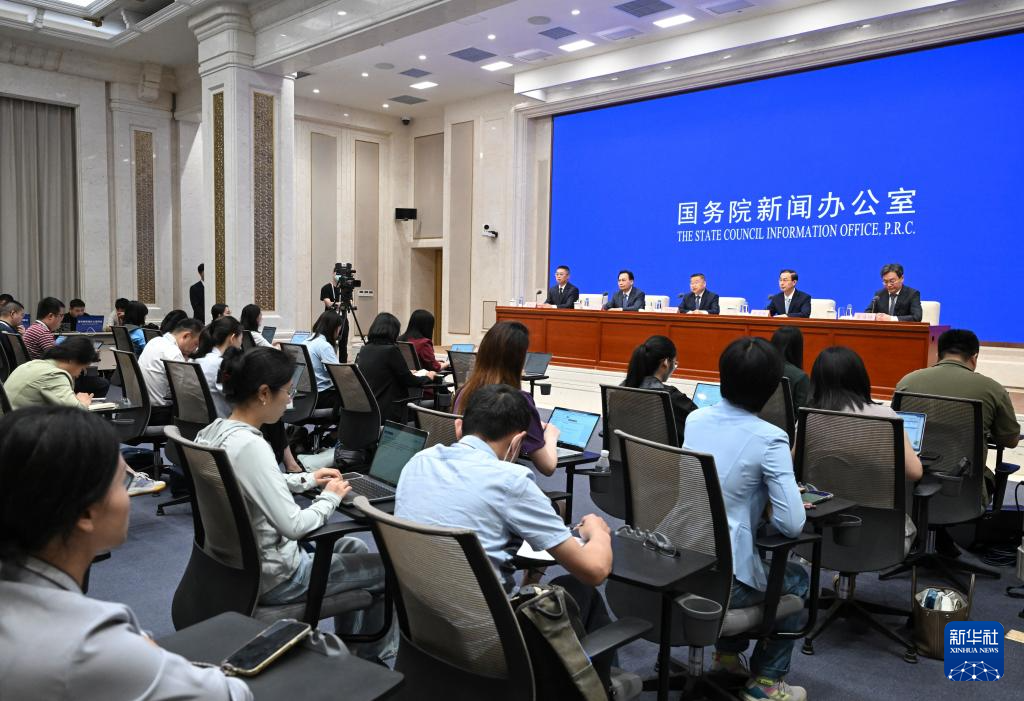
新华全媒+丨应变克难 稳健前行——从最新指标看当前中国经济走势
Xin Hua Wang· 2025-08-12 05:55
Economic Overview - In April 2025, China's economy demonstrated resilience against external pressures, maintaining a stable growth trajectory despite increasing challenges [34][38] - The industrial production index for large-scale industries increased by 6.1% year-on-year, with 36 out of 41 major industries reporting growth [34][35] - The service sector also showed robust performance, with a production index growth of 6% in April [34] Industrial Performance - The value added in the equipment manufacturing sector rose by 9.8%, while high-tech manufacturing increased by 10% [10][37] - The digital product manufacturing sector experienced a significant growth of 10% in April, driven by advancements in "Artificial Intelligence+" [37] Consumer Market - The total retail sales of consumer goods reached 37,174 billion yuan, marking a year-on-year increase of 5.1% [19] - Sales of home appliances and cultural products surged, with year-on-year growth rates of 38.8% and 33.5% respectively [36] Investment Trends - From January to April, fixed asset investment (excluding rural households) totaled 147,024 billion yuan, reflecting a 4% year-on-year increase [21] - Investment in equipment acquisition grew by 18.2%, contributing 64.5% to overall investment growth [36] Trade and Employment - The total value of goods imports and exports reached 38,391 billion yuan in April, with a year-on-year growth of 5.6% [25] - The urban unemployment rate was recorded at 5.1% in April, a slight decrease from the previous month [33] Policy Impact - Recent macroeconomic policies have shown positive effects, supporting economic recovery and promoting industrial transformation [36][39] - The government has implemented measures such as lowering the reserve requirement ratio and establishing new financial tools to enhance liquidity and support project financing [39]
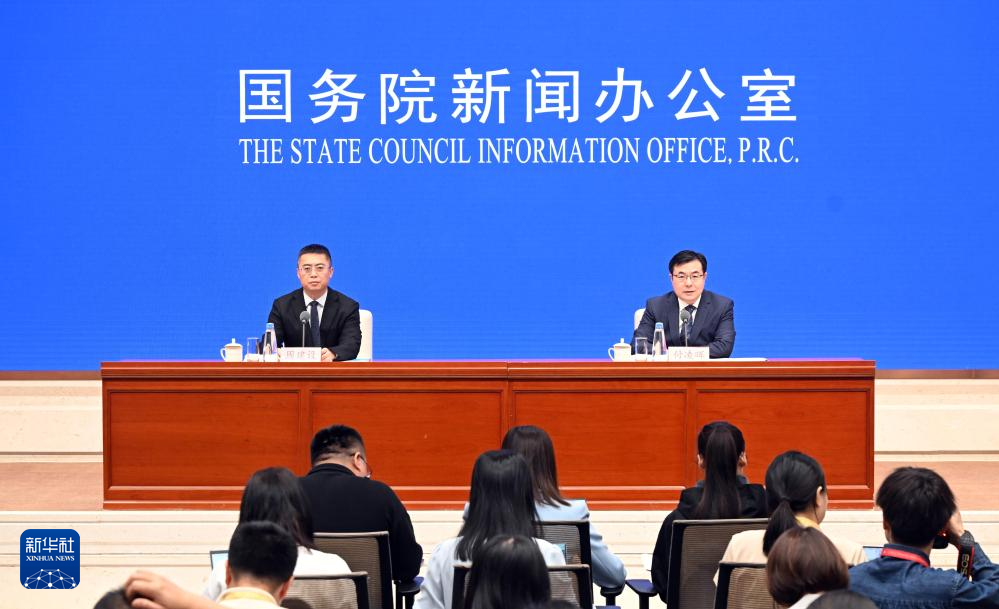
经济学家解读2025上半年中国经济关键词
Ren Min Ri Bao· 2025-08-10 23:24
Core Viewpoint - China's economy shows strong vitality and resilience in the first half of the year, with a GDP growth of 5.3%, positioning it as a leader among major economies [2][3] Economic Performance - The GDP growth of 5.3% in the first half of the year reflects China's robust economic performance despite global uncertainties [2] - Domestic demand contributed 68.8% to GDP growth, indicating a solid foundation for the domestic economy [16] Policy Measures - The government has implemented proactive fiscal and monetary policies to stabilize the economy and promote growth [3] - Policies such as consumption incentives and infrastructure investment have led to a 5.0% increase in retail sales and a 4.6% increase in infrastructure investment [4] Technological Innovation - The manufacturing sector has seen significant growth, with high-tech manufacturing increasing by 9.5% and equipment manufacturing by 10.2% [7] - R&D expenditure reached nearly 2.7% of GDP, surpassing the EU average, indicating a strong focus on innovation [4][8] Trade and External Relations - Exports grew by 7.2%, with high-end equipment exports increasing by over 20%, showcasing a shift towards higher value-added products [4][13] - Trade with countries involved in the Belt and Road Initiative accounted for 51.8% of total trade, diversifying market risks [13] Market Dynamics - The domestic market is characterized by a wide range of consumption patterns, with service consumption accounting for 45.5% of total consumption [12] - The manufacturing sector is adapting to global supply chain changes, with significant growth in high-end equipment manufacturing [12][13] Employment and Income - The urban unemployment rate decreased to 5.0%, and per capita disposable income increased by 5.4%, reflecting improvements in living standards [24][25] - The government is focusing on enhancing social security and employment support to further boost consumer confidence [25][26]
人民币成避风港?20国领袖挤爆北京!特朗普关税沦为“纸老虎”
Sou Hu Cai Jing· 2025-08-09 03:22
Group 1 - The diplomatic landscape is shifting as leaders from over twenty countries, including France, Brazil, and Vietnam, are increasingly engaging with China, contrasting sharply with the isolation of the U.S. under Trump's aggressive trade policies [1] - Trump's trade policies, including a 125% tariff on China and 41% "reciprocal tariffs" on other nations, have led to significant increases in shipping costs and currency exchange rates, causing global businesses to express dissatisfaction [1] - Mexico's exports to the U.S. have increased despite Trump's tariffs, largely due to a 50% surge in Chinese exports of machinery and electrical equipment to Mexico, highlighting the resilience of global supply chains [1] Group 2 - The internationalization of the Renminbi (RMB) has been unexpectedly accelerated by Trump's tariff policies, with the currency maintaining stability while other emerging market currencies have depreciated significantly [3] - In 2024, China accounted for 35% of global exports of intermediate goods, and its cross-border e-commerce transactions represented 42% of the global total, showcasing China's strong trade position [3] - The establishment of the RMB Cross-Border Payment System (CIPS) has expanded to cover 140 countries, with a projected 28% increase in transaction volume by 2025 [3] Group 3 - French President Macron signed a €20 billion deal during his visit to China, focusing on aviation and renewable energy, while Brazilian President Lula is advancing the "Two Oceans Railway" project to facilitate exports to China [5] - In 2024, Brazil's exports to China constituted 32% of its total exports, compared to only 11% for the U.S., indicating a significant shift in trade dynamics [5] - The rise of the RMB is supported by technological advancements, with a notable increase in the domestic production of high-end machine tools and a strong reliance on China for solar panels and electric vehicle batteries [5] Group 4 - Trump's tariffs, intended to undermine "Made in China," have inadvertently spurred upgrades in China's manufacturing capabilities, with a 7% increase in high-tech manufacturing investment and a 40% surge in aerospace R&D spending in 2024 [7] - Chinese companies have made significant technological breakthroughs, such as the development of a 600 km/h maglev train and advancements in semiconductor technology, enhancing the country's manufacturing competitiveness [7] - The shift in manufacturing capabilities has transformed the RMB from a secondary option to a primary currency in international trade [7] Group 5 - The story of Texas farmer John Carter illustrates the broader trend of businesses adapting to RMB transactions, which have reduced costs and improved cash flow, reflecting a pragmatic approach to currency choice [9] - Grassroots movements towards RMB settlements are emerging globally, with various sectors, including Southeast Asian rubber producers and Australian iron ore miners, exploring this option [9] - China's role as the rotating chair of the Shanghai Cooperation Organization has further marginalized the U.S. in multilateral mechanisms, emphasizing the changing dynamics in global diplomacy [9]

不折不扣落实减税降费
Sou Hu Cai Jing· 2025-08-08 22:16
Group 1 - The cumulative tax cuts and fee reductions in China from 2021 to the first half of this year reached 9.9 trillion yuan, expected to reach 10.5 trillion yuan by the end of this year, with an average annual increase of over 2 trillion yuan [1] - Tax cuts and fee reductions are crucial for reducing the burden on enterprises and stimulating market vitality, allowing more funds for reinvestment and enhancing the multiplier effect of investments [1][2] - Structural tax cuts aim to allocate more funds to critical areas for national development, better serving the construction of a modern industrial system [1] Group 2 - The structural tax cuts particularly support the manufacturing sector, with measures like lowering VAT rates and increasing VAT refunds, contributing to the growth of manufacturing [2] - From 2021 to 2024, the sales revenue of manufacturing enterprises is expected to maintain around 29% of total enterprise revenue, significantly supporting economic growth [2] - High-end and intelligent manufacturing are progressing steadily, with annual sales revenue growth rates of 9.6% and 10.4% for equipment manufacturing and high-tech manufacturing, respectively [2] Group 3 - Continued implementation of tax and fee preferential policies is essential, with departments relying on tax data to accurately identify beneficiaries and improve service mechanisms [3] - There is a need to optimize tax and fee systems to support technological innovation and manufacturing development, including policies for basic research and technology transfer [3] - Tax incentives should guide social funds towards research and production in modern industries, particularly in new energy, new materials, electronic information, and robotics [3]
上半年GDP同比增长5.3% 经济表现好于市场预期
Zhong Guo Jing Ying Bao· 2025-08-08 15:24
国家统计局副局长盛来运答记者问时表示,上半年经济稳中有进的发展态势和成效,为完成全年目标打 下了较好基础。上半年,中国经济顶住压力、稳定增长,保持稳中有进、稳中向好的发展态势,充分展 示了中国经济的抗压能力和强大韧性,这种发展态势会得以保持。 上半年经济平稳向好 对于上半年我国经济走势,北京市社会科学院副研究员王鹏在接受《中国经营报》记者采访时表示,今 年上半年,我国经济平稳向好,结构优化且新动能涌现。消费成拉动经济关键,投资助力产业升级与稳 定,净出口展现韧性。 从上半年消费、投资、出口"三驾马车"来看:消费需求较快增长,二季度最终消费支出对经济增长贡献 率为52.3%,拉动GDP增长2.7个百分点。 中经记者 谭志娟 北京报道 上半年我国经济表现好于市场预期。国家统计局近日发布的数据显示,上半年GDP同比增长5.3%,较 2024年全年加快0.3个百分点,为完成全年预期目标打下了扎实基础。 不仅如此,各地因地制宜发展新质生产力,加大技术创新和产业创新融合发展力度,新产业、新技术、 新业态继续保持较快发展。上半年,高技术产业增加值同比增长9.5%。 受访业界专家认为,上半年面对国际形势急剧变化、外部压力明显 ...
一揽子稳增长措施发力 我国经济总体产出保持扩张
Jin Rong Shi Bao· 2025-08-08 07:59
5月31日,国家统计局发布的数据显示,5月份,制造业采购经理指数(PMI)为49.5%,比上月上 升0.5个百分点;非制造业商务活动指数为50.3%,比上月下降0.1个百分点;综合PMI产出指数为 50.4%,比上月上升0.2个百分点,我国经济总体产出保持扩张。 东方金诚首席宏观分析师王青表示,5月份制造业PMI指数回升主要有两方面因素驱动。一是包括 降息降准在内的一揽子金融政策措施对经济稳定增长形成支撑,二是关税战降温,下半月我国对美国出 口出现比较强劲的反弹。 "5月份,我国制造业经历了上月短暂波动后呈现回稳迹象,但后期走势仍需观察。"文韬具体分析 道,一方面,外部环境依然复杂严峻,外贸回稳仍有不确定性;另一方面,从PMI表现来看,制造业 PMI仍处于50%以下水平,多数分项指标及部分行业仍处于低位。当前政策层面,仍需加码推进各项稳 经济政策措施,加快构建双循环新发展格局和全国统一大市场。 非制造业商务活动指数延续扩张 5月份,非制造业商务活动指数为50.3%,比上月略降0.1个百分点,仍高于临界点,非制造业总体 延续扩张态势。对此,中国物流信息中心分析师武威表示,非制造业商务活动指数今年以来连续5个月 ...