服装

Search documents
宝兰黄金完成融资;茶芭乐油柑茉莉茶上新;Nike高层大调整
Sou Hu Cai Jing· 2025-12-05 09:00
Investment Dynamics - Baolan Gold has completed over 100 million RMB in Series A financing, led by Challenger Capital, with participation from Kering Group and Shunwei Capital [3] - The funds will be used to deepen brand value, expand channel layout, upgrade supply chain resilience, and empower core talent, further consolidating its advantage in the high-end gold jewelry sector [3] Acquisition Dynamics - JD.com has acquired 85.2% of Ceconomy, a leading European consumer electronics retailer, for approximately 2.2 billion euros (about 181 billion RMB) [6] - This acquisition allows JD.com to access Ceconomy's established offline store network and local supply chain, aiming to transform stores into instant retail warehouses and reduce delivery times from 2-3 days to hours [6] - This deal marks the largest acquisition by a Chinese e-commerce company in Europe, enhancing JD.com's overseas business growth [6] - Canadian plant-based snack company Trubar has been acquired by Turkish food company ETİ Gıda for approximately 201 million CAD (about 10 billion RMB) [8] - The acquisition is expected to be completed by Q1 2026, with Trubar's shares delisting from the Toronto Stock Exchange [8] - The deal may open a window for mergers among local startups in the Canadian plant snack market [8] Brand Dynamics - COS, a brand under H&M Group, will reopen its flagship store in Beijing's Sanlitun on December 24, with plans for additional stores in Dalian, Jinan, and Wuhan by early 2026 [9] - The flagship store's design integrates contemporary minimalist aesthetics with Beijing's cultural heritage, reflecting the brand's alignment with local culture [9] - COS aims to strengthen its presence in first-tier and new first-tier cities in China [9] - Let Tea has launched its "Guava Oil Kumquat Jasmine Tea" across all channels, expanding its no-sugar fruit tea category [16] - The new product features a health-focused formula with zero sugar and calories, combining guava and kumquat flavors for a unique taste [16] - This launch is expected to enhance Let Tea's position as a leader in the no-sugar fruit tea segment and drive industry upgrades [16] - French fashion brand Etam has announced its complete withdrawal from the Chinese market, closing its online stores on platforms like Tmall and Xiaohongshu [17] - This marks the end of Etam's operations in China after over 30 years in the market [17] Personnel Dynamics - Nike has announced significant executive changes, including the elimination of the Chief Commercial Officer position and the departure of the Chief Technology Officer [21] - A new Chief Operating Officer has been appointed, with expanded responsibilities including leadership of the technology department [21] - These changes are part of Nike's strategy to drive growth and performance [21] - Valentino has appointed Davide Tosi as Chief Merchandising Officer to lead global product planning and pricing strategies [24] - Tosi's experience with brands like Gucci and Prada is expected to help Valentino address revenue declines [24] - Former public relations head of Shui Jing Fang, Hong Zonghua, has joined PepsiCo as Vice President of Corporate Affairs for the Asia-Pacific region [27] - Hong's extensive background in public relations and government relations in foreign consumer companies is seen as a valuable asset for PepsiCo [27] - Fendi has appointed Francesca Leoni as the new Global Chief Communications Officer, succeeding Cristiana Monfardini [30] - Leoni brings over 25 years of experience in the luxury goods sector, aiming to enhance Fendi's brand strategy and public relations efforts [30]



嘉曼服饰跌2.66% 2022上市即巅峰超募4.7亿
Zhong Guo Jing Ji Wang· 2025-12-05 08:53
嘉曼服饰首次公开发行股票募集资金总额为109,782.00万元,扣除发行费用(不含税)后募集资金 净额为99,458.56万元。嘉曼服饰最终募集资金净额比原计划多47,350.56万元。嘉曼服饰于2022年9月5日 发布的招股说明书显示,该公司拟募集资金52,108.00万元,分别用于营销体系建设项目、电商运营中心 建设项目、企业管理信息化项目、补充流动资金。 中国经济网北京12月5日讯 嘉曼服饰(301276.SZ)今日收报22.35元,跌幅2.66%,总市值 28.97亿 元。目前该股处于破发状态。 嘉曼服饰于2022年9月9日在深交所创业板上市,公开公开发行股票2,700万股,发行价格为40.66元/ 股,保荐机构(主承销商)为东兴证券股份有限公司,保荐代表人为姚浩杰、张仕兵。 上市首日,嘉曼服饰盘中最高价报38.00元,创上市以来最高价。 2025年5月22日,公司公告以每10股转增2股并税前派息7.2元,股权登记日2025年5月28日,除权除 息日2025年5月29日。 (责任编辑:魏京婷) 嘉曼服饰首次公开发行股票的发行费用共计103,234,368.96元,东兴证券股份有限公司获得保荐、 承销费 ...
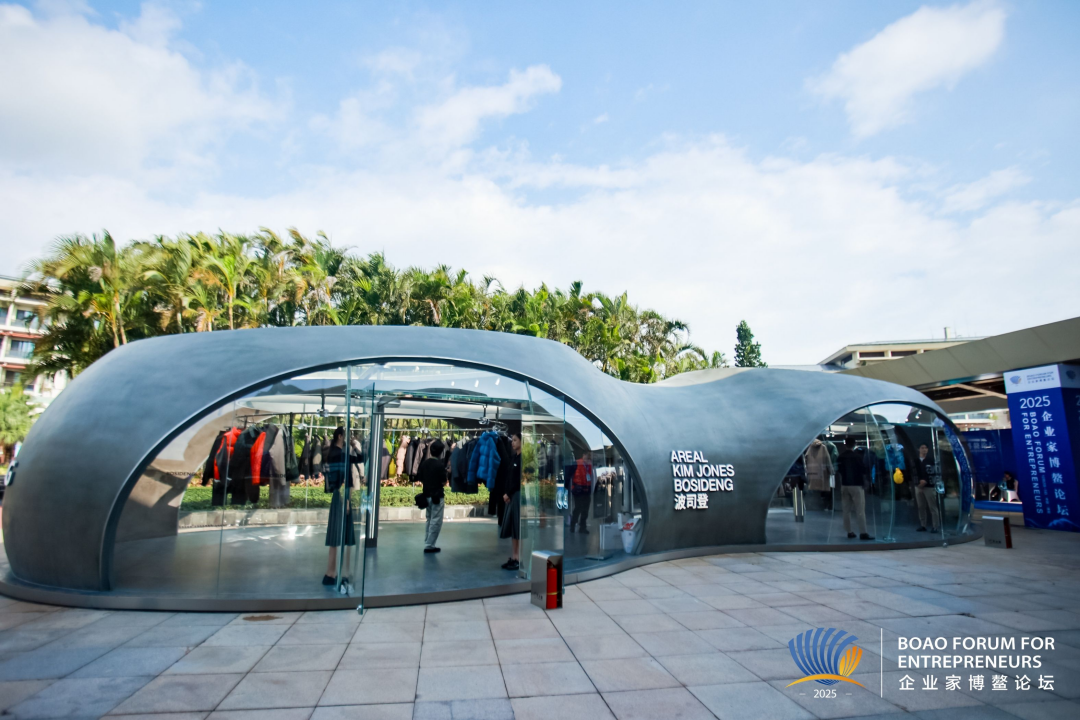
南海之滨邂逅无界美学,波司登AREAL闪耀2025企业家博鳌论坛
Xin Hua Wang· 2025-12-05 08:52
Core Viewpoint - The 2025 Entrepreneur Boao Forum held in Hainan focused on "Linking the World, Leading the Future: New Opportunities in the 14th Five-Year Plan," gathering global business leaders to discuss new opportunities and paths for development [1] Group 1: Company Initiatives - Bosideng showcased its AREAL high-end product line at the forum, integrating fashion aesthetics with modern technology to create an immersive cultural experience [1][6] - The AREAL pop-up store, inspired by the "∞" symbol, emphasizes a "boundary-less" design aesthetic, transforming the space into a three-dimensional expression of the brand's philosophy [2][5] - The pop-up store features a central "8" shaped installation that embodies the core concept of "breaking boundaries and moving forward," aligning with the AREAL series' vision [2][5] Group 2: Product Features - The AREAL line, developed in collaboration with renowned designer Kim Jones, represents a fusion of functionality and fashion, breaking the boundaries between outdoor and urban wear [5][9] - The collection redefines down jackets with a layering system that allows for versatile use across different scenarios, promoting a modern wardrobe that balances functionality and elegance [6][9] - Bosideng utilizes premium wool and custom fabrics in the AREAL line, combining natural materials with high-tech textiles to achieve both comfort and practicality [8] Group 3: Brand Positioning - The pop-up store at Boao signifies a key step in Bosideng's brand upgrade, reflecting the shift from "technology output" to "value output" for Chinese brands [9][11] - Bosideng has positioned itself on a global scale, participating in major international fashion weeks and expanding its international presence, aligning with the Belt and Road Initiative [9][11] - The collaboration with international designers illustrates Bosideng's commitment to finding its voice in the global market, merging Eastern craftsmanship with Western fashion trends [9][11]
朗姿股份:控股股东及配偶为公司1亿元授信提供担保
Xin Lang Cai Jing· 2025-12-05 08:48
Core Viewpoint - The company, Langzi Co., announced a credit facility application of 100 million yuan to meet funding needs, backed by personal guarantees from its controlling shareholder and spouse without any fees [1] Financial Performance - The projected revenue for 2024 is 1.413 billion yuan, with a net profit of 194 million yuan [1] - For the period of January to September 2025, the company expects a revenue of 1.05 billion yuan and a net profit of 867 million yuan [1] Related Transactions - From January to November 2025, the company has engaged in related party transactions totaling 79.1432 million yuan with its actual controller and related parties [1]

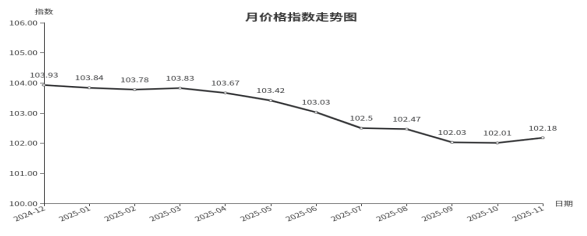
临沂商城11月价格总指数为102.18点,环比上涨0.17点
Zhong Guo Fa Zhan Wang· 2025-12-05 06:32
Core Insights - The overall price index for Linyi Mall in the current month is 102.18 points, reflecting a month-on-month increase of 0.17 points (0.17% rise), a year-on-year decrease of 1.75 points (1.68% drop), and a decline of 1.66 points (1.60% drop) compared to the beginning of the year [1]. Price Index Summary - Among 14 categories of goods, 8 categories saw price increases, 3 remained stable, and 3 experienced price declines. The top two categories with price increases are steel and ceramics, while the top two categories with price declines are clothing and daily necessities [3]. Steel Category - The monthly price index for steel is 95.96 points, with a month-on-month increase of 0.65 points. All subcategories, including construction steel, profiles, plates, and pipes, showed price increases. In November, steel prices fluctuated, with significant increases at the beginning of the month, followed by stability in the latter half. The rise in upstream raw material prices supported the cost side, leading to a slight increase in market steel prices. However, terminal demand remains weak, limiting the growth in sales volume [5]. Ceramics Category - The monthly price index for ceramics is 106.44 points, with a month-on-month increase of 0.58 points. The indices for sanitary ceramics and architectural ceramics increased by 2.41 points and 0.06 points, respectively, while daily ceramics saw a price decline. Seasonal changes and reduced construction activities have led to a seasonal sales slump for products like toilets and tiles. However, increased wedding activities and a recovering catering industry have boosted demand for daily ceramics, resulting in a slight increase in sales volume and revenue [7]. Clothing and Accessories Category - The monthly price index for clothing and accessories is 102.71 points, reflecting a month-on-month decrease of 0.21 points. Both clothing and accessories categories experienced declines of 0.43 points and 0.12 points, respectively. The market showed a "rise then fall" pattern in November, with strong demand for winter products in the first half of the month due to significant temperature drops. However, the early "Double Eleven" promotions drained consumer demand, leading to a decline in sales for children's and women's clothing in the latter half of the month [8][13]. Daily Necessities Category - The monthly price index for daily necessities is 102.77 points, with a month-on-month decrease of 0.04 points. Significant price drops were observed in bags, personal care and beauty products, and toys. The decline in prices is primarily driven by a notable drop in bag sales, while other categories like labor protection tools and kitchenware saw stable prices due to increased wholesale volumes [11].
美国圣诞节变贵:特朗普乱加关税,民众买单,俄罗斯趁机全球捡漏
Sou Hu Cai Jing· 2025-12-05 06:12
Core Insights - The rising costs of consumer goods in the U.S. are significantly impacting holiday spending, with families facing higher expenses for gifts due to inflation and less attractive discounts during the holiday shopping season [1][3] Group 1: Price Increases - Prices for electronic products, clothing, and essential goods have risen, leading to difficult budgeting decisions for families [3] - The increase in costs is attributed to U.S. government tariff policies that have raised the price of imported goods [4] Group 2: Government Policies and Market Impact - The U.S. government's recent tariff measures, aimed at protecting the domestic economy, have inadvertently disrupted market stability and provided opportunities for other countries, such as Russia, to expand their export markets [6][9] - Neighboring countries like Canada and Mexico have retaliated with their own tariffs, resulting in increased household expenses, such as higher electricity bills [7] Group 3: Consumer Behavior Changes - Consumers are adapting by purchasing holiday decorations and essentials early to avoid the full impact of tariffs on prices, and many are turning to second-hand platforms for gifts and appliances [9] - Price comparison has become a common practice among consumers, who are now more cautious about their spending and budgeting for the holiday season [9]

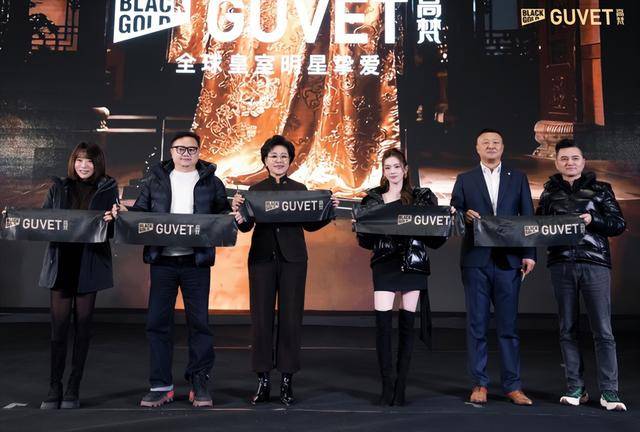
高梵旗舰店落户哈尔滨,重塑高端鹅绒服品牌价值
Sou Hu Cai Jing· 2025-12-05 05:20
Core Insights - The opening of the high-end store of Gaofan in Harbin marks a significant milestone, achieving over 400,000 yuan in sales within the first two days, showcasing strong consumer demand and brand appeal [1] - Gaofan's strategic positioning in the Northeast market capitalizes on the growing demand for high-quality winter apparel, driven by the region's unique climate and tourism trends [2] - The brand's extensive patent portfolio and commitment to quality have established a strong competitive advantage in the high-end down jacket market [7][10] Channel Strategy - Gaofan's success in Harbin is attributed to its deep understanding of the Northeast market and precise channel strategy, leveraging the region's booming ice and snow economy [2] - The choice of Harbin's Xicheng Hongchang as a location reflects Gaofan's foresight in targeting high-traffic areas with a mature customer base, enhancing brand visibility and alignment with its premium positioning [2] - The brand's expansion strategy includes establishing flagship stores in key cities, creating a robust regional retail network that effectively captures the benefits of the ice and snow economy [3] Product Strength - Gaofan's product strength is underpinned by 185 invention patents, making it a leader in the global down jacket industry, with a focus on quality and innovation across the entire supply chain [7] - The brand's commitment to sourcing high-quality down from top regions and maintaining strict quality control through proprietary breeding bases ensures the superior quality of its products [7] - Innovative design and technology integration in Gaofan's down jackets provide a blend of functionality and fashion, appealing to modern consumer preferences [10] Experience Empowerment - Gaofan's flagship stores offer immersive experiences that go beyond traditional retail, enhancing brand value and consumer engagement through carefully curated environments [12] - The store layout is designed to facilitate easy navigation based on usage scenarios, allowing consumers to quickly find products that meet their needs [13] - The presence of brand ambassadors and interactive experiences at the store launch amplify consumer interest and drive word-of-mouth marketing [13] Full Channel Collaboration - Gaofan's growth strategy is characterized by a synergistic approach that combines online sales with offline experiences, creating a sustainable growth ecosystem [14] - The brand's ability to convert online traffic into in-store purchases through engaging experiences exemplifies its effective marketing strategy [14] - Gaofan's commitment to quality and customer satisfaction fosters high repurchase rates, transforming single transactions into long-term customer relationships [15]
新华社:“大字吸睛、小字免责”,这样的小把戏该退场了
Xin Lang Cai Jing· 2025-12-05 04:41
Core Viewpoint - The article highlights the deceptive advertising practices of companies that use large fonts to attract attention while hiding important disclaimers in small print, undermining consumer trust and damaging the overall market environment [1][5][9]. Group 1: Advertising Practices - Companies often employ the "big font attracts attention, small font exempts liability" strategy, summarized by the media as "three blows" [6]. - Examples include a smartphone brand claiming to be the "king of backlighting" while clarifying in small print that this is merely a design goal [7]. - A clothing brand boasts of being the "global sales leader" for three consecutive years, with small print indicating the data is based on an August 2023 survey, raising questions about the validity of such claims [7]. Group 2: Consumer Impact - Such advertising tactics can lead to consumer deception, making it easy for individuals to fall into traps set by misleading claims [8]. - Consumers may develop distrust towards brands that engage in these practices, leading to cautious spending and reluctance to purchase [9]. - The prevalence of "small print exemptions" can create disputes when consumers seek redress after feeling misled, often leaving them in a difficult position [9]. Group 3: Legal and Regulatory Aspects - Advertising laws and consumer protection regulations mandate that advertisements must be truthful and clear, prohibiting misleading information [10]. - Courts typically assess the visibility of disclaimers based on the average consumer's attention, meaning that hidden disclaimers may not absolve companies from liability [10]. - There is a call for regulatory bodies to enforce standards that ensure core product features, pricing, and promotional conditions are clearly communicated [10]. Group 4: Market Integrity - The article emphasizes that the reliance on deceptive advertising can harm a company's reputation and lead to a loss of consumer trust [8][9]. - The trend of using "small print exemptions" threatens honest businesses, potentially leading to a market where integrity is compromised [9]. - A shift towards quality products and genuine service is advocated as a means to restore consumer confidence and promote a healthier market environment [10].
新华社发文:“大字吸睛、小字免责”,这样的小把戏该退场了
Di Yi Cai Jing Zi Xun· 2025-12-05 04:41
Core Viewpoint - The article highlights the deceptive advertising practices of companies using large eye-catching text for promotions while hiding important disclaimers in small print, which undermines consumer trust and damages the overall market environment [2][5]. Group 1: Advertising Practices - Companies often employ the "big text attracts attention, small text exempts liability" strategy, summarized by the media as "three blows" [3]. - Examples include a smartphone brand claiming to be the "king of backlighting" while clarifying in small print that this is merely a design goal [4]. - A clothing brand boasts of being the "global sales leader" for three consecutive years, with small print indicating the data is based on an August 2023 survey, raising questions about the validity of such claims [4]. Group 2: Consumer Impact - Consumers are easily misled by the prominent claims, leading to skepticism about the quality and materials of products from companies that engage in such advertising tactics [5]. - The small print often goes unnoticed, allowing companies to use exaggerated claims while attempting to shield themselves from accountability [5]. - This practice can lead to disputes when consumers seek to assert their rights after feeling deceived, as companies may use the small print as a defense [5]. Group 3: Industry Implications - The prevalence of the "big text, small text" phenomenon is increasing across various sectors, from manufacturers to retailers, both online and offline [5]. - This trend can erode consumer trust, causing cautious spending behavior, while businesses relying on such tactics risk damaging their reputations [5]. - The article calls for a collaborative effort to address these deceptive practices, emphasizing the need for clear and truthful advertising to foster a trustworthy market environment [6].

新华社发文:“大字吸睛、小字免责”,这样的小把戏该退场了
第一财经· 2025-12-05 04:26
Core Viewpoint - The article highlights the deceptive advertising practices of companies that use large, eye-catching text to attract consumers while hiding important disclaimers in small print, undermining consumer trust and damaging the overall market environment [3][7]. Group 1: Advertising Practices - Companies often employ the "big text attracts attention, small text exempts responsibility" strategy, which has been summarized by the media as "three blows" [4]. - Examples include a smartphone brand claiming to be the "king of backlighting" while stating in small print that this is merely a design goal, raising questions about the integrity of such claims [5]. - Another example involves a clothing brand promoting itself as the global sales leader for three consecutive years, with the small print indicating that the data source is from a survey conducted in August 2023, which seems misleading [5]. Group 2: Consumer Impact - This advertising tactic can lead to consumer rights violations, as consumers may easily fall into traps set by misleading large print [6]. - Consumers may develop distrust towards brands that engage in such practices, leading to cautious spending and reluctance to purchase [7]. - When consumers seek to defend their rights after feeling deceived, companies often use the small print as a defense, resulting in disputes and complicating the consumer's ability to seek redress [6][7]. Group 3: Industry Consequences - The prevalence of the "big text, small text" phenomenon is increasing, raising concerns about the integrity of the market [7]. - Companies relying on such deceptive tactics for short-term gains risk damaging their long-term reputation, as negative public sentiment can quickly erode years of goodwill [7]. - The widespread use of small print disclaimers can lead to a situation where honest companies are driven out of the market by those engaging in dishonest practices [7]. Group 4: Regulatory Recommendations - The article calls for a collaborative effort to address the "big-small text trap," emphasizing the need for clear standards regarding the presentation of core product information [8]. - It suggests that advertising should be truthful and clear, with a focus on making disclaimers easily noticeable to consumers [8]. - Strengthening enforcement against misleading advertising, particularly in high-risk sectors like automotive, finance, and food, is essential to ensure compliance and protect consumers [8].