玻璃制造

Search documents
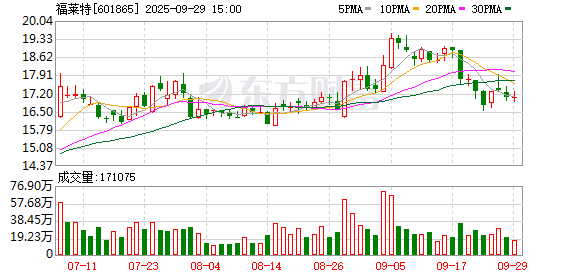
福莱特发生2笔大宗交易 合计成交1.69亿元
Zheng Quan Shi Bao Wang· 2025-09-29 14:43
Summary of Key Points Core Viewpoint - On September 29, 2023, Fulete experienced significant trading activity on the block trading platform, with a total transaction volume of 10.906 million shares and a transaction value of 169 million yuan, indicating a discount of 9.09% compared to the closing price of the day [2] Trading Activity - The closing price of Fulete on the same day was 17.05 yuan, with a flat closing and a turnover rate of 0.90%. The total transaction amount for the day was 292 million yuan, with a net inflow of main funds amounting to 115,000 yuan [2] - Over the past five days, Fulete's stock has declined by 1.39%, with a total net inflow of funds amounting to 16.3468 million yuan [2] Margin Trading Data - The latest margin financing balance for Fulete is 462 million yuan, which has increased by 22.7423 million yuan over the past five days, reflecting a growth rate of 5.18% [2] Block Trade Details - The block trade on September 29 included two transactions: - The first transaction involved 9.806 million shares at a value of 151.993 million yuan, with a transaction price of 15.50 yuan, reflecting a discount of 9.09% from the closing price [2] - The second transaction involved 1.1 million shares at a value of 17.05 million yuan, also at a price of 15.50 yuan, with the same discount [2]


菲利华股价涨5.48%,大成基金旗下1只基金重仓,持有6.48万股浮盈赚取25.53万元
Xin Lang Cai Jing· 2025-09-29 05:20
Company Overview - Hubei Feilihua Quartz Glass Co., Ltd. is located at 68 Dongfang Avenue, Jingzhou, Hubei Province, and was established on January 22, 1999. The company was listed on September 10, 2014. Its main business involves the production and sales of high-performance quartz glass materials and products for various fields including optical communication, semiconductors, solar energy, and aerospace [1]. Financial Performance - As of September 29, Feilihua's stock price increased by 5.48%, reaching 75.88 CNY per share, with a trading volume of 1.139 billion CNY and a turnover rate of 3.00%. The total market capitalization stands at 39.63 billion CNY [1]. - The revenue composition of the company is as follows: quartz glass materials account for 70.80%, quartz glass products for 28.91%, and other revenues for 0.30% [1]. Fund Holdings - Dachen Fund has a significant holding in Feilihua, with its Dachen National Security Theme Flexible Allocation Mixed A Fund (002567) holding 64,800 shares, which represents 5.09% of the fund's net value, making it the fourth-largest holding. The fund reduced its position by 100 shares in the second quarter [2]. - The Dachen National Security Theme Flexible Allocation Mixed A Fund was established on May 4, 2016, with a current scale of 26.27 million CNY. Year-to-date, it has achieved a return of 14.99%, ranking 5145 out of 8244 in its category, while its one-year return is 4.38%, ranking 7468 out of 8080. Since inception, the fund has returned 59.6% [2]. Fund Management - The fund manager of Dachen National Security Theme Flexible Allocation Mixed A is Wang Shuai, who has been in the position for 3 years and 304 days. The total asset size of the fund is 1.894 billion CNY, with the best return during his tenure being 60.57% and the worst being -20.92% [3].

玻璃纯碱早报-20250929
Yong An Qi Huo· 2025-09-29 00:44
Report Industry Investment Rating - No relevant content found. Core Viewpoints - In the glass market, spot prices in various regions showed different trends, with some increasing and some remaining stable, and the production - sales situation also varied by region. In the soda ash market, factory inventory decreased significantly while delivery warehouses had a small increase, and downstream demand was driven by pre - holiday restocking [2]. Summary by Related Content Glass - **Spot Price Changes**: From September 19th to September 26th, the price of 5mm large - plate glass in Shahe Security increased from 1155.0 to 1224.0, a weekly increase of 69.0 and a daily increase of 17.0; Wuhan Changli's 5mm large - plate glass price rose from 1100.0 to 1180.0, a weekly increase of 80.0 and a daily increase of 40.0. However, the prices of Shandong and South China's 5mm large - plate glass remained unchanged [2]. - **Futures Contract Price Changes**: The FG05 contract price decreased from 1383.0 on September 25th to 1372.0 on September 26th, a daily decrease of 11.0; the FG01 contract price dropped from 1270.0 to 1252.0, a daily decrease of 18.0 [2]. - **Price Difference Changes**: The FG 1 - 5 spread was - 120.0 on September 26th, with a weekly increase of 7.0 and a daily decrease of 7.0; the 01 Hebei basis was - 49.0 on September 26th, with a weekly increase of 24.0 and a daily increase of 23.0 [2]. - **Profit Changes**: North China's coal - fired profit increased from 291.6 on September 25th to 302.2 on September 26th, a daily increase of 10.6; North China's natural gas profit increased from - 159.3 to - 150.1, a daily increase of 9.2 [2]. - **Production - Sales Situation**: The production - sales rates in Shahe, Hubei, East China, and South China were 104, 108, 116, and 157 respectively [2]. Soda Ash - **Spot Price Changes**: From September 19th to September 26th, the price of Shahe heavy soda decreased from 1230.0 to 1200.0, a weekly decrease of 30.0 and a daily decrease of 20.0; North China's light soda price dropped from 1170.0 to 1120.0, a weekly decrease of 50.0 and a daily decrease of 10.0 [2]. - **Futures Contract Price Changes**: The SA05 contract price decreased from 1404.0 on September 25th to 1384.0 on September 26th, a daily decrease of 20.0; the SA01 contract price dropped from 1315.0 to 1293.0, a daily decrease of 22.0 [2]. - **Price Difference Changes**: The SA01 - SA05 spread was - 91.0 on September 26th, a weekly decrease of 2.0 and a daily decrease of 2.0; the SA01 Shahe basis was - 93.0 on September 26th, a weekly decrease of 5.0 and a daily increase of 2.0 [2]. - **Profit Changes**: North China's ammonia - soda process profit decreased from - 152.0 on September 25th to - 168.8 on September 26th, a daily decrease of 16.8; North China's combined - soda process profit dropped from - 175.0 to - 192.4, a daily decrease of 17.4 [2]. - **Inventory Situation**: Factory inventory decreased significantly, while delivery warehouses had a small increase, and overall inventory decreased [2].
【商洛】企业来了“科技副总”
Shan Xi Ri Bao· 2025-09-28 22:42
Group 1 - The article highlights the innovative "Technology Vice President" flexible talent introduction mechanism in Shandong City, aimed at bridging the gap between education and technology talent [1][3] - The mechanism allows for deeper integration of academic research and enterprise needs, moving beyond traditional project-based collaborations [2][3] - The initiative has led to significant growth in technology-driven enterprises in the region, with an annual increase of 46% in the number of such companies [2] Group 2 - The first batch of 15 engineering PhDs from Shangluo University has been appointed as "Technology Vice Presidents," leading to the establishment of research centers and successful patent applications [4][6] - The "Technology Vice Presidents" have facilitated key technological breakthroughs in various sectors, including electronics and agriculture, enhancing local industry capabilities [5][6] - The program has fostered a collaborative environment where enterprises and academic institutions work together on research and development, leading to a more integrated innovation ecosystem [7][8] Group 3 - The initiative has resulted in the development of new products and technologies, such as high-purity quartz sand and low-temperature preservation techniques for chestnuts, benefiting local farmers and industries [6][5] - The "Technology Vice Presidents" are not only solving immediate technical challenges but also transforming the R&D models of companies, promoting a culture of continuous innovation [8][7] - The program emphasizes the importance of talent cultivation, establishing dual mentorship mechanisms that enhance knowledge transfer between academia and industry [8]
基本面有差异,玻强碱弱
Guo Xin Qi Huo· 2025-09-28 13:52
1. Report Industry Investment Rating No relevant content provided. 2. Core Viewpoints of the Report - For soda ash, the fundamentals are not optimistic. Supply pressure and high inventory are the key factors suppressing prices, and there are no signs of a turnaround in the short term. The trading strategy is to short on rallies unilaterally and consider rolling to sell out - of - the - money call options on near - term contracts [3][67]. - For glass, the fundamentals are neutral. Policy and news have a significant impact on the FG2601 contract. The glass futures price in the fourth quarter may show a volatile trend, with the price center likely to be higher in the first half and lower in the second half. The trading strategy is to focus on band trading and consider selling deep out - of - the - money call options [4][68]. 3. Summary by Relevant Catalogs 3.1 Market Review Soda Ash - In Q1 2025, the soda ash price fluctuated, with a decline in the second half of December due to factory maintenance and a rebound later as enterprises resumed production. In February, the price first dropped and then rebounded. In March, the price fell despite improved fundamentals [6]. - In Q2 2025, the soda ash price showed a smooth downward trend due to increased supply and slower demand growth [7]. - In Q3 2025, the price first rose and then fell. In July, the price increased with the rise of coking coal futures. In August, supply reached a historical high and demand was weak, leading to a price drop. In September, the price fluctuated, and it was relatively firm before the National Day due to downstream restocking [7]. Glass - In Q1 2025, the glass futures price trended downward. In January, the futures were weak but the spot price rebounded. In February, the price continued to decline due to high inventory and slow recovery of processing enterprises. In March, the price first dropped to a low and then rebounded, but it couldn't be sustained [8][10]. - In Q2 2025, the glass futures price showed a smooth downward trend due to poor macro - environment and low real - estate demand. In June, the price rebounded due to the rise of coal prices [10]. - In Q3 2025, the price first rose under the influence of the "anti - involution" policy and then fell back. In September, the price rebounded with the arrival of the consumption peak season [10]. 3.2 Soda Ash Fundamental Analysis Price and Spread - In Q3 2025, the spot price of soda ash in various regions first rose and then fell, and the futures price also showed a similar trend. The spot price decline was greater than that of the futures, and the basis decreased by 150 yuan/ton compared to the end of June [13]. Profit, Production, and Capacity Utilization - By September 25, 2025, the ammonia - soda production profit was - 37.2 yuan/ton, and the combined - soda production profit was - 77.5 yuan/ton, both showing a decline compared to the end of June. However, the capacity utilization rate remained high, above 80% in Q3 and above 85% in September. The weekly production was mostly above 700,000 tons, and the monthly production in September increased compared to August [17]. Inventory - As of September 25, 2025, the soda ash enterprise inventory was 1.9515 million tons, a decrease of 115,400 tons compared to the end of June. The light - soda inventory was 729,100 tons, a decrease of 76,100 tons, and the heavy - soda inventory was 922,400 tons, a decrease of 39,300 tons. The heavy - soda inventory was digested faster after August due to the rebound of the photovoltaic glass market and the ignition of some float glass production lines [22]. Future Capacity Expansion Plan - In the first half of 2025, new capacities of Lianyungang Alkali Plant and Hubei Shuanghuan were put into production. In the second half, there are still 3.5 million tons of capacity to be put into operation, including the second - phase project of Yuanxing Energy, which was successfully ignited on September 19 and entered the commissioning stage [27]. Downstream Demand - **Float Glass**: In Q3 2025, the spot price of float glass in most regions rose, but it decreased in Guangdong. The futures price also rose and then fell. The production profit of glass enterprises improved. The daily melting volume increased to 160,200 tons, and the enterprise inventory decreased. However, the deep - processing enterprise operating rate declined, and the terminal real - estate demand remained weak [29][32][33]. - **Photovoltaic Glass**: In Q3 2025, the photovoltaic glass price rebounded, and the daily melting volume reached 88,800 tons after a rebound. The enterprise inventory days decreased to 14.16 days. The domestic photovoltaic component installation volume and export volume showed different trends. The installation volume declined after May, and the export volume increased in August but is likely to decline after September [48][54]. - **Light - Soda Demand**: The demand for light soda is relatively stable. The PPI of glass products continued to decline, the production of synthetic detergents decreased, and the production of lithium carbonate increased steadily [60]. 3.3 Outlook and Trading Recommendations - For soda ash, the supply surplus problem may worsen in the fourth quarter. The trading strategy is to short on rallies unilaterally and consider rolling to sell out - of - the - money call options on near - term contracts [67]. - For glass, the daily melting volume may remain stable with possible short - term fluctuations. The trading strategy is to focus on band trading and consider selling deep out - of - the - money call options [68].
南华期货2025年度玻璃纯碱四季度展望:政策性扰动不断,边际变化决定弹性
Nan Hua Qi Huo· 2025-09-28 13:13
Group 1: Report Industry Investment Rating - Not provided in the content Group 2: Report's Core Views Glass - Glass is in a state from weak balance to weak surplus. Without unexpected factors, it is expected to fluctuate at a low level. The supply side has uncertainties, including the impact of coal - to - gas conversion in Shahe and potential industrial policies. The cost may rise. Before facing delivery, the futures may be more likely to rise than fall. The high mid - stream inventory in Shahe and Hubei restricts its upward elasticity [1]. - The price range is estimated to be (1000, 1400). Without cold - repair, consider the 1 - 5 reverse spread opportunity [1]. 纯碱 - The market has repeatedly traded the fact and expectation of soda ash surplus. Without new factors intensifying the surplus and affecting the spot market, the futures may fluctuate with sentiment. High supply is expected, and the production capacity will increase with the output release of Yuangxing Phase II. Demand is expected to remain stable, with a 300 - 350 - million - ton capacity surplus in float glass and photovoltaic glass. Exports remain high. Policy and cost are uncertain factors. Without delivery pressure, soda ash may fluctuate around the marginal cost [1]. - The price range is estimated to be (1100, 1500). Use band - trading strategies and short on rallies without policy disturbances [2]. Group 3: Summary by Relevant Catalogs Chapter 2: Glass and Soda Ash Third - Quarter Market Review Glass - In Q3 2025, the glass price center moved up. In July, the price of the main 09 contract rose from 1060 yuan/ton to around 1450 yuan/ton, a rise of over 36%, driven by macro - policies and the "anti - involution" sentiment. In August, the market sentiment cooled, and the price declined due to delivery pressure and high mid - stream inventory. In September, the price fluctuated as the market lacked a clear trading theme [2][3]. Soda Ash - In Q3 2025, the soda ash price center moved up from 1100 - 1200 yuan/ton to 1300 - 1400 yuan/ton. In July, the main 09 contract rose to over 1450 yuan/ton, a rise of about 24%, driven by macro - policies and speculative demand. In August, the market returned to reality. Although supply and inventory pressure were high, the price was supported near delivery, showing anti - decline characteristics [7]. Chapter 3: Core Concerns of Glass and Soda Ash Glass - Monitor the mid - stream inventory depletion. High inventory in Shahe and Hubei needs to be digested by the end - market in the peak season; otherwise, the price may decline. Hubei's situation is crucial for pricing [19]. - Pay attention to the realization of cost - increase expectations. There are policy pressures for coal - to - gas conversion in Shahe this quarter and in Hubei by the end of 2026. Coal prices may also be affected by policies [21]. - Track whether the supply side can continue to clear. The current daily melting volume is relatively low, and marginal changes in supply will affect the price [22]. Soda Ash - Watch for "policy - related stories" on the supply side. Policy - driven production cuts may change the supply - demand balance, and unexpected supply reduction may lead to significant price elasticity [22][23]. - Focus on the cost - increase expectations of coal and raw salt prices. Coal accounts for 35% - 40% of the cost, and raw salt prices may rise [24]. Chapter 4: Glass Valuation Feedback and Supply - Demand Outlook Glass Supply - As of the end of September 2025, the float glass daily melting volume was around 16.1 - 16.2 million tons, slightly higher than expected. Some production lines may resume production in Q4, but there is no cold - repair expectation. Policy - related coal - to - gas conversion in Shahe and Hubei may affect supply and cost [25][26]. Glass Valuation - Gas - fired production lines are in a loss, while coal - fired and petroleum - coke - fired production lines are profitable. There is a policy trend for coal - and petroleum - coke - fired lines to switch to gas, which will increase costs. Glass is in a low - valuation state, and its price increase may lead to over - supply due to increased production expectations [30][31]. Glass Demand - From January to August 2025, real - estate data was weak, which restricted glass demand. From January to September 2025, glass apparent demand declined by 6.5% - 7.0%. Although Q3 was better than Q2, high mid - stream inventory limited the upward elasticity of glass prices. Seasonally, Q4 demand may improve, but mid - stream inventory depletion needs to be observed [34]. Glass Supply - Demand Balance and Outlook - Based on the average daily apparent demand in Q3, glass is in a basic balance in Q4. The annual supply and demand growth rates are - 6.3% and - 7% respectively. Marginal changes in supply or demand will determine price elasticity [48]. Chapter 5: Soda Ash Valuation Feedback and Supply - Demand Outlook Long - term Supply Pressure - In H1 2025, soda ash production capacity increased from 38.9 million tons to 41.1 million tons. Yuangxing Phase II with 2.8 - million - ton capacity was ignited in mid - September. High supply is expected in Q4, and the daily output may be above 105,000 tons [51][56]. Valuation Disputes vs. Cost Increase - In Q3, coal and raw salt prices increased, driving up soda ash costs by 80 - 90 yuan/ton. Different production processes and regions have different costs. Market valuation is affected by the difficulty of marginal production capacity exit and cost - increase expectations [61][62]. Soda Ash Demand and Export - Float glass and photovoltaic glass are the main demand sources for soda ash. Float glass production may decline by 6% - 6.5%, and photovoltaic glass by 9% - 10%, dragging down soda ash demand by 4 - 5 percentage points. From January to August 2025, soda ash net exports were nearly 1.35 million tons, and monthly exports are expected to remain at 160,000 - 200,000 tons [72]. Soda Ash Surplus and High Inventory - Soda ash inventory is at a high level, and the market consensus is surplus. In Q4, demand may improve slightly, but supply will remain high, and the surplus situation is difficult to reverse [85]. Soda Ash Supply - Demand Balance and Outlook - In Q4, soda ash production is expected to remain high, with an annual growth rate of 2.5% - 3%. Demand will be stable, and exports will remain high. The supply - demand balance will remain in surplus, with an average daily surplus of about 10,000 tons [94].
行业周报:建材行业稳增长方案出台,积极布局建材机会-20250928
KAIYUAN SECURITIES· 2025-09-28 12:51
Investment Rating - The investment rating for the building materials industry is "Positive" (maintained) [1] Core Viewpoints - The Ministry of Industry and Information Technology and five other departments have jointly issued the "Building Materials Industry Steady Growth Work Plan (2025-2026)", which aims to stabilize growth and promote transformation. Key goals include achieving over 300 billion yuan in revenue from green building materials by 2026 and establishing "zero external electricity, zero carbon emissions" demonstration factories [3][4] - The report recommends several companies in the consumer building materials sector, including Sankeshu (channel penetration and retail expansion), Dongfang Yuhong (waterproof leader with optimized operational structure), Weixing New Materials (high-quality operations with a high retail business ratio), and Jianlang Hardware. Beneficiary stocks include Beixin Building Materials (gypsum board leader with diversified expansion into coatings and waterproof sectors) [3][4] - The cement sector is expected to benefit from the "Energy Saving and Carbon Reduction Special Action Plan" issued by the National Development and Reform Commission, which aims to control cement clinker capacity at around 1.8 billion tons by the end of 2025 [3][4] Summary by Sections Market Overview - The building materials index fell by 2.11% in the week from September 22 to September 26, 2025, underperforming the CSI 300 index by 3.18 percentage points. Over the past three months, the CSI 300 index rose by 13.80%, while the building materials index increased by 10.96%, underperforming by 2.84 percentage points [4][11] - The average PE ratio for the building materials sector is 28.92 times, ranking it 15th from the bottom among all A-share industries, while the PB ratio is 1.32 times, ranking it 8th from the bottom [17][21] Cement Sector - As of September 26, 2025, the average price of P.O42.5 bulk cement nationwide was 287.55 yuan/ton, an increase of 3.06% month-on-month. The clinker inventory ratio reached 70.17%, up by 5.06 percentage points [22][23] - Regional price trends show increases in various areas, with the highest increase in the southwest region at 7.67% [22][23] Glass Sector - The spot price of float glass as of September 26, 2025, was 1283.80 yuan/ton, up by 6.19% from the previous period. The inventory of float glass decreased by 2.60%, with a total of 53.29 million weight boxes [73][75] - The price of photovoltaic glass remained stable at 125.00 yuan/weight box [77] Fiberglass Sector - The market price for non-alkali 2400tex direct yarn ranges from 3400 to 4000 yuan/ton, with variations depending on the region and specific product type [6][4] Consumer Building Materials - As of September 26, 2025, the price of crude oil was 72.09 USD/barrel, showing a week-on-week increase of 7.76%. The price of asphalt remained stable at 4570 yuan/ton [6][4]
南华期货玻璃纯碱产业周报:供应政策预期,盘面反复-20250928
Nan Hua Qi Huo· 2025-09-28 12:49
Report Industry Investment Rating No relevant content provided. Core Viewpoints of the Report - The core contradictions affecting the trends of glass and soda ash include supply contraction expectations and the current weak balance state of glass and high - production and high - inventory situation of soda ash. The trading logic lies in expectations that are difficult to be falsified in the short term [1]. - In the short term, glass is prone to rise and difficult to fall, and soda ash follows. The情绪 for glass has not fully released [6]. - The demand for glass is currently weak with high inventories in the upper and middle reaches, and the demand for soda ash remains stable [54][66]. Summary by Relevant Catalogs Chapter 1: Core Contradictions and Strategy Recommendations 1.1 Core Contradictions - Supply contraction expectations: There may be industrial policies. For glass, there are disturbances such as coal - to - gas conversion in Shahe, and there is an expectation of petroleum coke - to - gas conversion next year, which implies cost increase. Soda ash has no clear indication and its price fluctuates with glass or market sentiment [1]. - In reality, glass is in a weak balance with high middle - stream inventories, and without real production cuts, the upward price elasticity is limited. Soda ash has high production and high inventories, with strong upward pressure, but the price is supported by expectations [1]. - Near - term trading logic: Glass has general real - world demand but some speculative demand, and the middle - stream still has "water - storage capacity". Soda ash follows coal prices and glass, but is suppressed by high near - term inventories and production, while upstream soda ash plants currently have limited pressure due to downstream replenishment at low prices [2]. - Long - term trading expectations: There are expectations of cost increase, mainly from coal prices, and whether the supply contraction expectations will be fulfilled, mainly related to industrial policies. When the expectations cannot be falsified, the futures market may be prone to rise and difficult to fall [3]. 1.2 Trading - Type Strategy Recommendations - Trend judgment: In the short term, glass is prone to rise and difficult to fall, and soda ash follows [6]. - Month - spread strategy: Without substantial cold - repair or production cuts in glass, continue to focus on the 1 - 5 reverse spread [6]. - Hedging arbitrage strategy: Consider going long on glass and short on soda ash [6]. 1.3 Industry Customer Operation Recommendations - Price range prediction: The price range of glass is predicted to be 1000 - 1400, and that of soda ash is 1100 - 1500 [6]. - Hedging strategies: Different hedging strategies are recommended for glass and soda ash in terms of inventory management and procurement management, including futures trading and option trading [6]. 1.4 Basic Data Overview - Glass spot prices: The average price of glass in Shahe decreased slightly, and prices in different regions showed different trends [8]. - Glass futures prices and month - spreads: The prices of glass futures contracts decreased, and the month - spreads changed [9]. - Soda ash spot prices: The prices of soda ash in different regions remained stable [11]. - Soda ash futures prices and month - spreads: The prices of soda ash futures contracts decreased, and the month - spreads changed [12]. Chapter 2: This Week's Important Information and Next Week's Attention Events 2.1 This Week's Important Information - Bullish information: There were rumors of a glass industry symposium, and relevant departments issued a work plan for the building materials industry. The upstream inventories of glass and soda ash decreased, with glass inventory (factory warehouse) down 2.55% week - on - week and 18.56% year - on - year, and soda ash factory inventory down 10.41 tons week - on - week [13]. - Bearish information: The inventory of Shahe's spot - futures reached a new high this year, and the soda ash delivery warehouse inventory increased, with the total inventory of factory and delivery warehouses at an absolute high [14]. 2.2 Next Week's Important Events to Follow - Whether there are further clear instructions on industrial policies [16]. - The downstream transmission situation after the spot price increase [16]. - Track daily production and sales [16]. Chapter 3: Futures Market Interpretation - Unilateral trends and capital movements: The main contracts of glass and soda ash maintained a position of over one million hands, in line with the seasonality. The price difference between the two narrowed, and neither showed a good trend. Glass once rose due to supply contraction expectations and spot price increases, but then declined as the sentiment subsided [16]. - Basis and month - spread structure: Glass generally maintains a C - structure, and the 1 - 5 reverse spread idea is maintained in logic. Soda ash also maintains a C - structure, with limited short - term month - spread opportunities [31][33]. Chapter 4: Valuation and Profit Analysis 4.1 Upstream and Downstream Profit Tracking in the Industrial Chain - Glass: The theoretical cost changes little. Natural gas production lines are in loss, while petroleum coke and coal - gas production lines still have profits. Glass factories have limited willingness to cold - repair at current prices [38]. - Soda ash: The cash - flow cost of the ammonia - soda process in Shandong is around 1170 yuan/ton, and the full cost is 1300 - 1320 yuan/ton. The full cost of the combined - soda process (mainly in Central China) is 1200 yuan/ton. There are still profits in the soda ash industrial chain at current prices [38]. 4.2 Import and Export Analysis - Glass: The monthly average net export of float glass is 5 - 7 tons, accounting for 1.2% - 1.3% of the apparent demand, with limited impact [45]. - Soda ash: The monthly average net export of soda ash is 16 tons, accounting for 5.6% of the apparent demand, and the export in August was slightly higher than expected, maintaining high expectations [45]. Chapter 5: Supply, Demand, and Inventory 5.1 Supply - Side and Projections - Glass supply: The daily melting of glass has slightly increased, and there may be ignition plans for some production lines in the fourth quarter. Attention should be paid to the impact of coal - to - gas conversion in Shahe and industrial policies on glass production capacity [49]. - Soda ash supply: The production of soda ash fluctuates slightly with planned maintenance, and high supply is maintained [52]. 5.2 Demand - Side and Projections - Glass demand: This week, the spot price increase improved the shipment, but the overall demand is weak with high inventories in the upper and middle reaches [54]. - Soda ash demand: The daily melting of float and photovoltaic glass is stable, and the rigid demand for soda ash remains stable. The fundamentals of photovoltaic glass have improved significantly [66]. 5.3 Inventory Analysis - Glass: The factory inventory of glass decreased, but the middle - stream inventories in Shahe and Hubei are at a high level [75]. - Soda ash: The factory inventory of soda ash decreased, and the inventory in the delivery warehouse increased. The total inventory decreased, and the pressure on soda ash plants continued to ease [76].
黑色建材周报:市场情绪反复,玻碱震荡偏弱-20250928
Hua Tai Qi Huo· 2025-09-28 09:33
Report Industry Investment Rating - Glass: Oscillating weakly [3] - Soda Ash: Oscillating weakly [3] - Cross-variety: None [3] - Cross-period: None [3] Core Viewpoints - The glass market is affected by speculative demand and downstream restocking, with slight inventory reduction but limited overall changes. The glass price is volatile due to macro policies, while the fundamentals still suppress the price. Attention should be paid to macro policies and peak-season demand [1]. - The supply - demand contradiction of soda ash persists. With the ignition of Yuanxing Phase II, the supply pressure will increase. Focus on whether the speculative demand for soda ash weakens, and monitor new capacity production progress and inventory changes [2]. Summary by Related Catalogs Price and Spread - This week, the glass main contract 2601 oscillated strongly, closing at 1,252 yuan/ton on Friday, with a 2.88% increase. The weekly average price of the domestic float glass market was 1,178 yuan/ton, a 14.9 - yuan/ton increase from the previous week [1][5]. - This week, the soda ash main contract 2601 oscillated and consolidated, closing at 1,293 yuan/ton on Friday, with a 1.93% decrease. The downstream demand for soda ash was stable, mainly for pre - holiday rigid restocking [1][5]. Supply - This week, the float glass output was 1.1242 million tons, a 0.27% increase from the previous week. The enterprise operating rate was 76.01%, unchanged from the previous week, and the capacity utilization rate was 80.33%, a 0.25% increase from the previous week [1][17]. - This week, the soda ash capacity utilization rate was 89.12%, a 3.59% increase from the previous week; the output was 776,900 tons, a 4.19% increase from the previous week [2][17]. Demand - This week, the glass trading sentiment was boosted by macro policies. The futures and spot markets resonated, with downstream prices rising and purchasing enthusiasm increasing. There was pre - holiday rigid restocking, and the production - sales ratio improved [1][19]. - This week, the downstream of soda ash mainly engaged in pre - holiday rigid restocking. The photovoltaic glass and float glass operations were stable, with no obvious changes in production lines [2][19]. Inventory - This week, the total inventory of the national float glass sample enterprises was 59.355 million heavy boxes, a 2.55% decrease from the previous week, indicating inventory reduction [1][23]. - This week, the inventory of domestic soda ash manufacturers was 1.6515 million tons, a 5.93% decrease from the previous week, showing inventory reduction [2][23].
研判2025!中国夹层玻璃工艺流程、市场政策、产业链、供需现状、市场规模、竞争格局及发展趋势分析:国产夹层玻璃市场占有率高达98.75%[图]
Chan Ye Xin Xi Wang· 2025-09-28 01:45
Overview - The laminated glass market in China is expected to reach a demand of 110.746 million square meters and a market size of 21.717 billion yuan in 2024, with a production volume of 157.651 million square meters [1][10] - The demand for laminated glass is driven by increasing national income levels and safety awareness, leading to its widespread application in construction and automotive sectors [1][10] Market Policies - The Chinese government has implemented various policies to support the development of the glass industry, including standards and guidelines aimed at promoting safety and sustainability [6] Industry Chain - The laminated glass industry chain includes upstream suppliers of raw materials like quartz sand and soda ash, midstream manufacturers of laminated glass, and downstream applications in construction, automotive, and other sectors [9] Current Market Situation - The construction sector accounts for nearly 50% of the laminated glass demand, with significant applications in residential, commercial, and public buildings [9][10] - The automotive sector is also a growing market for laminated glass, particularly with the rise of electric vehicles [10] Competitive Landscape - The laminated glass market in China is highly competitive, with domestic companies like Fuyao Glass, Xinyi Glass, and Flat Glass leading the market, achieving a domestic market share of 98.75% by 2024 [10][12] - Fuyao Glass reported a revenue of 21.450 billion yuan in the first half of 2025, with automotive glass accounting for 91.10% of its revenue [12] - Flat Glass achieved a revenue of 7.737 billion yuan in the same period, with a gross profit margin of 14.05% [12] Future Trends - The laminated glass industry is expected to see increased consolidation as smaller, less efficient companies are phased out due to stricter environmental standards [14] - The Belt and Road Initiative is anticipated to open new international markets for Chinese laminated glass companies, particularly in Southeast Asia and Africa [14]