
餐饮

Search documents
旗下十间餐厅暂停运营,上海小南国:策略性重整
Guan Cha Zhe Wang· 2026-02-11 10:12
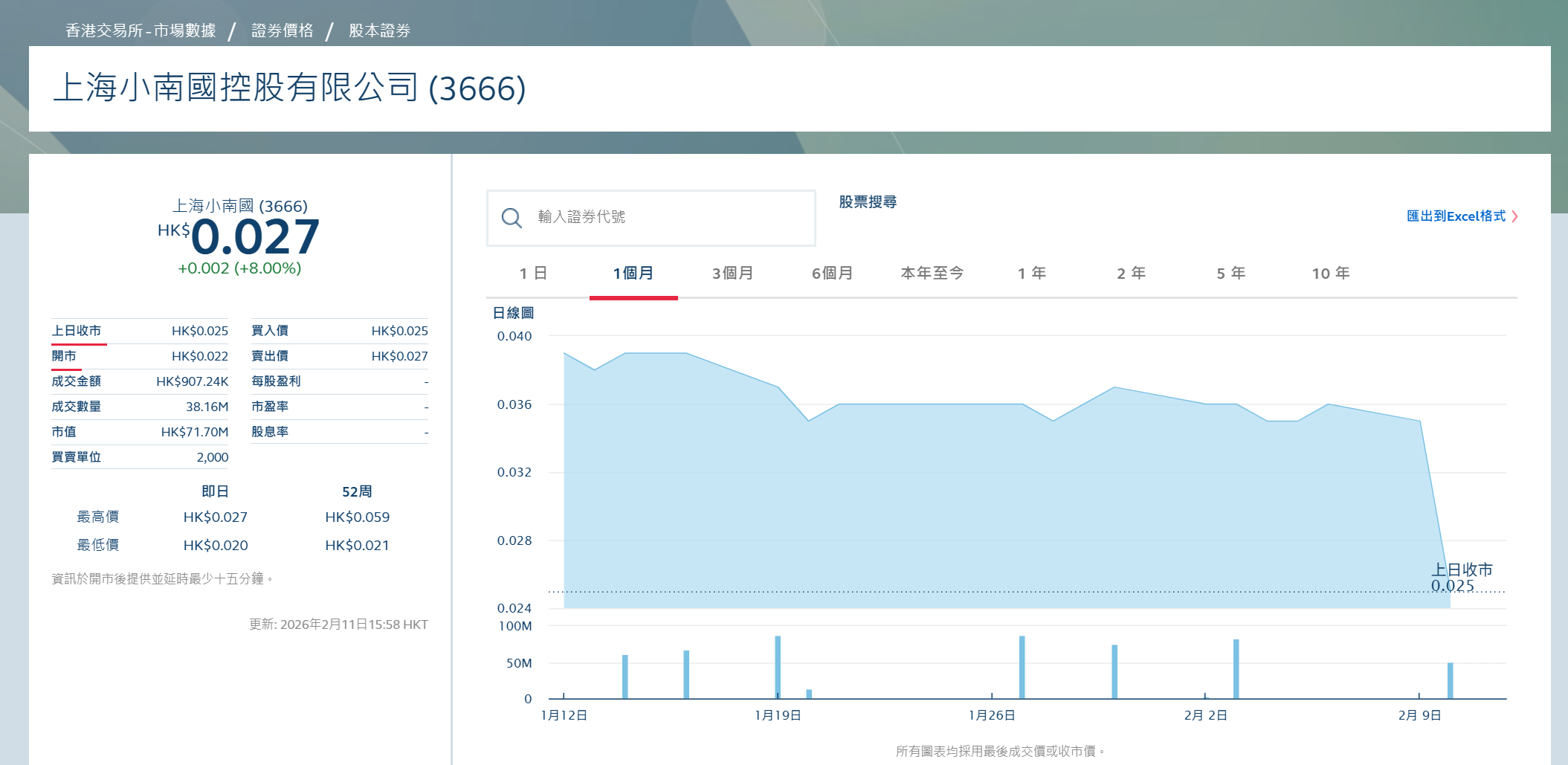
Core Viewpoint - Shanghai Xiaonan Guo's stock price has experienced significant volatility, with a drop of 28.57% to HK$0.025 per share on February 10, followed by a further decline of over 16% in early trading on February 11, before rebounding to an 8% increase by the end of the day [1][4]. Group 1: Stock Performance - As of February 10, Shanghai Xiaonan Guo's stock closed at HK$0.025, reflecting a 28.57% decrease [1]. - On February 11, the stock opened with a sharp decline, dropping over 16% before recovering to close with an 8% increase [1]. Group 2: Company Operations - The company confirmed that all restaurants operating under the "Shanghai Xiaonan Guo" brand in Shanghai have temporarily ceased operations as part of a strategic restructuring [4]. - The board clarified that claims regarding non-refundable deposits and prepaid cards are incorrect, stating that they are processing refunds for deposits and that funds for prepaid cards are held in designated accounts for refunds [4]. Group 3: Strategic Restructuring - The strategic restructuring aims to address ongoing profitability issues in the mainland Chinese restaurant business and is part of a broader plan to enhance operational efficiency, improve product and service quality, and reduce costs [4][5]. - The company plans to reallocate operational resources to more profitable market segments and implement a comprehensive brand revitalization plan to enhance affordability and strengthen profit margins [5]. Group 4: Historical Context - Shanghai Xiaonan Guo has over 30 years of experience in the restaurant industry, operating various dining brands and was successfully listed on the Hong Kong main board in 2012 [5]. - The company faced its first net loss post-IPO in 2015, with continuous revenue decline from 2016 to 2020 and a significant increase in debt-to-equity ratio, rising from nearly 80% in 2018 to over 250% by mid-2025 [5]. Group 5: Recent Transactions - In January, the company announced plans to sell 100% of its subsidiary, Xiaonan Guo (Hong Kong) Catering Group Limited, for a total consideration of USD 100,000 to an independent third party [6].

兰州市市场监督管理局2026年食品安全专项抽检信息通告
Zhong Guo Zhi Liang Xin Wen Wang· 2026-02-11 09:25
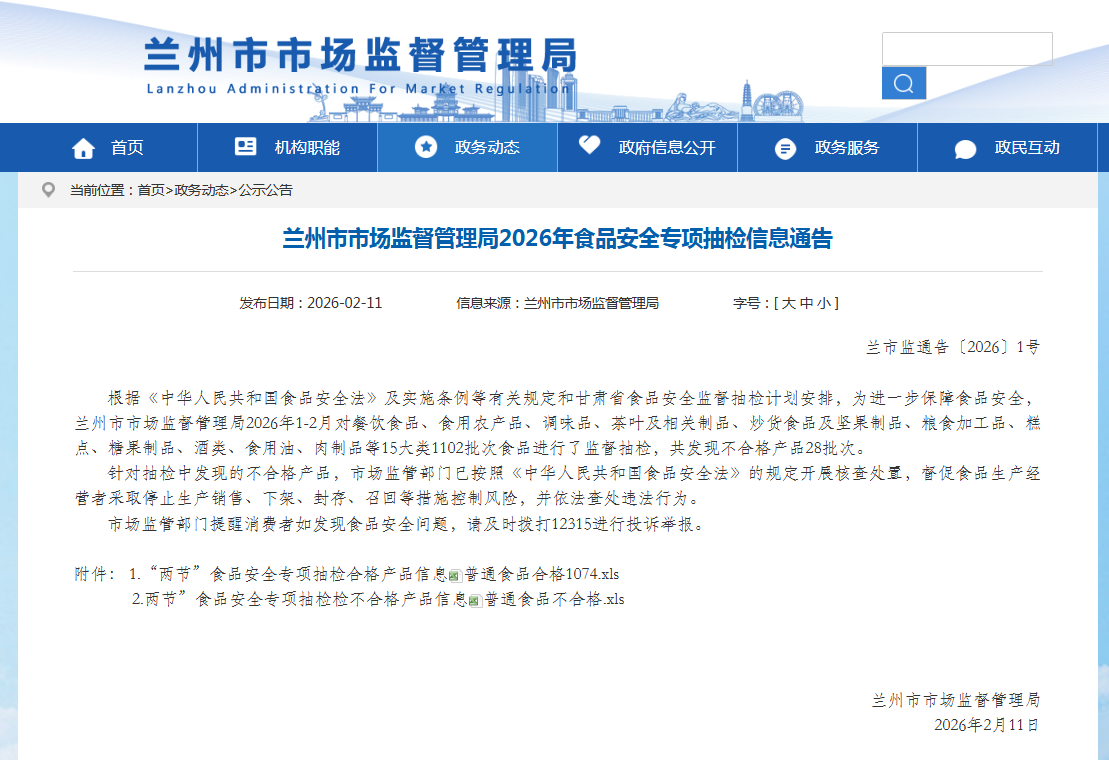
Group 1 - The news highlights multiple food safety inspections conducted in Lanzhou, Gansu Province, focusing on various food products and their compliance with safety standards [2][3][4] - Several food samples, including fruits, vegetables, and baked goods, were tested for pesticide residues and other contaminants, with specific attention to harmful substances like phosphine and sulfur residues [2][3][4] - The inspections were carried out by local food safety authorities, ensuring that food products sold in markets meet health regulations and standards [2][3][4] Group 2 - Specific instances of non-compliance were noted, such as the detection of pesticide residues in products like pomelo and celery, indicating potential risks to consumer health [2][3][4] - The inspections included a variety of vendors, from small local shops to larger markets, reflecting a comprehensive approach to food safety in the region [2][3][4] - The results of these inspections are crucial for maintaining public health and ensuring that food products are safe for consumption, thereby influencing consumer confidence in local food sources [2][3][4]
百胜中国(09987):长期主义优质标的,基本面持续突破
Western Securities· 2026-02-11 08:58
Investment Rating - The investment rating for the company is "Buy" [6] Core Insights - The company achieved revenues of $11.8 billion and $2.8 billion in Q4 2025, with year-on-year growth of 4% and 9% respectively. Adjusted net profit was $929 million and $140 million for the same periods, reflecting a year-on-year increase of 2% and 22% respectively [1][6] - Same-store sales increased by 1% for the year, with Q4 system sales up 7% and same-store sales up 3%, marking three consecutive quarters of positive same-store growth. The dual-brand strategy showed strong performance, with KFC's same-store sales up 3% and Pizza Hut's up 1% [1][6] - Profit exceeded expectations due to effective cost control and improved operational efficiency. KFC and Pizza Hut's store profit margins were 17.4% and 12.8%, respectively, with year-on-year increases of 0.5 and 0.8 percentage points [1] - The company continues to expand its store network, with over 18,000 stores by the end of 2025, adding more than 1,700 stores during the year. KFC opened 1,349 new stores, while Pizza Hut added 444 [2] - The company is committed to high shareholder returns, planning to return a total of $4.5 billion from 2024 to 2026, with a dividend increase of 21% to $0.29 per share in 2026 [2] Financial Projections - Revenue projections for the company are as follows: $11.8 billion in 2025, $12.4 billion in 2026, $13.1 billion in 2027, and $13.9 billion in 2028, with growth rates of 4.4%, 5.2%, 5.9%, and 6.1% respectively [4] - Net profit projections are $929 million in 2025, $1.0 billion in 2026, $1.1 billion in 2027, and $1.2 billion in 2028, with growth rates of 2.0%, 9.1%, 10.4%, and 11.3% respectively [4] - The company’s earnings per share (EPS) are projected to be $2.62 in 2025, $2.86 in 2026, $3.16 in 2027, and $3.52 in 2028 [4]
亮剑浦江:网络法治在上海的生动实践
Xin Lang Cai Jing· 2026-02-11 08:50
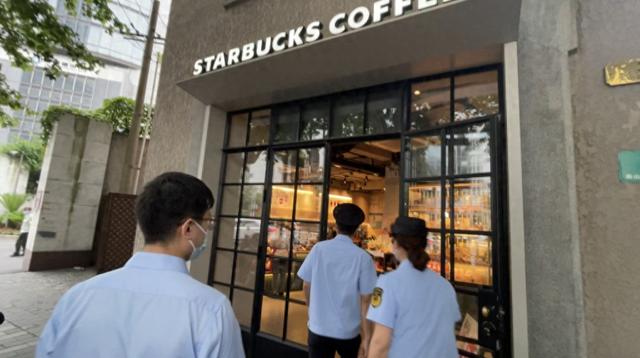
Core Viewpoint - The "Liangjian Pujiang" initiative in Shanghai aims to enhance personal information protection through legal enforcement, addressing the challenges posed by digital technology in daily life [1][9]. Group 1: Initiative Overview - The "Liangjian Pujiang" personal information protection enforcement action was launched in June 2023, focusing on consumer scenarios that frequently collect personal data [2][4]. - The initiative has evolved over three years, with 2023 focusing on "small cuts" in daily life, 2024 targeting typical scenarios, and 2025 aiming for ecological construction in governance [1][19]. Group 2: Enforcement Actions - The initiative identified eight consumer scenarios with significant data collection issues, including QR code dining, parking payments, and children's education [2][4]. - Major coffee chains like Starbucks were targeted for frequent data collection practices, leading to compliance training and guidance from regulatory bodies [5][6]. Group 3: Legal Framework and Governance - The implementation of the Personal Information Protection Law in 2021 marked a new phase in legal governance, with Shanghai establishing a scene-based governance model [9][10]. - The initiative has created a governance framework that includes collaboration among various departments, breaking down silos for effective enforcement [11][12]. Group 4: Innovative Solutions - The introduction of the "Pure Code" for parking payments allows users to pay without providing personal information, demonstrating innovative governance thinking [13][14]. - The initiative emphasizes a balanced approach to sensitive data collection, advocating for minimal use and maximum transparency [15][16]. Group 5: Long-term Mechanisms - The "Liangjian Pujiang" initiative has transitioned from a special action to a sustainable governance model, establishing a closed-loop enforcement process [19][20]. - By 2025, the initiative aims to solidify its achievements through continuous legal guidance and compliance resources for businesses [20][21].


36氪研究院 | 2026全国连锁商家抖音经营报告
3 6 Ke· 2026-02-11 08:32
Core Insights - The chain industry in China is transitioning to a stable and efficient development phase, focusing on operational efficiency rather than rapid expansion, with an emphasis on single-store performance and overall growth certainty [1][11] - Local life services are becoming a new growth arena for chain merchants, driven by the shift in consumer behavior from "in-store decision-making" to "online decision-making and offline consumption" [2][21] - Douyin's life service platform is enhancing its ecosystem, facilitating efficient collaboration and growth potential for chain merchants through a comprehensive approach that integrates product supply, content dissemination, and offline operations [4][32] Group 1: Industry Overview - The growth rate of the chain industry, particularly in dining and retail, is stabilizing, with the focus shifting from rapid store openings to enhancing operational efficiency [14][11] - The chainization rate in the dining sector is projected to increase from 19% in 2019 to 23% in 2024, indicating a trend towards more efficient operations [14] - The industry is increasingly adopting digital transformation and multi-channel integration to create sustainable competitive advantages [14][11] Group 2: Consumer Behavior and Market Dynamics - The consumer decision-making process is evolving, with social media and content platforms becoming primary sources of information, leading to a shift towards online decision-making before offline purchases [25][28] - Policies supporting consumption and the integration of online and offline services are driving the rapid development of local life services [21][22] - The competition for consumer attention is intensifying as businesses shift their customer acquisition strategies online, focusing on cost-effective and efficient methods [17][18] Group 3: Douyin Life Service Ecosystem - Douyin's life service ecosystem is expanding, with steady growth in transaction volume, user base, and the number of chain merchants, creating a vibrant and diverse local service ecosystem [4][32] - The platform's transaction volume is expected to grow by 19% year-on-year, with a significant increase in the number of new chain merchants and active users [33] - Douyin is leveraging a four-step growth engine to create a closed-loop system that supports merchants from traffic acquisition to performance growth [38][32] Group 4: Operational Strategies for Chain Merchants - Chain merchants are integrating various resources, including traffic, content, and offline services, to explore new operational models and customer acquisition strategies [6][11] - The focus on product supply, content marketing, and offline operations is essential for achieving effective customer engagement and transaction conversion [4][38] - Successful strategies include creating "mindshare products," maintaining marketing consistency, and implementing a cyclical flow of traffic to enhance operational efficiency [38][41]

雄安春节期间“乐购新春”消费系列活动启动
Bei Jing Ri Bao Ke Hu Duan· 2026-02-11 08:29
Core Viewpoint - Xiong'an New Area is launching a series of consumption activities during the 2026 Spring Festival, inviting residents and tourists to enjoy the local culture and benefits through various themed events and subsidies aimed at enhancing consumer spending and engagement in the area [1] Group 1: Food Consumption - Xiong'an New Area is issuing food consumption vouchers with discounts such as "spend 200 get 60 off" and "spend 100 get 30 off," which can be combined with bank vouchers for a maximum discount of 110 yuan per transaction [2] - High-quality hotels are offering special New Year's Eve dinners along with interactive activities to enhance the dining experience [2] Group 2: Housing and Electronics - A trade-in policy for electronics and home appliances is being implemented, providing a 15% subsidy, with a maximum of 1500 yuan for home appliances and 500 yuan for digital products [3] - A home appliance and digital product exhibition will be held during the Lantern Festival, offering one-stop services for policy consultation and subsidy redemption [3] Group 3: Automotive Consumption - The automotive sector is promoting a "buy, exhibit, and use" service model, with trade-in subsidies of up to 20,000 yuan for scrapping old cars and 15,000 yuan for trade-ins [4] - A total of 15 million yuan in government funds will be allocated for a car consumption carnival, providing purchase subsidies ranging from 1500 to 7000 yuan based on vehicle price [4] Group 4: Tourism and Cultural Activities - From February to March, the third Spring Festival Carnival will feature a variety of cultural and tourism activities, including themed events and interactive experiences to enhance the festive atmosphere [5] - The carnival will include activities such as parades and traditional crafts, creating immersive experiences for visitors [5] Group 5: Shopping Initiatives - Multiple consumer incentives are being introduced in collaboration with banks and commercial entities, including government vouchers that can be combined for significant discounts on purchases [6] - New brands are set to debut at the Xiong'an Outlets, with daily cultural performances during the festival period, enhancing the shopping experience [6] Group 6: Entertainment and Cultural Engagement - Over 600 cultural and sports activities are planned, promoting community participation and traditional cultural experiences [7] - A budget of 1 million yuan in cultural consumption vouchers will be allocated to support various cultural activities, enriching the spiritual and cultural life of residents [7] Group 7: Special Events - From February 18 to March 3, a series of unique events will be held at the Business Service Center, including traditional markets and family-friendly performances [8] - Public spaces will host various cultural activities, ensuring a festive atmosphere that combines traditional elements with modern consumer experiences [8]

知名餐厅上海小南国深夜宣布10店停业,股价跳水后又反弹
凤凰网财经· 2026-02-11 08:23
Core Viewpoint - Shanghai Xiao Nan Guo, a well-known restaurant brand, has temporarily closed ten of its restaurants as part of a strategic restructuring, leading to significant stock price fluctuations and consumer concerns regarding deposits and prepaid cards [2][5]. Group 1: Company Operations - On February 10, Shanghai Xiao Nan Guo announced the temporary closure of ten restaurants to align with its strategic restructuring efforts [2][5]. - The company clarified that reports of all its restaurants being closed were inaccurate, and it is processing refunds for customer deposits and prepaid cards, which are secured in designated accounts [5]. Group 2: Market Reaction - Following the announcement, the stock price of Shanghai Xiao Nan Guo experienced a sharp decline, dropping over 16% at one point during the morning session on February 11, before rebounding to an 8% increase by the end of the day [1]. - The stock had previously closed down 28.57% on February 10, reflecting investor concerns over the company's operational status [1]. Group 3: Consumer Sentiment - Many consumers have reported that restaurants under the Shanghai Xiao Nan Guo brand have quietly ceased operations, with some expressing frustration over prepaid deposits for reservations, particularly for the upcoming New Year celebrations [5][6]. - A consumer review indicated that operational issues, including unpaid wages leading to staff strikes, had been affecting service quality prior to the closures [6].
港股收评:恒指涨0.31%、科指涨0.9%,有色金属及稀土板块走高,科网股、汽车股活跃
Jin Rong Jie· 2026-02-11 08:20
Market Performance - The Hong Kong stock market showed a positive trend with the Hang Seng Index rising by 83.23 points, or 0.31%, closing at 27,266.38 points [1] - The Hang Seng Tech Index increased by 48.96 points, or 0.9%, to 5,499.99 points, while the National Enterprises Index rose by 25.43 points, or 0.28%, to 9,268.18 points [1] - Significant market divergence was observed, with new stocks surging and some older stocks experiencing sharp declines, supported by continuous inflow of southbound funds [1] Individual Stock Movements - Newly listed stock Lexin Outdoor surged by 48.51% on its second day of trading, reaching HKD 36.8, marking an increase of over 220% from its IPO price [2] - Bilibili-W saw a rise of 5.16% to HKD 252.8, with expectations of a nearly 60% year-on-year growth in game licenses by 2026, potentially boosting advertising revenue [2] - Kingsoft Cloud experienced a significant increase of 9.12%, benefiting from Xiaomi's projected AI investment of approximately HKD 10 billion in 2026 [2] Sector Performance - Resource stocks performed strongly, with Ganfeng Lithium rising over 4% due to an 8% increase in lithium carbonate futures [2] - Coal stocks continued their upward trend, with Mongolian Coal and Yancoal both rising over 4%, following Indonesia's announcement of significant production cuts [2] - Real estate stocks saw a late surge, with Vanke Enterprises and Country Garden rising by 3.76% and 3.57%, respectively, amid easing concerns over corporate debt risks [3] Market Sentiment and Outlook - Analysts noted that the recent market pullback was driven by three main pressures: hawkish Fed expectations, doubts about AI capital expenditure returns, and lower-than-expected manufacturing PMI [4] - Despite the inflow of southbound funds, overall trading volume in the Hong Kong market has decreased, indicating a cautious sentiment among investors [4] - The market is expected to see a potential short-term recovery, with a focus on essential retail and tech hardware sectors, while maintaining a defensive strategy due to high volatility risks [4]
20.5亿元消费券、补贴、红包等你领!
Jin Rong Shi Bao· 2026-02-11 07:19
Core Viewpoint - The Chinese government is implementing a series of measures to boost consumer spending during the upcoming Spring Festival, including financial support, promotional activities, and increased supply of essential goods. Group 1: Financial Support and Incentives - The first batch of 625 billion yuan in national subsidy funds has been allocated to local commerce departments [3] - A lottery for invoices during the nine-day holiday will have a prize pool exceeding 1 billion yuan [4] - Local governments have arranged 20.5 billion yuan in funds to directly benefit consumers through vouchers, subsidies, and red envelopes [4][13] - Financial institutions are encouraged to develop diverse financial products and services to support consumption [14] Group 2: Supply and Inventory Management - As of February 9, inventory levels for key supermarket items such as grains, meat, and eggs have increased by over 20% compared to the previous month, with vegetable stocks up by 7.7% [5][20] - Various regions are actively organizing supply chains to ensure adequate stock of essential goods for the holiday [19] Group 3: Consumer Experience Enhancement - The government is promoting a comprehensive approach to holiday consumption, covering food, accommodation, transportation, tourism, shopping, and entertainment [6] - Initiatives include encouraging restaurants to offer special New Year meal packages and promoting discounts in hotels and home appliance stores [7][8] - Airlines and railways will increase capacity and offer special services during the holiday [9] - Cultural activities such as traditional fairs and performances will be supported to enhance the festive atmosphere [10][11] Group 4: Collaboration and Community Engagement - The cultural and tourism sector is launching a nationwide Spring Festival consumption month with various initiatives to engage the public [17] - Sports events and fitness activities are being organized to promote community participation and well-being during the holiday [18]
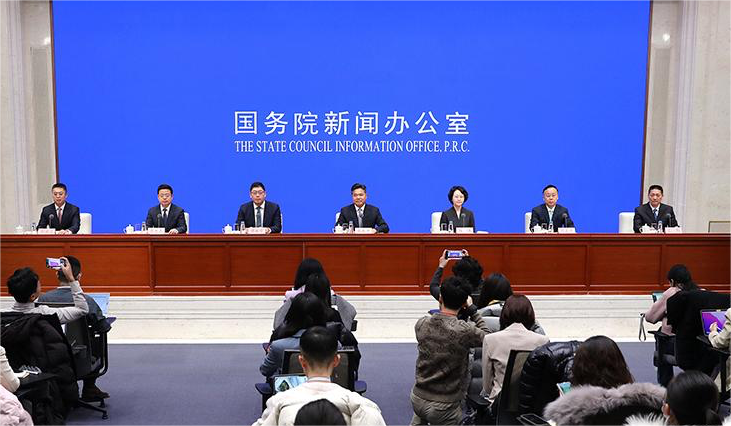
国补资金625亿元就位!春节消费“三重礼包”请查收
Yang Shi Xin Wen· 2026-02-11 07:03
Core Viewpoint - The Chinese government is launching the "Happy Shopping Spring Festival" special event to boost consumer spending during the upcoming extended Spring Festival holiday, with a focus on high-value policy packages to stimulate the market [1] Group 1: Event Overview - The Spring Festival holiday this year will be the longest in history, lasting for nine days [1] - The Ministry of Commerce, in collaboration with nine other departments, has planned the "Happy Shopping Spring Festival" event to promote holiday consumption [1] Group 2: Consumer Incentives - The first package includes a trade-in program, with the Ministry of Commerce and other agencies allocating 62.5 billion yuan in subsidies to support consumers during the holiday [2] - The second package features a prize invoice initiative, where 100 billion yuan in rewards will be distributed over six months in 50 cities, with over 1 billion yuan allocated for the Spring Festival period [2] - The third package involves financial support, where the People's Bank of China and financial regulators will guide institutions to offer various discounts across multiple consumer sectors, including airports, hotels, and restaurants [2]