玩具

Search documents
外贸产品拓内销提速增量
Ren Min Ri Bao· 2025-08-08 08:02
Core Viewpoint - The article discusses the acceleration of integrating domestic and foreign trade in China, highlighting the government's support for foreign trade products to expand into the domestic market, which is seen as a crucial strategy to boost consumption and support foreign trade enterprises [1][2]. Group 1: Government Initiatives - The Ministry of Commerce launched the "Foreign Trade Quality Products China Tour" in April, resulting in over 16.7 billion yuan in procurement intentions by early May, with participation from over 2,400 foreign trade companies and 6,500 buyers [1]. - A recent meeting of the Central Political Bureau emphasized the need to accelerate the integration of domestic and foreign trade, with a focus on supporting foreign trade products to enter the domestic market [1]. - The "Special Action Plan to Boost Consumption" encourages foreign trade companies to cultivate their own brands and expand into domestic sales [1]. Group 2: Corporate Responses - Zhejiang Hangzhou Lianhua Supermarket quickly facilitated the sale of nearly $2 million worth of seafood products that were initially intended for export, demonstrating the urgency for new sales channels due to tariff impacts [2][3]. - Major supermarket chains like Yonghui and Tencent have opened "green channels" for foreign trade enterprises to facilitate their transition to domestic sales, providing tailored support and rapid product placement [3][4]. - E-commerce platforms such as Meituan and Taobao have initiated programs to assist foreign trade companies in entering the domestic market, with significant participation from over 300 companies [4][5]. Group 3: Financial Support and Cost Reduction - JD.com announced a procurement plan to purchase at least 200 billion yuan worth of export products for domestic sales, receiving over 8,000 applications for cooperation within a week [8][9]. - Tencent has implemented a "zero deposit trial operation" for over 2,600 business categories, allowing foreign trade enterprises to list products without upfront costs, thus reducing operational expenses [9][10]. - Financial institutions in Fuzhou are providing flexible credit solutions to support foreign trade companies facing cash flow issues due to canceled orders [10][11]. Group 4: Technological Empowerment - Companies like Ningbo Jinshan Shuanglu Battery Co. are leveraging advanced technologies such as 5G and AI to enhance production efficiency and product quality, which is crucial for competing in the domestic market [12][13]. - The integration of AI in product development, as seen in the case of Dongguan's toy companies, is driving innovation and meeting domestic consumer preferences [15][16]. - The implementation of flexible production lines allows companies to respond quickly to market demands, exemplified by Xiangxing Group's ability to adapt to sudden spikes in product popularity [17][18]. Group 5: Market Dynamics and Future Outlook - The shift from foreign trade to domestic sales is viewed as an opportunity to expand market space rather than merely redistributing existing market shares [14]. - Companies are encouraged to focus on quality and brand development to meet the evolving demands of domestic consumers, as highlighted by the experiences of various enterprises [16][19]. - The article concludes with a positive outlook on China's ability to leverage its vast market potential to counter external uncertainties, emphasizing the importance of high-quality development [20].
前第四范式科学家创业AI玩具赛道,种子轮获阿米巴、商汤、第四范式数百万美元融资|早起看早期
36氪· 2025-08-08 00:07
Core Viewpoint - The article discusses the launch of "Artificial Productivity," an AI hardware company that has completed a multi-million dollar seed round of financing and aims to innovate in the children's toy market by leveraging advanced AI technology to enhance interactivity and engagement [6][8]. Group 1: Company Overview - "Artificial Productivity" was founded in 2024 by former chief scientist of Fourth Paradigm, Tu Weiwei, and has developed its first AI companion robot, the Panda Robot, which is set to be launched next month [6]. - The company has secured funding from notable investors including Amiba Capital, SenseTime Guoxiang Capital, and Fourth Paradigm Fund, with Yuanhe Capital acting as the exclusive financial advisor [6]. Group 2: Market Context - The global toy industry is facing structural challenges, with the traditional toy market nearing 1 trillion yuan in 2024, while leading companies are experiencing growth pressures [7]. - Video games are rapidly capturing children's attention, with daily active users of games like NetEase's "Egg Party" peaking over 50 million, of which over 70% are minors [7]. Group 3: Product Innovation - "Artificial Productivity" aims to address the growth challenges in the traditional toy industry by utilizing large model technology to revolutionize human-machine interaction, moving beyond traditional remote-controlled toys [7][8]. - The Panda Robot has been tested in children's malls, revealing that its most popular features—rock-paper-scissors and action imitation—can keep children engaged for over two hours, with a replay rate exceeding 80% [7]. Group 4: Technology and Features - The core technology of the AI Agent's autonomous decision-making capability is crucial for delivering personalized experiences to children [8]. - The company has developed the "Artificial Productivity" Autonomous Hardware Platform, which includes multi-modal interaction, user behavior prediction, and decision-making capabilities based on user feedback [8][10]. Group 5: Competitive Advantage - The product pricing is competitive, with some models priced in the double-digit range, while maintaining a focus on fun and engagement [10]. - The company collaborates with top IPs to integrate content into the AI toy system, allowing for diverse gameplay experiences [10]. Group 6: Distribution Strategy - Unlike many AI toy companies that focus solely on online sales, "Artificial Productivity" has partnered with a wide range of online and offline channels, including e-commerce platforms, Douyin, and retail stores, to maximize consumer reach [11]. Group 7: Team Background - The founder, Tu Weiwei, holds a PhD from Nanjing University and has extensive experience in AI technology development, having previously worked at leading companies such as Baidu and Fourth Paradigm [11]. - The core R&D team comprises members from top universities and has experience in software and hardware development across various leading firms [11].

制造业回流将削弱美国跨国公司竞争力
2 1 Shi Ji Jing Ji Bao Dao· 2025-08-07 22:41
Group 1 - The U.S. government is threatening to impose a 100% tariff on imported semiconductor products, which reflects a strategy to encourage high-end manufacturing to return to the U.S. [1] - The tariffs are aimed at creating uncertainty in trade negotiations and are part of a broader strategy to reshape domestic supply chains and reduce reliance on foreign manufacturing [2] - The U.S. has been facing challenges such as a high trade deficit and increasing federal debt, prompting the need for structural changes in its economic policies [2] Group 2 - The proposed tariffs could lead to increased prices for imported goods, potentially raising inflation in the U.S. and complicating the manufacturing landscape [3] - The U.S. is seeking investments from allied countries in high-end manufacturing sectors, including semiconductors and pharmaceuticals, to bolster its domestic industry [2] - China's share of semiconductor exports to the U.S. is minimal, but the broader implications of tariffs could disrupt supply chains and impact U.S. competitiveness in global markets [3] Group 3 - China is focusing on expanding its domestic market and reducing reliance on the U.S. market, with exports showing a 7.2% year-on-year growth in July [4] - The trade value between China and the U.S. has decreased by 11.1% in the first seven months, indicating a shift in trade dynamics [4] - China's manufacturing sector is expected to strengthen its global position through innovation and leveraging its large domestic market [4]

奋楫前行 迎头赶上——汕头建设新时代经济特区五年答卷
Shang Hai Zheng Quan Bao· 2025-08-07 18:28
Core Insights - Shantou is advancing its economic development by focusing on industrialization and modernization, particularly in the context of the 40th anniversary of its economic zone establishment [7][22] - The city is implementing a "three new, two special, one big" industrial development strategy, which includes new energy, new materials, and new generation electronic information industries [8][10] New Energy Sector - Shantou is developing a significant offshore wind power project, with an investment of 40.77 billion yuan, expected to generate an annual output value of 142 billion yuan upon reaching full production [9] - The offshore wind power industry aims to achieve an economic scale exceeding 200 billion yuan by 2030, positioning Shantou as a national hub for offshore wind power technology [9][10] New Materials Industry - The new materials sector is projected to have 302 enterprises by 2024, with an output value of 48.825 billion yuan, accounting for 17.4% of the city's industrial output [10] - Shantou is focusing on high-end, green, and clustered development in the new materials industry, aiming to create a billion-level industry cluster [10] New Generation Electronic Information Industry - Shantou is uniquely positioned as a national communication hub with six international submarine cables connecting to over 297 cities globally, accounting for over 50% of the national export bandwidth [10] - The city is leveraging its advantages to develop cross-border data services and attract investment in green computing [10] Traditional Industries Transformation - The textile and toy industries, which contribute significantly to national production, are undergoing transformation to address challenges such as small enterprise size and low product quality [12][15] - Shantou is promoting high-end, intelligent, and green upgrades in these traditional sectors, with significant investments in smart manufacturing and digital transformation [12][14] Health Industry Development - The health industry in Shantou is expanding, with a focus on pharmaceuticals, medical devices, and health services, supported by local enterprises and research institutions [16][18] - The health industry has surpassed 30 billion yuan in scale, with ongoing projects totaling approximately 138 billion yuan [19] Business Environment Improvement - Shantou is enhancing its business environment to attract investment, with initiatives such as streamlined administrative processes and improved regulatory frameworks [20][21] - The city aims to create a market-oriented, law-based, and international business environment to support high-quality economic development [21][22]

母婴消费链多股年内翻倍
Shen Zhen Shang Bao· 2025-08-07 16:48
Group 1 - Recent favorable policies such as childcare subsidies and free education fees have been introduced at the national level, leading to a surge in related A-share concept stocks [1] - As of the market close on August 7, shares of Chuangyuan Co. rose by 15.34%, while Beiyinmei and Weisi Medical increased by over 5% [1] - Year-to-date, related concept stocks have shown significant price increases, with Qide New Materials up 187.36%, Chuangyuan Co. up 102.90%, Weisi Medical up 97.53%, and Beiyinmei up over 80% [1] Group 2 - The "Implementation Plan for Childcare Subsidy System" issued by the Central Committee and the State Council states that starting January 1, 2025, subsidies will be provided for children under three years old, amounting to 3,600 yuan per child per year [1] - The implementation of childcare subsidy policies and free education fees is expected to continuously benefit the maternal and infant consumption chain, including dairy products, baby products, educational services, textiles, toys, and maternal and infant medical devices [1] - The market's growth expectations for preschool education and maternal and infant consumption sectors have been further strengthened with the clarification and implementation of policy details [1]



IP联名、谷子潮玩撬动情绪消费,这波风口还跟不跟?
Nan Fang Du Shi Bao· 2025-08-07 11:20
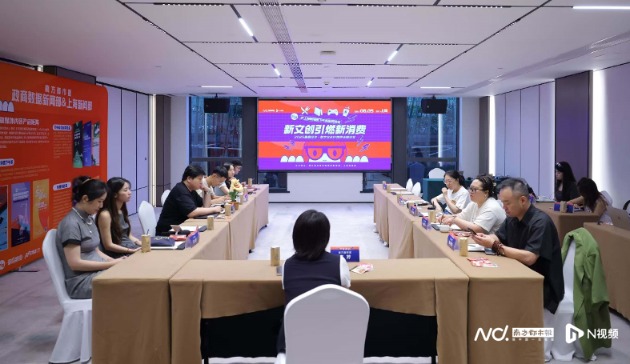
Group 1 - The core viewpoint of the articles highlights the transformation of consumer behavior among Generation Z, emphasizing emotional engagement and social empowerment as key drivers of consumption [1] - Digital cultural IPs are evolving into "super interfaces" that activate various industries such as cultural tourism, retail, and food and beverage [1] - Government policies are facilitating the development of a collaborative ecosystem in the cultural industry, promoting a model based on content creation, digital transformation, derivative development, and cross-industry empowerment [1] Group 2 - The "New Cultural Creation Ignites New Consumption" salon in Shanghai focused on discussions around innovation in the digital cultural industry and deep development of digital cultural IPs [2][4] - The concept of "tone alignment" emerged as a key consideration for brands when selecting IP partners, emphasizing the importance of compatibility in brand identity [5][7] - Companies like Softstar Technology and Century Huatong are exploring cross-industry collaborations to enhance brand visibility and consumer engagement [9][11] Group 3 - The tea beverage brand Lemon Right has observed a slowdown in the pace of IP collaborations, indicating a shift towards strengthening its own brand identity [12][14] - The importance of brand building is emphasized, with companies recognizing that successful collaborations should enhance their core offerings rather than solely relying on emotional value [14][15] - AI technology is being integrated into IP collaborations, providing interactive experiences and enhancing consumer engagement [17] Group 4 - Intellectual property protection is crucial for the value realization of IPs, with ongoing challenges related to infringement and the need for effective enforcement strategies [19] - The rise of counterfeit products, such as the imitation of the popular IP "Labubu," highlights the ongoing issues within the industry regarding brand reputation and market integrity [19]
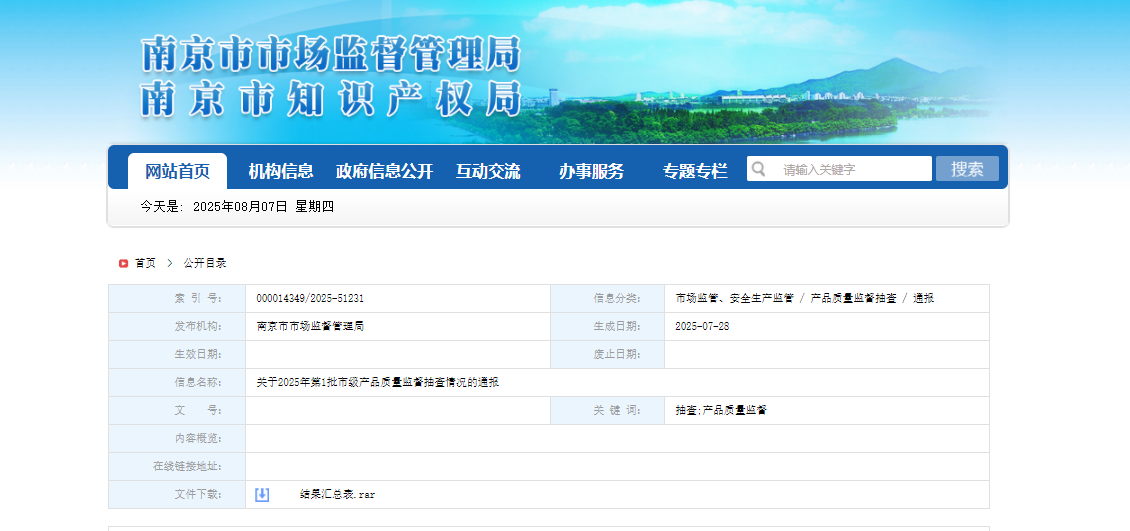
南京市市场监管局发布电动玩具产品抽查结果
Zhong Guo Zhi Liang Xin Wen Wang· 2025-08-07 09:11
中国质量新闻网讯 近日,南京市市场监管局发布2025年第1批市级产品质量监督抽查情况通报。其中,电动玩具产品抽查10批次,全部合格。 | 2025年南京市电动玩具产品质量监督抽查检验结果汇总表 | | | | | | | | | | | | | | --- | --- | --- | --- | --- | --- | --- | --- | --- | --- | --- | --- | --- | | 序 | | 规格型 | | | 样 品 | 电 商 | | 受检单位南 | | 生产单位南 | 检验结 | 不合 | | 样品名称 号 | 号 | | 批号 | 商标 | 来 | 平 | 受检单位 | 京市所属行 | 生产单位 | 京市所属行 | 论判定 | 格项 | | | | | | | | | | 政区域 | | 政区域 | 类型 | 目 | | | | | | | 源 | 台 | | | | | | | | 1 趣味声光玩具(电动 | 806 | | — | 甄潮 | 实 体 | — | 南京新尚超市有限公司江宁店 | 江宁区 | 汕头市缔俐文 | — | 未发现 | — | | 玩具) | | | ...
三星DDR4停产时间延后至2026年底|首席资讯日报
首席商业评论· 2025-08-07 04:23
Group 1 - Samsung has decided to extend the production of DDR4 DRAM until December 2026, reversing its earlier plan to cease production this year due to a surge in demand for DDR4 [2] - The second batch of 718 counterfeit Pop Mart toys was seized by customs, indicating ongoing issues with intellectual property rights in the toy industry [3] - Xincheng Capital has successfully raised over 4.5 billion RMB for a new merger and acquisition fund, aiming to leverage the advantages of the Yangtze River Delta industrial cluster [4] Group 2 - The departure of Yan Weixin, co-founder of Zhiyuan Robotics, may highlight potential discrepancies in the company's technological direction and its alignment with market needs [5] - Recent agricultural policies in China, such as "one certificate, one product," are expected to enhance the quality and order of the pesticide market, benefiting leading companies with multiple registration certificates [6] - CITIC Securities maintains a positive outlook on the home appliance industry, driven by government subsidies and increased demand for air conditioning during summer [7] Group 3 - Infomedia has agreed to be acquired by TPG for approximately 421.4 million USD, with a 30% premium over its recent stock price [8] - A breakthrough in the development of a 6mm thick rare earth permanent magnet motor has been achieved, marking a significant advancement in high-end motor technology [9] - The film "Nanjing Photo Studio" has surpassed 1.7 billion RMB in box office revenue, indicating strong audience reception [10] Group 4 - Researchers have reduced the number of codons in E. coli from 64 to 57, potentially opening new avenues for drug and material development [11] - OpenAI has released two open-weight AI models capable of mimicking human reasoning, marking a significant step in AI accessibility [12] - JD Coin Chain is preparing to apply for a stablecoin license in Hong Kong, countering rumors of withdrawal from the market [13]

15岁少年成为百万富豪!7岁创作卡牌游戏15岁卖出
Sou Hu Cai Jing· 2025-08-07 03:43
(亚历克斯·巴特勒创作他的卡牌游戏时只有7岁。) (这款卡牌游戏以两款墨西哥食物为主题。) (亚历克斯的爸妈成立了一家公司,他是大股东。最近他将游戏出售给别家公司。) 美国西雅图一名15岁少年,通过出售自己7岁时发明的卡牌游戏,一举成为百万富豪。 亚历克斯·巴特勒与父母在上月将其原创卡牌游戏《Taco vs. Burrito》出售给总部位于威斯康星州的玩具公司PlayMonster。《西雅图时报》报道称,虽然交 易金额未公开,但亚历克斯已开始与父母共同规划投资,并表示希望购买一辆兰博基尼。 截至目前,该游戏销量已达150万份,并推出两个扩展包。由于业务规模扩大,最终亚历克斯选择将其出售给PlayMonster。该公司CEO表示,将通过新产 品线和市场扩展该游戏,并计划于今年11月推出收藏版。 来源:潇湘晨报 编辑:涵钰 版权归原作者所有 如有侵权请及时联系 ...

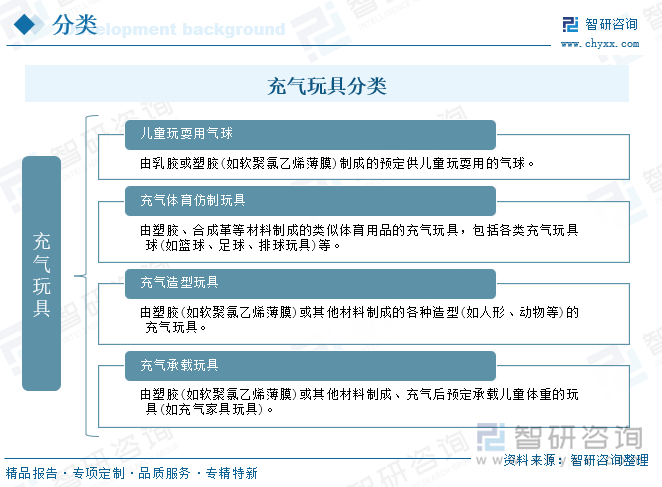
研判2025!中国充气玩具行业产业链、市场规模、竞争格局、发展趋势分析:行业应用场景广泛,市场规模增长至84.81亿元[图]
Chan Ye Xin Xi Wang· 2025-08-07 01:09
Core Viewpoint - The inflatable toy market, as a segment of the plastic toy industry, is experiencing steady growth due to its lightweight, durable, and versatile characteristics, with the market size projected to increase from 6.704 billion yuan in 2015 to 8.481 billion yuan in 2024, reflecting a compound annual growth rate (CAGR) of 2.6% [1][16]. Industry Overview - Inflatable toys are made from materials like latex or plastic, filled with air or inert gases, and include various types such as balloons, inflatable sports toys, and furniture [3]. - The inflatable toy market in China is expected to grow steadily, driven by the increasing demand for lightweight and portable toys suitable for outdoor activities and travel [1][16]. Market Size and Growth - The inflatable toy market in China reached a size of 6.704 billion yuan in 2015 and is projected to grow to 8.481 billion yuan by 2024, with a CAGR of 2.6% [1][16]. - The overall plastic toy market in China is also expanding, with the market size expected to reach 84.808 billion yuan in 2024, showing a year-on-year increase of 4.03% [14]. Competitive Landscape - The inflatable toy industry is characterized by intense competition, with major players like Gaole Co., Aofei Entertainment, and Hai Xin Group leveraging brand strength, supply chain integration, and diverse sales channels to maintain market share [18][19]. - Companies are facing challenges such as product homogenization and shrinking profit margins, prompting a need for differentiation and innovation [18]. Policy and Regulation - Recent government policies aim to enhance regulation and provide guidance for the toy industry, including measures to address marketing practices harmful to minors and ensure product quality [5][7]. - The 2023-2025 action plan emphasizes the need for improved mental health protections for children, impacting the marketing and safety standards for toys [5]. Industry Trends - There is a growing emphasis on environmental sustainability and safety in the inflatable toy industry, with a shift towards recyclable or biodegradable materials [23]. - The industry is witnessing increased concentration, with leading companies expanding through IP integration and technology, while smaller firms either specialize or face consolidation [24]. - Sales channels are diversifying, with a significant rise in e-commerce and cross-border sales, enhancing market reach and brand visibility [26].