
半导体材料

Search documents
安集科技(688019):CMP抛光液市占率稳步提升 功能性湿化学品快速放量 全年业绩实现高增长
Xin Lang Cai Jing· 2026-01-30 02:37
Core Viewpoint - The company forecasts a revenue of 2.505 billion yuan for 2025, representing a year-on-year increase of 37%, with a net profit attributable to shareholders of 795 million yuan, up 49% year-on-year, and a non-recurring net profit of 705 million yuan, up 34% year-on-year [1] Group 1: Financial Performance - For Q4 2025, the company expects a revenue of 693 million yuan, a year-on-year increase of 33% and a quarter-on-quarter increase of 3%, with a net profit of 187 million yuan, up 33% year-on-year but down 20% quarter-on-quarter [1] - The decline in quarterly profit is attributed to several factors: higher government subsidies in Q3 2025, foreign exchange losses due to currency fluctuations, and increased expenses towards the end of the year [1] Group 2: Industry Outlook - The semiconductor industry is experiencing a sustained upturn, with the company's CMP polishing liquid market penetration deepening and rapid growth in functional wet chemicals sales, leading to high annual performance growth [1] - The global AI development is creating a "supply-demand imbalance" in the storage industry, with rising prices in logic foundry and packaging testing segments, which is expected to continue boosting upstream material demand [1] Group 3: Product Development - The company is expanding its product line in functional wet chemicals, covering various products such as post-etch cleaning solutions, photoresist stripping solutions, and etching solutions, with successful progress in advanced process post-etch cleaning solutions and increasing market share in alkaline polishing post-cleaning solutions [2] - The company is building a platform for electroplating liquids and additives, with successful localization of supply and ongoing development of various electroplating solutions for integrated circuits and advanced packaging [2] Group 4: Future Growth Potential - The semiconductor industry is expected to continue its upward trend, with a new round of capital expansion anticipated, particularly from leading semiconductor manufacturers like Changxin, Changcun, and SMIC, which have significant capacity plans [2] - As a leading supplier of CMP polishing liquids in China, the company is entering a harvest period for its second growth curve in functional wet electronic chemicals and electroplating liquids, likely benefiting from the continuous release of new downstream capacities [2] Group 5: Investment Analysis - Based on the company's earnings forecast data, the net profit estimate for 2025 has been slightly adjusted to 795 million yuan (previously 811 million yuan), while maintaining net profit forecasts for 2026 and 2027 at 1.021 billion yuan and 1.274 billion yuan, respectively [2] - The current market capitalization corresponds to price-to-earnings ratios of 57, 44, and 35 for the years 2025, 2026, and 2027, respectively, with a maintained "buy" rating [2]

龙图光罩:PSM与普通BIM的核心区别在于其提升光刻分辨率的技术原理
Zheng Quan Ri Bao Zhi Sheng· 2026-01-29 12:38
证券日报网1月29日讯 ,龙图光罩在接受调研者提问时表示,PSM(相移掩模版)与普通BIM(二元掩 模版)的核心区别在于其提升光刻分辨率的技术原理。BIM仅通过透光(亮区)与不透光(暗区)的二 元结构来转移图形,其物理极限在相对高端的制程中会导致图形边缘光学干扰,影响精度。而PSM通过 在相邻透光区域引入180度的相位差,利用光的干涉效应使中间暗区的光强抵消得更彻底,从而显著提 升成像的对比度和分辨率,尤其适用于线宽更小、密度更高的高端芯片制造。因此,PSM是支撑90nm 及以下更先进制程的关键技术,其设计和制造复杂度远高于BIM。公司在此领域已具备成熟的技术积累 和量产能力,能够满足客户对高端节点的需求。 (编辑 王雪儿) ...
新材料行业月报:基本金属价格普涨,2025年全国累计发电装机容量同增16%-20260129
Zhongyuan Securities· 2026-01-29 08:42
Investment Rating - The report maintains an "Outperform" rating for the new materials industry [1][8]. Core Insights - The new materials sector outperformed the CSI 300 index in January 2026, with the new materials index rising by 10.54%, surpassing the CSI 300's increase of 1.90% by 8.64 percentage points [8][12]. - Basic metal prices saw a general increase in January 2026, with notable price changes including copper (1.23%), aluminum (2.79%), zinc (4.74%), and tin (34.93%) [8][37]. - Global semiconductor sales continued to grow, with November 2025 figures showing a 29.8% year-on-year increase, marking the 25th consecutive month of growth [8][42]. - The new materials sector is expected to benefit from the ongoing recovery in downstream demand and the push for domestic alternatives, indicating a potential growth cycle ahead [8][21]. Summary by Sections Industry Performance Review - The new materials index showed strong performance in January 2026, ranking 7th among 30 major industry sectors [12][16]. - A total of 170 stocks in the new materials sector were analyzed, with 141 stocks rising and 25 falling in January [17][20]. - The sector's valuation increased, with the new materials index PE (TTM) at 31.72, reflecting a 4.21% month-on-month increase [21][24]. Important Industry Data Tracking - In December 2025, the Consumer Price Index (CPI) rose by 0.2% month-on-month, while the Producer Price Index (PPI) increased by 0.2% [30][31]. - Basic metal prices and inventory changes were tracked, showing significant fluctuations in January 2026 [37][40]. - The export volume of superhard materials increased by 3.39% in December 2025, although the export value saw a slight decline [50][50]. Industry Dynamics - The establishment of the humanoid robot standard committee in Beijing and the introduction of the first group standard for functional diamonds highlight ongoing developments in the new materials sector [2]. - The implementation of the action plan for upgrading the non-ferrous metal industry in Henan province indicates regional efforts to enhance industry standards [2].



专访王东升——时代潮流 国家需要
半导体行业观察· 2026-01-29 01:15
Core Viewpoint - The article emphasizes the importance of having the right direction in business, stating that difficulties can be overcome if the direction is correct, while self-doubt can lead to disastrous outcomes [1]. Group 1: Company Background - Xi'an Yiswei Materials has become the largest 12-inch silicon wafer manufacturer in mainland China, ranking first domestically and sixth globally, with a successful listing on the STAR Market on October 28, 2025 [5][29]. - The company aims to achieve profitability for its first factory by the second half of 2025 and for its second factory by the second half of 2027, with a goal of consolidated profitability by 2027 [28][29]. Group 2: Leadership Insights - Wang Dongsheng, the chairman of Yiswei, believes that the motivation for his second entrepreneurial venture is to align with "the trends of the times and national needs" [6][8]. - He highlights the importance of self-reliance and innovation in the semiconductor industry, emphasizing that true innovation requires foundational technology rather than mere assembly [7][8]. Group 3: Industry Context - The article discusses the evolution of China's industrial landscape over the past four decades, noting the transition from assembly-based industries to a focus on self-sustaining, innovative enterprises [6][7]. - Wang stresses that the semiconductor industry must overcome challenges posed by international trade tensions and technological barriers, advocating for a shift from reliance on external paths to innovative solutions [26][27]. Group 4: Regional Development - The article highlights the supportive role of the local government in Xi'an, which has fostered a conducive environment for Yiswei's growth, including successful financial backing and strategic collaboration [17][20]. - Wang expresses optimism about the potential for Xi'an to become a significant player in the semiconductor industry, similar to other major cities like Beijing and Shanghai [21][22]. Group 5: Future Aspirations - Yiswei aims to achieve a 50% share of its revenue from overseas markets, indicating a strategic focus on both domestic and international growth [29][31]. - The company is committed to addressing common industry challenges and positioning itself as a leader in the semiconductor sector through continuous technological innovation [19][27].



申万宏源证券晨会报告-20260129
Shenwan Hongyuan Securities· 2026-01-29 00:29
Core Insights - The report highlights the steady growth in the semiconductor industry, with companies like Anji Technology and Guanggang Gas benefiting from the ongoing expansion cycle [14][15] - Anji Technology anticipates a revenue of 2.505 billion yuan for 2025, representing a 37% year-on-year increase, and a net profit of 795 million yuan, up 49% [14] - Guanggang Gas projects a revenue of 2.424 billion yuan for 2025, also reflecting a 15% year-on-year growth, with a net profit of 286 million yuan [15] Semiconductor Industry Overview - The semiconductor sector is experiencing a robust upturn, driven by high demand for DRAM and NAND chips, leading to significant price increases [15] - The report notes that the global semiconductor industry is entering a new capital expansion phase, with major players planning substantial capacity increases [14][15] Company-Specific Insights - Anji Technology's CMP polishing liquid market share is steadily increasing, with functional wet chemicals seeing rapid growth, contributing to high annual performance [14] - Guanggang Gas is benefiting from the high demand in the semiconductor industry, with existing projects and new ones coming online, leading to consistent quarterly revenue growth [15] Future Outlook - The semiconductor industry is expected to maintain its growth trajectory, with Anji Technology poised to benefit from new capacity releases in downstream sectors [14] - Guanggang Gas is also well-positioned to capitalize on the ongoing expansion in the semiconductor market, with numerous potential projects on the horizon [15]
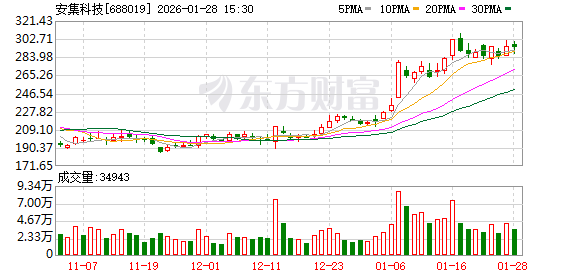
安集科技:2025年年度业绩预告的自愿性披露公告
Zheng Quan Ri Bao· 2026-01-28 14:16
Group 1 - The company, Anji Technology, announced an expected revenue of approximately 2,505 million yuan for 2025, representing an increase of about 669.98 million yuan, or a year-on-year growth of approximately 36.51% [2] - The net profit attributable to the parent company's shareholders is projected to be around 795 million yuan, which is an increase of about 261.36 million yuan compared to the previous year, reflecting a year-on-year growth of approximately 48.98% [2]
中国贸促会:今年链博会将创新设置人工智能专区
Mei Ri Jing Ji Xin Wen· 2026-01-28 13:25
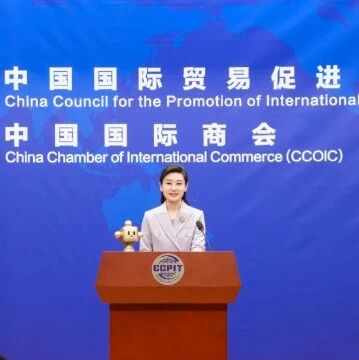
1月28日,中国贸促会举行1月例行新闻发布会。 提升外资服务保障能力 中国贸促会2026年有哪些重点工作值得期待? 王文帅表示,2026年是"十五五"开局之年。下一步,中国贸促会将以"十五五"规划有关重要部署作为根 本遵循,在扩大高水平对外开放方面,以最高标准、最严要求办好APEC(亚太经济合作组织)工商领 导人峰会等工商界活动,为APEC"中国年"积累务实成果。 中国贸促会新闻发言人王文帅介绍,2025年11月份,在涉华经贸摩擦方面,19个国家(地区)涉华经贸 摩擦指数为101,处于高位。其中,欧盟涉华经贸摩擦指数最高,半导体材料、稀土磁铁和液晶产品等 行业涉华经贸摩擦指数处于高位。当月19个国家(地区)涉华经贸摩擦措施涉及金额同比下降12.4%, 环比下降2.4%。 部分中企遭遇歧视性待遇 针对近期欧盟出台相关法案,部分规则和实施细则被指针对中国企业的问题,王文帅指出,近期欧盟针 对中国企业的不合理歧视措施的确有所增加。 今年1月初,欧盟密集发布欧盟碳边境调节机制(CBAM)相关立法提案与实施细则,无视中国绿色低 碳发展取得的巨大成效,对中国产品碳排放强度设定显著偏高的基础默认值,并将在未来三年内逐年提 ...
贸促会发布新一期全球经贸摩擦指数,欧盟升至榜首
第一财经· 2026-01-28 11:31
2026.01. 28 本文字数:1750,阅读时长大约3分钟 作者 | 第一财经 高雅 在国际贸易环境日趋复杂的背景下,欧盟近期采取的一系列措施进一步加剧了全球经贸摩擦。 根据中国贸促会于1月28日在北京举行的月度例行新闻发布会公布的数据,2025年11月全球经贸摩擦指数监 测范围内涵盖的20个国家(地区)中,欧盟、美国与韩国位列前三。当月,欧盟因频繁发起多项反补贴和反 倾销调查,其经贸摩擦措施涉及金额超越美国,取代了后者连续16个月占据的榜首位置。 这种摩擦态势在涉华经贸领域表现得尤为突出。贸促会数据显示,当月19个国家(地区)的涉华经贸摩擦指 数录得101,处于高位。其中,欧盟的涉华摩擦指数最高,半导体材料、稀土磁铁和液晶产品等关键行业的 指数居高。但当月涉华经贸摩擦措施涉及的绝对金额在同比与环比上分别下降12.4%和2.4%。 王文帅表示:"欧盟的上述举动,均对中国企业构成不公平、歧视性待遇。中国企业长期在欧依法合规经 营,中国产品、服务普遍惠及欧盟各国人民,双方工商界合作不断深化,产业链供应链深度融合。中国工商 界坚决反对欧方对中国企业的歧视行为和带有明显单边主义与贸易保护主义色彩的错误做法,呼吁欧 ...
安集科技:多名高管拟减持股份
Xin Lang Cai Jing· 2026-01-28 10:41
Core Viewpoint - The company Anji Technology announced that several executives plan to reduce their shareholdings between March 2, 2026, and June 1, 2026, with specific limits on the number of shares to be sold [1] Group 1: Shareholding Reduction Details - Chairman Shumin Wang intends to reduce holdings by up to 22,420 shares, representing 0.0133% of total shares [1] - Director and General Manager Zhang Ming plans to sell up to 33,546 shares, accounting for 0.0199% of total shares [1] - Employee Director Yang Xun will reduce holdings by up to 22,000 shares, which is 0.0131% of total shares [1] - Vice General Manager Yuchun Wang aims to sell up to 20,000 shares, representing 0.0119% of total shares [1] - Financial Officer Liu Rong will reduce holdings by up to 3,570 shares, which is 0.0021% of total shares [1] Group 2: Method and Limitations - The share reduction will occur through centralized bidding or block trading [1] - Each executive's reduction will not exceed 25% of their current holdings [1]
安集科技:预计2025年净利润约7.95亿元,同比增长约48.98%
Xin Lang Cai Jing· 2026-01-28 10:41
安集科技公告,预计2025年实现归属于母公司所有者的净利润约7.95亿元,与上年同期相比,将增加约 2.61亿元,同比增加约48.98%。报告期内,公司紧贴客户需求并同步客户上量节奏,推动营业收入稳健 增长。同时,公司为保持技术领先优势,加强产品研发创新能力,持续加强研发投入的同时,持续提升 内部管理和经营效率,期间费用增长幅度低于营业收入增幅,推动盈利能力进一步提升。 ...