
新能源车

Search documents
去年我国对外直接投资比上年增长7.1%
Xin Lang Cai Jing· 2026-01-22 18:09
Group 1: China's Foreign Investment - As of the end of 2025, China will have established over 50,000 enterprises abroad, spanning 190 countries and regions, maintaining a top-three position in global foreign investment stock for nine consecutive years [1] - China's foreign direct investment is projected to reach $174.38 billion in 2025, representing a 7.1% increase from the previous year, solidifying its leading position globally [1] - Chinese enterprises are actively fulfilling social responsibilities, creating over 2 million jobs annually and investing in various public facilities, earning widespread praise from host countries [1] Group 2: Consumer Market Trends - In 2025, the number of consumers purchasing first-level energy-efficient or water-efficient appliances increased by 20%, with smart glasses, smartwatches, and smart bands each growing over 40% [2] - The retail sales of consumer goods in China reached 50.1 trillion yuan in 2025, marking a 3.7% growth, with retail goods sales increasing by 3.8% and dining revenue growing by 3.2% [2] - Final consumption expenditure contributed 52% to economic growth, continuing to serve as a primary engine for economic development [2] Group 3: Response to EU Regulations - The Chinese government expressed serious concerns regarding the EU's recent decision to classify certain Chinese companies as high-risk suppliers, which is seen as discriminatory [3] - Chinese enterprises have been operating in Europe in compliance with laws, providing quality products and services that support the development of the European telecommunications and digital industries [3] - The Chinese government opposes the EU's use of non-technical standards to restrict market access for Chinese companies, arguing that such actions distort competition and threaten supply chain security in the digital industry [3]
印度成新能源黑洞?15亿人只有两个快充站,特斯拉半年卖不完300辆
Xin Lang Cai Jing· 2026-01-22 10:09
Core Insights - India, with a population of nearly 1.5 billion, has only two super-fast charging stations, leading to challenges in the electric vehicle (EV) market, where Tesla has struggled to sell even 300 cars in six months [1][3][19] - The electric passenger vehicle sales in India are projected to be only 177,000 units by 2025, accounting for just 3.99% of the total vehicle sales, which is significantly lower compared to nearly 4.27 million fuel vehicles sold [3][14] Market Challenges - High import tariffs result in elevated prices for EVs in India, with the Tesla Model Y priced at approximately 6.7 million INR (around $67,000), making it unaffordable for most consumers compared to local brands [5][14] - The unique commuting habits of Indians and inadequate infrastructure hinder the rapid adoption of EVs, with electric three-wheelers expected to sell around 800,000 units by 2025, capturing over 60% of the three-wheeler market [5][17] Infrastructure and Policy Issues - India currently has only two super-fast charging stations, which is insufficient for a country of its size, further complicating the EV market landscape [7][19] - The "India Electric Passenger Vehicle Manufacturing Promotion Plan" has not yielded results, as no automaker has applied to participate, despite interest from companies like Tesla and Toyota. The high investment and local value requirements deter potential entrants [19][24] Company Initiatives - Maruti Suzuki has acquired land worth approximately $550 million to increase production capacity by up to 1 million units annually, responding to domestic automotive demand [20][22] - Suzuki plans to invest $8 billion over the next five to six years in India, positioning the country as a global production hub for electric vehicles [22] - Toyota has introduced a new electric SUV, Urban Cruiser EBella, in India, offering a Battery-as-a-Service model to reduce upfront costs for consumers [22] Market Potential - Despite current challenges, India is projected to surpass both South Korea and Germany in automotive production by 2025, with 790,000 passenger vehicles exported in the first eleven months of 2025, exceeding the total for 2024 [24]



商务部:下一步将坚持惠民生和促消费紧密结合 不断释放消费潜力活力
智通财经网· 2026-01-22 08:33
Core Insights - The Chinese consumption market is expected to maintain steady growth in 2025, with both scale and quality improvements, highlighted by a retail sales total exceeding 50 trillion yuan for the first time, reaching 50.1 trillion yuan, a 3.7% increase from the previous year, contributing 52% to economic growth [1][4][5] Group 1: Consumption Market Characteristics - Expansion: The retail sales of consumer goods will surpass 50 trillion yuan, marking a significant milestone with a growth rate of 3.7% year-on-year [1][4] - Benefits to the Public: The implementation of the old-for-new consumption policy led to sales of 2.61 trillion yuan, benefiting 366 million people [1][4] - Quality Improvement: New consumption trends such as green and smart products are thriving, with retail sales of new energy vehicles increasing by 17.6%, and the penetration rate expected to reach 60% by the end of 2025 [1][5] Group 2: Future Initiatives - The Ministry of Commerce will continue to combine policies and activities to stimulate consumption and release consumer potential [2][5]
小鹏汽车-W跌超3% 宣布推出全系7年低息分期购车方案
Zhi Tong Cai Jing· 2026-01-22 06:35
小鹏汽车-W 分时图 日K线 周K线 月K线 76.65 -2.65 -3.34% 3.72% 2.48% 1.24% 0.00% 1.24% 2.48% 3.72% 76.35 77.33 78.32 79.30 80.28 81.27 82.25 09:30 10:30 12:00/13:00 14:00 16:10 0 11万 22万 33万 小鹏汽车-W(09868)跌超3%,暂领跌新能源车股。截至发稿,跌3.15%,报76.8港元,成交额7.43亿港 元。 消息面上,1月22日,小鹏汽车宣布推出全系7年低息分期购车方案:首付15%起,月供低至1355元,活 动有效期至2026年1月31日。此外,招银国际发布研报称,考虑到去年11月及12月销售数据较预期弱, 维持对今年中国乘用车零售及批发销量预测,预料分别同比跌0.1%及增长2.9%。该行认为,上季销量 表现逊色可能导致部分车企期内盈利未能符合预期,相应下调小鹏等车企去年第四季盈利预测,仍预计 小鹏可在上季度能实现盈亏平衡。 ...
港股科技ETF(513020)开盘涨超1.3%,市场聚焦AI驱动与结构性机遇
Mei Ri Jing Ji Xin Wen· 2026-01-22 06:33
Core Viewpoint - The Hong Kong stock market is expected to continue structural growth driven by AI demand and the anticipation of interest rate cuts by the Federal Reserve, with technology stocks being a key focus area [1] Group 1: Market Performance - On January 22, the Hong Kong Technology ETF (513020) opened with a gain of over 1.3%, reflecting strong market interest in AI-driven opportunities [1] - The overall Hong Kong market showed strength, with major indices rising, particularly the Hang Seng Technology Index, indicating a preference for the technology sector [1] Group 2: Sector Analysis - The demand for AI is expected to improve, making Hong Kong technology stocks particularly promising, with leading companies likely to benefit from the growth of the AI industry [1] - The Hong Kong Technology ETF tracks the Hong Kong Stock Connect Technology Index (931573), which includes core assets in sectors such as Internet, semiconductors, innovative pharmaceuticals, and new energy vehicles [1] Group 3: Performance Metrics - Since the base date at the end of 2014, the Hong Kong Stock Connect Technology Index has achieved a cumulative return of 224.25%, significantly outperforming the Hang Seng Technology Index, which recorded a return of 83.87%, by over 140 percentage points [1] - The Hong Kong Stock Connect Technology Index has consistently outperformed other indices, including the Shanghai-Hong Kong-Shenzhen Internet Index and the Hang Seng Healthcare Index [1]
港股异动 | 小鹏汽车-W(09868)跌超3% 宣布推出全系7年低息分期购车方案
智通财经网· 2026-01-22 06:05
消息面上,1月22日,小鹏汽车宣布推出全系7年低息分期购车方案:首付15%起,月供低至1355元,活 动有效期至2026年1月31日。此外,招银国际发布研报称,考虑到去年11月及12月销售数据较预期弱, 维持对今年中国乘用车零售及批发销量预测,预料分别同比跌0.1%及增长2.9%。该行认为,上季销量 表现逊色可能导致部分车企期内盈利未能符合预期,相应下调小鹏等车企去年第四季盈利预测,仍预计 小鹏可在上季度能实现盈亏平衡。 智通财经APP获悉,小鹏汽车-W(09868)跌超3%,暂领跌新能源车股。截至发稿,跌3.15%,报76.8港 元,成交额7.43亿港元。 ...
港股科技ETF(513020)收涨超0.7%,后市关注AI产业支撑
Mei Ri Jing Ji Xin Wen· 2026-01-21 08:24
Group 1 - The Hong Kong Technology ETF (513020) rose over 0.7% on January 21, with a focus on the AI industry as a key driver for future performance [1] - Major Hong Kong tech companies are accelerating the integration of AI into their business ecosystems, with Alibaba leveraging its Qianwen platform for product deployment in e-commerce and transportation, while Tencent is enhancing its WeChat ecosystem to promote AI mini-programs and applications in education [1] - The Hong Kong market is seeing a concentration of leading semiconductor companies, and the recent stable performance of domestic GPU, large model, and hard tech companies post-listing suggests a continued rhythm of quality tech firms going public in Hong Kong [1] Group 2 - The Hong Kong Technology Index has outperformed the Hang Seng Technology Index, particularly in sectors like new energy vehicles, innovative pharmaceuticals, and semiconductors, with a cumulative return of 224.25% from the end of 2014 to the end of 2025, exceeding the Hang Seng Technology Index's 83.87% by over 140% [2] - The Hong Kong Technology Index has consistently outperformed other indices, including the Hang Seng Internet Index, the Hang Seng Internet Technology Index, and the Hang Seng Healthcare Index [2]
港股科技ETF(513020)盘中涨超0.5%,优质科技企业赴港节奏有望延续
Mei Ri Jing Ji Xin Wen· 2026-01-21 03:03
Group 1 - The core viewpoint is that the Hong Kong stock market is gathering leading H-share semiconductor companies, and the recent stable performance of domestic GPU, large model, and hard technology companies post-listing is expected to continue attracting quality tech enterprises to Hong Kong, providing ongoing incremental targets for the Hong Kong tech sector [1] - Investment strategies suggest that due to strict regulations and cooling sentiment in the A-share market, Hong Kong tech heavyweight stocks are likely to benefit from the upcoming AI product release window, with "northbound capital" potentially becoming more active in seeking advantageous assets in Hong Kong, indicating that Hong Kong stocks may outperform A-shares in the short term [1] - Leading tech companies in Hong Kong are accelerating the integration of AI with their business ecosystems, such as Alibaba advancing productization in core scenarios like e-commerce and transportation using its Qianwen platform, and Tencent enriching AI applications through its WeChat ecosystem [1] Group 2 - The Hong Kong Stock Connect Technology Index is overweight in sectors like new energy vehicles, innovative pharmaceuticals, and semiconductors compared to the Hang Seng Technology Index, showing a cumulative return of 224.25% from the base date at the end of 2014 to the end of 2025, significantly outperforming the Hang Seng Technology Index, which has a return of 83.87% [2] - The Hong Kong Stock Connect Technology Index has consistently outperformed similar indices, including the Hang Seng Internet Technology Index and the Hang Seng Healthcare Index, indicating its strong performance in the long term [2]
中国用电量破10万亿,格局之变藏着AI时代先手棋 | 新京报专栏
Sou Hu Cai Jing· 2026-01-20 17:43
Core Insights - China's electricity consumption is projected to exceed 10 trillion kilowatt-hours by 2025, doubling from 2015 levels and surpassing the annual consumption of major economies like the US, EU, Russia, India, and Japan [3][6][10] - The growth in electricity demand is driven by industrial modernization, the rise of electric vehicles, and the increasing energy needs of AI technologies [6][7][11] Group 1: Electricity Demand Drivers - The electricity consumption growth is primarily supported by the second industry, which accounts for 64% of total electricity use, shifting from traditional high-energy industries to high-end manufacturing [6][10] - The rapid expansion of the electric vehicle market is a significant contributor to electricity demand, with the charging and swapping service industry expected to grow by 48.8% by 2025 [7][10] - The AI sector, particularly large model training and inference, is highly energy-intensive, with data centers consuming electricity comparable to small cities [7][11] Group 2: Energy Supply and Infrastructure - By 2025, China's total installed power generation capacity is expected to exceed 3.8 billion kilowatts, accounting for one-third of the global total, with a reliability rate of 99.9% [10][11] - The energy structure is transitioning from a basic guarantee to a core hub, with non-fossil energy sources making up over 60% of installed capacity [10][11] - The construction of 46 ultra-high voltage lines facilitates efficient energy transmission from the west to the east, optimizing resource allocation [11][14] Group 3: Strategic Energy Planning - China's strategic planning emphasizes building a strong energy nation, focusing on a clean, low-carbon, and efficient energy system to support future industries like AI and high-end manufacturing [14][15] - The development of large hydropower projects enhances the flexibility and stability of the power system, crucial for industries with high power stability requirements [15] - The ongoing energy infrastructure development positions China as a leader in global energy and technology competition, reshaping the landscape for AI and sustainable energy transitions [15]
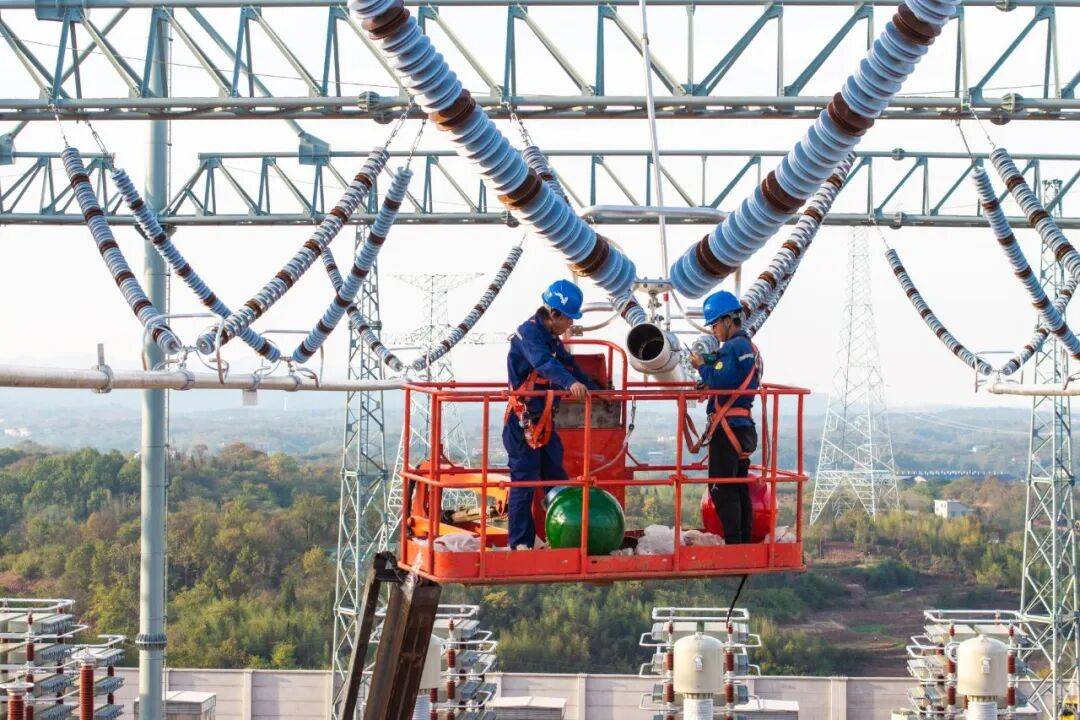
中国用电量破10万亿,格局之变藏着AI时代先手棋
Xin Jing Bao· 2026-01-20 11:30
Core Insights - China is projected to surpass other countries in electricity consumption and AI computing power by 2025, with total electricity usage expected to exceed 10 trillion kilowatt-hours, doubling from 2015 levels and surpassing the combined annual consumption of major economies like the EU, Russia, India, and Japan [1][2]. Group 1: Electricity Consumption Growth Drivers - The growth in electricity consumption is driven by industrial modernization, the rise of electric vehicles, and the increasing demand for AI computing power, reflecting a shift from traditional high-energy industries to high-end manufacturing [2][3]. - By 2025, the second industry will account for 64% of total electricity consumption, with significant contributions from high-end manufacturing and the recovery of the service sector, indicating a collaborative growth pattern [2][3]. - The rapid expansion of electric vehicle applications is a key contributor to electricity demand, with the charging and swapping service industry experiencing explosive growth due to the increasing adoption of green transportation [3][4]. Group 2: AI and Data Center Energy Demand - The development of AI, particularly large models, is highly energy-intensive, with data centers consuming electricity comparable to that of small cities. The "East Data West Computing" initiative is expected to significantly boost electricity demand in the data sector [3][4]. - By 2025, electricity consumption for internet data services in Guizhou is projected to surge by 95.01%, with Huawei's cloud data center in Gui'an experiencing a 56.92% increase in electricity usage, highlighting the exponential growth in computing power demand [3][4]. Group 3: Power Supply and Infrastructure - China's electricity supply system is the largest and most advanced globally, with total installed capacity expected to exceed 3.8 billion kilowatts by 2025, accounting for one-third of global capacity and achieving a supply reliability rate of 99.9% [5][6]. - The transition of electricity from a basic guarantee to a core hub in the energy structure is evident, with non-fossil energy sources now constituting over 60% of installed capacity, making renewable energy the dominant force in power generation [5][6]. - The construction of 46 ultra-high voltage transmission lines facilitates efficient energy transfer from the west to the east, optimizing resource allocation and enhancing energy security [6][7]. Group 4: Strategic Energy Planning - China's long-term strategic planning emphasizes building a strong energy nation, focusing on a clean, low-carbon, and efficient energy system to support future industries like AI and high-end manufacturing [7][8]. - The ongoing development of large hydropower projects not only addresses current electricity demand but also positions China favorably in the global energy landscape, enhancing the flexibility and stability of the power system [8][9]. - The strategic value of electricity is increasingly recognized as a critical factor in ensuring energy security and supporting industrial competitiveness in the context of global technological competition [9].