智能座舱

Search documents
一周港股IPO:思格新能源、潮宏基等4家递表;不同集团、紫金黄金等3家通过聆讯
Cai Jing Wang· 2025-09-15 10:41
Group 1: Company Filings - Four companies submitted applications to the Hong Kong Stock Exchange from September 8 to September 14, with three companies passing the hearing [1][6] - Sig Energy (Shanghai) Co., Ltd. submitted its listing application on September 8, aiming to be a global leader in distributed energy storage systems, with a projected market share of 28.6% in 2024 [2] - Shengwei Times Technology Co., Ltd. submitted its application on September 11, ranking 14th in China's ride-hailing service market, with revenues projected to grow from approximately 8.16 billion RMB in 2022 to 15.94 billion RMB in 2025 [3][4] - Shenzhen Maiketian Biomedical Technology Co., Ltd. submitted its application on September 11, with a product reach in over 140 countries and revenues expected to increase from 9.17 billion RMB in 2022 to 13.99 billion RMB in 2025 [4] - Guangdong Chaoshan Industrial Co., Ltd. submitted its application on September 12, leading the jewelry market in mainland China with a projected market share of 1.4% in 2024 [5] Group 2: Companies Passing Hearings - Different Group passed the hearing on September 11, focusing on mid-to-high-end parenting products, with a market share of 4.2% in China [7] - Zijin Gold International Limited passed the hearing on September 14, being a leading global gold mining company with a compound annual growth rate of 21.4% in gold production from 2022 to 2024 [8] - Botai Internet of Vehicles Technology (Shanghai) Co., Ltd. passed the hearing on September 14, ranking third in China's smart cockpit solutions market with a market share of 7.3% [9] Group 3: Companies Going Public - Hesai Technology (02525.HK) is set to launch its IPO from September 8 to September 11, with a global offering of 17 million shares and a maximum price of 228.00 HKD per share [10] - Jinfang Pharmaceutical (02595.HK) will have its IPO from September 11 to September 16, offering 77.6 million shares at a price of 20.39 HKD per share [11] - Health 160 (02656.HK) plans its IPO from September 9 to September 12, offering 33.65 million shares at a price range of 11.89 to 14.86 HKD per share [12] Group 4: New Stock Listing - Dahang Science and Technology (02543.HK) was listed on September 9, closing at 56.90 HKD per share, with a price increase of 14.95% [13]

J.D. Power智能座舱研究:不同阵营技术差异明显
Zhong Guo Qi Che Bao Wang· 2025-09-15 05:45
Core Insights - J.D. Power and Tongji University's HVR Lab conducted a study on smart cockpits, highlighting the rapid development of AI technology and its impact on vehicle interaction systems [1] - The average score for luxury automotive smart cockpits was 620, with some models excelling in first-word response and complex command recognition [1] - Mainstream automakers' large model functionalities are widespread but lack brand differentiation, as most vehicles perform similarly in basic command recognition and simple scenario responses [1] Group 1 - The study identified significant technical differences in the underlying architecture of "wake-free interaction," with luxury brands relying on preset keyword matching, leading to unintended wake-ups [2] - New entrants in the market utilize innovative algorithms combining voiceprint recognition and contextual analysis to filter out background noise and improve command accuracy [2] - Current large models struggle with complex command recognition, vague demand understanding, and cross-domain collaboration, exposing weaknesses in multi-modal coordination and dynamic intent correction [2] Group 2 - The interaction paradigm is shifting from "passive tools" to "active cognitive partners," with leading brands moving towards proactive service capabilities [3] - Examples of proactive features include reminders based on user habits and automatic adjustments based on passenger needs, although many models still operate on a passive response basis [3] - Future developments in vehicle interaction will focus on enhancing proactive service capabilities and seamless cross-device functionality, which will be key indicators of user experience quality [3] Group 3 - The study on smart cockpits is divided into three phases: luxury, mainstream, and economy, with updated evaluation dimensions and methods [4] - An innovation index scoring model (out of 1000) was employed, consisting of HMI performance index and AI performance index, each contributing 50% to the overall score [4] - The scoring model integrates user satisfaction scores and applies scientific weight distribution to ensure comprehensive and accurate assessments [4]


8月市场平稳,斑马智行冲刺港股上市
CAITONG SECURITIES· 2025-09-12 07:50
Group 1 - The report indicates that the automotive market in August showed a stable trend, with retail sales reaching 1.995 million units, a year-on-year increase of 4.6% and a month-on-month increase of 8.2%. Cumulatively, retail sales for the year reached 14.741 million units, up 9.5% year-on-year [4][9][13] - The report highlights that the automotive market is transitioning towards "reducing price cuts and stabilizing promotions," with 23 models experiencing price reductions in August, compared to 29 in the same month last year [4][9][13] - The report notes that Zhibao Zhixing (formerly Zhibao Network) has officially submitted its listing application to the Hong Kong Stock Exchange, with projected revenues of 805 million, 872 million, and 824 million RMB for 2022, 2023, and 2024 respectively, indicating a decline of 5.4% in 2024 [5][29][30] Group 2 - The report suggests focusing on companies with a leading position in automotive intelligence and advanced software capabilities, including Ruiming Technology, Daotong Technology, Huace Navigation, Desay SV, and others [6][32] - The report emphasizes that the penetration rate of automotive intelligence is expected to increase, driven by consumer demand and policy support, although there are risks associated with the pace of this growth [6][33]
前CFO怒喷斑马网络“圈钱上市”,阿里托举也止不住亏损?
阿尔法工场研究院· 2025-09-08 00:02
Core Viewpoint - Zebra Network's IPO process is marred by losses, dependency on major shareholders, and reputation controversies [2][5] Shareholder Dependency - Zebra Network's ownership structure shows Alibaba holding 44.7% and SAIC holding 34.3%, indicating a high reliance on these two major shareholders [3][7] - Revenue from SAIC has historically contributed nearly half of Zebra Network's income, with SAIC's revenue share being 54.7%, 47.4%, and 38.8% from 2022 to 2024, and rebounding to 47.8% in Q1 2025 [10][8] Financial Performance - The company has accumulated losses exceeding 2.6 billion yuan from 2022 to 2024, with a further loss of 1.58 billion yuan in Q1 2025, primarily due to a one-time intangible asset impairment of 1.84 billion yuan [15][16] - Gross margin has declined from 53.9% in 2022 to 38.9% in 2024, indicating ongoing financial and profitability pressures [15][16] Market Position and Valuation Controversy - Despite holding a leading market share in niche segments, the former CFO criticized the company for its fundraising motives, raising doubts about its valuation and market strategy [4][11] - Zebra Network's market share in software-centric smart cockpit solutions is 7.8%, while in vehicle platform services, it stands at 11.2%, but the overall market remains fragmented with the top five players holding only 26.9% [16][20] User Experience and Reputation Issues - User complaints about the "Zebra Smart Driving System" include system lag and upgrade failures, which could impact partnerships with automakers and revenue stability [12][21] - The public criticism from the former CFO and negative user feedback have heightened concerns regarding the company's governance and valuation [11][21] Competitive Landscape - The smart cockpit market is entering a price war, challenging Zebra Network's profitability as hardware prices drop and software procurement becomes bundled, reducing negotiation power [17][21] - R&D expenses have been high, with 1.11 billion, 1.12 billion, and 980 million yuan from 2022 to 2024, yet the gross margin continues to decline [17][15] Future Outlook - Zebra Network's future hinges on its ability to reduce dependency on SAIC and Alibaba, enhance product experience, and develop independent R&D capabilities [21][20] - The company faces significant scrutiny from investors regarding its ability to achieve profitability and maintain competitive advantages amid rising competition and self-research trends from automakers [20][21]

就在今天|物理智能产业与资本峰会:L3高阶智驾专题暨VLA模型产业白皮书及产业图谱发布
国泰海通证券研究· 2025-09-03 22:29
Core Insights - The article discusses the rapid development of large models and their integration into intelligent driving, highlighting the growing consensus in the industry regarding the commercial viability of L3 level intelligent driving by 2025 [1][2] - The introduction of the Visual-Language-Action (VLA) model is expected to create a comprehensive cognitive framework similar to human drivers, influencing the landscape of intelligent driving and embodied intelligence, while presenting significant market and capital opportunities [1][2] Group 1: Key Presentations and Insights - The event featured speeches from industry leaders, including Chen Zhongyi from Guotai Junan Securities and Wu Heng from SAIC Group, emphasizing the importance of L3 intelligent driving and embodied intelligence [3] - Zhu Feng, Chief Analyst at Guotai Junan, presented on the VLA model as a key to achieving L3 intelligent driving [3] - Yuan Yuji from Momenta discussed the company's data-driven approach and dual-product strategy for scalable autonomous driving solutions, including mass production of assisted driving and Robo taxi applications [4] Group 2: Technological Innovations - He Yihan from Che Lian Tian Xia highlighted the evolution of intelligent cockpit large models, focusing on redefining vehicle experiences through AI and optimizing multiple large language models for practical applications [5] - Liu Bin from Juefei Technology emphasized the importance of data loops in driving high-quality development in intelligent driving, providing customized data engines and services [5] - Zhou Enze from Al-Link showcased innovations in automotive intelligent cockpit technology, significantly reducing development costs for car manufacturers while enhancing user experience [6] Group 3: Industry Trends and Future Directions - Wang Panqu from Zero One Automotive discussed the transition to intelligent heavy trucks under the VLA framework, aiming to become a leading global transportation robotics company through vertical integration and innovative design [6] - A roundtable discussion involving industry, investment, and banking experts was held to explore the intersection of these sectors and their implications for the future of intelligent driving [6]

3年亏掉26亿元 斑马智行拟赴港IPO
Xin Lang Cai Jing· 2025-08-29 20:58
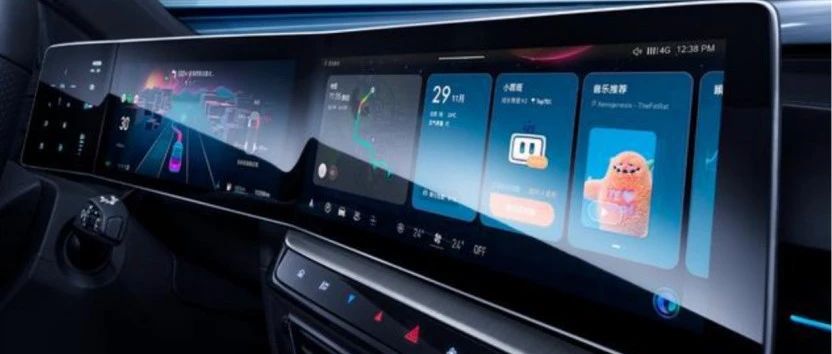
Core Insights - The automotive industry has entered a new phase of competition focused on intelligent cockpit technology, which is becoming a key battleground for companies to capture user attention [1] - Alibaba announced plans to spin off Zhibo Network Technology Co., Ltd. (Zhibo Zhixing) for an independent listing on the Hong Kong Stock Exchange, with the aim of enhancing R&D, increasing market share, and supporting global expansion [1][2] - Zhibo Zhixing, founded in 2015 through a partnership between Alibaba and SAIC Group, has a valuation of 22 billion yuan as of June 2025, ranking 331st on the Hurun Global Unicorn List [1] Financial Performance - Zhibo Zhixing reported revenues of 805 million yuan, 872 million yuan, and 824 million yuan for the years 2022 to 2024, with corresponding losses of 878 million yuan, 876 million yuan, and 847 million yuan [2][6] - The company is currently in a loss-making phase, which is attributed to significant upfront investments in technology and strategic pricing to accelerate market adoption [6][7] Market Position and Growth - The intelligent cockpit solutions market in China is projected to grow from 129 billion yuan in 2024 to 327.4 billion yuan by 2030, with a compound annual growth rate (CAGR) of 16.8% [3] - Zhibo Zhixing is recognized as the largest domestic supplier of software-centric intelligent cockpit solutions, with a significant increase in deployment from 835,000 units in 2022 to 2.334 million units by 2024, reflecting a CAGR of 67.2% [3][5] Competitive Advantages - The company claims to be one of the only two third-party suppliers in China with a fully self-developed automotive operating system, integrating core components of intelligent vehicle experience [4] - Zhibo Zhixing's intelligent cockpit solutions have been implemented in over 8 million vehicles across more than 14 countries, establishing a closed-loop ecosystem that enhances collaboration among manufacturers, vehicle owners, and content providers [5] Strategic Focus - The company emphasizes long-term technology leadership and deep product integration as core strategies, necessitating substantial initial investments in R&D and partnerships with leading manufacturers [6][7] - Zhibo Zhixing aims to build market influence by securing early contracts with major manufacturers, which can lead to sustained revenue throughout a vehicle's lifecycle, even at the cost of short-term profitability [7]
新股消息 | 四维智联拟港股上市 中国证监会要求补充说明已实施的股权激励方案合规性等事项
智通财经网· 2025-08-29 12:30
Group 1 - The China Securities Regulatory Commission (CSRC) has requested Siwei Zhili to provide supplementary explanations regarding the compliance of its implemented equity incentive plan [1][2] - Siwei Zhili submitted its listing application to the Hong Kong Stock Exchange on June 27, 2025, with CITIC Securities as the sole sponsor [1] - The CSRC has outlined specific areas for Siwei Zhili to clarify, including business operations, shareholder pricing rationality, and compliance with foreign investment regulations [1][2] Group 2 - Siwei Zhili is recognized as a leading supplier of intelligent cockpit solutions in China, known for its innovative software development capabilities and comprehensive product coverage [2] - According to Frost & Sullivan, Siwei Zhili ranked tenth among domestic first-tier intelligent cockpit solution suppliers in 2024, holding a market share of 0.1%, and ranked third among globally software-driven Chinese first-tier suppliers [2] - The company's integrated cockpit solution service volume ranks second nationwide [2]
阿里巴巴和上汽热捧!这家独角兽要IPO了!
IPO日报· 2025-08-28 02:30
Core Viewpoint - Alibaba Group plans to spin off its subsidiary, Zhibo Network Technology Co., Ltd. (Zhibo Network), which specializes in smart cockpit solutions, for an independent listing on the Hong Kong Stock Exchange. This move aims to enhance the company's value and operational transparency while allowing it to access capital markets independently [1][18]. Industry Overview - The smart cockpit sector is on the verge of explosive growth, driven by supportive government policies, rapid growth in the passenger car market, improved chip performance, breakthroughs in large language models, and the continuous evolution of integrated AI technologies. Global smart vehicle sales are projected to grow from 58 million units in 2024 to 86.5 million units by 2030, with a compound annual growth rate (CAGR) of 6.9% [5]. - The market for smart cockpit solutions in China is expected to expand from 129 billion yuan in 2024 to 327.4 billion yuan by 2030, with a CAGR of 16.8%. Software-based cockpit solutions are anticipated to grow even faster, from 40.1 billion yuan to 114.9 billion yuan, achieving a CAGR of 19.2% [5]. Company Profile - Zhibo Network focuses on developing smart cockpit solutions, offering system-level OS solutions, AI end-to-end solutions, and in-vehicle platform services [4]. - Despite its smaller revenue scale compared to competitors like Desay SV and Huayang Group, Zhibo Network's latest valuation reached 22 billion yuan (approximately 3 billion USD), supported by its parent companies, Alibaba and SAIC [1][12][14]. - Zhibo Network's revenue for 2022 to 2024 is projected at 805 million yuan, 872 million yuan, and 824 million yuan, respectively, with a slight decline in 2024 due to seasonal factors. The company reported a net loss of 878 million yuan, 876 million yuan, and 847 million yuan over the same period, with losses narrowing year by year [6][7]. Competitive Position - Zhibo Network is recognized as the largest software-centric smart cockpit solution provider in China based on revenue projections for 2024 and ranks first in terms of solution deployment volume. It is one of only two third-party suppliers in China with a fully self-developed automotive operating system [11]. - The company has achieved a deployment volume growth from 835,000 units in 2022 to 2.334 million units in 2024, with a CAGR of 67.2%. As of June 30, 2025, its solutions have been installed in over 8 million vehicles across more than 14 countries [11]. Financial Backing and Valuation - Zhibo Network has received significant financial backing, with cumulative financing exceeding 10 billion yuan since its establishment in 2015. Its latest funding round in September 2023 valued the company at approximately 22 billion yuan [12][13]. - The company has a high price-to-sales (P/S) ratio of approximately 26.7 times based on its valuation, significantly higher than Desay SV's 3 times and Huayang Group's 3.8 times [14]. Key Clients and Suppliers - SAIC and Alibaba are not only major shareholders but also the largest clients and suppliers of Zhibo Network. Revenue from the top five clients consistently accounted for around 90% of total revenue during the reporting period, with SAIC contributing significantly [16][17]. - Zhibo Network's relationship with SAIC is highlighted by its recognition as "Annual Software Supplier" by SAIC Volkswagen in 2023, indicating a strong client partnership [16].

阿里巴巴和上汽热捧!这家独角兽要IPO了!
Guo Ji Jin Rong Bao· 2025-08-27 07:53
Core Viewpoint - Alibaba Group plans to spin off its smart cockpit solution provider, Zhibo Network Technology Co., Ltd. (Zhibo Network), for an independent listing on the Hong Kong Stock Exchange, with a valuation reaching 22 billion yuan [1][8]. Industry Overview - The smart cockpit sector is on the verge of explosive growth, driven by supportive government policies, rapid growth in the passenger car market, improved chip performance, breakthroughs in large language models, and the continuous evolution of integrated AI solutions [4]. - Global smart vehicle sales are projected to grow from 58 million units in 2024 to 86.5 million units by 2030, with a compound annual growth rate (CAGR) of 6.9% [4]. - The Chinese smart cockpit solution market is expected to expand from 129 billion yuan in 2024 to 327.4 billion yuan by 2030, with a CAGR of 16.8% [4]. - The market for software-based cockpit solutions is anticipated to grow from 40.1 billion yuan in 2024 to 114.9 billion yuan by 2030, achieving a CAGR of 19.2% [4]. - The demand for personalized and intelligent in-car experiences is increasing, with the in-car service platform market projected to reach 14.7 billion yuan by 2030, growing at a CAGR of 64.8% from 2024 to 2030 [4]. Company Performance - Zhibo Network's revenue for 2022 to 2024 is reported as 805 million yuan, 872 million yuan, and 824 million yuan, respectively, with a slight decline in 2024 due to seasonal factors [5]. - The company has incurred net losses of 878 million yuan, 876 million yuan, and 847 million yuan over the same period, with losses narrowing each year [5]. - In Q1 2025, Zhibo Network reported a revenue of 136 million yuan, a year-on-year decline of 19.53% [5]. - The company has a cash outflow from operating activities, with net cash used of -585 million yuan, -417 million yuan, -487 million yuan, and -199 million yuan over the past four years [5]. Competitive Position - Zhibo Network is recognized as the largest software-centric smart cockpit solution provider in China based on 2024 revenue projections and ranks first in solution deployment [6]. - The company is one of only two third-party suppliers in China with a fully self-developed automotive operating system and offers a differentiated business model by integrating core components of smart vehicle experiences [6]. - Zhibo Network's deployment volume is expected to grow from 835,000 units in 2022 to 2,334,000 units in 2024, with a CAGR of 67.2% [6]. Financial Backing and Valuation - Zhibo Network has received significant financial backing, with cumulative financing exceeding 10 billion yuan since its establishment in 2015 [7]. - The latest financing round in September 2023 valued the company at approximately 22 billion yuan (around 3 billion USD) [7]. - The company's price-to-sales (P/S) ratio is approximately 26.7 times based on its valuation, significantly higher than competitors Desay SV and Huayang Group, which have P/S ratios of 3 and 3.8, respectively [8]. Key Partnerships - Alibaba and SAIC are not only shareholders but also the largest customers and suppliers of Zhibo Network [9]. - Zhibo Network's revenue from its top five customers consistently accounts for around 90% of total revenue, with SAIC contributing significantly [10]. - Alibaba holds approximately 44.72% of Zhibo Network's issued share capital and controls 40.17% of the voting rights [10]. Strategic Intent - Alibaba's announcement of the spin-off aims to better reflect Zhibo Network's value, enhance operational and financial transparency, and enable independent capital market financing [11].



三年亏26亿!前CFO炮轰“上市圈钱”,斑马智行IPO蒙阴影
凤凰网财经· 2025-08-27 03:40
Core Viewpoint - Zhibo Zhixing, an "Alibaba-backed" unicorn, is facing significant operational pressure with a valuation of 22 billion RMB and cumulative losses of 2.6 billion RMB over three years [1][2]. Group 1: Financial Performance - Zhibo Zhixing has reported continuous losses over the past three years, totaling approximately 2.6 billion RMB, with revenues of 805 million RMB in 2022, 872 million RMB in 2023, and an estimated 824 million RMB in 2024, indicating a year-on-year decline of 5.5% [7][9]. - The company's gross margin has been declining, from 53.9% in 2022 to 46.4% in 2023, and further down to 38.9% in 2024 [9]. - Research and development (R&D) expenses have been substantial, exceeding revenue, with amounts of 1.111 billion RMB, 1.123 billion RMB, and 980 million RMB from 2022 to 2024, representing 137.9%, 128.8%, and 118.9% of revenue respectively [10]. Group 2: Customer Concentration and Dependency - Zhibo Zhixing's revenue is highly concentrated, with the top five customers contributing 93.0%, 89.9%, and 88.5% of total revenue from 2022 to 2024, and the largest customer, SAIC Group, accounting for nearly half of the revenue [11]. - The company is heavily reliant on Alibaba for supplies, with procurement from Alibaba making up over 50% of total purchases from 2022 to 2025 Q1 [11]. - The dual dependency on major shareholders, Alibaba and SAIC, raises concerns about the company's ability to expand its customer base independently [12]. Group 3: Management Concerns - The former CFO of Zhibo Zhixing publicly criticized the company's direction, expressing skepticism about its future and highlighting issues with management integrity [13]. - There has been a notable turnover in the executive team, with significant departures reported in 2019, raising questions about the company's vision and stability [14]. - The company has relied on external financing to support its high R&D costs, with substantial funding rounds in 2018 and 2021 [15]. Group 4: Future Outlook - Zhibo Zhixing aims to leverage its IPO proceeds to enhance R&D, expand market share, and support business acquisitions, but its success will depend on balancing shareholder collaboration with operational independence [15].