量子计算

Search documents
上交大教授放弃绿卡,回国造出中国首条量子光子芯片产线
Guan Cha Zhe Wang· 2026-01-15 08:53
Core Viewpoint - Turing Quantum has emerged as a leading player in China's quantum computing sector, recently completing a strategic financing round of several hundred million yuan, indicating strong investor confidence in its technology and industrialization capabilities [1][21]. Company Overview - Turing Quantum was founded in 2021 with the ambition to become "the Intel of the quantum era," having completed seven rounds of financing totaling over 1 billion yuan, with a current valuation of approximately 7 billion yuan [5]. - The company has established China's first photonic chip pilot line, significantly reducing its iteration cycle to two to three weeks, which is a competitive advantage compared to international peers [1][16]. Leadership and Vision - Founder Jin Xianmin transitioned from academia to entrepreneurship, emphasizing the importance of applying quantum technology to real-world products and market needs [6][9]. - Jin has outlined a three-phase development strategy for Turing Quantum: a long-term technology accumulation phase, a rapid growth phase post-establishment, and a future explosive growth phase expected in the next five to ten years [10][12][20]. Technological Advancements - Turing Quantum focuses on photonic quantum computing, which meets the criteria of programmability, integration, and scalability, offering advantages such as room-temperature operation and low energy consumption [15]. - The company has made significant progress in developing integrated photonic chips, which are crucial for the industrialization of quantum computing [15][16]. Market Applications - Turing Quantum's clients are primarily in finance, biomedicine, and artificial intelligence, where quantum computing can optimize investment portfolios, simulate drug molecules, and accelerate machine learning processes [17]. - The company is also collaborating with local governments to establish quantum computing centers, which will serve as infrastructure for regional technological innovation and industry upgrades [17]. Future Outlook - Jin anticipates that quantum computing will transition from specialized applications to broader general-purpose computing, becoming a foundational tool across various industries [20]. - Turing Quantum aims to leverage its unique position in the market to achieve a trillion yuan valuation, driven by technological advancements and market demand [20].


1月15日早餐 | 金属期货集体大涨
Xuan Gu Bao· 2026-01-15 00:18
Market Overview - The three major US stock indices experienced their first consecutive declines since 2026, with the Nasdaq falling by 1%, marking its largest drop in nearly a month. The S&P 500 closed down 0.53% and the Dow Jones down 0.09% [1] - Technology stocks dragged down the market, with the "Big Seven" tech companies, including Microsoft, Amazon, and Meta, all declining by over 2%. The semiconductor index halted a three-day rise, with Broadcom dropping over 4% [1] - Despite better-than-expected Q4 earnings, Bank of America and Citigroup saw declines of nearly 4% and over 3%, respectively, while Wells Fargo, which reported weaker profits, fell over 4% [1] - The Nasdaq Golden Dragon China Index decreased by 0.23%, with Ctrip dropping 17% and Arctech down 5%. Alibaba rose by about 2%, while Century Internet gained over 7% [1] Commodity and Currency Movements - US Treasury prices rose, with the 10-year Treasury yield hitting a one-week low. The dollar index fell after approaching a four-week high, while the offshore yuan slightly rebounded, briefly surpassing 6.97 [1] - Bitcoin surged nearly 4% from its daily low, breaking the $97,000 mark, reaching a nearly two-month high [1] - Precious metals saw a resurgence, with gold and silver hitting record highs for three consecutive days. Gold rose over 1%, and silver increased by nearly 8%. Tin and copper also reached historical highs, with tin rising by 11% and nickel up nearly 6% [1] Industry Developments - SK Hynix has halted production of consumer-grade memory chips, redirecting resources towards the B2B and AI server markets [3] - Key raw materials for PCBs, such as fiberglass cloth, are in short supply, prompting major companies like Apple to seek alternative suppliers [4] - The US plans to implement a manned lunar orbit mission in February [5] - Tesla will stop selling the FSD buyout version after February 14, offering it only as a monthly subscription [6] AI and Technology Innovations - OpenAI is investing $10 billion in partnership with Cerebras to deploy 750 megawatts of computing power over three years. OpenAI and Anthropic are reportedly taking initial steps, while SpaceX is in talks with several banks [7] - OpenAI's CEO Sam Altman and former Apple design chief Jony Ive are set to launch an AI device, code-named Sweetpea, expected to be released in September with an initial production target of 40 to 50 million units [7][13] - Alibaba is set to unveil its Qianwen app on January 15, which aims to integrate various life scenarios, enhancing its capabilities in the AI era [15] Financial Sector Updates - The Chinese Ministry of Finance held a video conference to promote a package of policies aimed at boosting domestic demand [8] - Some mid-sized brokerage firms have exhausted their margin financing funds [8] - The tax rebate policy for housing exchanges will continue to support "selling old and buying new" for the 2026-2027 fiscal year [8] - The Chinese Ministry of Industry and Information Technology held a meeting to address the chaotic "price war" in the new energy vehicle sector, emphasizing strict actions against violators [8]

上证早知道|事关自动驾驶 上海部署;Meta扩产AI眼镜;473亿元资金 抢筹ETF
Shang Hai Zheng Quan Bao· 2026-01-14 23:17
Group 1 - The "Atomic Energy Law of the People's Republic of China" officially took effect on January 15, marking the first fundamental law in China's nuclear energy sector [1] - The second China eVTOL Innovation Development Conference was held in Shanghai from January 15 to 16 [1] - Huibo's controlling shareholder will change to Baile Equipment Group, with the actual controller changing to the State-owned Assets Supervision and Administration Commission of Tianjin [1] Group 2 - The Ministry of Finance, the State Taxation Administration, and the Ministry of Housing and Urban-Rural Development announced the extension of personal income tax policies supporting residents' housing purchases from January 1, 2026, to December 31, 2027 [1] - A joint meeting was held by the Ministry of Industry and Information Technology, the National Development and Reform Commission, and the State Administration for Market Regulation to resist disorderly "price wars" in the new energy vehicle industry [1] Group 3 - The Hainan Free Trade Port has seen 585,000 people engage in duty-free shopping, with a total amount of 3.89 billion yuan, representing year-on-year increases of 32.4% and 49.6% respectively [2] - The Ministry of Finance plans to issue 400 billion yuan of 91-day discount treasury bonds [2] - A guideline was issued to enhance the collaborative development of meteorological services in health and wellness, aiming for a comprehensive system by 2030 [2] Group 4 - IDC reported that Apple ranked first in China's smartphone market in Q4 2025, followed by vivo, OPPO, Huawei, and a tie between Honor and Xiaomi in fifth place [3] - Honor's global shipment volume exceeded 71 million units for the first time, with a year-on-year growth of approximately 55% in overseas shipments [3] Group 5 - Shanghai released the "Mosu Zhixing" action plan to accelerate the advancement of automotive intelligence, aiming for large-scale application of high-level autonomous driving by 2027 [4] - East Asia Securities predicts that the penetration of new energy vehicles, exports, and intelligent high-end development will be structural highlights in the automotive market in 2026 [4] Group 6 - Meta plans to double the production capacity of AI glasses to 20 million units by the end of 2026, driven by steady sales growth [5] - The global AR market is expected to enter a rapid development phase due to AI technology, supply chain optimization, and the entry of major players [5] Group 7 - Google launched the new MedGemma 1.5 AI medical model, enhancing capabilities in medical imaging and text processing [6] - AI in healthcare shows strong potential in improving medical device functions and assisting clinical decision-making [6] Group 8 - Huazhong University of Science and Technology's subsidiary plans to establish a semiconductor device research and production base with a total investment of 1 billion yuan [7] - Colorful Technology plans to issue convertible bonds to raise up to 1.46 billion yuan for AI-related projects [7] Group 9 - Four-dimensional Map expects revenue of 4.06 billion to 4.34 billion yuan in 2025, with a year-on-year growth of 15.42% to 23.50% [8] - The company anticipates a significant increase in revenue from its data compliance business in 2025 [8] Group 10 - Institutional investors net purchased 516 million yuan of Guangxun Technology, highlighting its strong market position in optical communication [9] - Jiarun Technology received a net purchase of 298 million yuan, focusing on expanding its network information security capabilities [10] Group 11 - Equity ETFs saw a net subscription of over 47 billion yuan in three trading days, with significant interest in thematic ETFs [11] - Institutional investors also net purchased several companies, indicating strong market confidence [11] Group 12 - Weili Transmission is advancing its wind power gearbox smart factory, which is expected to significantly increase revenue and improve profit margins [12] - The global wind energy market is projected to drive demand for core components like wind power gearboxes [12] Group 13 - Ouma Software is building a comprehensive AI ecosystem in the examination and assessment field, enhancing its core technologies [13] - The company aims to integrate AI into various examination processes, establishing a competitive edge and growth potential [13]

从实验室到产业,量子计算如何引发全球科技格局重构
Sou Hu Cai Jing· 2026-01-14 19:41
Core Insights - Google has made significant advancements in quantum computing with its Willow quantum chip, which can perform calculations equivalent to what the best supercomputers would take 10^25 years to complete in just 5 minutes [1][3] Technological Breakthrough - The Willow chip operates in near absolute zero temperatures, which is lower than cosmic background radiation, allowing for stable performance [3] - Google has improved quantum error correction from a 3x3 grid to a 7x7 grid, significantly reducing error rates [5] - The T1 time for quantum bits has been increased to 100 microseconds, enhancing the reliability of calculations [5] - The QuantumEchoes algorithm is reported to be 13,000 times faster than traditional algorithms, marking a critical step in practical quantum computing [7] Market Potential - The global quantum technology market is projected to reach $8 billion by 2024, with China holding a significant share [9] - By 2035, the market size is expected to soar to $900 billion, prompting intense investment from various countries [11] Competitive Landscape - The U.S. is strong in quantum hardware, with major players like Google, IBM, and Microsoft, while China is rapidly advancing, evidenced by the recent launch of the Zuchongzhi 3 superconducting quantum computing prototype [11] - There are predictions that China could become the leader in quantum computing patents by 2027, indicating a heated competition in this field [11] Strategic Importance - The United Nations has declared this year as the "International Year of Quantum Science and Technology," highlighting the strategic significance of quantum technology [13] - Countries view quantum technology as a core component of national competitiveness, with substantial investments being made [13] Security Implications - Quantum computing poses risks to encryption security, with algorithms like Shor's potentially threatening a $3 trillion market [15] - The U.S. National Institute of Standards and Technology is developing post-quantum encryption standards to mitigate these risks [15] Application Prospects - Quantum computing has vast potential applications, including drug discovery, materials science, and addressing global challenges like climate change and energy crises [17][19] - The integration of quantum computing with artificial intelligence could lead to groundbreaking innovations [19] Industry Evolution - Quantum computing has transitioned from a technical threshold to an industrial competitive stage, reshaping future industry landscapes [20] - The ongoing developments in quantum technology present both opportunities and challenges for human civilization [22]


美股异动丨霍尼韦尔盘前涨1.6%,旗下量子计算部门Quantinuum计划提交IPO申请
Ge Long Hui· 2026-01-14 12:46
Core Viewpoint - Honeywell's quantum computing division, Quantinuum, plans to confidentially file for an initial public offering (IPO) [1] Group 1 - Honeywell's stock rose by 1.6% in pre-market trading, reaching $213.62 [1] - The number of shares and price range for the proposed IPO have not yet been determined [1] - The IPO will depend on market conditions and the completion of the SEC review process [1]

图灵量子半年完成两轮数亿元融资
Xin Lang Cai Jing· 2026-01-13 12:33
Group 1 - Turing Quantum has completed two rounds of strategic financing totaling several hundred million yuan within six months, with investors including Dinghui Baifu, Guoke Capital, and Haitong Kaiyuan, while existing shareholders continue to invest [1] - The funds from this financing will be used to further research and industrialize optical quantum computing, contributing to the construction of the optical quantum computing ecosystem [1] - Turing Quantum has established a "chip + algorithm" dual-drive model, creating a complete closed loop from technology research and development to industrial implementation, and has a national strategic layout with headquarters in Shanghai and connections to Beijing, Wuxi, and Changsha [1] Group 2 - Dinghui Baifu's partner, Li Yonghao, stated that quantum computing has become a core competitive field among major countries and is expected to reshape industries such as finance, pharmaceuticals, and artificial intelligence in the near future [1] - Haitong Kaiyuan's Managing Director, Jiang Changhui, emphasized that quantum computing is a key area leading the next technological revolution and a main track for national technological competition, with Turing Quantum showing strong execution capabilities in industrial exploration [2] - Turing Quantum will continue to focus on core technology breakthroughs and industrialization in optical quantum computing, contributing to the formation of new productive forces in this strategic frontier field [2]
近亿元战略融资,由中国移动独家投资!
Sou Hu Cai Jing· 2026-01-13 10:33
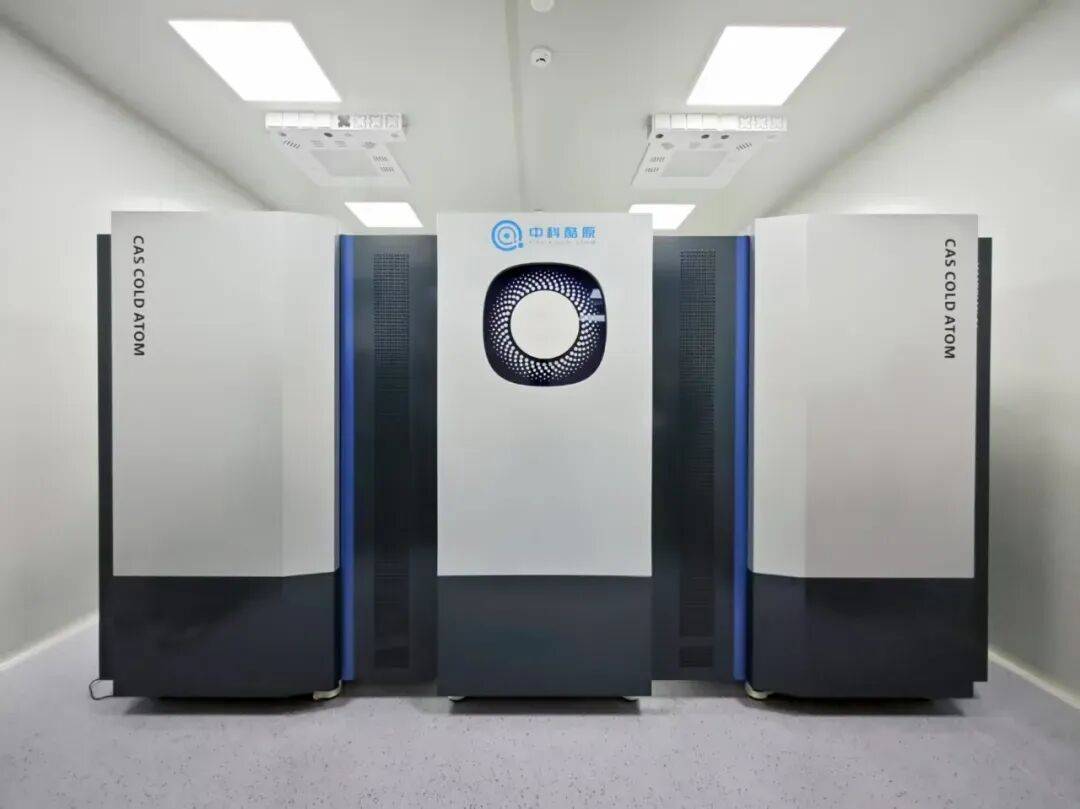
Core Viewpoint - Zhongke Kuyuan Technology (Wuhan) Co., Ltd. has completed a nearly 100 million yuan strategic financing round, exclusively invested by China Mobile Chain Long Fund, highlighting its significant position in the quantum technology sector [1] Group 1: Company Overview - Zhongke Kuyuan was established in 2020, with a core team originating from the Chinese Academy of Sciences, excelling in atomic interference precision measurement and neutral atom quantum computing [1] - The company is a leading enterprise in the quantum technology industry chain in Hubei Province and a founding member of the National Quantum Technology Industry-Academia-Research Innovation Alliance [1] - Zhongke Kuyuan has applied for over 70 patents related to quantum computing and precision measurement, with nearly 50% being invention patents [1] Group 2: Technological Advancements - In 2024, Zhongke Kuyuan launched the "Hanyuan 1" atomic quantum computer, which operates without the need for low-temperature environments, significantly reducing deployment costs [2] - The company also introduced the "Kuyuan Quantum Cloud" platform, enabling universities and enterprises to access quantum computing power via the cloud, accelerating technology dissemination [2] - The "Hanyuan" quantum computer offers advantages such as long coherence time and high control precision, making it suitable for building general-purpose quantum computers [4] Group 3: Commercialization Efforts - Zhongke Kuyuan is focusing on the commercialization of its "Hanyuan" series quantum machines, developing both full programming and global control technology routes, and creating a quantum computing cloud platform to lower user entry barriers [4] - The company collaborates with industries such as finance, pharmaceuticals, and materials to develop quantum algorithms, facilitating the transition from research to industrial application [4] Group 4: Funding and Strategic Partnerships - In the past year, Zhongke Kuyuan has secured multiple rounds of financing, including strategic investments from the Wuhan Guanggu Chip Quantum Technology Investment Fund and other funds totaling several million yuan [6] - The recent investment from China Mobile Chain Long Fund is seen as a strategic move to build an ecosystem that integrates quantum computing with 5G/6G network optimization and big data analysis, aligning with China Mobile's strategic goals [6][7] - This investment also supports the national focus on quantum technology as a key direction in the "9+6" strategic emerging industries layout by the State-owned Assets Supervision and Administration Commission [7]

量子计算测控系统:精准操控的“神经中枢”
Zhong Zheng Wang· 2026-01-13 04:55
Core Insights - Quantum computing measurement and control systems are a critical component of quantum computers, acting as the "nerve center" that determines the performance and effective output of quantum chips [1][2] - The global quantum computing industry is advancing towards a thousand-bit scale, placing unprecedented demands on the integration, scalability, stability, and automation of measurement and control systems [1] - China has made significant strides in this field, achieving a key leap from breaking monopolies to leading in engineering, with the "Benyuan Tianji 4.0" system supporting over 500 quantum bits [2] Industry Developments - The measurement and control system is essential for signal generation, acquisition, and control in quantum chips, with its precision and stability directly impacting chip performance [1] - The U.S. has classified quantum measurement and control systems as a key emerging technology, while companies like Zurich Instruments and NVIDIA are exploring hybrid computing architectures [1] - China's "Benyuan Tianji" series has demonstrated scalable production capabilities, supporting various quantum computing tasks for over 37 million users across 163 countries [2] Challenges and Opportunities - Despite advancements, China faces challenges in high-precision control technology and the absence of industry standards, indicating significant potential for technological progress and investment [2] - Experts suggest a focus on "top-down design and integrated soft-hard breakthroughs" to enhance control technology and establish modular, open architecture standards [2] - Continuous innovation in measurement and control systems is expected to drive the overall computational power of quantum computers and attract long-term capital to core technology breakthroughs and ecosystem standardization [2]
镭神智能敲定2200万美元激光雷达业务买家
Xin Lang Cai Jing· 2026-01-12 16:05
Core Viewpoint - Lidar manufacturer Luminar Technologies has reached an agreement to sell its lidar business to a quantum computing company for $22 million, but the deal may change if a better offer is received before the deadline [1][3]. Group 1: Company Overview - Luminar Technologies filed for Chapter 11 bankruptcy protection in December last year and previously announced plans to sell its semiconductor subsidiary for $110 million to the same quantum computing company [1][3]. - The founder and former CEO, Austin Russell, has expressed interest in bidding for the lidar assets and had attempted to acquire the entire company before the bankruptcy filing [1][3]. Group 2: Financial Implications - The lead bid of $22 million indicates a significant decline in Luminar's valuation, which peaked at approximately $11 billion in 2021, based on expectations of widespread adoption of its lidar sensors by major automakers like Volvo [2][4]. - Volvo had planned to purchase over 1 million units of the lidar sensors but ultimately abandoned the deal in 2025, leading to the collapse of partnerships with other automakers like Mercedes-Benz and Polestar [2][4]. Group 3: Quantum Computing Company Background - The quantum computing company, established in 2001 and originally a ticketing company, shifted its focus to quantum computing and optical technology after a restructuring process [5]. - In 2025, the company raised over $700 million through stock issuance, but its revenue for the first three quarters of last year was only $384,000 [5].
开局即冲刺!南山“科技+金融”双轮驱动新质生产力 |南山半月谈
Sou Hu Cai Jing· 2026-01-12 11:44
Core Viewpoint - The article highlights the vibrant synergy between technology and finance in Nanshan, Shenzhen, showcasing significant developments in the AI and biotechnology sectors, which align with national strategies for innovation and productivity enhancement [1][14]. Group 1: Capital Market Activity - In early January, Nanshan's technology finance sector experienced a surge in activity, marked by significant listings and financing events, including the IPO of AI data leader Xunce Technology, which raised HKD 1.08 billion [3]. - Another notable financing event involved Jindu Biotechnology, which secured a substantial investment from leading institutions, indicating strong capital inflow into Nanshan's future industries [3]. Group 2: Project Incubation and Support - The "X-Day" event on January 9 showcased six promising projects, emphasizing the role of platforms in accelerating incubation and connecting startups with investors [5]. - The "Six Ones" policy in Nanshan supports young entrepreneurs by providing essential resources, fostering a high-density talent and information environment conducive to rapid innovation [5]. Group 3: Industrial Collaboration and Ecosystem - The "Shenzhen Robot Valley" is rapidly forming a trillion-yuan industrial cluster, with companies like Yuejiang Technology achieving mass production of humanoid robots and securing global orders [7]. - Nanshan is also a national pilot zone for low-altitude economy development, attracting key enterprises and establishing a comprehensive industrial chain from R&D to operational scenarios [7]. Group 4: Capital Ecosystem and Investment Philosophy - Nanshan has developed a multi-faceted capital ecosystem, including a CNY 50.45 billion fund aimed at early-stage projects, ensuring seamless capital support throughout the lifecycle of hard tech companies [8]. - The investment philosophy in Nanshan emphasizes patience and long-term innovation over immediate financial returns, fostering a supportive environment for early-stage hard tech investments [10]. Group 5: Government and Market Interaction - The government in Nanshan adopts a "no interference" approach, providing timely support when needed while allowing businesses to focus on growth, exemplified by the establishment of a dedicated quantum computing facility [10]. - The market mechanism in Nanshan facilitates efficient collaboration between academic institutions and industry, enhancing the conversion of technological achievements into marketable products [12]. Group 6: Systematic Innovation Framework - Nanshan's innovative framework includes a unique fault-tolerance mechanism for government funds, shifting focus from short-term returns to long-term innovation effectiveness, thereby encouraging investment in early-stage hard tech [12]. - This systematic approach positions Nanshan as a model for regional implementation of national strategies, particularly in emerging sectors like AI, synthetic biology, and low-altitude economy [14].