云计算

Search documents
揭秘Agent落地困局!93%企业项目卡在POC到生产最后一公里|亚马逊云科技陈晓建@MEET2026
量子位· 2025-12-25 06:08
Core Insights - The true value of Agents lies not in their impressive demonstrations but in their ability to operate effectively in production environments. Data indicates that over 93% of enterprise Agent projects get stuck in the transition from Proof of Concept (POC) to production [1][17]. Group 1: Agent Development and Challenges - A successful Agent requires three essential modules: the model (brain), code (logic), and tools (connecting to the physical world). The effective integration of these three components presents the greatest engineering challenge [7][9]. - The transition from POC to production is hindered by significant obstacles, primarily due to data quality discrepancies and a lack of engineering capabilities [7][17]. - The best time for model customization is during the foundational model training phase, similar to how humans learn languages more effectively at a young age [21][23]. Group 2: Engineering and Deployment Solutions - To address the challenges faced during the deployment and production phases, the company has introduced Amazon Bedrock AgentCore, a comprehensive toolbox designed to manage foundational infrastructure dynamically [20]. - The introduction of Strands Agents simplifies the development process, allowing complex functionalities to be achieved with significantly less code, enhancing efficiency [13][30]. - The company has also launched features to support TypeScript and edge device deployment, expanding the applicability of Agents across various platforms [15][30]. Group 3: Automation and Workflow Integration - The emergence of large models has opened new possibilities for workflow automation, with the development of Amazon Nova Act, which integrates large model capabilities with engineering functionalities for end-to-end automation [29]. - The success rate of automation using Nova Act can reach over 80%, showcasing its effectiveness compared to traditional RPA tools [29]. Group 4: Case Studies and Industry Impact - Blue Origin has built over 2,700 internal Agents using Bedrock and Strands Agents, achieving a 75% improvement in delivery efficiency and a 40% enhancement in design quality [30]. - Sony has developed an internal "Data Ocean" platform, serving over 57,000 internal users and processing up to 150,000 inference requests daily, while also improving compliance review efficiency by 100 times through model fine-tuning [30].



海航科技股价涨5.15%,南方基金旗下1只基金位居十大流通股东,持有1411.84万股浮盈赚取282.37万元
Xin Lang Cai Jing· 2025-12-25 05:42
Group 1 - HNA Technology's stock rose by 5.15%, reaching 4.08 CNY per share, with a trading volume of 153 million CNY and a turnover rate of 1.52%, resulting in a total market capitalization of 11.829 billion CNY [1] - HNA Technology, established on March 6, 1982, and listed on September 9, 1996, is based in Tianjin and operates in IT product distribution, warehousing and logistics, internet finance, and cloud computing [1] - The company's main business revenue composition includes 65.77% from merchandise trade, 33.27% from shipping, and 0.96% from other sources [1] Group 2 - Southern Fund's Southern CSI 1000 ETF (512100) is among the top ten circulating shareholders of HNA Technology, having reduced its holdings by 512,500 shares to 14.1184 million shares, representing 0.49% of circulating shares [2] - The Southern CSI 1000 ETF has a current scale of 76.63 billion CNY and has achieved a year-to-date return of 27.71%, ranking 1906 out of 4197 in its category [2] - The fund has a one-year return of 23.44%, ranking 2053 out of 4170, and a since inception return of 13.02% [2]

股市“四辩”——一家知名投资机构展望2026年资本市场
李迅雷金融与投资· 2025-12-25 05:18
Core Viewpoint - The Chinese stock market is expected to rebound strongly in 2025, with the Shanghai Composite Index reaching a ten-year high, while the market structure remains highly differentiated. The article discusses how to seize new opportunities in 2026 from four perspectives: future debate, allocation debate, current debate, and strategy debate [3]. Future Debate - China is unlikely to repeat Japan's lost decades due to its superior innovation capabilities and irreplaceability in the global market. The Chinese economy's rise has diminished Japan's industrial advantages, and the market has shifted from being viewed as "uninvestable" to having "strategic allocation value" [3][9][10]. - The historical context of Japan's economic stagnation post-1990s is contrasted with China's current trajectory, emphasizing that China's innovation in technology and manufacturing is advancing rapidly [7][8]. Allocation Debate - The influx of new capital into the stock market is driven by asset reallocation from residents and financial institutions in a low-interest-rate environment. The real estate market's downturn has transformed it from a source of capital diversion to a driver of stock market growth [4][12]. - High-net-worth individuals and insurance funds are leading this asset reallocation, which is characterized as rational and gradual rather than speculative [12][14]. Current Debate - The article raises concerns about whether AI capital expenditure expectations can be met, highlighting the potential for AI to be a significant technological revolution. However, the high profit margins in the industry may limit the overall economic growth associated with AI [5][19]. - The article discusses the challenges of achieving the necessary revenue growth to support the anticipated capital expenditures in the AI sector, suggesting that the required income increments are substantial compared to the current GDP [20][21]. Strategy Debate - The outlook for 2026 remains positive, but investors should temper their return expectations. The ongoing asset reallocation process is expected to sustain market resilience, with a focus on defensive strategies and identifying opportunities in technology and advanced manufacturing sectors [26][27]. - Specific sectors to watch include: - **Technology**: Continued investment in AI applications and companies that can leverage AI for efficiency [29]. - **Advanced Manufacturing**: Growth in sectors related to AI and robotics, with a focus on domestic cycles and equipment upgrades [30]. - **Consumer**: Identifying resilient companies in traditional sectors that can maintain performance despite broader economic challenges [31]. - **Military**: Anticipated recovery in the military sector as procurement cycles normalize [31]. - **Real Estate**: Looking for structural opportunities in real estate services and resilient developers amid ongoing market adjustments [31].

股市“四辩”︱2026年重阳投资策略报告
Xin Lang Cai Jing· 2025-12-25 03:51
Core Viewpoint - The Chinese stock market is expected to rebound strongly in 2025, with the Shanghai Composite Index reaching a ten-year high, while the market structure remains highly differentiated. The outlook for 2026 involves identifying new opportunities through various debates [1][30]. Future Debate - China is unlikely to follow Japan's path of economic stagnation, primarily due to its superior innovation capabilities and irreplaceability in the global market. The market perception has shifted from being "uninvestable" to having "strategic allocation value" [5][9][10]. Allocation Debate - The incremental funds for the stock market are derived from asset reallocation by residents and financial institutions in a low-interest-rate environment. The real estate market has transitioned from being a source of capital diversion to a driving force for the stock market, marking a historical first [11][40]. - High-net-worth individuals and insurance funds are the main drivers of this asset reallocation, which is characterized by a rational and gradual approach rather than a speculative rush [12][41]. Current Debate - The expectations for AI capital expenditure are high, as AI is seen as a significant technological revolution. However, the industry faces challenges in reconciling high profit margins with the need for substantial capital investment, which may impact the pace of capital expenditure [17][23]. Strategy Debate - The market outlook for 2026 remains positive, but investors should temper their return expectations. The strategy focuses on defensive counterattacks and seeking alpha opportunities in technology and advanced manufacturing sectors, while also exploring contrarian investments in consumer, military, and real estate sectors [24][32][26].

海外AI热潮再起,英伟达与Groq达成技术授权协议!云计算ETF汇添富(159273)冲高后小幅回落!光模块2026年投资机遇如何?
Sou Hu Cai Jing· 2025-12-25 03:43
Group 1 - The core viewpoint of the news highlights the ongoing developments in the AI and cloud computing sectors, particularly focusing on the demand for optical modules driven by AI training and inference needs [4][9] - Nvidia has entered a licensing agreement with AI startup Groq, indicating a strategic move to invest in AI-related companies while avoiding antitrust scrutiny [3] - The optical module market is expected to see significant growth, with 800G optical modules projected to maintain high growth rates and 1.6T shipments also expected to increase substantially [4][9] Group 2 - The demand for optical modules is primarily driven by Scale-out networks, which enhance processing capabilities by adding more computing nodes [8] - Future demand for optical modules in Scale-up networks is anticipated to be vast, as these networks increase the number of GPUs/XPUs in single computing nodes [9][11] - The average Scale-up bandwidth is significantly higher than Scale-out bandwidth, with a ratio of 12.5, indicating a larger market potential for network hardware in the Scale-up domain [11][12]




华为云城市峰会落地十堰,绿色算力擘画鄂西经济新格局
Zhong Guo Jing Ji Wang· 2025-12-25 02:59
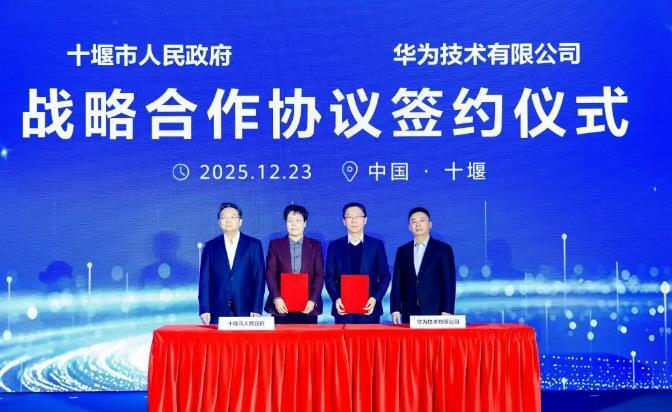
中国经济网12月25日讯(记者王惠绵)12月23日,2025华为云城市峰会落地湖北十堰。政企学研界嘉宾齐 聚一堂,以"云聚武当.建设绿色智能鄂西区域性中心城市"为主题,共商数字经济发展路径,共绘绿色 算力产业蓝图。 十堰依托生态禀赋构筑算力高地 "加快城市数字化转型,是十堰的战略选择,也是推动产业升级、优化营商环境、提升治理效能、增进 民生福祉的重要举措。"十堰市委常委、常务副市长周智勇表示,十堰将数字经济作为十大千亿级产业 集群重点培育,加快推动数字技术与实体经济深度融合,已成功入选全省首批中小企业数字化转型试点 城市,被纳入全省三大算力集群。 政企协同创新激活数字经济产业生态 数字经济的腾飞,离不开开放协同、互利共赢的产业生态。华为与十堰战略携手,并积极培育创新力 量,共同绘制"技术+产业+应用"的生态图谱。 湖北省数据局党组成员、副局长艾青松在致辞中强调,十堰要依托武当云谷独特优势,积极融入全 省"武宜襄十"算力圈布局,既能承接武汉的算力辐射,又能辐射带动周边地区。 "十堰的算力,生而绿色,源于天然。"十堰市数据局党组成员、副局长龚勇在推介中,点出了这座城市 发展绿色算力的独特底气。得天独厚的生态条件, ...
腾讯云Valkey社区贡献位居全球第一,率先在国内支持8.0版本
Sou Hu Cai Jing· 2025-12-25 02:46
Core Insights - The article highlights the significant changes in the open-source software landscape with the emergence of the new generation open-source in-memory database Valkey, which is now supported by Tencent Cloud as the first in China to release Valkey 8.0 [1] Group 1: Valkey Overview - Valkey is an open-source in-memory Key-Value database project managed by the Linux Foundation, originating from the Redis community, aimed at creating a vendor-neutral and stable foundational software platform through a loose open-source protocol and community governance model [1] - The release of Valkey 8.0 marks the first major version since its fork from Redis, inheriting capabilities from Redis 7.2.4 while achieving significant improvements in performance and resource efficiency, particularly for Search and AI applications [5] Group 2: Tencent Cloud's Role - Tencent Cloud has become a key contributor to the Valkey project, ranking first globally in community code contributions, with expert Binbin Zhu contributing over 360 pull requests (PRs) and serving on the Technical Steering Committee (TSC) and Core Team [2] - Tencent Cloud's involvement includes adapting Valkey 8.0 for cloud environments based on its extensive experience in industries such as gaming, e-commerce, and finance, enhancing its stability and usability in production settings [5] Group 3: Community Engagement - Major global cloud providers, including AWS, Google Cloud, Oracle, Tencent Cloud, Alibaba Cloud, and Huawei Cloud, are deeply engaged in the Valkey community, fostering a community-centric open-source collaboration model [1] - The establishment of the Valkey community in Beijing allows Chinese developers to participate actively in global community governance [1]


申万宏源:维持阿里巴巴-W(09988)“买入”评级 目标价197港元
智通财经网· 2025-12-25 02:37
Core Viewpoint - The report from Shenwan Hongyuan maintains Alibaba Group's earnings forecast and buy rating, projecting revenues for FY2026-FY2028 at 1,038.6 billion, 1,143.4 billion, and 1,250.6 billion RMB, with adjusted net profits of 101.9 billion, 145.5 billion, and 183.6 billion RMB respectively. The SOTP valuation method yields a target valuation of 3,412.4 billion RMB, corresponding to a target price of 203 USD per ADS, indicating a 34% upside potential, and a target price of 197 HKD per share, also reflecting a 34% upside potential [1]. Group 1 - AI cloud growth is expected to continue, driven by improved Capex and accelerating cloud revenue trends, with domestic AI cloud fundamentals remaining positive for the coming year. Alibaba is noted for its comprehensive self-developed technology stack in cloud computing, which includes chips, servers, operating systems, and large models, positioning it among the top tier in terms of revenue scale, growth rate, and profit margins in China [2]. - The competition from ByteDance's Volcano Engine focuses on the MaaS layer, but Alibaba Cloud's advantages in full-stack solutions and ecosystem integrity are difficult to replicate in the short term. Alibaba Cloud's leadership in the broader AIIaaS and overall cloud market is supported by the demand for enterprise-wide intelligent transformation [3]. Group 2 - The domestic AI chip market is experiencing a surge in demand for localized computing power, with Alibaba's T-head chips achieving performance levels comparable to international standards and winning bids for large intelligent computing center projects. This development is crucial for Alibaba Cloud to provide differentiated computing services and enhance profit margins [4]. - Alibaba is positioning itself to capture the C-end entry point, potentially unlocking monetization opportunities. The company is enhancing its AI capabilities to transition from graphical user interfaces to natural language interfaces, integrating its ecosystem through products like the Quark AI glasses, which aim to create a seamless connection between various services [5].


2025年大模型推理优化与部署实践产业洞察研究报告-云计算开源产业联盟
Sou Hu Cai Jing· 2025-12-25 02:34
Group 1 - The core point of the report indicates that the large model industry has transitioned from "model innovation" to a critical period of "scale implementation," where inference optimization and efficient deployment have become core competitive advantages, leading to rapid market growth [1][13] - The global AI inference computing power market is expected to grow nearly tenfold from 2021 to 2024, reaching USD 13.958 billion in 2024 and projected to increase to USD 18.355 billion in 2025; the Chinese market is expected to grow even faster, reaching CNY 43.83 billion by 2025, with a compound annual growth rate of 66.3% [1][39][43] - The market competition landscape is diverse, with Tianyi Cloud, Alibaba Cloud, and Huawei Cloud leading the domestic market, while Amazon, Google, and Microsoft dominate internationally; the token-based billing model has become mainstream, and the model-as-a-service (MaaS) business model is rapidly gaining popularity [1][39] Group 2 - The current deployment forms have diversified to meet different scenario needs, with four main deployment methods emerging: MaaS, integrated inference machines, private deployment platforms, and cloud-edge-end collaborative inference [2][59] - Full-stack optimization technology has become a core support, breaking through performance bottlenecks through hardware adaptation, inference engines, model layers, and parallel computing technologies [2][3] - The industry faces multiple challenges, including high costs, lack of standards, talent shortages, fragmented ecosystems, and complex security compliance; the report suggests accelerating the establishment of a technical standard system and fostering collaborative innovation mechanisms [3][14] Group 3 - Industry applications are deeply rooted, with significant results from practical cases; for instance, CITIC Securities has processed over 200 million service requests through an inference acceleration engine, and a robotics company has achieved an 80% efficiency improvement in private deployment [3][14] - The Chinese AI inference computing power market is expected to see a rapid increase in the proportion of inference workloads, projected to reach 70.5% by 2026, indicating a shift in focus from training to inference [43][47] - The deployment preferences for large model inference platforms are expected to change significantly, with public cloud deployment increasing from 49% to 58% and private cloud deployment rising from 16% to 26% by 2027 [58][59]

钛媒体「年度全球化公司」榜单重磅发布 | 2025 EDGE AWARDS
Tai Mei Ti A P P· 2025-12-25 02:06
Group 1 - In 2025, Chinese companies are shifting from cross-border operations to deeper localization and accelerating globalization in response to changing overseas policies [2] - The U.S. government has implemented policies such as the cancellation of tax exemptions for cross-border packages under $800 and reciprocal tariffs, while the EU has introduced the New Battery Law [2] - Chinese enterprises are transitioning from "single product exports" to "full-chain system output," with market strategies evolving from a focus on Europe and the U.S. to a dual-driven approach involving emerging and traditional markets [2] Group 2 - The EDGE AWARDS recognizes companies that have achieved significant breakthroughs in overseas markets despite fluctuating international conditions, highlighting their contributions to globalization [3] - ECARX has achieved large-scale production and delivery in global markets, securing over $1 billion in overseas orders and achieving profitability in Q3 [3] - Alibaba Cloud is enhancing its global infrastructure to support Chinese enterprises' overseas development, focusing on AI product internationalization and building a global cloud computing network [4] Group 3 - HLA has expanded its global strategy, opening new stores in Southeast Asia, Central Asia, and the Middle East, with overseas revenue increasing by 27.42% [4] - Kudi Coffee has expanded its international presence to 33 countries, with over 18,000 stores globally, ranking third worldwide in the coffee and tea sector [4] - United Imaging Healthcare has seen overseas revenue grow from $40 million to over $2 billion in seven years, with a compound annual growth rate of 93% [5] Group 4 - Pop Mart has experienced explosive growth in overseas revenue, which increased by 437.5% in the first half of 2025, accounting for 40.3% of total revenue [6] - Century Huatong, a leading gaming company, has achieved over $3.8 billion in global revenue from its game "Whiteout Survival" and is actively exploring AI gaming applications [7] - Tongwei Group has a global market share of approximately 30% in polysilicon, with significant growth in component sales across various regions [8] Group 5 - Yanghe Distillery has established a comprehensive international communication system focusing on high-end, platform-based, and localized strategies, covering 86 countries and regions [9] - Yiling Pharmaceutical has successfully registered 17 innovative traditional Chinese medicines in over 50 countries, promoting a multi-faceted approach to global healthcare [10] - The trend of collaborative globalization is emphasized, with companies providing reliable service networks to support Chinese enterprises in overseas markets [11] Group 6 - Amazon Global Selling has facilitated the entry of numerous Chinese sellers into international markets, signing cooperation agreements with various provincial commerce departments [12] - XTransfer offers cross-border financial and risk control services to over 800,000 enterprises, enhancing global competitiveness for small and medium-sized businesses [13] - Huawei Cloud has expanded its global presence with 34 geographic regions and 101 available zones, supporting local industry upgrades in various countries [14] Group 7 - Stripe provides programmable financial services to millions of businesses, enabling Chinese brands to establish payment channels and innovative revenue models as they expand globally [15]