外卖

Search documents
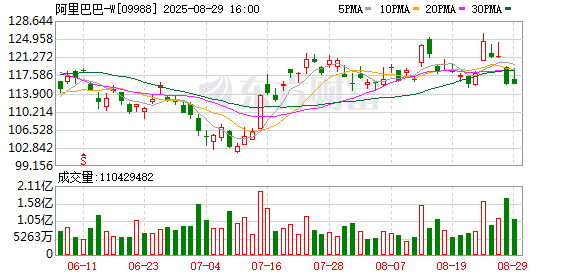
阿里巴巴二季度经营利润下降3% 淘宝闪购猛“烧钱”
Di Yi Cai Jing· 2025-08-29 11:44
Core Insights - Alibaba Group reported Q1 FY2026 financial results, showing a revenue of 247.65 billion RMB, a 2% year-over-year increase, and a 10% increase when excluding divested businesses [2] - Operating profit decreased by 3% to 34.99 billion RMB, with adjusted EBITA down 14%, primarily due to increased investments in Taobao Flash Sale and user experience [2] - The company restructured its business segments, integrating Ele.me and Fliggy into Alibaba's China e-commerce group, with Taobao Flash Sale and Ele.me moving into the instant retail segment [2] Financial Performance - Free cash flow showed a net outflow of 18.82 billion RMB, contrasting with a net inflow of 17.37 billion RMB in the same period last year, resulting in a 36.19 billion RMB difference [3] - Sales and marketing expenses reached 53.18 billion RMB, accounting for 21.5% of revenue, up from 13.4% in the previous year, driven by investments in Taobao Flash Sale and customer acquisition [4] - Instant retail revenue was 14.78 billion RMB, a 12% year-over-year increase, attributed to the growth in order volume from Taobao Flash Sale [4] Business Segment Highlights - Alibaba Cloud revenue grew by 26%, marking a three-year high, with AI-related revenue experiencing triple-digit growth for eight consecutive quarters [5] - The international digital commerce group saw a 19% revenue increase, with adjusted EBITA losses narrowing significantly to 59 million RMB from a loss of 3.706 billion RMB in the previous year [5] - Employee count decreased to 123,711 as of June 30, 2025, down from 124,320 in the previous quarter [5]


跃升千亿交易规模,滴滴在拉美瞄准外卖
Tai Mei Ti A P P· 2025-08-29 11:32
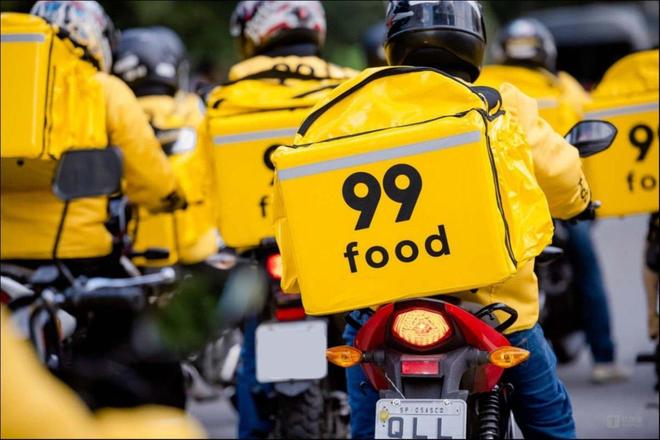
Core Insights - Didi's core platform gross transaction value (GTV) reached 109.6 billion yuan in Q2 2025, with international business GTV at 27.1 billion yuan, reflecting a 27.7% year-on-year growth at fixed exchange rates [2] - Didi's 99Food launched in Brazil's Goiânia and achieved 1 million orders in 45 days, expanding to São Paulo, the largest city in Latin America [2][4] - Didi's international strategy began in 2018 with the acquisition of Brazilian ride-sharing company 99, now covering 14 countries, including 10 in Latin America [5] Business Expansion - Didi has over 55 million users in Brazil, covering a quarter of the population, with more than 1.5 million registered drivers, including 700,000 motorcycle riders [6] - The food delivery business is seen as a natural extension of Didi's urban service ecosystem, leveraging its large ride-hailing user base and driver resources [6] - Didi's experience in Mexico, where it became the leading food delivery service, is expected to bolster its confidence in expanding food delivery in Brazil [6] Market Potential - Latin America is one of the fastest-growing food delivery markets globally, with a growth rate of 19% in 2023, second only to the Middle East [7] - The food delivery market in Latin America is valued at approximately 37.9 billion USD, with Brazil and Mexico leading at around 20 billion USD and 7.2 billion USD, respectively [8] Competitive Landscape - Didi faces competition from iFood in Brazil, which holds an 80% market share, and has previously exited the Brazilian market in 2023 [8][9] - Didi's strategy includes localized competition, focusing on smaller cities before expanding to major urban areas [8][9] Operational Strategies - Didi is addressing high delivery costs and platform commissions in Brazil, which can reach 30% and 27% of order value, respectively [9][11] - The company is implementing various promotional measures, such as free delivery and discounts for users, guaranteed income for riders, and commission waivers for merchants [11] - Didi's unique advantage lies in its ability to utilize its ride-hailing network to reduce delivery costs, allowing riders to handle both passenger and food deliveries [12]

阿里巴巴二季度经营利润下降3%,淘宝闪购猛“烧钱”
Di Yi Cai Jing· 2025-08-29 11:21
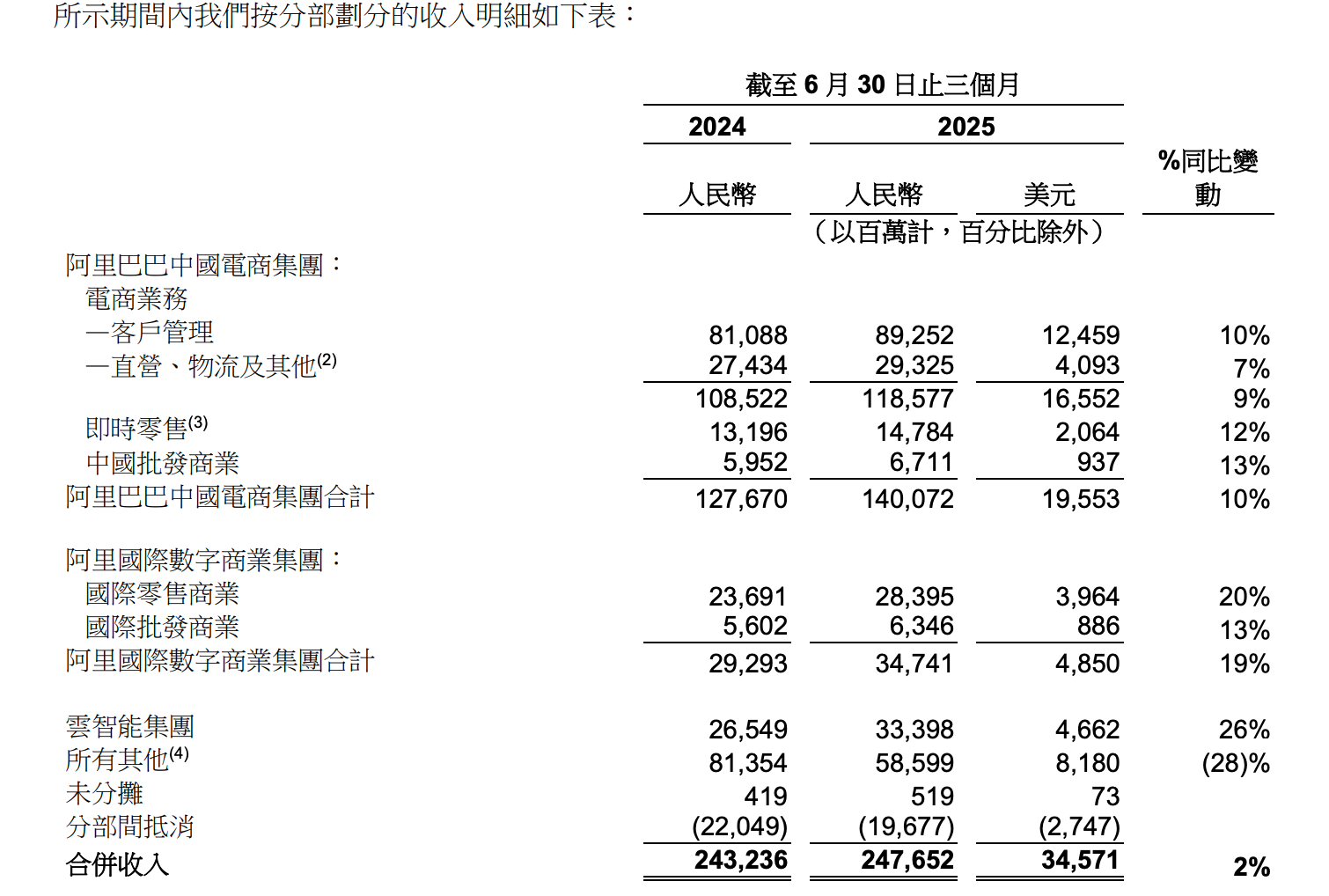
Core Insights - Alibaba Group reported a revenue of 247.65 billion RMB for Q2 of FY2026, representing a 2% year-over-year increase, and a 10% increase when excluding divested businesses [1][2] - The company experienced a decline in operating profit to 34.99 billion RMB, down 3% year-over-year, with adjusted EBITA decreasing by 14% due to increased investments in Taobao Flash Sale and user experience [1][2] - The restructuring of business segments included the integration of Ele.me and Fliggy into Alibaba's China e-commerce group, with Taobao Flash Sale and Ele.me moving into the instant retail segment [1] Financial Performance - The free cash flow for the quarter was a net outflow of 18.82 billion RMB, a significant drop from a net inflow of 17.37 billion RMB in the same period last year, resulting in a difference of 36.19 billion RMB [2] - Sales and marketing expenses reached 53.18 billion RMB, accounting for 21.5% of revenue, up from 13.4% in the previous year, driven by investments in Taobao Flash Sale and customer acquisition [3] - Instant retail revenue grew to 14.78 billion RMB, a 12% year-over-year increase, largely attributed to the order volume growth from Taobao Flash Sale [3] Business Segment Insights - Alibaba Cloud's revenue increased by 26% year-over-year, marking the highest growth rate in three years, with AI-related revenue growing for eight consecutive quarters [4] - The international digital commerce group saw a revenue increase of 19%, with adjusted EBITA losses narrowing significantly to 5.9 million RMB compared to a loss of 3.706 billion RMB in the same period last year [5] - The total number of employees at Alibaba decreased to 123,711 as of June 30, 2025, down from 124,320 in the previous quarter [5]
外卖大战进入深水区:短期波动不改变长期终局
Ge Long Hui A P P· 2025-08-29 10:48
Group 1 - The core viewpoint of the article highlights the unprecedented capital consumption war in China's food delivery industry, initiated by JD.com, followed by Alibaba's aggressive moves, while Meituan adopts a defensive strategy [1] - The food delivery sector has seen a massive subsidy investment of approximately 1 trillion yuan in just six months, leading to a fierce competition among major platforms [2] - The short-term demand driven by subsidies is deemed unsustainable, as many new users attracted by discounts may leave once the subsidies are withdrawn, resulting in a rapid decline in order volume [3][4] Group 2 - The focus of the subsidy war has been disproportionately on non-essential, low-ticket items like tea drinks, creating a false sense of high-frequency consumption that is not sustainable [4] - Meituan's Q2 revenue grew by 11.7% to 91.8 billion yuan, but adjusted net profit significantly dropped to only 1.5 billion yuan, indicating challenges in maintaining profitability amidst fierce competition [6][7] - Meituan holds a market share of 65%, while Ele.me and JD.com hold 28% and 7% respectively, showing that Meituan has managed to maintain its market position despite the intense competition [7] Group 3 - Meituan is enhancing its ecosystem by supporting merchants, riders, and users, with initiatives like financial support for over 300,000 restaurants and a commitment to improve food safety and operational efficiency [8][9] - The company is also focusing on rider stability and welfare, including full coverage of work injury insurance and pension subsidies, which are crucial for maintaining delivery capacity [9] - Meituan's monthly active users surpassed 500 million, with increased transaction frequency, indicating a deepening user loyalty and engagement [9] Group 4 - Meituan is investing in technology to reduce costs, with R&D spending increasing by 17.2% to 6.3 billion yuan in Q2, focusing on areas like drone delivery and automated warehousing [9] - The company is expanding its instant retail segment, achieving strong growth in transaction volume during the 618 shopping festival, indicating a successful diversification strategy [12] - Meituan's international expansion through its Keeta platform has shown rapid growth, capturing significant market share in Hong Kong and Saudi Arabia, with plans to enter Brazil [13][14] Group 5 - The article concludes that while short-term fluctuations are inevitable, the long-term value of companies like Meituan remains strong, as they focus on providing quality supply, stable delivery, and reasonable pricing [15][16] - Meituan's ability to navigate complex competition and maintain its leading position is underscored by its commitment to core business principles, ensuring a reliable service for users [16]
美团将取消骑手“超时罚款”!评论区有人担心……
Zhong Guo Qing Nian Bao· 2025-08-29 10:12
Group 1 - Meituan announced the complete cancellation of overtime fines for its crowd-sourced delivery riders by the end of 2025, which has sparked significant public interest and discussion [1][4] - The company has already piloted a new system called "Anzhun Card" in Quanzhou, which replaces overtime fines with a point system that deducts points for late deliveries and awards points for timely deliveries, with implementation in 22 cities as of August [3] - The announcement has led to mixed reactions, with some expressing concerns about consumer protection and others advocating for more humane working conditions for riders, emphasizing that rider safety should take precedence over strict performance metrics [4][7] Group 2 - The shift from monetary fines to a point deduction system is seen as a way to provide riders with more breathing room, while still maintaining some level of accountability [7] - The discussion around delivery time expectations highlights the need for a balanced approach that considers the rights of workers, customer experience, and the overall health of the food delivery industry [7]


古茗CEO称8月外卖平台补贴力度下降,美团王兴说补贴不是长久之计,外卖目标利润率约3%
Sou Hu Cai Jing· 2025-08-29 09:48
Core Viewpoint - The ongoing subsidy war in the food delivery sector, driven by platforms like Taobao, Meituan, and JD, is not beneficial for the long-term health of the industry, as stated by Gu Ming's founder Wang Yunan and Meituan's CEO Wang Xing [3][4]. Group 1: Impact of Subsidies - Gu Ming's founder indicated that long-term reliance on delivery subsidies is detrimental to franchise operations and the overall industry [3]. - The "zero purchase" campaign launched in July had an impact of approximately 4 to 5 yuan per order for Gu Ming, with lower-priced brands benefiting more from this initiative [3]. - The competitive landscape for food delivery intensified from the second quarter of the year, with the first quarter remaining unaffected [3]. Group 2: Company Performance - Gu Ming reported that the overall impact of the subsidy activities on its first half performance was limited, and the intensity of subsidies has decreased since August [3]. - Meituan's revenue for the second quarter of 2025 grew by 11.7% to 91.8 billion yuan, with an operating profit of 226 million yuan and an adjusted net profit of 1.493 billion yuan [4]. Group 3: Strategic Outlook - Meituan's CEO reaffirmed the company's long-term profit assumption of "1 yuan per order, with a profit margin of about 3%" despite increased strategic investments in the third quarter that may pressure short-term financial metrics [4]. - The CEO emphasized that Meituan will continue to invest to meet consumer demands and maintain its market leadership, believing that competition will eventually return to rationality [4].
印度为什么敢跟中国比外卖?印度外卖卷疯了?
Hu Xiu· 2025-08-29 09:04
Core Insights - The article discusses the rapid growth of the food delivery market in India, highlighting the speed of service and the increasing user engagement [1] - It raises questions about the sustainability of this growth compared to the more established market in China [1] Industry Overview - The Indian food delivery market is characterized by a significant increase in order volume and user base, although it still lags behind China [1] - The term "hunger games" is used to describe the competitive landscape of the Indian food delivery sector, indicating intense competition among players [1] Market Dynamics - The article suggests that the current pace of growth in the Indian food delivery market may not be sustainable in the long term [1] - It implies that the rapid service model, where food can be delivered in as little as 10 minutes, may not be replicable indefinitely [1]
外卖大战下京东2025年Q2净利润跌超50%、营销开支同增127.6%至270亿元 新业务运营利润率低至-106.7%
Xin Lang Zheng Quan· 2025-08-29 08:43
Core Viewpoint - JD.com has entered the food delivery market with a strong strategy of "0 commission + 100 billion subsidies + rider social security," aiming to disrupt the duopoly of Meituan and Ele.me by focusing on high-ticket orders and niche categories like fresh produce and pharmaceuticals [1][2]. Group 1: Financial Performance - In Q2 2025, JD.com's revenue reached 356.7 billion yuan, a year-on-year increase of 22.4%, marking the highest growth rate in nearly three years [1]. - The net profit attributable to ordinary shareholders was 6.2 billion yuan, down over 50% from 12.6 billion yuan in Q2 2024 [1]. - The new business segment, primarily driven by the food delivery service, saw a staggering revenue growth of 199%, reaching 13.852 billion yuan, with daily order volume exceeding 25 million [2]. Group 2: Cost and Investment - The aggressive strategy to penetrate the food delivery market has led to significant operational losses, with the new business segment's operating loss soaring from 0.695 billion yuan in the previous year to 14.777 billion yuan, resulting in an operating profit margin of -106.7% [2]. - Marketing expenses surged by 127.6%, increasing from 11.9 billion yuan in Q2 2024 to 27 billion yuan (approximately 3.8 billion USD) in Q2 2025, primarily due to high subsidies for the food delivery business [2]. Group 3: Strategic Outlook - JD.com's management indicated that the short-term profit margin fluctuations are a result of competitive pressures and investment pace, with the intention of transforming these investments into new growth drivers that will synergize with core business operations [2].

外卖狂欢的代价:巨头财报惨不忍睹,美团少赚115亿,京东营销费用暴涨127%
Sou Hu Cai Jing· 2025-08-29 08:19
Core Insights - The fierce competition in the food delivery sector has led to significant profit declines for both Meituan and JD.com, despite revenue growth for both companies [1][2][3] - Meituan's profit dropped by 89% to 1.49 billion yuan in Q2, while JD.com's profit was halved to 6.2 billion yuan [1][2] - The aggressive marketing strategies, including substantial discounts and promotions, have resulted in increased marketing expenses for both companies, with Meituan spending 22.5 billion yuan and JD.com spending 27 billion yuan in Q2 [1][3] Meituan Analysis - Meituan's revenue increased by 11.7%, but its core local business saw a profit decrease of 11.5 billion yuan compared to the previous year [1] - The company attributed its profit decline to "irrational competition," indicating that the competitive landscape forced it to increase spending on marketing [1] - Marketing expenses for Meituan doubled from 14.8 billion yuan to 22.5 billion yuan year-over-year [1] JD.com Analysis - JD.com reported a revenue increase of 22.4%, but its net profit fell from 12.6 billion yuan to 6.2 billion yuan [2] - The company gained over 1.5 million merchants and 150,000 delivery riders, but the cost of acquiring these resources contributed to the profit decline [2] - JD.com's marketing expenses surged by 127%, reaching 27 billion yuan in Q2, with daily spending on food delivery ads alone amounting to 150 million yuan [3] Industry Overview - The food delivery market is characterized by intense competition among major players, including Meituan, JD.com, and Alibaba's Taobao [3] - The ongoing "war" in the food delivery sector has led to a situation where companies are heavily investing in marketing and promotions, resulting in a "mutually destructive" financial environment [3] - Analysts predict that the aggressive spending will continue to impact profitability, with expectations of further profit declines for Alibaba as well [3]
特朗普呼吁起诉金融大鳄索罗斯|首席资讯日报
首席商业评论· 2025-08-29 04:11
Group 1 - The AI model AlphaCD has been developed by the Agricultural Genome Research Institute of the Chinese Academy of Agricultural Sciences, which can efficiently predict the enzymatic activity characteristics of over 20,000 cytosine deaminases and design new high-performance base editing tools [2] - The Central Education Work Leading Group has issued an action plan for optimizing higher education discipline and major settings from 2025 to 2027, focusing on strategic emerging industries and future industries [2] - The State Administration for Market Regulation has released a list of food adulteration testing methods, addressing three major technical challenges in food safety [3] Group 2 - Nanyang has introduced new housing policies to promote the healthy development of the real estate market in the central urban area, effective from August 13, 2023, until December 31, 2026, with 20 measures aimed at supporting housing demand and improving market confidence [4] - UK researchers have achieved a breakthrough by chemically connecting RNA with amino acids, providing new insights into the origins of life [5] - Google announced an additional investment of $9 billion in Virginia for cloud computing and AI infrastructure by 2026, part of a broader commitment to AI training for all university students in the state [6] Group 3 - NVIDIA reported Q2 revenue of $46.7 billion for fiscal year 2026, up from $30.04 billion in the same period last year, exceeding market expectations [7] - Meituan's Q2 revenue reached 91.8 billion yuan, a year-on-year increase of 11.7%, but the company anticipates significant losses in its core local business for Q3 due to intense competition in the food delivery market [11] - Japanese property insurance company SOMPO has agreed to acquire insurance company Aspen for approximately $3.5 billion [10]