生物医药

Search documents
斯坦福「返老还童」新研究:无需干细胞,逆转关节损伤和老化
量子位· 2026-01-25 03:34
Core Viewpoint - A new study from Stanford University School of Medicine focuses on joint health, aiming for cartilage regeneration through oral or injectable drugs without relying on expensive stem cells or surgical replacements [1][3]. Group 1: Research Background - The study addresses the "impossible triangle" of cartilage repair, which includes the scarcity of cartilage cells, lack of blood supply for repair materials, and the harsh environment due to continuous load and friction [4][5]. - Millions suffer from joint pain and swelling as they age, indicating a significant unmet medical need [6]. Group 2: Current Treatment Limitations - Existing treatments primarily focus on pain relief and symptom management, often leading to costly joint replacement surgeries over time [10][11]. Group 3: Enzyme Focus - The research team identified the enzyme 15-PGDH, which breaks down prostaglandin E2, crucial for muscle stem cell function. Inhibiting this enzyme can promote repair in various tissues [13][14]. - The hypothesis is that inhibiting 15-PGDH could "awaken" the regenerative capacity of aging or damaged cartilage [15]. Group 4: Experimental Findings - The study demonstrated that inhibiting 15-PGDH significantly reversed natural cartilage loss in older animals and prevented post-injury arthritis [16][18]. - The method does not rely on stem cells, as cartilage cells can change their gene expression to a more youthful state [18][30]. Group 5: Specific Experimental Results - In experiments, injecting a small molecule drug that inhibits 15-PGDH in older mice resulted in thickened, functional cartilage, proving the drug's effectiveness in reversing age-related cartilage degeneration [23][24]. - The research also showed that the drug could prevent cartilage degradation and typical arthritis changes after simulated ligament injuries in mice [28][29]. Group 6: Human Application - Following successful mouse experiments, the drug's effects were validated on human samples, showing reduced activity of degenerative genes and early signs of regeneration within a week [35][36]. - An oral drug targeting 15-PGDH is currently undergoing clinical trials for muscle weakness, with initial safety confirmed [37]. Group 7: Future Directions - The research team aims to conduct more experiments to simplify and reduce the cost of treating joint issues, potentially transforming current treatment methodologies [38].


2026年全球医疗健康行业私募股权报告(英文版)
Sou Hu Cai Jing· 2026-01-25 02:40
Core Insights - The global healthcare private equity market is experiencing a significant recovery and record growth, with total deal value expected to exceed $191 billion in 2025, marking a historical high [11][12][16] - The market shows clear regional differentiation, with Europe leading in biopharma and healthcare services, North America maintaining stability despite policy impacts, and Asia-Pacific demonstrating broad growth resilience [11][25][27] Market Performance - In 2025, healthcare private equity saw a record performance with disclosed deal value surpassing $191 billion and 445 buyouts, making it the second-highest annual total on record [11][12] - The exit value surged from $54 billion in 2024 to an expected $156 billion in 2025, driven by an increase in large deals [15][16] Regional Analysis - Europe experienced a doubling of deal value to approximately $59 billion, primarily driven by biopharma and healthcare provider deals [25] - North America faced a temporary pullback in the second quarter but still achieved a healthy year with an expected exit activity of $90 billion, significantly higher than 2024 [26] - Asia-Pacific set a record for deal value, exceeding 2021's high by over 30%, with notable growth in biopharma, medtech, and healthcare IT [27][28] Sector Trends - Biopharma remains a cornerstone of investment, with deal value rising from $55 billion in 2024 to an estimated $80 billion in 2025, accounting for about 30% of overall deal volume [33] - Provider and related services deal value increased by 57% to an estimated $62 billion, driven by technology-enabled assets and healthcare IT [38] - Medtech is emerging as a new growth engine, with investors focusing on revenue growth and margin expansion [39] Investment Strategies - The investment logic in healthcare IT is shifting towards revenue and profit expansion through refined pricing and generative AI applications, with the "60 rule" becoming a new performance benchmark [3] - Investors are adopting a "barbell strategy" in pharma services, focusing on high-quality assets with scale advantages and potential operational improvements [3]
市长殷勇作政府工作报告:308个便民事项实现京津冀跨省自助办
Xin Lang Cai Jing· 2026-01-25 01:47
在回顾2025年工作时,报告提出,北京深化京津冀重点领域协同发展,扎实推进通州区与北三县一体化 高质量发展示范区建设,白庙南北检查站完成改造;京津合作示范区加快建设,天津滨海—中关村科技 园新增注册企业689家;北京输出到津冀技术合同成交额996亿元、增长18.1%,生物医药等重点产业链 36项卡点攻关取得突破,新能源汽车生态港启动建设;京唐城际铁路、承平高速全线通车,308个便民 事项实现跨省自助办,为群众带来更多便利。 来源:北京日报客户端 1月25日上午,北京市第十六届人民代表大会第四次会议在北京会议中心开幕。市长殷勇作政府工作报 告。 ...
扎实做好“人、产、城”三篇文章
Xin Lang Cai Jing· 2026-01-24 22:40
Group 1: Core Perspectives - The 20th Central Committee's Fourth Plenary Session accurately identifies the historical position of the Party and the country's development, making top-level designs and strategic plans for the next five years [1] - The Kunming Municipal Committee's 12th Plenary Session outlines a development blueprint and key work tasks, emphasizing the integration of "people, industry, and city" to achieve a virtuous cycle [1] Group 2: Focus on "People" - During the 14th Five-Year Plan period, there is a focus on seizing urbanization opportunities, planning population issues with a systematic approach, and promoting high-quality population development linked to improved living standards [2] - Strategies include attracting talent through effective recruitment plans, enhancing employment through industry collaboration, and creating a welcoming urban culture to increase population growth and quality [2] - Efforts to retain people involve integrated planning of population, industry, and public services, optimizing urban space, and improving service systems to enhance the city's capacity for population and economic development [2] - Enhancing people's well-being by addressing education, healthcare, social security, and employment gaps to create an ideal living and working environment [2] Group 3: Focus on "Industry" - The 14th Five-Year Plan emphasizes the importance of the real economy, focusing on intelligent, green, and integrated development while strengthening industrial growth [3] - Strategies include optimizing existing industries through technological updates and innovation, transforming traditional industries into high-end service-oriented sectors [3] - The plan aims to expand new industries in areas where Kunming has competitive advantages, such as new materials, renewable energy batteries, biomedicine, electronic information, and equipment manufacturing [3] - Actions to improve the business environment are highlighted, aiming to enhance Kunming's overall business climate to support high-quality industrial development [3] Group 4: Focus on "City" - The "People's City" concept is promoted, focusing on urban structure optimization, energy transformation, quality enhancement, and green transition [3] - Urban planning will leverage Kunming's natural advantages, improving functional structures and spatial layouts while integrating ecological and urban development [3] - Enhancements in urban functions will be driven by urban renewal, fostering innovation ecosystems, and addressing infrastructure gaps to improve urban quality [3] - Smart city initiatives will be advanced to address traditional governance challenges, improving the quality of urban management and enhancing residents' quality of life [3]
2025年GDP十强城市预估排名出炉:上海第1,苏州远超成都,南京入围?
Sou Hu Cai Jing· 2026-01-24 17:39
Core Insights - The 2025 GDP forecast for China's top ten cities reveals a competitive landscape, with Shanghai and Beijing maintaining their positions as economic powerhouses, while cities like Shenzhen, Chongqing, and Guangzhou are rapidly advancing [1][3]. Group 1: Shanghai and Beijing - Shanghai's GDP is projected to reach 5.67 trillion yuan, an increase of 278.2 billion yuan from the previous year, with significant contributions from the Zhangjiang Science City and Yangshan Port, which has been the world's busiest container port for 19 consecutive years [1][5]. - Beijing's GDP is expected to surpass 5.2 trillion yuan, growing by 388 billion yuan, driven by a surge in tech startups in Zhongguancun and a digital economy that constitutes over 65% of its GDP [3][5]. Group 2: Emerging Cities - Shenzhen's GDP is forecasted to hit 3.89 trillion yuan, with a growth rate of 5.68%, bolstered by major players like BYD in the electric vehicle market, which holds a 12% global share [5][7]. - Chongqing's GDP is anticipated to reach 3.37 trillion yuan, with a notable contribution from the automotive sector, where companies like Changan and Seres account for 12% of its GDP [7]. - Guangzhou's GDP is projected at 3.23 trillion yuan, supported by investments in AI and digital economy sectors, with local companies contributing significantly to national testing mileage in smart vehicles [7]. Group 3: Other Notable Cities - Suzhou's GDP is expected to be 2.79 trillion yuan, with a strong focus on nanotechnology and a 20% annual growth in patents in biomedicine and integrated circuits [7]. - Chengdu is set to achieve a GDP of 2.5 trillion yuan, with a remarkable growth rate of 6.57%, driven by advancements in electronic information and new energy industries [8]. - Hangzhou's GDP is forecasted at 2.3 trillion yuan, with its digital economy core industries accounting for over 30% of its GDP, showcasing a transition from an e-commerce hub to a smart city [8]. - Wuhan's GDP is projected to reach 2.23 trillion yuan, with significant contributions from the optoelectronic information industry and a resilient economic recovery post-pandemic [8]. - Nanjing's GDP is expected to be 1.93 trillion yuan, with high-tech industries like integrated circuits and new energy vehicles making up over 55% of its GDP [9].
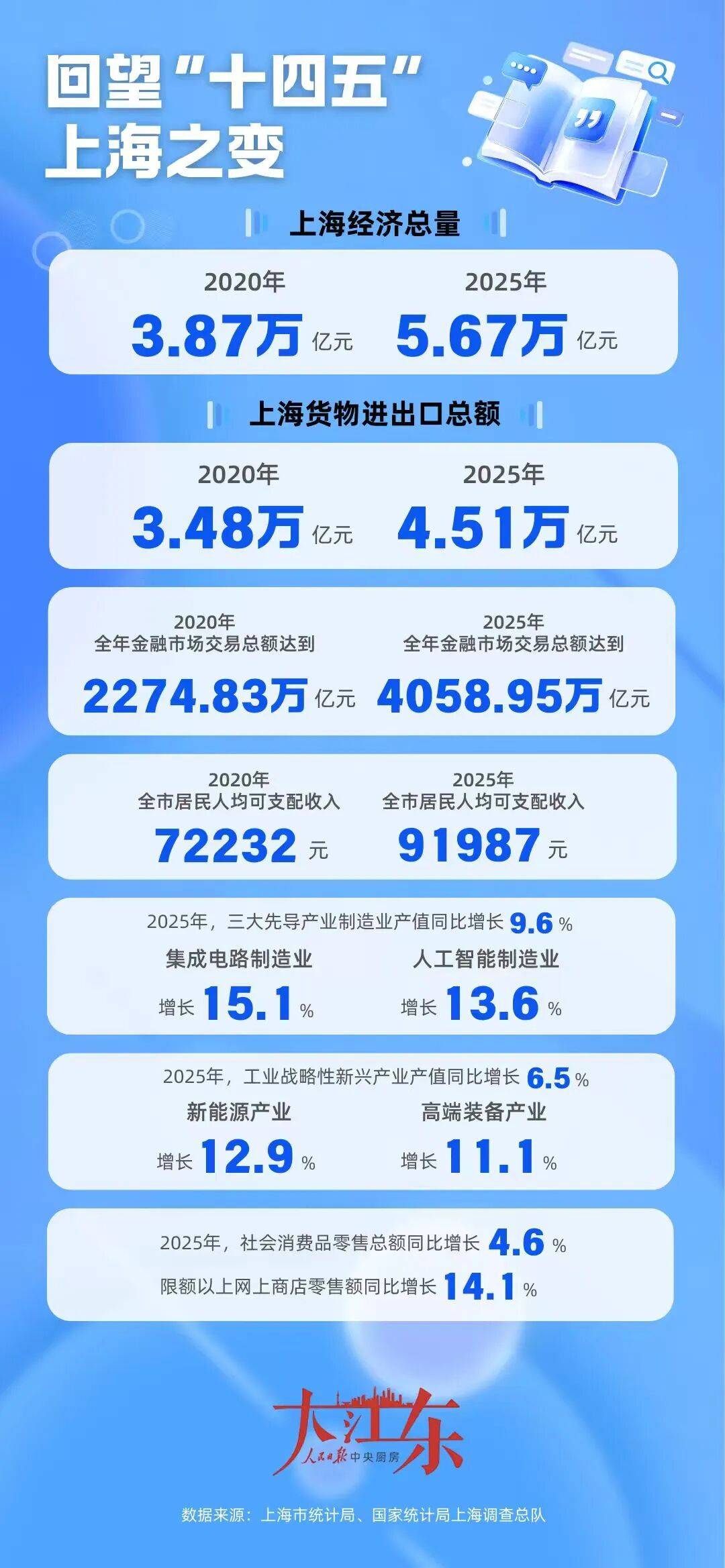
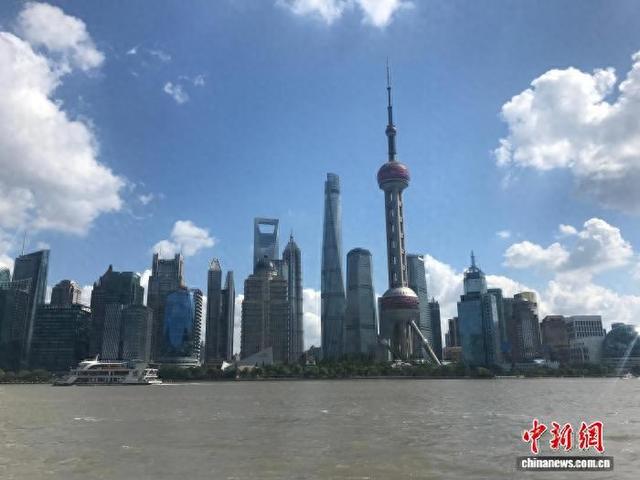
韧性、勇气、眼界,三个关键词回望上海“十四五” | 大江东:开局看上海①
Sou Hu Cai Jing· 2026-01-24 15:14
Economic Performance - In 2025, Shanghai's GDP is projected to reach 56,708.71 billion yuan, with a year-on-year growth of 5.4%, surpassing the national average by 0.4 percentage points [1] - Shanghai's economic scale has risen to the fifth largest globally, surpassing London, with significant growth from 3.87 trillion yuan in 2020 to over 5 trillion yuan [3] Industry Development - Shanghai has identified artificial intelligence, integrated circuits, and biomedicine as its three leading industries, with over 30 domestically produced innovative drugs approved for listing [3] - The integrated circuit industry in Shanghai is expected to generate over 480 billion yuan in revenue by 2025, more than doubling its scale compared to five years ago [19] Infrastructure and Urban Development - Major urban renovation projects have been completed, including the transformation of old housing and the initiation of 70 projects in urban villages [3] - Significant investments in infrastructure, totaling 195.75 billion yuan, have been made to support long-term urban development [6] Innovation and Research - Shanghai has seen a substantial increase in R&D spending, with a projected 85% growth in basic research investment during the "14th Five-Year Plan" period [21] - The number of papers published by Shanghai scientists in top international journals has increased from 124 in 2020 to 181 in 2025 [21] Policy and Reform - The "one industry, one certificate" reform has streamlined business operations, allowing for quicker establishment of new stores, with over 1,7000 comprehensive licenses issued [14] - Shanghai has implemented 24 local regulations to support innovative practices and address regulatory gaps [14]
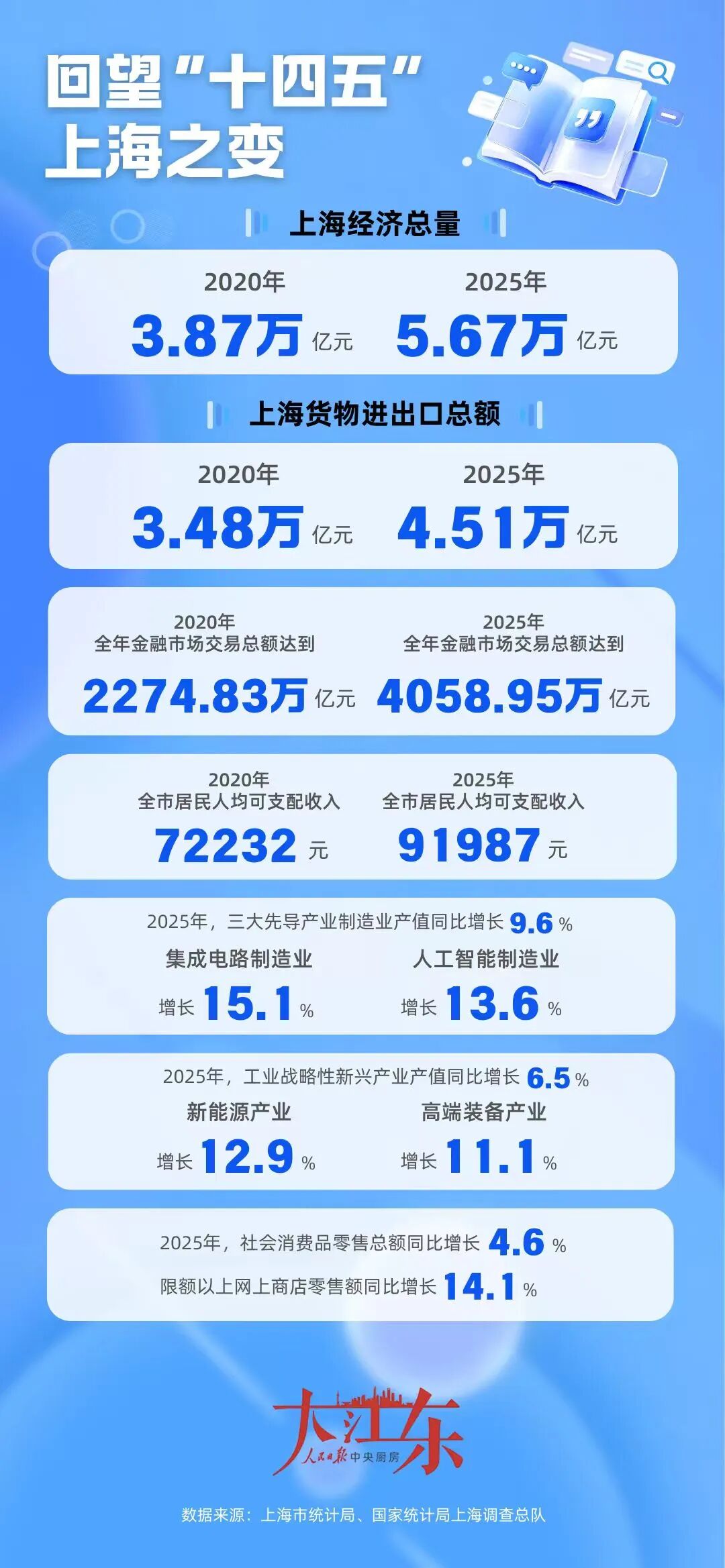
韧性、勇气、眼界 三个关键词回望上海“十四五” | 大江东:开局看上海①
Guo Ji Jin Rong Bao· 2026-01-24 14:51
Economic Performance - In 2025, Shanghai's GDP is projected to reach 56,708.71 billion yuan, with a year-on-year growth of 5.4%, surpassing the national average by 0.4 percentage points [1] - Shanghai's economic scale has risen to the fifth largest globally, surpassing London, with significant growth from 3.87 trillion yuan in 2020 to over 5 trillion yuan [3] - The city's economic recovery is evident, with a steady increase in growth rates, projected to align with the national average of 5% in 2024 [11] Industrial Development - Shanghai has identified artificial intelligence, integrated circuits, and biomedicine as its three leading industries, with substantial advancements in these sectors over the past five years [3] - The integrated circuit industry in Shanghai is expected to generate over 480 billion yuan in revenue by 2025, more than doubling its scale compared to five years ago [19] - The city has established a comprehensive industrial chain in chip design, manufacturing, packaging, and materials, with 35 companies listed on the Sci-Tech Innovation Board, the highest in the country [20] Innovation and Research - Shanghai's R&D expenditure reached approximately 160 billion yuan in 2020, accounting for about 4.1% of its GDP, with a significant increase in basic research funding by 85% during the "14th Five-Year Plan" [22][23] - The number of papers published by Shanghai scientists in top international journals has increased from 124 in 2020 to 181 in 2025, reflecting the city's growing emphasis on scientific research [23] - The city aims to focus on six key areas for future development, including quantum technology and biomanufacturing, to enhance its innovation capabilities [24]
北京经开区经济总量迈上四千亿新台阶
Xin Lang Cai Jing· 2026-01-24 10:17
Group 1 - The core economic data for Beijing Economic-Technological Development Area (Beijing EDA) in 2025 shows a GDP of 401.21 billion yuan, marking a year-on-year growth of 10.7%, leading among national-level economic development zones [1] - The main driving force behind this rapid economic growth is the continuous breakthroughs in leading industries, including the full-scale production of BOE's sixth-generation semiconductor display devices and the launch of the new pure electric CLA at Beijing Benz [1] - In 2025, the industrial output value of Beijing EDA grew by 12% year-on-year, with key industries such as high-end automobiles and new energy smart vehicles achieving an output value of 311.32 billion yuan, up 17.4% [1] Group 2 - The productive service industries, represented by information services and finance, have shown significant empowering effects, with information services generating revenue of 130.28 billion yuan, a year-on-year increase of 16.7% [2] - Investment in fixed assets in Beijing EDA has maintained a scale of over 100 billion yuan for three consecutive years, with major projects like the Sanofi insulin raw material project and the large commercial complex Wanxianghui accelerating their implementation [2] - In 2025, the R&D expenses of key large and medium-sized enterprises in Beijing EDA increased by 31.8% year-on-year, leading the city in growth [2] Group 3 - The Beijing EDA aims to establish itself as a model for new productive forces and an international high-end industrial complex, focusing on building a modern industrial system and nurturing trillion-yuan industrial clusters [3] - The area is set to kick off several key projects in the new year, including the new drug R&D and industrialization base project by Shouyao Holdings and the headquarters of Aerospace Intelligent Manufacturing [3]

上海规上工业总产值时隔两年再次迈上4万亿元台阶
Xin Lang Cai Jing· 2026-01-24 05:10
Core Viewpoint - Shanghai is projected to achieve a record industrial output value of 4.07 trillion yuan by 2025, marking a significant milestone in its industrial growth [1][3] Industry Overview - The overall industrial added value in Shanghai is expected to grow by 5.1% year-on-year, representing the fastest growth rate in the past four years [1][3] - The equipment manufacturing sector is accelerating, with notable growth in various sub-sectors: - Railway, shipbuilding, aerospace, and other transportation equipment manufacturing increased by 15.8% - Electrical machinery and equipment manufacturing rose by 11.1% - Automobile manufacturing grew by 7.8% - Computer, communication, and other electronic equipment manufacturing saw a growth of 7.7% [3] Key Industry Developments - The rapid development of the integrated circuit industry is a crucial driver for the growth of Shanghai's electronics sector, with revenue expected to exceed 480 billion yuan by 2025 [3] - Shanghai has cultivated leading enterprises in various segments of the chip design, manufacturing, and testing industries [3] - During the 14th Five-Year Plan period, the manufacturing output of Shanghai's leading industries, including integrated circuits, biomedicine, and artificial intelligence, increased by 85%, raising their share of Shanghai's industrial output from 7.8% to 12.4% [3]
主播说:广货何以行天下?我们看到了向新力、突围力与协同力
Nan Fang Du Shi Bao· 2026-01-24 01:41
Group 1: Guangdong Products and Market Trends - The "Guangdong Products Going Global" spring campaign is gaining traction, showcasing a variety of Guangdong goods that blend traditional craftsmanship with modern technology [2][4] - Guangdong's flower industry is a significant sector, with a market scale exceeding 30 billion yuan and an annual import-export value of over 1.2 billion yuan, making it the largest small potted plant production base in China [14][16] - The Guangdong film industry is experiencing growth, supported by government policies aimed at high-quality cultural development, which includes various sectors such as film and animation [44][45] Group 2: Innovation in Traditional Industries - The lighting industry in Zhongshan is shifting from standardization to customization, with companies focusing on technology-intensive solutions to meet diverse consumer needs [6][8] - Guangdong's biopharmaceutical sector is evolving from traditional herbal medicine to cutting-edge technologies, with companies like Kangfang Biotech achieving significant international milestones [28][30] - The drone industry in Guangdong is represented by companies like Chengzhi Intelligent, which has developed innovative products for emergency rescue operations, gaining popularity in over 50 countries [22][26] Group 3: Community and Collaborative Efforts - Local representatives and community members are actively promoting the flower industry, emphasizing the importance of collective efforts in sustaining the sector's vitality [16][19] - The Guangdong film industry benefits from collaboration among various stakeholders, including cinema operators and technology providers, enhancing the overall viewing experience [40][42] - The biopharmaceutical industry is seeing increased support from local governments, responding to the challenges faced by small and medium-sized biotech firms [32][34]